
Triangle Cactus (Acanthocereus tetragonus)
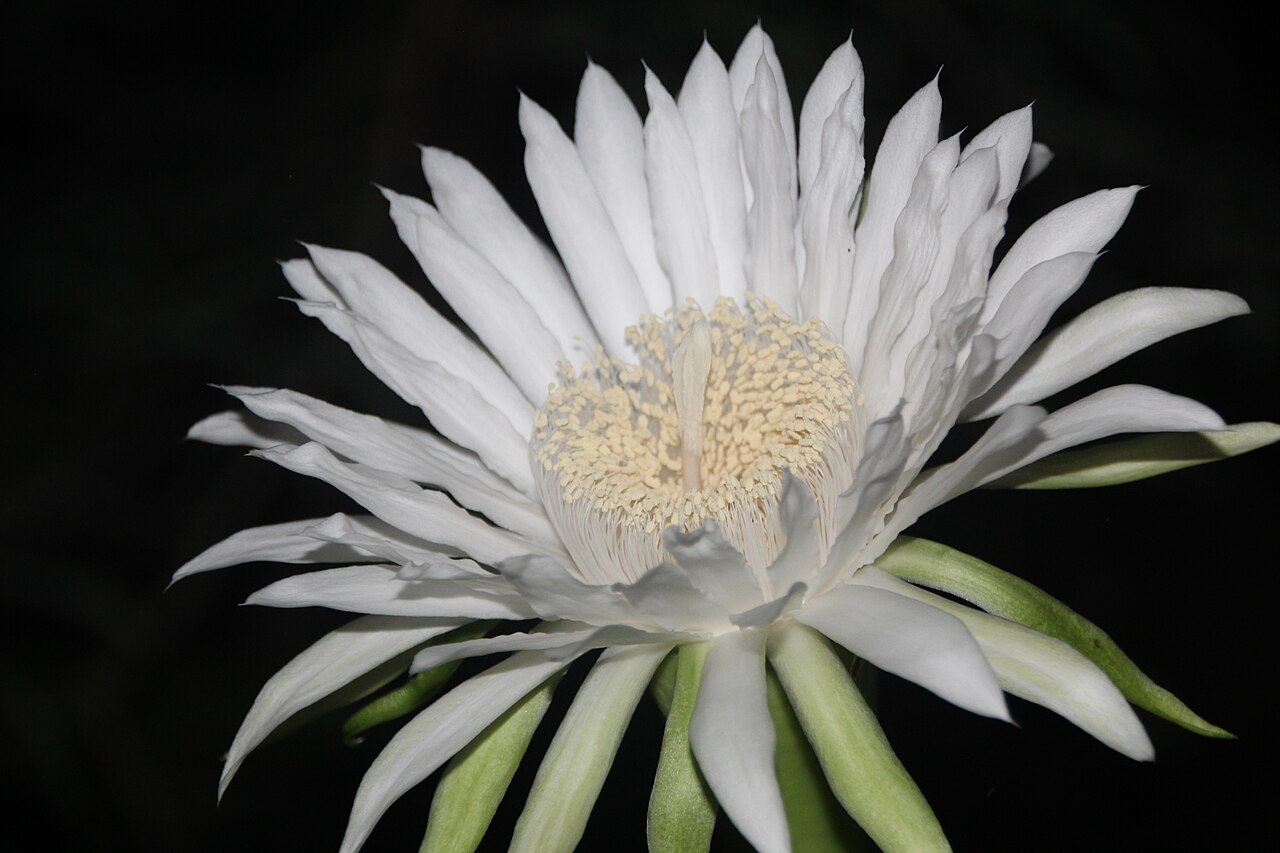
Acanthocereus tetragonus, known as Triangle Cactus, barbed-wire cactus or night-blooming cereus, is a large, sprawling cactus of coastal thickets and hammocks in Florida and the Lower Rio Grande Valley of Texas. Its bright green, sharply three-angled stems arch, lean and clamber through surrounding shrubs, often reaching 6 to 10 feet or more, and form spiny tangles that are almost impossible to walk through.
In summer it produces spectacular white flowers 5 to 8 inches across that open at night and close by the next morning, followed by shiny red, sweet fruits. It is a member of the cactus family (Cactaceae) and ranges widely through Mexico, Central America, the Caribbean and northern South America. A dwarf, monstrose form sold as “fairy castle cactus” is a common houseplant.
In Florida, the Atlas of Florida Plants lists triangle cactus as a state-threatened species, so wild plants must never be dug or cut. This guide covers how to identify triangle cactus, where it grows, how to grow nursery-propagated plants in frost-free gardens, and its value to wildlife.
Identification
Few native cacti in the United States look like triangle cactus. Look for long, bright green, jointed stems with three (sometimes four or five) sharp ridges, studded with clusters of long gray spines, arching out of a coastal thicket.
Growth Habit
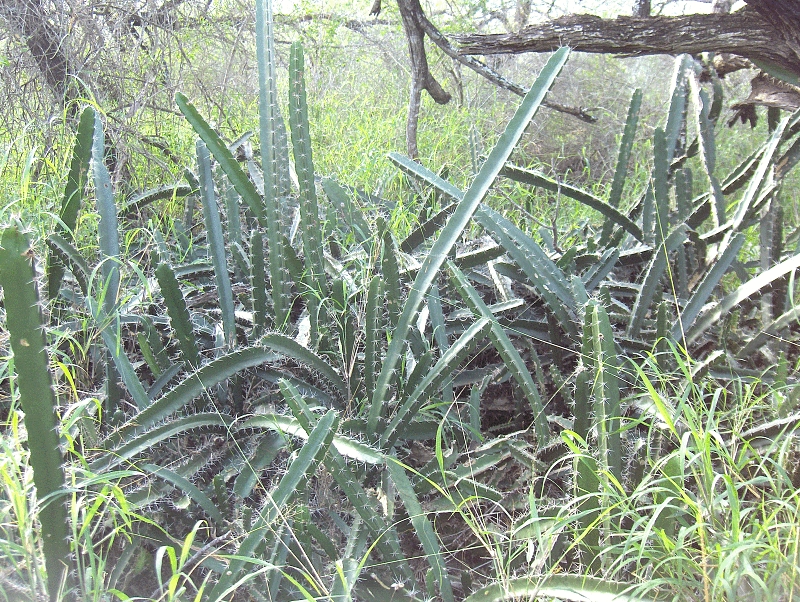
It is a sprawling, shrubby to vine-like cactus. Young stems are erect, but as they lengthen they arch over, lean on other shrubs or lie on the ground, where they may root at the tips and form new plants. Over time a single plant can form a thicket several yards across, with stems commonly 6 to 10 feet long and sometimes much longer.
Stems
The stems are jointed, bright to dark green and about 2 to 3 inches thick. Mature stems usually have three sharply angled, wing-like ribs, which gives the plant its common name; young stems may have four or five ribs. The edges of the ribs are scalloped between the areoles.
Spines
Small gray areoles are spaced about an inch apart along the rib edges. Each carries a cluster of usually about six to eight stiff, gray to brownish spines, with one or two longer central spines up to about 1 1/2 inches long. The spines are sharp and the plant is painful to handle.
Flowers
The flowers are large, 5 to 8 inches across, with a long, slender, spiny tube. The inner petals are pure white and the outer ones greenish or tinged with red, around a mass of cream stamens. They open in the evening, are faintly fragrant, and wither by the next morning. Flowering occurs mainly from late spring through summer, often in several flushes.
Fruit
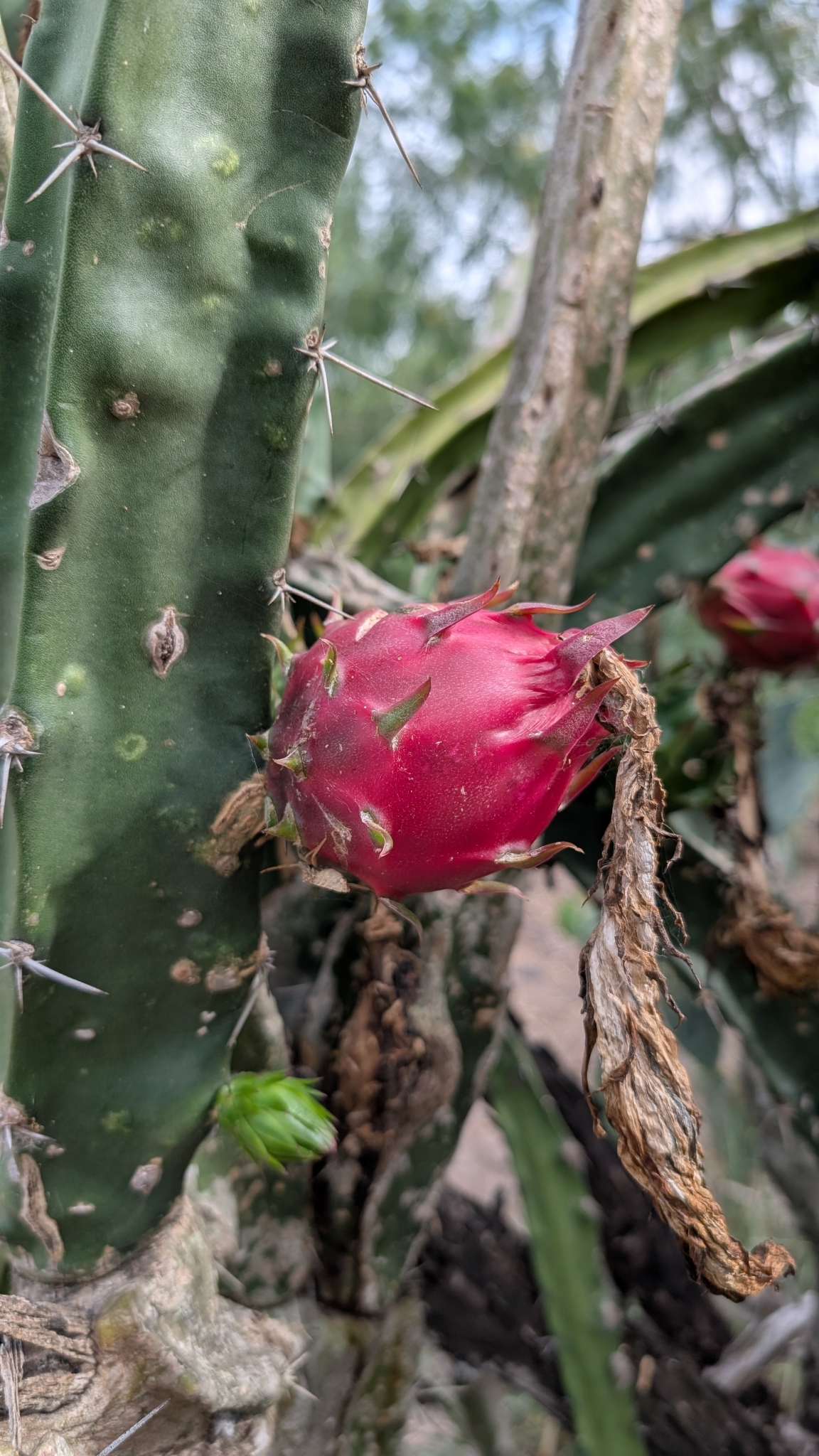
The fruit is an oval, bright red, shiny berry about 1 1/2 to 2 inches long, bearing a few spine clusters that fall away as it ripens. The flesh is red and sweet with many small black seeds.
Look-alikes
In Florida, the applecactus or Harrisia cacti have slender, round-ribbed stems with more numerous ribs and yellow or red fruits. Night-blooming species of Selenicereus and Hylocereus (dragon fruit) are climbing cacti with aerial roots; dragon fruit is not native to the United States and has broad, three-winged stems with very short spines.
Quick Facts
| Scientific Name | Acanthocereus tetragonus (L.) Hummelinck |
| Family | Cactaceae (cactus family) |
| Plant Type | Sprawling to clambering perennial cactus |
| Mature Height | 3–10 ft; stems sometimes much longer when supported |
| Mature Spread | 6–15 ft (forms thickets) |
| Growth Rate | Fast for a cactus |
| Sun Exposure | Full sun to part shade |
| Water Needs | Low; drought tolerant |
| Soil Type | Sandy, shelly or limestone soils; must drain well |
| Soil pH | About 6.5–8.5 (neutral to alkaline) |
| Bloom Time | Late spring–summer (night blooming) |
| Flower Color | White |
| Fall Color | Evergreen stems |
| Fruit | Shiny red, sweet, edible berry |
| Deer Resistant | Yes; heavily spined |
| USDA Hardiness Zones | 9b–11 (frost tender) |
Native Range
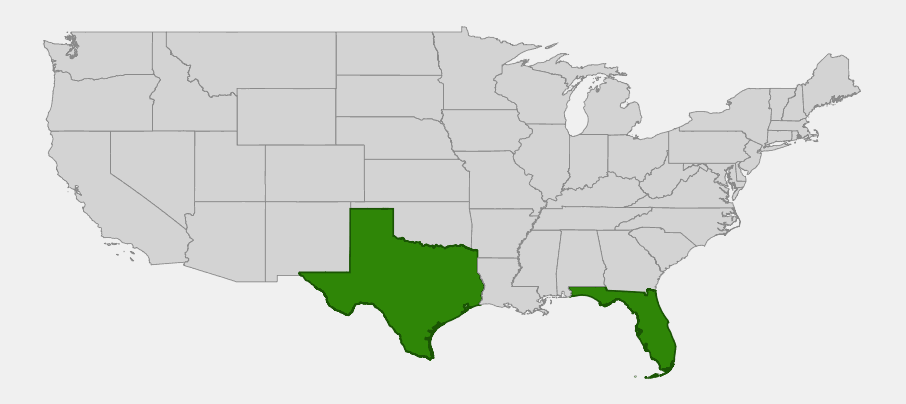
Triangle cactus is native to the subtropical coasts of the southern United States and to the American tropics. USDA PLANTS lists it as native in Florida and Texas and in the U.S. Virgin Islands; plants in Hawaii are introduced. Beyond the United States it ranges through Mexico, Central America, the West Indies and northern South America, and it is grown as a living fence in parts of the tropics.
In Florida it grows in coastal hammocks, on shell mounds and in coastal thickets of the central and southern peninsula and the Florida Keys. The Atlas of Florida Plants records it from only a handful of counties and lists it as threatened under state law. In Texas it is confined to the far south, mainly the Lower Rio Grande Valley and nearby coastal counties, where it grows in dense thornscrub and brush.
It favors sandy, shelly or limestone soils in hot, frost-free or nearly frost-free sites, from open sun at the edges of thickets to the light shade of hammocks. Freezes kill stems back, which limits it to the warmest parts of both states.
📋 Regional plant lists featuring Triangle Cactus: North & South Florida · South & West Texas
Growing & Care Guide
Triangle cactus is a bold, fast-growing native for frost-free coastal gardens in South Florida and South Texas, valued for its huge night flowers, red fruit and use as an impenetrable barrier. It is not a plant for small spaces or paths. In Florida it is state-listed as threatened: buy only nursery-propagated plants from licensed native nurseries and never collect stems or plants from the wild.
Light
It grows in full sun to part shade. Plants in sun are more compact and flower more freely; in hammock shade they become longer and more sprawling.
Soil & Water
Plant it in sandy, shelly or limestone soil that drains quickly. Water to establish new plants, then let rainfall take over; it is highly drought tolerant and rots in soggy soil. It tolerates salt spray and coastal conditions.
Planting Tips
Give it plenty of room, or a fence, trellis or sturdy shrub to lean on. It makes an effective security hedge or living fence along property lines. Keep it well away from walkways, play areas and places where people or pets might brush against it. Protect it from frost; temperatures much below freezing damage the stems.
Pruning & Maintenance
Wear thick gloves and long sleeves, and use long-handled tools when pruning; the spines are sharp and the stems heavy. Cut back stems that grow into paths or where they are not wanted. Fallen stem pieces can root, so clear them away if you do not want new plants.
Propagation
It roots easily from stem cuttings: let a cut stem section dry and callus for a week or two, then set it in dry, sandy soil and water lightly once roots start. It can also be grown from seed cleaned from ripe fruit. Use only plants you own or nursery stock; never take cuttings from wild plants, especially in Florida.
Landscape Uses
- Security hedge or living fence: a spiny, nearly impenetrable barrier for frost-free coastal properties
- Moon gardens: huge white flowers that open at night
- Coastal and xeriscape gardens: salt- and drought-tolerant for sandy and shelly soils
- Wildlife gardens: red fruit for birds and cover for small animals
- Habitat restoration: a component of coastal hammock and South Texas thornscrub plantings
Wildlife & Ecological Value
Triangle cactus thickets are small fortresses for wildlife in coastal hammocks and thornscrub, combining food, nectar and protected cover.
For Pollinators
The large, pale, fragrant flowers open at night, a classic pattern for pollination by sphinx (hawk) moths, which feed with their long tongues while hovering. Bees and other insects visit flowers that are still open early in the morning.
For Birds
The sweet red fruits are eaten by mockingbirds, thrashers, woodpeckers and other birds, which spread the seeds. The dense, spiny stems give songbirds safe nesting and roosting cover from predators.
For Mammals
In Florida, the federally endangered Key Largo woodrat eats the stems, and the spiny thickets give cover to woodrats and other small mammals. Raccoons and other animals eat fallen fruit.
Ecosystem Role
Its arching, rooting stems help bind sandy and shelly soils at the edges of coastal hammocks and thickets, and the spiny tangles create protected microhabitats where seedlings of other plants and small animals can escape browsing and predators.
Cultural & Historical Uses
Carl Linnaeus described the species in 1753 as Cactus tetragonus, and it was transferred to the genus Acanthocereus, “spiny cereus”, in 1938. Botanists have long debated how many species the genus holds; Acanthocereus pentagonus and A. floridanus are names formerly applied to the same plants.
In Mexico and Central America, triangle cactus, sometimes called pitaya or nopal de cruz, is widely planted as a living fence. The tender young stems are eaten as a vegetable, and the sweet red fruits are eaten fresh. Its dwarf, oddly branched form, the “fairy castle cactus”, is one of the most familiar cacti sold as houseplants.
Because the flowers open only for a single night, a flush of blooms on a triangle cactus thicket is a local event in South Florida and South Texas gardens, and many people stay up to watch them open in the evening.
Frequently Asked Questions
Why is it called triangle cactus?
Its mature stems usually have three sharp ridges, so a cross-section looks like a triangle. Young stems can have four or five ridges.
Is triangle cactus endangered?
It is not rare across its whole range, but in Florida the Atlas of Florida Plants lists it as threatened under state law, and it grows in only a few counties. Never collect it from the wild.
When does triangle cactus bloom?
Mainly from late spring through summer, often in several flushes. Each flower opens in the evening and closes by the next morning.
Is the fruit edible?
Yes. The shiny red fruits are sweet and are eaten in Mexico and Central America, and the young stems are cooked as a vegetable. Remove any spines carefully first.
Can I grow triangle cactus outside South Florida or South Texas?
Only in frost-free or nearly frost-free climates (about USDA zones 9b to 11). Elsewhere it can be grown in a container and brought indoors in winter.


