
Sea Torchwood (Amyris elemifera)
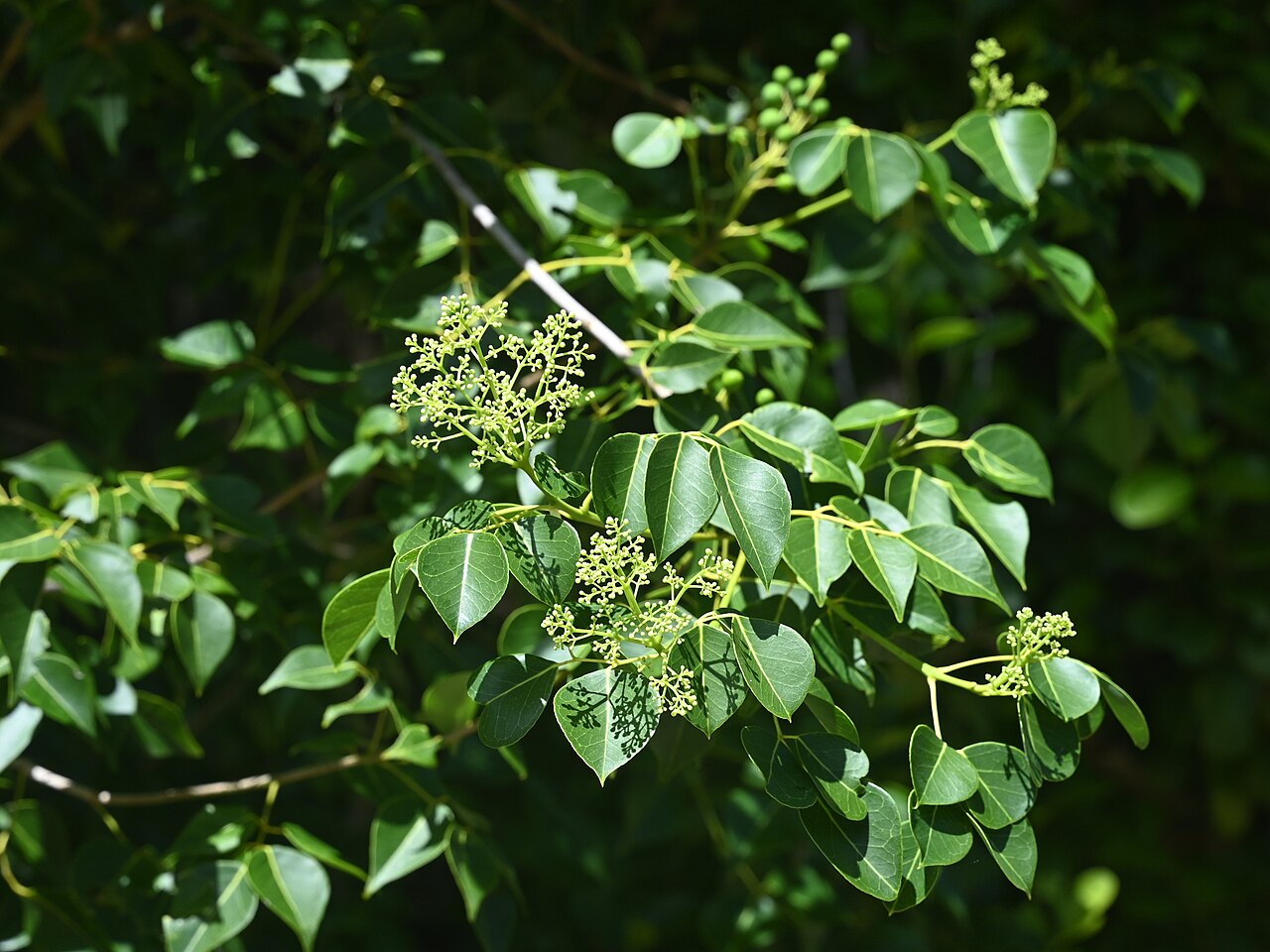
Amyris elemifera, commonly known as Sea Torchwood or simply Torchwood, is a small evergreen tree of Florida’s coastal hammocks, a member of the citrus family that most gardeners outside South Florida have never heard of. It earns its common name honestly: the wood and foliage are so saturated with aromatic resin that early Florida settlers reportedly bundled dried branches and burned them as makeshift torches. Today it is valued less for lighting the way and more for what it quietly supports — Sea Torchwood is a larval host plant for the giant swallowtail, Florida’s largest butterfly, making it a genuinely useful small tree for anyone gardening in its native range who wants to support pollinators rather than just look at them.
In the wild, Sea Torchwood grows as an understory or edge tree in coastal hammocks, dune thickets, and limestone woodlands throughout peninsular Florida, often alongside other hardwood hammock species like gumbo limbo and wild lime. It tolerates salt spray, wind, and the thin, alkaline soils typical of coastal Florida, which makes it a practical choice for gardeners working with difficult near-shore conditions where many ornamentals struggle.
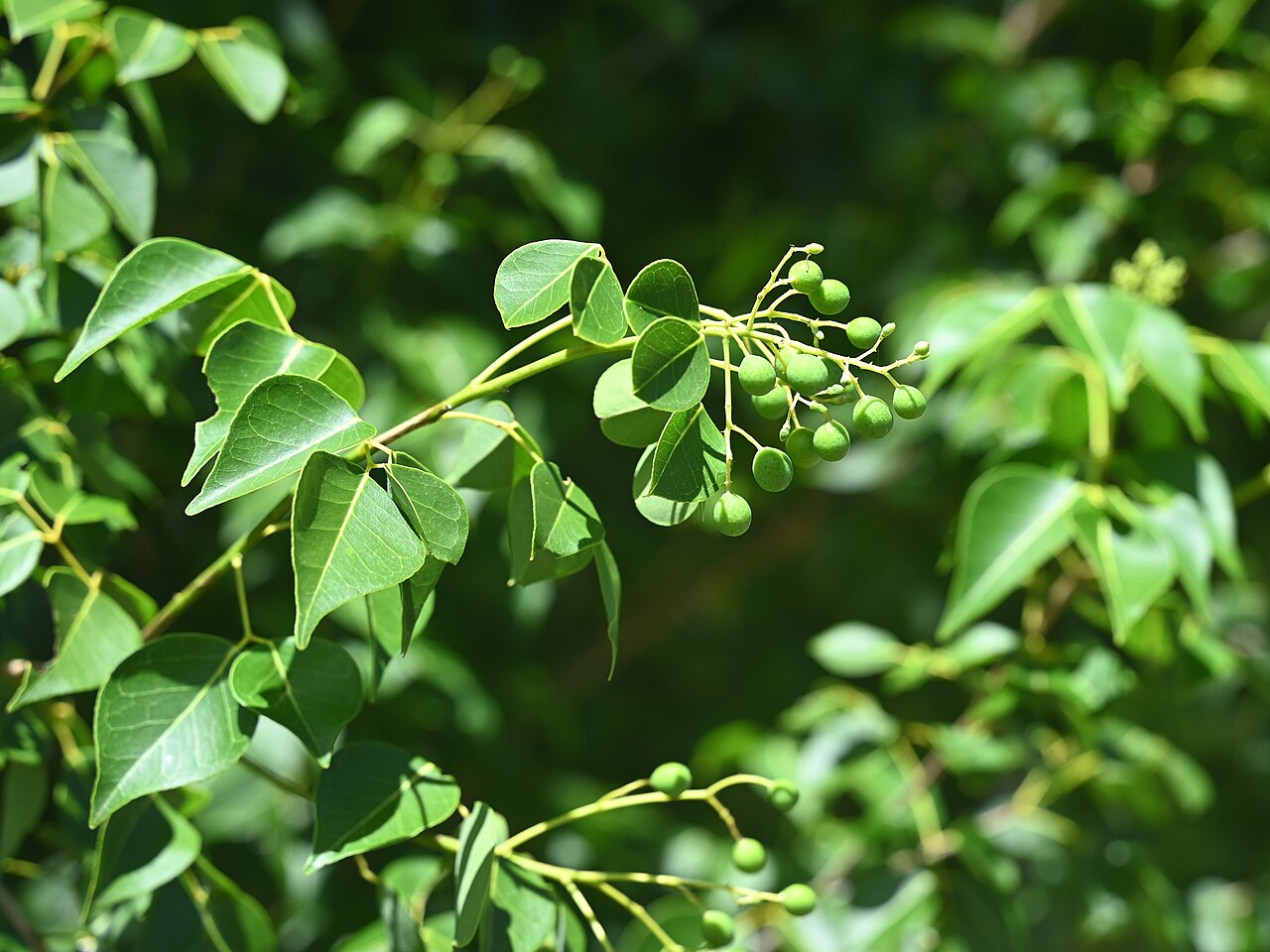
This is a modest, slow-growing tree rather than a showpiece — small, fragrant white flowers appear more or less year-round, followed by purplish-black fruit that songbirds eat readily. If you garden in Florida and want a genuinely native, low-maintenance small tree that feeds a butterfly most people only see in field guides, Sea Torchwood deserves a spot near the edge of a hammock planting or as a specimen in a native butterfly garden.
Identification
Sea Torchwood is a small evergreen tree or large shrub, typically 10 to 20 feet tall, occasionally reaching 30 feet, with a dense, rounded crown and often multiple trunks.
Leaves
Leaves are opposite, compound, and usually trifoliate (occasionally with more leaflets), with glossy, leathery, ovate to elliptic leaflets 1 to 3 inches long. Crushed foliage releases a strong, resinous, citrus-like odor — a reliable field mark for confirming identification, since Sea Torchwood belongs to the citrus family even though it bears no resemblance to an orange tree at a glance.
Flowers
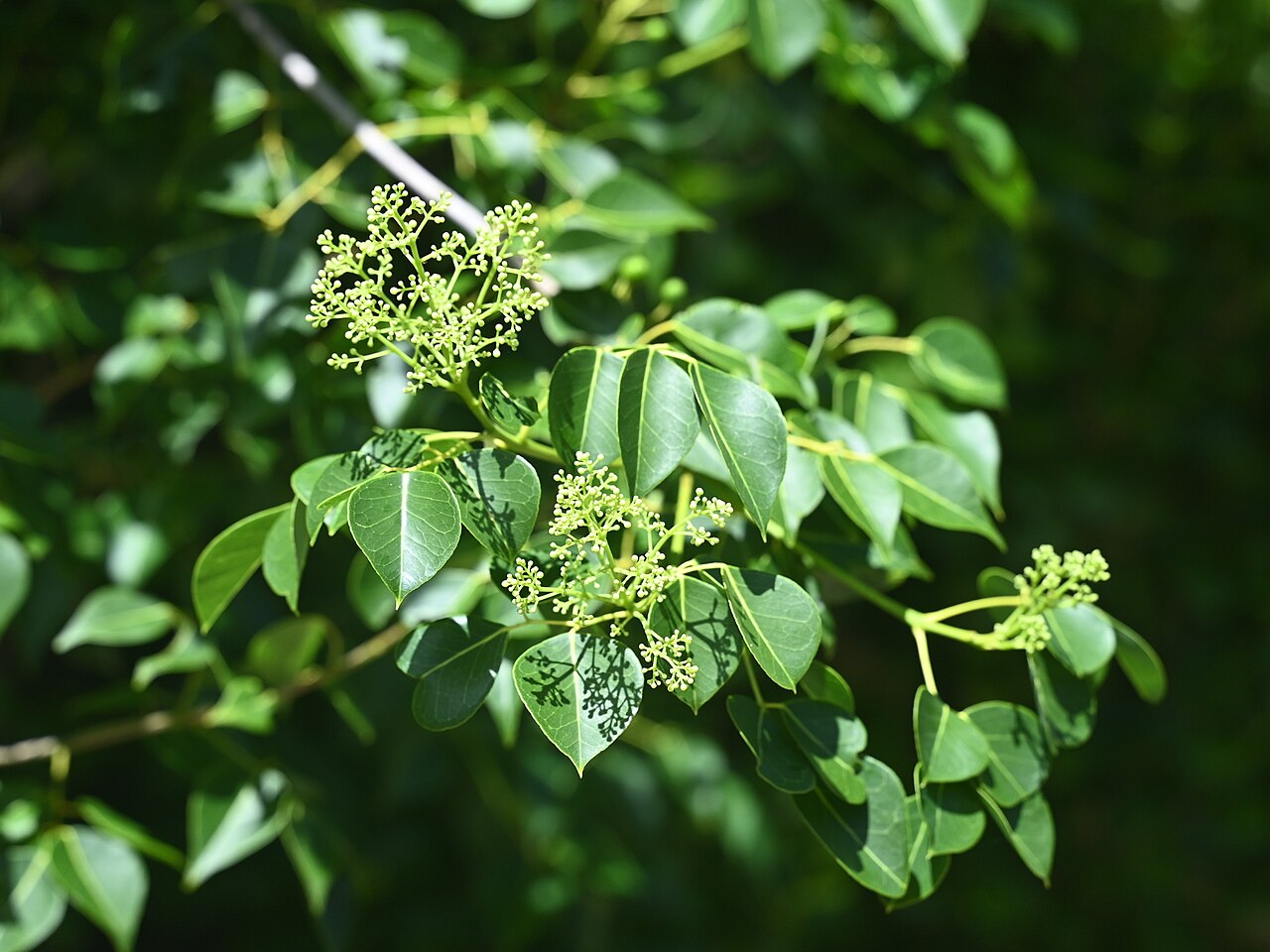
Flowers are small, white to cream-colored, and borne in loose, branched clusters at the leaf axils. Flowering is sporadic and can occur in almost any month in South Florida’s mild climate, though it is heaviest in warmer months, and the blooms carry a light, sweet fragrance that draws a variety of small pollinating insects.
Fruit
The fruit is a small, round drupe, roughly a third of an inch across, green when immature and ripening to purplish-black. Fruit often persists on the tree alongside new flower clusters, since bloom and fruit set overlap through much of the year.
Bark & Form
Bark is thin, smooth to slightly rough, and gray-brown. The overall silhouette is dense and twiggy, more shrub-like than tree-like in open, sunny, or salt-exposed sites, and more upright and tree-form in sheltered hammock settings.
Quick Facts
| Scientific Name | Amyris elemifera |
| Family | Rutaceae (Citrus/Rue) |
| Plant Type | Evergreen Tree/Large Shrub |
| Mature Height | 10–20 ft (occasionally to 30 ft) |
| Mature Spread | 8–15 ft |
| Growth Rate | Slow to moderate |
| Sun Exposure | Full Sun to Partial Shade |
| Water Needs | Low to Moderate |
| Soil Type | Sandy or limestone-based; well-drained |
| Soil pH | Neutral to alkaline |
| Bloom Time | Nearly year-round in South Florida; heaviest in warm months |
| Fruit | Small purplish-black drupe, eaten by birds |
| Salt Tolerance | High |
| Wildlife Value | Host plant for giant swallowtail; fruit eaten by songbirds |
| USDA Hardiness Zones | 10–11 |
Native Range
Sea Torchwood is native to peninsular Florida, where BONAP county records show it concentrated in coastal and near-coastal counties from the central peninsula south through the Keys. It also occurs natively in Puerto Rico and the U.S. Virgin Islands. Habitat is coastal hammocks, dune thickets, and limestone woodlands, usually within reach of salt spray or brackish influence, which explains its strong tolerance for wind and salt in cultivation.
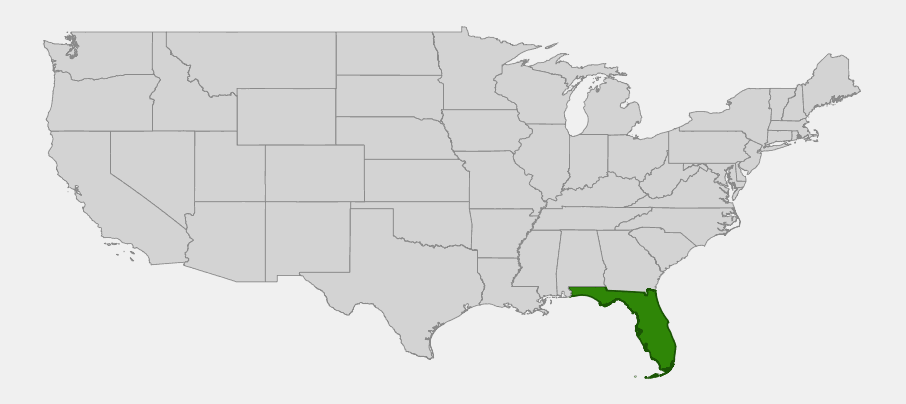
Sea Torchwood is native only to Florida (and the Caribbean); this campaign has no regional plant list covering peninsular Florida, so no 📋 regional list links apply to this page.
Growing & Care Guide
Sea Torchwood is a tough, low-maintenance small tree once established, well suited to the difficult growing conditions common near the Florida coast.
Light
Grows well in full sun to partial shade. In open, sunny, salt-exposed sites it tends to stay shrubby and dense; in the partial shade of a hammock edge it grows taller and more tree-like.
Soil & Site
Adapts to sandy or limestone-based soils typical of coastal Florida and tolerates alkaline pH without difficulty. Good drainage is important — this is not a tree for low, wet spots.
Water
Water regularly during the first year to establish a deep root system. Once established, Sea Torchwood is drought-tolerant and handles the dry spells common in its native coastal habitat without supplemental irrigation.
Salt & Wind
This is one of its strongest selling points: Sea Torchwood tolerates direct salt spray and coastal wind exposure better than most ornamental small trees, making it a genuinely useful choice for oceanfront or near-shore Florida landscapes where many other species fail.
Pruning & Maintenance
Little pruning is required. Light shaping can encourage a more tree-like form if a single-trunk habit is desired; otherwise, let it grow into its naturally dense, rounded shape.
Landscape Uses
- Butterfly gardens as a larval host plant for the giant swallowtail
- Coastal and seaside landscaping where salt spray and wind limit other choices
- Hammock edge and understory restoration alongside Gumbo Limbo and other hardwood hammock natives
- Informal hedges or screens in frost-free South Florida landscapes
- Wildlife gardens where the fruit crop draws songbirds
Wildlife & Ecological Value
For Butterflies
Sea Torchwood is a documented larval host plant for the giant swallowtail (Papilio cresphontes), North America’s largest butterfly. Like other citrus-family host plants, it supports the caterpillar stage, whose odd bird-dropping camouflage is one of the more memorable sights in a Florida native garden.
For Birds
The small purplish-black fruit is readily eaten by a range of songbirds, which in turn disperse the seed through coastal hammock habitat.
For Pollinators
The small, fragrant, nearly year-round flowers draw a variety of bees and other small pollinating insects, providing a reliable nectar source through much of the year in a climate where many plants have a shorter bloom window.
Ecosystem Role
As a salt- and wind-tolerant hammock-edge species, Sea Torchwood helps stabilize and diversify Florida’s increasingly fragmented coastal hammock habitat, a plant community under heavy development pressure throughout the state.
Cultural & Historical Uses
The common name “torchwood” refers to the resinous, oily wood and foliage, historically said to have been bundled and burned as a makeshift torch by early Florida settlers — the resin content is high enough that the wood burns readily even when green. This is a matter of historical record rather than a practical modern recommendation, since dedicated materials now exist for that purpose and harvesting wild Sea Torchwood for fuel is neither necessary nor advisable given its more valuable role as a butterfly host plant.
Frequently Asked Questions
Is Sea Torchwood related to citrus trees?
Yes, it belongs to the Rutaceae, the citrus family, though it bears no visual resemblance to an orange or lemon tree. The connection shows up mainly in the strong, resinous, citrus-like smell released when the foliage is crushed, and in its value as a larval host plant for swallowtail butterflies, a trait shared with many of its citrus-family relatives.
What butterfly does Sea Torchwood support?
It is a documented host plant for the giant swallowtail, North America’s largest butterfly. Planting it is one of the more reliable ways to attract this species to a South Florida garden.
Can Sea Torchwood handle beachfront planting?
Yes, it tolerates salt spray and coastal wind better than most small ornamental trees, making it a solid choice for near-shore Florida landscapes.
How big does Sea Torchwood get?
Typically 10 to 20 feet, sometimes a dense large shrub rather than a true tree depending on sun and wind exposure, occasionally reaching 30 feet in sheltered hammock settings.
Is Sea Torchwood cold-hardy?
No. It is suited to USDA zones 10–11 and is a plant for frost-free or nearly frost-free South and Central Florida; it is not reliably hardy farther north.
Related reading: Pollinator Garden Design Basics · Planting Native Trees for Wildlife · Woodland Garden Design with Natives

Looking for a nursery that carries Sea Torchwood?
Browse our native plant nursery directory: Delaware, Florida & Georgia

