Saffron Plum (Sideroxylon celastrinum)
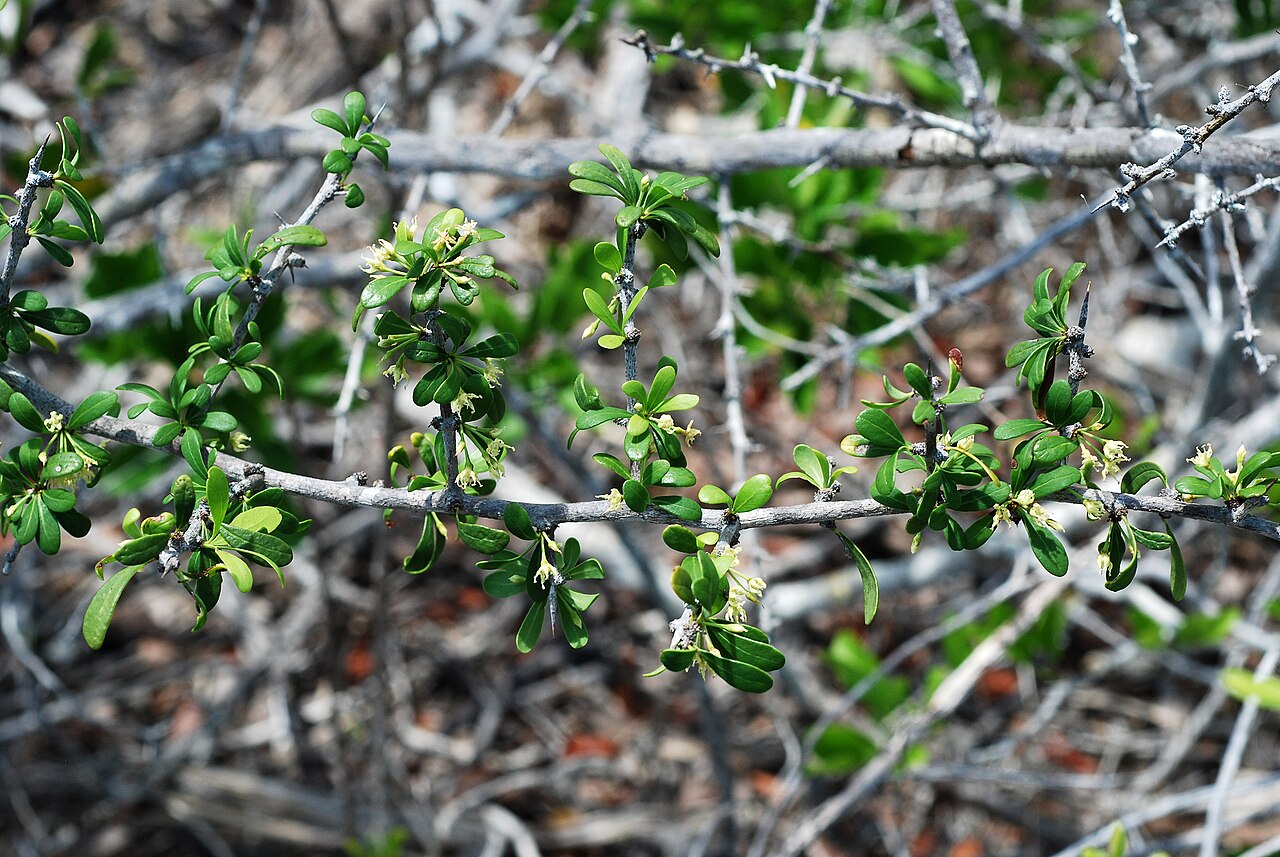
Sideroxylon celastrinum (long known as Bumelia celastrina), commonly called Saffron Plum or Coma, is a dense, spine-tipped evergreen shrub or small tree in the Sapotaceae — the same tropical family as sapodilla and chicle. It is a quiet but tough presence in the coastal brush of South Texas and the hammocks of Florida, forming a tight tangle of zig-zagging, thorn-armed branches that give excellent cover and, later in the year, small sweet fruit that people and wildlife have both relied on for generations.
The common name comes not from the fruit’s flavor but from the yellow (“saffron”) color of the sapwood just beneath the bark, visible on a fresh cut. The fruit itself is the real draw: a blue-black, olive-sized drupe that ripens from late summer into winter and has a mild, sweet flavor when fully soft — one of the few truly palatable fruits among the native plants of the Tamaulipan thornscrub and Florida coastal hammocks.
In the landscape, Saffron Plum is valued as a slow-growing, wind- and salt-tolerant hedge or specimen shrub that asks for almost nothing once established. Its fragrant, bee-covered flowers, wildlife-feeding fruit, and resistance to hurricane winds make it a quietly excellent choice for coastal South Texas and Florida gardens willing to give it the years it takes to fill in.
Identification
Saffron Plum grows as a many-branched shrub or small tree, typically 10 to 20 feet tall (occasionally taller in old specimens), with a dense, rounded crown built from stiff, zig-zagging twigs.
Bark & Stems
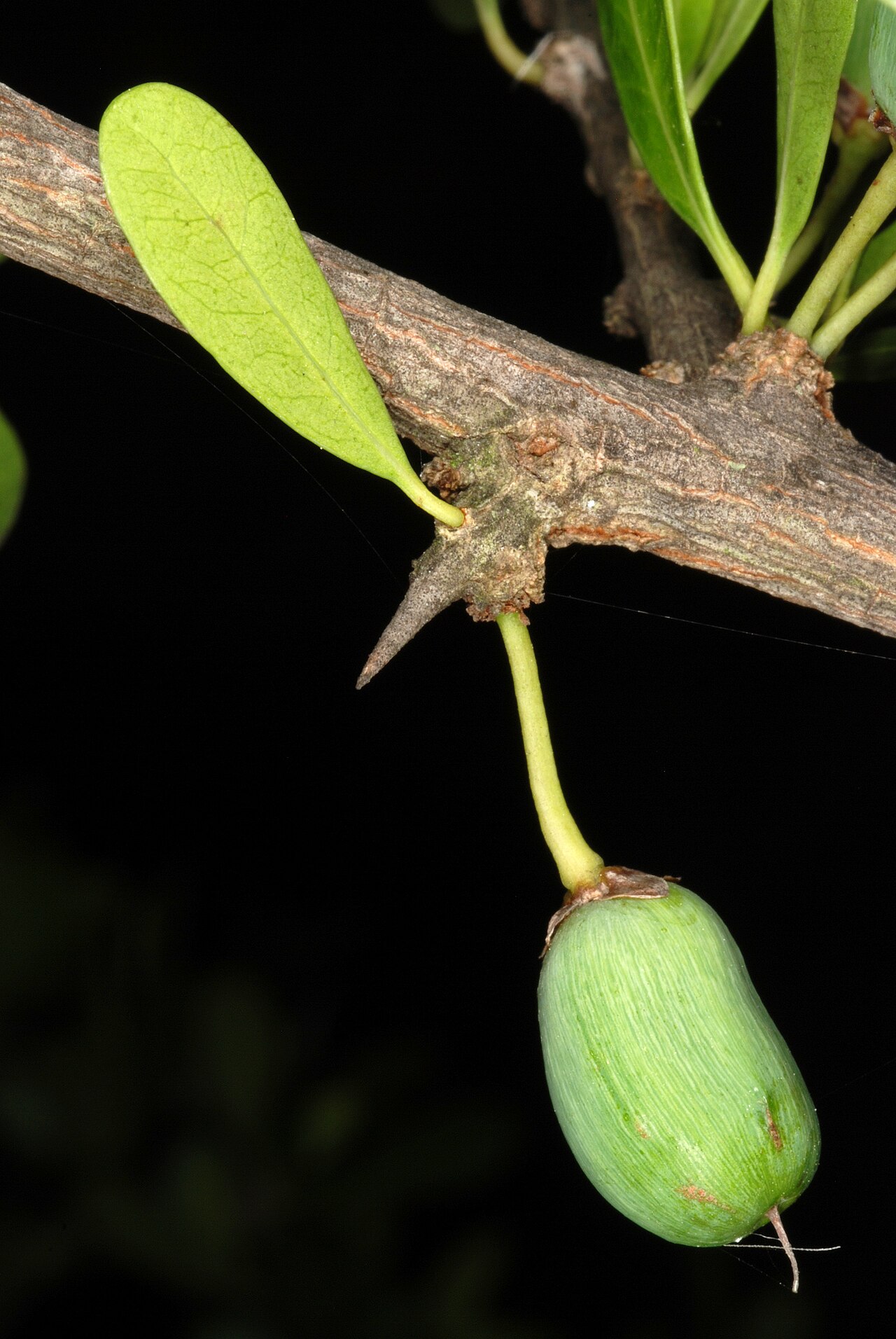
Bark is gray to grayish-brown and relatively smooth on younger wood, roughening with age. Branchlets zig-zag sharply from node to node and many terminate in a stiff, sharp spine, giving the whole shrub a thorny, impenetrable character that is obvious even from a distance. A fresh cut into young wood reveals the yellowish sapwood that gives the plant its common name.
Leaves
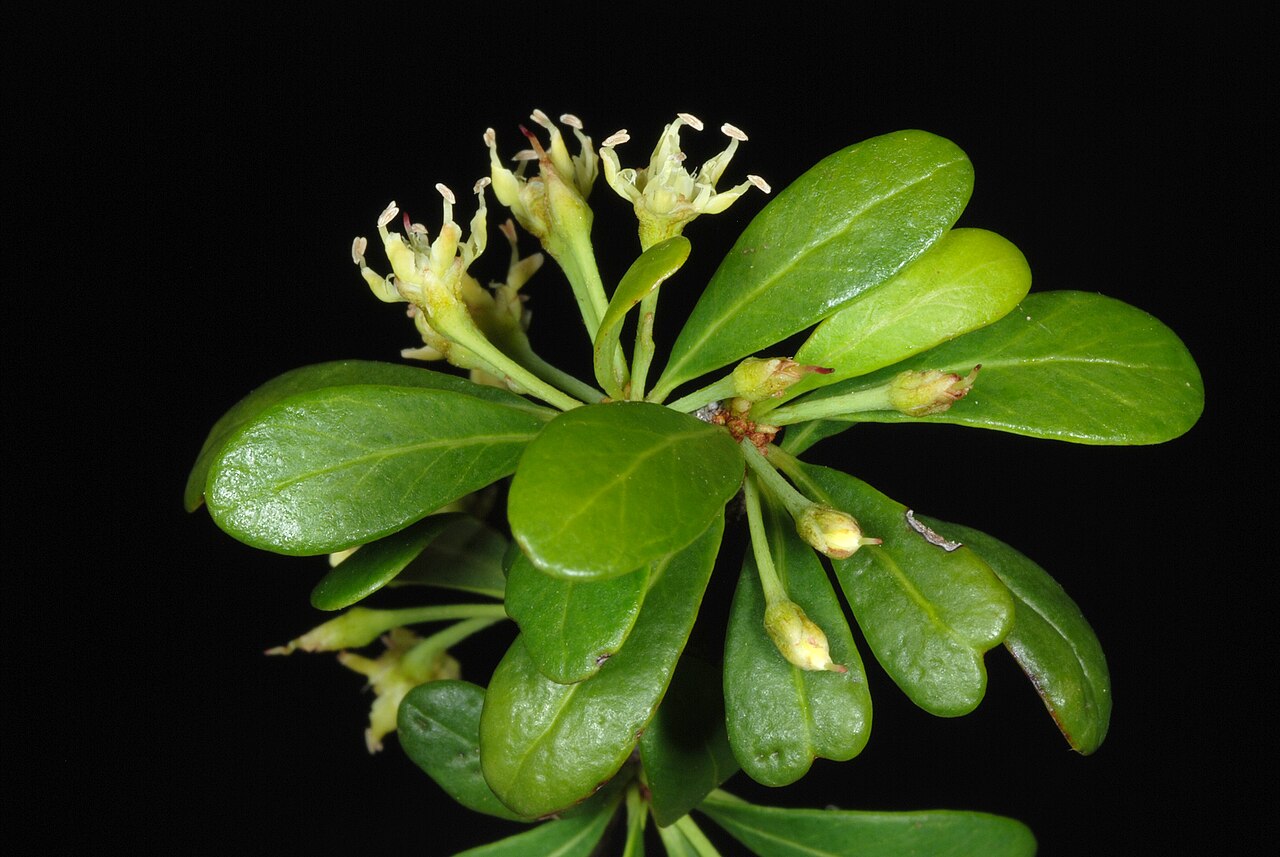
Leaves are simple, alternate, and often clustered in tight spurs along the twigs. They are small — typically 1/2 to 1.5 inches long — spoon-shaped to obovate, thick and leathery, glossy dark green above and paler beneath, with smooth margins and a rounded or notched tip. The foliage is evergreen, giving the plant year-round structure.
Flowers
Small, fragrant, creamy white to greenish-white flowers are borne in dense clusters at the leaf axils, each flower only about 1/8 inch across but produced in large enough numbers to perfume the air around a blooming shrub. Bloom can occur more than once a year in frost-free locations, drawing a steady stream of bees and other small pollinators.
Fruit & Seeds
The fruit is an oval drupe about 1/2 to 3/4 inch long, green at first and ripening to blue-black. Ripe fruit has a thin, sweet, mildly flavored pulp around a single hard seed. Fruiting is heaviest from late summer into winter, and ripe drupes are quickly taken by birds and mammals — leave fruit for wildlife unless you are certain of correct identification, since several unrelated plants share the generic “black berry on a thorny shrub” look.
Quick Facts
| Scientific Name | Sideroxylon celastrinum (syn. Bumelia celastrina) |
| Family | Sapotaceae (Sapodilla) |
| Plant Type | Evergreen Shrub / Small Tree |
| Mature Height | 10–20 ft (3–6 m) |
| Mature Spread | 8–15 ft |
| Growth Rate | Slow |
| Sun Exposure | Full Sun to Part Shade |
| Water Needs | Low once established |
| Soil Type | Sandy, caliche, or shell-based; well-drained |
| Soil pH | Neutral to alkaline |
| Bloom Time | Intermittent, year-round in frost-free areas |
| Flower Color | Creamy white to greenish-white |
| Fall Color | None (evergreen) |
| Fruit | Blue-black edible drupe, 1/2–3/4 in, late summer–winter |
| Deer Resistant | Yes (thorny branching) |
| USDA Hardiness Zones | 9b–11 |
Native Range
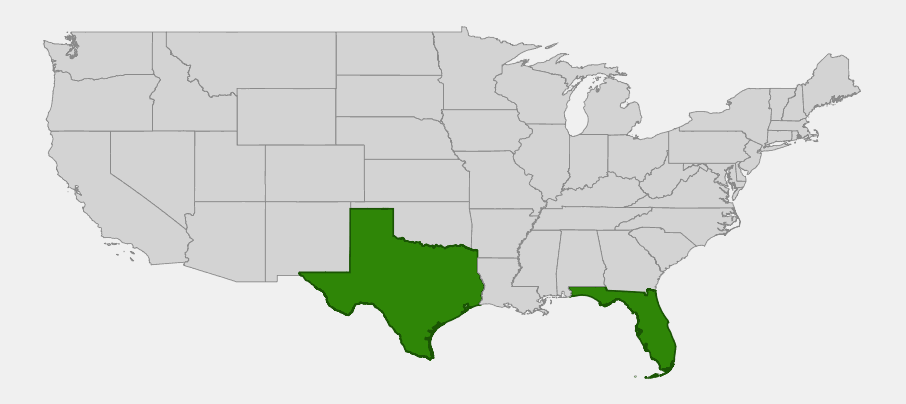
Saffron Plum is native to the southern tip of Texas and to Florida, where it grows in coastal brush, barrier-island thickets, and hammock edges. From these U.S. populations its range continues south through Mexico, the Caribbean, and Central America into northern South America, placing the Texas and Florida plants at the northern edge of a tropical distribution.
In South Texas, Saffron Plum is a typical member of Tamaulipan thornscrub and coastal brush on the Rio Grande Plain, often growing with other spiny, salt- and drought-tolerant shrubs on well-drained clay or caliche soils. In Florida it favors coastal hammocks and shell middens, where its tolerance for salt spray, wind, and occasional salt-water inundation lets it hold ground that many other woody plants cannot.
Because it is not reliably cold-hardy, Saffron Plum’s range stops abruptly where hard freezes become regular, confining it to the subtropical fringe of both states. It should be planted only within its native counties in Texas and Florida, not used as a general-purpose Gulf Coast landscape shrub outside that range.
📋 Regional plant lists featuring Saffron Plum: South and West Texas
Growing & Care Guide
Saffron Plum rewards patience: it grows slowly, but what you end up with is an exceptionally tough, long-lived shrub that needs almost no care once it is through its establishment years.
Light
Full sun to light shade both work well. Plants in full sun develop a denser, more compact form with heavier flowering and fruiting; in part shade the growth is somewhat looser.
Soil & Water
This species wants lean, well-drained soil — sandy, caliche, or shell-based ground is ideal, and it does not tolerate standing water or heavy, poorly drained clay. Water regularly through the first one to two growing seasons to establish a deep root system; after that, Saffron Plum is genuinely drought tolerant and needs extra water only in prolonged dry spells. Its tolerance for salt spray and brief salt-water flooding is part of why it thrives on barrier islands and coastal hammocks.
Planting Tips
Plant from containers in spring, after the risk of frost has passed, and be patient with the slow early growth — this is a long-term investment shrub, not a fast screen. Space plants 6 to 10 feet apart for a hedge, or give a single specimen 10 to 15 feet of room to develop its natural rounded form. Wear gloves when working near the plant, since the spine-tipped branchlets are sharp.
Pruning & Maintenance
Saffron Plum needs very little pruning beyond removing dead wood; its slow growth means it holds a shape well without frequent shearing. It tolerates hard pruning and resprouts after storm damage or a rare hard freeze, which — combined with its documented wind resistance — makes it a good choice for hurricane-prone coastal sites.
Propagation
Propagate from fresh seed cleaned out of ripe fruit and sown soon after collection; germination can be slow and uneven, consistent with the plant’s generally slow growth habit. Semi-hardwood cuttings can be attempted under mist but are not a reliable primary method.
Landscape Uses
- Coastal hedge or screen tolerant of salt spray and wind
- Wildlife garden shrub for fruit-eating birds and mammals
- Hurricane-resilient landscaping in South Texas and Florida
- Thornscrub and coastal hammock restoration plantings
- Living barrier where its spine-tipped branches discourage foot traffic
- Low-water xeriscaping once established
Wildlife & Ecological Value
Saffron Plum earns its keep in a native landscape through both its flowers and its fruit, across a long and fairly continuous season.
For Pollinators
The small, fragrant flowers appear intermittently through much of the year in frost-free locations and are heavily worked by honeybees and native bees, which are drawn by both the scent and the reliable nectar supply during periods when fewer other plants are blooming.
For Birds
The blue-black fruit ripening from late summer into winter is an important food source for a range of resident and migratory birds, including mockingbirds and various thrushes, at a time of year when many other native fruits have already been stripped from the landscape.
For Mammals
Raccoons and other small mammals also take the ripe fruit, and the dense, thorny branching provides secure shelter and denning cover that larger predators have difficulty penetrating.
Ecosystem Role
As a slow-growing, long-lived component of Tamaulipan thornscrub and Florida coastal hammocks, Saffron Plum adds structural permanence to plant communities that are otherwise dominated by faster-growing, shorter-lived shrubs, and its wind resistance helps stabilize the thorny shrub layer after hurricanes and tropical storms.
Cultural & Historical Uses
The sweet, ripe fruit of Saffron Plum has long been gathered and eaten directly off the shrub by people throughout its range in South Texas, Florida, and Mexico, where it is sometimes still called “coma” — a name shared with several related Sideroxylon fruits valued for fresh eating. The flavor is mild and plum-like once the fruit has fully softened and turned blue-black; unripe green fruit is astringent and unpalatable.
The common name “saffron plum” references the yellow color of the freshly cut sapwood rather than any use of the plant as a dye or spice. The dense, hard wood has occasionally been used locally for small tool handles and fence posts, though the shrub’s slow growth and modest size have kept it from any significant timber use.
Today Saffron Plum is grown primarily as a native landscape and wildlife shrub rather than for its fruit, though home gardeners within its native range sometimes do sample the ripe drupes as a foraged treat. As with any wild fruit, correct identification should be confirmed before eating.
Frequently Asked Questions
Is Saffron Plum fruit really edible?
Yes — the ripe, blue-black fruit has a mild, sweet, plum-like flavor and has long been eaten fresh by people within the plant’s native range. Unripe green fruit is astringent and not palatable. Confirm identification carefully before eating any wild fruit.
Why is it called “saffron” plum if the flowers and fruit aren’t that color?
The name refers to the yellow (“saffron”) color of the sapwood visible just beneath the bark on a fresh cut, not to the flower or fruit color.
Are the thorns on Saffron Plum a problem in a yard?
The spine-tipped branchlets are sharp enough to require care when pruning or working nearby, so it’s best placed along a property line or in a wildlife border rather than next to a walkway, patio, or play area.
How fast does Saffron Plum grow?
Slowly. It can take several years to develop real size and structure, but the payoff is an unusually long-lived, low-maintenance, storm- and salt-tolerant shrub once it is established.
Can Saffron Plum handle hurricanes and salt spray?
Yes — it is noted specifically for wind resistance and tolerates salt spray and brief salt-water flooding well, which is why it is common in coastal hammocks and barrier-island thickets in both Texas and Florida.