Brasil (Condalia hookeri)
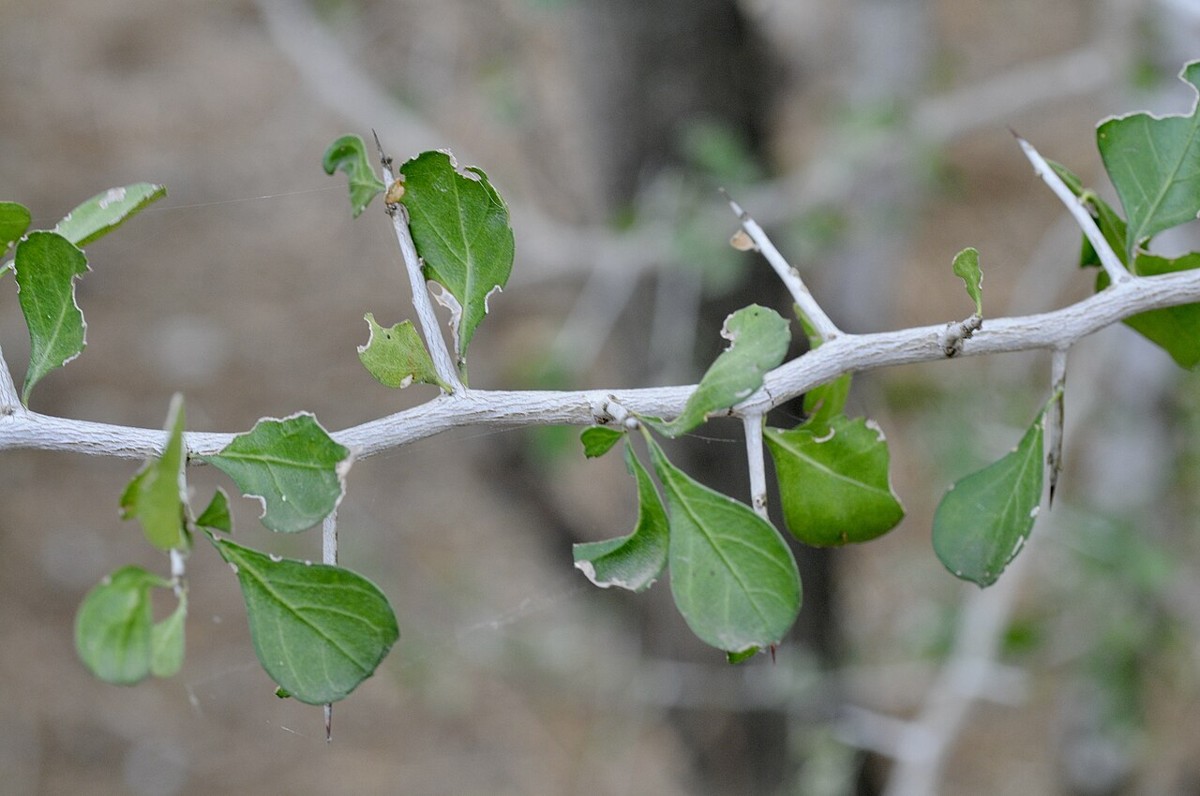
Condalia hookeri, known in South Texas as Brasil, Bluewood Condalia, Brasilwood, or Capul Negro, is a thorny, thicket-forming shrub or small tree of the Rhamnaceae (buckthorn) family, native to the brushlands of central and south Texas and northeastern Mexico. It is one of the signature plants of the South Texas thornscrub, forming dense, nearly impenetrable stands of stiff, spine-tipped branches that provide some of the best wildlife cover in the region.
Brasil is usually seen as a multi-trunked shrub 6 to 15 feet tall, though old specimens growing as small trees can occasionally reach 20 feet. Fresh lime-green leaves emerge each spring just as the prior year’s leaves finally drop, and small black fruits ripen through the warmer months, feeding gray foxes, raccoons and a long list of birds. The common name refers to a blue-black dye historically obtained from the wood, and the dense, thorny wood has also long been valued as a hot-burning fuel.
For a South Texas garden or brush-restoration planting, Brasil earns its keep as a low-water, low-maintenance background plant: it tolerates poor, caliche-laden soils, needs little irrigation once established, and forms a thorny barrier hedge that doubles as prime habitat for nesting birds and small mammals.
Identification
Brasil grows as a densely branched, thicket-forming shrub or small tree, typically 6 to 15 feet tall (occasionally to 20 feet), with a thin, irregular crown of widely spreading, stiff branches. It is commonly multi-trunked, and the overall silhouette is wiry and angular rather than rounded or full.
Bark & Stems
Branchlets of the current year’s growth are green, turning gray streaked with brown as they age. Every branch tip ends in a sharp, rigid thorn, and the stiff, spreading branching pattern makes mature stands of Brasil genuinely difficult to walk through — a trait that is part of its wildlife value.
Leaves
Leaves are small, leathery, and paddle-shaped (spatulate), ¼ to 1½ inches long, widest near the tip rather than the base, tapering down to the petiole, with a small point at the tip and margins that are smooth to weakly toothed near that point. New leaves emerge a vivid, fresh lime-green in early spring just as the previous year’s foliage finally drops, giving the shrub a brief but noticeable flush of bright new growth each year.
Flowers & Fruit
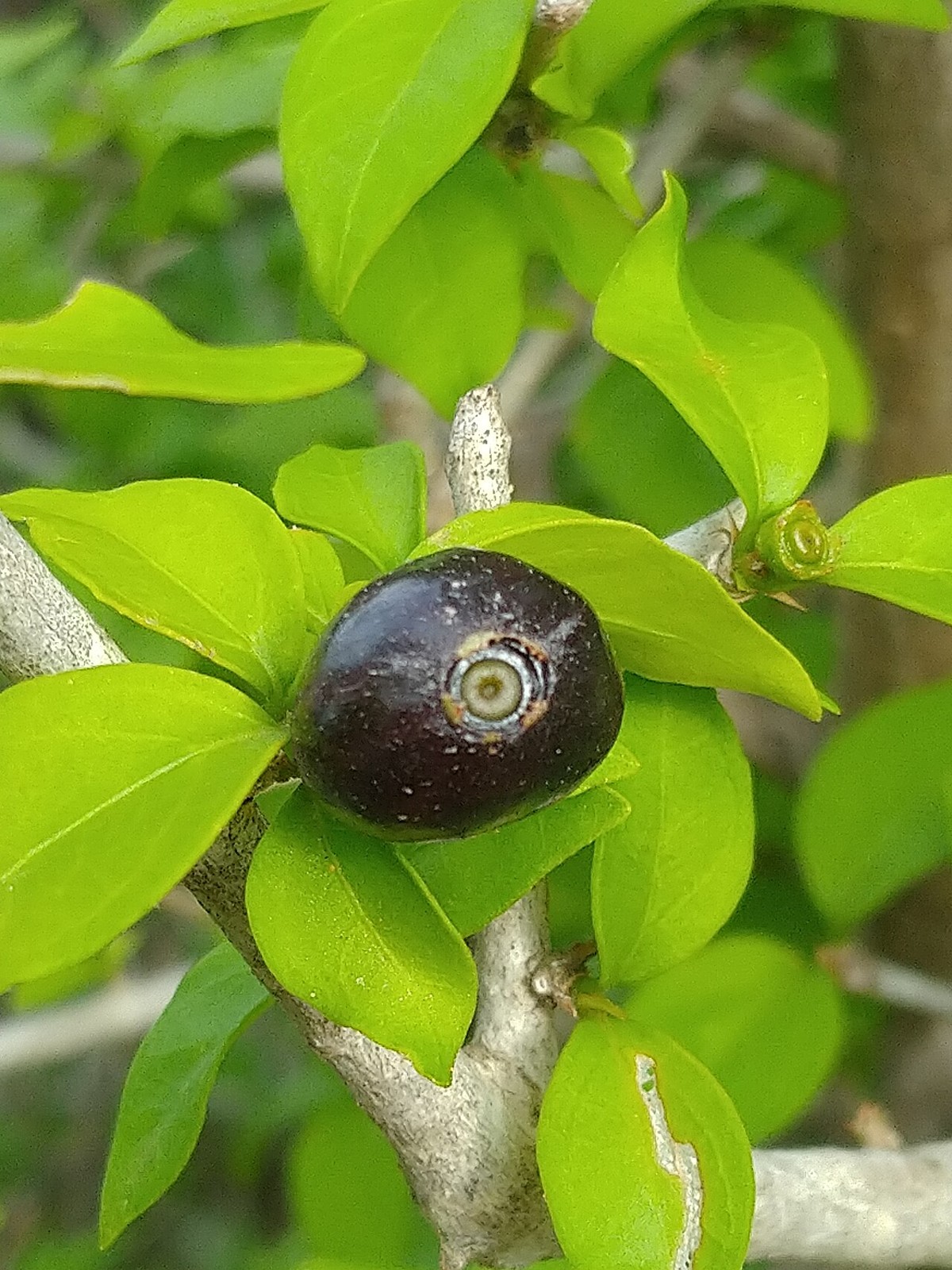
The flowers are small, green, and inconspicuous, blooming over an unusually long season from March into October, with the heaviest bloom from April through July. The fruit is a round, fleshy drupe about 5/16 inch across that passes through green, red, and finally glossy black as it ripens through summer. The fruit is edible and has traditionally been used to make jelly, though the thorny, tangled growth of the shrub makes harvesting it a genuinely thorny task.
Quick Facts
| Scientific Name | Condalia hookeri |
| Family | Rhamnaceae (Buckthorn) |
| Plant Type | Evergreen to Semi-Evergreen Shrub / Small Tree |
| Mature Height | 6–15 ft (to 20 ft rarely) |
| Mature Spread | 6–12 ft |
| Growth Rate | Slow to Moderate |
| Sun Exposure | Part Shade to Full Sun |
| Water Needs | Low |
| Soil Type | Dry; sandy, sandy loam, clay loam or caliche |
| Soil pH | Neutral to alkaline |
| Bloom Time | March – October (peak April–July) |
| Flower Color | Green |
| Fall Color | None notable (largely evergreen) |
| Fruit | Round black drupe, edible, ripens summer |
| Deer Resistant | Moderate (thorns discourage browsing) |
| USDA Hardiness Zones | 8–11 |
Native Range
Brasil is native to central Texas southward through the Rio Grande Plains and South Texas brush country, and on into northeastern Mexico. Within Texas, confirmed county-level records cluster across the South Texas Plains and Rio Grande Plains, where it is one of the dominant thorny shrubs of native brush country, not a species that has merely escaped cultivation.
It grows in dry, brushy pastures and woods on sandy, loamy, or caliche-based soils, typically alongside other South Texas thornscrub species. The region’s hot summers, mild winters, and sparse, erratic rainfall shaped a shrub that handles drought and poor soil with ease but needs good drainage to thrive.
Brasil is a regionally specific native of the southern half of Texas; gardeners well outside this range, including most of the central and eastern United States, should not expect it to be reliably hardy or appropriate and should favor locally native shrubs instead.
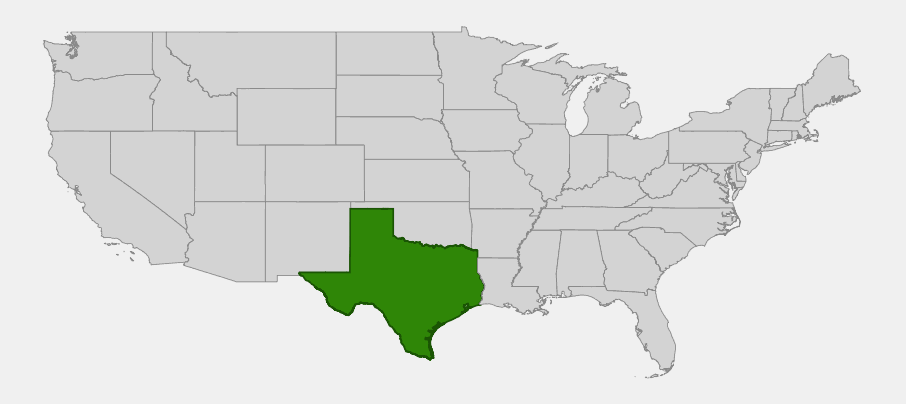
📋 Regional plant lists featuring Brasil: South and West Texas
Growing & Care Guide
Brasil rewards a hands-off, lean-soil approach. It is built for the heat, drought, and poor soils of South Texas brush country, and it struggles more from overwatering and rich garden beds than from neglect.
Light
Brasil grows well from part shade to full sun. In cultivation it is most often grown in full sun, where it develops a denser, more compact thicket; in part shade it tends to grow taller and more open as it reaches for light.
Soil & Water
This shrub is adapted to dry, sandy, loamy, clay loam, or caliche soils and needs very little supplemental water once established. Good drainage is essential — Brasil does not tolerate consistently wet or poorly drained soil. Established plants are genuinely drought tolerant and need no routine irrigation outside of extended, severe drought.
Planting Tips
Plant container-grown stock in fall or early spring to allow roots to establish before summer heat arrives. Because of its thorns and thicket-forming habit, site Brasil away from walkways and high-traffic areas, and use it instead as a background screen, property-line hedge, or wildlife thicket. Space plants 4 to 8 feet apart for a dense, continuous hedge.
Pruning & Maintenance
Brasil needs little pruning beyond removing dead wood and shaping young plants if a more tree-like form is wanted. Because every branch tip ends in a thorn, pruning is best done with heavy gloves and care. Once established, it is low-maintenance, drought tolerant, and largely free of serious pests or disease.
Propagation
Propagate from fresh seed collected in late summer or early fall once fruit has turned black or purplish; fresh seed sown immediately after collection germinates promptly, while winter-stored seed benefits from stratification at about 41°F for up to 30 days. Semi-hardwood cuttings will also root.
Landscape Uses
Brasil fills a distinct role in South Texas native landscapes:
- Thorny barrier hedge or property-line screen
- Wildlife thicket for nesting birds and small mammals
- Brushland restoration plantings
- Xeriscape background shrub in dry, low-water gardens
- Butterfly host planting for the snout butterfly
Wildlife & Ecological Value
Few South Texas shrubs match Brasil’s combination of dense cover and season-long fruit production, making it one of the most valuable native wildlife plants in its range.
For Birds
The black summer fruit is eaten by a wide variety of birds, and the tangled, thorny branching provides some of the safest nesting and roosting cover available in South Texas brush, protecting nests from many ground predators.
For Mammals
Gray foxes and raccoons regularly feed on the fruit, and the dense thorny thickets offer secure daytime cover for a range of small and medium-sized mammals in otherwise open brush country.
For Pollinators
Though small and green, the flowers bloom over an exceptionally long season from spring through fall, supplying a steady, if modest, nectar source for native bees and other insects across most of the growing year. Brasil also serves as a larval host plant for the snout butterfly.
Ecosystem Role
As a dominant thicket-forming shrub of South Texas brushland, Brasil adds vertical structure and near-impenetrable cover to an ecosystem that depends on dense brush for wildlife survival through extreme heat and drought, while its root system helps stabilize soil on the dry plains and slopes where it grows.
Cultural & Historical Uses
The common name “Brasil” refers to a blue-black dye historically extracted from the wood, a trait shared with other dye-producing hardwoods that carried the “brazilwood” name across Spanish colonial Texas and Mexico. The dense, heavy wood has also long been prized locally as a hot-burning fuelwood, valued by ranching communities in the brush country for cooking and heating fires.
The ripe black fruit has traditionally been gathered to make jelly, though harvesting it from Brasil’s thorny, tangled branches has always been a genuinely difficult task — a fact reflected in how little commercial use the fruit has ever seen despite its edibility. The species bears the name of William Jackson Hooker, the 19th-century botanist and Director of Kew Gardens, honoring his extensive work cataloging North American flora.
Today Brasil is valued less for any harvested product and more for its role as a classic, authentic component of South Texas brush country, both on working ranchland and in native-plant landscaping that aims to recreate that brush habitat.
Frequently Asked Questions
Is Brasil the same plant as “brazilwood”?
Not exactly. Brasil (Condalia hookeri) gets its common name from a blue-black dye obtained from its wood, a naming tradition shared with other so-called “brazilwood” trees, but it is a distinct South Texas native species in the Rhamnaceae family.
Can you eat Brasil’s fruit?
Yes — the black, ripe fruit is edible and has traditionally been used to make jelly. However, the thorny, tangled branches make harvesting it difficult, and most of the fruit is left for wildlife.
How tall does Brasil grow?
Most plants reach 6 to 15 feet as a multi-trunked shrub or small tree, with old specimens occasionally reaching 20 feet in favorable sites.
Is Brasil a good hedge plant?
Yes, its dense, thorny branching makes an effective barrier hedge or wildlife screen, though its thorns mean it should be kept away from walkways and areas with foot traffic.
Does Brasil grow outside Texas?
It is native to central and south Texas and northeastern Mexico, and it is best suited to the hot, dry conditions of that region. It is not recommended outside its native southern Texas range.

Looking for a nursery that carries Brasil?
Browse our native plant nursery directory: Texas