Lotebush (Ziziphus obtusifolia)
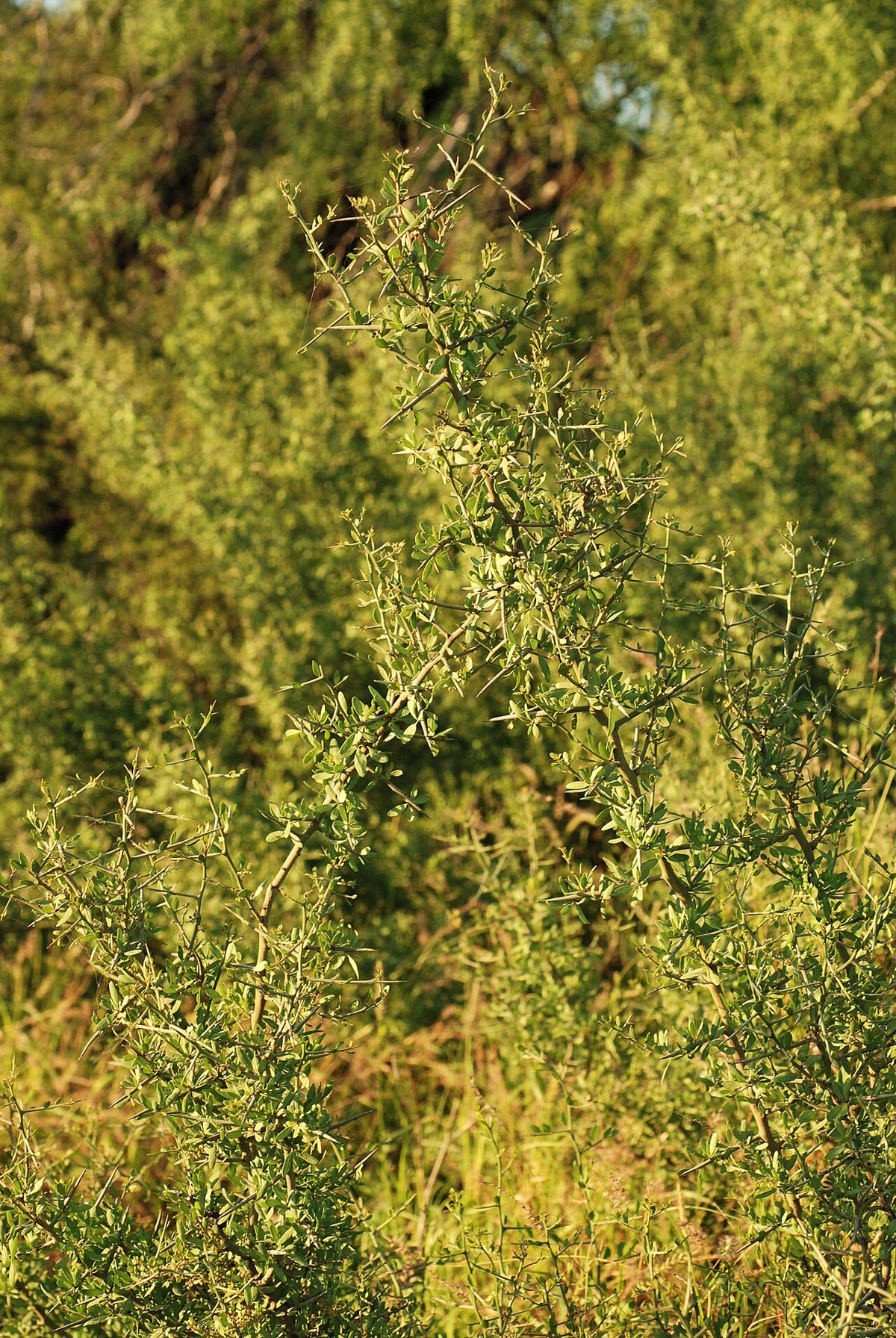
Ziziphus obtusifolia, known across the Southwest as Lotebush, Graythorn, or Lote-bush Condalia, is a densely branched, spine-tipped shrub in the Rhamnaceae (buckthorn) family, native to the deserts and dry brush country of California, Arizona, New Mexico and Texas. It is one of the most widespread thorny shrubs of the desert Southwest, equally at home on shallow caliche soil in the Chihuahuan Desert, rocky Sonoran Desert slopes, and the brushlands of South and West Texas.
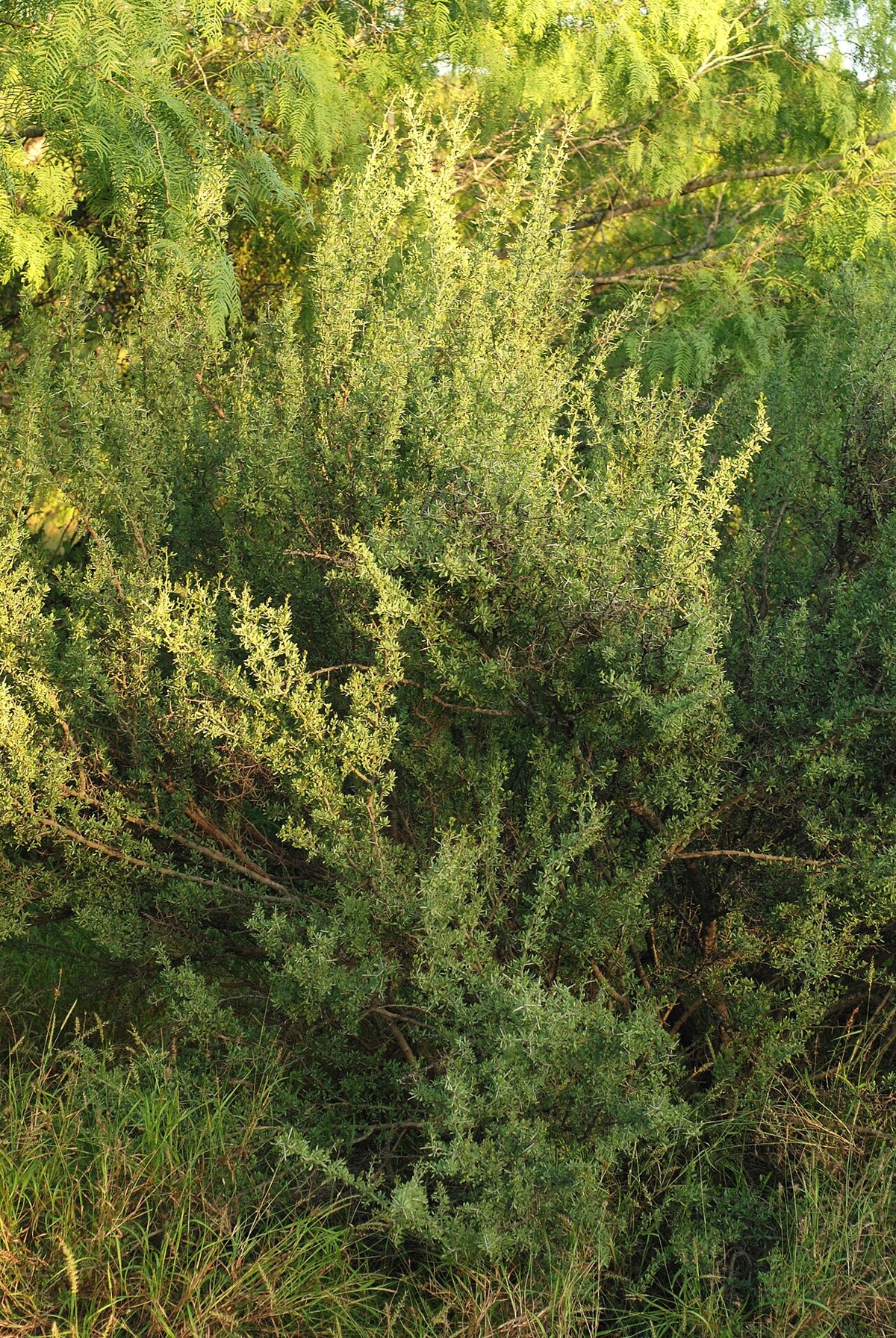
Lotebush rarely grows taller than 8 feet, and is often considerably shorter, but what it lacks in height it makes up for in density. Its stiff, interlacing, pale gray branchlets end in sharp spines, forming a thicket that few animals — or people — push through casually. Small leaves and inconspicuous greenish-yellow flowers give way to round, fleshy black fruit that is an important food source for desert wildlife.
For a dry, sun-baked corner of a California, Arizona, New Mexico or Texas landscape, Lotebush offers something few ornamental shrubs can: true desert toughness, near-zero water needs once established, and genuine habitat value, all wrapped in a plant that looks completely at home against limestone outcrops, caliche flats and open desert ground.
Identification
Lotebush is a densely branched shrub, usually under 8 feet tall and often considerably shorter, with a tangled, rounded to irregular silhouette built from stiff, interlacing branchlets. The overall effect, especially leafless in winter or drought, is of a pale gray, spiny thicket rather than a conventional leafy shrub.
Bark & Stems
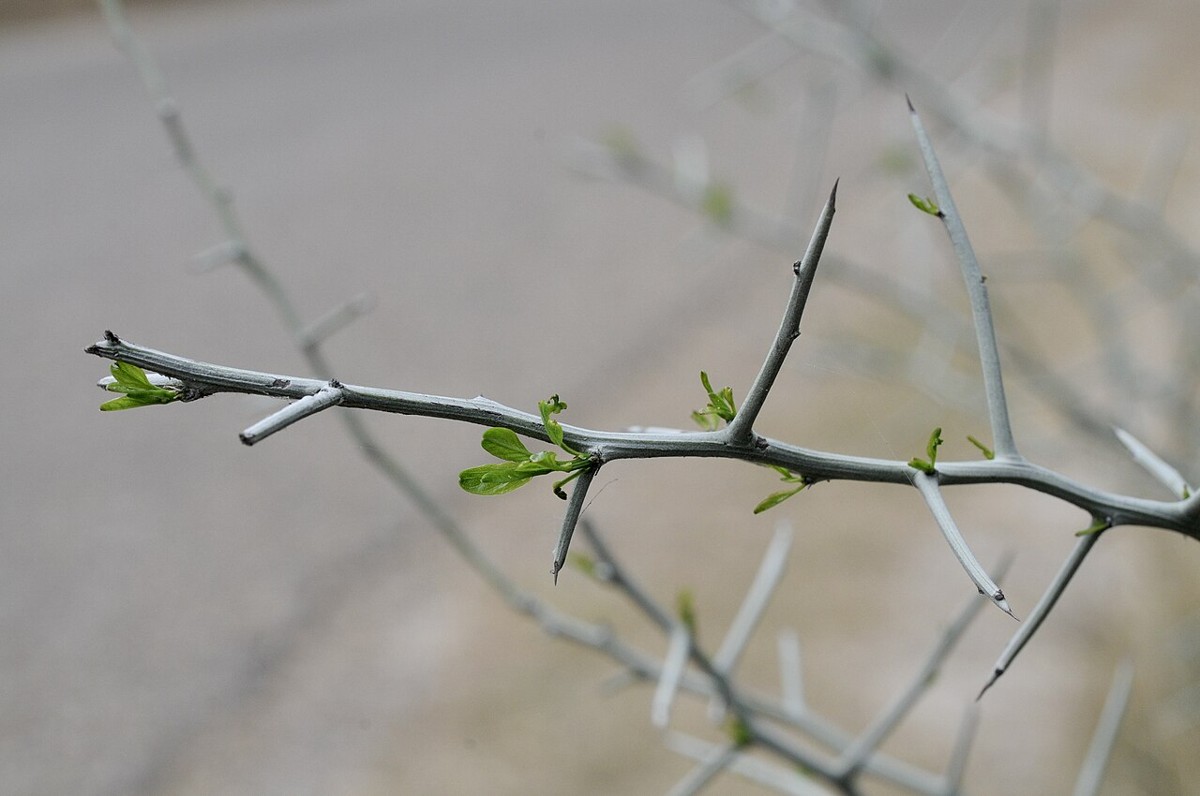
Branchlets are stiff and sharply zig-zagging, coated with a light gray bark that is interrupted by fine, lengthwise cracks from radial growth — a texture visible up close on older stems. Every branch tip tapers to a rigid spine, and the dense, crisscrossing growth pattern makes a mature Lotebush thicket genuinely difficult to pass through, a trait central to its wildlife value.
Leaves
Leaves are small — up to about 1¼ inches long but usually around half that — borne in clusters or alternately along the stems. Leaf shape is variable, with margins that may be smooth or finely serrate depending on the individual plant. The foliage is sparse enough that the gray, spiny branch structure remains the shrub’s most visible feature even when fully leafed out, and leaves are shed in cold or dry periods.
Flowers & Fruit
Flowers are small, greenish-yellow, and inconspicuous, clustered along the stems and blooming in early spring (March–April) with occasional later flushes after rain. The fruit is a fleshy black drupe about ⅜ inch across, maturing through summer and into fall. It is a significant food source for desert birds and mammals, though it is not grown or gathered as a human food crop.
Quick Facts
| Scientific Name | Ziziphus obtusifolia |
| Family | Rhamnaceae (Buckthorn) |
| Plant Type | Deciduous Shrub |
| Mature Height | 3–8 ft |
| Mature Spread | 4–8 ft |
| Growth Rate | Slow |
| Sun Exposure | Part Shade to Full Sun |
| Water Needs | Low |
| Soil Type | Dry, shallow; sandy, sandy loam, clay loam, often over limestone |
| Soil pH | Neutral to alkaline |
| Bloom Time | March – April |
| Flower Color | Yellow-green |
| Fall Color | None notable |
| Fruit | Round black drupe, ripens summer–fall |
| Deer Resistant | Yes (spines discourage browsing) |
| USDA Hardiness Zones | 7–10 |
Native Range
Lotebush is native across the desert Southwest, with county-confirmed populations in the deserts of southeastern California, throughout Arizona and New Mexico, and across central, south and west Texas. It is a defining shrub of Chihuahuan and Sonoran desert scrub and the limestone brush country of the Edwards Plateau and South Texas Plains.
It favors open, unshaded sites with very shallow soil over limestone, as well as sandy or loamy desert flats, streambanks and brushy chaparral. These are harsh, exposed growing conditions with intense sun and minimal, erratic rainfall — exactly the pressures that shaped Lotebush’s low water needs and spine-protected growth form.
Because this is a true desert and dry-brush species, it should only be planted within or very near its confirmed native range; in consistently moist or humid climates outside the Southwest it is neither appropriate nor likely to thrive.
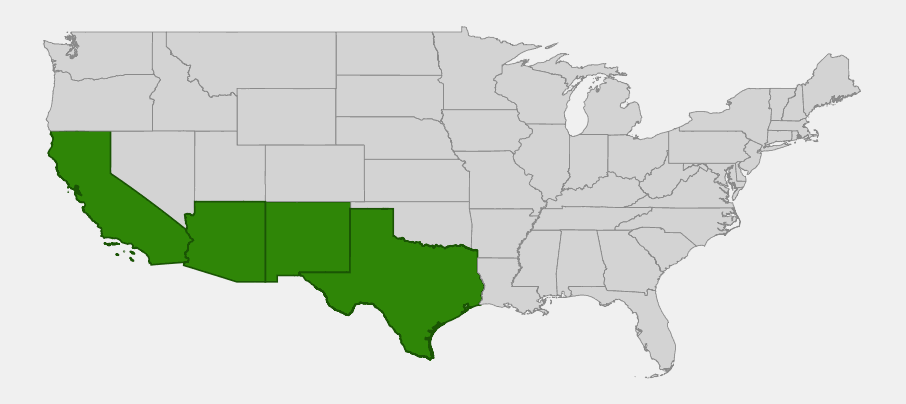
📋 Regional plant lists featuring Lotebush: California & Nevada, Arizona & New Mexico, South and West Texas
Growing & Care Guide
Lotebush is as low-maintenance as desert shrubs get. Once established, it needs almost nothing beyond the sun and lean soil it evolved with, making it a reliable, near-permanent fixture in a xeric Southwest garden.
Light
It tolerates part shade but is frequently found growing in fully unshaded, sun-blasted sites with no protection at all. Full sun generally produces a denser, more compact thicket, which also improves its usefulness as a wildlife barrier or screen.
Soil & Water
Lotebush thrives in dry, shallow soils, including thin ground directly over limestone, as well as sandy, sandy loam, or clay loam desert soils. Water needs are low; once roots are established, supplemental irrigation is rarely necessary outside of extreme, prolonged drought. Good drainage is essential, and rich, consistently moist soil is more likely to cause problems than help.
Planting Tips
Plant container stock in fall or early spring so young roots can establish before peak summer heat. Because of its spines and dense growth, place Lotebush well away from walkways, patios, and other high-traffic areas, and use it instead as a background planting, property-line barrier, or wildlife thicket. Give it 4 to 8 feet of space to fill its natural form.
Pruning & Maintenance
Established Lotebush needs very little pruning beyond occasional removal of dead wood; heavy gloves are a must given the spine-tipped branches. It is naturally adapted to poor soil and drought and requires no routine fertilizing. Left alone, it will simply continue thickening into denser cover over time.
Landscape Uses
Lotebush serves a focused but valuable role in desert and brush-country landscaping:
- Spiny barrier hedge or security planting along property lines
- Desert and brushland restoration projects
- Wildlife thicket providing cover, nesting sites, and fruit
- Xeriscape background shrub for very low-water gardens
- Erosion control on shallow, rocky or caliche soils
Wildlife & Ecological Value
In the open, exposed terrain of the desert Southwest, Lotebush’s dense, spiny structure and reliable fruit crop make it one of the most important shrubs available to wildlife for both shelter and food.
For Birds
The black fruit is eaten by a range of desert and brush-country bird species, while the thorny, tangled branches offer secure nesting sites and cover that larger predators and ground animals struggle to penetrate.
For Mammals
A variety of desert mammals browse Lotebush foliage and consume the fruit, and the dense thicket provides valuable daytime cover and protection from both predators and extreme heat in open desert and brush terrain.
For Pollinators
The small, early-spring flowers draw native bees and other insects at a time of year when nectar sources in the desert can still be scarce, making Lotebush a useful early-season resource for pollinators.
Ecosystem Role
As a widespread, spine-armored shrub of desert and brush ecosystems, Lotebush adds structural complexity and genuine protective cover to landscapes that are otherwise sparse and exposed, while its root system helps stabilize thin, erosion-prone desert and limestone soils.
Cultural & Historical Uses
Lotebush has long been recognized throughout the desert Southwest as a defining, if unglamorous, component of native brush and desert scrub rather than as a cultivated or harvested plant. Its common names — Lotebush, Graythorn — reflect its pale gray bark and spine-tipped growth, features that made it easy for early botanists and ranchers alike to identify at a glance.
Historical herbarium collections, including specimens gathered in Bexar County, Texas in the early 1990s, document its long-recognized place in regional flora. On working rangeland across its range, Lotebush has traditionally been regarded less as a resource to harvest and more as a natural, self-sustaining component of brush cover — valuable for the wildlife habitat and erosion protection it provides on land too dry and rocky for cultivation.
In recent decades, interest in authentic, low-water native landscaping has brought Lotebush into cultivation as a deliberate choice for desert and brush-country gardens seeking to recreate natural habitat rather than for any product derived from the plant itself.
Frequently Asked Questions
How big does Lotebush get?
Most plants stay under 8 feet tall, and many are considerably shorter, forming a dense, rounded to irregular thicket of spiny branches.
Is Lotebush the same as graythorn?
Yes — Graythorn is simply another common name for Ziziphus obtusifolia, referring to its pale gray, spine-tipped bark.
Does Lotebush need much water?
No. It is a true desert and dry-brush species with low water needs, and established plants rarely require supplemental irrigation outside of extreme drought.
Is Lotebush fruit edible?
The black fruit is an important food source for birds and mammals, but it is not grown or gathered as a food crop for people. Treat it as a wildlife plant rather than a food plant.
Where should I avoid planting Lotebush?
Keep it away from walkways, patios, and other high-traffic areas because of its sharp spines, and avoid planting it outside its native Southwest desert and dry-brush range, where it is unlikely to thrive.

Looking for a nursery that carries Lotebush?
Browse our native plant nursery directory: California · Arizona & New Mexico · Texas