Texas Snakewood (Colubrina texensis)
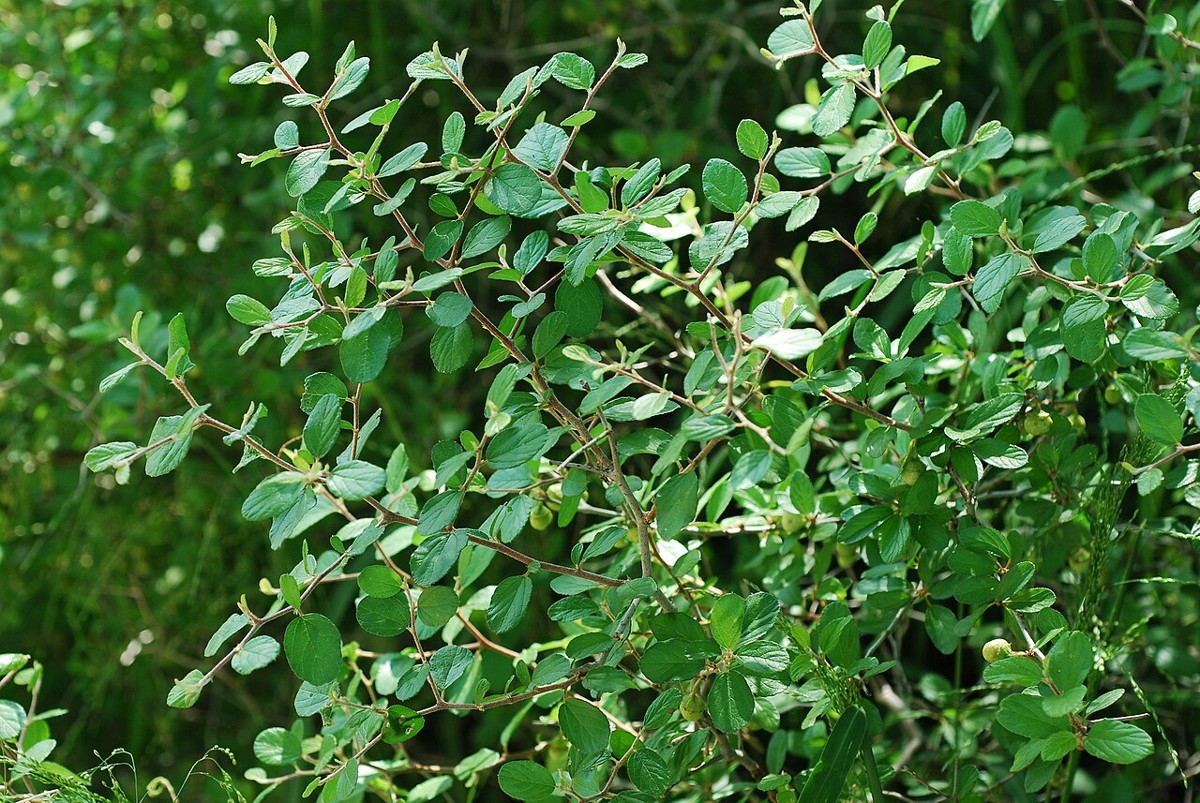
Colubrina texensis, commonly known as Texas Snakewood, Texas Hog Plum, or simply Hog Plum, is a tough, thicket-forming shrub of the Rhamnaceae (buckthorn) family native to the limestone hills and brushlands of central and west Texas. Its common name comes from the smooth, gray bark that develops scaly brown markings resembling the pattern on a snake’s skin — a detail that makes the shrub recognizable even in winter, when its small leaves have dropped.
This is a modest plant in stature, rarely topping 6 feet, but its tangle of slender, twisting branches, tiny grayish-green leaves and inconspicuous greenish-yellow flowers add up to a hardworking, low-water native for Hill Country and South Texas gardens. It asks for almost nothing — thriving in rocky, caliche-laden soils where few other landscape shrubs survive — and it quietly returns the favor with cover and fruit for deer, javelina, and a long list of birds.
Texas Snakewood is best treated as a background or hedging plant rather than a showpiece. Left alone it grows lanky and sparse, but it takes selective pruning well and can be shaped into a dense, compact screen or informal hedge in spots where irrigation and good soil are not an option. For anyone restoring brushland habitat in its native range, it belongs on the shrub list alongside agarita, cenizo and blackbrush acacia.
Identification
Texas Snakewood is a low, rounded, thicket-forming shrub, typically 3 to 6 feet tall and about as wide, though old plants in favorable sites can occasionally reach a bit taller. Its overall form is lanky and twiggy rather than full, with numerous slender stems that zig-zag sharply from node to node, giving the whole shrub an airy, tangled silhouette even in leaf.
Bark & Stems
The bark is smooth and gray on younger wood, developing scaly, brown, snakeskin-like markings as it ages — the feature that gives the plant both its scientific epithet feel and its common name. Branches are slender and distinctly zig-zagging, bending slightly at each leaf node, and often carry short, stiff spur shoots. Older stems can appear almost woven together where the shrub has thickened into a dense clump.
Leaves
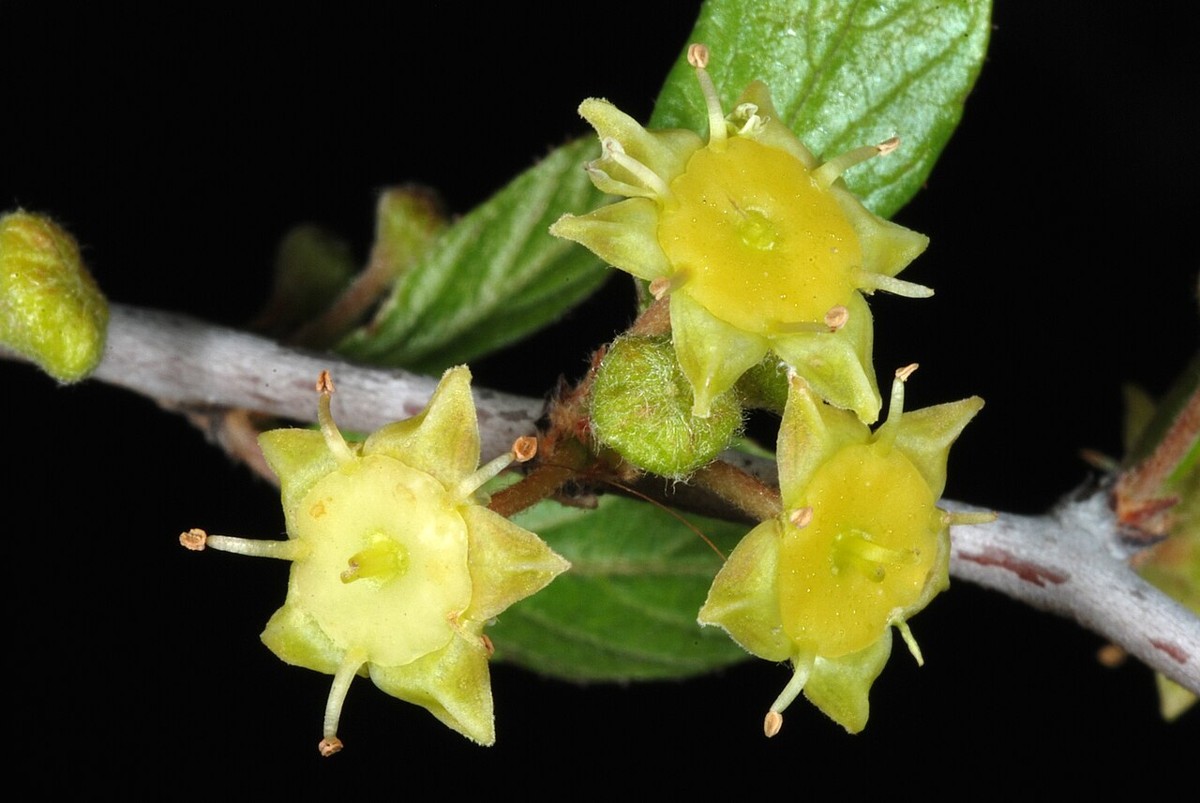
Leaves are small, simple, and alternately arranged, typically under an inch long, oval to elliptic with a rounded tip and finely toothed margins. They are grayish-green and glossy above, with the venation — a midrib and several pairs of prominent, parallel side veins — clearly visible and slightly impressed into the leaf surface. The foliage is sparse enough that the twiggy branch structure remains visible through the canopy, and leaves drop in cold or very dry periods, leaving the patterned bark exposed.
Flowers & Fruit
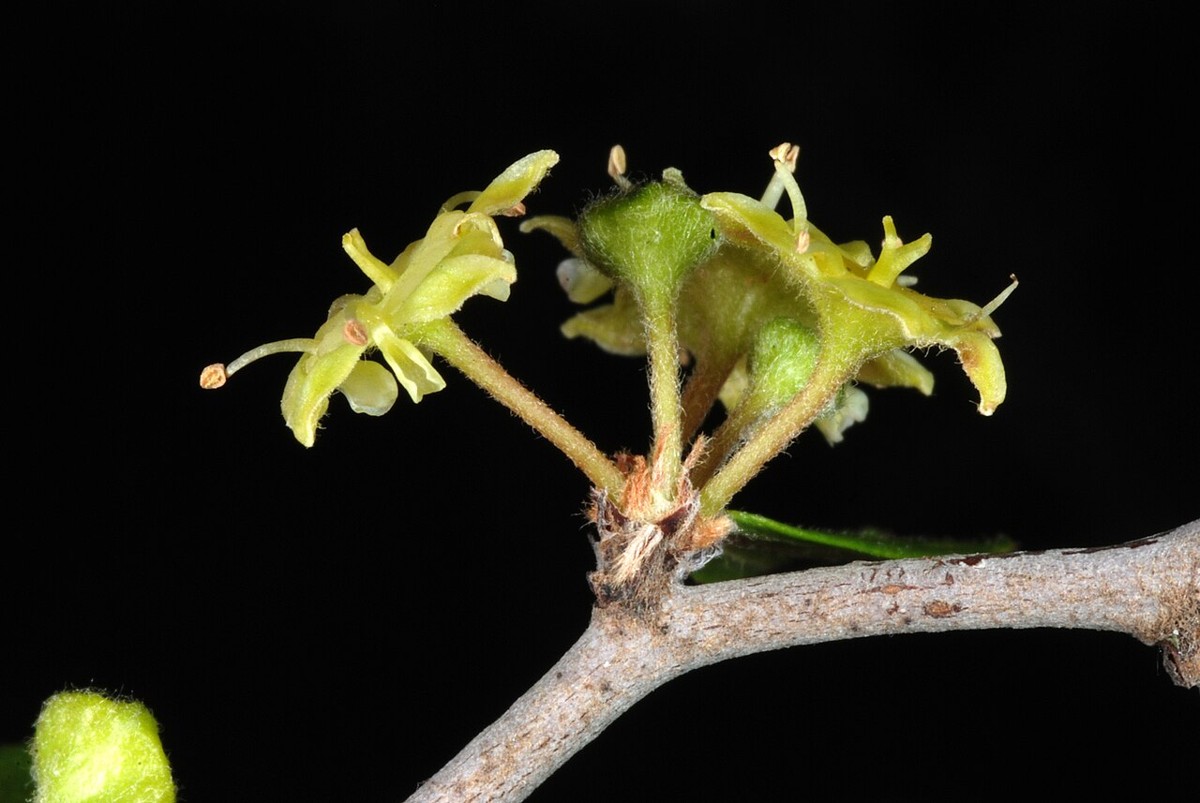
Flowers are tiny, star-shaped, and greenish-yellow, clustered in small groups (cymes) in the leaf axils. They are easy to overlook but open over a long season from May into July, and their faint nectar draws a range of small pollinating insects. The fruit that follows is a rounded, fleshy drupe about ¼ to ⅓ inch across, pale green when young and ripening to dark brown or black. Fruit should be collected for propagation while still turning color but before it splits; fully ripe fruit is usually dry enough to store with the seed intact.
Quick Facts
| Scientific Name | Colubrina texensis |
| Family | Rhamnaceae (Buckthorn) |
| Plant Type | Deciduous Shrub |
| Mature Height | 3–6 ft |
| Mature Spread | 3–6 ft |
| Growth Rate | Slow to Moderate |
| Sun Exposure | Part Shade to Full Sun |
| Water Needs | Low |
| Soil Type | Well-drained; limestone, caliche, sandy or clay loam |
| Soil pH | Neutral to alkaline |
| Bloom Time | May – July |
| Flower Color | Greenish-yellow |
| Fall Color | None notable (drops green to brown) |
| Fruit | Rounded brown-black drupe |
| Deer Resistant | No (browsed by deer) |
| USDA Hardiness Zones | 7–9 |
Native Range
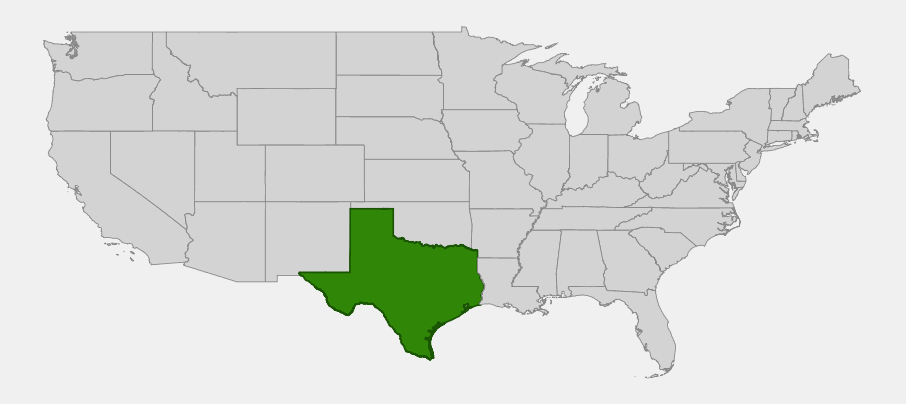
Texas Snakewood is native to central and west Texas, from the Edwards Plateau and Hill Country southward through the brushlands of South Texas, extending south into Tamaulipas in northeastern Mexico. Within Texas, county-level records are concentrated in the Hill Country, Rio Grande Plains and the Edwards Plateau, where it is a characteristic shrub of thorn-scrub and brushy limestone hillsides rather than an incidental or planted presence.
It occupies dry, rocky slopes and brushy flats on thin, alkaline soils — exactly the sites where competition from larger woody plants is limited by drought and poor soil depth. These are tough, exposed habitats with full sun to light shade from scattered mesquite, acacia and oak, and Texas Snakewood is one of the shrubs that fills in the thorny understory layer.
Because this is a regionally specific Texas native, gardeners outside its native range — including East Texas, the rest of the Southeast, and most of the country beyond the southern Plains — should not expect it to perform reliably and should look to regionally native shrubs instead. Within its home range, though, it is an authentic, low-maintenance choice for restoring Hill Country and South Texas brushland character.
📋 Regional plant lists featuring Texas Snakewood: South and West Texas
Growing & Care Guide
Texas Snakewood is built for tough, dry sites and is one of the easiest native shrubs to establish in Hill Country and South Texas gardens, provided it is given the lean, well-drained conditions it evolved with.
Light
It performs well from part shade into full sun. In the wild it often grows in the dappled light beneath taller brush species, but it tolerates open, sun-baked sites without complaint once established. More shade tends to produce a looser, lankier form, while full sun encourages denser, more compact growth.
Soil & Water
This shrub is specifically adapted to poor, dry, alkaline soils — limestone-based, caliche, sandy or clay loam — and it is disease resistant in exactly these conditions. It needs very little supplemental water once established and should not be planted in rich, consistently moist garden beds, where it is prone to rot and excessive, weak growth. Good drainage matters more than soil fertility.
Planting Tips
Plant container stock in fall or early spring so roots can establish before summer heat. Choose a site with reflected heat and poor soil where other shrubs struggle — a caliche bank, a rocky slope, or a dry hedgerow. Space plants 3 to 5 feet apart for a naturalistic thicket or informal hedge. Avoid amending the planting hole with rich organic matter, which works against this shrub’s drought adaptation.
Pruning & Maintenance
Left unpruned, Texas Snakewood tends to grow lanky and sparsely branched. Selective pruning of the oldest, leggiest stems encourages a denser, more attractive shrub, and the species responds well to shaping if a tidier hedge form is wanted. Little other maintenance is needed; it is naturally disease resistant and needs no regular fertilizing.
Propagation
Propagate from seed sown outdoors in fall following collection, or from stratified seed held in cold, dry storage for one season (stratification at about 41°F for 30–40 days improves germination). Semi-hardwood tip cuttings are also used. Collect fruit as it turns from green to black-brown but before it splits open; if the pulp is still fleshy, clean it from the seed before storing.
Landscape Uses
Texas Snakewood fits a specific but valuable niche in native landscaping:
- Dry hedgerow or informal screen in poor-soil sites where irrigated shrubs fail
- Brushland and thorn-scrub restoration plantings
- Wildlife thicket providing cover and fruit
- Xeriscape and rock garden accent among caliche or limestone outcrops
- Erosion control on dry, rocky slopes
Wildlife & Ecological Value
Despite its modest size, Texas Snakewood plays an outsized role in the thorn-scrub ecosystems it grows in, supplying both food and dense cover through the harshest parts of the Texas year.
For Birds
The fruit is eaten by a range of brushland birds, and the dense, twiggy structure of the shrub provides cover, nesting sites and protection from predators and summer heat — a valuable resource in open, exposed brush country where cover can be scarce.
For Mammals
White-tailed deer and javelina both browse the foliage and eat the fruit, making Texas Snakewood a regular part of the diet for South Texas game species. Its thicket form also offers bedding cover for deer and smaller mammals during the heat of the day.
For Pollinators
The small, nectar-producing flowers, though inconspicuous, bloom over a long stretch from May through July and draw a variety of small native bees and other beneficial insects at a time when many showier wildflowers have already finished blooming.
Ecosystem Role
As a thicket-forming shrub on thin, dry soils, Texas Snakewood helps stabilize rocky slopes and caliche banks against erosion, while its dense branching structure adds a mid-level layer of habitat complexity to brushland that would otherwise be dominated by scattered trees and open ground.
Cultural & Historical Uses
Texas Snakewood has never been a significant commercial species, but it has long been recognized by Texas naturalists and collectors for its distinctive, patterned bark, which gives the plant both its common and scientific-adjacent “snakewood” identity. Historical botanical collections, including specimens gathered in Bexar County in the 1980s and 1990s now held by the Lady Bird Johnson Wildflower Center herbarium, document its long-standing presence in Hill Country brush country.
Ranchers and landowners in its native range have traditionally valued it less as a cultivated plant and more as a natural component of brush cover, left in place or lightly managed as part of rangeland brush that shelters livestock and wildlife alike. Its toughness and low water needs have more recently drawn interest from native-plant gardeners seeking authentic, regionally appropriate shrubs for dry Hill Country and South Texas landscapes.
The wood itself has no significant documented traditional use beyond occasional use as a hardy brush-country fuelwood; its primary value, historically and today, lies in its role as rangeland and garden brush rather than as a harvested material.
Frequently Asked Questions
How big does Texas Snakewood get?
It is a modest shrub, typically reaching 3 to 6 feet tall and about as wide, with a rounded, thicket-forming habit. It rarely grows larger in cultivated or wild settings.
Can Texas Snakewood be grown outside Texas?
It is native only to central and west Texas and adjacent northeastern Mexico, and it is best suited to the alkaline, rocky, dry soils of that region. Gardeners elsewhere should choose a regionally native shrub instead.
Does Texas Snakewood need much water?
No. It has low water needs and is adapted to dry, well-drained, often poor soils. Overwatering or rich, moist soil can cause problems rather than help it thrive.
Is the fruit of Texas Snakewood edible for people?
There is no reliable record of the fruit being used as a human food source; it is valued instead as wildlife forage for birds, deer and javelina. Treat it as a wildlife plant rather than a food plant.
Why is it called “snakewood”?
The name comes from the mature bark, which develops scaly, brown markings on a smooth gray background that resemble the pattern on a snake’s skin — a feature easiest to see on older stems once the leaves have dropped.

Looking for a nursery that carries Texas Snakewood?
Browse our native plant nursery directory: Texas