Sandpaper Oak (Quercus pungens)
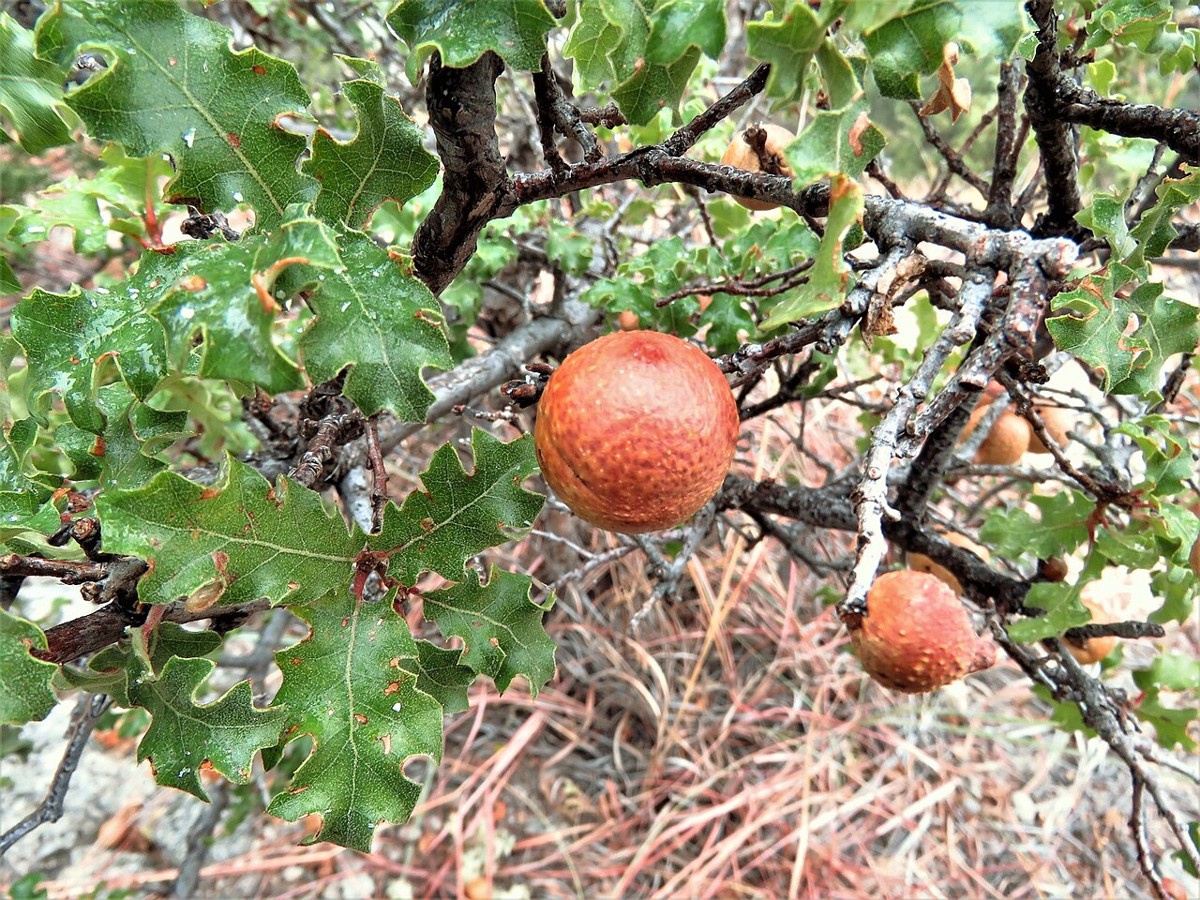
Quercus pungens, commonly known as Sandpaper Oak or pungent oak, is a small, tough, drought-adapted shrub oak native to the rocky canyons, mesas, and foothills of the Trans-Pecos and Edwards Plateau of Texas, southern New Mexico, and southeastern Arizona, extending south into northern Mexico. Its name comes from the distinctly rough, sandpaper-like texture of its leaf undersides, a quick and reliable way to distinguish it from other small scrub oaks sharing its range.
Sandpaper Oak grows as a dense, many-stemmed shrub, typically 3 to 10 feet tall, though old individuals on favorable sites can reach small-tree stature. Its small, stiff, grayish-green leaves have wavy, often spine-tipped margins and a harsh, sandpapery underside covered in dense star-shaped hairs. Like other members of the white oak group, it produces small, sweet-kernel acorns that mature in a single season and are readily consumed by wildlife.
For gardeners and restoration plantings on dry, rocky, limestone or caliche soils across the Southwest, Sandpaper Oak is a low-water, low-maintenance shrub that provides year-round structure, wildlife cover, and acorn mast where few other woody species can establish. It is well suited to xeriscape plantings, brush screens, and native hedgerows in its home range.
Identification
Sandpaper Oak is most often seen as a dense, rounded, multi-stemmed shrub forming thickets on rocky slopes and canyon walls, though scattered individuals on deeper soils can grow into small trees. The species often hybridizes with other scrub oaks in its range, so leaf shape and hair texture can vary somewhat between populations.
Bark & Stems
Young twigs are slender and finely hairy, aging to gray-brown and smooth. Older stems develop thin, pale gray, scaly bark typical of the white oak group. Plants commonly sprout from the root crown after fire, browsing, or drought dieback, producing dense multi-stemmed thickets.
Leaves
Leaves are simple, alternate, and small — generally 1 to 2 inches long, oblong to obovate, with wavy, shallowly lobed margins tipped with small bristly points. The defining feature is texture: the upper surface is dull gray-green and the lower surface is noticeably rough and gritty to the touch, covered in dense, minute star-shaped (stellate) hairs that give the species its common name. Leaves are evergreen to tardily deciduous in the warmer parts of its range.
Flowers
Sandpaper Oak is wind-pollinated and monoecious like all oaks. Slender, pale yellow-green male catkins appear in spring with the new leaves; female flowers are tiny and inconspicuous, borne singly or in small groups in the leaf axils.
Fruit & Seeds
Acorns are small, roughly ½ inch long, maturing in a single growing season with a shallow, scaly cup covering only the base of the nut. The kernels are relatively sweet, as in other white oaks, and are an important food source for birds and mammals across the plant’s rocky, semi-arid range.
Quick Facts
| Scientific Name | Quercus pungens |
| Family | Fagaceae (Beech/Oak) |
| Plant Type | Evergreen to Semi-Evergreen Shrub |
| Mature Height | 3–10 ft |
| Mature Spread | 4–8 ft, often forming dense thickets |
| Growth Rate | Slow |
| Sun Exposure | Full Sun to Partial Shade |
| Water Needs | Low (drought tolerant once established) |
| Soil Type | Shallow, rocky, well-drained; limestone or caliche |
| Soil pH | Neutral to alkaline (7.0–8.5) |
| Bloom Time | March – April |
| Flower Color | Pale yellow-green (catkins) |
| Fall Color | None notable (evergreen to semi-evergreen) |
| Fruit | Small acorns, about ½ in, shallow cup |
| Deer Resistant | No (browsed by deer; acorns eaten by wildlife) |
| USDA Hardiness Zones | 7–9 |
Native Range
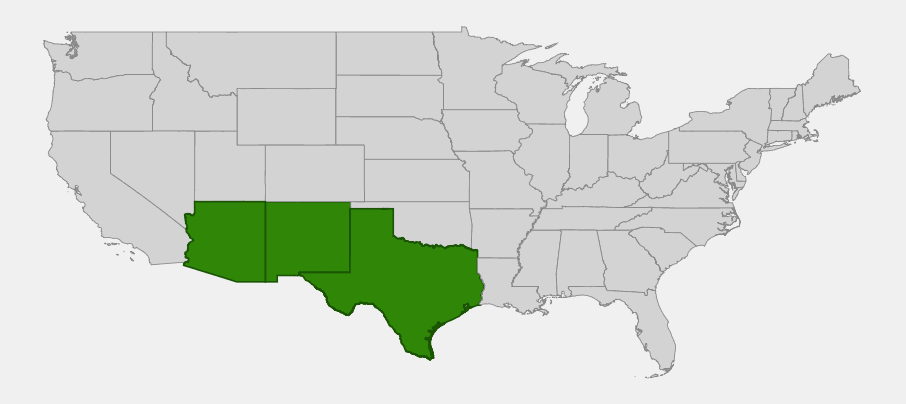
Sandpaper Oak is native to the rocky canyons, limestone escarpments, and desert mountain foothills of the Trans-Pecos and Edwards Plateau of Texas, southern New Mexico, and the sky-island ranges of southeastern Arizona, extending south into the Mexican states of Chihuahua and Coahuila. It is a characteristic shrub of Chihuahuan Desert canyon and foothill woodlands, often growing alongside other small scrub oaks and desert shrubs on thin, rocky soils.
Across this range, Sandpaper Oak favors exposed limestone or volcanic rock outcrops, canyon walls, and rocky slopes at moderate elevations, where it forms dense thickets that stabilize steep, erosion-prone terrain. It is highly drought and heat tolerant, and like many Southwestern scrub oaks, resprouts readily from the root crown after fire or dieback.
Because it is closely tied to rocky, well-drained, often calcareous substrates, Sandpaper Oak does not occur on the deep sandy or clay soils of the Texas coastal plain or the Great Plains, even where climate alone might seem suitable. Gardeners outside the rocky foothill and canyon country of west Texas, southern New Mexico, and southeastern Arizona should not expect reliable results without comparable soil conditions.
📋 Regional plant lists featuring Sandpaper Oak: South and West Texas · Arizona & New Mexico
Growing & Care Guide
Sandpaper Oak is built for rocky, well-drained, low-water sites and does poorly in rich or consistently moist garden soils — match its native conditions and it needs very little from a gardener once established.
Light
Plant in full sun to light, filtered shade. In the wild it most often grows in full exposure on rocky slopes and canyon walls, but tolerates partial shade beneath taller trees.
Soil & Water
This species demands sharp drainage and performs best in shallow, rocky, alkaline soils over limestone, caliche, or volcanic rock; it struggles in heavy clay or consistently damp soils. Once established, generally after two to three growing seasons, it is highly drought tolerant and needs little to no supplemental irrigation.
Planting Tips
Set out container-grown plants in fall or early spring to allow roots to establish before summer heat arrives. Use native, unamended soil in the planting hole rather than rich organic mixes, which can hold excess moisture on heavy sites. Space plants 4 to 6 feet apart for a continuous thicket or screen.
Pruning & Maintenance
Sandpaper Oak tolerates pruning well and resprouts readily, making it useful for shaping into a hedge. Remove dead wood after hard freezes, which can occasionally damage exposed growth at higher elevations or the northern edge of its range. Established plants require essentially no fertilization.
Propagation
Propagate from fresh acorns collected in fall and sown promptly, since white oak acorns germinate quickly and do not store well. Root sprouts from established thickets can also be divided, though acorn-grown plants typically develop straighter roots.
Landscape Uses
- Xeriscaping on rocky, alkaline sites where few other shrubs thrive
- Wildlife hedgerows providing dense cover and acorn mast
- Erosion control on steep rocky slopes and canyon walls
- Screening hedges when planted in groups
- Restoration plantings in Chihuahuan Desert foothill and canyon habitats
- Low-water native gardens in the Southwest
Wildlife & Ecological Value
For Birds
The dense, thorny-textured thickets formed by Sandpaper Oak provide valuable nesting cover and predator protection for scrub-adapted birds, including wrens, sparrows, and quail. Scrub Jays and other corvids cache and disperse the acorns, aiding the species’ spread.
For Mammals
Acorns are an important fall and winter food source for white-tailed and mule deer, javelina, and various rodents. Deer also browse the foliage and twigs, especially in winter, which can keep heavily browsed plants low and dense.
For Pollinators
As a wind-pollinated oak, Sandpaper Oak does not depend on insect pollinators, but it hosts gall-forming wasps and a range of native oak-specialist moth and butterfly larvae, which in turn support insectivorous birds during the breeding season.
Ecosystem Role
Sandpaper Oak is a key structural shrub of rocky canyon and foothill plant communities in the Chihuahuan Desert region, stabilizing thin, erosion-prone soils on steep slopes and providing cover and food resources in landscapes otherwise dominated by desert scrub and grasses. Its ability to resprout after fire or drought dieback makes it a resilient, long-persisting component of these ecosystems.
Cultural & Historical Uses
Sandpaper Oak’s sweet, low-tannin acorns, typical of the white oak group, were gathered and eaten by Indigenous peoples across its range in the Trans-Pecos and adjacent borderlands, as was common practice with white oaks generally throughout North America. The plant’s distinctive sandpapery leaf texture has long served as a practical field identification trait for ranchers, naturalists, and botanists working in the rocky canyon country where it grows.
On rangeland in its native area, Sandpaper Oak thickets provide valuable browse and shelter for livestock and wildlife, though like other scrub oaks they can sometimes be managed as rangeland brush where dense stands limit forage grass production. Given its typically small stem diameter, the wood has seen little commercial use beyond occasional local use as fuelwood.
Frequently Asked Questions
How do I tell Sandpaper Oak apart from other scrub oaks?
Rub the underside of a leaf — Sandpaper Oak’s leaf undersides are distinctly rough and gritty to the touch, covered in dense star-shaped hairs, unlike the smoother or merely fuzzy undersides of related scrub oaks such as Mohr Oak.
Is Sandpaper Oak a tree or a shrub?
It is primarily a shrub, typically 3 to 10 feet tall and often forming dense thickets by root sprouting. Old individuals on favorable sites can occasionally reach small-tree size, but a shrub form is far more common.
Will Sandpaper Oak grow in clay soil?
Not well. It is adapted to shallow, rocky, well-drained limestone or caliche soils and tends to struggle in heavy clay or soils that stay consistently moist.
Do deer eat Sandpaper Oak?
Yes. White-tailed and mule deer browse the foliage and twigs, particularly in winter, and the acorns are eaten by deer and other wildlife. It is not considered deer resistant.
Where is Sandpaper Oak native?
Within the United States, it is native to Texas, New Mexico, and Arizona, concentrated in the rocky canyon and foothill country of the Trans-Pecos, Edwards Plateau, and southeastern Arizona’s sky-island ranges. Its range also extends into the Mexican states of Chihuahua and Coahuila.

Looking for a nursery that carries Sandpaper Oak?
Browse our native plant nursery directory: Texas · New Mexico · Arizona