
Tawny Cottongrass (Eriophorum virginicum)
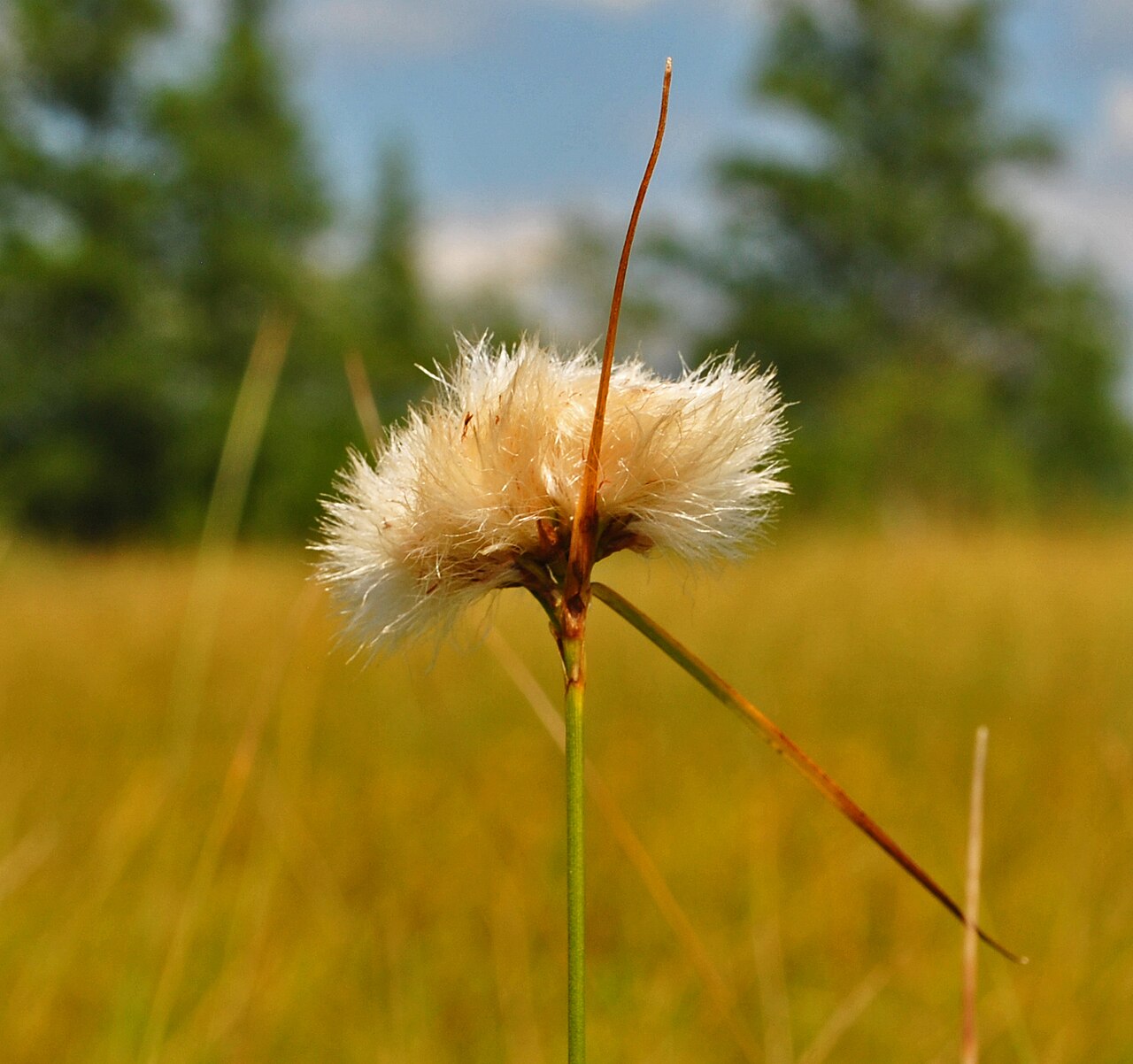
Eriophorum virginicum, known as Tawny Cottongrass, is a native wetland plant of bogs, fens and wet, acidic meadows in eastern North America. Despite its name, it is not a true grass but a sedge, a member of the sedge family (Cyperaceae). In late summer each stem is topped with a single, dense tuft of silky bristles in shades of copper, tan or cinnamon, which makes it easy to recognize among the other cottongrasses, most of which have bright white tufts.
Plants grow 1 to 3 feet tall from creeping rhizomes, with narrow, grass-like leaves and slender, rounded stems. The small flowers bloom in early summer in a tight cluster of spikelets framed by two or three long, leafy bracts. As the seeds ripen, the bristles attached to each seed lengthen into the soft, cottony head that carries the seeds away on the wind. A bog full of tawny cottongrass in August and September glows with warm, rusty color.
Tawny cottongrass belongs in true bog and wet acid-soil gardens, where it adds fine texture and late-season color alongside pitcher plants, sundews, cranberries and leatherleaf. Its bog and fen habitats are fragile and slow to recover from disturbance. Never dig cottongrass from a bog. Buy nursery-propagated plants or grow it from responsibly sourced seed.
Identification
Tawny cottongrass is the only common eastern cottongrass with tawny or coppery bristles. Combined with the single head per stem and the long, leaf-like bracts beneath it, this makes identification straightforward in late summer.
Growth Habit
Plants grow 1 to 3 feet tall from slender, creeping rhizomes, forming loose colonies of single stems or small clumps. Stems are smooth, rounded to slightly three-angled near the top, and stiffly upright.
Leaves
Leaves are flat to slightly channeled, narrow (about 1/8 inch wide) and grass-like, with sheaths wrapping the lower stem. Usually two to four leaves are borne along the stem, and the uppermost often reaches above the middle of the stem.
Flowers
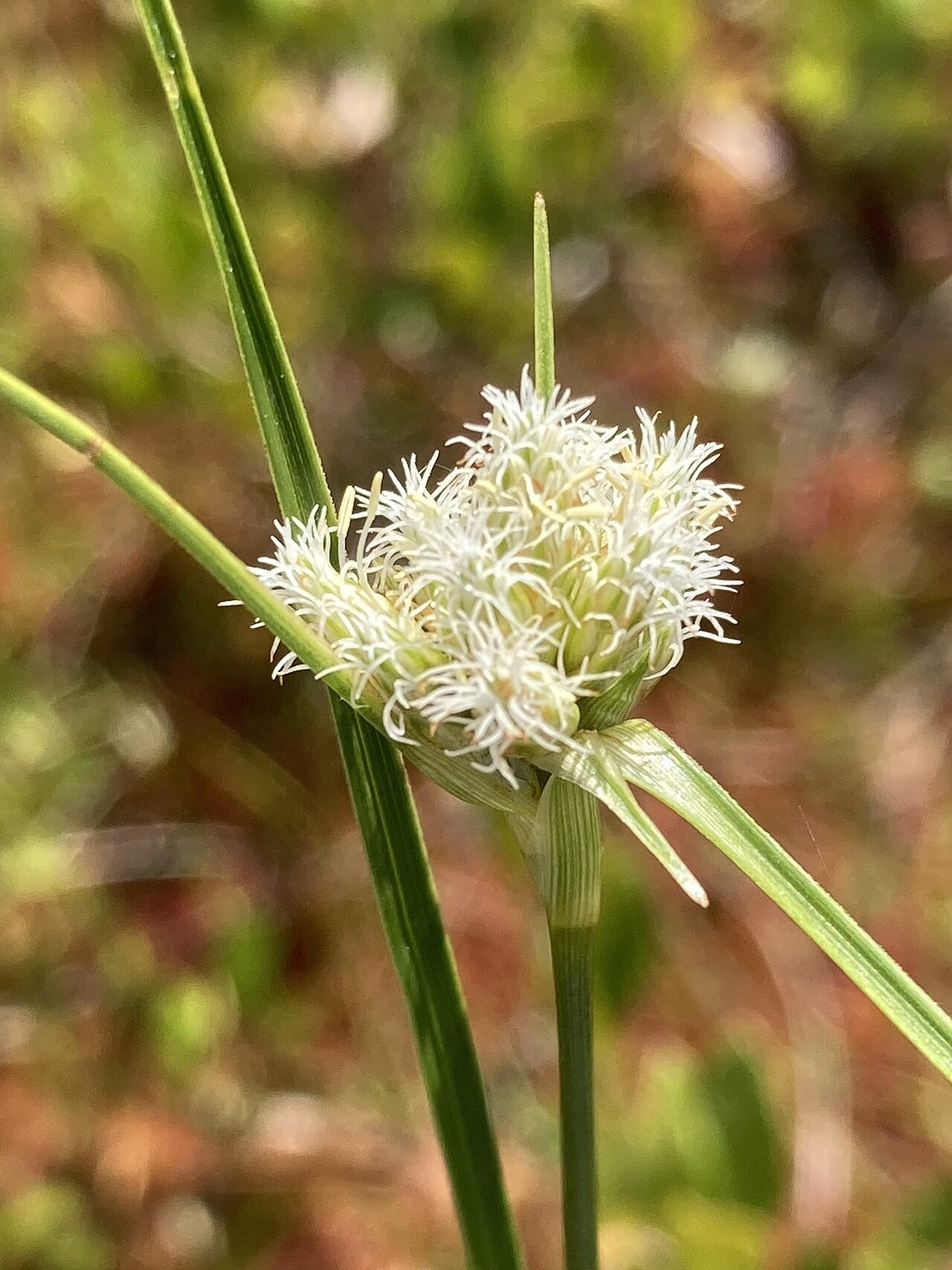
From June to August, each stem ends in a single, dense, rounded cluster of several small spikelets. Two or three leaf-like bracts spread from beneath the cluster, usually longer than the head itself, a key feature. The individual flowers are tiny and wind-pollinated, each subtended by a scale and surrounded by many fine bristles.
Fruit & Seed Heads
After flowering, the bristles attached to each small, brown achene lengthen to about 1/2 to 3/4 inch, forming a cottony head 1 to 1 1/2 inches across. The color ranges from rich copper-brown to tan or cream; occasional plants have whitish bristles. Heads mature from late July into September and persist into fall, gradually blowing apart as seeds disperse on the wind.
Look-alikes
Tussock cottongrass (Eriophorum vaginatum) grows in dense tussocks and has a single head without leafy bracts. Thin-leaved cottongrass (E. viridicarinatum) and tall cottongrass (E. angustifolium) have several drooping heads on stalks and white bristles. Wool grass (Scirpus cyperinus) is a much larger sedge with many small, woolly brown spikelets in a large, branched cluster. The tawny color, single head and long bracts set tawny cottongrass apart.
Conservation
Tawny cottongrass is widespread in the Northeast and Great Lakes states, but it is uncommon to rare at the southern and western edges of its range, where bogs and fens are scarce. Bogs are fragile ecosystems that take centuries to form. Never dig plants from the wild; buy only nursery-propagated plants.
Quick Facts
| Scientific Name | Eriophorum virginicum |
| Family | Cyperaceae (sedge family); not a true grass |
| Plant Type | Rhizomatous perennial sedge (graminoid) |
| Mature Height | 1–3 ft |
| Mature Spread | 6–12 in; slowly spreads by rhizomes |
| Growth Rate | Moderate |
| Sun Exposure | Full sun to light shade |
| Water Needs | High; constantly wet, saturated soil |
| Soil Type | Sphagnum peat, acidic muck, wet sand |
| Soil pH | About 4.0–6.0 (strongly to moderately acidic) |
| Bloom Time | June–August; seed heads July–October |
| Flower Color | Tiny, inconspicuous; seed heads copper, tan or cream |
| Fall Color | Foliage turns tan to reddish-brown |
| Fruit | Small achenes with long tawny bristles forming a cottony head |
| Deer Resistant | Yes |
| USDA Hardiness Zones | 3–7 |
Native Range
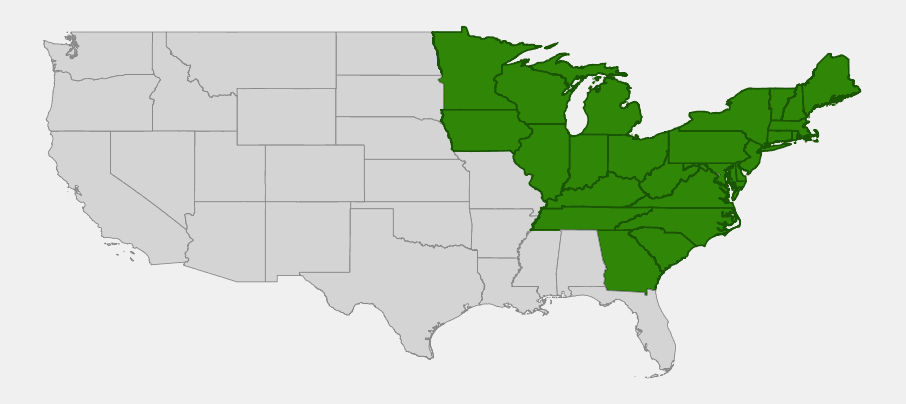
Tawny cottongrass is native to eastern North America, from Newfoundland, Labrador, the Maritime Provinces, Quebec and Ontario south through the northeastern and Great Lakes states. USDA PLANTS records it in 25 states plus the District of Columbia, and also lists British Columbia, far west of the main range.
It is most common in the glaciated Northeast and the upper Great Lakes region, from Maine, New Hampshire, Vermont and Massachusetts west through New York, Pennsylvania and Michigan to Wisconsin and Minnesota, and in the pine barrens and bogs of New Jersey. Southward it follows the Appalachians and the Atlantic Coastal Plain to Virginia, North Carolina, South Carolina, Tennessee and northern Georgia, where it is local in mountain bogs and seepage wetlands. The records from Iowa, Illinois, Indiana, Ohio and Kentucky represent scattered, outlying bogs and fens near the southern edge of glaciation.
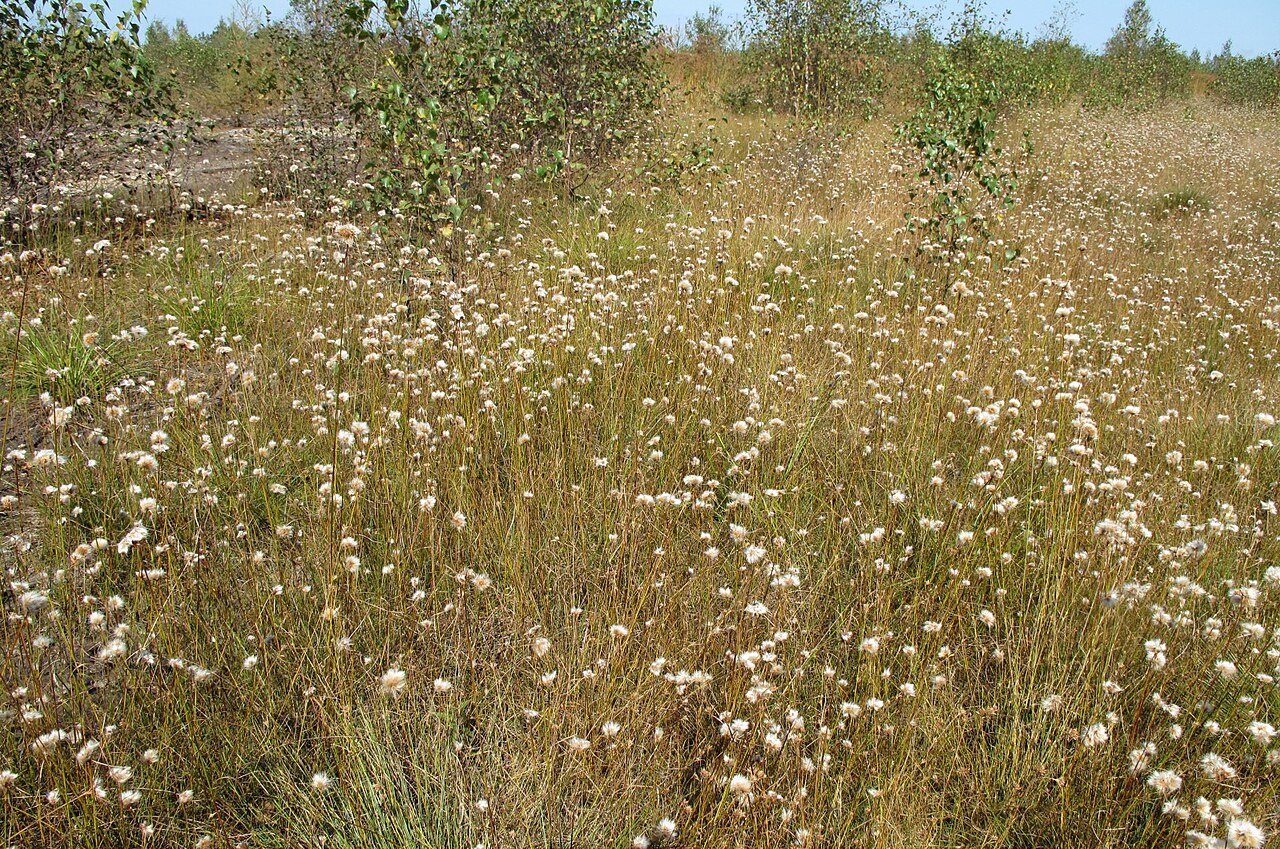
It grows in open, acidic wetlands: sphagnum bogs, poor fens, floating peat mats around ponds, wet sandy or peaty meadows, and seepage bogs. It needs constantly wet, nutrient-poor soil and full sun to light shade.
📋 Regional plant lists featuring Tawny Cottongrass: New York, Pennsylvania & Northern New Jersey · Ohio & Indiana · Michigan, Wisconsin & Eastern Minnesota · Kentucky & Tennessee · Connecticut, Massachusetts & Rhode Island · New Hampshire, Maine & Vermont · Maryland, Virginia & West Virginia · Delaware, Southern New Jersey & Long Island · Illinois, Iowa & Missouri · Alabama, Georgia & Mississippi · North & South Carolina
Growing & Care Guide
Tawny cottongrass is easy to grow if you can give it what a bog gives it: constant moisture, acidic soil, low fertility and sun. It is a natural companion for carnivorous plants in a bog garden. Buy nursery-propagated plants or seed; never dig plants from the wild.
Light
Full sun gives the best seed heads and the most compact plants. It tolerates light shade, but in deeper shade it becomes floppy and produces few heads.
Soil & Water
Grow it in acidic, nutrient-poor, constantly wet soil: sphagnum peat, a peat and sand mix, or acidic muck. It tolerates standing water a few inches deep. In containers and bog gardens, use rainwater or distilled water if your tap water is hard, and never fertilize.
Planting Tips
Plant in spring in a lined bog garden, at the edge of an acidic pond, or in a container without drainage holes set in a saucer of water. Space plants about 12 inches apart. Combine with pitcher plants, sundews, cranberries and low bog shrubs, keeping taller plants from shading it.
Pruning & Maintenance
Leave the seed heads standing for fall interest and to let seeds disperse. Cut back old stems and leaves in late winter or early spring if you want a tidier look. Pull out invading weeds, tree seedlings and aggressive grasses that could take over a small bog garden.
Propagation
Divide established clumps or rhizomes in spring. Fresh seed sown on the surface of wet peat germinates after a period of cold, moist stratification; keep it constantly wet and in good light. Plants usually flower in their second or third year.
Landscape Uses
- Bog gardens: late-summer copper tufts among pitcher plants and sundews
- Acidic pond edges: fine texture on wet, peaty shorelines
- Container mini-bogs: with carnivorous plants, kept wet with rainwater
- Wetland restoration: for bogs, fens and acidic wet meadows
- Naturalistic plantings: adds movement and fall color to wet, sunny sites
Wildlife & Ecological Value
Tawny cottongrass is wind-pollinated and modest in its wildlife value, but it is an important structural plant in the bog community.
For Pollinators
The tiny flowers are wind-pollinated and offer no nectar. Bees may occasionally gather pollen, but cottongrass is not a significant pollinator plant.
For Birds
Some birds use the soft bristles of cottongrasses as nest lining, and seed-eating birds may take some of the small seeds. Bogs with cottongrass are home to birds such as palm warblers, Lincoln’s sparrows and swamp sparrows.
For Mammals
Deer and other herbivores occasionally graze the leaves, but the plant is generally not a preferred food.
Ecosystem Role
Tawny cottongrass is part of the specialized plant community of acidic peatlands, where its rhizomes and roots help bind the peat surface. Sedges like cottongrass contribute to the slow buildup of peat over centuries. Its presence indicates open, wet, acidic and nutrient-poor conditions, which are increasingly rare where wetlands have been drained or polluted with nutrients.
Cultural & Historical Uses
The genus name Eriophorum comes from Greek words meaning “wool-bearing,” a reference to the cottony seed heads. The species name virginicum refers to Virginia, a name used broadly for eastern North America in early botanical works. Linnaeus described the species in 1753.
In northern Europe and Asia, cottongrass fluff has been used for stuffing pillows, as wicks for candles and lamps and as tinder, and similar uses are recorded in North America. The fibers are short and brittle, though, and attempts to spin them into thread or cloth were never very successful.
Cottongrasses are among the most familiar plants of northern bogs and tundra, and their nodding white or tawny heads are a symbol of these wild, open wetlands. Tawny cottongrass, with its warm copper color, is a favorite of photographers and bog walkers in late summer.
Frequently Asked Questions
Is tawny cottongrass a grass?
No. Despite its name, it is a sedge in the family Cyperaceae. Like many sedges, it has narrow, grass-like leaves, but its stems and flowers are different from those of true grasses.
Why are the seed heads tawny instead of white?
The bristles of this species are naturally copper, tan or cinnamon colored. It is the main eastern cottongrass with colored bristles; occasional plants are whitish.
Can I grow tawny cottongrass in a regular garden bed?
Not well. It needs constantly wet, acidic, nutrient-poor soil like that of a bog. Grow it in a bog garden, a container mini-bog or at the edge of an acidic pond.
Can I collect cottongrass from a bog?
No. Bogs are fragile and recover very slowly, and the species is uncommon in parts of its range. Buy nursery-propagated plants or seed from responsible sources.
When does tawny cottongrass look its best?
In late summer and early fall, from about late July to September, when the cottony seed heads are fully developed.

Looking for a nursery that carries Tawny Cottongrass?
Browse our native plant nursery directory: Connecticut, Delaware & Georgia · Illinois, Indiana & Iowa · Kentucky, Maine, Maryland, Massachusetts, Michigan & Minnesota · New Hampshire, New Jersey, New York, North Carolina & Ohio · Pennsylvania, Rhode Island, South Carolina, Tennessee, Vermont & Virginia · West Virginia & Wisconsin