American Cranberry (Vaccinium macrocarpon)
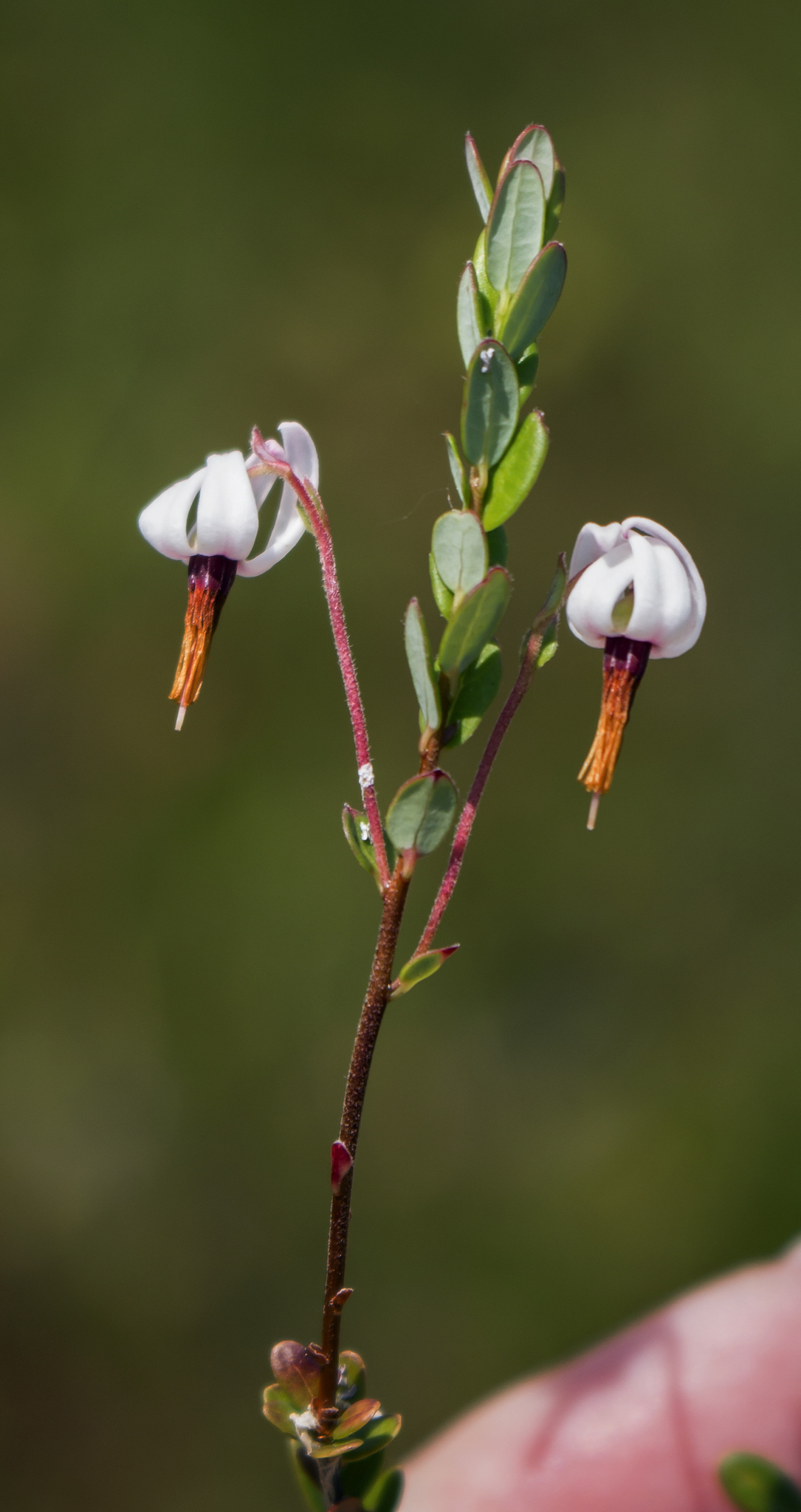
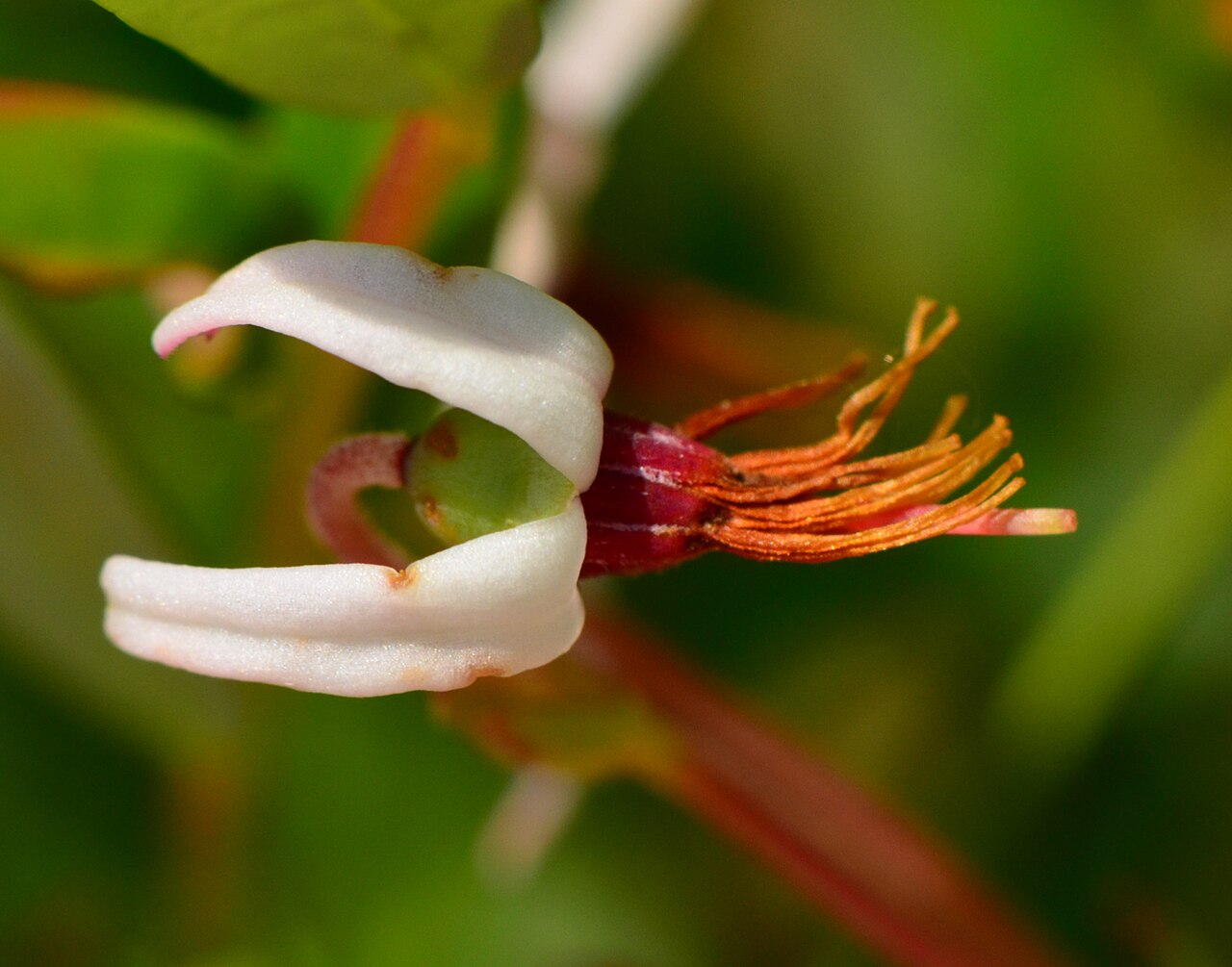
American cranberry is a low, trailing evergreen shrub, not a tree that bears bunches of fruit above head height. Its wiry runners spread over acidic ground, carrying tiny leathery leaves and short upright shoots. In flower, the reflexed pink petals reveal why cranberry blooms deserve a close look even in a garden where fruit harvest is not the main purpose.
Vaccinium macrocarpon is the large-fruited cranberry familiar from cultivation, but a native bog planting is not simply a miniature commercial flooded field. Cranberry roots need moisture and an appropriate acidic substrate; the plant does not need to remain under water throughout the growing season. Seasonal flooding used in agriculture has particular management purposes and should not be copied indiscriminately at home.
This species is an excellent example of matching a plant to a very specific site. A sunny, acidic bog bed in a cool climate may suit it well; an ordinary dry perennial border usually will not. For the Carolinas, native status is especially important: North Carolina flora records mountain populations, but does not treat it as native to South Carolina. The regional list covers both states, not one continuous cranberry habitat.
Identification
Stems & Habit
Slender woody runners lie close to the surface and produce upright shoots. The resulting mat is low, even though individual stems may travel much farther than the plant is tall. Distinguish runner length from vertical height when planning a bed. Plants climbing into neighboring vegetation can appear taller, but they do not become conventional upright shrubs.
Leaves
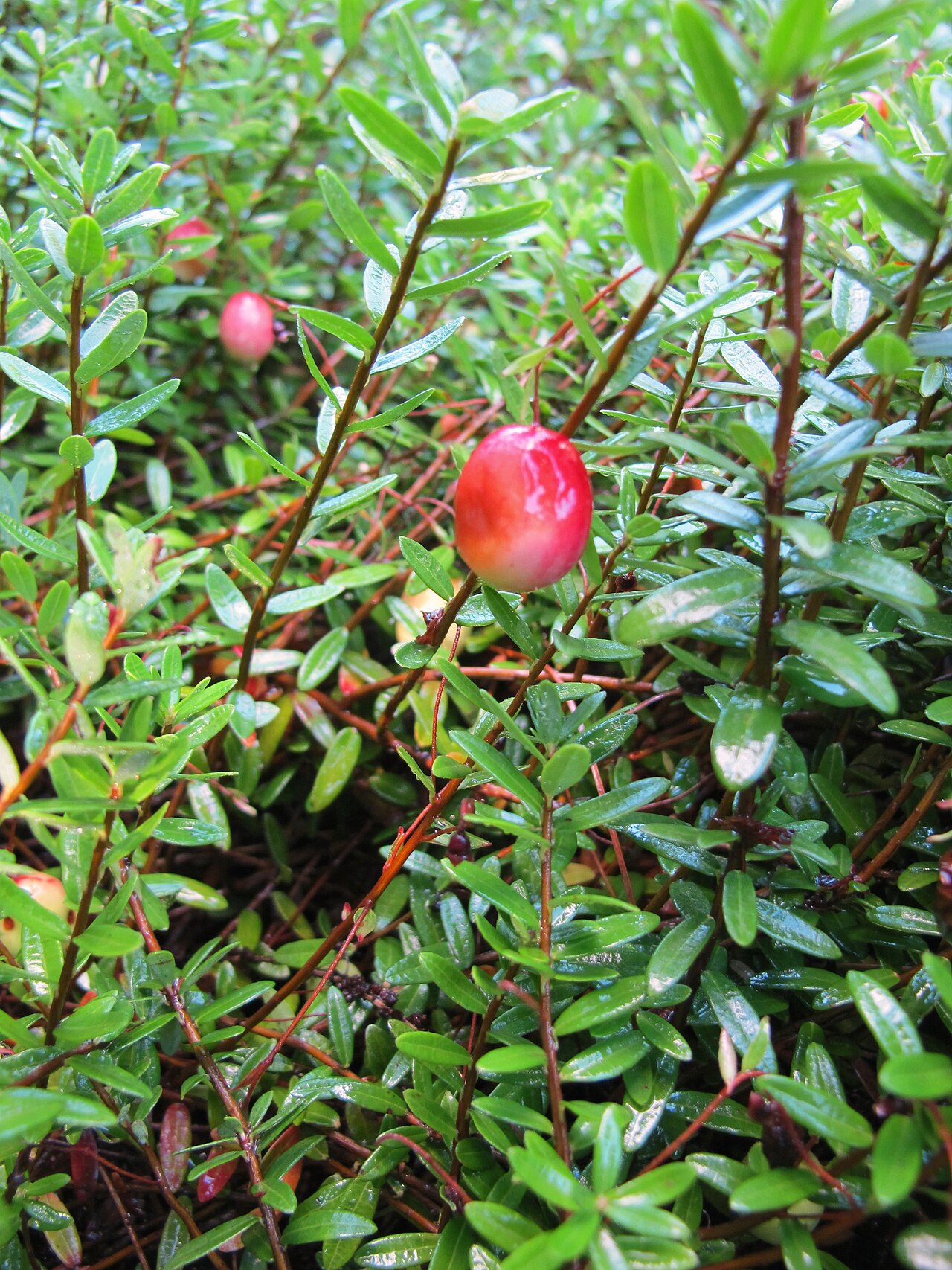
Small alternate leaves are evergreen, leathery and elliptical, with pale undersides. Their scale is one of the most useful clues when distinguishing a cranberry runner from a young blueberry shoot. Foliage may take on bronze or purplish tones in cold weather. Yellowing during active growth can point to unsuitable pH or root conditions rather than a simple need for fertilizer.
Flowers
Flowers nod from slender stalks and have narrow petals that turn strongly backward, exposing the elongated central stamens. The effect is closer to a tiny swept-back flower than a closed blueberry bell. The pink or whitish-pink blossoms are easily overlooked from standing height; plant near a low path edge or accessible bog-bed margin if you want to watch them closely.
Fruit & Seeds
The berries become red as they mature and have a tart flavor. Fruit set depends on successful flowering and pollination as well as plant vigor. A correctly identified cultivated cranberry can be a food plant, but do not identify unknown wild berries from color alone. Berry size varies among wild plants and cultivated selections, and not every ornamental planting yields a commercial-style harvest.
Quick Facts
| Scientific Name | Vaccinium macrocarpon; synonym Oxycoccus macrocarpus |
| Family | Ericaceae |
| Plant Type | Trailing evergreen shrub and bog groundcover |
| Mature Height | Usually 4–8 inches above the ground; runners are much longer |
| Mature Spread | Spreads by slender runners, eventually forming a mat |
| Growth Rate | Moderate, spreading by runners |
| Sun Exposure | Full sun; some light shade tolerated |
| Water Needs | Consistently moist acidic substrate; not a drought plant |
| Soil Type | Acidic organic or sandy bog soil, pH about 4.0–5.2 |
| Soil pH | About 4.0–5.2 |
| Bloom Time | Late spring through early summer |
| Flower Color | Pink to pale pink-white |
| Fall Color | Bronze to reddish evergreen foliage in cold weather |
| Fruit | Red tart berries, generally ripening late summer through autumn |
| Deer Resistant | Not deer-proof; protect establishing plants where browsing is heavy |
| USDA Hardiness Zones | 3–7; heat and irrigation-water chemistry constrain culture |
Native Range
The natural range is concentrated in eastern and north-central North America, including the northeastern United States, the Great Lakes region and an Appalachian extension southward. Western commercial fields and escaped plants should not be added to a native-range map solely because cranberries grow there. The map here excludes western cultivation and naturalization records.
In New Hampshire, Maine and Vermont the plant is associated with acidic wetlands and boggy substrates. At its southern edge, North Carolina populations occupy specialized mountain wetlands rather than ordinary lowland gardens. North Carolina’s vascular-plant flora explicitly separates this range from South Carolina and Georgia.
Protect the hydrology of natural cranberry sites. Moving wild runners to a garden is not a substitute for conserving a bog, and digging can damage sensitive vegetation. For home growing, use propagated stock and design a contained acidic bed; do not excavate or alter a natural wetland to imitate a cranberry farm.
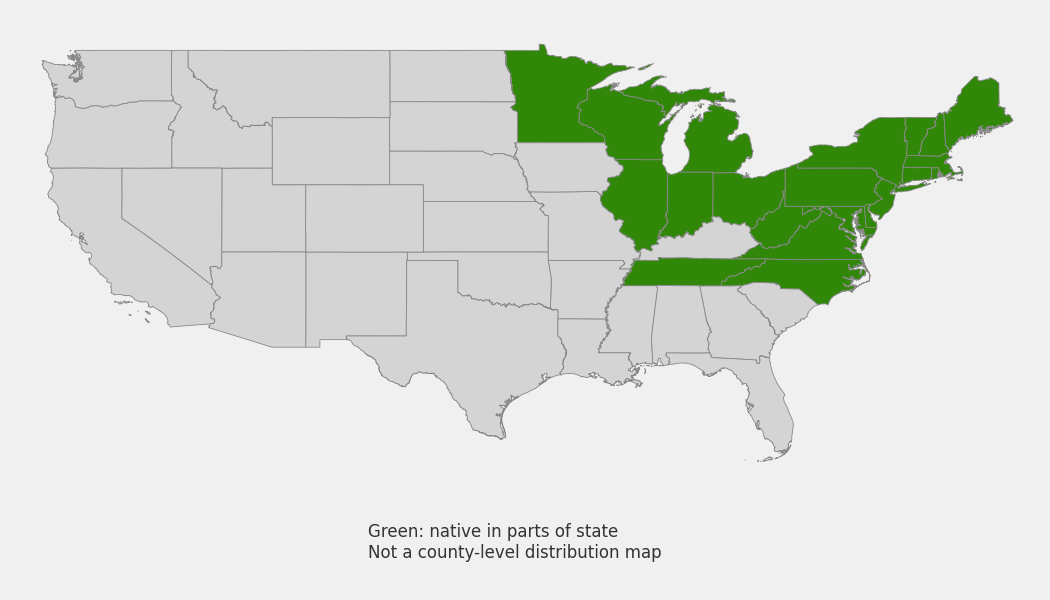
📋 Regional plant list: New Hampshire, Maine & Vermont
Growing & Care Guide
Light
Full sun generally supports flowering and fruiting, provided moisture is dependable. Shade from taller shrubs can gradually reduce productivity as a bed matures. Remove encroaching garden vegetation selectively rather than clearing a natural bog canopy. A very hot exposed container needs careful water management because its shallow root environment dries much faster than a bog surface.
Soil & Water
Use a tested acidic substrate and consider the alkalinity of irrigation water. Cranberry is poorly suited to ordinary alkaline garden soil, even when the soil looks moist. Keep roots hydrated but avoid treating permanent submergence as the goal. A lined or contained bog bed still needs a way to manage water level; stagnant, overheated water and drought are both problems.
Planting Tips
Set rooted nursery plants at their previous depth and keep runners in contact with suitable substrate without burying the upright shoots. Weed the bed carefully while it fills in. Avoid mixing cranberry with vigorous plants that will shade it or make hand-weeding impossible. Label cultivated selections so future gardeners know whether the planting is intended for habitat, fruit production or both.
Pruning & Maintenance
Lightly manage runners that overrun the intended bed; do not mow or shear the mat as if it were turf. Remove dead material gently and keep enough upright growth to carry flowers. Monitor the transition between runner production and flowering before intervening heavily. A plant that looks leafy but fruits poorly may need better light or pollinator access rather than more fertilizer.
Propagation
Rooted runners and stem cuttings preserve a named selection more predictably than seed. Seed-grown offspring vary and require patience. Use healthy cultivated parent plants and clean media; moving pieces of a wild bog also moves soil organisms and may violate conservation rules. Keep new plants evenly moist while rooting and gradually expose them to their final light conditions.
Landscape Uses
- A sunny acidic bog garden with managed moisture
- A low evergreen groundcover beside a cool-climate water feature
- An educational planting showing flowers, runners and fruit
- A small food garden where soil and irrigation chemistry can be controlled
Wildlife & Ecological Value
For Pollinators
The flowers are visited by bees, and the genus Vaccinium supports specialized bee relationships as well as general flower visitors. Do not apply insecticides during bloom. A cranberry bed embedded in a diverse native planting offers more surrounding nesting and feeding opportunities than a bed isolated from other vegetation.
For Birds
Birds may take ripe fruit, making cranberry a useful low-level food source in suitable habitat. Leave some berries where wildlife value is a goal. Crop protection and habitat planting are different priorities: netting intended for harvest protection must be managed so animals are not trapped.
For Mammals
Small mammals also use the fruit. Expect shared harvests in an open garden rather than assuming every berry will remain until you pick it. Protecting an entire wetland from normal wildlife use would undermine the habitat purpose of planting it.
Ecosystem Role
The low mat contributes to the distinctive vegetation of acidic wetlands. Its presence reflects hydrology, substrate chemistry and competition, not simply a preference for extra watering. A garden bed can demonstrate those relationships but cannot reproduce the full ecological complexity of a natural bog.
Cultural & Historical Uses
Cranberry has a longstanding role as a North American food plant. Native communities used the fruit before modern commercial production; the species continues to link regional foods with wetland landscapes. Historical use should be described without treating all Indigenous traditions as one uniform practice.
Commercial harvest photographs often show floating berries on flooded beds. They are memorable images, but they can mislead home gardeners into thinking cranberry grows permanently underwater. The living runner, flower and fruit photographs on this page emphasize the plant itself rather than a harvest technique.
Older botanical sources may place the species in Oxycoccus as Oxycoccus macrocarpus. That synonym refers to the same large cranberry, not the unrelated highbush cranberry viburnums. Checking the scientific name is essential when ordering a low bog groundcover instead of a much taller shrub.
Frequently Asked Questions
Does cranberry grow underwater?
Not continuously. It grows on moist acidic substrate. Commercial flooding serves particular seasonal purposes; permanent deep water is not the standard home-growing condition.
Is highbush cranberry the same plant?
No. Highbush cranberries are viburnums, not Vaccinium macrocarpon. They are upright shrubs with very different flowers, leaves and site requirements.
Can I grow it in a normal raised vegetable bed?
Only if the substrate and irrigation suit its strongly acidic, consistently moist requirements. A typical vegetable bed is usually too neutral, dry or nutrient-rich to be an easy match.
Is it native to South Carolina?
The North Carolina flora used here explicitly places the southern native extension in North Carolina and Tennessee, not South Carolina or Georgia. Its presence in a combined Carolinas list should not imply native status in both states.
Why does my plant have foliage but few berries?
Consider light, flower production, bee visits and the balance between runners and upright shoots. Check soil and water chemistry before applying fertilizer; poor fruiting has several possible causes.
📋 Also listed: North & South Carolina
Sources & Further Reading
- NC State Extension: cranberry
- North Carolina flora: southern range limits
- Native Plant Trust: cranberry
- Oregon State: cranberry morphology
Find Native Plants
Ask growers about nursery propagation and regional provenance. Browse our NH native plant nurseries, ME native plant nurseries, VT native plant nurseries, NC native plant nurseries directory for suppliers. Explore the native nursery finder.