Eastern Leatherwood (Dirca palustris)
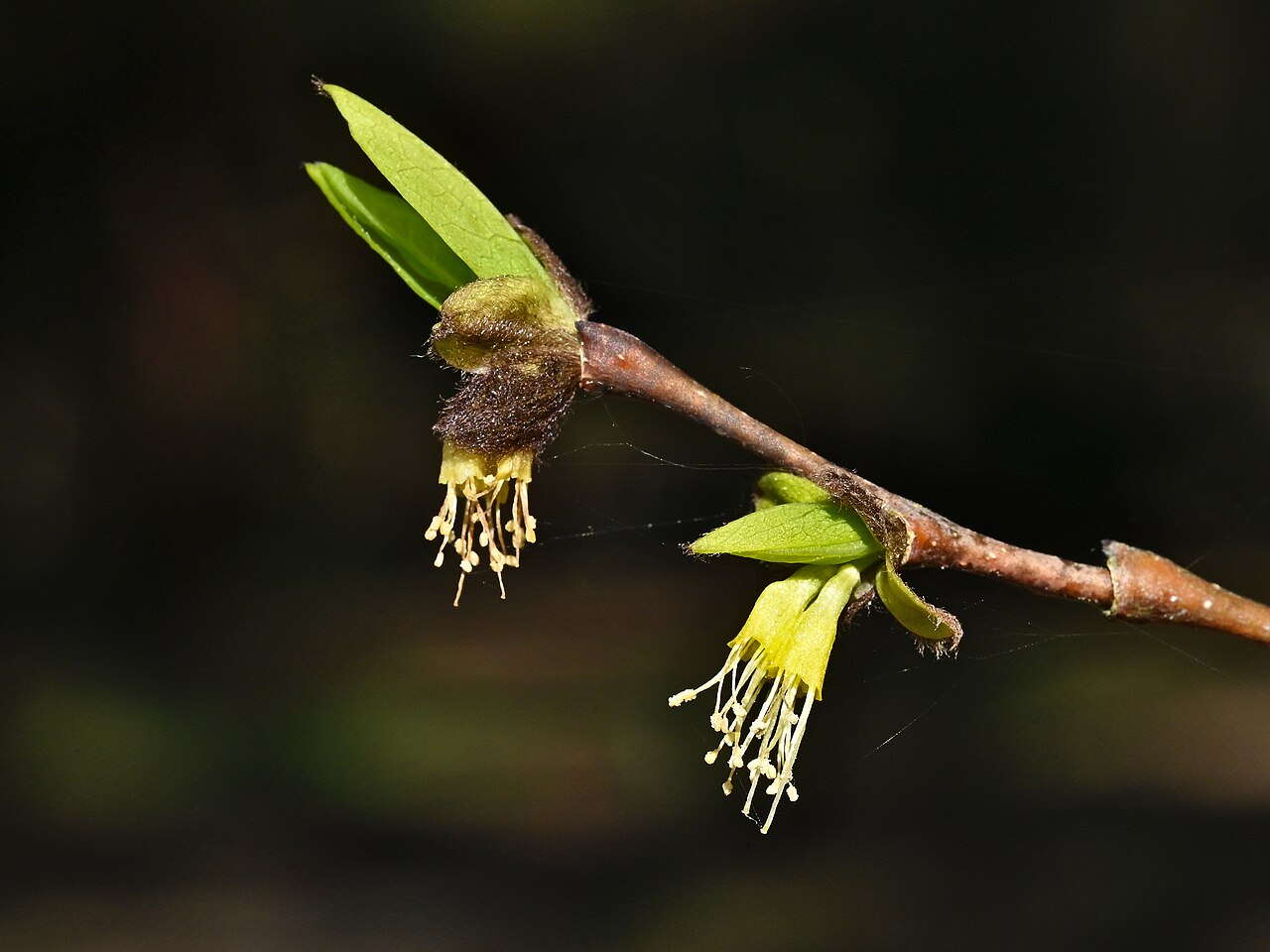
Eastern leatherwood is a quiet but distinctive native shrub for a rich woodland garden. Small pale-yellow flowers emerge while many neighboring plants are still dormant; later, broad light-green leaves form a soft, rounded mass. It is a plant to place beside a path where early flowers can be noticed, rather than at the far end of a lawn where their detail disappears.
The name leatherwood refers to flexible twigs and unusually tough, fibrous bark. Dirca palustris is a woody member of Thymelaeaceae, not the leatherwood fern, Dryopteris marginalis. That distinction matters when following a common-name link or purchasing plants: a fern cannot provide this shrub’s flowers, fruit, winter framework or eventual four-to-six-foot footprint.
Slow growth and a preference for moisture-retentive woodland soils make leatherwood best suited to patient gardeners. Once established in the right place it can be long-lived. Do not interpret the species name palustris as a requirement for standing water: forest slopes and rich ravines are characteristic settings, and drainage remains important in a planting hole.
Identification
Bark & Stems
The stems are slender and flexible, with smooth gray-brown bark. A young plant may look spare before its branches fill out. Avoid demonstrating the toughness of the bark by bending or stripping shoots: this damages the plant and the bark can irritate sensitive skin. Look for the twig structure and the alternate buds without breaking off a branch.
Leaves
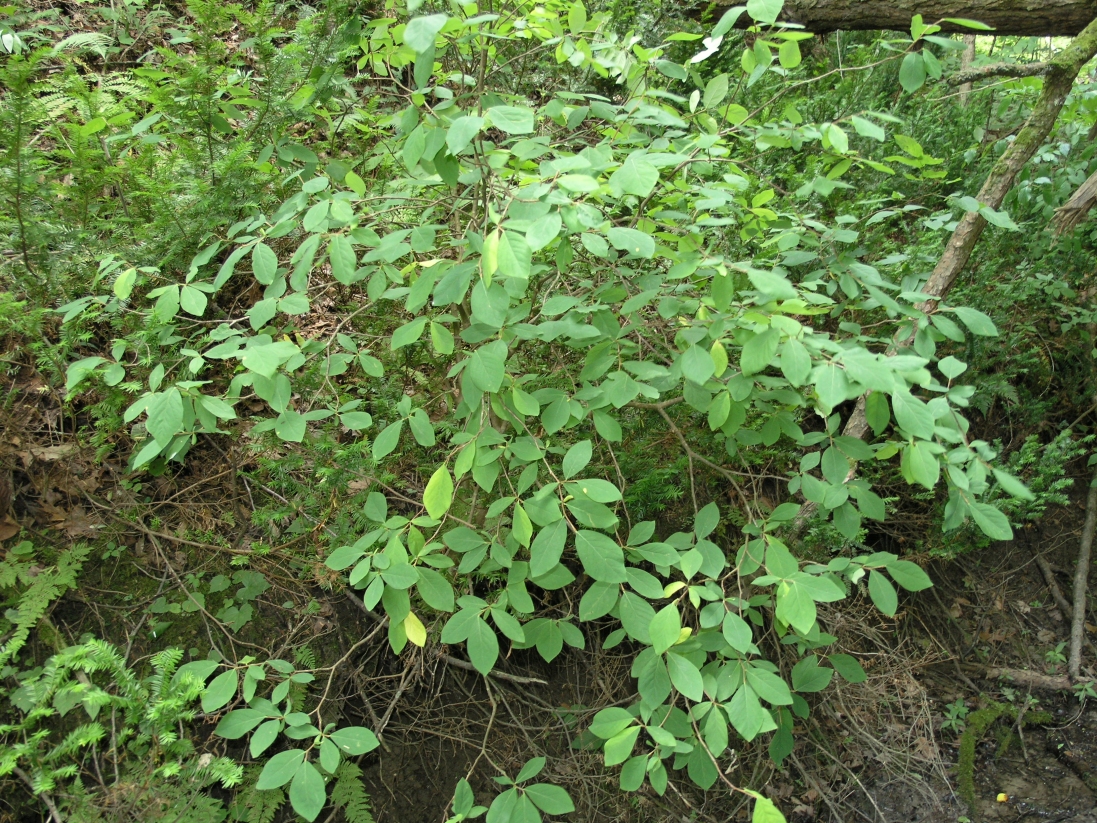
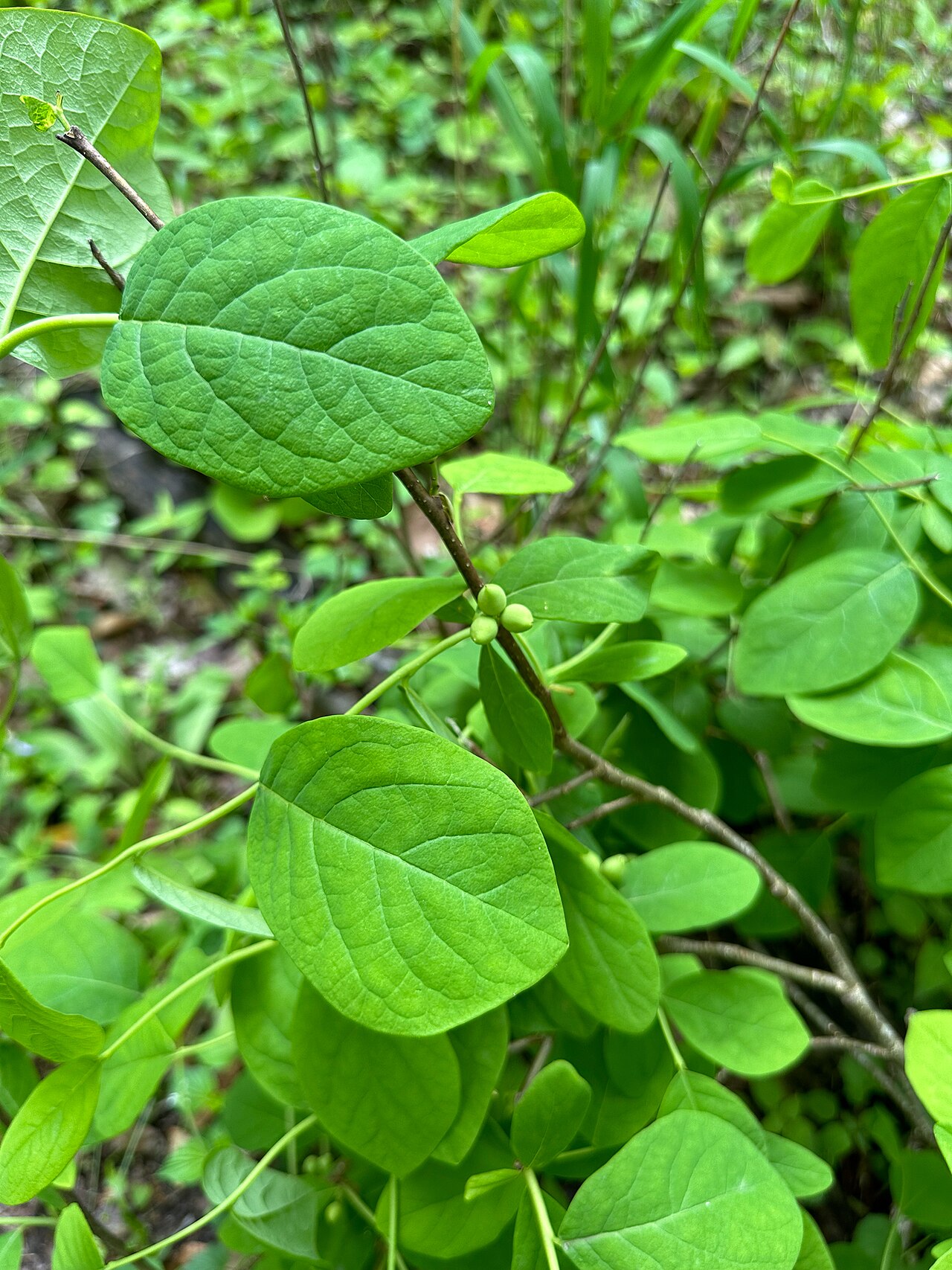
Leaves are simple, alternate and oval to somewhat widest above the middle. Margins are entire rather than toothed, and young foliage may carry fine hairs. The light-green summer color and yellow autumn foliage suit a shaded border. Unlike a fern, the plant has true woody shoots, buds and individual leaf blades rather than fronds rising from a basal crown.
Flowers
Small yellowish tubular flowers hang in clusters near shoot tips and appear very early in spring, before or as leaves expand. The display is delicate, especially compared with a shrub covered in large petals. A close view reveals projecting stamens. Because timing depends on weather and latitude, use the emergence of neighboring woodland plants rather than a fixed calendar date to anticipate bloom.
Fruit & Seeds
The flower is followed by a small, single-seeded drupe that may be green, pale or reddish as it develops. Fruits are not garden snacks: do not confuse them with edible berries, and keep them away from children who pick unfamiliar fruit. Leaf shape, early tubular flowers and the twig characters together distinguish leatherwood from other woodland shrubs.
Quick Facts
| Scientific Name | Dirca palustris |
| Family | Thymelaeaceae |
| Plant Type | Deciduous woodland shrub |
| Mature Height | Usually 4–6 feet; occasionally taller |
| Mature Spread | Usually 4–6 feet |
| Growth Rate | Slow |
| Sun Exposure | Partial to full shade; avoid hot exposed sites |
| Water Needs | Consistently moist but aerated soil; not drought adapted |
| Soil Type | Rich woodland soil with humus; often on base-rich substrates |
| Soil pH | Often rich base-influenced woodland soil; test before amendment |
| Bloom Time | Early spring before or with emerging leaves |
| Flower Color | Pale yellow |
| Fall Color | Yellow |
| Fruit | Small drupes, green becoming pale or reddish |
| Deer Resistant | Not deer-proof; protect establishing plants where browsing is heavy |
| USDA Hardiness Zones | 3–9 in garden references; select regional stock |
Native Range
Eastern leatherwood occurs in eastern and north-central North America, with scattered populations across a broad region. NC State’s distribution list covers much of the eastern United States, west into parts of the central states. The state map is an overview of those native occurrences; it is not a claim that leatherwood is abundant or easily found in every state.
New Hampshire, Maine and Vermont are within the northeastern range. Rich forests and shaded ravines provide the combination of moisture, shelter and organic matter that the plant favors. In parts of the southern Appalachians it is associated with base-rich rock substrates. Such habitat details are more useful for choosing a garden bed than the state name alone.
A garden planted far outside the native range is cultivation, not evidence of natural occurrence. The flowering photograph from an arboretum shows valid plant features but does not make leatherwood native to that country. In restoration work, preserve local populations and use propagated material of documented origin rather than moving plants between distant regions.
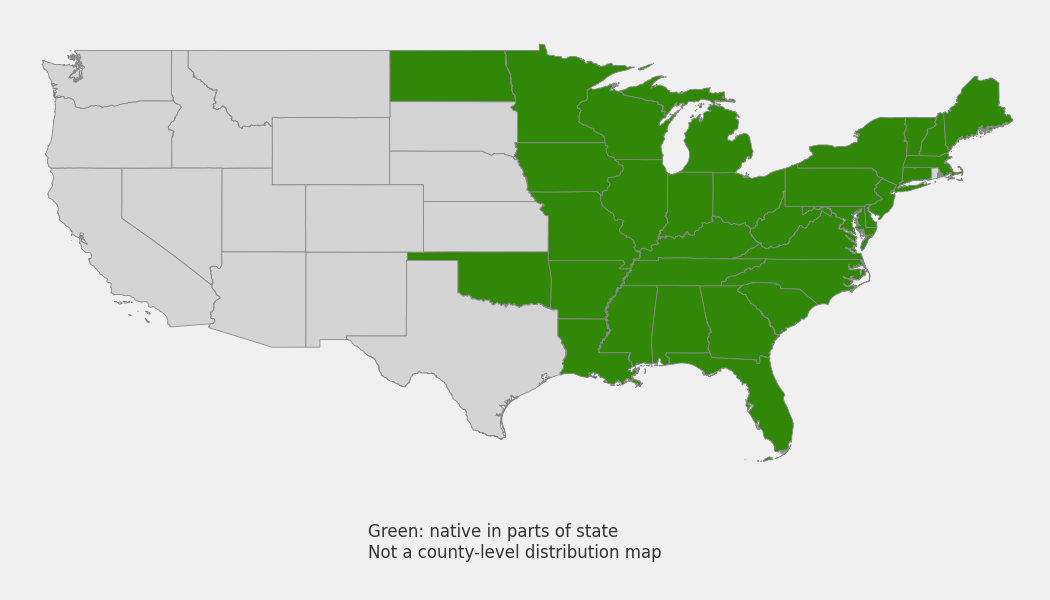
📋 Regional plant list: New Hampshire, Maine & Vermont
Growing & Care Guide
Light
Choose filtered light or a shaded woodland edge, especially where afternoons are hot. A plant in bright sun needs more dependable moisture and may show leaf bleaching or scorch. Very dense shade can produce a looser shape; that is not necessarily a problem in a naturalistic garden. Avoid clearing a canopy abruptly around an established shrub.
Soil & Water
Aim for a deep, humus-rich soil that stays moist without remaining stagnant. Woodland leaf mulch helps moderate temperature and evaporation. Test drainage before planting into heavy ground: a hole that holds water for days is not improved by simply adding compost inside it. Water the root ball slowly during establishment and do not wait for severe wilting to intervene.
Planting Tips
Obtain a nursery-propagated shrub and handle the root system carefully. Give it room for a rounded crown rather than tucking it tightly between larger shrubs. Plant at its previous depth, water to settle soil around roots and mark the position so dormant twigs are not accidentally cut back during cleanup. Modest initial size is normal for this slow-growing plant.
Pruning & Maintenance
Little routine pruning is required. Remove dead or damaged wood and let the natural form develop. Avoid shearing away new growth every season; slow growth makes recovery a lengthy process. Keep aggressive vines and dense groundcovers from overwhelming the base. Use gloves if your skin is sensitive, and wash after handling prunings.
Propagation
Seed and layering are documented propagation methods. Seed behavior can be slow and variable, so use a species-specific protocol and keep the sowing protected and labelled. Do not substitute instructions for unrelated shrubs sold as leatherwood. Layering should be done on a cultivated parent with permission, not by disturbing wild stems in a protected woodland.
Landscape Uses
- An early-spring detail beside a shaded path
- A low woodland shrub beneath taller deciduous trees
- A sheltered rich-soil border with ferns and spring herbs
- A slow-growing specimen in a native woodland collection
Wildlife & Ecological Value
For Pollinators
Early flowers add an opportunity for insects active before the main spring bloom. Their small size makes close observation rewarding. Avoid broad-spectrum sprays on flowering branches and maintain other early and late native flowers nearby; no one shrub spans the full feeding season.
For Birds
The fruits are used by birds and the branches contribute cover in the woodland understory. Retaining the shrub within a layered planting provides more useful shelter than isolating it in a closely mown lawn. Fruit value for wildlife should not be confused with human edibility.
For Mammals
Small mammals may use the fruit and shelter. Protect nursery plants if local browsing prevents establishment, but do not describe the shrub as reliably deer-proof. Wildlife use varies by region and by the availability of other foods.
Ecosystem Role
Leatherwood adds structural variety to a rich-forest understory. Its shade-tolerant habit lets it coexist beneath a canopy without requiring a large opening. Retain surrounding leaf litter and avoid repeated cultivation around its roots so the garden more closely resembles the woodland conditions to which it is adapted.
Cultural & Historical Uses
The flexible bark and twigs have a documented history as cordage materials. Botanical and extension accounts record uses for tying, baskets and other fiber work. These records explain the common name and should be presented as historical context, not as an invitation to strip bark from slow-growing wild shrubs.
The plant is also a good example of the limits of common names. Leatherwood, leatherbark and wicopy have been used for Dirca palustris, while leatherwood fern names a wholly different plant. A scientific name on a nursery label protects against purchasing the wrong growth form for a site.
For modern gardeners, the most useful contribution is ornamental and ecological: very early flowers, a modest woodland form and autumn color. Propagation and preservation offer a more sustainable relationship with the species than harvesting. Keep historical uses separate from medical or food claims; the plant’s irritating and toxic parts are reasons to leave experimentation aside.
Frequently Asked Questions
Is leatherwood the same as leatherwood fern?
No. Eastern leatherwood is Dirca palustris, a deciduous flowering shrub. Leatherwood fern is a Dryopteris fern and has a completely different life history and appearance.
Does it need a swamp?
No. It needs reliable moisture but commonly inhabits rich woods and ravines with aerated soil. Avoid both drought and a planting hole that traps stagnant water.
Why is a nursery plant growing slowly?
Slow growth is normal. Check moisture, competing roots and browsing before adding fertilizer. The aim is a healthy root system and steady establishment, not rapid soft shoots.
Are the berries edible?
They should not be eaten. Treat the fruits and other parts as nonfood plants; wildlife eating a fruit does not establish its safety for people.
Can I prune it into a low formal hedge?
That is a poor use of a slow woodland shrub. Allow the natural rounded or slightly open form and reserve pruning for damaged wood or a genuine space conflict.
Sources & Further Reading
- NC State Extension: Dirca palustris
- Oregon State: identification and culture
- Native Plant Trust: leatherwood
- University of Connecticut: leatherwood
- Missouri Botanical Garden: leatherwood
Find Native Plants
Ask growers about nursery propagation and regional provenance. Browse our NH native plant nurseries, ME native plant nurseries, VT native plant nurseries directory for suppliers. Explore the native nursery finder.