Hairy Solomon’s Seal (Polygonatum pubescens)
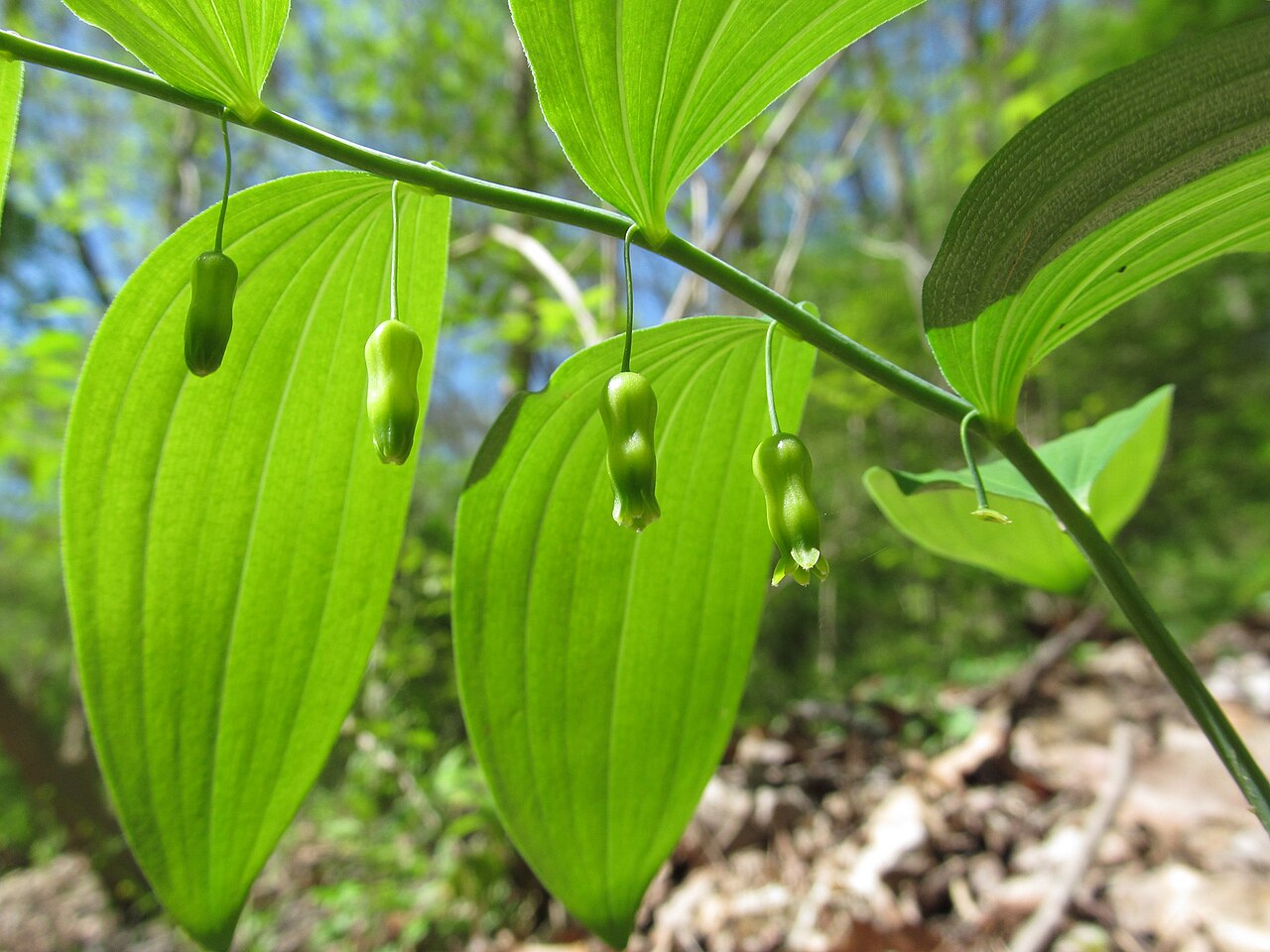
Hairy Solomon’s seal brings a graceful arch to the woodland floor. A leafy stem rises from a rhizome and bends outward, carrying small hanging flowers beneath the leaves. It is a good companion for ferns because the two plants offer different textures while sharing sheltered, humus-rich conditions.
Polygonatum pubescens is not simply another name for smooth or giant Solomon’s seal. Its fine hairs along the veins on the lower leaf surface are an important diagnostic feature, and its flowers are usually carried in small groups. Use that combination rather than the general arching habit when distinguishing species in a mixed planting.
For gardeners in northern New England, it is a native choice for a protected woodland border where the soil remains reasonably moist. The plant can expand into a colony, but it should not be expected to cover dry compacted ground beneath a thirsty tree without help. Retain leaf litter, protect emerging shoots and give a young division time to build its rhizome.
Identification
Stems & Rhizomes
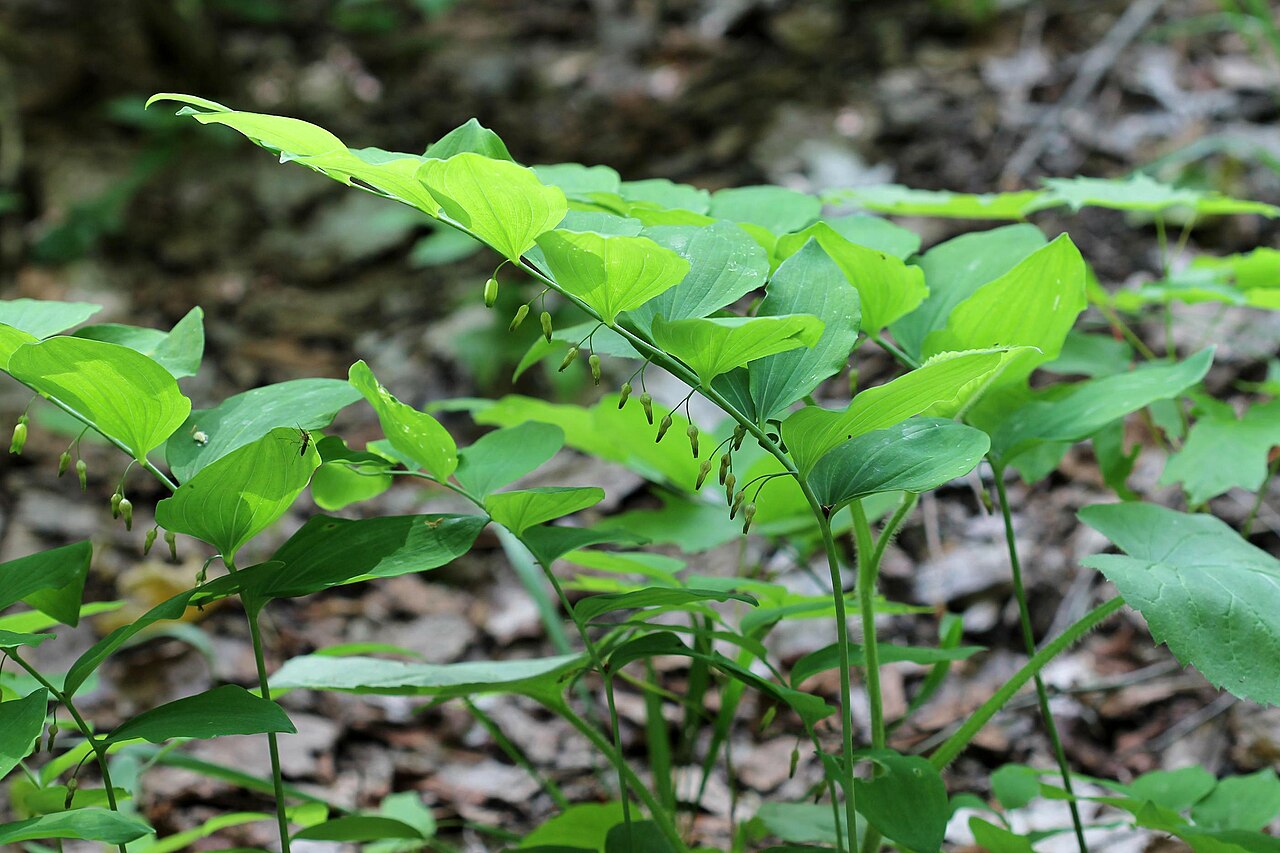
The aboveground stems are herbaceous and die back seasonally. New shoots arise from a jointed underground rhizome rather than a permanent woody branch framework. Do not rake aggressively over dormant crowns or mistake late-emerging shoots for weeds. A colony is composed of multiple stems, so its eventual width can exceed the spread of an individual nursery plant.
Leaves
Alternate leaves are oval to elliptic, with smooth margins and strongly evident lengthwise veins. Turn a mature leaf over carefully and look for minute hairs along the underside veins; a hand lens can help. Smooth Solomon’s seal lacks that pubescence. Leaf size alone is unreliable because light, vigor and developmental stage change the apparent proportions.
Flowers
Small tubular flowers hang from leaf axils, commonly one to three together. They are greenish white or yellow-green, with short lobes at the mouth. The flowers do not form a terminal plume at the end of the stem; a terminal cluster suggests a different plant such as false Solomon’s seal. Photograph the attachment as well as the flower face when documenting identification.
Fruit & Seeds
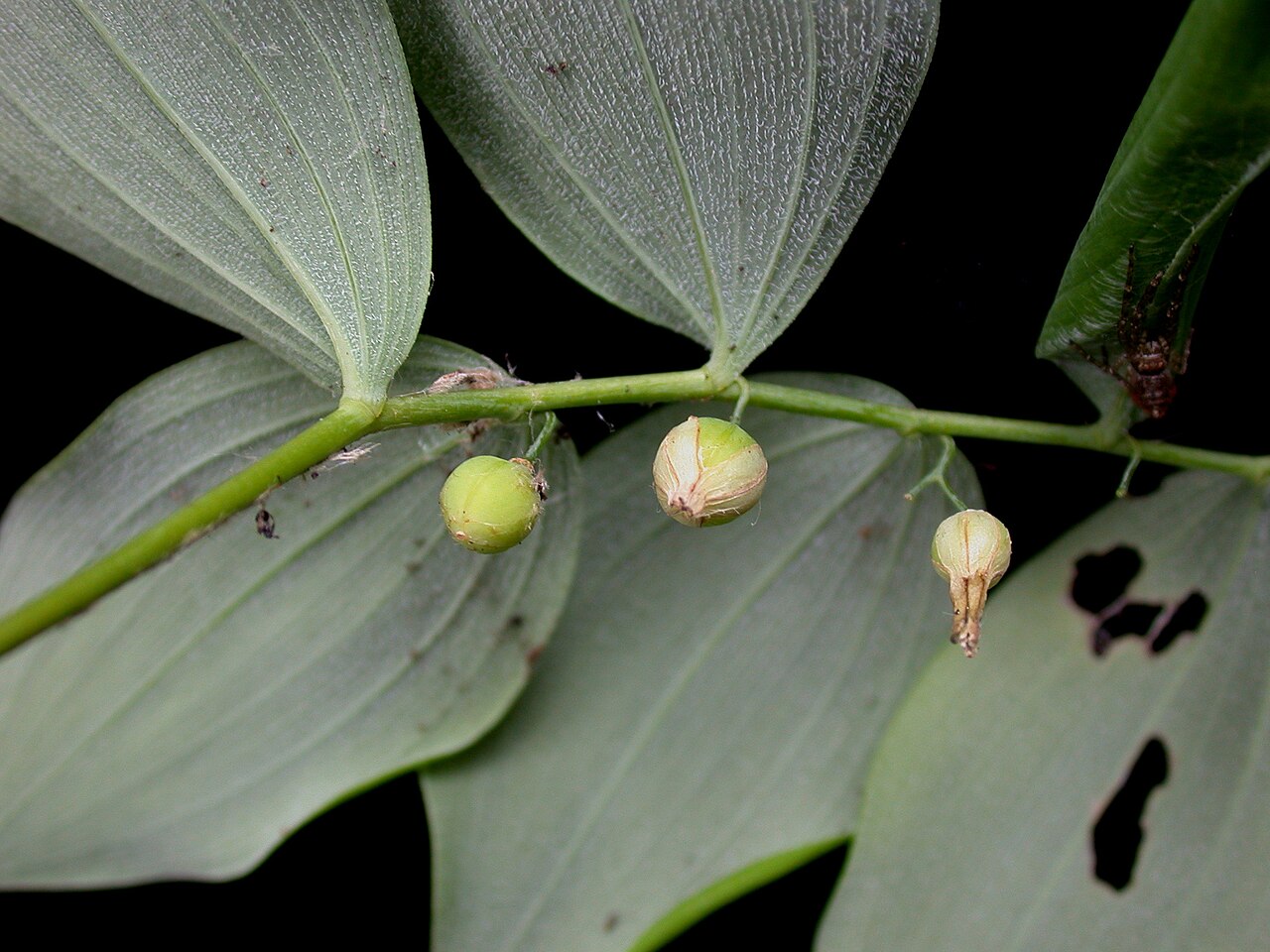
Dark berries follow pollinated flowers and remain beneath the arching stem. They should be treated as nonfood fruits in the garden. Do not infer edibility from a bird feeding on them or from a common name shared with other plants. The location of berries under leaf axils continues to distinguish the plant after its flowers have gone.
Quick Facts
| Scientific Name | Polygonatum pubescens; synonym Convallaria pubescens |
| Family | Asparagaceae |
| Plant Type | Rhizomatous woodland herbaceous perennial |
| Mature Height | Usually 1–2.5 feet |
| Mature Spread | About 1–1.5 feet per plant, expanding slowly into colonies |
| Growth Rate | Slow to moderate, rhizomatous |
| Sun Exposure | Partial to full shade |
| Water Needs | Average to moist woodland soil; avoid repeated drought |
| Soil Type | Humus-rich, well-drained forest soil |
| Soil pH | Acidic to near neutral woodland soil |
| Bloom Time | Spring to early summer |
| Flower Color | Greenish white to yellow-green |
| Fall Color | Yellow before seasonal dieback |
| Fruit | Dark blue-black berries; not a garden food plant |
| Deer Resistant | Not deer-proof; protect establishing plants where browsing is heavy |
| USDA Hardiness Zones | 3–8, with cool sheltered conditions preferred |
Native Range
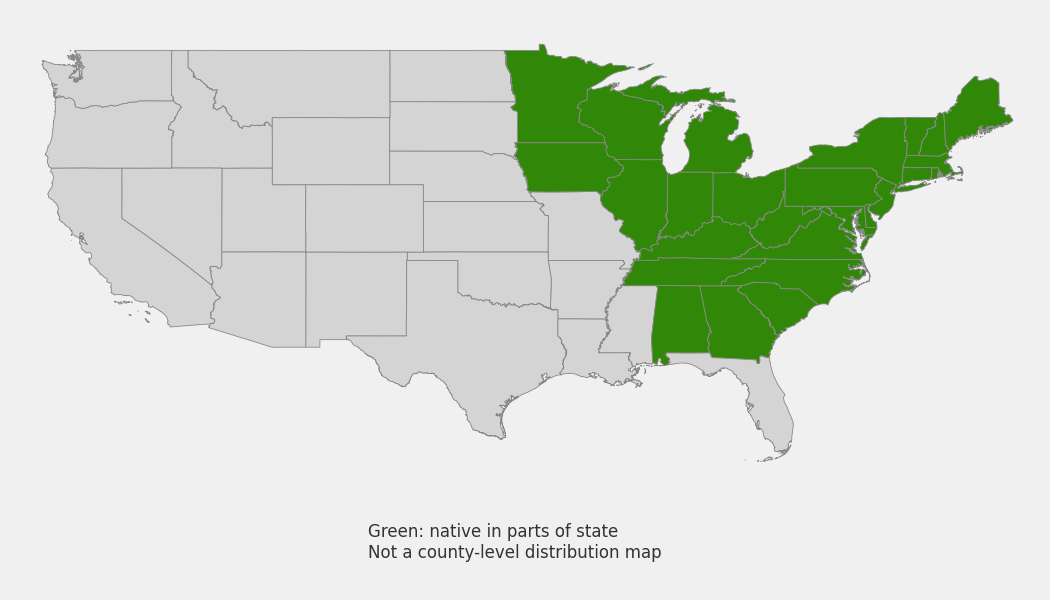
Hairy Solomon’s seal is native to north-central and eastern North America. NatureServe describes a range from eastern Canada south through the eastern United States to the southern Appalachians, extending west into the upper Midwest. Native Plant Trust confirms the species throughout the six New England states.
Its usual habitat is mesic deciduous forest, often in rich soil and on rocky slopes. Mesic means a moderate moisture environment rather than permanent standing water. Northern forest gaps can support it well, while hot, drying exposure near the southern edge of its range is more demanding.
The map represents state-level native occurrence, assembled from the cited range accounts. It cannot show every suitable patch or the local effects of deer, invasive plants and woodland disturbance. For restoration, seek locally appropriate propagated stock and preserve the surrounding forest floor rather than moving rhizomes from a wild colony.
📋 Regional plant list: New Hampshire, Maine & Vermont
Growing & Care Guide
Light
Partial shade or dappled woodland light is the safest starting point. Morning light before a deciduous canopy closes can support spring growth. Full afternoon exposure is a poor choice in warm climates. In very dense shade, inspect competition and soil moisture before assuming that a fertilizer application will improve flowering.
Soil & Water
Provide humus-rich soil with drainage and dependable moisture during active spring growth. Keep a light leaf mulch rather than a deep mound that buries emerging stems. Avoid repeated summer drying in a newly planted bed. Conversely, a saturated hole around a rhizome can cause trouble even for a plant associated with moist woods.
Planting Tips
Plant propagated material at its nursery depth and mark the crown location. Allow space for the stems to arch without being repeatedly brushed or broken. Water after planting and watch for slugs or browsing on tender shoots. A small group reads naturally among ferns, but leave enough separation to inspect each crown during the establishment period.
Pruning & Maintenance
There is no need to prune living stems into shape. Leave foliage until it naturally declines so the rhizome can replenish reserves. Remove damaged stems only when necessary and avoid pulling them hard enough to disturb the underground portion. If a colony becomes crowded, divide deliberately rather than repeatedly chopping through it during routine edging.
Propagation
Division of cultivated rhizomes is a practical way to increase a known plant. Keep viable buds and roots with each piece, replant promptly and prevent drying. Seed propagation is slower and dormancy can require patience. Keep species labels with all divisions because related Solomon’s seals can look similar when young and can be mixed accidentally in nursery beds.
Landscape Uses
- A layered woodland border with ferns and spring flowers
- Soft arching foliage along a sheltered path
- A small native colony beneath an open deciduous canopy
- A shaded planting where hanging flowers can be viewed closely
Wildlife & Ecological Value
For Pollinators
The tubular flowers are visited by bees and other suitable flower visitors. Their position beneath the leaves makes observation easiest from the side. Avoid spraying a woodland bed during flowering; insects using small, inconspicuous blooms deserve the same protection as those on showier plants.
For Birds
Berries can contribute a seasonal woodland food resource. Retain surrounding cover and leaf litter if habitat value is a goal. The plant’s contribution is part of a larger food web, not a reason to promise a particular bird species will visit every garden.
For Mammals
Deer may browse the tender shoots and foliage. A repeatedly browsed plant can lose much of its season’s photosynthetic surface. Protect establishing colonies where pressure is high and evaluate browsing before deciding the species has failed because of soil conditions.
Ecosystem Role
Rhizomatous herbs occupy the forest floor between woody roots and leaf litter. A mixed planting of species with different emergence and flowering times offers a richer seasonal structure than a single groundcover carpet. Avoid digging around an established colony merely to tidy the surface.
Cultural & Historical Uses
The name Polygonatum refers to the jointed rhizome, while pubescens points to its fine hairs. Those names preserve practical identification clues. Older sources may place the genus in a different family or use Convallaria pubescens; the modern treatment used here places it in Asparagaceae.
Historical food or medicinal references to Solomon’s seal require careful species-level interpretation and preparation knowledge. This garden guide does not recommend harvesting or self-treatment. The easiest way to appreciate the plant is to leave its rhizome intact and observe the annual emergence of stems, flowers and berries.
Native woodland gardening offers a conservation-minded use for propagated material. Demand for inexpensive wild-dug plants can damage colonies. Ask a supplier whether stock was nursery propagated, and keep records of its origin if you later divide and share it.
Frequently Asked Questions
How is it different from smooth Solomon’s seal?
Look for fine hairs along the veins beneath the leaves, together with the small groups of hanging flowers. Smooth Solomon’s seal lacks those hairs; size alone is not dependable.
Is false Solomon’s seal the same plant?
No. False Solomon’s seal bears a flower cluster at the stem tip, while Polygonatum flowers hang from leaf axils beneath the arching stem.
Can it grow in dry shade?
It is a better fit for average to moist, humus-rich shade. Dry compacted soil and heavy tree-root competition make establishment difficult, particularly in hot summers.
Should I cut back leaves after flowering?
No, not while they are healthy. The foliage supports the rhizome after bloom. Let it decline naturally unless a stem is badly damaged.
Can I eat the berries?
Do not eat them. This page treats the species as an ornamental woodland plant, not as a food crop, and common-name confusion makes casual harvesting especially inappropriate.
Sources & Further Reading
- NC State Extension: hairy Solomon’s seal
- Native Plant Trust: diagnostic characters
- NatureServe: range and conservation
- Flora of Pennsylvania: hairy Solomon’s seal
Find Native Plants
Ask growers about nursery propagation and regional provenance. Browse our NH native plant nurseries, ME native plant nurseries, VT native plant nurseries directory for suppliers. Explore the native nursery finder.