
Red Larkspur (Delphinium nudicaule)
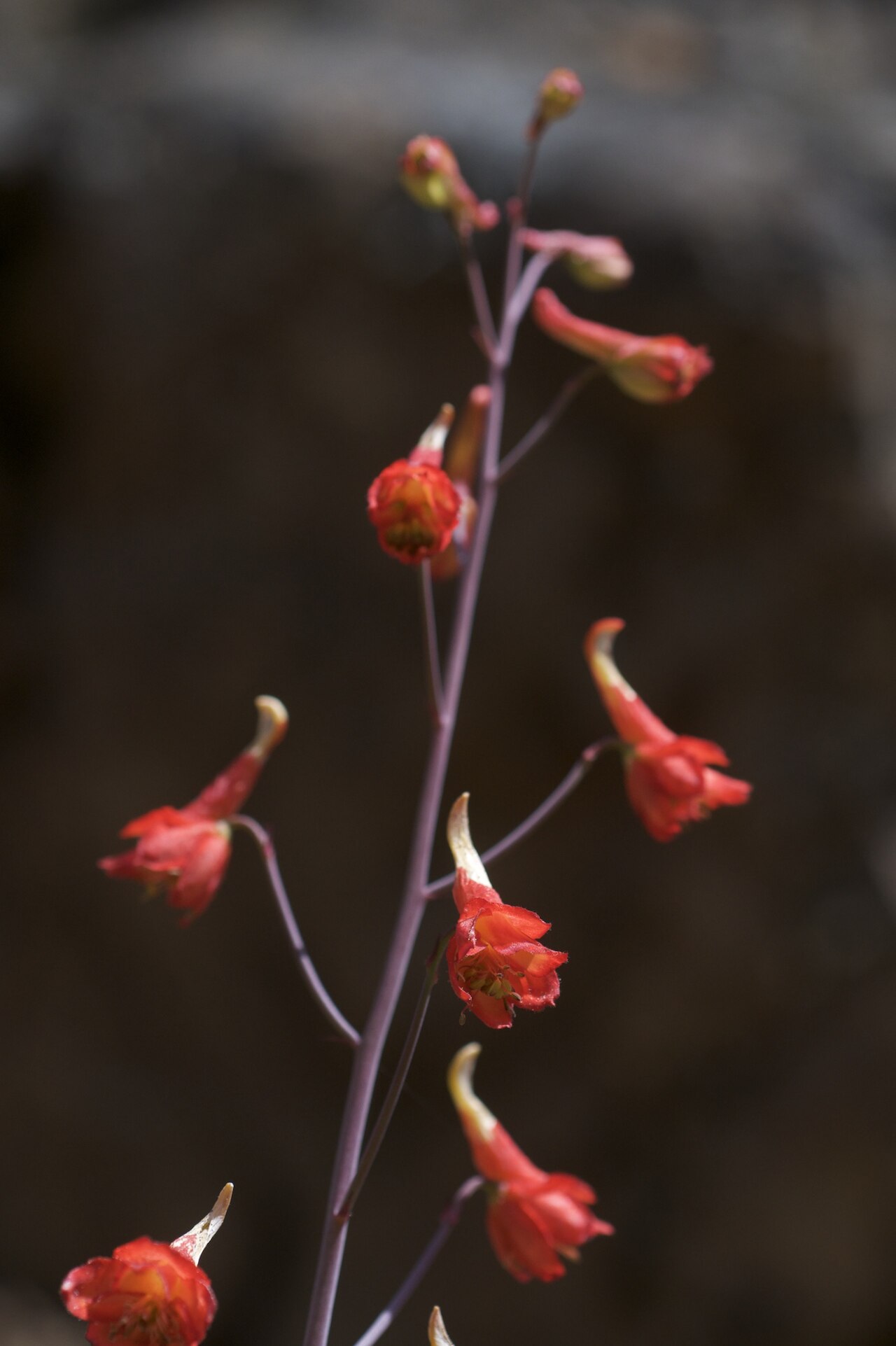
Delphinium nudicaule, known as Red Larkspur (also canyon larkspur or orange larkspur), is a spring wildflower of the rocky slopes, canyons and open woods of California and southwestern Oregon. It is one of the very few red-flowered larkspurs in the world. Its slender, almost leafless stalks carry scarlet to orange-red, spurred flowers, a classic shape and color for hummingbird pollination.
It is a perennial from a cluster of thick, fleshy roots. Plants are usually 8 to 24 inches tall, with a few rounded, lobed leaves near the base, and they bloom from about March to June. After flowering and setting seed, they die back and stay dormant through the dry summer, re-emerging with the winter rains.
Safety note: like all larkspurs, red larkspur contains toxic alkaloids in all parts, especially the young growth and seeds. It is poisonous to people, pets and livestock if eaten, and it has caused cattle poisoning. Wear gloves if you are sensitive, and keep it away from grazing animals and from children who might eat plant parts.
Identification
Look for a slender, nearly leafless flowering stalk with loose spikes of red to orange-red, long-spurred flowers above a few fleshy, palmately lobed basal leaves, on rocky banks, cliffs and open slopes in spring.
Leaves
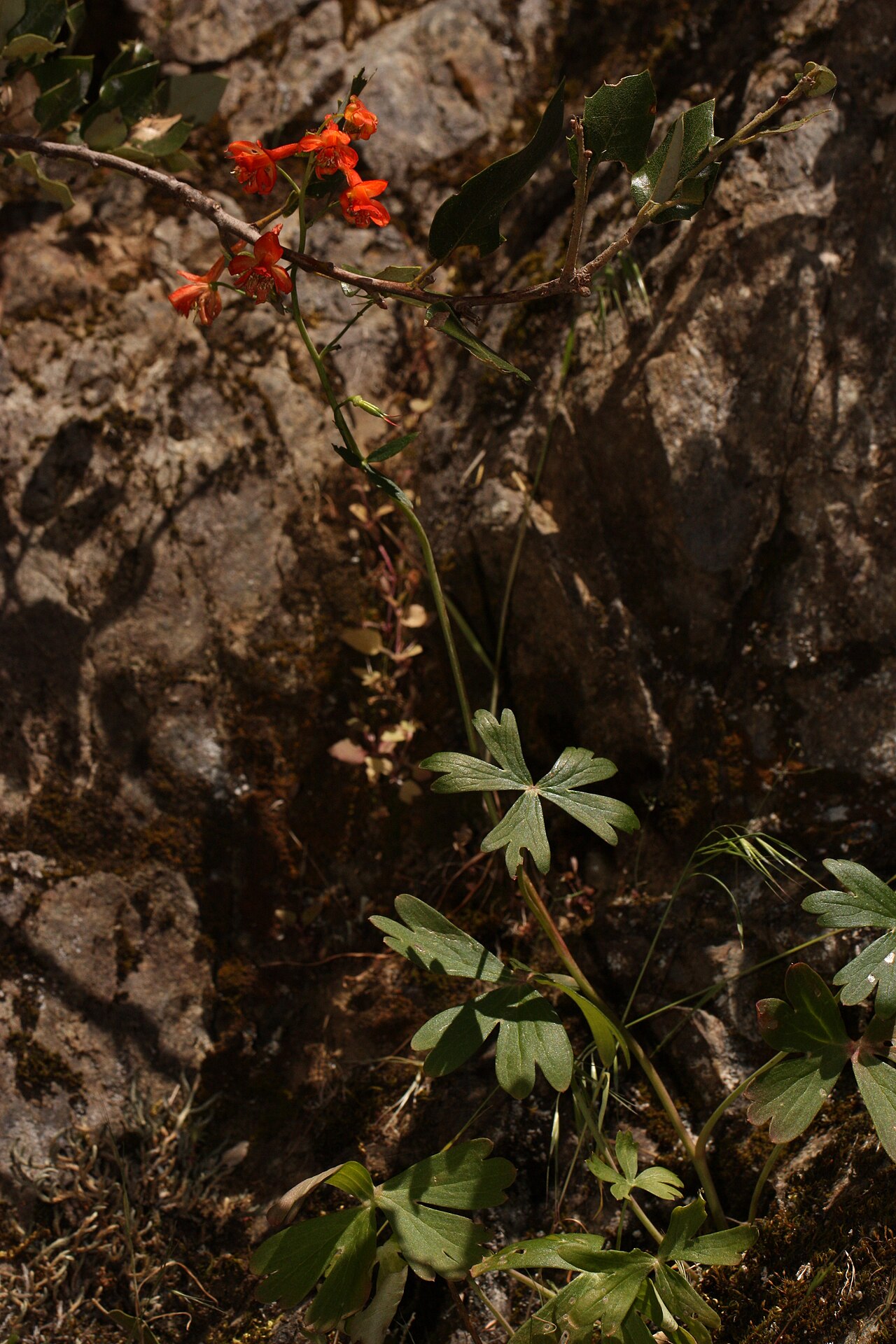
The leaves are few and mostly at the base of the plant, on long stalks. They are round to kidney-shaped in outline, about 1 to 4 inches across, divided into three to five broad, shallowly lobed segments, and somewhat thick and fleshy. The flowering stem has few or no leaves, the source of the name nudicaule (“naked stem”).
Flowers
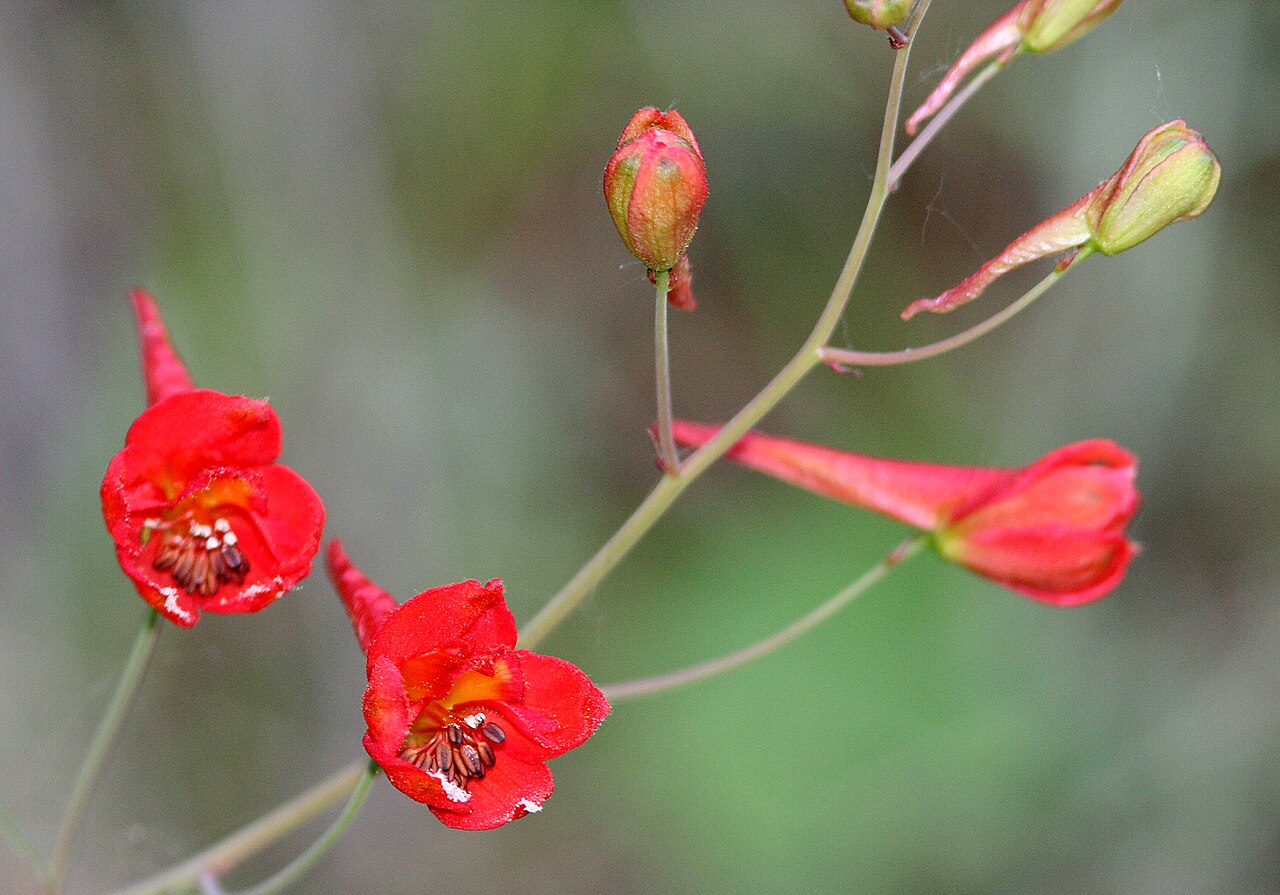
The flowers grow in a loose raceme of about 2 to 12 on long, curving stalks. Each is about 1 inch long and red to scarlet or orange-red (rarely yellow). The five sepals are fused toward the base and form a narrow, tubular, forward-pointing flower, with the upper sepal extended into a straight spur about 1/2 to 1 inch long. The small inner petals are yellowish or red with yellow tips. Bloom is mainly from March to June.
Fruit & Seeds
After flowering, the plant forms upright clusters of three slender, pod-like follicles about 1/2 to 3/4 inch long that split open to release small, dark seeds.
Roots & Growth
Red larkspur grows from a cluster of thick, fleshy, somewhat tuberous roots. It is summer-dormant: the leaves wither soon after seeds ripen, and the roots rest until fall or winter rain.
Look-alikes
Scarlet Larkspur (D. cardinale) of southern California is much taller (often 3 to 6 feet), with wide-open, flatter scarlet flowers and a leafy stem. Western Columbine (Aquilegia formosa) has nodding red-and-yellow flowers with five spurs instead of one. Red larkspur is told by its small size, single-spurred, tubular, forward-facing red flowers and nearly leafless stalk.
Quick Facts
| Scientific Name | Delphinium nudicaule |
| Family | Ranunculaceae (buttercup family) |
| Plant Type | Herbaceous perennial; summer-dormant |
| Mature Height | 8–24 in |
| Mature Spread | 6–12 in |
| Growth Rate | Moderate |
| Sun Exposure | Part shade to full sun |
| Water Needs | Low; winter-wet, summer-dry |
| Soil Type | Well-drained rocky, gravelly or loamy soils |
| Soil pH | About 6.0–7.5 |
| Bloom Time | March–June |
| Flower Color | Red to scarlet or orange-red |
| Fall Color | None; dormant in summer and fall |
| Fruit | Cluster of three slender follicles |
| Deer Resistant | Yes; toxic and rarely browsed |
| USDA Hardiness Zones | 7–10 |
Native Range
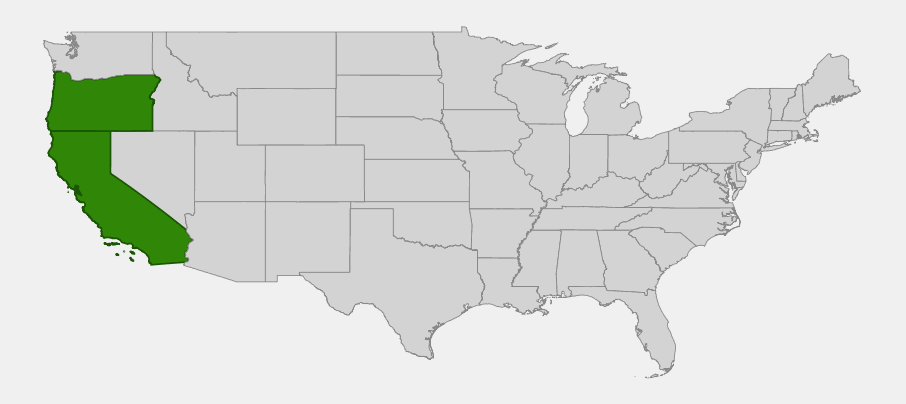
Red larkspur is native to California and southwestern Oregon. USDA PLANTS lists it as native in both states.
In California it grows mainly in the Coast Ranges, from about San Luis Obispo and Monterey counties north through the San Francisco Bay Area and the North Coast Ranges, and in the Klamath Mountains and the northern Sierra Nevada and Cascade foothills. It reaches its northern limit in the Siskiyou Mountains and Rogue River country of southwestern Oregon.
It grows on rocky slopes, cliffs, talus, road cuts, canyon walls and stream banks, and in openings in chaparral, oak woodland, mixed evergreen forest and conifer forest. It often grows in partial shade on north-facing rocks and on serpentine as well as other soils.
📋 Regional plant lists featuring Red Larkspur: Western Oregon & Western Washington · California & Nevada
Growing & Care Guide
Red larkspur is a striking hummingbird plant for rock gardens, slopes and woodland edges in mild, summer-dry climates. Its main needs are sharp drainage and a dry summer rest.
Light
Part shade to full sun near the coast; afternoon shade inland. It often does best on a north- or east-facing slope or among rocks.
Soil & Water
Plant in well-drained, rocky or gravelly soil. Water during dry spells in winter and spring while it is growing, then keep it dry once the leaves yellow in early summer. Summer water often rots the fleshy roots.
Planting Tips
Plant small container plants in fall or winter, or sow seed. Mark the spot, because the plant disappears in summer. It looks best in groups among rocks, with grasses and other summer-dormant wildflowers. Plant it away from pastures and children’s play areas because of its toxicity.
Pruning & Maintenance
Little care is needed. Remove the dried stalks after the seeds drop. Protect new growth from slugs and snails.
Propagation
Grow from fresh seed sown in fall in a gritty mix and left outdoors; larkspur seed benefits from a cool, moist period before it germinates. Seedlings may take two or more years to bloom. Do not dig plants from the wild; the fleshy roots seldom survive transplanting.
Landscape Uses
- Hummingbird gardens: bright red, tubular spring flowers
- Rock gardens: thrives among rocks with sharp drainage
- Woodland edges: light shade under oaks and madrones
- Summer-dry gardens: dormant in summer; no irrigation needed
- Containers: can be grown in deep pots with gritty soil
Wildlife & Ecological Value
Red larkspur is a classic hummingbird flower, an evolutionary shift from the bee-pollinated blue flowers of most larkspurs.
For Pollinators
Its red color, tubular shape and long nectar spur are adapted to hummingbirds, such as Anna’s and Allen’s hummingbirds, which are its main pollinators. Bumblebees sometimes rob nectar by biting through the spur.
For Birds
Hummingbirds feed on the nectar in spring. The toxic seeds are rarely eaten by birds.
For Mammals
Deer and most other mammals avoid it because of its toxic alkaloids. Livestock that eat it can be poisoned.
Ecosystem Role
As an early-blooming nectar source on rocky slopes, it helps support hummingbirds in spring, during their breeding season. Its summer dormancy is typical of many California perennials adapted to a Mediterranean climate.
Cultural & Historical Uses
The genus name Delphinium comes from the Greek word for dolphin, because the flower buds were thought to resemble a dolphin. The species name nudicaule means “naked stem,” for its nearly leafless flower stalk.
Red larkspur is one of only a few red-flowered larkspurs, and botanists consider it an example of the shift from bee pollination to hummingbird pollination. Plant breeders have used it in crosses with other delphiniums to bring red and orange colors into garden hybrids, and selections such as ‘Fox’ have been grown in gardens.
Larkspurs are a well-known cause of cattle poisoning in the West, and ranchers learned to keep herds away from dense larkspur patches in spring. On this site, related species include Scarlet Larkspur and Western Columbine.
Frequently Asked Questions
Is red larkspur poisonous?
Yes. All parts contain toxic alkaloids. It is poisonous to people, pets and livestock if eaten. Keep it away from grazing animals and young children.
Do hummingbirds visit red larkspur?
Yes. Its red, tubular, spurred flowers are adapted for hummingbird pollination, and Anna’s and Allen’s hummingbirds are frequent visitors.
Why does red larkspur disappear in summer?
It is summer-dormant. After flowering and setting seed, the leaves die back and the fleshy roots rest until rain returns in fall or winter.
How do I grow red larkspur?
Give it sharp drainage, part shade or morning sun, water in winter and spring, and keep it dry in summer. Grow it from seed or nursery plants.
Where does red larkspur grow wild?
In the Coast Ranges, Klamath Mountains and northern foothills of California, and in southwestern Oregon, on rocky slopes, cliffs and woodland openings.

Looking for a nursery that carries Red Larkspur?
Browse our native plant nursery directory: California · Oregon