Scarlet Larkspur (Delphinium cardinale)
Delphinium cardinale, commonly known as scarlet larkspur or cardinal larkspur, is one of the most dramatic wildflowers of the Southern and Central California chaparral — a tall, branching perennial that sends up spikes of brilliant red, spurred flowers from a cluster of deeply cut basal leaves. For a few weeks each early summer, scarlet larkspur turns otherwise muted chaparral slopes into a hummingbird spectacle, its color visible from a surprising distance.
Like other members of the buttercup family (Ranunculaceae), scarlet larkspur grows from a thickened, perennial rootstock that survives the long California dry season underground, sending up fresh foliage with the winter rains and flowering stalks by late spring. After seed set, the above-ground growth dies back completely, and the plant disappears until the following winter — a pattern gardeners sometimes mistake for the plant’s death if they are not expecting it.
Every part of scarlet larkspur, like all delphiniums, contains toxic diterpenoid alkaloids and should never be eaten by people, pets, or livestock. In the garden, it is grown strictly as an ornamental for its striking color and strong hummingbird appeal, best placed where its summer dormancy and need for excellent drainage can be accommodated without disturbance.
Identification
Scarlet larkspur is a herbaceous perennial that produces one to several flowering stems, 3 to 8 feet tall, rising from a cluster of basal leaves and a woody, tuberous rootstock. The stems are stiffly upright, often branching in the upper portion where the flowers are borne, and the whole plant has an airy, open structure compared to the denser growth of surrounding chaparral shrubs.
Leaves
Leaves are mostly basal, with a few smaller leaves scattered up the lower stem, palmately divided into narrow, deeply cut lobes, giving them a lacy, fern-like appearance. Basal leaves can reach 4 to 8 inches across; upper stem leaves are progressively smaller and less divided. Foliage begins to yellow and wither as the plant finishes flowering and enters summer dormancy.
Flowers
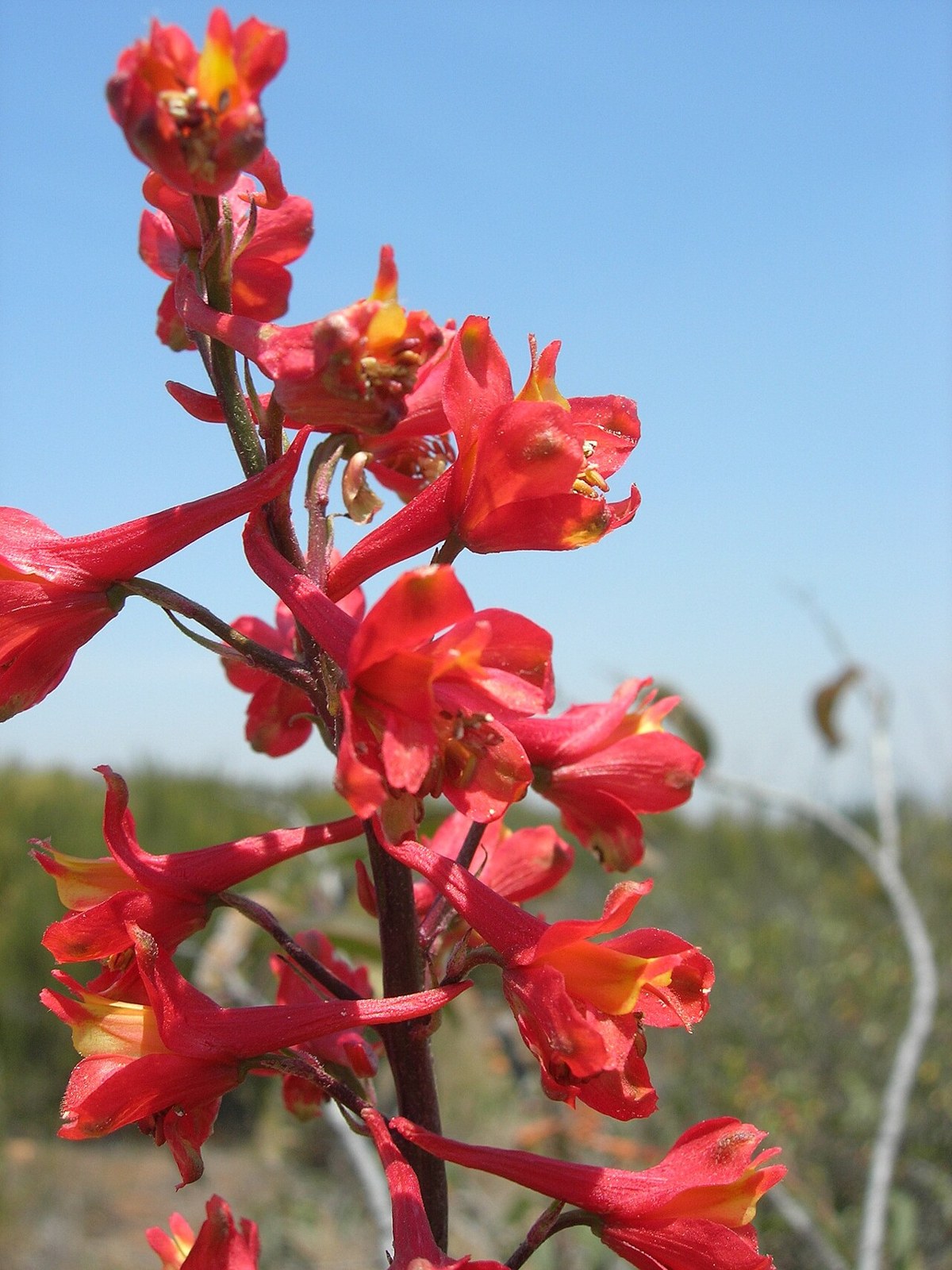
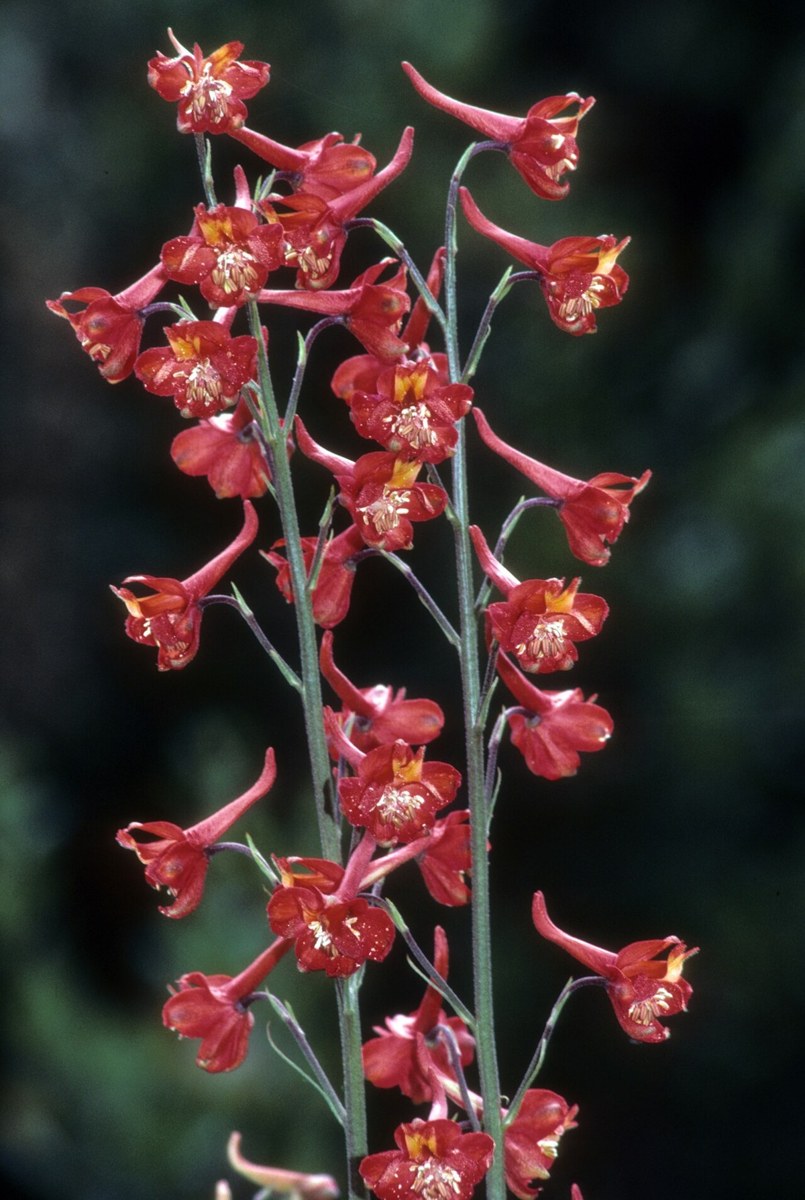
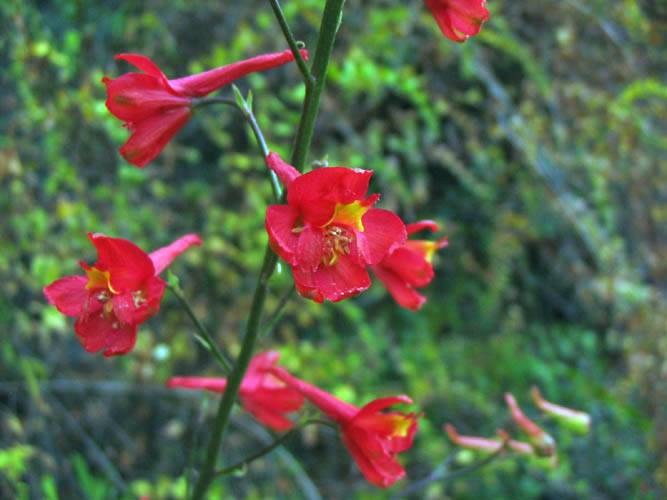
Flowers are borne in a loose, open raceme along the upper stem, each flower 1 to 1½ inches across, brilliant scarlet to red-orange with a conspicuous nectar spur extending backward from the flower, and often a small patch of yellow at the center where the inner petals contrast with the outer sepals. Ten to 40 or more flowers may open in succession along a single stalk. Bloom typically runs from May into July, varying with elevation and rainfall.
Fruit & Seeds
After pollination, flowers develop into small, upright follicles (dry, pod-like fruits) that split open along one side to release numerous small seeds by late summer. The entire above-ground plant then dries and dies back, with the rootstock surviving underground to resprout the following winter.
Quick Facts
| Scientific Name | Delphinium cardinale |
| Family | Ranunculaceae (Buttercup) |
| Plant Type | Perennial herb (summer-dormant) |
| Mature Height | 3–8 ft in flower |
| Mature Spread | 1–2 ft (basal foliage) |
| Growth Rate | Fast in spring; dormant in summer |
| Sun Exposure | Part Shade to Full Sun |
| Water Needs | Low; none needed in summer dormancy |
| Soil Type | Well-drained; rocky or loamy |
| Soil pH | 6.0–7.5 (slightly acidic to neutral) |
| Bloom Time | May – July |
| Flower Color | Scarlet red with yellow center |
| Fall Color | None (dormant; no foliage present) |
| Fruit | Small dry follicles (pods) |
| Deer Resistant | Yes (toxic to browsing animals) |
| USDA Hardiness Zones | 8–10 |
Native Range
Scarlet larkspur is native to California, where county-level records confirm its presence along the central and southern Coast Ranges and inland valleys, continuing south through the Transverse and Peninsular Ranges into San Diego County, with its range extending into northern Baja California, Mexico.
It grows in chaparral, coastal sage scrub, and oak woodland, typically on dry slopes and canyon sides, often in the partial shade of larger shrubs that help shelter its roots during the hot, dry summer dormancy. Elevation ranges from near sea level to around 5,000 feet.
Scarlet larkspur is not native outside California; it should not be confused with the many other Delphinium species found elsewhere in the western United States, some of which have very different bloom color, height, and habitat preferences.
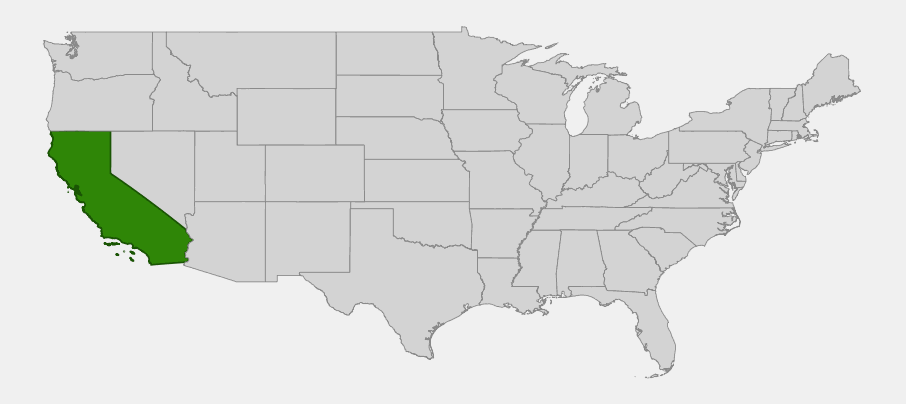
📋 Regional plant lists featuring Scarlet Larkspur: California & Nevada
Growing & Care Guide
Scarlet larkspur rewards patience and a light touch. Because it dies back completely each summer, it is best planted where its dormant season won’t be mistaken for a bare spot and disturbed.
Light
Part shade to full sun suits scarlet larkspur well; in hotter inland gardens, afternoon shade from a nearby shrub or tree helps extend the bloom period and protect the dormant rootstock from excessive summer heat. Coastal gardens can grow it in fuller sun.
Soil & Water
Good drainage is essential, especially during the summer dormant period when the rootstock is vulnerable to rot if kept wet. Water during the active winter and spring growth period to support strong flowering, then withhold water entirely through summer and early fall, allowing the soil to dry as it would naturally in the plant’s native chaparral habitat.
Planting Tips
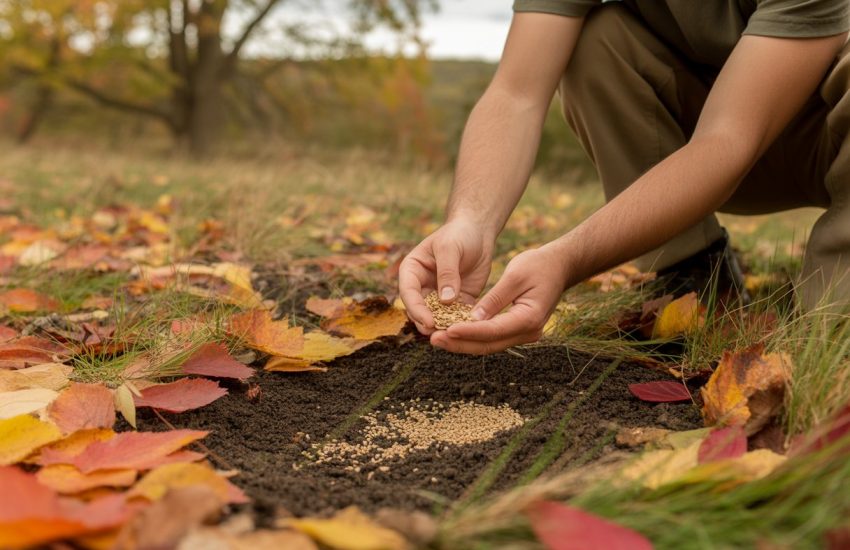
Plant dormant tuberous roots or container stock in fall, ahead of the winter rains. Mark the planting location clearly, since the plant will disappear entirely each summer and the spot can easily be disturbed or overplanted by mistake. Give it some structure to lean against, as the tall flowering stems can benefit from the support of nearby shrubs in windy sites.
Pruning & Maintenance
Allow the foliage and flowering stems to die back naturally after bloom rather than cutting them while still green, since the plant is reabsorbing nutrients into the rootstock during this period. Dry stalks can be cut back once fully brown. No summer maintenance is needed or wanted — avoid any summer irrigation nearby.
Landscape Uses
- Hummingbird gardens — among the showiest native nectar sources in late spring
- Dry chaparral and oak woodland gardens that accommodate summer dormancy
- Naturalistic slope and canyon plantings
- Cut flowers for dramatic seasonal arrangements (handle with care; toxic if ingested)
- Restoration plantings in degraded chaparral habitat
Wildlife & Ecological Value
Scarlet larkspur is one of the most important late-spring nectar plants in California chaparral, with flowers precisely shaped for its primary pollinator.
For Pollinators
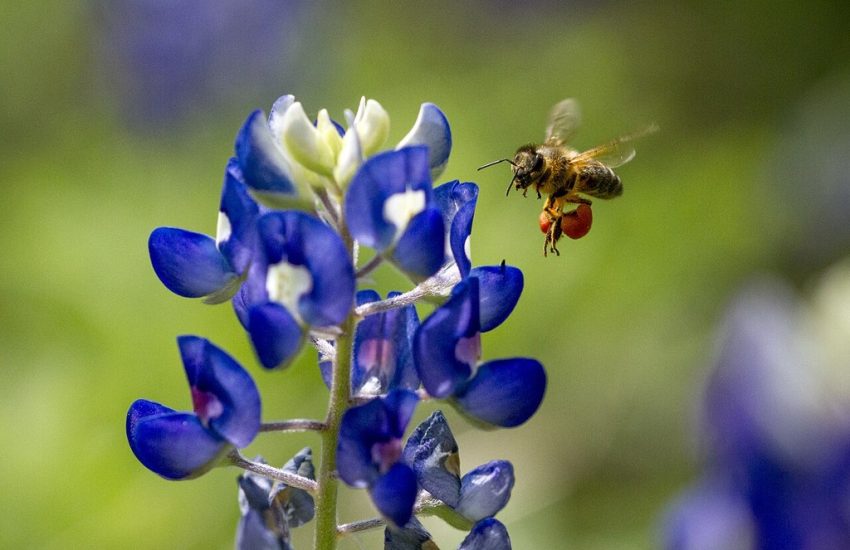
The long nectar spur and bright red color are adaptations for hummingbird pollination; bees generally cannot reach the nectar through the narrow spur and are less significant pollinators than they are for many other chaparral wildflowers.
For Birds
Anna’s, Allen’s, and black-chinned hummingbirds are major visitors, and scarlet larkspur’s late-spring bloom timing helps support hummingbirds during a period when many earlier chaparral wildflowers have already finished flowering.
For Mammals
All parts of the plant are toxic due to diterpenoid alkaloids, and it is avoided by deer and other browsing mammals — a trait shared by the genus Delphinium generally, including the agricultural livestock poisoning concerns associated with rangeland larkspur species in other parts of the West.
Ecosystem Role
By flowering later than many chaparral wildflowers and concentrating its growth in the cooler, wetter months, scarlet larkspur fills a seasonal niche in the pollinator landscape, providing a late pulse of hummingbird-accessible nectar before the long dry season sets in.
Cultural & Historical Uses
Scarlet larkspur’s known toxicity has limited any documented history as a food or medicinal plant; like other delphiniums, the diterpenoid alkaloids present throughout the plant made it a species to be recognized and avoided rather than utilized by Indigenous peoples of its native range.
Historically, the vivid red color of scarlet larkspur made it a conspicuous and well-noted part of the Southern California chaparral landscape, described by early botanists exploring the region’s flora in the 19th century. Its striking appearance has long made it a favorite subject for California wildflower photography and botanical illustration.
In modern horticulture, scarlet larkspur is grown strictly as an ornamental, valued by native plant gardeners specifically for its hummingbird appeal and its contribution of true red color to the late-spring chaparral garden — a shade not common among the genus’s many blue- and purple-flowered relatives.
Frequently Asked Questions
Is scarlet larkspur poisonous?
Yes. All parts of the plant contain toxic diterpenoid alkaloids and should never be eaten by people, pets, or livestock. It is grown strictly as an ornamental and should be handled with care, especially around children and grazing animals.
Why does my scarlet larkspur disappear in summer?
This is normal. Scarlet larkspur is summer-dormant — the entire above-ground plant dies back after flowering and seed set, with the rootstock surviving underground until it resprouts the following winter with the return of rain.
What pollinates scarlet larkspur?
Primarily hummingbirds, which are drawn to the bright red, spurred flowers. The long nectar spur limits access for most bees, making hummingbirds the dominant pollinator for this species.
How tall does scarlet larkspur grow?
Flowering stems typically reach 3 to 8 feet, making it one of the taller wildflowers in its chaparral habitat, though the basal foliage itself stays low to the ground.
Can scarlet larkspur be grown from seed?
Yes, though germination can be slow and benefits from cold-moist stratification over winter, mimicking natural conditions. Many gardeners find it easier to start with container stock or divisions of the tuberous rootstock.

Looking for a nursery that carries Scarlet Larkspur?
Browse our native plant nursery directory: California