Royal Larkspur (Delphinium variegatum)
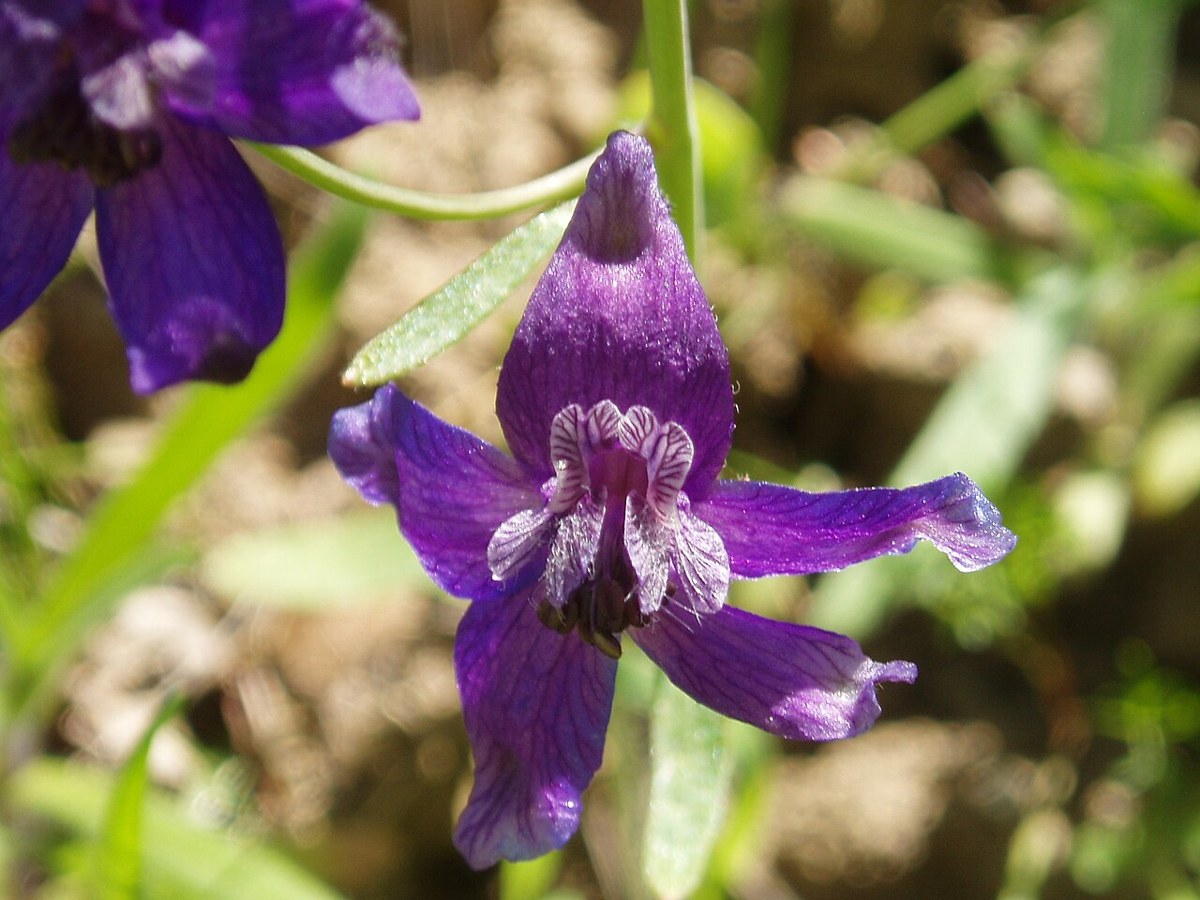
Delphinium variegatum, commonly known as royal larkspur, is a low-growing perennial wildflower of California’s central and northern Coast Ranges, prized for its deep blue-purple flowers marked with a striking patch of white or pale lavender at the center of each bloom. Shorter and earlier-blooming than many of its larkspur relatives, royal larkspur is one of the signature spring wildflowers of the grassy hillsides and oak woodlands ringing the San Francisco Bay Area and the inner Coast Ranges.
Like other members of the genus, royal larkspur grows from a perennial, tuberous rootstock that disappears below ground for most of the year, sending up a rosette of deeply lobed leaves and a single or few-branched flowering stalk with the winter and early spring rains. By early summer the whole plant has dried and vanished, not to reappear until the following winter — a rhythm tied closely to California’s Mediterranean climate of wet winters and bone-dry summers.
All parts of royal larkspur, like all delphiniums, are toxic and should never be eaten. In the garden and in restoration plantings, it is valued purely as an ornamental spring wildflower, grown for its rich color in grassland and oak woodland settings where its need for a dry summer dormancy can be respected.
Identification
Royal larkspur is a herbaceous perennial, considerably shorter than many other California delphiniums, typically reaching only 8 to 20 inches tall in flower, with one to several slender, mostly unbranched stems rising from a basal leaf rosette and a small tuberous rootstock.
Leaves
Leaves are mostly basal, palmately divided into several narrow, rounded to toothed lobes, somewhat succulent in texture, 1 to 3 inches across. A few smaller, less-divided leaves occur along the lower portion of the flowering stem. The foliage emerges with the first substantial winter rains and begins to wither as the plant finishes flowering in spring.
Flowers
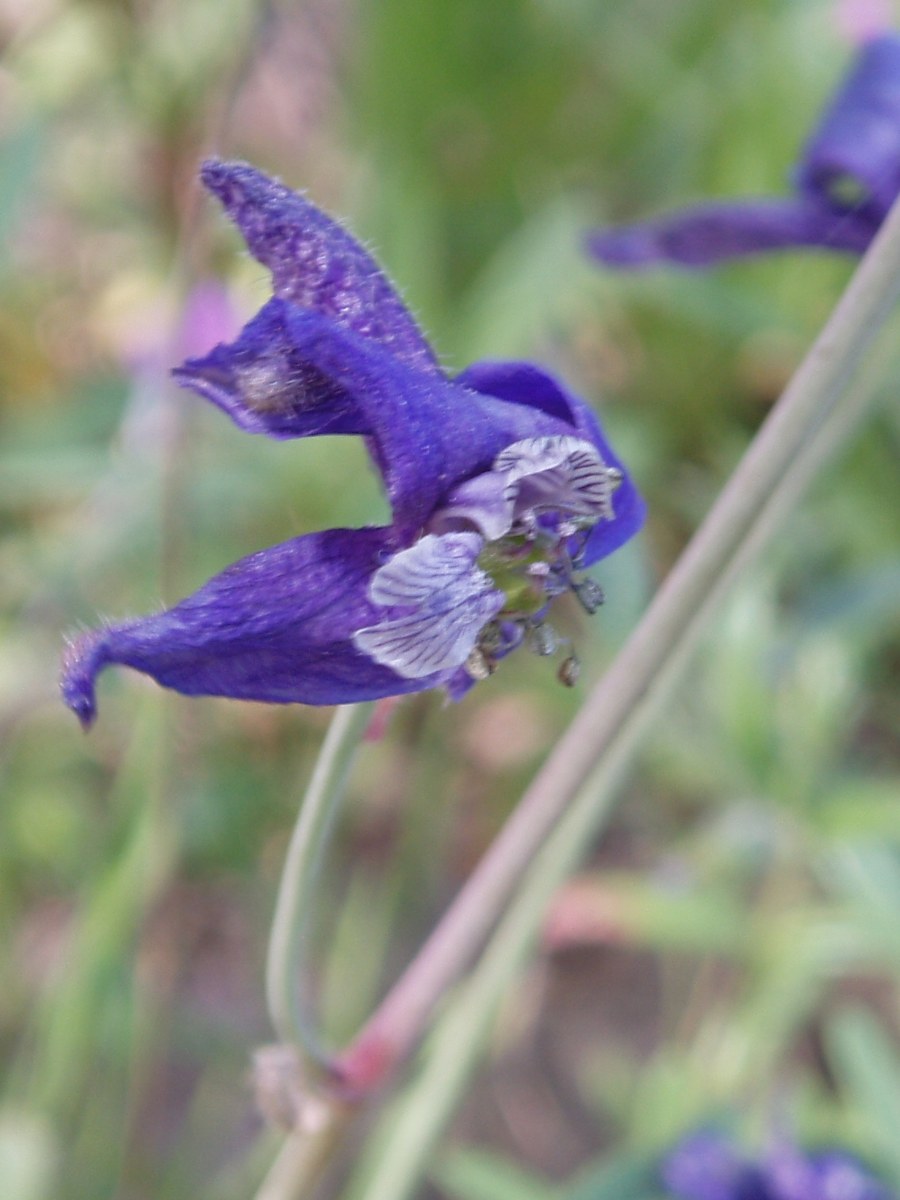
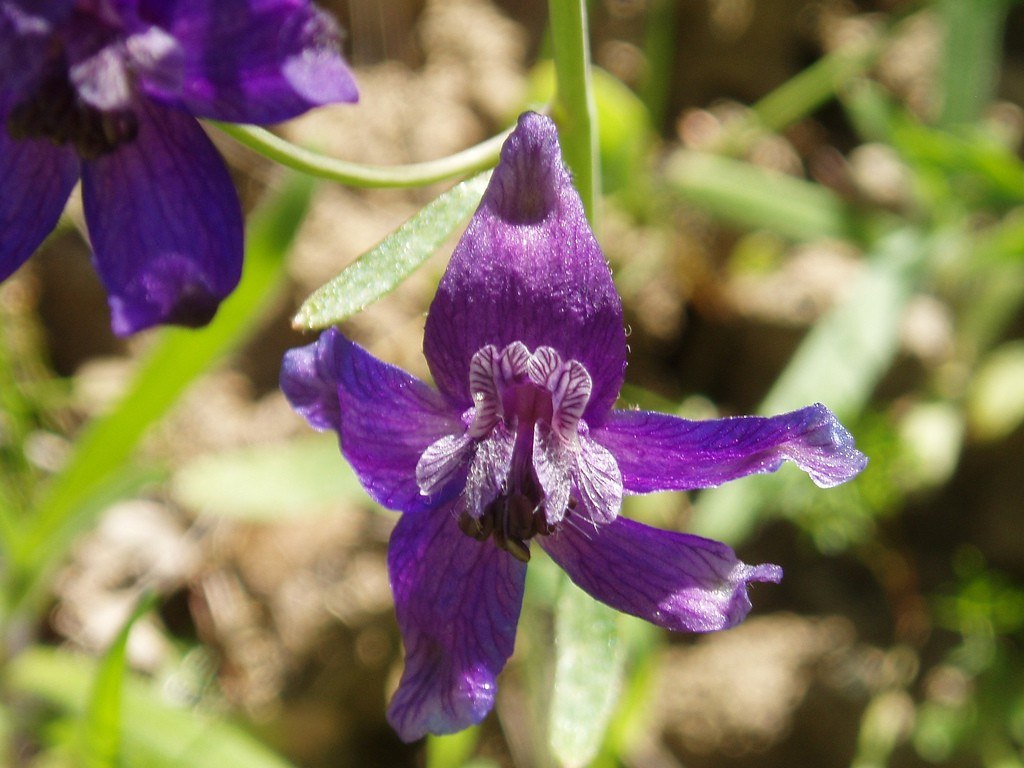
Flowers are borne in a loose, few- to many-flowered raceme at the top of the stem, each flower ¾ to 1¼ inches across, in a rich deep blue to blue-purple (occasionally paler lavender or, rarely, white), with the central petals marked by a distinctive patch of white or pale lavender edged in fine veining — the “variegated” pattern that gives the species its scientific name. A slender nectar spur extends backward from the flower. Bloom typically runs from March into May, among the earlier-flowering larkspurs in California.
Fruit & Seeds
Flowers mature into small, upright follicles that dry and split open to release numerous seeds by late spring to early summer, after which the entire above-ground plant withers and disappears until the following winter’s rains.
Quick Facts
| Scientific Name | Delphinium variegatum |
| Family | Ranunculaceae (Buttercup) |
| Plant Type | Perennial herb (summer-dormant) |
| Mature Height | 8–20 in in flower |
| Mature Spread | 8–12 in (basal foliage) |
| Growth Rate | Fast in winter-spring; dormant in summer |
| Sun Exposure | Full Sun |
| Water Needs | Low; none needed in summer dormancy |
| Soil Type | Well-drained; grassland loam or clay-loam |
| Soil pH | 6.0–7.5 (slightly acidic to neutral) |
| Bloom Time | March – May |
| Flower Color | Deep blue-purple with white-mottled center |
| Fall Color | None (dormant; no foliage present) |
| Fruit | Small dry follicles (pods) |
| Deer Resistant | Yes (toxic to browsing animals) |
| USDA Hardiness Zones | 8–10 |
Native Range
Royal larkspur is native to California, where county-level records confirm its presence through the central and northern Coast Ranges, including the San Francisco Bay Area counties, extending into portions of the inner Coast Ranges and the Sierra Nevada foothills.
It grows in open grassland, grassy oak woodland, and coastal bluffs and hillsides, often in heavy clay or serpentine-influenced soils, generally from near sea level to around 3,000 feet elevation. It is frequently found in the same grassy, oak-dotted hillside habitat favored by many of California’s best-known spring wildflower displays.
Royal larkspur’s range is centered on central and northern California and does not extend into Southern California’s chaparral belt in the way that some other native delphiniums do; gardeners should source plants appropriate to their specific region within the state.
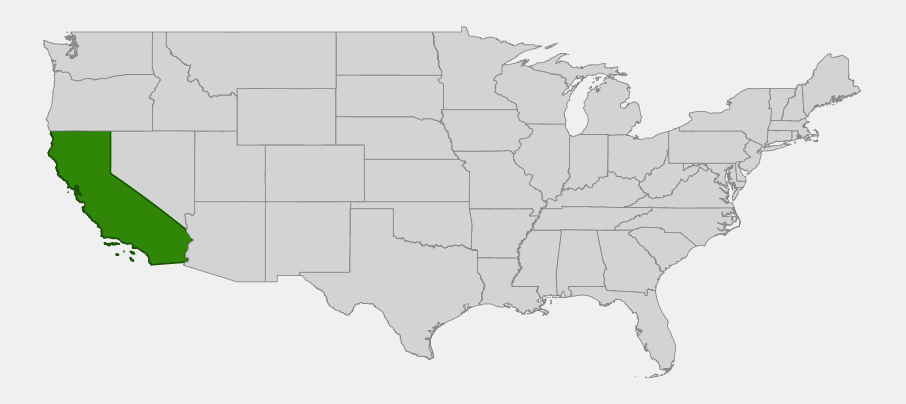
📋 Regional plant lists featuring Royal Larkspur: California & Nevada
Growing & Care Guide
Royal larkspur is a good choice for gardeners wanting authentic California grassland character, as long as its dormancy cycle is understood and accommodated.
Light
Full sun is best, matching its native open grassland and hillside habitat. It can tolerate the light shade of scattered oaks, which is common in its wild setting, but dense shade will reduce flowering.
Soil & Water
Royal larkspur tolerates a range of well-drained soils, including heavier clay-loam typical of California grassland, and even thin, serpentine-influenced soils in parts of its range. Water during the winter and spring growing season to support healthy flowering, then withhold water completely through the summer dormant period — consistent summer moisture is the most common way to lose this species, since the rootstock needs a dry rest.
Planting Tips
Plant dormant roots or container stock in fall ahead of winter rains, in a spot that will not be irrigated through summer. Royal larkspur mixes naturally with California bunchgrasses and spring annual wildflowers, and is well suited to naturalistic meadow or grassland plantings rather than a conventional, regularly watered border.
Pruning & Maintenance
Let the plant die back naturally after flowering and seed set; avoid cutting back green foliage, since the plant is still drawing nutrients into its rootstock. Once fully dry, spent stalks can be removed or simply left to weather in a naturalistic planting. No summer care is required — and none should be given.
Landscape Uses
- California native grassland and meadow gardens
- Oak woodland understory plantings with seasonal dormancy
- Spring wildflower displays mixed with poppies and lupines
- Pollinator gardens focused on native bees
- Restoration plantings in degraded coastal grassland habitat
Wildlife & Ecological Value
Royal larkspur contributes early-spring color and nectar to California’s grassland and oak woodland plant communities, at a time when many summer-blooming natives have not yet started growth.
For Pollinators
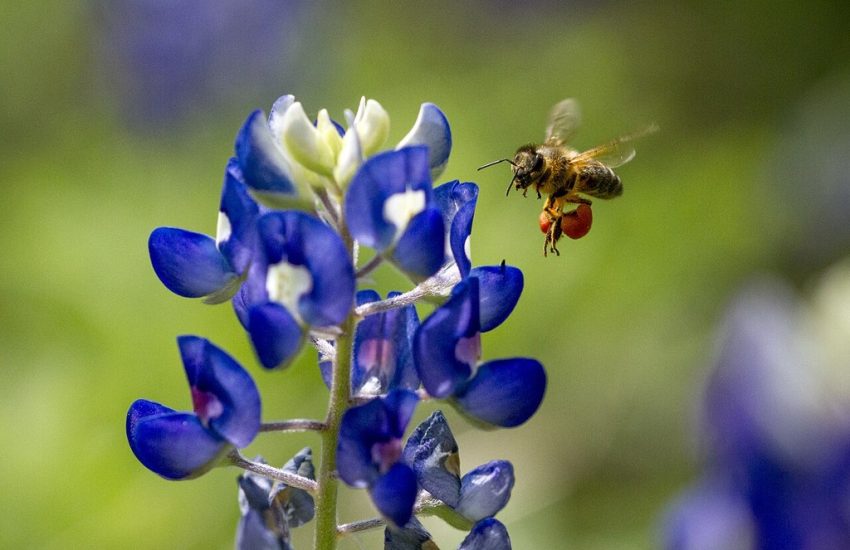
Unlike the hummingbird-pollinated scarlet larkspur, royal larkspur’s shorter nectar spur and flower structure make it more accessible to large-bodied native bees, including bumblebees, which are considered important pollinators for this and several related blue- and purple-flowered Delphinium species.
For Birds
While not a primary hummingbird plant in the way some of its red-flowered relatives are, royal larkspur’s early bloom still provides incidental nectar for hummingbirds moving through grassland and oak woodland habitat in search of other spring-blooming resources.
For Mammals
Like all delphiniums, royal larkspur is toxic and avoided by deer and other grazing animals — a trait that, on a landscape scale, is part of why larkspur species are a recognized concern for livestock grazing on California and western rangelands generally.
Ecosystem Role
As a geophyte-like perennial tied closely to the winter-wet, summer-dry rhythm of California’s Mediterranean climate, royal larkspur is part of a broader community of native bulbs and tuberous perennials that define the character of the state’s grassland and oak woodland wildflower displays each spring.
Cultural & Historical Uses
Like other members of its toxic genus, royal larkspur does not have a significant documented history as a food or medicinal plant; its toxicity would have made it a species to recognize and avoid rather than use among Indigenous peoples within its range.
The species name variegatum refers to the distinctive white-mottled pattern at the center of its flowers, a feature that has long made it a recognizable and well-documented component of California’s spring wildflower displays in historical botanical surveys of the Coast Ranges and Bay Area.
In contemporary native plant horticulture, royal larkspur is grown as part of the broader revival of interest in California grassland wildflower gardening, valued for its rich color and its compatibility with bunchgrass meadow plantings that aim to recreate something of the state’s pre-settlement grassland character.
Frequently Asked Questions
Is royal larkspur poisonous?
Yes. Like all delphiniums, royal larkspur contains toxic alkaloids throughout the plant and should never be eaten by people, pets, or livestock. It is grown strictly as an ornamental.
Why does royal larkspur disappear after spring?
This is expected. Royal larkspur is a summer-dormant perennial — the above-ground growth dies back completely after flowering, and the plant survives as a tuberous rootstock underground until the following winter’s rains trigger new growth.
How is royal larkspur different from scarlet larkspur?
Royal larkspur is shorter (8 to 20 inches versus 3 to 8 feet), blooms earlier, has deep blue-purple rather than red flowers, and is primarily bee-pollinated rather than hummingbird-pollinated. The two also occupy different, though sometimes overlapping, parts of California.
What pollinates royal larkspur?
Large native bees, including bumblebees, are considered important pollinators, drawn to the deep blue-purple flowers and able to access the nectar more easily than they can in longer-spurred, hummingbird-adapted larkspur species.
Can royal larkspur grow in a regularly watered garden bed?
Not successfully long-term. It needs a dry summer rest to thrive, so it is best planted in a dedicated dry-summer area, such as a grassland or oak woodland themed garden, rather than mixed with plants that need regular summer irrigation.

Looking for a nursery that carries Royal Larkspur?
Browse our native plant nursery directory: California