
Canadian Gooseberry (Ribes oxyacanthoides)
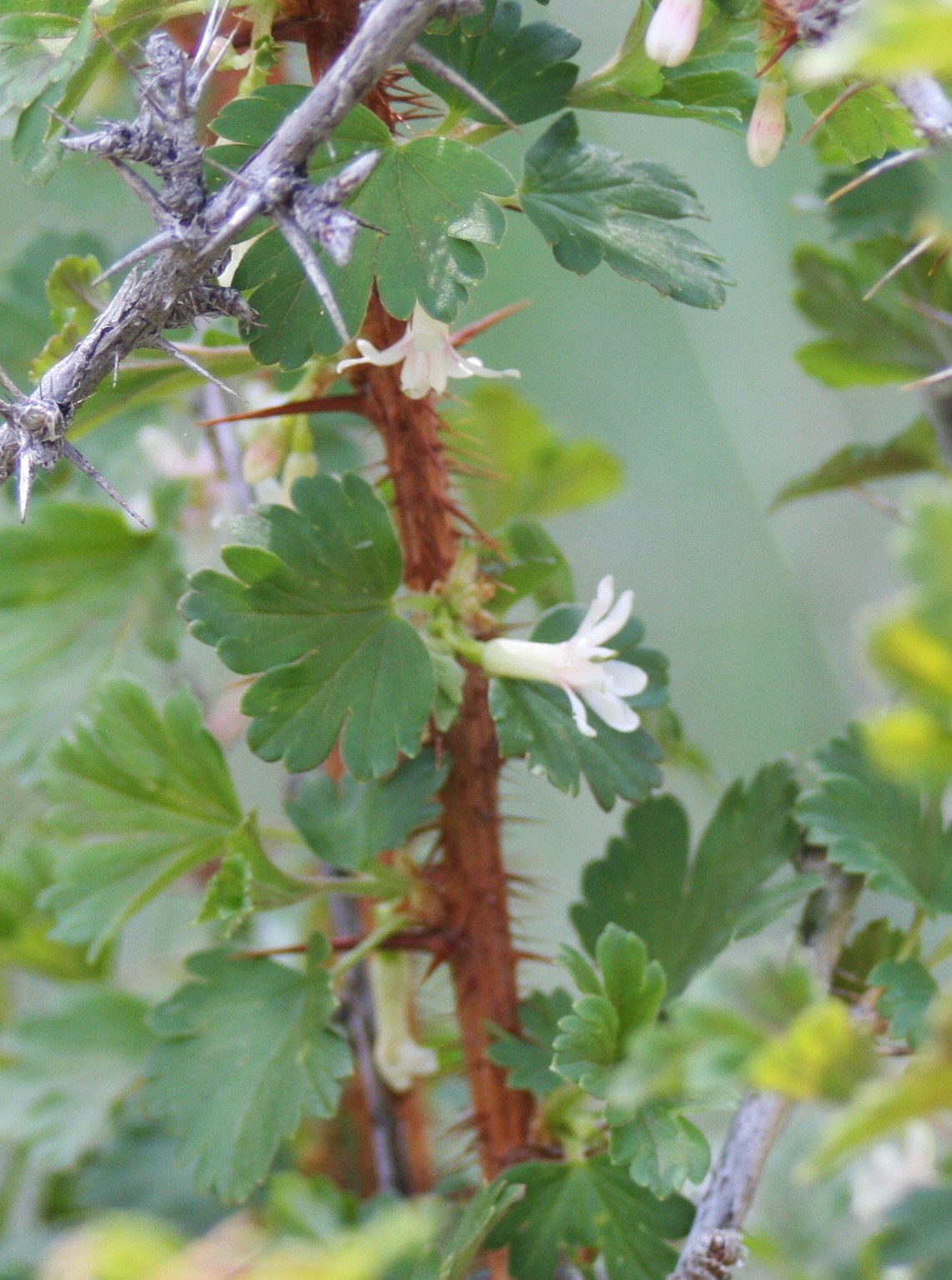
Ribes oxyacanthoides, the Canadian Gooseberry (also called northern gooseberry), is a prickly native shrub that ranges from Alaska across Canada to Hudson Bay and Newfoundland, and south through the Rocky Mountains, the Great Basin and the northern Great Plains and Great Lakes states. It grows in moist woods, thickets, stream banks, rocky slopes and forest edges.
It is a low to medium shrub with bristly stems armed with spines at the nodes, small, lobed leaves, and little greenish-white to pinkish flowers that hang from the leaf axils in spring. Its smooth berries ripen from green to reddish-purple or black and are edible and tasty, much like a small cultivated gooseberry.
Botanists now include several western gooseberries in this species as subspecies, including the inland gooseberry (ssp. setosum), Idaho gooseberry (ssp. irriguum) and Umatilla gooseberry (ssp. cognatum). This guide covers how to identify it, where it grows, how to grow it and its value to wildlife.
Identification
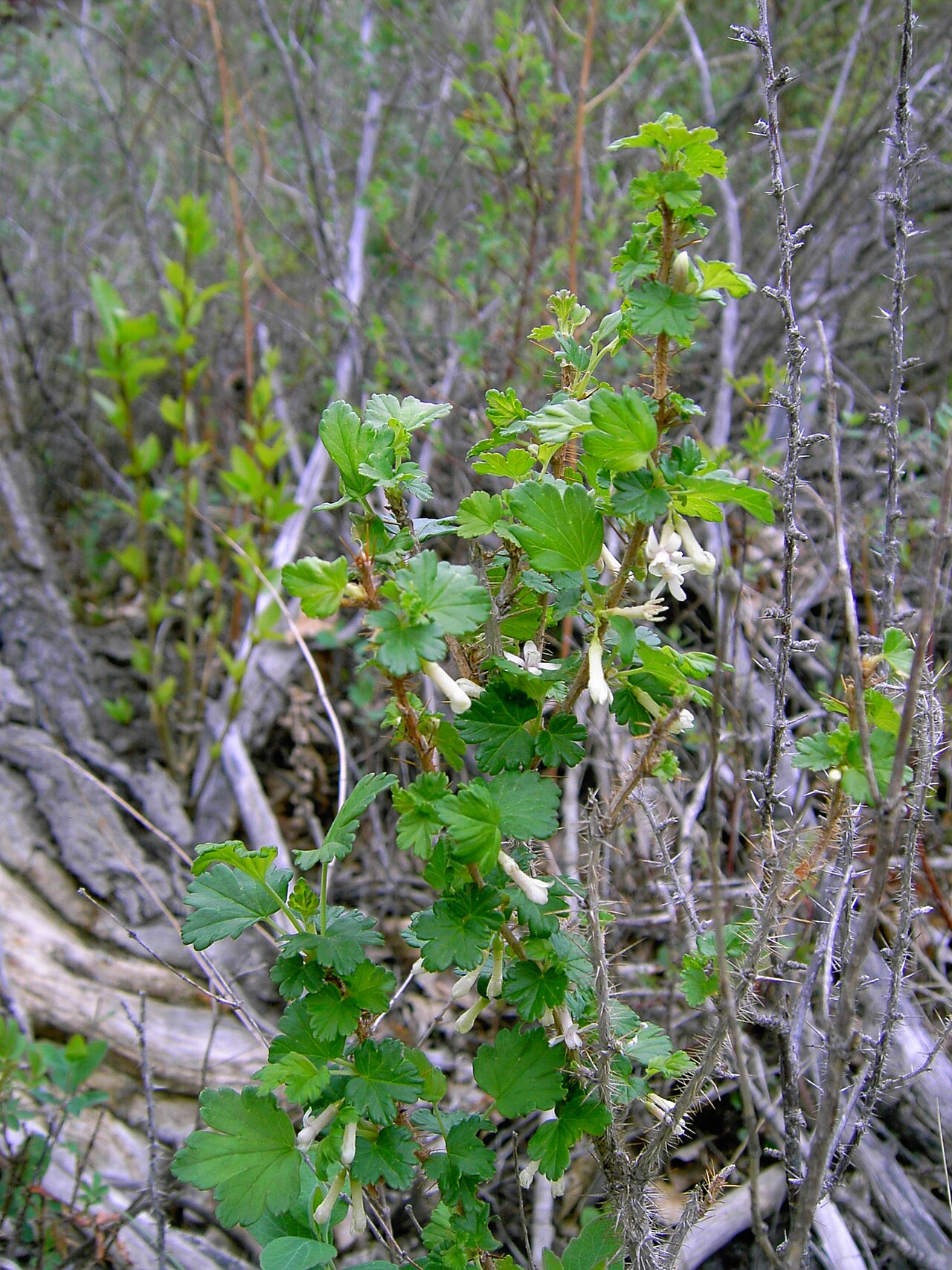
Canadian gooseberry is a spiny shrub with bristly stems, small palmately lobed leaves, nodding whitish flowers in ones to threes, and smooth berries.
Stems
It grows 1½ to 6 feet tall, with upright to arching stems. The young stems are usually covered with fine bristles, and there are one to three stout spines, up to ½ inch long, at each node. Older bark is gray to reddish-brown. The amount of bristles varies by subspecies; some forms are nearly smooth between the nodes.
Leaves
The leaves are alternate, roundish, about ½ to 1½ inches wide, and palmately three- to five-lobed with rounded teeth. They range from smooth to finely hairy or glandular, and turn yellow to reddish in fall.
Flowers
In spring, from about May to June, small bell-shaped flowers hang singly or in twos or threes from the leaf axils. They are about ⅓ inch long, greenish-white to pinkish, with spreading sepals, small white petals and stamens about as long as the petals.
Fruit & Look-alikes
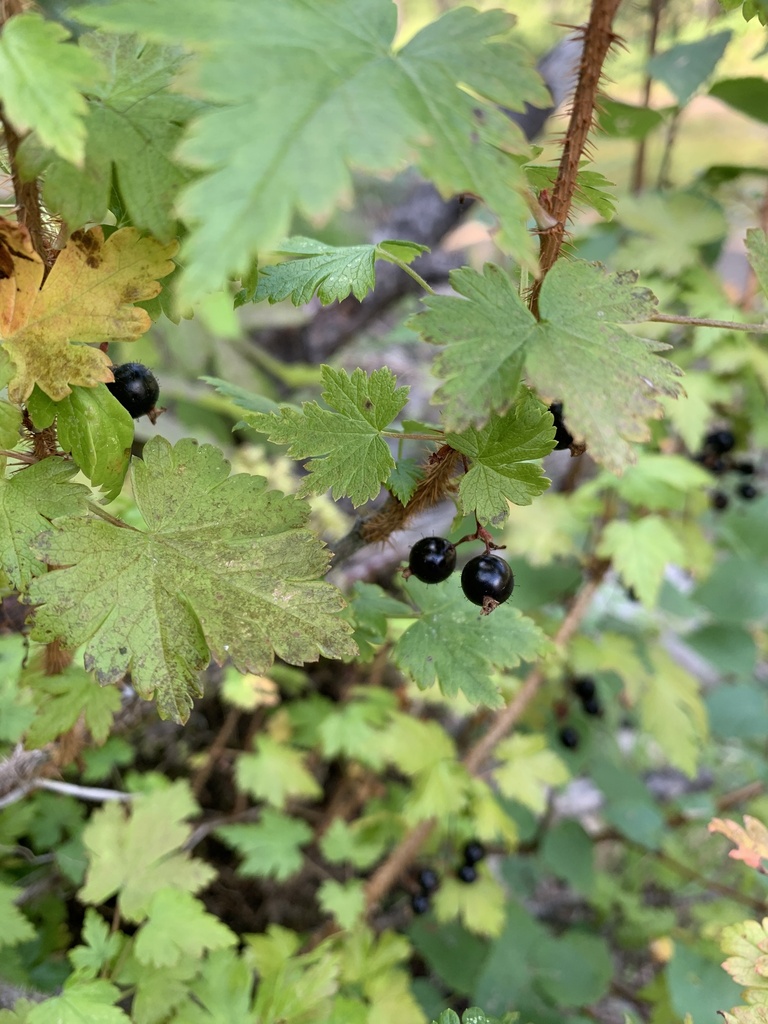
The berries are round, about ⅓ to ⅝ inch across, smooth (not prickly), ripening from green to reddish, purple or black in mid to late summer. Swamp Currant is also spiny but has bristly black berries in drooping clusters. Smooth Gooseberry of the East has fewer or no bristles on the stems. The introduced European gooseberry has larger, often hairy fruit.
Quick Facts
| Scientific Name | Ribes oxyacanthoides L. |
| Family | Grossulariaceae (currant and gooseberry family) |
| Plant Type | Deciduous spiny shrub |
| Mature Height | 1½–6 ft |
| Mature Spread | 2–5 ft |
| Growth Rate | Moderate |
| Sun Exposure | Full sun to partial shade |
| Water Needs | Moderate; tolerates some drought |
| Soil Type | Moist loam, sandy or rocky soil |
| Soil pH | About 5.5–8.0 |
| Bloom Time | May–June |
| Flower Color | Greenish-white to pinkish |
| Fall Color | Yellow to reddish |
| Fruit | Smooth reddish-purple to black berry; edible |
| Deer Resistant | Moderate; spines deter some browsing |
| USDA Hardiness Zones | 2–6 |
Native Range
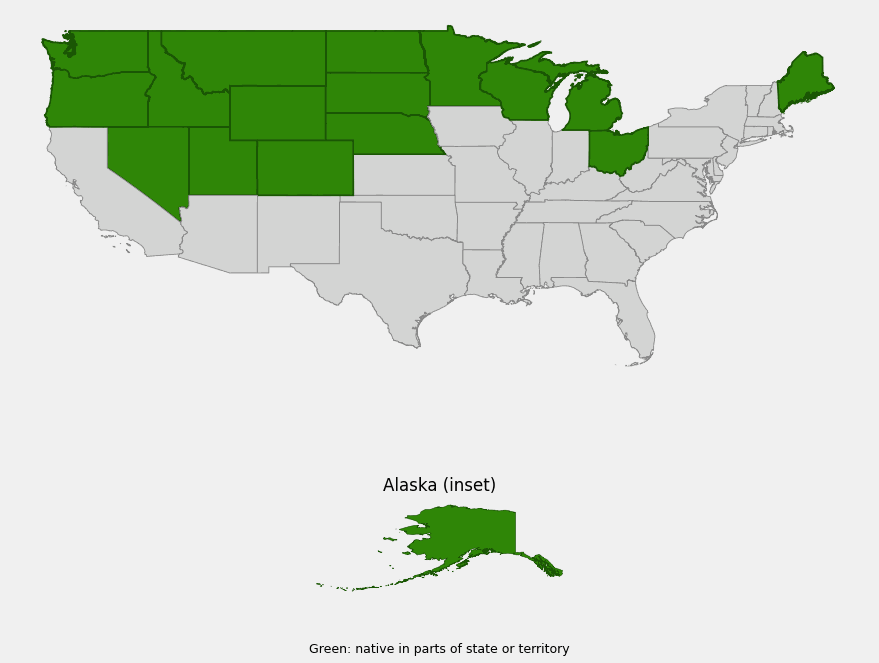
Canadian gooseberry has a broad northern and western range. In Canada it grows from Yukon and the Northwest Territories across British Columbia and the Prairie Provinces to Ontario and Quebec. In the United States, USDA PLANTS lists it in Alaska and in Washington, Oregon, Idaho, Montana, Wyoming, Nevada, Utah, Colorado, North Dakota, South Dakota, Nebraska, Minnesota, Wisconsin and Michigan, with outlying records in Ohio and Maine.
Its subspecies have different ranges. The typical form (ssp. oxyacanthoides) is northern and boreal. Inland gooseberry (ssp. setosum) grows on the northern Great Plains and in the Rocky Mountains. Idaho gooseberry (ssp. irriguum) and Umatilla gooseberry (ssp. cognatum) are plants of the interior Pacific Northwest, and Henderson’s gooseberry (ssp. hendersonii) grows in the mountains of Idaho, Montana and Nevada.
It grows in moist to fairly dry places: stream banks, riparian thickets, aspen groves, moist coniferous and mixed woods, coulees and ravines on the plains, rocky slopes and forest openings, from low elevations to the subalpine zone.
📋 Regional plant lists featuring Canadian Gooseberry: Alaska · Nebraska, Kansas & Eastern Colorado · North Dakota, South Dakota & Western Minnesota · Montana & Wyoming · Idaho, Eastern Oregon & Eastern Washington · Western Oregon & Western Washington · Utah & Western Colorado · California & Nevada · Michigan, Wisconsin & Eastern Minnesota · Ohio & Indiana · New Hampshire, Maine & Vermont
Growing & Care Guide
Canadian gooseberry is offered by some native nurseries and conservation districts in the northern Plains and Rocky Mountain states. It is a hardy, low-maintenance shrub for wildlife plantings, hedgerows and edible landscapes in cold climates. Check local rules before planting: like all Ribes, it can host white pine blister rust, and some areas restrict planting currants and gooseberries near five-needle pines.
Light
Full sun to partial shade. Fruit production is best with at least half a day of sun.
Soil & Water
It grows in a wide range of soils, from moist loam to sandy and rocky ground, and prefers even moisture but tolerates moderate drought once established. Good drainage helps prevent root problems.
Planting Tips
Plant in spring or fall, 3 to 4 feet apart, along a woodland edge, in a hedgerow or in a wildlife thicket. Its spines make it a useful barrier planting. Wear gloves when handling it.
Pruning & Maintenance
Prune in late winter, removing a few of the oldest stems at the base, since gooseberries fruit best on two- to three-year-old wood. Watch for powdery mildew and for imported currantworm (sawfly larvae), which can strip the leaves in early summer.
Propagation
Take hardwood cuttings in late fall or winter, or layer low stems. Seed needs about three months of cold, moist stratification and often germinates over two seasons.
Landscape Uses
- Wildlife hedgerows: spiny cover and summer fruit for birds
- Edible landscaping: tasty native gooseberries for fresh eating or jam
- Riparian and woodland edge restoration: hardy native shrub for cold climates
- Barrier plantings: dense, spiny stems
Wildlife & Ecological Value
Canadian gooseberry provides spring nectar, summer fruit and dense, protective cover.
For Pollinators
The small, hanging flowers are pollinated mainly by bumble bees and other bees, which visit for nectar and pollen in spring. Gooseberries are host plants for the gray comma and other comma butterflies and for several moths.
For Birds
Thrushes, robins, waxwings, grouse and other birds eat the berries, and the spiny thickets provide safe nesting cover for songbirds.
For Mammals
Bears, chipmunks, squirrels and other small mammals eat the fruit, and deer, elk and moose browse the leaves and twigs to some extent despite the spines.
Ecosystem Role
It is part of the shrub layer of boreal and mountain woods and prairie coulees, where it helps hold soil on stream banks and slopes. Like all Ribes, it is an alternate host of white pine blister rust.
Cultural & Historical Uses
Carl Linnaeus named Ribes oxyacanthoides in 1753 from North American material. The species name means “like Oxyacantha,” an old name for hawthorn, referring to its spines.
Indigenous peoples across its range ate the berries fresh, dried or mixed with other foods, and some used the roots, stems or leaves medicinally.
Several western gooseberries were long treated as separate species, such as Ribes setosum, R. irriguum and R. cognatum. Modern floras combine them as subspecies of a single, variable R. oxyacanthoides, and they intergrade where their ranges meet.
Frequently Asked Questions
Are Canadian gooseberries edible?
Yes. The ripe berries are tart-sweet and can be eaten fresh or cooked into pies and jams. Be sure of the identification before eating any wild fruit.
How do I recognize Canadian gooseberry?
Look for a spiny shrub with bristly stems, one to three spines at each node, small lobed leaves, small hanging whitish flowers and smooth berries that ripen reddish-purple to black.
Where does Canadian gooseberry grow?
From Alaska across Canada and south through the Rocky Mountains, Great Basin, northern Great Plains and Great Lakes states, in moist woods, thickets and stream banks.
Can I plant Canadian gooseberry near white pines?
It is best not to. All gooseberries and currants can host white pine blister rust, and some areas restrict planting them. Check local regulations.
What are inland gooseberry and Idaho gooseberry?
They are subspecies of Canadian gooseberry: inland gooseberry (ssp. setosum) of the Plains and Rockies, and Idaho gooseberry (ssp. irriguum) of the interior Pacific Northwest.

Looking for a nursery that carries Canadian Gooseberry?
Browse our native plant nursery directory: Alaska · Colorado · Idaho · Maine, Michigan, Minnesota & Montana · Nebraska, Nevada, North Dakota & Ohio · Oregon · South Dakota & Utah · Washington · Wisconsin & Wyoming

