
Wingleaf Primrose-willow (Ludwigia decurrens)
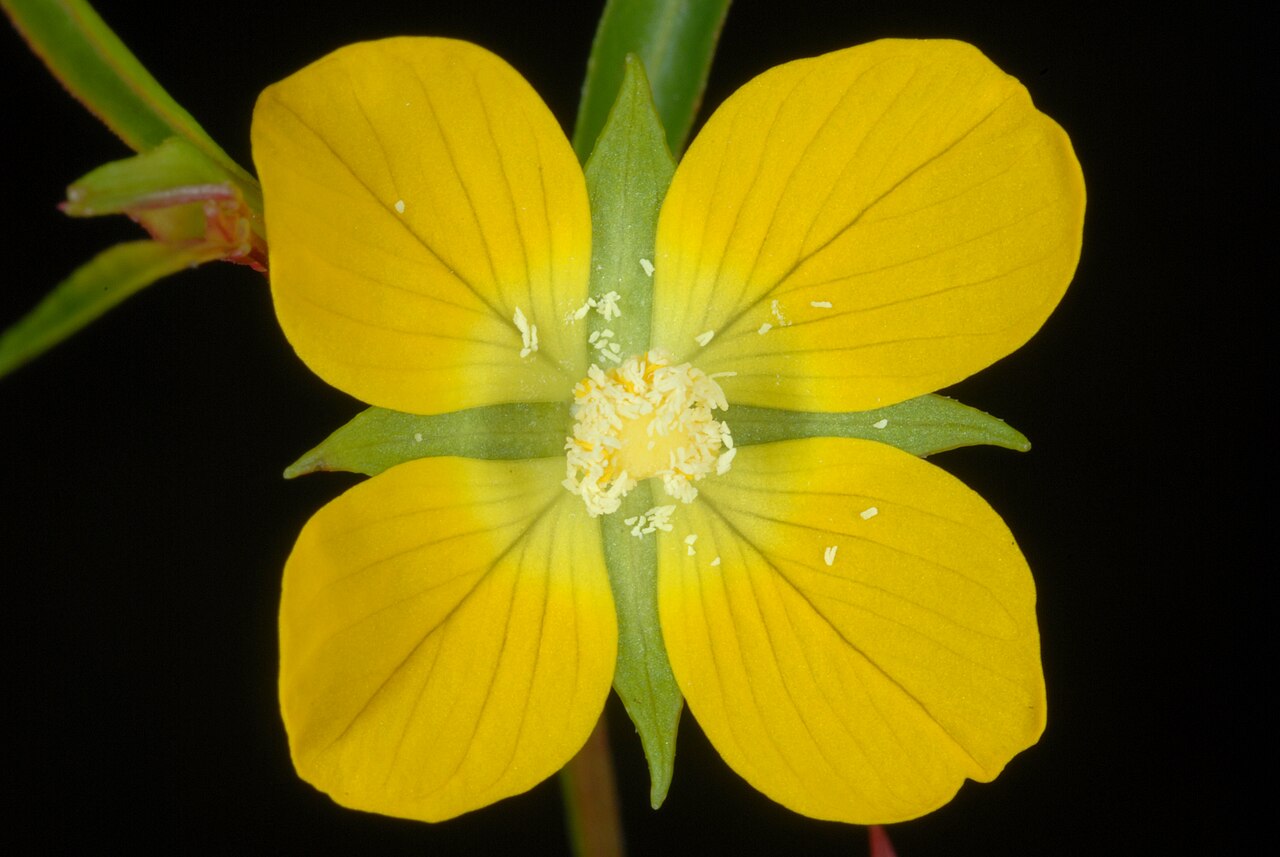
Ludwigia decurrens, the Wingleaf Primrose-willow (also called willow primrose or winged water-primrose), is a tall, upright wetland wildflower of the southern and central United States, Puerto Rico and tropical America. It grows in marshes, ditches, pond and river margins, wet fields, swamp openings and other places with wet soil or shallow water.
Its name comes from its winged stems: the bases of the leaves run down the stem as narrow ridges, or “wings,” giving the stem a four-angled look. From summer to fall it bears showy, bright yellow, four-petaled flowers, followed by slender, four-angled capsules packed with tiny seeds.
It is an annual or short-lived perennial that can grow 2 to 6 feet tall in a single season and often appears in large numbers on freshly exposed mud. This guide covers how to identify it, where it grows, how to use it in wet gardens and restorations, and its value to wildlife.
Identification
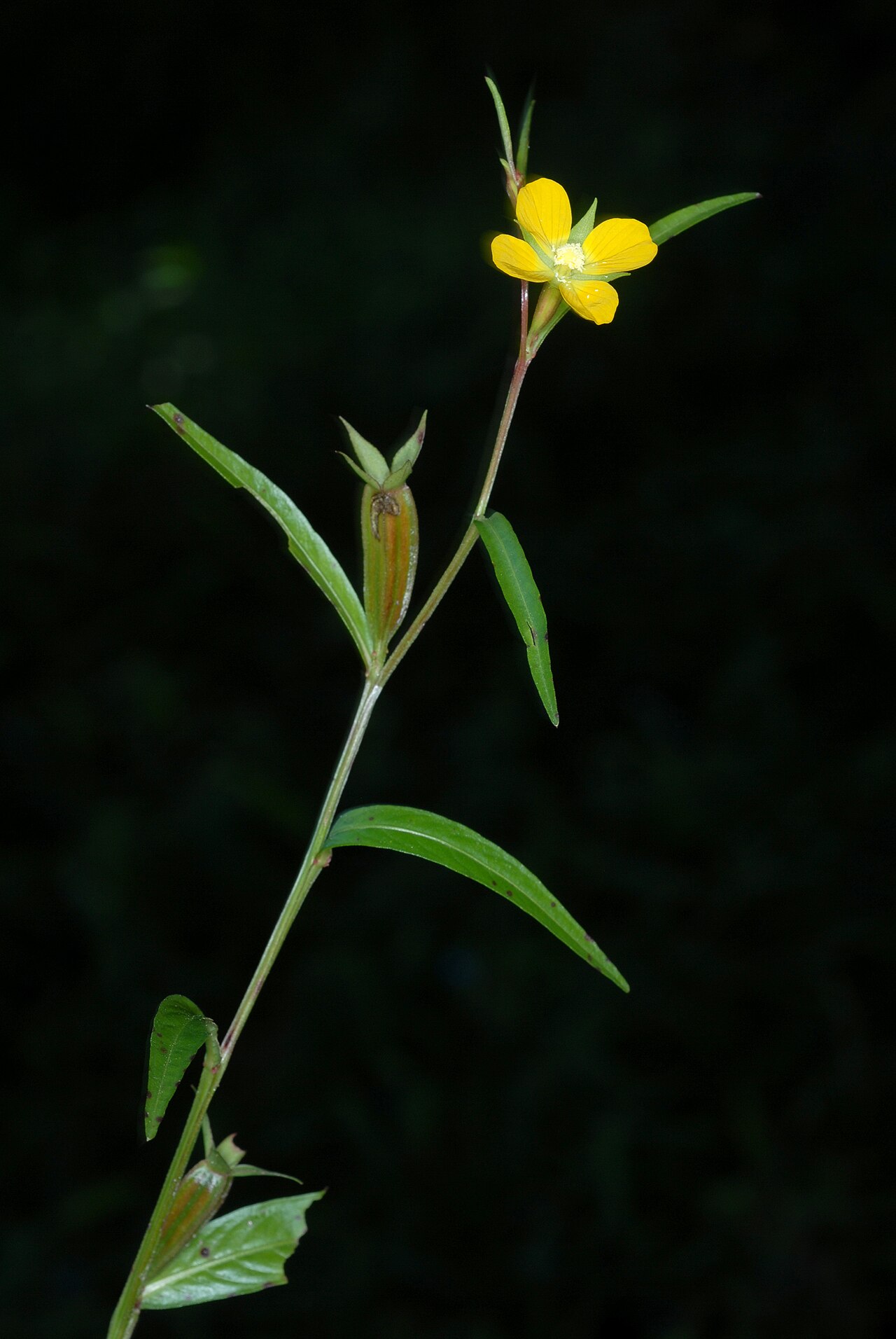
Wingleaf primrose-willow is a tall, branching, hairless wetland plant with winged, angled stems, narrow alternate leaves and bright yellow flowers with four petals.
Stems
The stems are upright and branching, 1½ to 6 feet tall, smooth, and often reddish at the base. Their most distinctive feature is the narrow wings that run down from the leaf bases, making the stems sharply four-angled. Older stems can become somewhat woody at the base, and plants growing in water may form spongy, air-filled tissue on submerged parts.
Leaves
The leaves are alternate, stalkless, lance-shaped to narrowly elliptic, about 2 to 6 inches long, with smooth edges and pointed tips. Their bases extend down the stem (decurrent), forming the wings.
Flowers
From about June to October, single flowers open in the upper leaf axils. Each is about 1 inch across, with four bright yellow, rounded petals, four green, pointed sepals and eight stamens around a pale center.
Fruit & Look-alikes
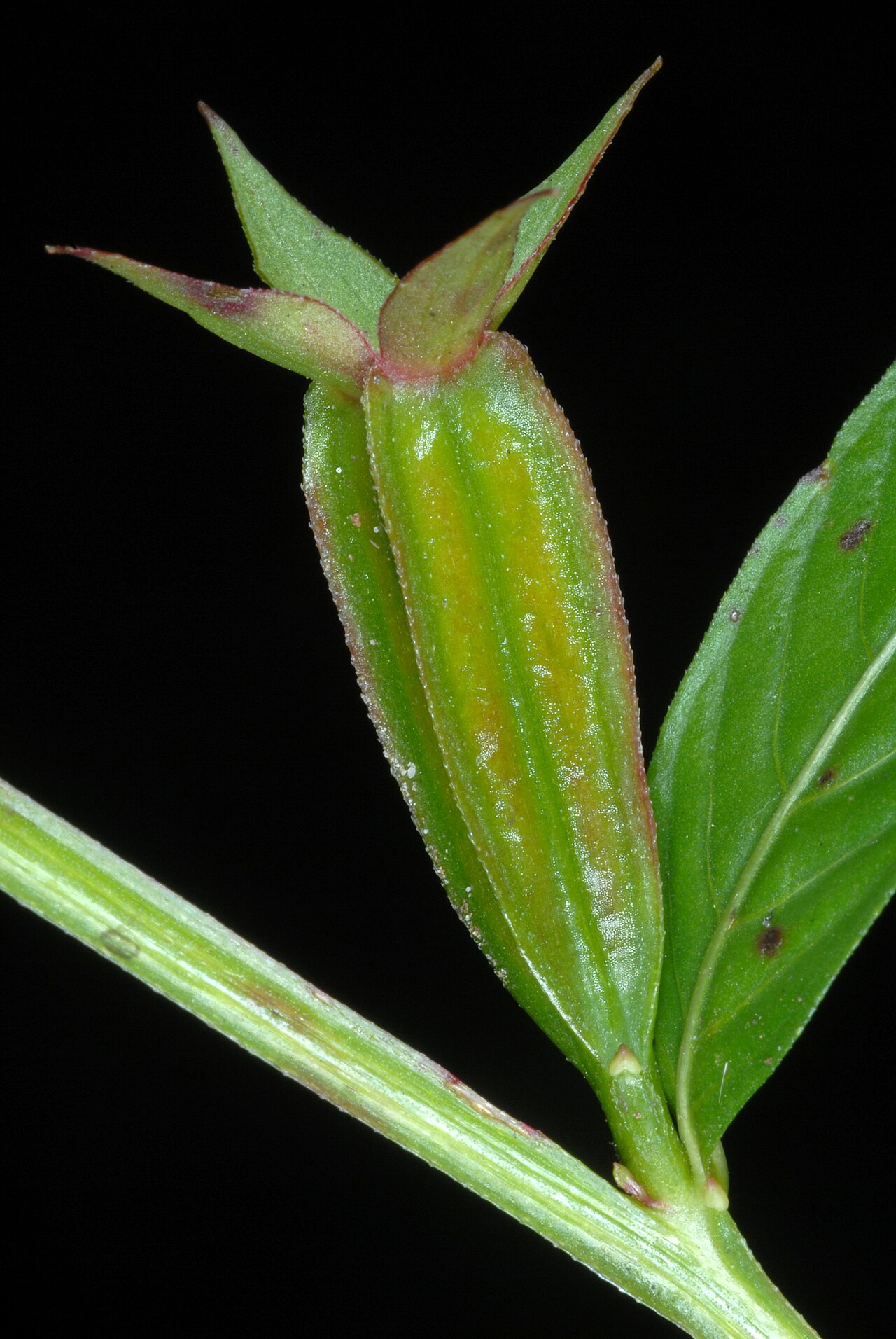
The capsule is slender and four-angled or narrowly winged, about ½ to ¾ inch long, topped by the persistent sepals. It holds many tiny seeds. Mexican Primrose-willow (L. octovalvis) is similar but usually hairy and has round, unwinged stems and longer, cylindrical capsules. Seedbox (L. alternifolia) has smaller flowers and cube-shaped capsules.
Quick Facts
| Scientific Name | Ludwigia decurrens Walter |
| Family | Onagraceae (evening primrose family) |
| Plant Type | Annual or short-lived perennial wetland herb |
| Mature Height | 1½–6 ft |
| Mature Spread | 1–3 ft |
| Growth Rate | Fast |
| Sun Exposure | Full sun to partial shade |
| Water Needs | Wet; saturated soil or shallow water |
| Soil Type | Mud, muck, wet sand or clay |
| Soil pH | About 5.0–7.5 |
| Bloom Time | June–October |
| Flower Color | Bright yellow |
| Fall Color | Stems and leaves often turn red |
| Fruit | Slender, four-angled capsule with many tiny seeds |
| Deer Resistant | Moderate |
| USDA Hardiness Zones | 5–11 |
Native Range
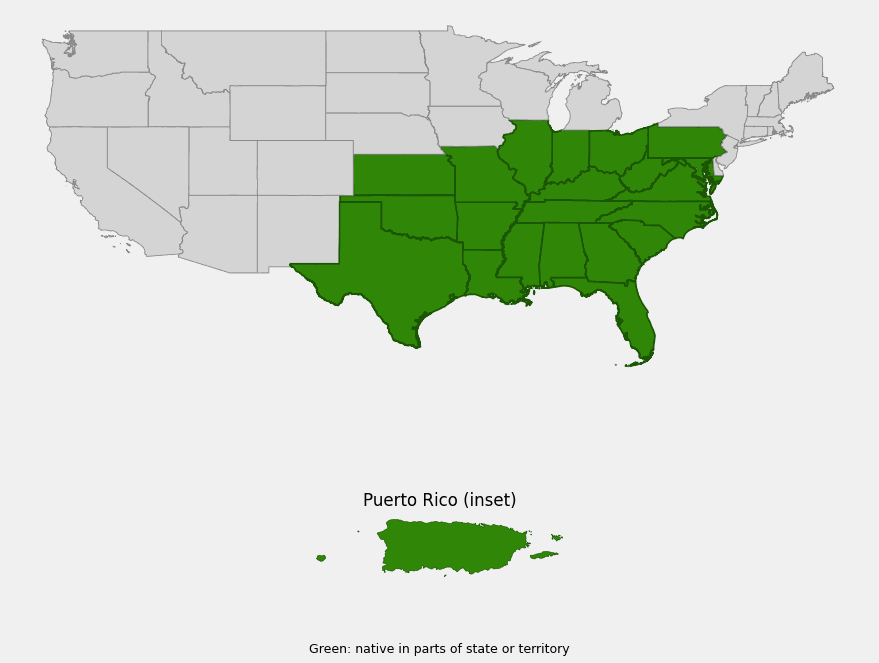
Wingleaf primrose-willow is native to the southern and central United States, Puerto Rico and the American tropics. USDA PLANTS lists it from Florida, Georgia and the Carolinas west to Texas, Oklahoma and Kansas, and north through the Mississippi and Ohio valleys to Missouri, Illinois, Indiana, Ohio, Kentucky, Tennessee, West Virginia, Virginia, Maryland and Pennsylvania, as well as in Puerto Rico.
It is most common on the Coastal Plain and in the lower Mississippi Valley. Toward the northern edge of its range it is more scattered, mostly along rivers, ditches and reservoir shores. In Puerto Rico it grows in wet lowland pastures, ditches and marshes.
It grows in full sun to partial shade on wet ground: marshes, wet meadows and fields, ditches, pond, lake and reservoir margins, sloughs, river and stream banks, swamp openings and rice fields. It often colonizes bare mud exposed when water levels drop. Outside the Americas it has been introduced to Africa and Asia, where it is a weed of rice paddies.
📋 Regional plant lists featuring Wingleaf Primrose-willow: North & South Florida · Alabama, Georgia & Mississippi · North & South Carolina · Maryland, Virginia & West Virginia · Kentucky & Tennessee · Arkansas, Louisiana, Eastern Oklahoma & Eastern Texas · Illinois, Iowa & Missouri · Ohio & Indiana · Nebraska, Kansas & Eastern Colorado · New York, Pennsylvania & Northern New Jersey · Puerto Rico · South & West Texas
Growing & Care Guide
Wingleaf primrose-willow is rarely sold by nurseries but often appears on its own in wet ground within its native range. It is easy to grow from seed and suits wet meadows, rain gardens, pond edges and wetland restorations in the South and Midwest, as well as in Puerto Rico. Because it reseeds heavily, give it room or use it in naturalistic plantings.
Light
Full sun gives the most flowers and sturdiest stems. It tolerates partial shade.
Soil & Water
It needs consistently wet soil or shallow standing water and tolerates seasonal flooding. It grows in mud, clay, sand and organic soils. It will not survive in dry soil.
Planting Tips
Sow seed on the surface of wet, bare soil in spring, since the seeds need light to germinate. Space young plants 1 to 2 feet apart. Plant it with sedges, rushes and other wetland wildflowers.
Pruning & Maintenance
Little care is needed. To limit reseeding, cut plants back after flowering, before the capsules ripen. Remove unwanted seedlings in spring.
Propagation
Grow from seed, which is produced in very large numbers. Stem pieces can also root in wet soil.
Landscape Uses
- Rain gardens and swales: summer-to-fall yellow flowers in the wettest zone
- Pond and stream edges: fast native cover on wet banks
- Wetland restoration: pioneer plant for bare mud
- Pollinator plantings: nectar and pollen for bees
Wildlife & Ecological Value
Wingleaf primrose-willow is a common, useful plant of southern and central wetlands.
For Pollinators
The yellow flowers are visited by many bees, as well as flies and other insects. The leaves are eaten by caterpillars of several moths and by leaf beetles.
For Birds
Ducks and other waterbirds eat the small seeds, and the tall stands provide cover for wading birds, rails and songbirds.
For Mammals
Deer and other mammals occasionally browse the plants, and muskrats may use the stems.
Ecosystem Role
As a fast-growing pioneer of exposed mud and disturbed wet soil, it helps stabilize sediment, adds organic matter and provides early cover in newly restored or drawn-down wetlands.
Cultural & Historical Uses
Thomas Walter, a botanist in colonial South Carolina, described Ludwigia decurrens in his Flora Caroliniana (1788). The genus is named for Christian Gottlieb Ludwig, an 18th-century German botanist.
The species name decurrens refers to the leaf bases that run down the stem to form wings, the plant’s best identifying feature.
Although native in the Americas, wingleaf primrose-willow has become an invasive weed of rice fields in parts of Africa and Asia, a reminder that native plants can be problems when moved to other continents.
Frequently Asked Questions
Why is it called wingleaf primrose-willow?
Its leaf bases run down the stem as narrow wings, and like other primrose-willows it has willow-like leaves and yellow, primrose-like flowers.
Is wingleaf primrose-willow native?
Yes. It is native to the southern and central United States, Puerto Rico and tropical America. It is invasive only where it has been introduced, in Africa and Asia.
When does wingleaf primrose-willow bloom?
From about June to October.
Can I grow wingleaf primrose-willow in a garden?
Yes, in wet soil or shallow water in full sun. It reseeds heavily, so it is best for naturalistic wet areas.
How do I tell it from other primrose-willows?
Look for the winged, four-angled stems, smooth (not hairy) leaves and bright yellow four-petaled flowers. Mexican primrose-willow has hairy, round stems.

Looking for a nursery that carries Wingleaf Primrose-willow?
Browse our native plant nursery directory: Alabama & Arkansas · Florida & Georgia · Illinois, Indiana & Kansas · Kentucky, Louisiana, Maryland, Mississippi & Missouri · North Carolina, Ohio & Oklahoma · Pennsylvania, South Carolina, Tennessee, Texas & Virginia · West Virginia

