
Mexican Primrose-Willow (Ludwigia octovalvis)
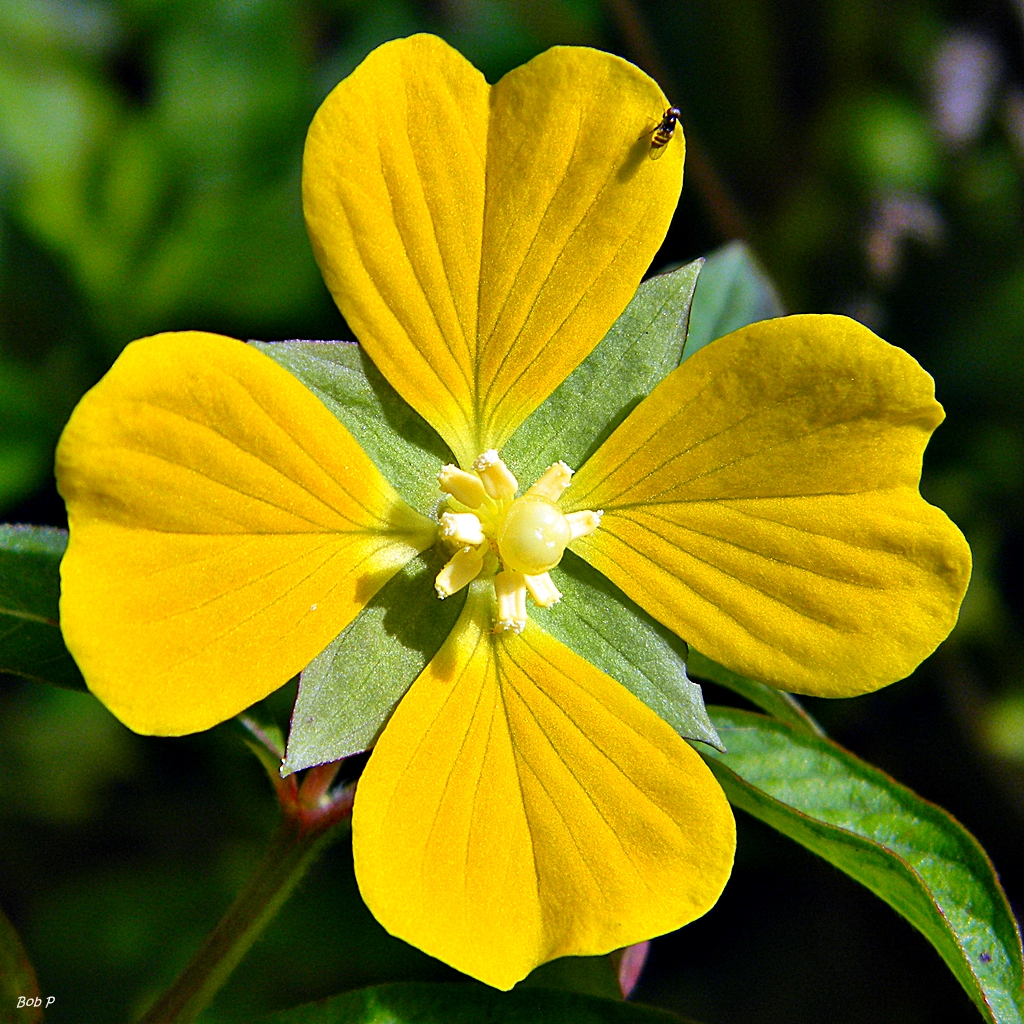
Ludwigia octovalvis, known as Mexican Primrose-Willow (also water primrose or long-fruited primrose-willow), is a shrubby wetland perennial in the evening primrose family (Onagraceae). It grows in marshes, swamps, wet ditches and pond edges throughout the world’s tropics and subtropics. In the United States, USDA PLANTS lists it as native in the Gulf and southern Atlantic states, Hawaii, Puerto Rico and the U.S. Virgin Islands.
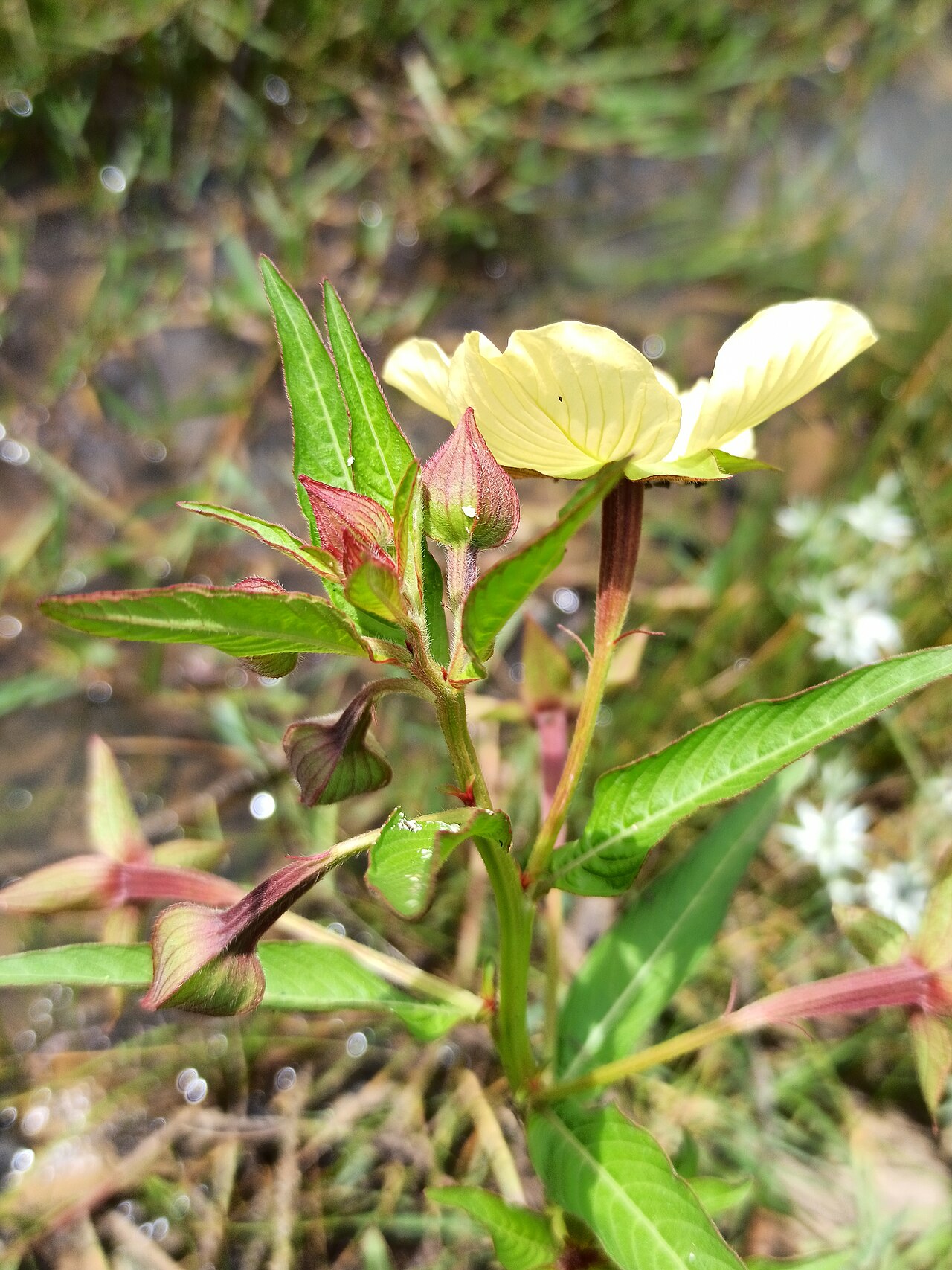
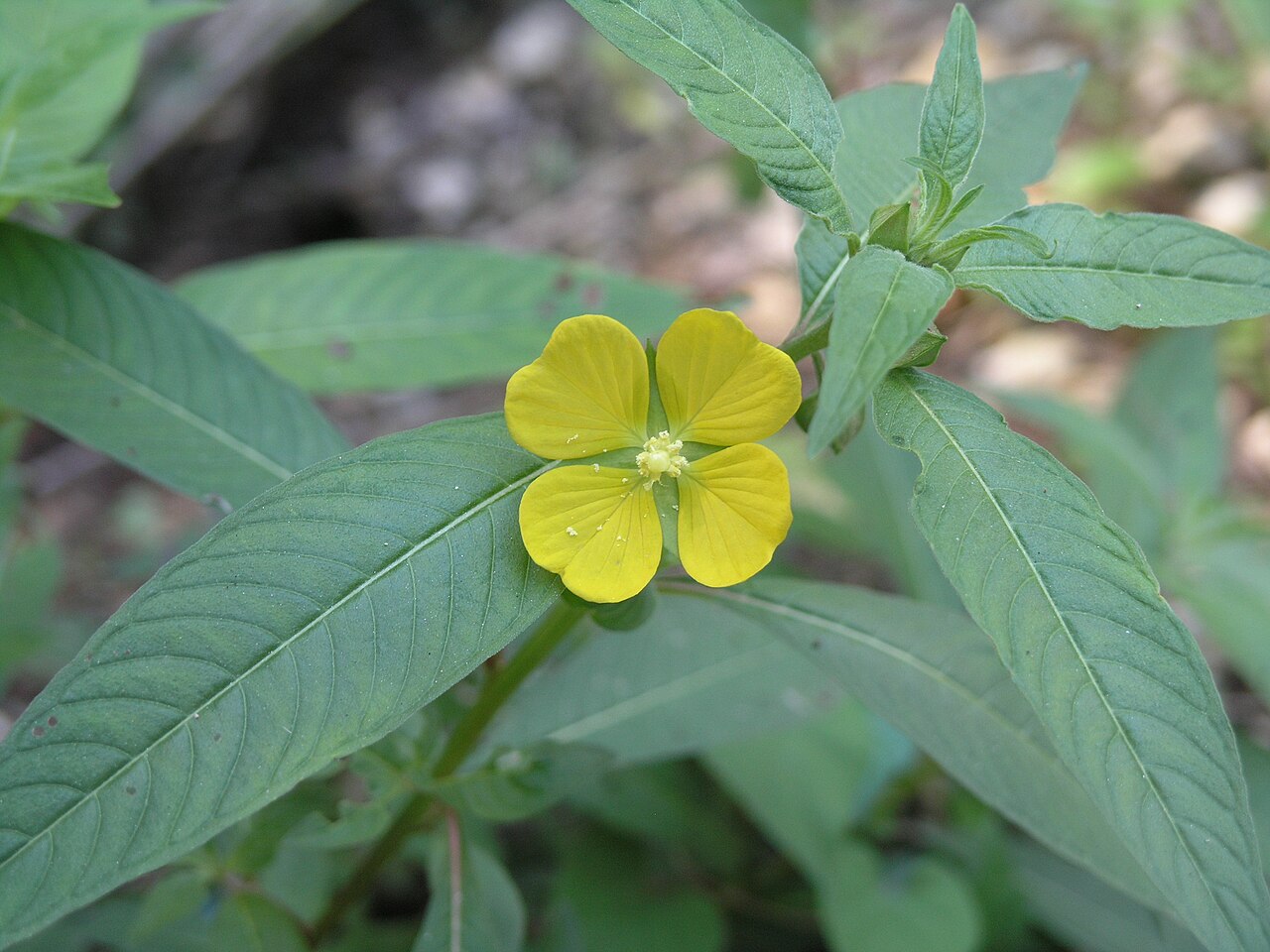
From summer into fall, and nearly year-round in South Florida and the tropics, it bears bright yellow, four-petaled flowers about an inch across in the leaf axils. Each flower lasts about a day and is followed by a long, slender, ribbed capsule topped by four green sepals. The willow-like leaves and the primrose-like flowers explain the common name.
This is a fast-growing, easy plant for wet sunny places: rain gardens, retention-pond margins, bog gardens and the shallow edges of ponds. Bees visit its flowers for pollen, and it supports the caterpillars of the banded sphinx moth. Because it seeds prolifically, it can become weedy in rice fields and disturbed wetlands, so give it a spot where self-sown seedlings are welcome.
Identification
Mexican primrose-willow is one of several yellow-flowered primrose-willows in the Southeast. Look for the combination of four petals, four sepals, eight stamens and a long, narrow, cylindrical capsule.
Growth Form
It is an upright, branching herb or subshrub, usually 2 to 6 feet tall, becoming woody at the base. LBJ Wildflower Center notes plants can reach about 12 feet in ideal conditions, though they are usually much shorter. Stems are green to reddish and may be smooth or covered with soft hairs; hairiness varies a great deal between plants and regions. In frost-free areas plants are perennial; where frosts occur they often die back or behave as annuals.
Leaves
The leaves are alternate, narrowly lance-shaped to nearly linear, 1 to 6 inches long, with smooth edges and short stalks. They look much like willow leaves and often turn reddish in full sun or late in the season.
Flowers
Flowers grow singly in the upper leaf axils. Each has four broad, yellow petals about 1/2 inch long, four green, pointed sepals and eight stamens around a short style with a rounded stigma. The flowers open in the morning and usually fall by the end of the day, but plants produce new ones over a long season.
Fruit & Seeds
The capsule is a slender, cylindrical, ribbed tube about 1 to 2 inches long, green to reddish-purple, with the four sepals still attached at the top. It sits below the flower (an inferior ovary) and splits irregularly at maturity to release many tiny seeds.
Look-alikes
Peruvian primrose-willow (Ludwigia peruviana) is a larger, very hairy shrub with bigger flowers and shorter, broader capsules; it is native to tropical America and invasive in Florida. Anglestem primrose-willow (L. leptocarpa) usually has five or six petals. Wingleaf primrose-willow (L. decurrens) has winged stems and a four-sided capsule. Seedbox (L. alternifolia) has small, cube-shaped capsules. Evening primroses (Oenothera) have a long floral tube above the ovary.
Quick Facts
| Scientific Name | Ludwigia octovalvis |
| Family | Onagraceae (evening primrose family) |
| Plant Type | Wetland herbaceous perennial or subshrub; annual in frosty areas |
| Mature Height | 2–6 ft (rarely to about 12 ft) |
| Mature Spread | 1–3 ft |
| Growth Rate | Fast |
| Sun Exposure | Full sun to partial shade |
| Water Needs | High; wet soil or shallow standing water |
| Soil Type | Mud, muck, wet sand or clay |
| Soil pH | About 5.5–7.5 |
| Bloom Time | Summer–fall; nearly year-round in South Florida |
| Flower Color | Yellow |
| Fall Color | Leaves and stems often redden |
| Fruit | Slender ribbed capsule, 1–2 in, with many tiny seeds |
| Deer Resistant | Moderately |
| USDA Hardiness Zones | 8–11 (grown as an annual in colder areas) |
Native Range
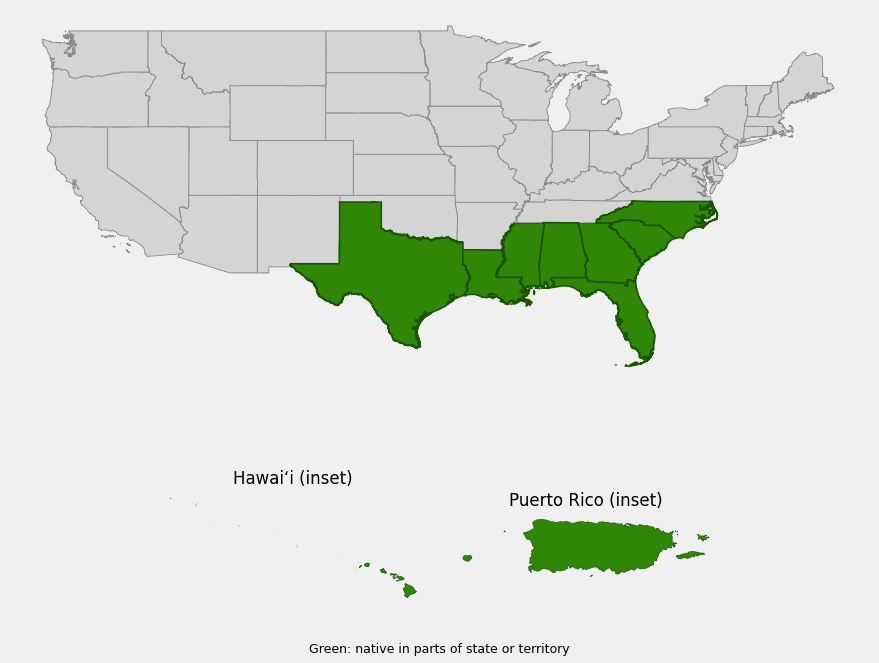
Mexican primrose-willow is pantropical, found in wetlands of the Americas, Africa, Asia, Australia and the Pacific islands. Its original native range is debated, and in some regions it is considered introduced. In the United States, USDA PLANTS lists it as native in Alabama, Florida, Georgia, Louisiana, Mississippi, North Carolina, South Carolina and Texas, as well as Hawaii, Puerto Rico and the U.S. Virgin Islands.
On the mainland it is most common in Florida, where it occurs throughout the state, and along the Gulf Coastal Plain of Louisiana and Texas. The Lady Bird Johnson Wildflower Center notes that in Texas it occurs mainly in the southern half of the state. Records in the Carolinas, Georgia, Alabama and Mississippi come mostly from the coastal plain. In Puerto Rico and Hawaii it grows in wet lowland pastures, ditches and stream margins.
Typical habitats are freshwater marshes, swamps, wet prairies, ditches and canals, pond and lake margins, wet disturbed ground and rice fields. It grows in saturated soil or shallow water, often at the edges of open water, and colonizes newly exposed mud quickly.
📋 Regional plant lists featuring Mexican Primrose-Willow: Hawaii · Alabama, Georgia & Mississippi · North & South Florida · Puerto Rico · North & South Carolina · Arkansas, Louisiana, Eastern Oklahoma & Eastern Texas · South & West Texas
Growing & Care Guide
Mexican primrose-willow is easy to grow wherever the soil stays wet. It is most useful in southern rain gardens, pond margins and wetland restorations, and gardeners elsewhere can grow it as a summer annual in a water garden container.
Light
Full sun gives the most flowers and the reddest stems. It tolerates partial shade but becomes leggier and blooms less.
Soil & Water
It needs constantly moist to wet soil or shallow water up to a few inches deep. It grows in mud, muck, sand or clay and is not fussy about fertility. It does not tolerate long dry periods.
Planting Tips
Plant it at the edge of a pond or in the wettest part of a rain garden, or set a pot in a water garden so the soil surface is at or just below the water line. Combine it with pickerelweed, duck potato, swamp hibiscus and other native emergent plants.
Pruning & Maintenance
Cut stems back in late winter to encourage bushy new growth. Remove unwanted seedlings while they are small, especially near rice fields or managed wetlands where it can become a weed. In colder areas, let frost-killed plants stand until spring or collect seed to resow.
Propagation
Sow the tiny seeds on the surface of wet soil in warm weather; they need light to germinate. Stem cuttings root readily in water or wet soil. Plants often self-seed on bare mud.
Landscape Uses
- Rain gardens and bioswales: thrives in the wettest zone of southern rain gardens
- Pond and lake margins: bright yellow color along shallow edges
- Water gardens: container plant for ponds, grown as an annual in the North
- Wetland restoration: quick cover on exposed mud and newly dug wetlands
- Pollinator plantings: a long-blooming pollen source for bees
Wildlife & Ecological Value
Mexican primrose-willow supports a variety of insects and wetland animals across its long blooming season.
For Pollinators
The open, bowl-shaped flowers offer pollen and some nectar and are visited by small native bees, honey bees, flies and other insects. Plants can also self-pollinate, so they set seed even with few visitors.
For Birds
Seeds of primrose-willows are eaten by some waterfowl and marsh birds, and dense stands provide cover for wading birds, rails and songbirds that forage along the water’s edge.
For Mammals
It has little documented value as food for mammals but offers cover along ditches and marsh edges for small mammals.
Ecosystem Role
Primrose-willows are host plants for the caterpillars of the banded sphinx moth (Eumorpha fasciatus), and the foliage feeds various flea beetles and other insects. The plant’s quick growth stabilizes mud and adds structure to shallow wetland edges.
Cultural & Historical Uses
The genus Ludwigia honors Christian Gottlieb Ludwig, an 18th-century German botanist. Older names for the species include Jussiaea suffruticosa and Ludwigia suffruticosa, which you may see in older references.
In parts of Asia and Africa, Mexican primrose-willow has been used in traditional medicine, and the plant has been the subject of laboratory research, including a published study on extracts in fruit flies and mice. These studies do not make it a proven remedy, and the plant should not be used medicinally without expert guidance.
Mexican primrose-willow is sold as an aquatic plant for ponds and aquariums, and in wetlands it is a cheerful, common sight along roadside ditches in Florida and the Gulf Coast. In rice-growing regions, it is often considered a weed because it seeds prolifically into flooded fields.
Frequently Asked Questions
Is Mexican primrose-willow native?
Yes, USDA PLANTS lists it as native in the southeastern United States, Texas, Hawaii, Puerto Rico and the U.S. Virgin Islands. It is widespread in the tropics worldwide, and in some countries it is considered introduced.
Is it the same as the invasive water primrose?
No. Several Ludwigia species are invasive in some areas, such as Peruvian primrose-willow in Florida and creeping water primroses in the West. Mexican primrose-willow is a native species in the Southeast, though it can seed into disturbed wetlands.
Can I grow it in a pond?
Yes. Grow it in shallow water or wet soil at the pond edge, or in a container sunk so its soil stays saturated.
Will it survive winter?
It is perennial in frost-free and mild-winter areas (roughly zones 8 to 11). Farther north, grow it as a summer annual from seed or cuttings.
How long does each flower last?
Usually only one day, but the plant produces new flowers continually from summer into fall, and nearly year-round in South Florida.

Looking for a nursery that carries Mexican Primrose-Willow?
Browse our native plant nursery directory: Alabama · Florida, Georgia & Hawaii · Louisiana & Mississippi · North Carolina · South Carolina & Texas