
Stinging Lupine (Lupinus hirsutissimus)
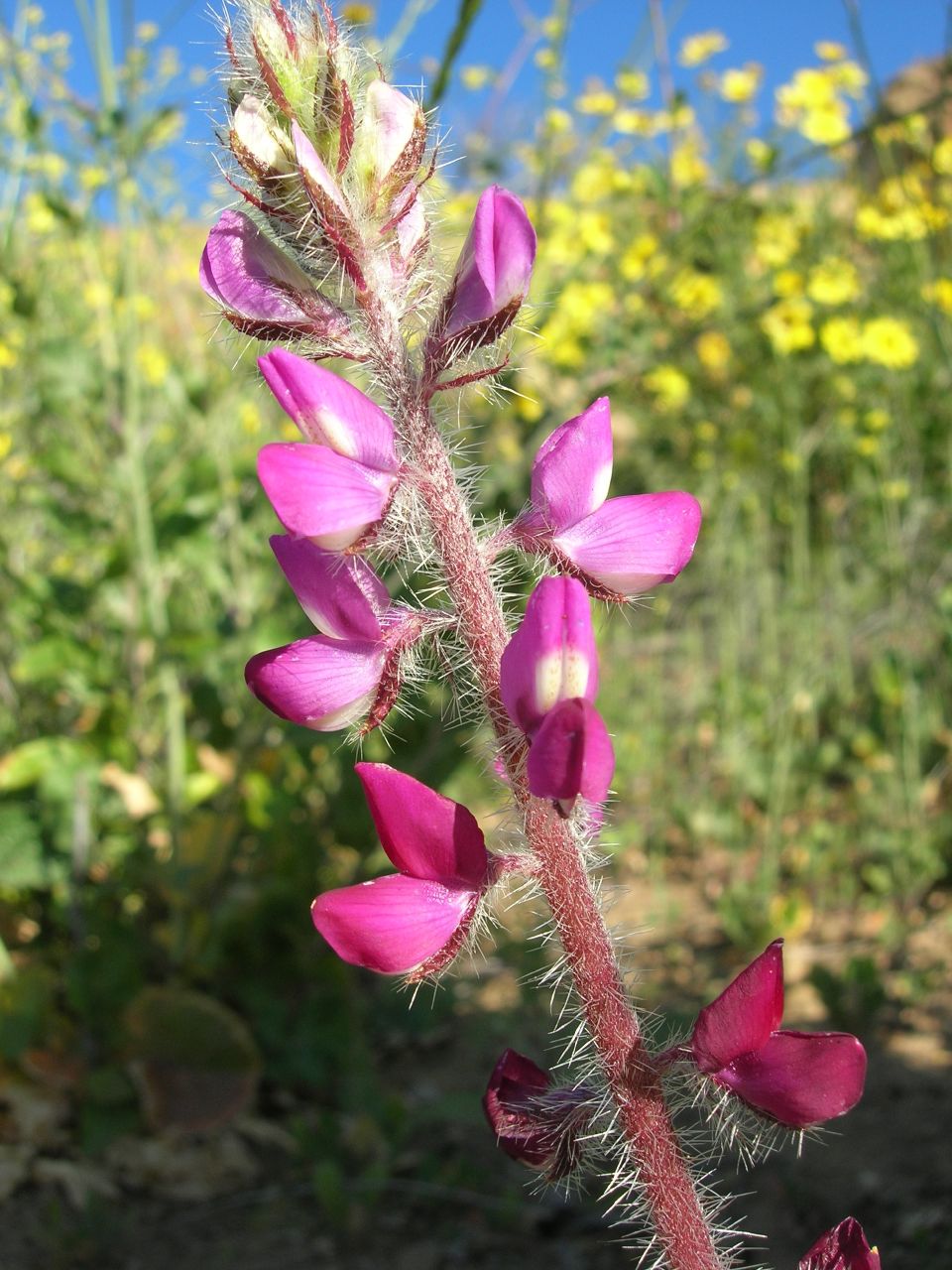
Lupinus hirsutissimus, known as Stinging Lupine (USDA: stinging annual lupine), is a showy but prickly annual lupine of the chaparral and coastal hills of California and Baja California. It belongs to the pea family (Fabaceae). Its spikes of dark pink to magenta pea flowers are lovely, but the whole plant is covered in long, stiff, yellowish hairs that sting like nettles when touched.
It grows 8 inches to more than 3 feet tall, often much larger in the first spring after a wildfire, when it can be abundant on burned chaparral slopes. The palmate leaves have 5 to 8 broad leaflets, and the flowers bloom from about March to May. Like other lupines, it fixes nitrogen and feeds native bees.
Safety note: do not touch stinging lupine with bare skin. Its bristles can cause a painful, burning, itchy reaction that may last for hours. Like many lupines, it also contains alkaloids in its leaves and especially its seeds that are toxic if eaten by people, pets or livestock. Enjoy it from the trail.
Identification
Look for an upright annual with reddish stems and palmate leaves densely covered in long, stiff, yellowish to rusty bristles, bearing loose spikes of dark pink to magenta pea flowers, often on burned or disturbed chaparral slopes in spring.
Stems & Habit
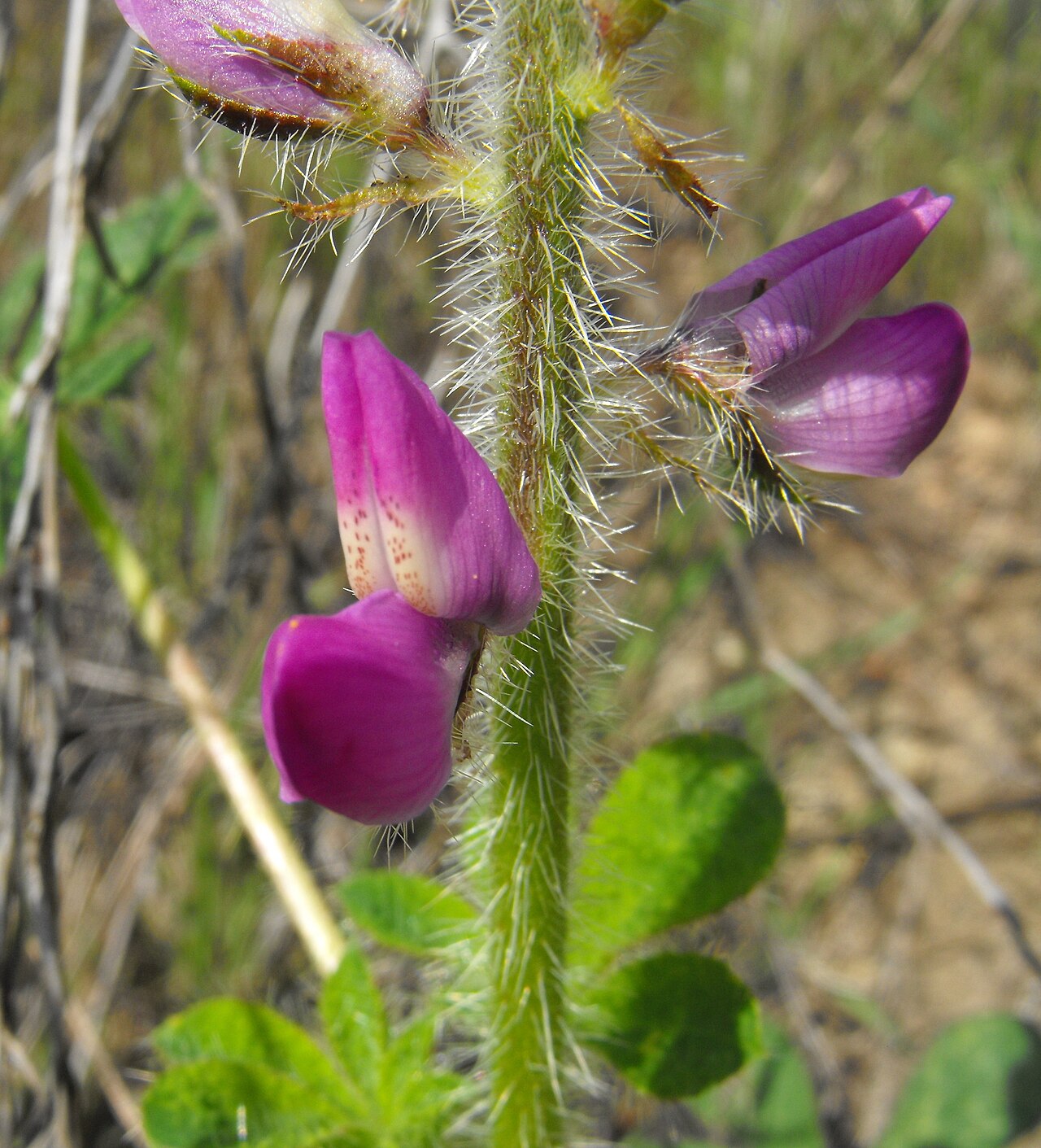
Stinging lupine is an erect annual 8 to 40 inches (20 to 100 cm) tall, sometimes taller on recently burned ground. The stems are often reddish and are thickly covered with long, spreading, stiff hairs up to about 1/2 inch long, giving the whole plant a shaggy look.
Leaves
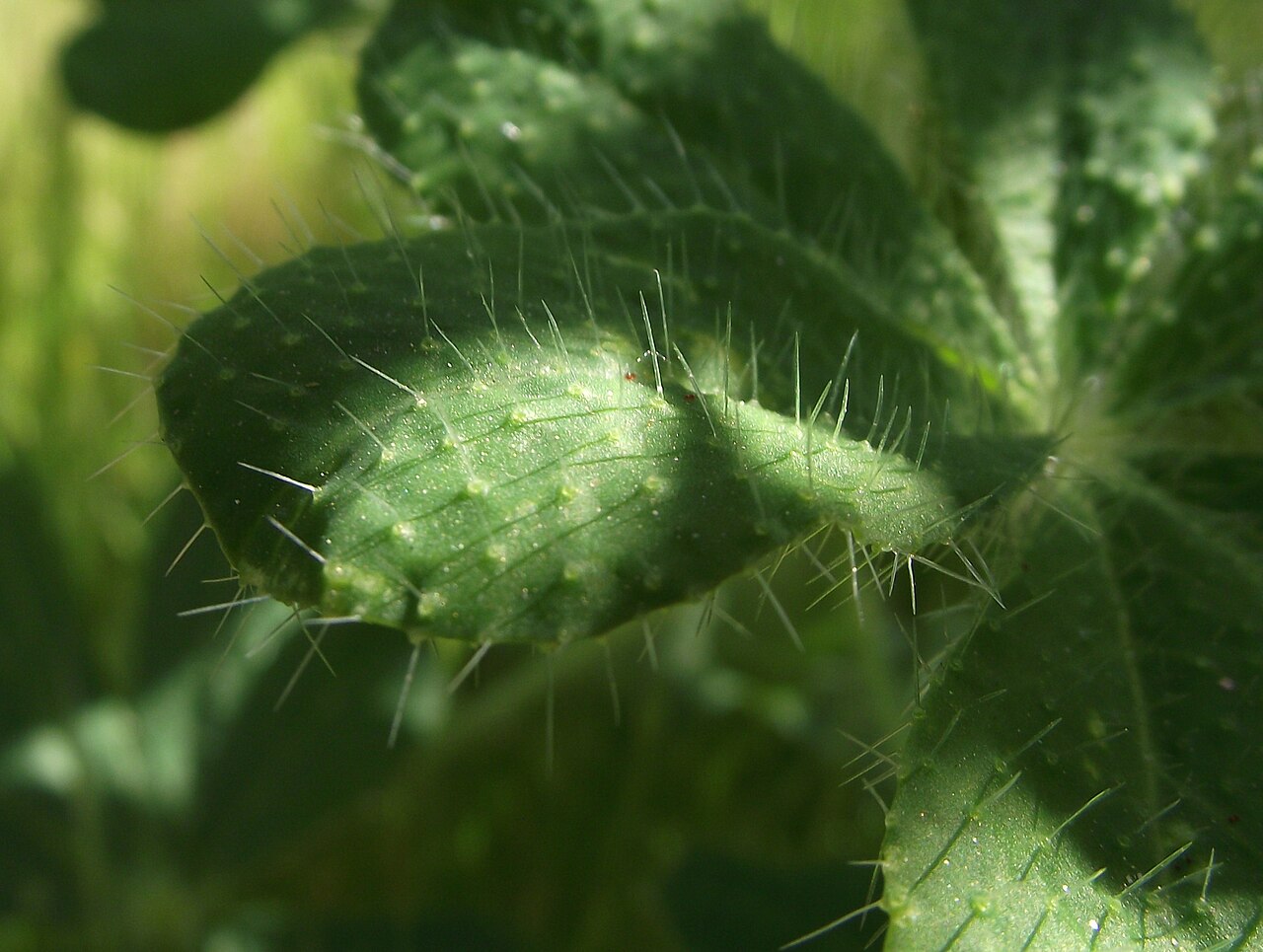
The leaves are palmately compound, with 5 to 8 broad, oblong to obovate leaflets up to about 2 inches (5 cm) long and 3/8 to 3/4 inch (1 to 2 cm) wide, on long stalks. They are bristly on both surfaces and along the edges. Broad leaflets set it apart from many narrow-leaved annual lupines.
Flowers
The flowers are loosely arranged along spikes (racemes) above the leaves, generally not in distinct whorls. Each pea flower is about 1/2 to 3/4 inch (1 to 2 cm) long, dark pink, rose-purple or magenta, with a yellowish to pinkish spot on the upright banner petal. Bloom time is mainly March to May.
Fruit & Seeds
The fruit is a hairy pod up to about 1 1/2 inches (4 cm) long, holding a few seeds. When ripe, the pods dry and split open explosively, flinging the seeds a short distance. The seeds are hard-coated and can lie dormant in the soil for years.
Look-alikes
Arroyo Lupine (L. succulentus) and Sky Lupine (L. nanus) are common annual lupines of the same region with blue-purple flowers and no stinging bristles. Coulter’s Lupine has narrow leaflets and blue flowers. Stinging lupine is easy to recognize by its dense, stiff, stinging hairs and its magenta rather than blue flowers.
Safety & Conservation
Handle it only with thick gloves, if at all, and keep children and pets away from patches. All lupines contain quinolizidine alkaloids; the seeds and pods are the most toxic part, and eating them can poison people and livestock. Stinging lupine is common within its range and is not of conservation concern.
Quick Facts
| Scientific Name | Lupinus hirsutissimus |
| Family | Fabaceae (pea family) |
| Plant Type | Spring annual wildflower |
| Mature Height | 8–40 in |
| Mature Spread | 8–24 in |
| Growth Rate | Fast |
| Sun Exposure | Full sun to light shade |
| Water Needs | Low; relies on winter rain |
| Soil Type | Rocky, gravelly or sandy well-drained slopes; burns and disturbed ground |
| Soil pH | About 6.0–7.5 |
| Bloom Time | March–May |
| Flower Color | Dark pink to magenta with a yellowish banner spot |
| Fall Color | None; annual, dies after seeding |
| Fruit | Hairy pod up to 1 1/2 in |
| Deer Resistant | Yes; stinging, toxic foliage is avoided |
| USDA Hardiness Zones | Annual; grows where zones 8–10 occur |
Native Range
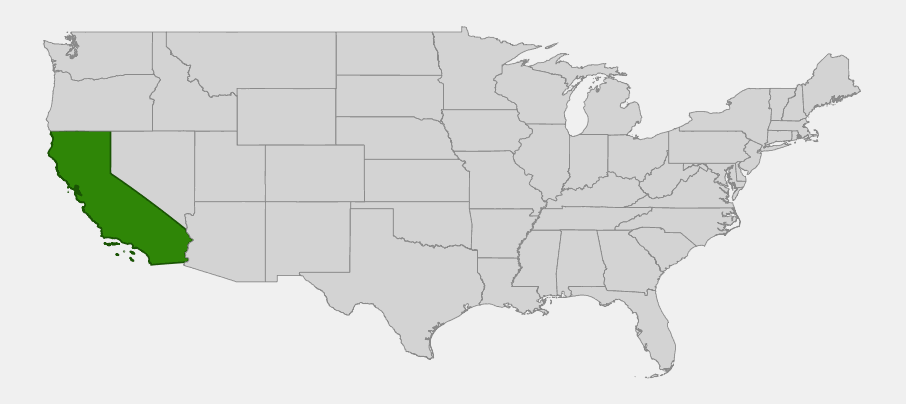
Stinging lupine is native to California and northern Baja California, Mexico. In the United States, USDA PLANTS lists it only in California.
It grows in the coastal mountains and foothills from the San Francisco Bay Area south through the Central Coast and the Transverse and Peninsular Ranges of Southern California, including the Santa Monica, San Gabriel and San Bernardino mountains, and the hills of Riverside and San Diego counties. It is most common in Southern California.
It grows on dry, open slopes in chaparral, coastal sage scrub and oak woodland, and is especially abundant in the first few years after a wildfire, when its long-dormant seeds germinate in the open, nutrient-rich ash. It also appears on road cuts and other disturbed ground.
📋 Regional plant lists featuring Stinging Lupine: California & Nevada
Growing & Care Guide
Stinging lupine is rarely planted on purpose because of its stinging hairs. If you want to grow it, treat it as a wild native annual for a remote, sunny corner of a large native garden or a restoration site, away from paths, play areas and pets.
Light
Full sun to light shade.
Soil & Water
Grow it in lean, well-drained, rocky or sandy soil. It relies on winter rain and needs no summer water. Like other lupines, it fixes its own nitrogen and needs no fertilizer.
Planting Tips
Sow seed in fall where plants are to grow, since lupines resent transplanting. Plant it well away from places people walk or brush past. Gentler annual lupines such as arroyo lupine and sky lupine are better choices for most gardens.
Pruning & Maintenance
No pruning is needed. If you must remove plants, wear thick gloves, long sleeves and eye protection, and pull them before the pods ripen to limit reseeding.
Propagation
Seed only. The hard seed coat must be nicked or soaked in hot water before sowing for good germination; in nature, heat from fire and long weathering break dormancy.
Landscape Uses
- Post-fire restoration: a native nitrogen-fixer on burned chaparral slopes
- Wildflower viewing: a striking magenta lupine of spring hikes
- Pollinator habitat: pollen for bumblebees and other native bees
- Remote native plantings: only where people will not touch it
- Natural deterrent: stinging hairs discourage foot traffic and browsing
Wildlife & Ecological Value
Stinging lupine is part of the flush of fire-following annuals that renews chaparral after a burn.
For Pollinators
Bumblebees and other large bees trip the keel of the pea flowers to reach the pollen. Like other lupines, the flowers produce little nectar but plenty of pollen.
For Birds
Some seed-eating birds may take seeds from opened pods, though the alkaloids make lupine seeds unpalatable to many animals.
For Mammals
Deer and livestock avoid the stinging, toxic foliage. Some rodents may eat or cache the seeds.
Ecosystem Role
As a legume, it hosts nitrogen-fixing bacteria in root nodules and adds nitrogen to burned, nutrient-poor slopes. Its long-lived seed bank lets it appear in great numbers after fires and then fade as shrubs return.
Cultural & Historical Uses
The genus name Lupinus comes from the Latin lupus, “wolf,” from an old belief that lupines robbed the soil. The species name hirsutissimus means “most hairy,” an apt name for this bristly plant.
Lady Bird Johnson Wildflower Center notes that in a genus of lovely wildflowers, stinging lupine is an unpleasant exception, since its stiff hairs sting like nettles. Hikers in Southern California often learn this the hard way when walking through burned chaparral.
Other California lupines on this site include Arroyo Lupine, Sky Lupine, Miniature Lupine and Silver Lupine.
Frequently Asked Questions
Does stinging lupine really sting?
Yes. Its long, stiff hairs can cause a burning, itchy sting similar to nettles. Avoid touching it with bare skin.
Is stinging lupine poisonous?
Yes, if eaten. Like other lupines, it contains toxic alkaloids, most concentrated in the seeds and pods. Keep children, pets and livestock from eating any part of it.
Why does it appear after wildfires?
Its hard-coated seeds wait in the soil for years. Fire breaks their dormancy and clears competing shrubs, so stinging lupine can be abundant in the first springs after a burn.
Where does stinging lupine grow?
In the coastal mountains and foothills of California, from the San Francisco Bay Area south to Baja California, mostly in chaparral and coastal sage scrub.
Should I plant it in my garden?
Usually not. Gentler native annual lupines such as arroyo lupine or sky lupine give similar color without the sting.

Looking for a nursery that carries Stinging Lupine?
Browse our native plant nursery directory: California