
Marsh Fleabane (Pluchea odorata)
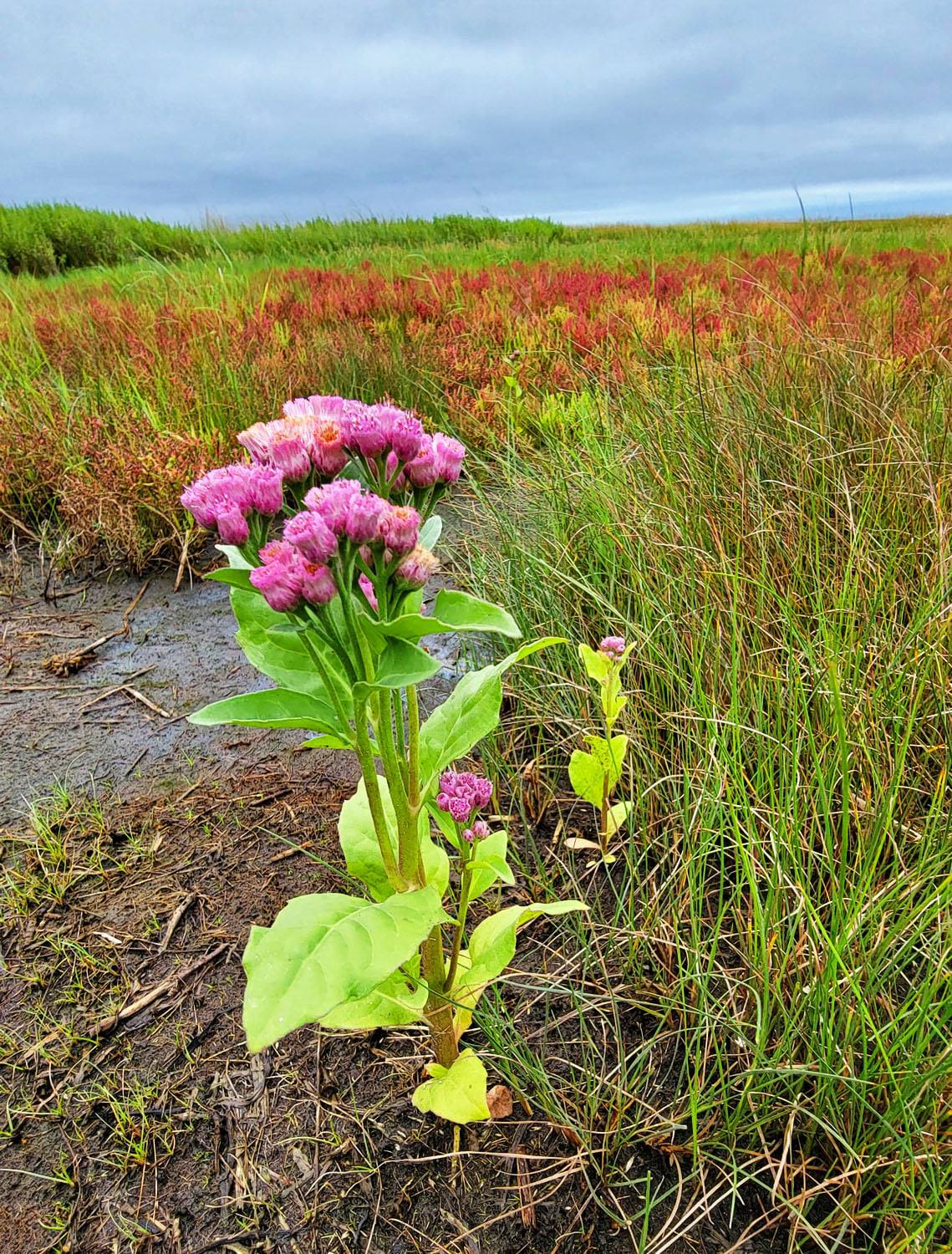
Pluchea odorata, known as Marsh Fleabane, saltmarsh fleabane or sweetscent (the name used by USDA), is a fragrant, pink-flowered member of the aster family that grows in salt and brackish marshes along the Atlantic and Gulf coasts and in moist, often salty places inland across the southern and southwestern United States. It is usually 1 to 3 feet tall, with soft, toothed, oval leaves and, from late summer into fall, flat-topped clusters of rose-pink to lavender flower heads.
The whole plant is covered with fine glandular hairs and has a sweet, camphor-like scent when brushed or crushed, which explains the species name odorata and the names sweetscent and camphorweed. Its flowers draw a lively crowd of bees, wasps, butterflies and beetles at the end of the season, and its pink clusters stand out against the green and gold of marsh grasses.
Marsh fleabane is a good choice for coastal gardens, rain gardens and wetland restorations where the soil stays moist and may be salty. This guide covers how to identify it, where it grows, how to grow it, and the role it plays in coastal ecosystems.
Identification
Marsh fleabane is distinctive in late summer and fall. Look for an upright, aromatic plant with toothed, oval leaves and flat-topped clusters of small pink heads without petals.
Growth Habit & Stems
It grows as an annual in the north and as an annual or short-lived perennial in warmer regions, sometimes becoming woody at the base. Plants are usually 1 to 3 feet tall, occasionally to about 5 feet, with a single erect stem or several stems branching above. The stems are green to purplish and covered with short glandular hairs that feel slightly sticky.
Leaves
The leaves are alternate, oval to lance-shaped, about 2 to 5 inches long, with a pointed tip, finely toothed edges and a short stalk or tapered base. They are soft, somewhat thick, especially on coastal plants, and finely hairy and glandular on both surfaces. Crushed leaves release a sweet, camphor-like smell.
Flowers
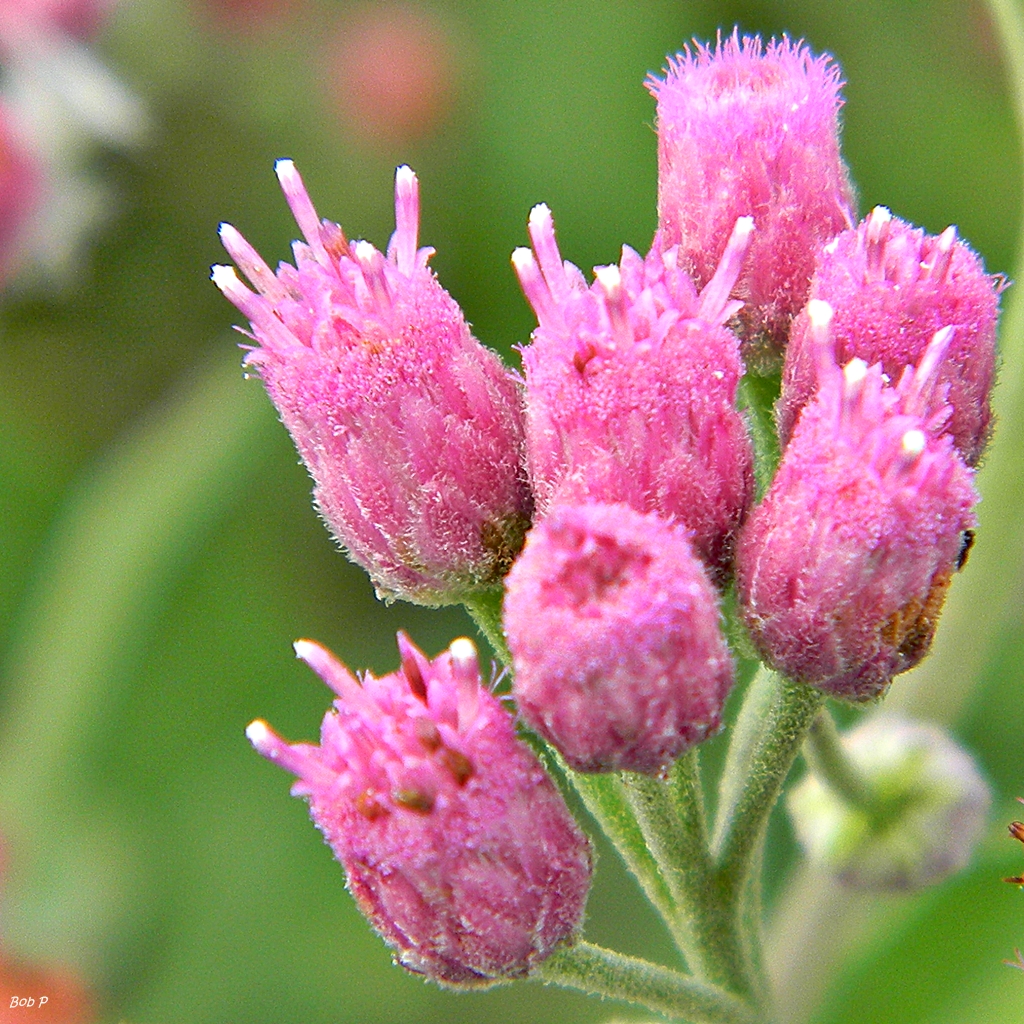
From about July to October in the north, and for much of the year in Florida and Puerto Rico, the stems end in rounded to flat-topped clusters of many small flower heads. Each head is about a quarter inch across and has no petals (rays); instead, a cup of overlapping pink to purplish bracts holds dozens of tiny, threadlike, rose-pink to lavender florets. Large plants can carry hundreds of heads.
Fruit & Seeds
Each floret produces a tiny, ribbed achene topped with a tuft of white bristles (pappus). Seeds are carried by wind and water, which helps the plant colonize new mudflats and marsh edges after storms and floods.
Similar Species
Stinking camphorweed (Pluchea foetida) of the Southeast has creamy white flowers and stalkless leaves that clasp the stem. Rosy camphorweed (Pluchea baccharis) of Florida and the Gulf Coast has pink flowers too, but its leaves are stalkless. Marsh fleabane’s stalked, toothed oval leaves and pink heads separate it. The camphorweed in the genus Heterotheca is unrelated and has yellow flowers.
Quick Facts
| Scientific Name | Pluchea odorata (L.) Cass. (var. odorata and var. succulenta) |
| Family | Asteraceae (aster family) |
| Plant Type | Annual or short-lived perennial herb, sometimes woody at the base |
| Mature Height | 1–3 ft (occasionally to about 5 ft) |
| Mature Spread | 1–2 ft |
| Growth Rate | Fast |
| Sun Exposure | Full sun to partial shade |
| Water Needs | High; moist to wet soils, tolerates periodic flooding |
| Soil Type | Sandy, silty or mucky soils; tolerates saline and alkaline conditions |
| Soil pH | About 6.0–8.5 |
| Bloom Time | July–October in the north; much of the year in Florida and Puerto Rico |
| Flower Color | Rose-pink to lavender or purplish |
| Fall Color | None notable; seed heads turn tan |
| Fruit | Tiny achene with a tuft of white bristles |
| Deer Resistant | Generally yes; the strongly aromatic foliage is seldom browsed |
| USDA Hardiness Zones | 5–11 (annual in colder zones) |
Native Range
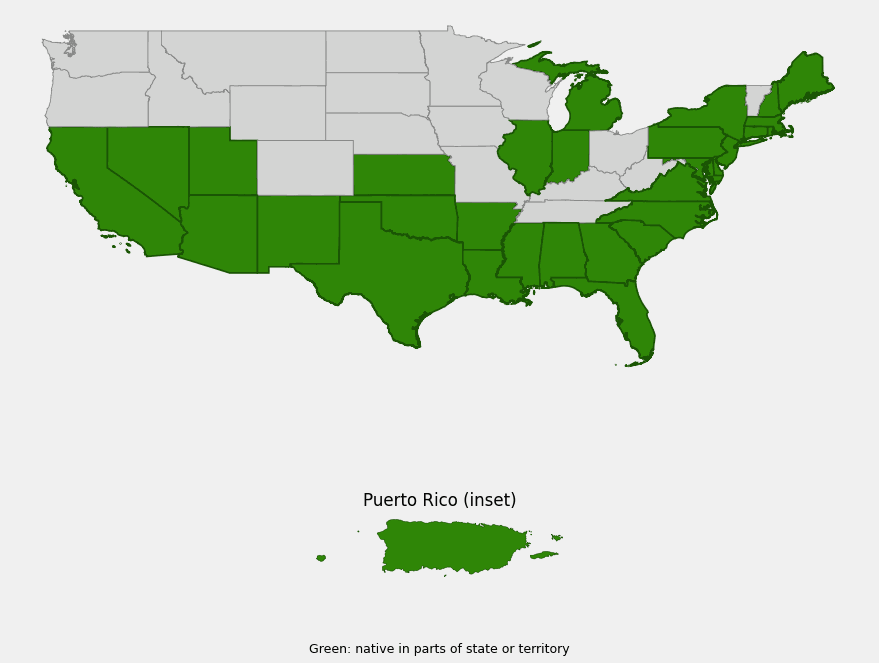
Marsh fleabane has one of the broadest ranges of any American Pluchea. USDA PLANTS lists it as native in 30 states and Puerto Rico, as well as the U.S. Virgin Islands. Along the Atlantic it follows salt and brackish marshes from southern Maine through New England, New York, New Jersey and the Chesapeake Bay to the Carolinas, Georgia and Florida, then west along the Gulf Coast through Alabama, Mississippi, Louisiana and Texas. Beyond the U.S. it extends through Mexico, Central America, the Caribbean and northern South America.
Inland, it grows in moist and often saline or alkaline places: salt flats and spring-fed marshes in Kansas and Oklahoma, scattered saline sites in the Midwest, and riverbanks, seeps, ditches and marsh edges across New Mexico, Arizona, southern Nevada, southwestern Utah and California, including coastal marshes in southern California. In Ontario it is considered introduced.
Two varieties are recognized. Var. succulenta, with thicker, more fleshy leaves, is the annual plant of Atlantic Coast salt marshes in the Northeast and mid-Atlantic. Var. odorata is the widespread southern and western form, often perennial in warm climates, and is the plant of the Gulf Coast, Florida, the Southwest and the tropics.
📋 Regional plant lists featuring Marsh Fleabane: New York, Pennsylvania & Northern New Jersey · Idaho, Eastern Oregon & Eastern Washington · Ohio & Indiana · Michigan, Wisconsin & Eastern Minnesota · Nebraska, Kansas & Eastern Colorado · Utah & Western Colorado · Connecticut, Massachusetts & Rhode Island · New Hampshire, Maine & Vermont · Maryland, Virginia & West Virginia · Delaware, Southern New Jersey & Long Island · Arizona & New Mexico · Illinois, Iowa & Missouri · Alabama, Georgia & Mississippi · North & South Florida · Puerto Rico
Growing & Care Guide
Marsh fleabane is easy to grow in moist, sunny places and is one of the few colorful wildflowers that tolerate salt spray and brackish water. It is best used in coastal gardens, rain gardens, pond edges and wetland restorations within its native range.
Light
Plant in full sun for the strongest stems and heaviest bloom. It tolerates partial shade but becomes taller and floppier with fewer flowers.
Soil & Water
Give it consistently moist to wet soil. Sand, silt or muck all work, and it tolerates salty or alkaline soils and occasional tidal or storm flooding better than most garden plants. In ordinary garden beds it needs regular watering during dry spells; it is not drought tolerant.
Planting Tips
Sow seed on the surface of moist soil in fall or early spring; the seeds are tiny, so press them lightly into the surface rather than burying them. Plugs or potted plants can be planted in spring, about 12 to 18 inches apart. It combines well with seaside goldenrod, seashore mallow, switchgrass and marsh elder in coastal plantings.
Pruning & Maintenance
Little care is needed. Leave the flower heads standing after bloom so seeds can mature and disperse; plants usually reseed nearby. Where it behaves as a perennial, cut back old stems in late winter. Avoid fertilizer, which makes plants leggy.
Propagation
Propagate by seed, which germinates readily on moist, bare soil. In warm climates, stem cuttings taken in late spring or summer also root easily in moist sand.
Landscape Uses
- Coastal gardens: salt-tolerant late-season color for gardens near marshes and the shore
- Rain gardens and pond edges: thrives in moist to wet soils that dry out occasionally
- Wetland and living-shoreline restoration: native high-marsh and marsh-edge plant for coastal restoration projects
- Pollinator gardens: late-summer nectar for bees, wasps, butterflies and beetles
- Dried arrangements: the pink flower clusters dry well and hold their color
Wildlife & Ecological Value
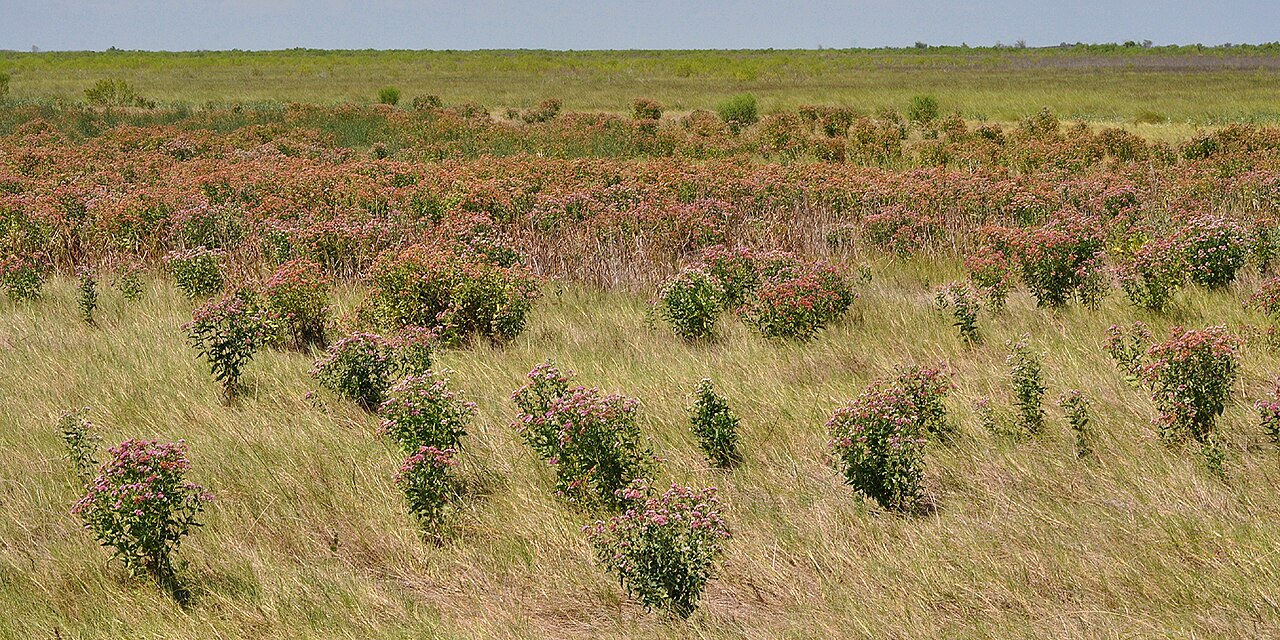
Marsh fleabane blooms when many coastal and wetland plants are going to seed, and its flowers are often among the busiest in the marsh.
For Pollinators
The flower heads attract a wide variety of insects, including native bees, honey bees, paper wasps and other wasps, flies, beetles and butterflies such as skippers, hairstreaks and sulphurs. In the Southeast, swarms of lovebugs often gather on the flowers in fall. Its late bloom makes it a valuable nectar source for migrating butterflies along the coast.
For Birds
The tiny seeds are of little direct value to birds, but marsh fleabane is part of the high-marsh vegetation that shelters seaside sparrows, saltmarsh sparrows, marsh wrens and other marsh birds, and the insects drawn to its flowers are food for swallows and other insect-eating birds.
For Mammals
The aromatic foliage is rarely browsed by deer or rabbits.
Ecosystem Role
As a fast-growing annual or short-lived perennial, marsh fleabane quickly colonizes bare mud and disturbed marsh edges after storms, fires and floods, helping to stabilize soil until longer-lived grasses and shrubs return. It is a characteristic plant of the high marsh, the zone at the upper edge of salt marshes that is flooded only by the highest tides.
Cultural & Historical Uses
Linnaeus described the plant in 1759 as Conyza odorata, and the French botanist Henri Cassini transferred it to his new genus Pluchea in 1826. Cassini named the genus for Noël-Antoine Pluche, an 18th-century French naturalist and popular science writer.
In parts of the Caribbean, Mexico and Central America, sweetscent has a long history as a folk remedy. A tea of the leaves has traditionally been taken for colds, fevers, digestive complaints and menstrual problems. These are traditional uses, not recommendations. The plant has not been proven safe as a medicine, and it should not be used during pregnancy or without guidance from a qualified health professional.
In the United States, marsh fleabane is valued mainly as a wildflower of coastal marshes, where its pink clusters are a familiar late-summer sight from New England beaches to Texas refuges. It is also grown by native plant enthusiasts for butterfly and coastal gardens, and it is sometimes used in dried flower arrangements.
Frequently Asked Questions
Is marsh fleabane the same as a fleabane daisy?
No. Despite the name, it is not closely related to the fleabane daisies (Erigeron), which have many white or pink rays. Marsh fleabane belongs to the genus Pluchea and has small pink flower heads without rays.
Why is it called sweetscent?
The leaves and stems are covered with tiny glands that release a sweet, camphor-like smell when touched or crushed. The species name odorata means fragrant.
Can marsh fleabane grow in salty soil?
Yes. It is one of the most salt-tolerant wildflowers of the high marsh and grows in brackish water, saline flats and soils exposed to salt spray. It also grows well in ordinary moist garden soil.
Is marsh fleabane invasive?
It is native to most of the southern and coastal United States and to Puerto Rico. It has, however, become an invasive weed in Hawaii and some Pacific islands where it is not native, so it should not be planted there.
When does marsh fleabane bloom?
In the Northeast and mid-Atlantic it blooms mainly from August to October. In the Deep South and the Southwest it begins in summer, and in south Florida and Puerto Rico it can bloom for much of the year.

Looking for a nursery that carries Marsh Fleabane?
Browse our native plant nursery directory: Alabama, Arizona & Arkansas · California · Connecticut, Delaware, Florida & Georgia · Illinois, Indiana & Kansas · Louisiana, Maine, Maryland, Massachusetts, Michigan & Mississippi · Nevada, New Hampshire, New Jersey, New Mexico, New York, North Carolina & Oklahoma · Pennsylvania, Rhode Island, South Carolina, Texas, Utah & Virginia