Seashore Mallow (Kosteletzkya pentacarpos)
Kosteletzkya pentacarpos — long known in North America as Kosteletzkya virginica and still widely sold and discussed under that name — is commonly called Seashore Mallow, Saltmarsh Mallow, or Virginia Saltmarsh Mallow. This pink-flowered perennial in the mallow family (Malvaceae) is one of the few native wildflowers truly adapted to brackish and salt marshes, where it grows in standing salt water that would kill most other garden perennials outright.
Along the Atlantic and Gulf coasts, from New York south through the Southeast and west to Texas, Seashore Mallow lines the upper edges of tidal marshes with its open, hibiscus-like pink blooms from midsummer into fall. Each flower lasts only a day, but a healthy plant produces a long, steady succession of them for weeks, drawing bees and other pollinators to a habitat that offers relatively few nectar sources.
In 2008, botanists merged the North American Kosteletzkya virginica with the Old World K. pentacarpos of the Mediterranean and Black Sea coasts, concluding the two were the same species on opposite sides of the Atlantic. For gardeners the practical upshot is simple: it is the same tough, salt-tolerant native plant that nurseries have sold under the older name for decades, now carrying an updated scientific name.
Identification
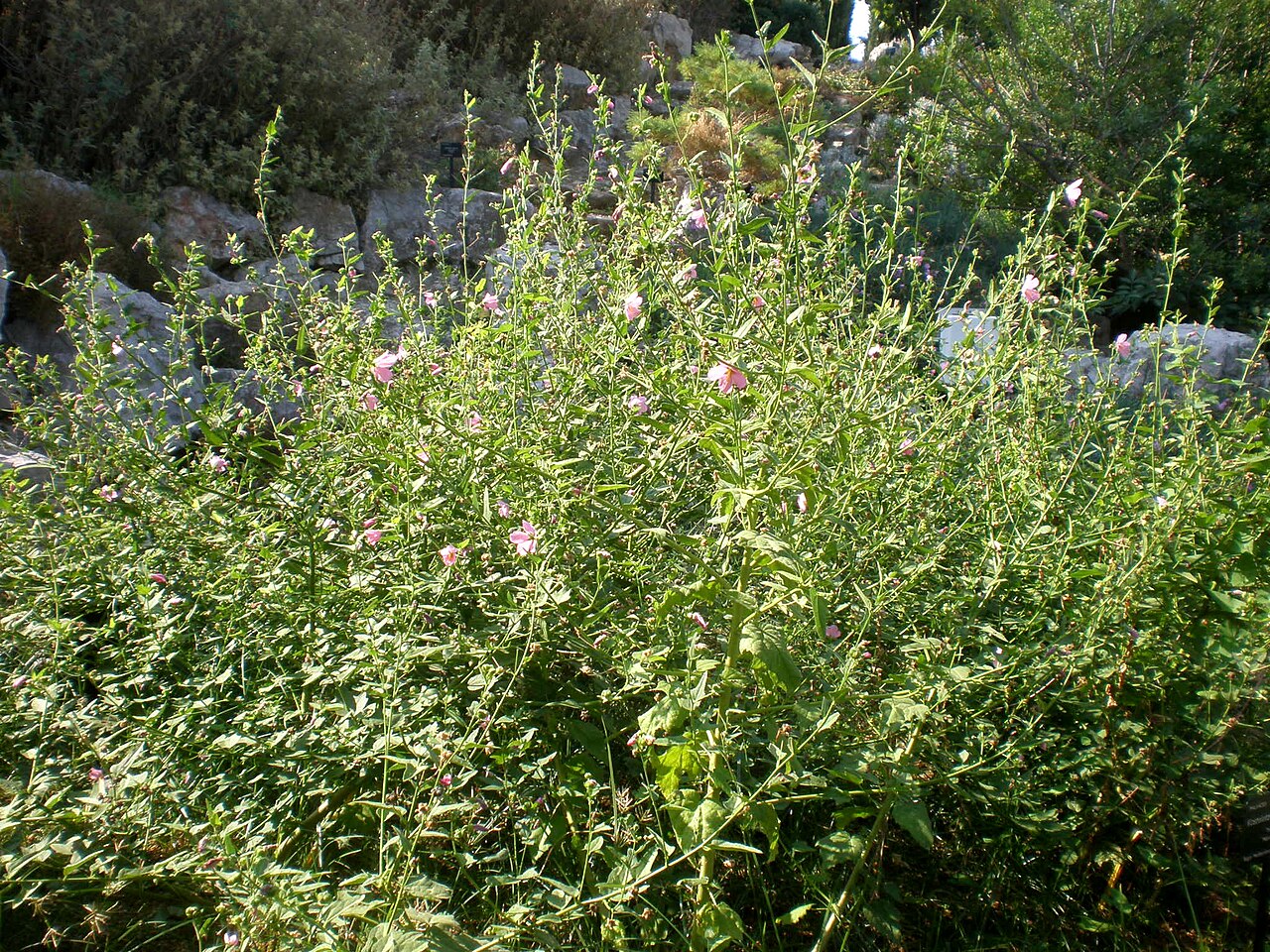
Seashore Mallow is an upright, many-stemmed perennial subshrub, typically reaching 3 to 6 feet tall, with a somewhat sprawling, bushy form by late summer. The whole plant — stems, leaves, and flower buds — is covered in soft, fine hairs that give it a slightly grayish, velvety texture.
Stems
Stems are slender but sturdy, often multiple from the base, and die back to a persistent woody crown each winter in colder parts of the range, resprouting vigorously in spring.
Leaves
Leaves are 2½ to 5½ inches (6–14 cm) long, variable in shape from heart-shaped (cordate) at the base of the plant to narrower and more lance-shaped higher up, with coarsely toothed margins. Like the stems, they are covered in short hairs that give the foliage a soft, grayish-green cast.
Flowers
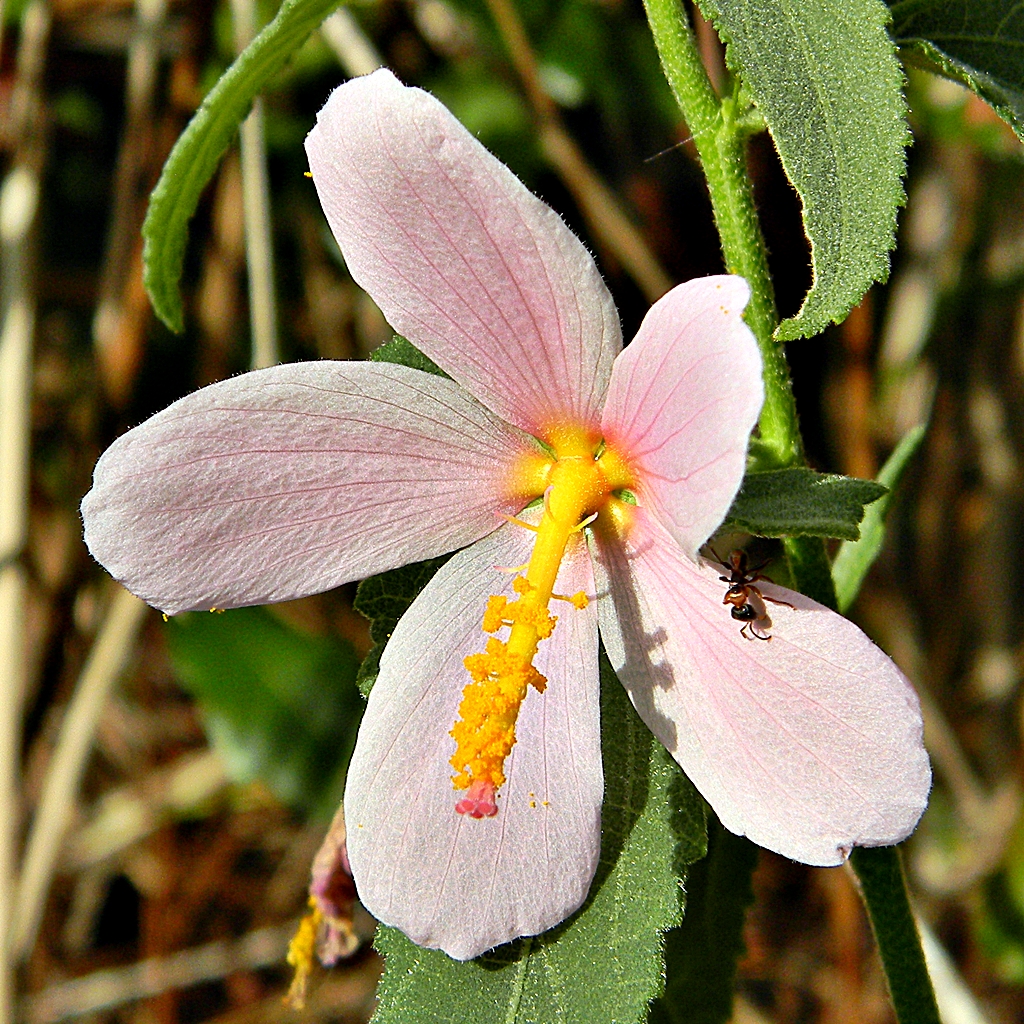
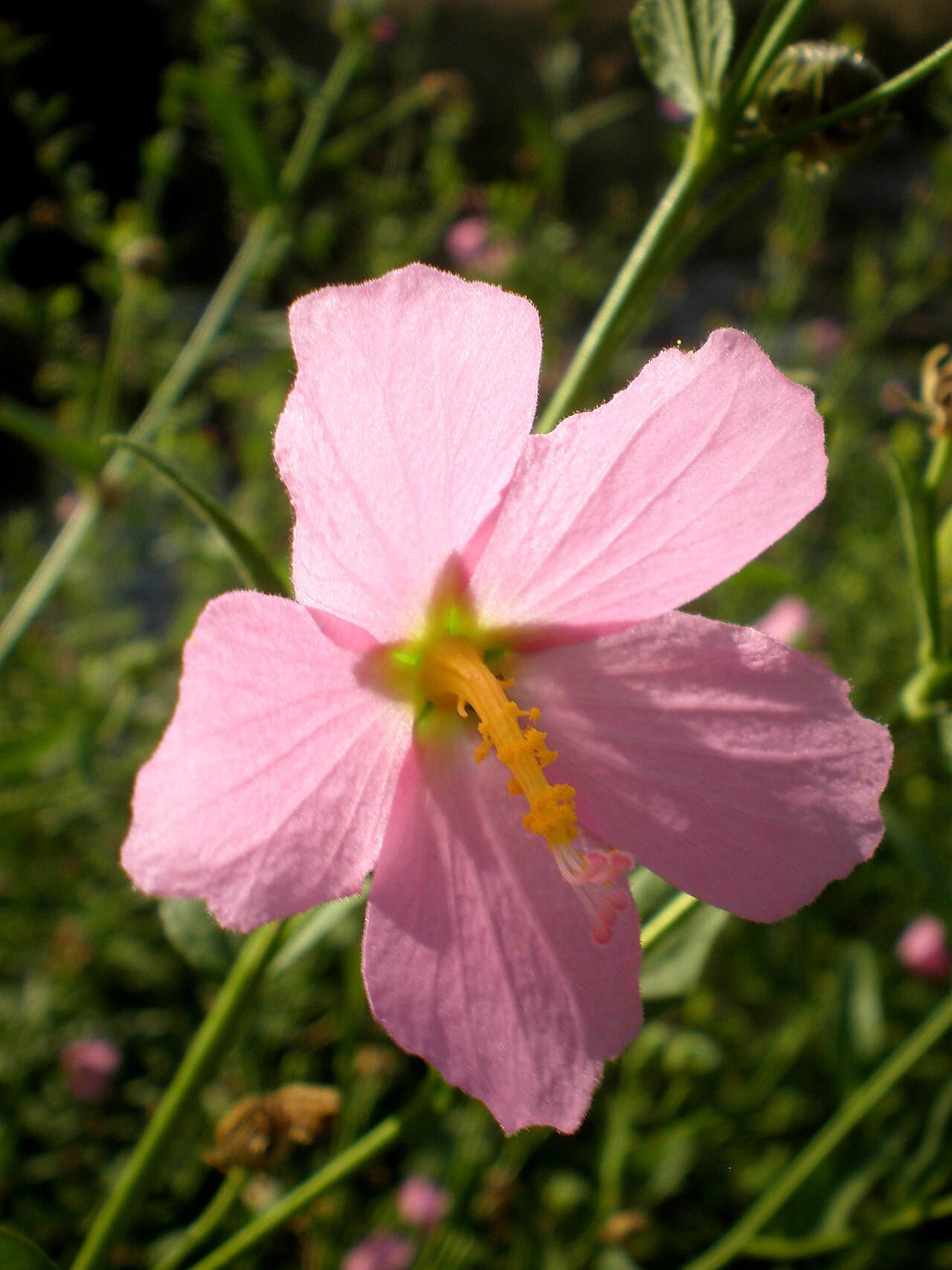
From July through October, Seashore Mallow produces a steady parade of showy, five-petaled flowers, 2 to 3 inches across, in shades from pale blush pink to a deeper rose, each centered on a prominent yellow-tipped staminal column typical of the mallow family. Flowers open in the morning and typically last only a single day, but established plants bloom continuously through the season.
Fruit & Seeds
The species name “pentacarpos” refers to its distinctive fruit: a capsule that splits into five sections (carpels), each containing one or two seeds. The dry, five-parted seed capsules persist on the plant into fall after the petals drop.
Quick Facts
| Scientific Name | Kosteletzkya pentacarpos (syn. Kosteletzkya virginica) |
| Family | Malvaceae (Mallow) |
| Plant Type | Perennial Subshrub / Herb |
| Mature Height | 3–6 ft (1–2 m) |
| Mature Spread | 2–4 ft |
| Growth Rate | Moderate |
| Sun Exposure | Full Sun to Part Sun |
| Water Needs | Moist to Wet; tolerates standing brackish water |
| Soil Type | Saline/brackish marsh soils, loam, sand |
| Soil pH | Neutral to slightly alkaline |
| Bloom Time | July – October |
| Flower Color | Pale to deep pink |
| Fall Color | No notable fall foliage color |
| Fruit | Five-parted dry capsule (schizocarp) |
| Deer Resistant | Moderate |
| USDA Hardiness Zones | 6–9 |
Native Range
Seashore Mallow is native to the Atlantic and Gulf coastal zone of the eastern United States, from Long Island, New York, south through New Jersey, Delaware, Maryland, Virginia, the Carolinas, Georgia, and Florida, then west along the Gulf Coast through Alabama, Mississippi, Louisiana, and into coastal Texas. It also occurs on Caribbean islands including Cuba and Bermuda. Across this entire range it is confined to the immediate coastal strip; plants sold in the nursery trade elsewhere in the country are garden plantings, not naturally occurring populations.
Within its coastal range, Seashore Mallow is a true halophyte, specialized to grow directly in the upper, less-frequently-flooded zones of brackish and salt marshes — habitat that few other flowering perennials can tolerate. It is often found at the marsh edge where salt marsh grades into higher ground, along tidal creek banks, and occasionally in brackish roadside ditches near the coast.
Because it depends on this narrow coastal marsh habitat, Seashore Mallow has become uncommon or locally rare at the northern edge of its range, including parts of New York, where coastal marsh loss and development have reduced available habitat. Populations remain more secure through the mid-Atlantic and Southeast.
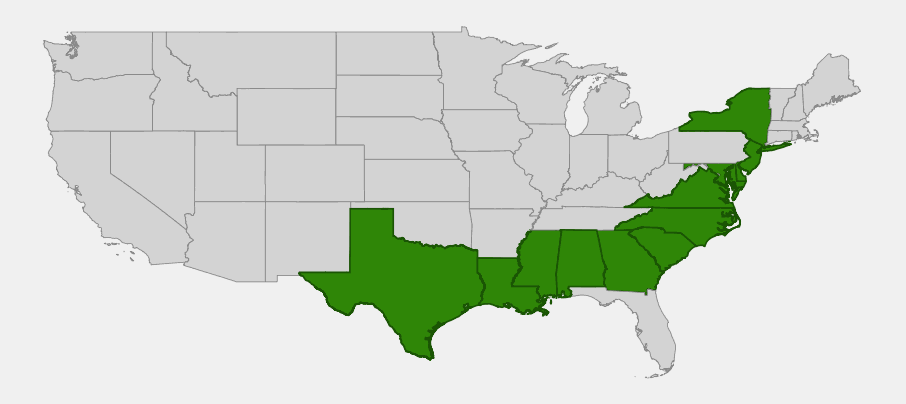
📋 Regional plant lists featuring Seashore Mallow: Maryland, Virginia & West Virginia, North Carolina & South Carolina, Georgia, Alabama & Mississippi, and Arkansas, Louisiana, Eastern Oklahoma & Eastern Texas. It is also native to Delaware, southern New Jersey, and Long Island, New York, covered by the Delaware, Southern New Jersey & Long Island, New York list, though that list has no herbaceous-perennial table for it yet.
Growing & Care Guide
Seashore Mallow is a tough, forgiving plant for the right spot: anywhere soil stays consistently moist to wet, including sites with occasional saltwater influence, this is one of the few showy perennials that will actually thrive rather than merely tolerate the conditions.
Light
Plant it in full sun to light part sun. Flowering is most abundant with at least six hours of direct sun; in heavier shade, plants stretch and bloom less.
Soil & Water
Seashore Mallow is remarkably salt tolerant and will grow directly in brackish marsh soils, including sites with periodic tidal flooding, but it also adapts well to ordinary moist garden soil with no salt at all, provided it does not dry out for long periods. It is an excellent choice for rain gardens, pond margins, and low spots that collect water after storms.
Planting Tips
Space plants about 2 to 3 feet apart to allow for their bushy mature form. Fall or spring planting both work well; keep new transplants consistently moist until established. In coastal gardens it can be used right down to the upper marsh edge, while inland gardeners can grow it successfully in ordinary wet or low-lying beds.
Pruning & Maintenance
Cut the dead top growth back to the crown in late winter before new shoots emerge. Established plants are low-maintenance and generally pest-free, needing little beyond an annual cutback and, in dry gardens, supplemental watering during extended dry spells.
Landscape Uses
Seashore Mallow fills a landscape niche few other native perennials can match:
- Rain gardens and bioswales that hold water after storms
- Coastal and brackish-marsh restoration plantings
- Pond and water-garden margins
- Pollinator gardens in moist, sunny sites
- Salt-impacted soils near roadways or coastal properties where few other flowering perennials survive
Wildlife & Ecological Value
As one of the showiest flowering plants of the salt marsh edge, Seashore Mallow punches well above its weight ecologically, offering resources that few other coastal marsh species provide.
For Pollinators
The large, open flowers are an important nectar and pollen source in marsh habitats that otherwise offer relatively few blooms. Bees, including various native bees and honeybees, are frequent visitors, along with other insects drawn to the conspicuous pink petals and prominent yellow staminal column.
For Birds
Marsh and wading birds use the dense growth of mature Seashore Mallow stands for cover along the upper marsh edge, and seed-eating birds forage on the capsules once they mature and dry in fall.
For Mammals
Marsh-edge mammals, including muskrats and other wetland species, move through and sometimes browse stands of Seashore Mallow as part of the broader salt marsh plant community, though it is not a primary forage species for any one group.
Ecosystem Role
Seashore Mallow helps stabilize the transition zone between salt marsh and upland, where its roots bind soil subject to tidal action and storm surge. As coastal development and sea-level rise put pressure on this narrow habitat band, Seashore Mallow’s salt tolerance and root structure make it a valuable species for marsh-edge restoration and living-shoreline projects.
Cultural & Historical Uses
Seashore Mallow has a long history as a distinctive feature of coastal marsh landscapes, though it was never a major food, fiber, or medicinal plant in the way some of its mallow-family relatives (such as the marsh mallow used in historical confectionery) were. Its old folk name “sweat weed” hints at some past home-remedy use, but no verified traditional medicinal application has been documented, and modern sources do not recommend the plant for any medicinal purpose.
In more recent decades, researchers have studied Seashore Mallow as a candidate “salt-tolerant biomass crop” — a plant that could be grown on marginal, salt-affected coastal land to produce biomass for bioenergy or as forage, without competing with freshwater cropland. This research use reflects the same trait that makes it valuable in home gardens: an unusual tolerance for salty, waterlogged soil that few other flowering plants can handle.
Today, Seashore Mallow is primarily grown and valued as an ornamental native wildflower, popular with coastal gardeners, restoration ecologists, and native plant nurseries for its reliable summer-long bloom and its ability to thrive in difficult, salt-affected sites.
Frequently Asked Questions
Is Kosteletzkya pentacarpos the same plant as Kosteletzkya virginica?
Yes. Botanists merged the North American K. virginica into the older Old World name K. pentacarpos in 2008 after finding the two were morphologically identical. Nurseries and older references may still use either name for the same plant.
Can Seashore Mallow grow in regular garden soil, not just a marsh?
Yes. While it is adapted to tolerate brackish, salty marsh conditions, it grows just as well in ordinary moist to wet garden soil with no salt at all, making it a versatile choice for rain gardens and low, poorly drained spots.
How long do the flowers last?
Each individual flower opens for only a single day, but a healthy, established plant produces a long, continuous succession of new blooms from midsummer into fall.
Is Seashore Mallow drought tolerant?
No. It is adapted to consistently moist to wet soils, including tidal marsh conditions, and does not tolerate prolonged drought well. It is best matched to damp sites rather than typical dry garden beds.
Where is Seashore Mallow native?
It is native to the immediate Atlantic and Gulf coastal zone from Long Island, New York, south to Florida and west to Texas, plus parts of the Caribbean. It is not native inland, even though it is sometimes grown there as a garden ornamental.

Looking for a nursery that carries Seashore Mallow?
Browse our native plant nursery directory: New York, New Jersey & North Carolina · Delaware & Georgia · Virginia, South Carolina & Texas · Maryland, Mississippi & Louisiana · Alabama