Burroweed (Isocoma tenuisecta)
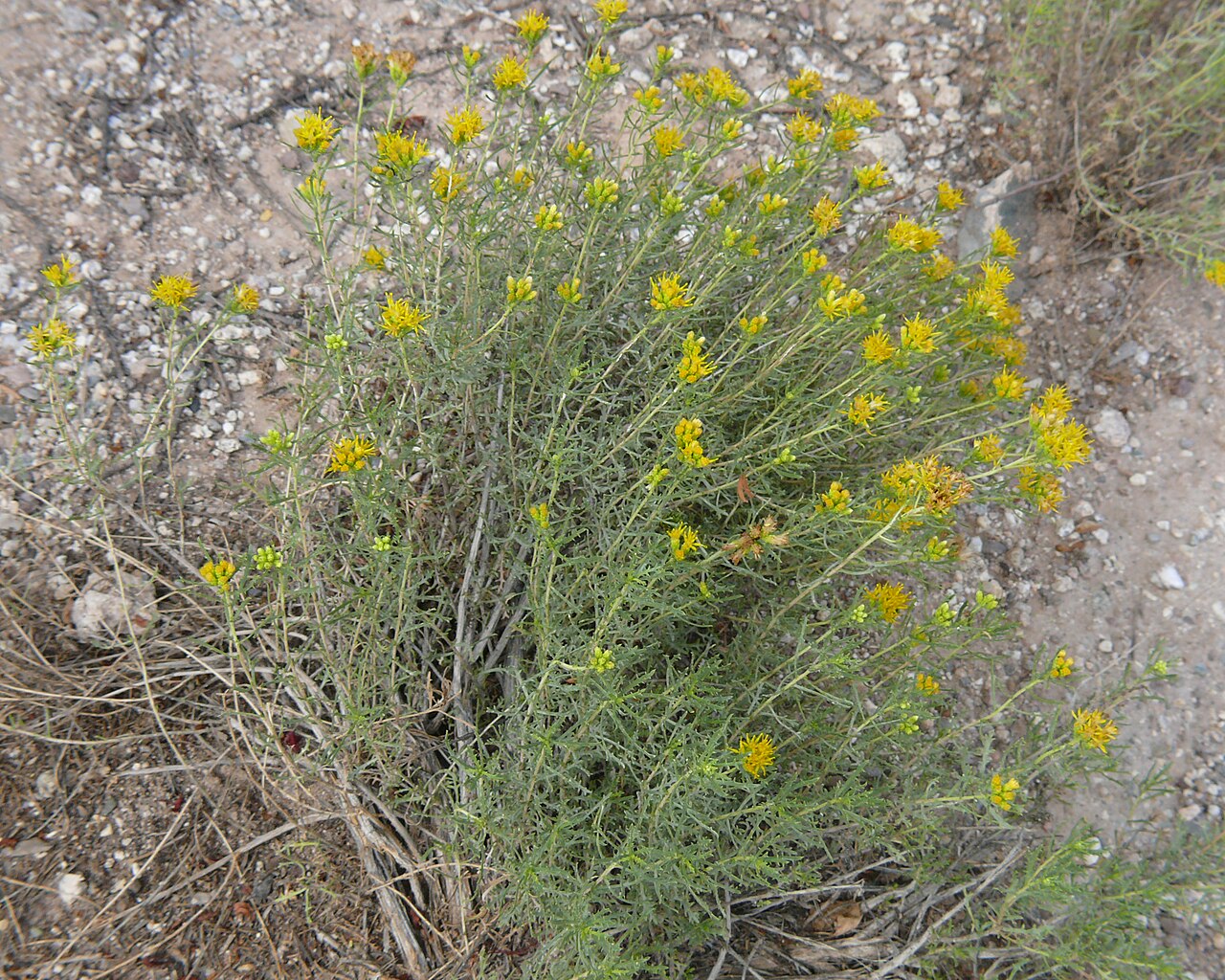
Isocoma tenuisecta, commonly called Burroweed (also known as shrine jimmyweed or burrow goldenweed), is a small, rounded, woody-based perennial subshrub native to the desert grasslands of Arizona, New Mexico, and northern Sonora, Mexico. A member of the aster family (Asteraceae), it is instantly recognizable in late summer and fall, when every branch tip erupts into tight clusters of small, bright-yellow flower heads that have no petal-like ray florets — just dense buttons of disc flowers.
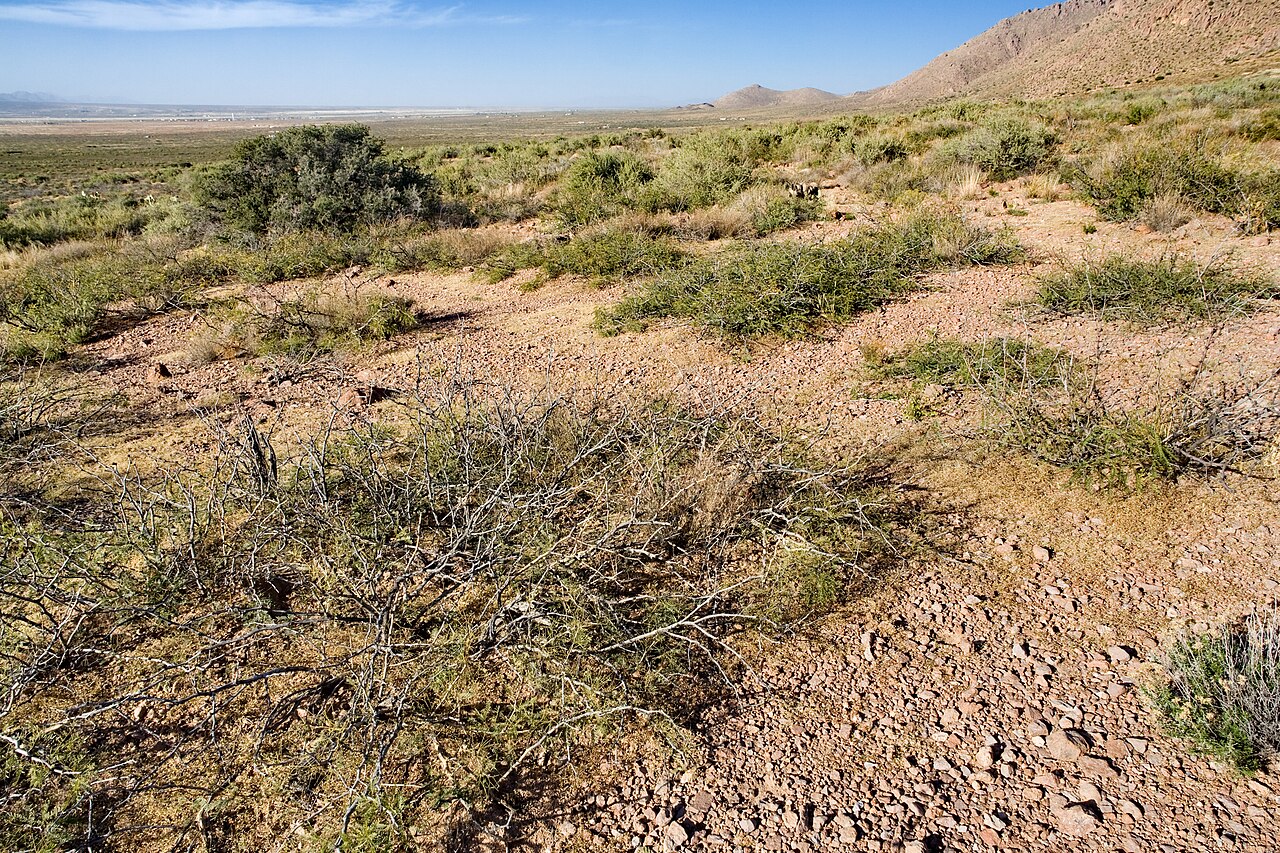
Burroweed grows one to three feet tall and about as wide, with narrow, glandular, lance-shaped leaves that are often slightly sticky to the touch. The foliage has a resinous, somewhat unpleasant odor when crushed, a trait shared with several of its goldenweed relatives. It thrives in open, sun-baked flats and bajadas of the Chihuahuan and Sonoran desert grasslands, often growing in dense colonies on disturbed or heavily grazed ground.
Before adding Burroweed to a home landscape, gardeners and livestock owners alike need to know one critical fact: this plant is poisonous to grazing animals. Its foliage contains tremetol, the same class of toxin found in white snakeroot, and can cause “trembles” in cattle, sheep, and goats, with the toxin even passing through milk to nursing young (and historically to humans who drank contaminated milk). It is not suitable for pastures, horse properties, or any site where livestock might browse it, and it should be kept out of reach of grazing animals in general.
Identification
Burroweed is a low, rounded subshrub with multiple woody stems rising from a persistent base, typically reaching 1 to 3 feet (30–90 cm) in height and spread. In the growing season its silhouette is softened by fine, gray-green foliage, while in winter the bare, wiry stems and old dried flower heads give the plant a scraggly, tan appearance.
Stems
Stems are slender, numerous, and woody at the base, branching upward into a bushy, rounded crown. New growth is herbaceous and slightly glandular-hairy, while older wood is gray and brittle.
Leaves
Leaves are narrowly lance-shaped to linear, about ¾ to 1½ inches (2–4 cm) long, and arranged alternately along the stems. Margins carry a scattering of large teeth or shallow lobes, and the leaf surfaces are glandular-dotted, giving them a faintly resinous sheen and a sharp, turpentine-like scent when bruised.
Flowers
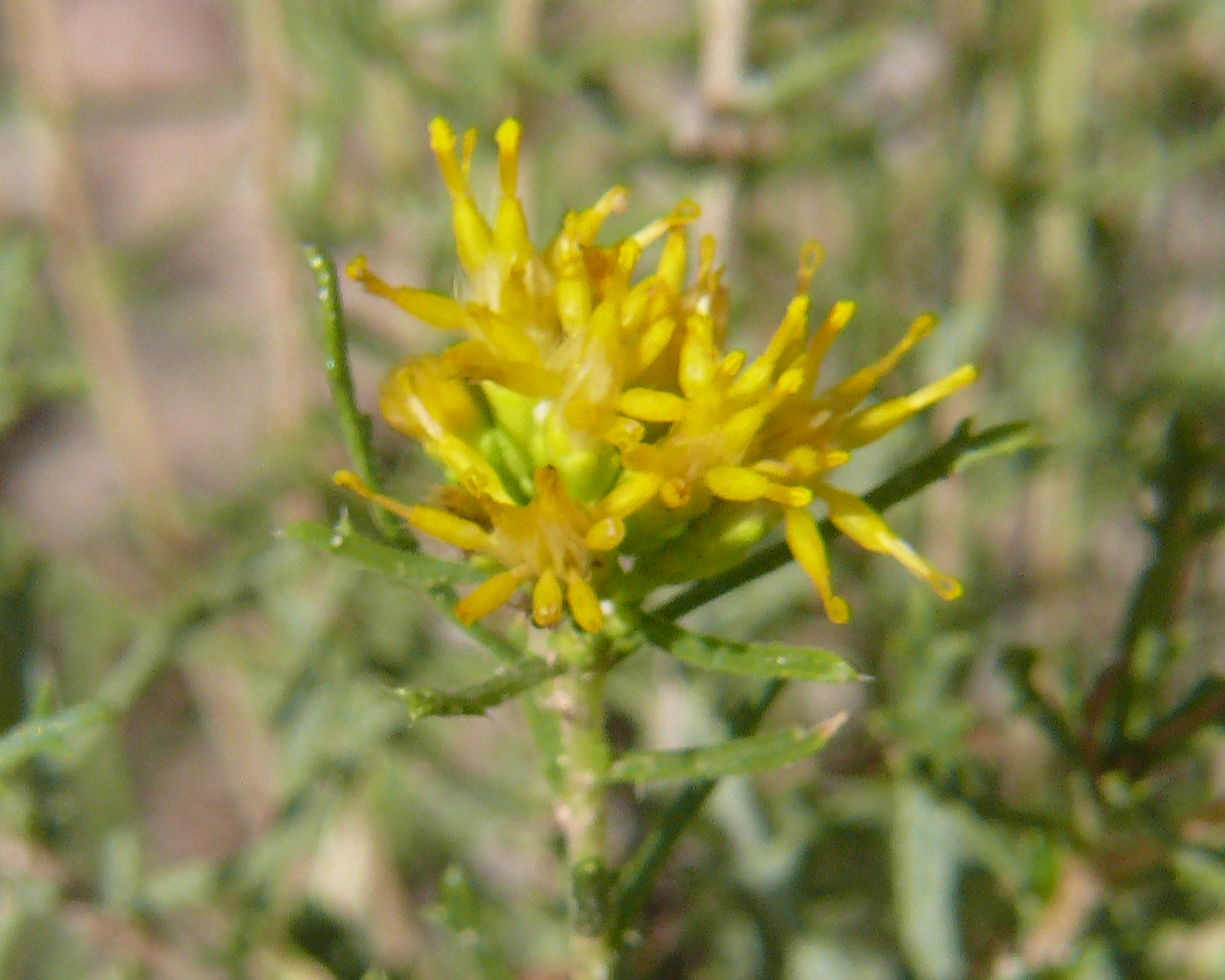
Flowering runs from September into November, when the plant is at its showiest. Each flower head is small, roughly ¼ inch (6 mm) across, and packed with 8 to 15 yellow disc flowers; there are no ray flowers (no “petals” in the usual daisy sense), so each head looks like a tight yellow pom-pom. Heads cluster densely at the tips of branches and along the upper stem, covering the whole plant in gold for several weeks.
Fruit & Seeds
After bloom, the flower heads dry to a dull tan and typically remain attached to the plant through winter rather than shattering immediately. Each tiny seed (achene) carries a tuft of bristly pappus that eventually carries it off on the wind, though many seeds disperse only a short distance from the parent plant.
Quick Facts
| Scientific Name | Isocoma tenuisecta |
| Family | Asteraceae (Aster/Sunflower) |
| Plant Type | Perennial Subshrub / Forb |
| Mature Height | 1–3 ft (30–90 cm) |
| Mature Spread | 1–3 ft |
| Growth Rate | Moderate to fast after disturbance |
| Sun Exposure | Full Sun |
| Water Needs | Low |
| Soil Type | Rocky, gravelly or caliche; well-drained |
| Soil pH | Neutral to alkaline |
| Bloom Time | September – November |
| Flower Color | Yellow |
| Fall Color | Gray-green foliage; yellow bloom display |
| Fruit | Small dry achene with bristly pappus |
| Deer Resistant | Yes — toxic and unpalatable to grazing animals |
| USDA Hardiness Zones | 8–10 |
Native Range
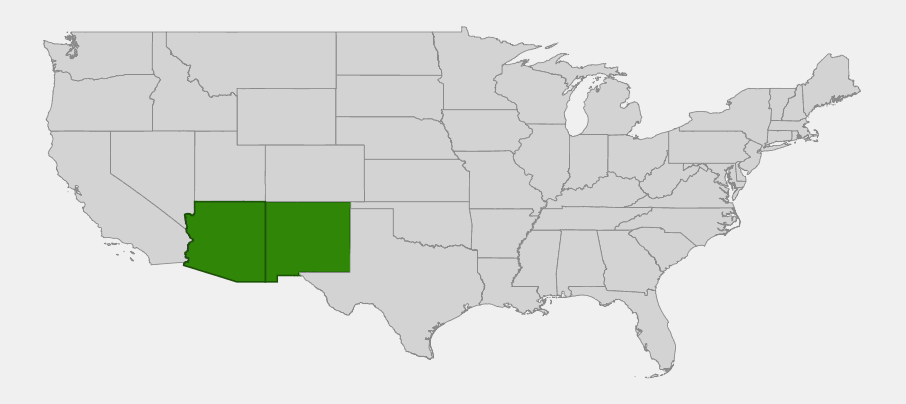
Burroweed is native to a fairly compact range centered on the desert grasslands of southeastern Arizona and southwestern New Mexico, extending south into the Mexican state of Sonora. Within the United States it is essentially restricted to these two states, where it is one of the most familiar subshrubs of mid-elevation desert grassland and semi-desert scrub.
It grows most densely on bajadas, flats, and rangeland between roughly 2,500 and 5,000 feet in elevation, in the transition zone between low desert and higher grassland or oak woodland. Burroweed is strongly associated with disturbed and overgrazed sites: because livestock avoid eating it while readily browsing the grasses around it, heavy grazing pressure tends to thin out competing vegetation and let burroweed populations expand, so dense stands are often a visual indicator of rangeland in poor condition.
Outside of this core range, Burroweed is not documented as naturalized or planted elsewhere in the United States; it remains a regional specialty of the Arizona–New Mexico borderlands and adjacent Mexico.
📋 Regional plant lists featuring Burroweed: Arizona & New Mexico
Growing & Care Guide
Burroweed is not a common nursery plant — most gardeners encounter it as a wild component of native desert grassland restorations rather than as a deliberate landscape accent — but it is extremely easy to grow in the right setting and asks for almost nothing once established.
Light
Give it full sun. Burroweed is a plant of open desert grassland and does not tolerate shade; it will become sparse and leggy if crowded by taller shrubs or trees.
Soil & Water
It is highly drought tolerant and prefers lean, rocky, gravelly, or caliche-heavy soils with excellent drainage. Once established, supplemental irrigation is rarely needed outside of extreme drought; overly rich or consistently moist soil tends to produce rank, floppy growth rather than the tight, rounded form seen in the wild.
Planting Tips
Because Burroweed is not widely sold, most plantings come from seed collected locally or from salvaged plants at restoration sites. If establishing it in a wildlife or restoration planting, space plants 2 to 3 feet apart to allow for their rounded mature form, and keep newly planted specimens watered through their first summer only.
Pruning & Maintenance
Little maintenance is required. Old, woody plants can be cut back hard in late winter to encourage fresh, more compact growth, since burroweed resprouts readily from its woody base. Removing spent flower heads is optional and mostly a matter of tidiness.
Landscape Uses
Given its toxicity to livestock, Burroweed is best reserved for specific, well-considered situations:
- Desert grassland restoration on rangeland that is not actively grazed
- Erosion control on dry, rocky slopes and disturbed desert soils
- Low-water demonstration gardens illustrating authentic Chihuahuan/Sonoran grassland plant communities
- Fall color accents in xeric native gardens, valued for its reliable yellow autumn bloom
It should never be planted where horses, cattle, sheep, or goats can browse it, and it is not an appropriate choice for pastures or working ranchland.
Wildlife & Ecological Value
Burroweed plays a modest but real ecological role in the desert grassland communities where it grows, even though its toxicity limits its value to larger browsing wildlife.
For Pollinators
The abundant fall flower heads provide a late-season nectar and pollen source at a time when few other desert grassland plants are blooming, attracting small native bees, wasps, and a variety of flies and beetles that help carry pollen between plants.
For Birds
Seed-eating birds, including sparrows and finches, pick at the small achenes once the flower heads dry, and the dense, twiggy growth form offers some cover for ground-foraging birds moving through open grassland.
For Mammals
Because of its tremetol content, Burroweed is avoided by cattle, sheep, goats, and most native browsers except in cases of severe forage shortage, when poisoning can occur. This avoidance is actually central to its ecological story: it is one of the clearest plant indicators that a desert grassland has been grazed too heavily, since it increases as more palatable grasses are grazed down around it.
Ecosystem Role
As an unpalatable, drought-hardy subshrub, Burroweed helps hold soil on disturbed bajadas and grassland flats where grazing or erosion has thinned out grass cover, and its late-season bloom extends the flowering season of desert grassland plant communities into early winter.
Cultural & Historical Uses
Burroweed does not have a significant history of use by people as food, fiber, or medicine — unlike many of its desert neighbors, it has no documented traditional culinary or craft applications, largely because of its toxicity and unpleasant resinous odor.
Its main significance to humans has always been agricultural and ecological rather than utilitarian: ranchers in Arizona and New Mexico have long recognized burroweed as a warning sign of overgrazed range, and its toxicity to livestock has made it the subject of rangeland management research for over a century. Early 20th-century agricultural bulletins specifically called out jimmyweeds and goldenweeds like Isocoma species as a cause of “trembles” and milk sickness in livestock and, indirectly, in people who drank contaminated milk.
Today, Burroweed is mainly of interest to range scientists, native plant restorationists, and desert naturalists who value it as an authentic, drought-tough component of Arizona and New Mexico’s desert grasslands, even as livestock producers continue to manage around it.
Frequently Asked Questions
Is Burroweed poisonous?
Yes. Burroweed contains tremetol, a toxin that can cause “trembles” in cattle, sheep, and goats, and the toxin can also pass through milk to nursing animals and, historically, to people who drank affected milk. It should never be planted where livestock graze.
Why does Burroweed increase on overgrazed land?
Livestock avoid eating burroweed because of its toxicity and resinous taste, while they readily graze the grasses growing around it. Over time, heavy grazing removes the competing grasses and lets burroweed spread, which is why dense stands are considered a sign of degraded rangeland.
Where does Burroweed grow naturally?
Burroweed is native to the desert grasslands of southeastern Arizona and southwestern New Mexico, plus adjacent Sonora, Mexico, typically between about 2,500 and 5,000 feet in elevation.
Can Burroweed be grown in a home garden?
It can, in full sun with sharp drainage, but it is not widely available in the nursery trade and is best suited to restoration plantings or xeric demonstration gardens rather than typical residential landscapes — and never anywhere livestock or grazing animals have access.
Does Burroweed have showy flowers?
Yes. From September through November, the whole plant becomes covered in small, bright-yellow, disc-only flower heads, making it one of the more visible fall-blooming subshrubs of its native desert grasslands.

Looking for a nursery that carries Burroweed?
Browse our native plant nursery directory: Arizona · New Mexico