Dwarf Violet Iris (Iris verna)
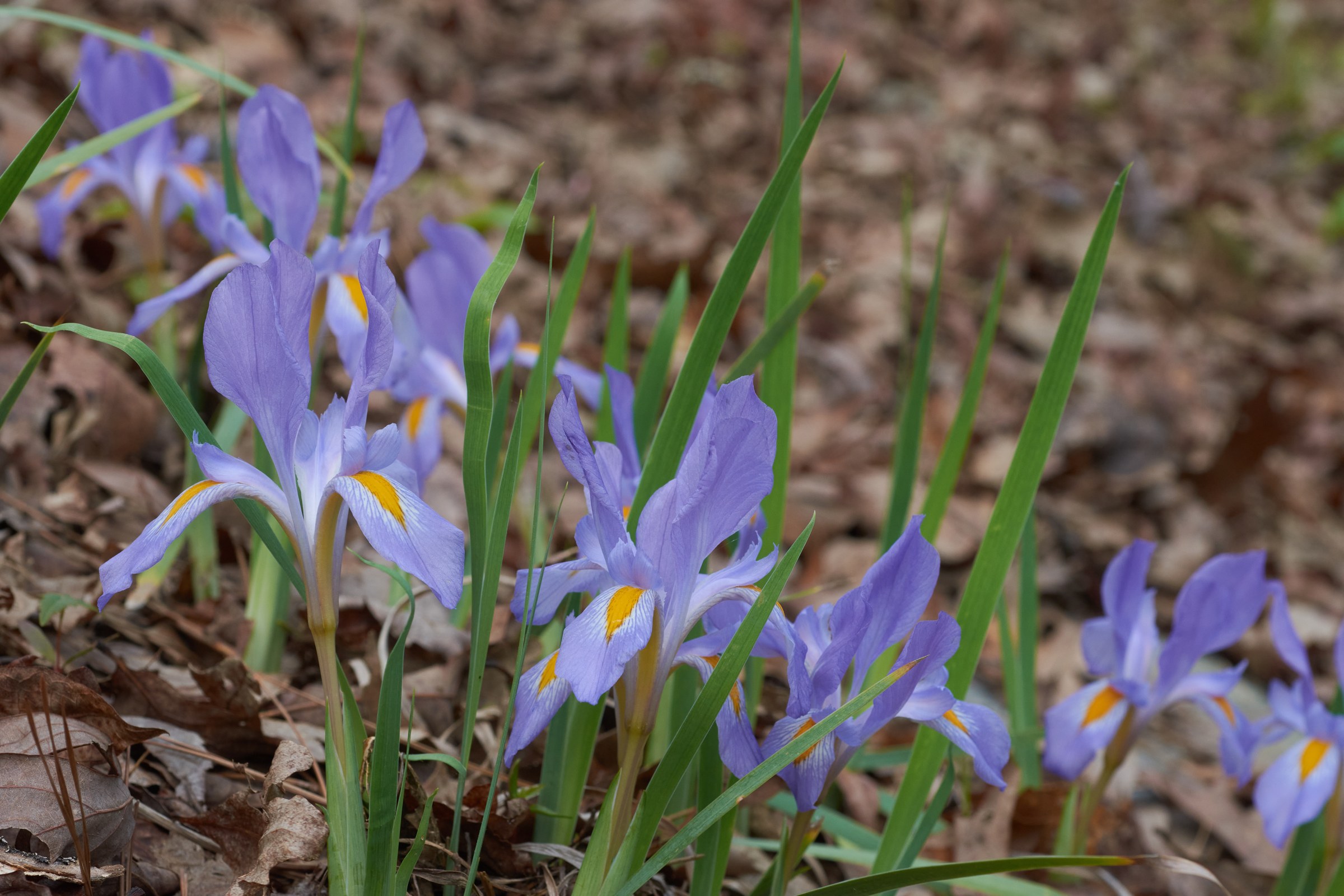
Iris verna L., commonly called the Dwarf Violet Iris (also Dwarf Iris or Vernal Iris), is the smallest native iris of the eastern United States — a low, early-blooming woodland wildflower that rarely tops 6 inches tall even in full flower. Despite its diminutive size, it is impossible to miss when in bloom: fragrant violet-blue flowers with a bright orange-yellow crest open just above the leaf litter in dry, sandy woodlands from the mid-Atlantic south through the Gulf states and west into the Ozarks and Ouachitas.
Unlike the wetland irises of the Southeast, Dwarf Violet Iris is a plant of dry ground — sandy pinewoods, oak-hickory ridges, and rocky outcrops where few other irises would survive. It spreads slowly by thin rhizomes into loose mats, often forming colorful drifts across the forest floor for a few weeks each spring before the surrounding canopy fully leafs out.
Note: the name “Dwarf Iris” is also used on this site for the separate, much more northern species Iris lacustris, a Great Lakes specialist. The two are not interchangeable — Dwarf Violet Iris is the southeastern, dry-woodland species described here.
Identification
Dwarf Violet Iris forms small, tight clumps of narrow leaves that elongate after flowering, spreading slowly outward by thin, wiry rhizomes just below the soil surface.
Leaves
Leaves are grass-like and only 1/4 to 1/2 inch wide, typically 2 to 4 inches long at bloom time but lengthening to 6 inches or more by early summer. They are flattened, slightly glaucous (blue-green), and arranged in small fans from the base of each rhizome segment.
Flowers
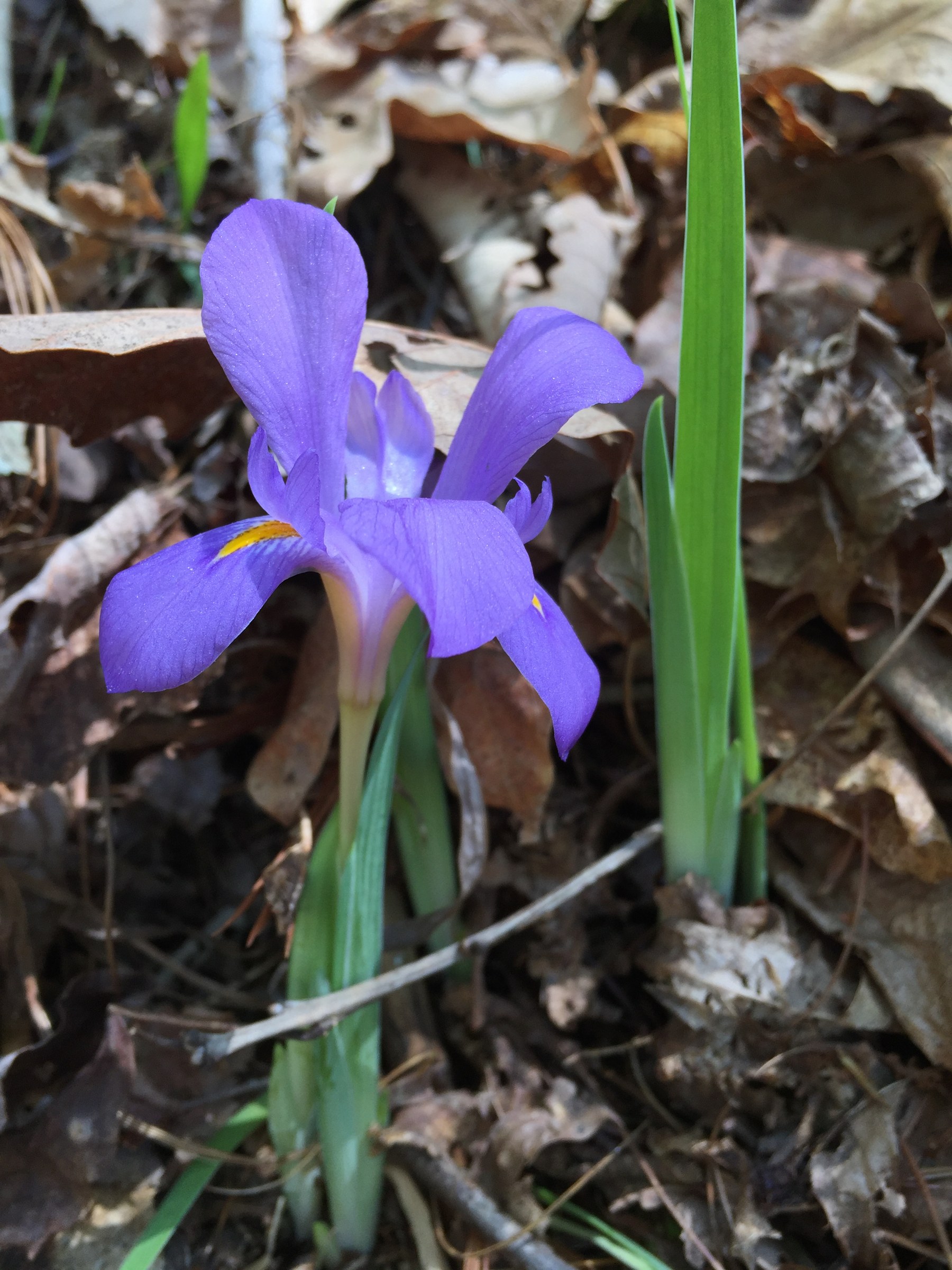
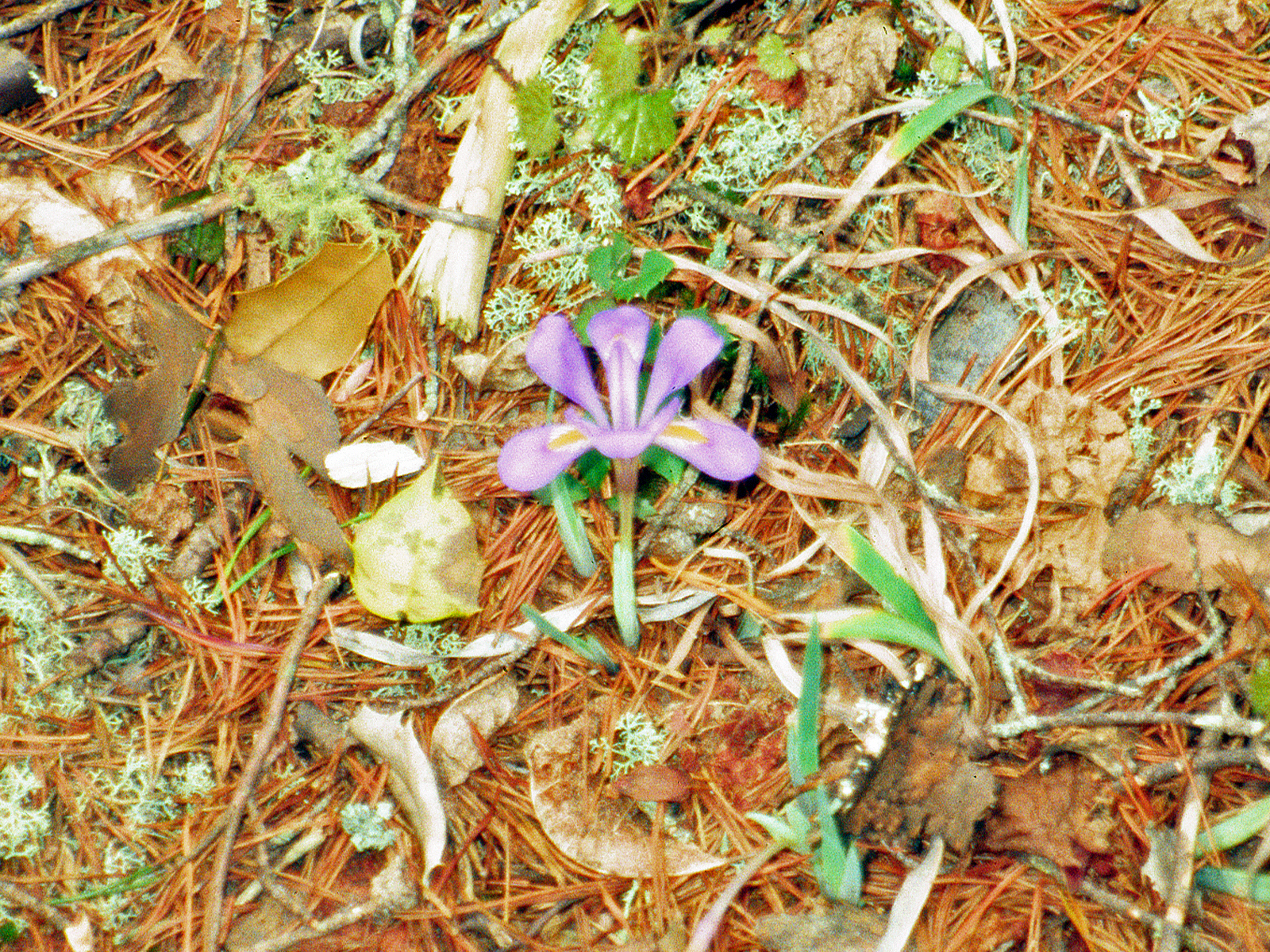
The fragrant flowers are 1.5 to 2 inches across, violet-blue to lavender, with three drooping falls each marked by a bright orange-yellow crest (rather than the “beard” of bearded irises or the simple signal patch of larger wetland irises) and three narrower, upright standards. Flowers are borne singly or in pairs on very short stalks that barely rise above the leaves, blooming from March into May depending on latitude — typically among the earliest native irises to flower each year.
Fruit & Rhizomes
A small, rounded to oblong seed capsule follows flowering, maturing by early summer. The slender rhizomes creep just beneath the surface, slowly expanding a colony outward over years rather than spreading aggressively. All parts of the plant, especially the rhizome, are toxic if eaten, and handling fresh rhizomes can irritate skin.
Quick Facts
| Scientific Name | Iris verna L. |
| Family | Iridaceae (Iris) |
| Plant Type | Herbaceous Perennial Wildflower (rhizomatous, dwarf) |
| Mature Height | 4–6 in in flower |
| Mature Spread | 6–12 in per patch, slowly spreading by rhizome |
| Growth Rate | Slow |
| Sun Exposure | Part Sun to Part Shade |
| Water Needs | Low; dry to average, good drainage essential |
| Soil Type | Sandy or rocky, acidic, well-drained; poor in nutrients |
| Soil pH | 4.5–6.0 (acidic) |
| Bloom Time | March – May |
| Flower Color | Violet-blue to lavender, orange-yellow crest |
| Fall Color | None notable |
| Fruit | Small rounded seed capsule, matures early summer |
| Deer Resistant | Yes; rhizomes and foliage are toxic |
| USDA Hardiness Zones | 5–9 |
Native Range
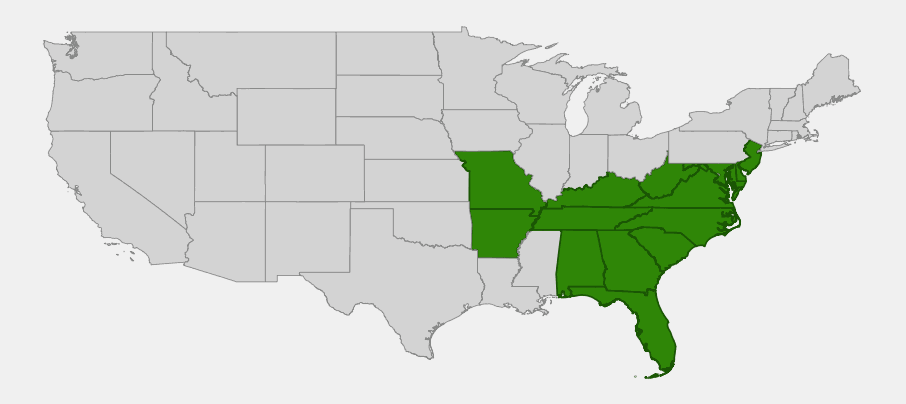
Dwarf Violet Iris is native across a broad swath of the eastern and southeastern United States: Alabama, Arkansas, Delaware, Florida (panhandle), Georgia, Kentucky, Maryland, Missouri, North Carolina, New Jersey, South Carolina, Tennessee, Virginia, and West Virginia. The core of its range runs through the Appalachian foothills and southeastern coastal plain, with notable disjunct populations in the Ouachita Mountains of Arkansas and the Ozarks of Missouri, far west of the main eastern range.
Throughout this range, Dwarf Violet Iris is a specialist of dry, acidic, sandy or rocky soils — pine-oak sandhills, dry ridgetops, longleaf and shortleaf pine woodlands, and similar well-drained sites where leaf litter is thin and competition from taller plants is limited. It typically grows in part sun to part shade beneath an open woodland canopy, and does poorly in rich, moist, or heavily shaded soils where larger plants crowd it out.
Because it depends on dry, sandy or rocky openings rather than rich garden soil, Dwarf Violet Iris is easy to lose from a landscape that is “improved” with compost or heavy irrigation — gardeners wanting to grow it should resist the urge to treat it like a typical perennial bed plant.
📋 Regional plant lists featuring Dwarf Violet Iris: Georgia, Alabama & Mississippi · North Carolina & South Carolina · Kentucky & Tennessee · Maryland, Virginia & West Virginia · Illinois, Iowa & Missouri · Arkansas, Louisiana, Eastern Oklahoma & Eastern Texas · Delaware, Southern New Jersey & Long Island
Growing & Care Guide
Dwarf Violet Iris rewards gardeners who can mimic its native dry-woodland setting — and frustrates those who try to grow it like a typical moisture-loving perennial.
Light
Give it part sun to part shade, ideally the dappled light found beneath an open pine or oak canopy. Full, unbroken sun in hot climates can stress the shallow rhizomes; deep, continuous shade reduces flowering.
Soil & Water
Plant in sandy or gravelly, acidic, sharply drained soil. This species actively dislikes rich garden loam, heavy clay, or regular irrigation — soggy conditions quickly rot the rhizomes. Once established, it needs only occasional watering during extended dry spells and otherwise thrives on rainfall alone.
Planting Tips
Set out container-grown plants in fall, when cooler temperatures help the shallow rhizomes establish before summer heat. Amend heavy soils with coarse sand to improve drainage rather than adding compost or fertilizer. Space plants 6 to 8 inches apart for a naturalistic drift, and resist the urge to mulch heavily — a thin layer of pine straw is plenty.
Pruning & Maintenance
This is a low-maintenance plant once sited correctly. Simply remove spent flowers and tidy foliage as it yellows in summer. Established colonies rarely need division; if a patch becomes crowded, lift and separate clumps in late summer after the foliage has died back, replanting immediately in well-drained soil.
Landscape Uses
Dwarf Violet Iris shines in naturalistic, dry woodland settings:
- Woodland rock gardens and sandy, well-drained slopes
- Native pine-savanna or oak-woodland restorations
- Dry shade gardens beneath established trees
- Front-of-border accents in sandy, lean garden soil
- Rock crevice or scree plantings where drainage is excellent
Wildlife & Ecological Value
As one of the earliest wildflowers to bloom in dry southeastern woodlands, Dwarf Violet Iris offers a modest but valuable contribution to its plant community each spring.
For Pollinators
Bumblebees and other large bees pollinate the flowers, pushing past the falls to reach nectar at the base while brushing against pollen hidden beneath the style branches. Blooming as it does before most other woodland wildflowers, it provides an early nectar source in habitats where spring flowers can otherwise be sparse.
For Birds
Ground-foraging birds of open pine-oak woods may take shelter in the low foliage mats, though the plant is too small to serve as significant nesting cover.
For Mammals
Toxic rhizomes and foliage make this iris unappealing to deer and other browsing mammals, which helps it persist even under heavy deer pressure in some woodlands.
Ecosystem Role
Dwarf Violet Iris is an indicator of healthy, fire-maintained or otherwise open pine-oak woodland — the dry, sandy, sparsely vegetated conditions it needs are the same conditions many other specialized understory wildflowers depend on. Its presence in a woodland often signals that the site has avoided the soil disturbance, fire suppression, or over-fertilization that eliminates such species.
Cultural & Historical Uses
Dwarf Violet Iris has long been admired by wildflower enthusiasts for being among the first native irises to bloom each spring, often appearing alongside bird’s-foot violets and other early sandhill wildflowers. Its small stature and fragrance made it a favorite subject for early American botanical illustrators documenting the flora of the southeastern states.
There is no significant documented history of medicinal or culinary use specific to this species among regional traditions; as with other irises, the plant’s toxicity means it has always been treated strictly as an ornamental rather than a food or remedy source.
Today it is grown primarily by native-plant enthusiasts and rock-gardeners who can provide its specific dry, sandy conditions, and it remains a minor but cherished presence in southeastern wildflower gardens and woodland restorations.
Frequently Asked Questions
Is Dwarf Violet Iris the same plant as “Dwarf Iris” sold at nurseries?
Not necessarily — “Dwarf Iris” is used loosely for several small iris species, including the unrelated Great Lakes species Iris lacustris. Confirm you are buying Iris verna if you want this southeastern, dry-woodland species specifically.
Why won’t my Dwarf Violet Iris bloom?
The most common cause is soil that’s too rich or too wet. This species needs lean, sandy, sharply drained soil and struggles in fertile garden beds or anywhere water collects after rain.
Can it grow in full sun?
It can tolerate full sun in cooler climates or with reliably sandy, dry soil, but in most of the Southeast it performs better with some shade from an open tree canopy, mimicking its native pine-oak woodland habitat.
Is Dwarf Violet Iris toxic to pets?
Yes. Like other irises, the rhizomes and foliage are toxic if eaten and can cause mouth and stomach irritation in pets and people; the sap can also irritate skin on contact.
How long does a colony take to spread?
Growth is slow — a planted clump may take several years to form a noticeable patch, since the thin rhizomes extend gradually rather than spreading aggressively.

Looking for a nursery that carries Dwarf Violet Iris?
Browse our native plant nursery directory: Alabama & Arkansas · Delaware, Florida & Georgia · Kentucky, Maryland & Missouri · North Carolina & New Jersey · South Carolina, Tennessee & Virginia · West Virginia