Dixie Iris (Iris hexagona)
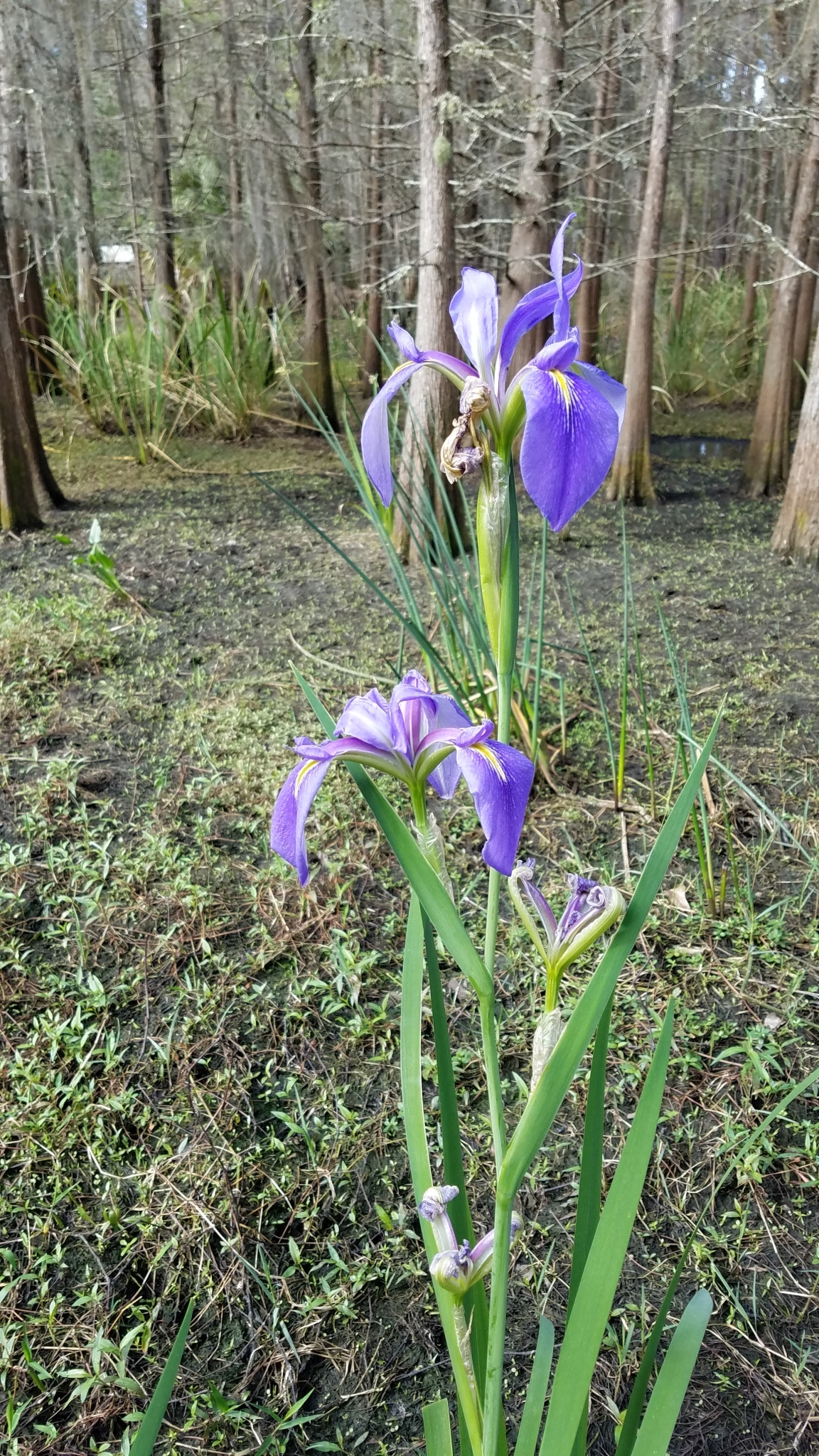
Iris hexagona Walter, commonly called the Dixie Iris (and occasionally Carolina Iris), is a tall, violet-blue-flowered wildflower of the Deep South’s marshes, cypress-gum swamps, and roadside ditches. It belongs to the small group of southeastern “Louisiana iris” relatives in Iris series Hexagonae, whose showy, six-angled seed capsules give the group its name. Though it shares a general look with its more famous cousins — Copper Iris, Giant Blue Iris, and the hybrid swarm of true Louisiana irises — Dixie Iris keeps to a narrower home range centered on the Atlantic and eastern Gulf coastal plain.
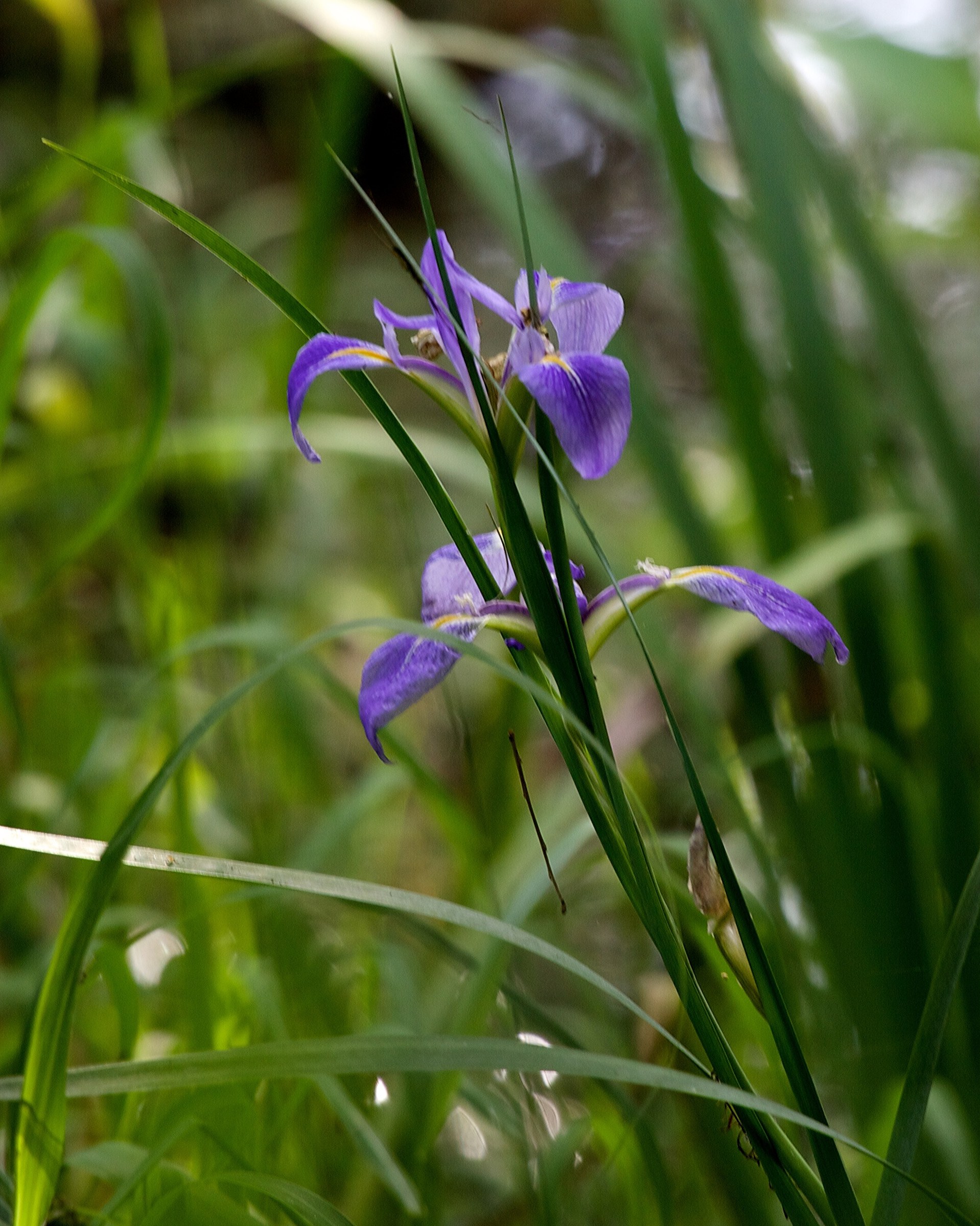
In spring, clumps of sword-shaped leaves send up branched flowering stalks topped with large, flattened blooms in shades of violet-blue to soft lavender, each petal marked with a bright yellow or cream signal patch that guides pollinators to the nectar. A single clump can produce a dozen or more flowers over several weeks, though individual blooms last only a day or two. The plant spreads slowly by thick, creeping rhizomes, forming loose colonies in the saturated soils it prefers.
Dixie Iris is an excellent choice for rain gardens, pond margins, and other consistently wet spots where few other flowering perennials thrive. It asks for little beyond steady moisture and a few hours of sun, rewarding that simple care with one of the most striking native wildflower displays of the southeastern spring.
Identification
Dixie Iris forms clumps of narrow, arching, sword-shaped leaves 2 to 3 feet long rising directly from thick rhizomes at or just below the soil surface. Flowering stems are branched, often taller than the leaves, and typically bear two to four flowers in succession rather than all at once.
Leaves
The leaves are linear and flattened, bright to medium green, 1/2 to 1 inch wide, with a prominent central rib and smooth margins. They form an upright to slightly arching fan from the base of the plant and persist through much of the growing season, dying back only after hard frost in the northern part of the range.
Flowers
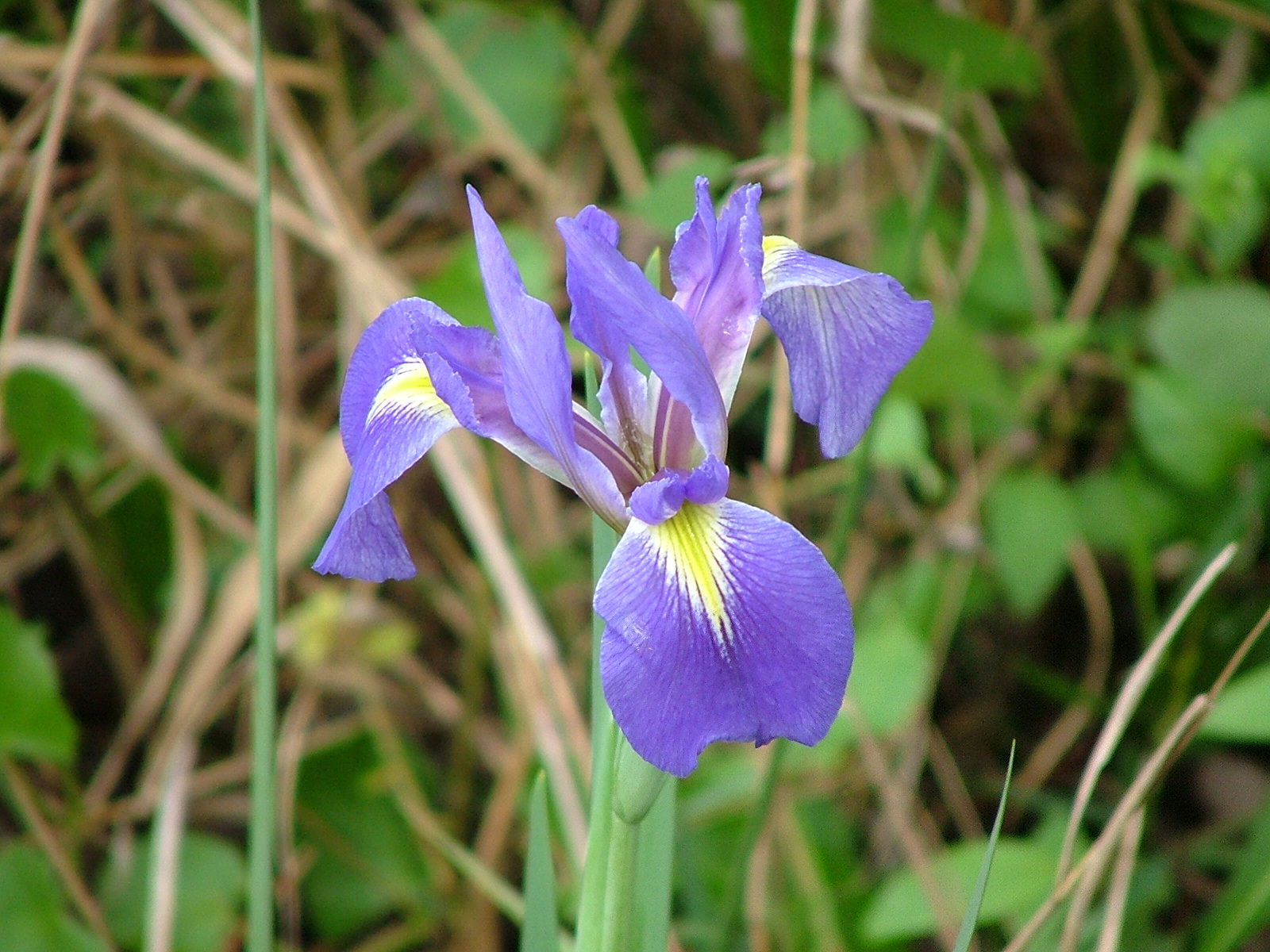
Each flower is 3 to 4 inches across with the classic iris structure: three large, drooping “falls” and three smaller, more upright “standards.” The falls are violet-blue to lavender (rarely white) with a yellow or cream signal streak and fine purple veining near the throat. Flowering runs from March into May, peaking in April across most of the range. The six-angled ovary behind each flower — visible as the stem swells after pollination — is the feature that gives the species its name, hexagona.
Fruit & Rhizomes
After flowering, a six-angled seed capsule develops, splitting open in late summer to release flat, light brown seeds. Below ground, the plant spreads by thick, fleshy rhizomes that root at the nodes, slowly expanding a clump outward into loose drifts over several years. All parts of the plant, especially the rhizome, contain irritant glycosides and are toxic if eaten; handling fresh rhizomes can also irritate skin, so wear gloves when dividing clumps.
Quick Facts
| Scientific Name | Iris hexagona Walter |
| Family | Iridaceae (Iris) |
| Plant Type | Herbaceous Perennial Wildflower (rhizomatous) |
| Mature Height | 2–3 ft in flower |
| Mature Spread | 1–2 ft per clump, slowly colonizing by rhizome |
| Growth Rate | Moderate |
| Sun Exposure | Full Sun to Part Shade |
| Water Needs | High; wet to consistently moist, tolerates shallow standing water |
| Soil Type | Rich, mucky or clay soils; tolerates poor drainage |
| Soil pH | 5.5–7.0 (acidic to neutral) |
| Bloom Time | March – May |
| Flower Color | Violet-blue to lavender, yellow signal patch |
| Fall Color | None notable; foliage persists into winter in mild climates |
| Fruit | Six-angled seed capsule, splits in late summer |
| Deer Resistant | Yes; rhizomes and foliage are toxic |
| USDA Hardiness Zones | 7–10 |
Native Range
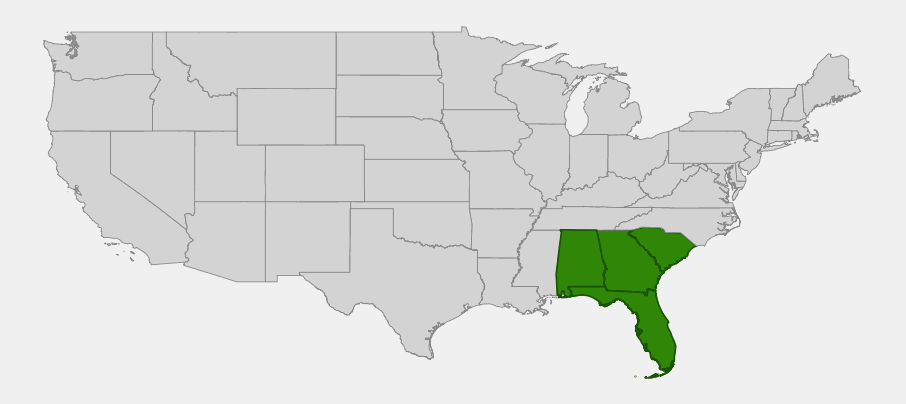
Dixie Iris is native to the Atlantic and eastern Gulf coastal plain, found wild in Alabama, Florida, Georgia, and South Carolina. It grows from the coastal counties inland through the flatwoods and river bottoms of the Deep South, generally staying within the warmer, wetter lowlands rather than the Piedmont or mountains.
Across this range, Dixie Iris favors the margins of cypress-gum swamps, freshwater marshes, wet pine flatwoods, roadside and agricultural ditches, and the shallow edges of ponds and slow streams. It typically grows in full sun to light shade where tree canopy is open, and tolerates both standing water for part of the year and periods of merely moist soil, as long as the ground does not dry out completely for long.
Some older treatments lumped the irises of the central Gulf Coast — Louisiana, Mississippi, and western Alabama — into a broad Iris hexagona, but most current floras separate those populations as the related Iris savannarum (prairie iris). Gardeners west of Alabama who want a Gulf Coast look should look for that species or one of the many Louisiana iris hybrids instead.
📋 Regional plant lists featuring Dixie Iris: Georgia, Alabama & Mississippi · North Carolina & South Carolina
Growing & Care Guide
Dixie Iris is easy to satisfy as long as you can offer it the one thing it truly demands: reliably wet soil. Given that, it is a tough, low-maintenance perennial that returns bigger every spring.
Light
Plant in full sun for the heaviest bloom, though Dixie Iris tolerates light to part shade, especially in the hottest parts of its range, where some afternoon shade can reduce moisture stress. In deep shade, flowering drops off sharply even though the foliage stays healthy.
Soil & Water
This is a wetland plant at heart. It grows best in rich, mucky, or clay soils that stay consistently wet to saturated, and it will tolerate a few inches of standing water during the growing season. In garden settings without a natural wet spot, plant it at a pond or rain garden margin, in a low area that collects runoff, or simply commit to regular supplemental watering — the soil should never be allowed to dry out for more than a day or two.
Planting Tips
Set out container plants or divisions in early spring or fall, spacing clumps 12 to 18 inches apart to leave room for spreading rhizomes. Plant rhizomes shallowly, with the top just at or barely below the soil surface, the same way you would plant a bearded iris. A thin layer of mulch helps hold moisture around new plantings but should not bury the rhizome.
Pruning & Maintenance
Remove spent flower stalks after bloom to tidy the clump, and cut back tattered foliage after hard frost. Established clumps benefit from division every 3 to 4 years in late summer, once flowering tapers off — lift the rhizome mass, discard the oldest, least vigorous sections, and replant the vigorous outer pieces. Wear gloves, since the rhizome sap can irritate skin.
Landscape Uses
Dixie Iris earns its keep in any consistently wet corner of the landscape:
- Pond and water-garden margins, planted in shallow water or saturated soil at the edge
- Rain gardens and bioswales that collect and briefly hold stormwater
- Wetland and marsh restoration plantings
- Roadside ditches and other low, poorly drained spots where little else will bloom
- Native wildflower borders in consistently irrigated beds
Wildlife & Ecological Value
Dixie Iris contributes both food and structure to the wetland communities it grows in, even though it is not a major wildlife food source itself.
For Pollinators
Large bees, especially bumblebees and carpenter bees, are the primary pollinators, strong enough to push past the flower’s landing-pad falls to reach the nectar and pollen hidden beneath the arching style branches. Swallowtail butterflies and other nectar-seekers also visit the blooms.
For Birds
The dense, upright foliage provides cover for marsh and wetland birds such as rails and gallinules, and the seed capsules are occasionally taken by seed-eating birds after they split open in late summer.
For Mammals
Because the rhizomes and foliage contain irritant compounds, Dixie Iris is rarely browsed by deer or other mammals, which makes it a reliable choice in areas with heavy deer pressure.
Ecosystem Role
Growing in dense clumps along swamp and marsh margins, Dixie Iris helps stabilize saturated soils against erosion and provides structural cover for amphibians and aquatic invertebrates at the water’s edge. Its spring bloom also adds an early nectar source in wetlands that can otherwise be sparse in flowers before summer.
Cultural & Historical Uses
Dixie Iris belongs to the same coastal-plain iris group that gave rise to the famous Louisiana iris hybrids grown by home gardeners and iris societies across the South. Breeders in the early and mid-20th century crossed Dixie Iris and its close relatives — Copper Iris, Giant Blue Iris, and Zigzag Iris — to produce the wide color range seen in modern Louisiana iris cultivars, though Dixie Iris itself played a smaller role in that breeding than its Louisiana cousins.
Historical accounts describe southeastern communities using iris rhizomes externally, applied as a poultice to bruises and sore muscles, but these uses are recorded as folk history rather than guidance — the rhizome is toxic if eaten and can irritate skin on contact, so it should never be used medicinally today.
In the modern landscape, Dixie Iris is valued mainly as an ornamental wetland wildflower, prized by native-plant gardeners for its reliable spring color in spots too wet for most other perennials, and by restoration practitioners as a native alternative to the many non-native irises sold for water gardens.
Frequently Asked Questions
Is Dixie Iris the same as a Louisiana iris?
Not exactly. Dixie Iris is one of several closely related wetland iris species native to the Southeast, and it is a parent of some Louisiana iris hybrids, but “Louisiana iris” more specifically refers to garden hybrids bred mainly from Copper Iris, Giant Blue Iris, Zigzag Iris, and Iris brevicaulis in and around Louisiana.
Can I plant Dixie Iris in a regular garden bed?
Only if you can keep the soil consistently moist to wet. In a typical well-drained bed it will struggle and bloom poorly; it performs best at a pond edge, in a rain garden, or in soil that stays damp through the growing season.
Are Dixie Iris rhizomes poisonous?
Yes. Like other irises, the rhizomes and foliage contain compounds that are toxic if eaten and can irritate skin on contact. Keep them away from pets and children, and wear gloves when dividing clumps.
How do I divide an overgrown clump?
Dig the rhizome mass in late summer after flowering has finished, break or cut it into sections with healthy leaf fans and roots, discard old woody centers, and replant the vigorous outer divisions at the same shallow depth.
Will Dixie Iris spread aggressively?
No. It spreads slowly by rhizome into tidy, expanding clumps rather than running widely, so it is easy to keep within bounds in a garden setting.

Looking for a nursery that carries Dixie Iris?
Browse our native plant nursery directory: Alabama · Florida & Georgia · South Carolina