
Smooth Gooseberry (Ribes hirtellum)
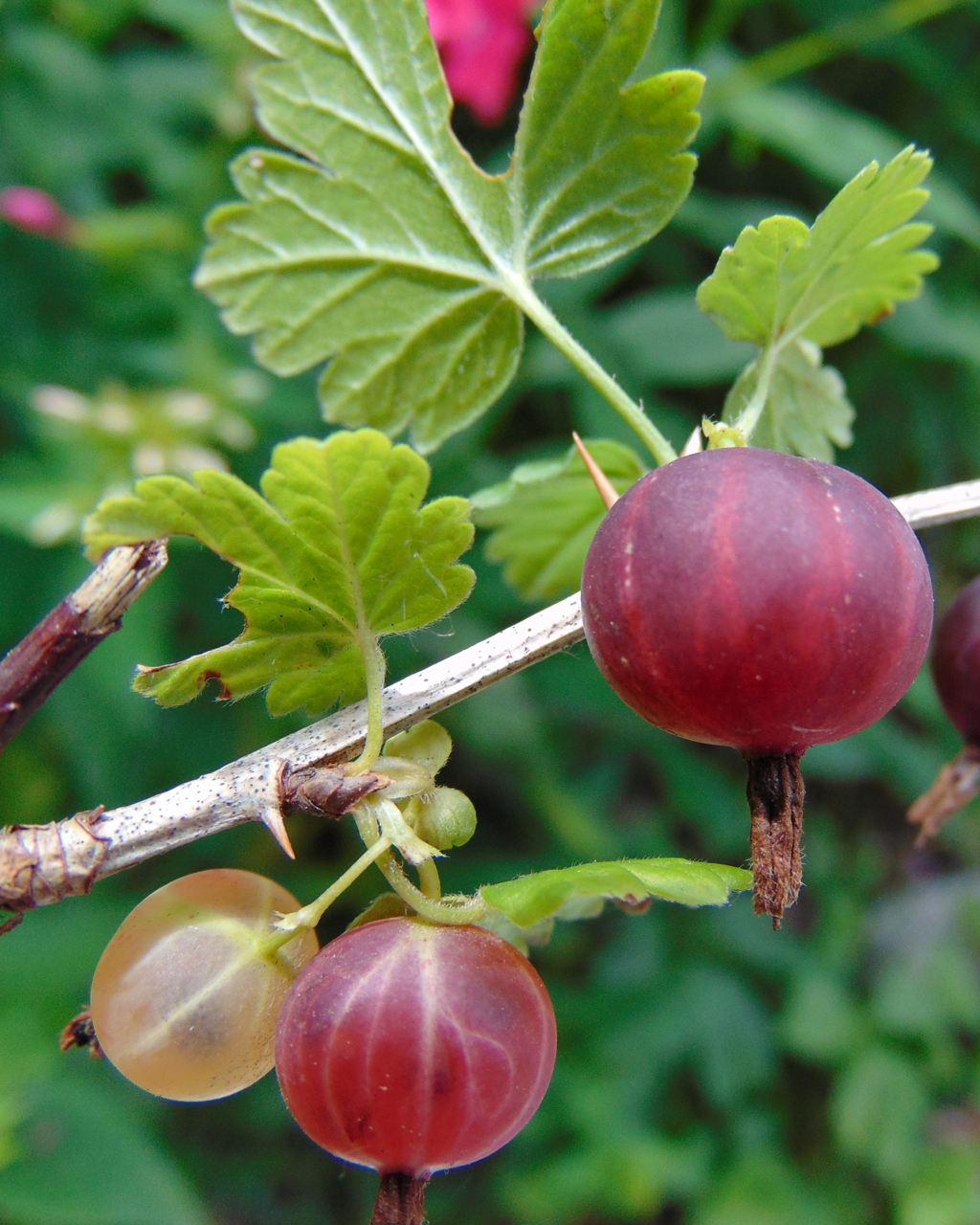
Ribes hirtellum, known as Smooth Gooseberry, American gooseberry, hairystem gooseberry or swamp gooseberry, is a small, arching native shrub of wet woods, swamps, bogs, rocky shores and thickets across the northern United States and Canada. It grows 2 to 4 feet tall, has small, lobed leaves and few or no spines, and in midsummer produces smooth, round berries that ripen from green to red-purple or nearly black. It belongs to the currant and gooseberry family (Grossulariaceae).
“Smooth” refers to the fruit, which, unlike that of the Prickly Gooseberry (Ribes cynosbati), has no prickles. The berries are tart, juicy and good to eat, and this species is the main wild parent of the classic American gooseberry cultivars such as ‘Houghton’ and ‘Downing’, which were valued for resisting the powdery mildew that plagued European gooseberries.
Note on white pine blister rust: like all Ribes, smooth gooseberry is an alternate host of white pine blister rust, a disease that kills Eastern White Pine and other five-needled pines. Some states and towns, especially in the Northeast, still restrict planting Ribes near white pines, so check local rules before planting. This guide covers how to identify it, where it grows, how to grow it, and its value to wildlife.
Identification
Several native gooseberries grow in the Northeast and Midwest. Smooth gooseberry is recognized by its smooth fruit, its short flower stalks with only 1 to 3 flowers, its stamens that barely extend beyond the flower, and its few, short spines.
Stems & Growth Habit
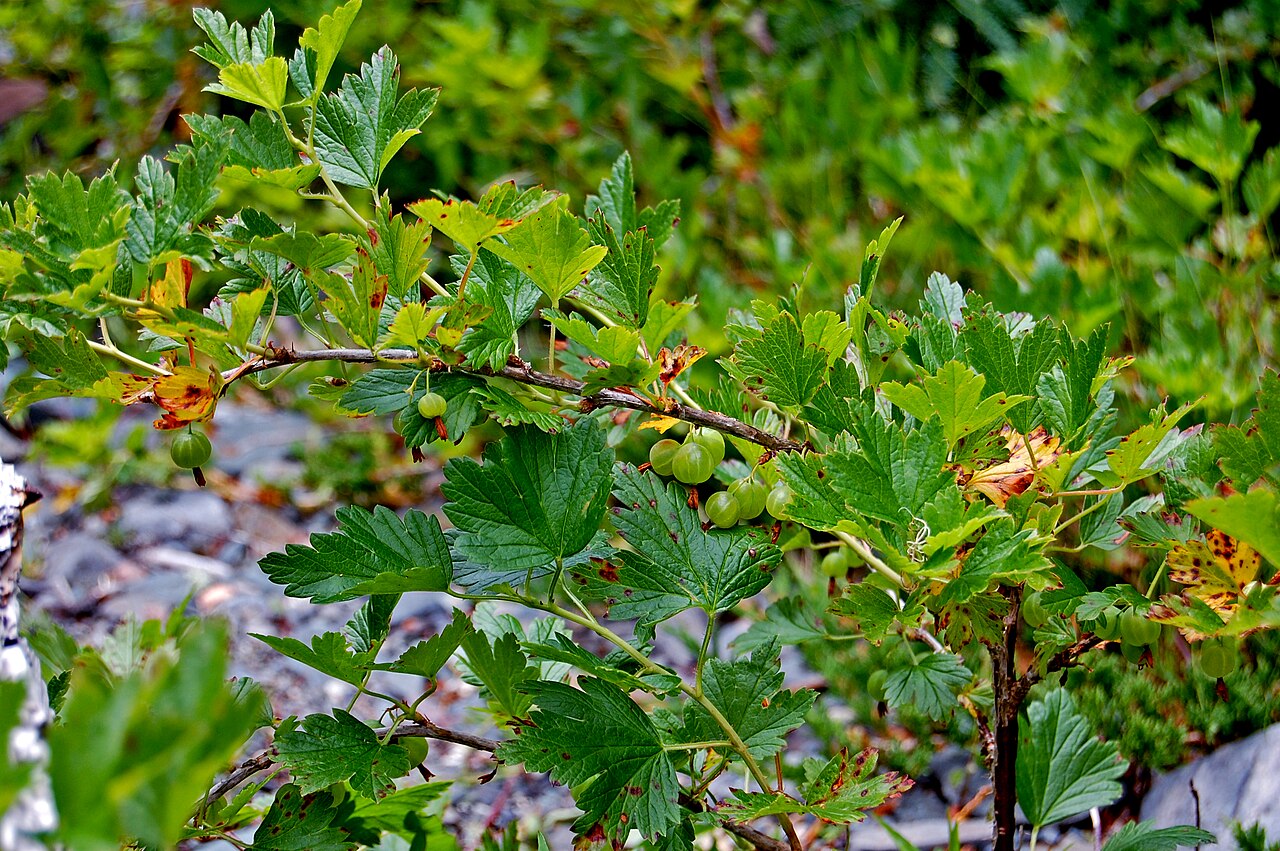
A low to medium shrub, usually 2 to 4 feet tall, with arching or sprawling branches that sometimes root where they touch the ground. The nodes usually carry a single short spine (sometimes up to three, sometimes none), and the stems between nodes are smooth or have a few scattered bristles. Older bark is gray to dark brown and peels in thin strips.
Leaves
Leaves are alternate, often clustered on short spur shoots, roughly round in outline, ¾ to 2 inches across, with 3 to 5 shallow, toothed lobes. They are smooth or slightly hairy and often turn yellow, orange or reddish in fall.
Flowers
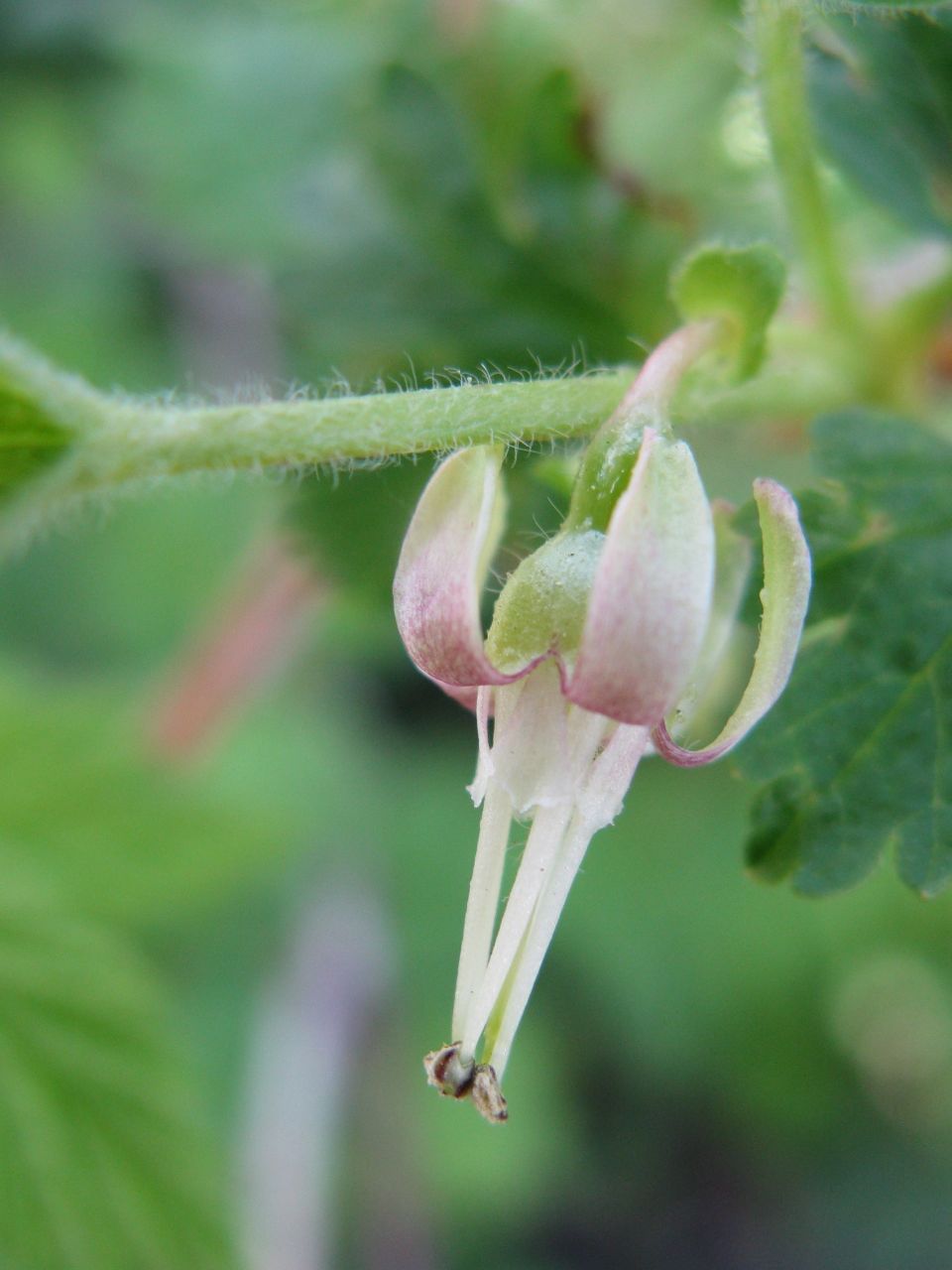
Flowers appear in April to June as the leaves expand, hanging singly or in clusters of 2 or 3 on short stalks beneath the branches. Each is a small bell about ⅜ inch long, greenish-white to pink or purplish, with five sepals that bend back, five small petals, and stamens that extend only slightly beyond the petals. They are easy to miss but are visited by early bees.
Fruit
The berries are round, ⅜ to ½ inch across, smooth and hairless, with no prickles, and carry the dried remains of the flower at the tip. They ripen in July and August from green to red-purple, purplish-black or occasionally remain pale greenish, and they are tart to sweet. The smooth berries separate it from prickly gooseberry, and its short stamens separate it from Missouri gooseberry, whose stamens stick far out of the flower.
Quick Facts
| Scientific Name | Ribes hirtellum (syn. Grossularia hirtella) |
| Family | Grossulariaceae (currant and gooseberry family) |
| Plant Type | Deciduous shrub with few or no spines |
| Mature Height | 2–4 ft |
| Mature Spread | 3–5 ft |
| Growth Rate | Moderate |
| Sun Exposure | Full sun to part shade |
| Water Needs | Moist to wet; tolerates some dryness on rocky sites |
| Soil Type | Moist loam, peat, sand or rocky soil |
| Soil pH | About 5.0–7.5 |
| Bloom Time | April–June |
| Flower Color | Greenish-white to pink or purplish |
| Fall Color | Yellow, orange or reddish |
| Fruit | Smooth, edible berry, red-purple to purplish-black |
| Deer Resistant | Low to moderate; browsed by deer and moose |
| USDA Hardiness Zones | 3–7 |
Native Range
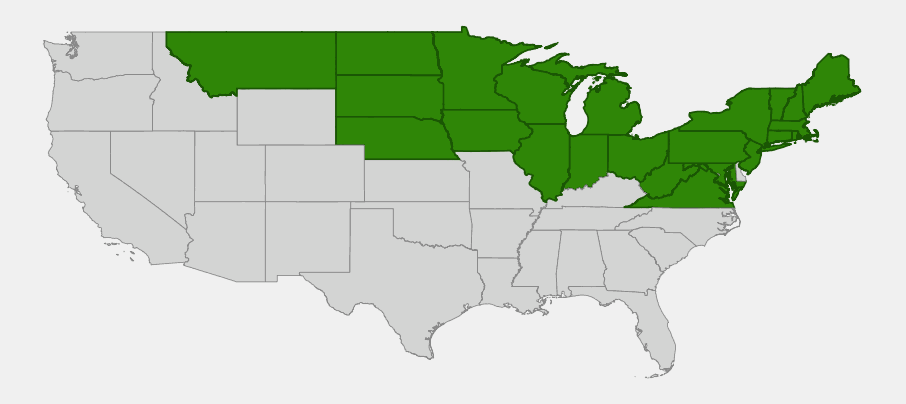
Smooth gooseberry is a northern shrub. USDA PLANTS records it as native from Montana, North Dakota, South Dakota and Nebraska east through Minnesota, Iowa, Wisconsin, Illinois, Indiana, Michigan and Ohio to Pennsylvania, New York, New Jersey and all six New England states, and south to Maryland, West Virginia and Virginia. In Canada it ranges from Alberta and Saskatchewan east to Newfoundland and Labrador, and it reaches the French islands of Saint Pierre and Miquelon.
It is most common in the Great Lakes region, northern New England and eastern Canada, where it grows in swamps, bogs, fens, wet woods, alder and willow thickets, and on rocky shores and ledges, including along the coast of Maine. Southward it becomes scarcer, and the southern records in Maryland, West Virginia and Virginia are outlying populations, mostly in cool mountain wetlands. At the western edge of its range, in Montana and the Dakotas, it is also local.
Because Ribes are alternate hosts for white pine blister rust, federal and state programs in the 20th century pulled millions of wild currant and gooseberry plants from forests to protect white pines. That history affected many native Ribes populations, and some local planting restrictions remain today.
📋 Regional plant lists featuring Smooth Gooseberry: Montana & Wyoming · North Dakota, South Dakota & Western Minnesota · Nebraska, Kansas & Eastern Colorado · Illinois, Iowa & Missouri · Michigan, Wisconsin & Eastern Minnesota · Ohio & Indiana · Maryland, Virginia & West Virginia · New York, Pennsylvania & Northern New Jersey · Delaware, Southern New Jersey & Long Island · Connecticut, Massachusetts & Rhode Island · New Hampshire, Maine & Vermont
Growing & Care Guide
Smooth gooseberry is an easy, hardy shrub for moist sites in cold climates and a good choice for edible native gardens. Buy plants from native plant nurseries, or choose one of the American gooseberry cultivars descended from it. Before planting, check whether your state or town restricts Ribes because of white pine blister rust.
Light
It grows in full sun to part shade. Plants in sun fruit more heavily, while those in shade grow looser and produce fewer berries. In hot summers, light afternoon shade helps.
Soil & Water
It prefers cool, moist, well-drained to wet soil rich in organic matter, but it adapts to sandy and rocky soils as long as the roots do not dry out completely. It handles seasonal flooding better than most fruiting shrubs. Mulch helps keep the roots cool and moist.
Planting Tips
Plant in early spring or fall, 3 to 4 feet apart. Set plants slightly deeper than they grew in the pot, which encourages new shoots from the base. Keep it at least several hundred feet from white pines if blister rust is a concern in your area, and follow any local spacing rules.
Pruning & Maintenance
In late winter, remove dead, damaged and crowded stems, and cut out a few of the oldest stems (those more than three or four years old) at the base, since the best fruit forms on younger wood. Wear gloves for handling, though it is less spiny than most gooseberries. American gooseberries resist powdery mildew better than European types, but good air flow still helps.
Propagation
It roots readily from hardwood cuttings taken in late winter and from layering low branches. Seed needs about three months of cold, moist stratification and may take two seasons to germinate. Branches that touch the ground often root on their own.
Landscape Uses
- Edible native gardens: tart berries for fresh eating, pies, jams and sauces
- Wildlife hedges: low thickets with fruit for birds and cover for small animals
- Wet woodland and swamp-edge plantings: within its native range
- Rain gardens and stream banks: tolerates seasonal flooding and holds soil
- Fruit breeding: the wild parent of mildew-resistant American gooseberry cultivars
Wildlife & Ecological Value
Smooth gooseberry offers early-spring flowers for bees and summer fruit for a wide range of birds and mammals, and its low thickets give shelter in wet woods and along shores.
For Pollinators
Its small, nodding flowers open in spring and are visited mainly by bumblebee queens and other early bees, which can reach the nectar inside the bell. Like other Ribes, it is an important early nectar source in northern woods. It is also a larval host plant for the gray comma butterfly and several moths.
For Birds
Thrushes, American robins, gray catbirds, cedar waxwings, grouse and many other birds eat the berries in summer, and the low, tangled branches shelter nesting and foraging songbirds.
For Mammals
Black bears, foxes, chipmunks, squirrels and other mammals eat the fruit, and deer, moose and snowshoe hares browse the twigs and leaves.
Ecosystem Role
Seeds pass through the animals that eat the berries and are spread widely, which is how gooseberries colonize new openings and wet thickets. The plant is also part of the life cycle of white pine blister rust, a fungus introduced from Eurasia that must alternate between Ribes and five-needled pines, so in forests with valuable white pines it is sometimes managed.
Cultural & Historical Uses
André Michaux described Ribes hirtellum in 1803 in his Flora Boreali-Americana. The species name means “slightly hairy,” for the sparse bristles on young stems. It has also been placed in the separate gooseberry genus Grossularia, as Grossularia hirtella, a name found in older books.
Wild gooseberries were gathered by Indigenous peoples across the northern woods and eaten fresh, dried or cooked, and settlers made them into pies and preserves. In the 1830s a Massachusetts gardener, Abel Houghton, raised the ‘Houghton’ gooseberry from seed of this species. It and its descendants, such as ‘Downing’, became the standard American gooseberries because they resisted the mildew that ruined European varieties in North America.
In the early 20th century white pine blister rust arrived in North America on imported pine seedlings, and many states banned or restricted growing currants and gooseberries. A federal ban on Ribes was lifted in 1966, and most states have since relaxed their rules, but some restrictions remain in parts of New England and elsewhere.
Frequently Asked Questions
Are smooth gooseberries edible?
Yes. The ripe berries are tart to sweet and can be eaten fresh or made into pies, jams and sauces. They are best picked when fully colored and slightly soft. As with any wild fruit, be sure of your identification before eating.
Why is it called smooth gooseberry?
Because its berries are smooth, without the prickles that cover the fruit of prickly gooseberry. The stems also have fewer and shorter spines than most gooseberries.
Can I plant gooseberries near white pines?
Check your state and local rules first. All Ribes can host white pine blister rust, and some states and towns restrict planting near white pines. Where it is allowed, keeping currants and gooseberries well away from five-needled pines reduces the risk.
What is the difference between American and European gooseberries?
European gooseberries (Ribes uva-crispa) have larger berries but are prone to powdery mildew in North America. American gooseberries, derived largely from smooth gooseberry, have smaller fruit but much better disease resistance, and some modern cultivars are hybrids of both.
Does smooth gooseberry need wet soil?
It grows best in moist to wet soil, and it tolerates seasonal flooding, but it also grows on rocky shores and in average garden soil as long as the roots do not stay dry for long.

Looking for a nursery that carries Smooth Gooseberry?
Browse our native plant nursery directory: Connecticut · Illinois, Indiana & Iowa · Maine, Maryland, Massachusetts, Michigan, Minnesota & Montana · Nebraska, New Hampshire, New Jersey, New York, North Dakota & Ohio · Pennsylvania, Rhode Island, South Dakota, Vermont & Virginia · West Virginia & Wisconsin

