
Prickly Gooseberry (Ribes cynosbati)
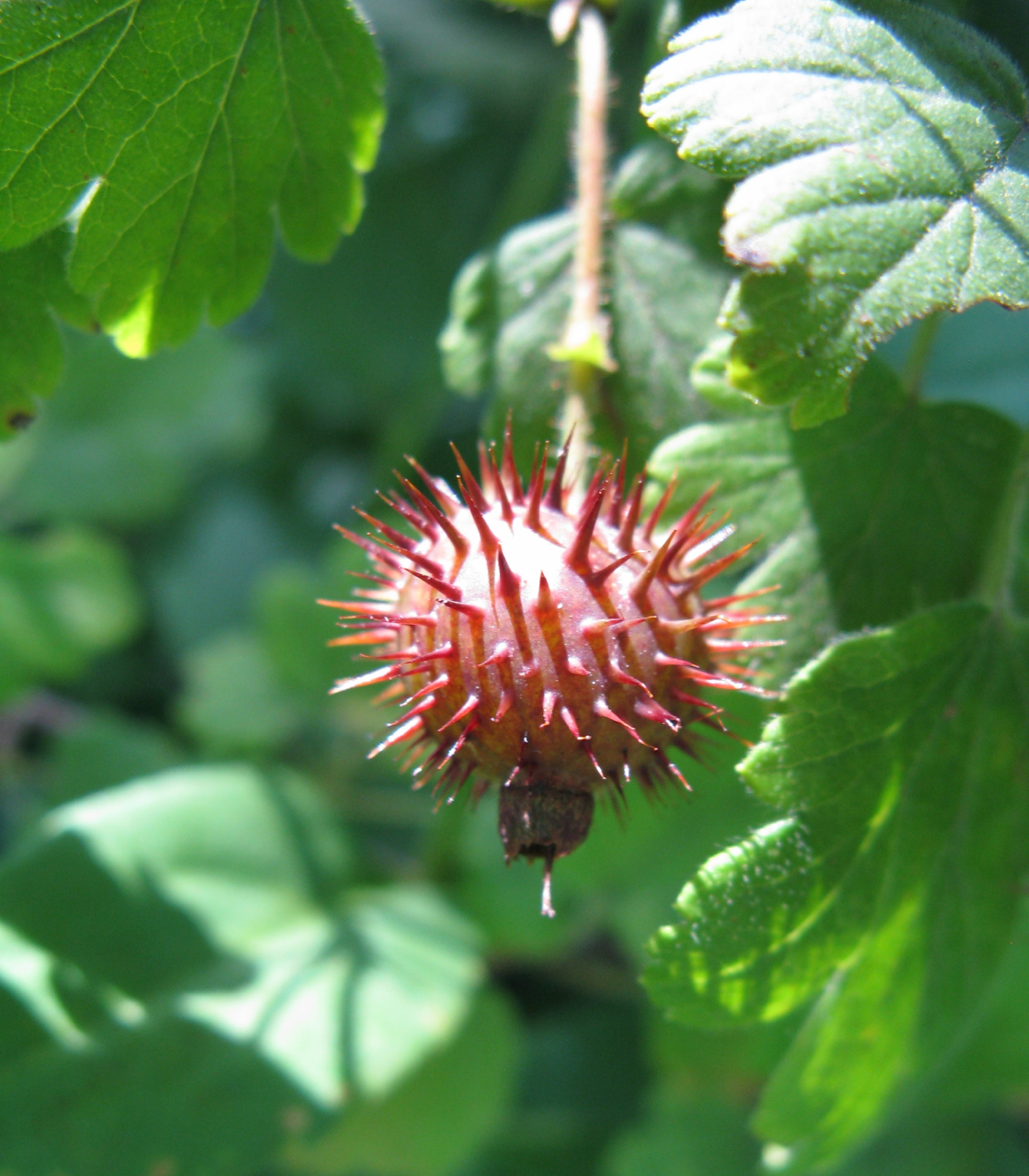
Ribes cynosbati, known as Prickly Gooseberry (USDA: eastern prickly gooseberry), also called dogberry or pasture gooseberry, is a small deciduous shrub in the currant and gooseberry family (Grossulariaceae). It grows in rich, rocky woods, ravines, thickets and woodland edges across the eastern and central United States and southeastern Canada, from New Brunswick and Maine west to Minnesota and the eastern Dakotas and south to Georgia, Alabama, Arkansas and Oklahoma.
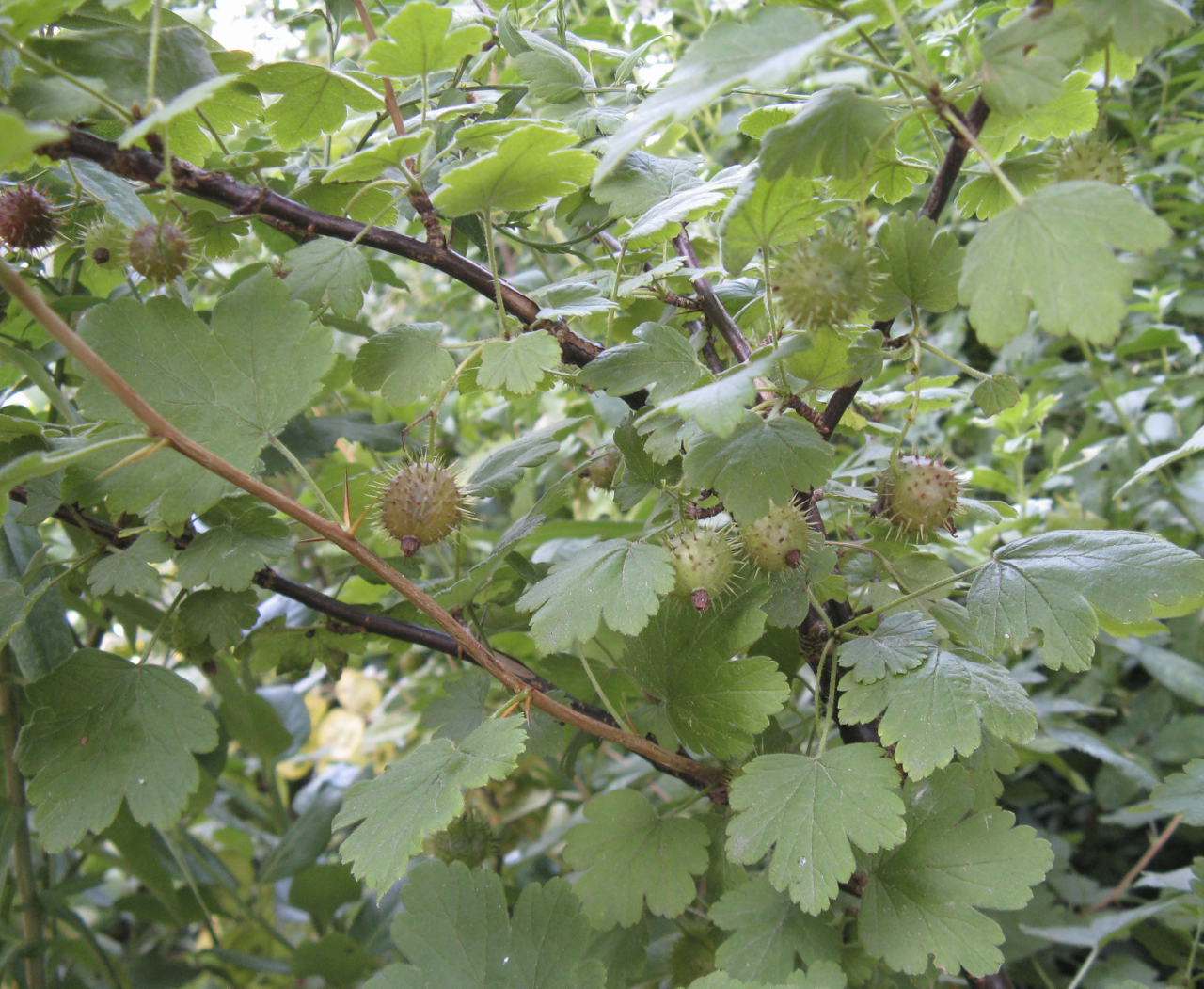
Its arching stems carry sharp spines at the nodes and small, lobed, maple-like leaves. In spring it bears greenish, bell-shaped flowers, and by mid to late summer it produces round berries covered in long prickles, which ripen from green to reddish-purple. The fruit is edible and has a tart, gooseberry flavor, but the prickles have to be dealt with first; it is usually cooked into jam or sauce.
Prickly gooseberry is a good shrub for woodland gardens, shady edges and wildlife plantings. Its early flowers feed bees, and its fruit is eaten by birds and mammals. Like other Ribes, it is an alternate host of white pine blister rust, so check local rules before planting near white pines.
Identification
Look for a low, arching woodland shrub with spines at the leaf nodes, small three- to five-lobed leaves, greenish bell-shaped flowers and, in summer, round berries covered in long prickles.
Growth Habit
A deciduous shrub usually 2 to 5 feet tall, with arching or sprawling stems that may root where they touch the ground. The stems have one to three sharp spines at each node and are sometimes sparsely bristly between them, especially on young growth. Older bark is gray-brown and may peel in strips.
Leaves
The alternate leaves are 1 to 2 1/2 inches wide, rounded in outline, with three to five shallow, toothed lobes, much like a small maple leaf. They are softly hairy, especially beneath, and grow on slender stalks, often in clusters on short side shoots. Fall color is yellow to dull red.
Flowers
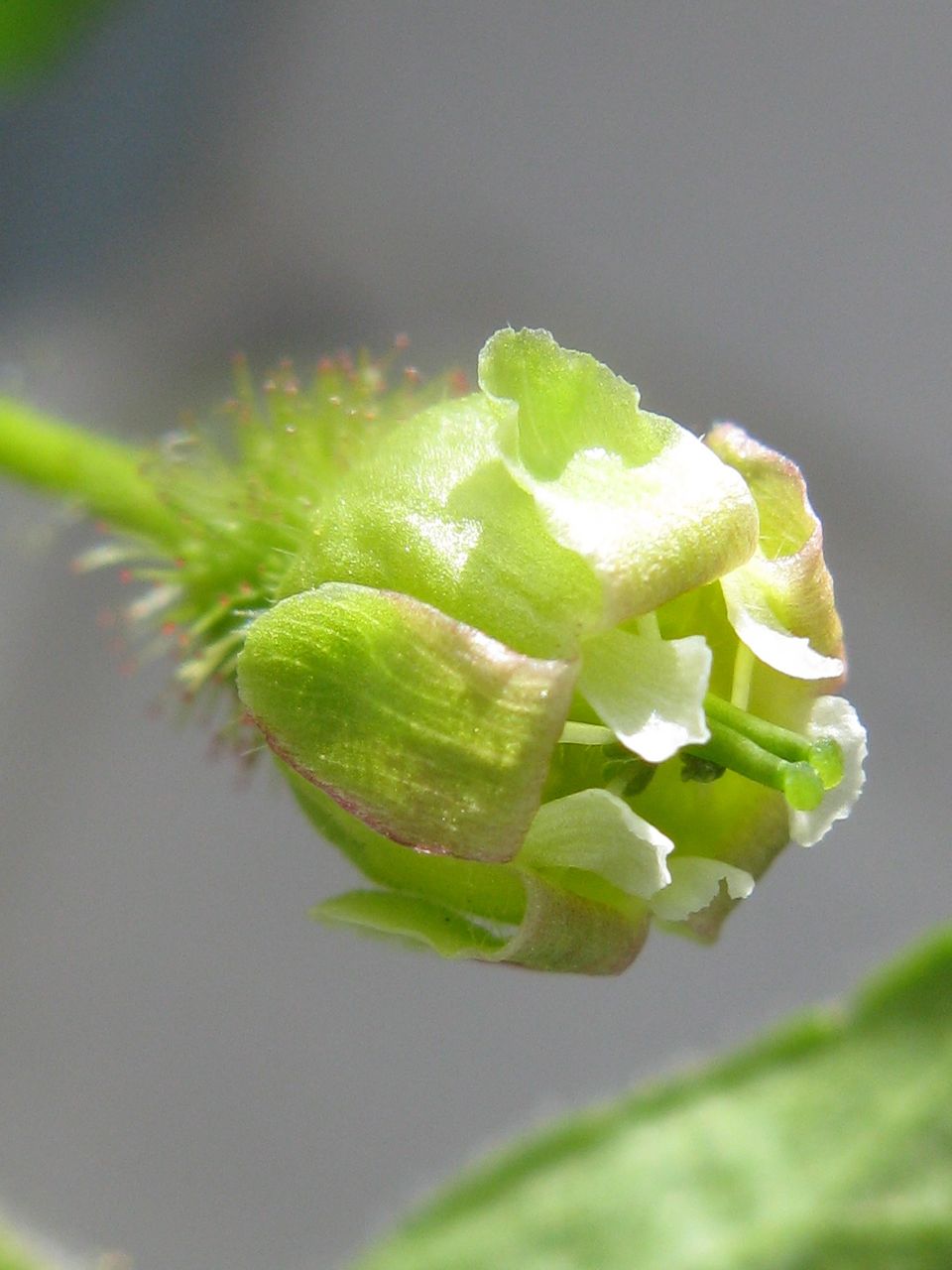
The flowers appear in April to June, as the leaves expand, in clusters of one to three on slender stalks. Each is about 1/3 inch long, bell-shaped and greenish-white to greenish-yellow, with sepals longer than the small petals and stamens that barely protrude. The ovary is already bristly.
Fruit
The fruit is a round berry about 1/3 to 1/2 inch across, covered with long, sharp prickles. It ripens from green to reddish-purple, mostly in July and August. The pulp is juicy and tart with many small seeds.
Look-alikes
Smooth or American gooseberry (Ribes hirtellum) has smooth fruit and grows in wetter, more northern sites. Missouri gooseberry has smooth berries and longer, more protruding stamens. Currants such as buffalo currant have no nodal spines and smooth fruit in longer clusters. The prickly fruit separates prickly gooseberry from all of these.
Quick Facts
| Scientific Name | Ribes cynosbati |
| Family | Grossulariaceae (currant and gooseberry family) |
| Plant Type | Deciduous shrub |
| Mature Height | 2–5 ft |
| Mature Spread | 3–5 ft |
| Growth Rate | Moderate |
| Sun Exposure | Part shade to shade; tolerates sun |
| Water Needs | Medium; tolerates dry shade once established |
| Soil Type | Rich, rocky or loamy woodland soils |
| Soil pH | Slightly acidic to neutral (about 5.5–7.5) |
| Bloom Time | April–June |
| Flower Color | Greenish-white |
| Fall Color | Yellow to dull red |
| Fruit | Prickly reddish-purple berries, July–August; edible |
| Deer Resistant | Somewhat; spines discourage browsing |
| USDA Hardiness Zones | 3–7 |
Native Range
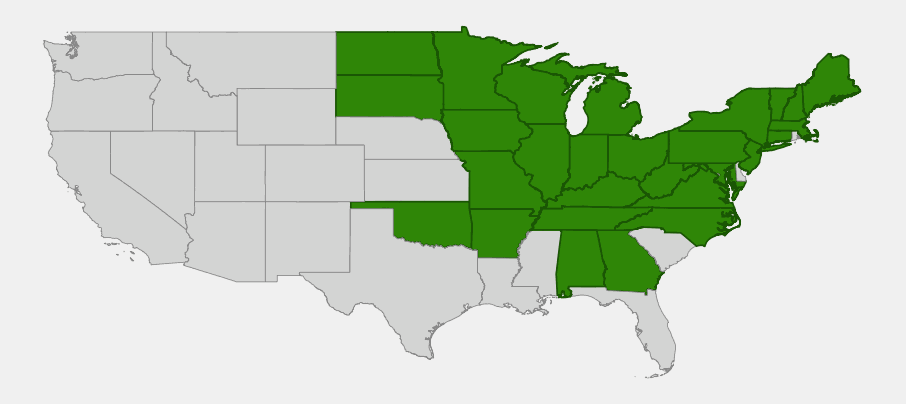
Prickly gooseberry is native to eastern and central North America. USDA PLANTS records it from 28 states, from Maine, New Hampshire and Vermont south through New York, Pennsylvania and the Appalachians to North Carolina, Georgia and Alabama, and west through the Great Lakes and Ohio Valley to Minnesota, Iowa, Missouri, Arkansas and Oklahoma, reaching the eastern edge of North and South Dakota. In Canada it grows in New Brunswick, Quebec and Ontario and reaches southeastern Manitoba.
It is most common in the Great Lakes region, the Northeast and the Appalachians. In the Southeast it is mainly a mountain plant, reaching western North Carolina, northern Georgia and northern Alabama, and in the West it reaches its limit in eastern North and South Dakota, western Minnesota, the Ozarks of Arkansas and Missouri, and eastern Oklahoma.
It grows in rich deciduous woods, rocky slopes and ravines, wooded hillsides, thickets, fencerows and woodland edges, often on limestone or other fertile soils. It tolerates moderately dry, shady sites under trees and is common in second-growth woods and old pastures, which gave it the name pasture gooseberry.
📋 Regional plant lists featuring Prickly Gooseberry: New York, Pennsylvania & Northern New Jersey · Ohio & Indiana · Michigan, Wisconsin & Eastern Minnesota · Kentucky & Tennessee · Connecticut, Massachusetts & Rhode Island · New Hampshire, Maine & Vermont · Maryland, Virginia & West Virginia · Delaware, Southern New Jersey & Long Island · Illinois, Iowa & Missouri · Alabama, Georgia & Mississippi · North & South Carolina · Arkansas, Louisiana, Eastern Oklahoma & Eastern Texas · North Dakota, South Dakota & Western Minnesota
Growing & Care Guide
Prickly gooseberry is an easy, adaptable shrub for shady and partly shady spots. Plant it where its spines will not be a problem, away from paths and play areas.
Light
Part shade to full shade under trees. It tolerates more sun if the soil stays moderately moist, and fruits best with some sun.
Soil & Water
It grows in loamy, rocky or clay soils that are well drained, from slightly acidic to neutral. Water during the first season; after that it tolerates moderately dry woodland conditions.
Planting Tips
Plant in spring or fall at the edge of a woodland, under open shade trees or in a wildlife hedge. Space plants 3 to 4 feet apart. Some states have restrictions on planting Ribes near white pines because of white pine blister rust, so check with your state forestry or agriculture department.
Pruning & Maintenance
Wear gloves. Remove old, unproductive stems at the base in late winter to keep the shrub open, and cut back stems that arch or root into unwanted places. It has few pests, although leaf spots and powdery mildew can appear in humid summers.
Propagation
Grow from seed cleaned from ripe fruit and sown in fall, or cold-moist treated for about three months before spring sowing. Stems that touch the ground often root and can be separated. Hardwood cuttings taken in late winter also root.
Landscape Uses
- Woodland gardens: a small native shrub for shady edges
- Wildlife plantings: fruit for birds and mammals; spiny cover
- Edible landscaping: tart berries for jam, sauce and pies
- Pollinator gardens: early spring flowers for bees
- Naturalized hedges: arching, spiny stems for informal barriers
Wildlife & Ecological Value
Prickly gooseberry provides early flowers, summer fruit and protective cover in eastern woodlands.
For Pollinators
The spring flowers are visited by bumble bees and other native bees, as well as flies, for nectar and pollen. Ribes species are larval host plants for the gray comma butterfly (Polygonia progne) and several moths, including the currant spanworm.
For Birds
Many birds eat the berries, including American robins, gray catbirds, brown thrashers and ruffed grouse. The spiny branches give nesting cover to small songbirds.
For Mammals
Chipmunks, squirrels, raccoons, foxes and black bears eat the fruit. The spines provide shelter for rabbits and other small mammals and discourage some deer browsing.
Ecosystem Role
It forms part of the shrub layer of rich eastern woodlands and spreads seeds through birds and mammals. As an alternate host of white pine blister rust (Cronartium ribicola), a non-native fungus that needs both a Ribes and a five-needle pine to complete its life cycle, it played a part in decades of Ribes eradication programs in the 20th century.
Cultural & Historical Uses
The species name cynosbati comes from the Greek for “dog bramble,” an old name also used for wild roses. It is the source of the common name dogberry. The genus name Ribes is an old Arabic-derived name for currants.
Native peoples and settlers gathered prickly gooseberries for food. The berries can be eaten raw by people who carefully rub off the prickles, but they are usually cooked; the spines soften with cooking and the pulp can be strained to make jam, jelly, sauce or pie.
In the early and mid 20th century, federal and state programs removed millions of wild gooseberry and currant bushes across the United States to protect valuable white pine forests from white pine blister rust. Some states still restrict planting Ribes in certain areas.
Frequently Asked Questions
Are prickly gooseberries edible?
Yes. The ripe reddish-purple berries are edible and tart. Remove or soften the prickles first; most people cook them into jam, jelly, sauce or pie.
When do prickly gooseberries ripen?
Mostly in July and August, turning from green to reddish-purple.
Can I plant prickly gooseberry near white pines?
It can host white pine blister rust, which damages white pines. Some states restrict planting Ribes near white pines, so check local rules before planting.
Does prickly gooseberry grow in shade?
Yes. It grows naturally in woods and thrives in part to full shade, though it fruits better with some sun.
What wildlife uses prickly gooseberry?
Bees visit the spring flowers, birds such as robins, catbirds and grouse eat the fruit, and mammals from chipmunks to black bears eat the berries.

Looking for a nursery that carries Prickly Gooseberry?
Browse our native plant nursery directory: Alabama & Arkansas · Connecticut & Georgia · Illinois, Indiana & Iowa · Kentucky, Maine, Maryland, Massachusetts, Michigan, Minnesota & Missouri · New Hampshire, New Jersey, New York, North Carolina, North Dakota, Ohio & Oklahoma · Pennsylvania, South Dakota, Tennessee, Vermont & Virginia · West Virginia & Wisconsin

