
Parish’s Poppy (Eschscholzia parishii)
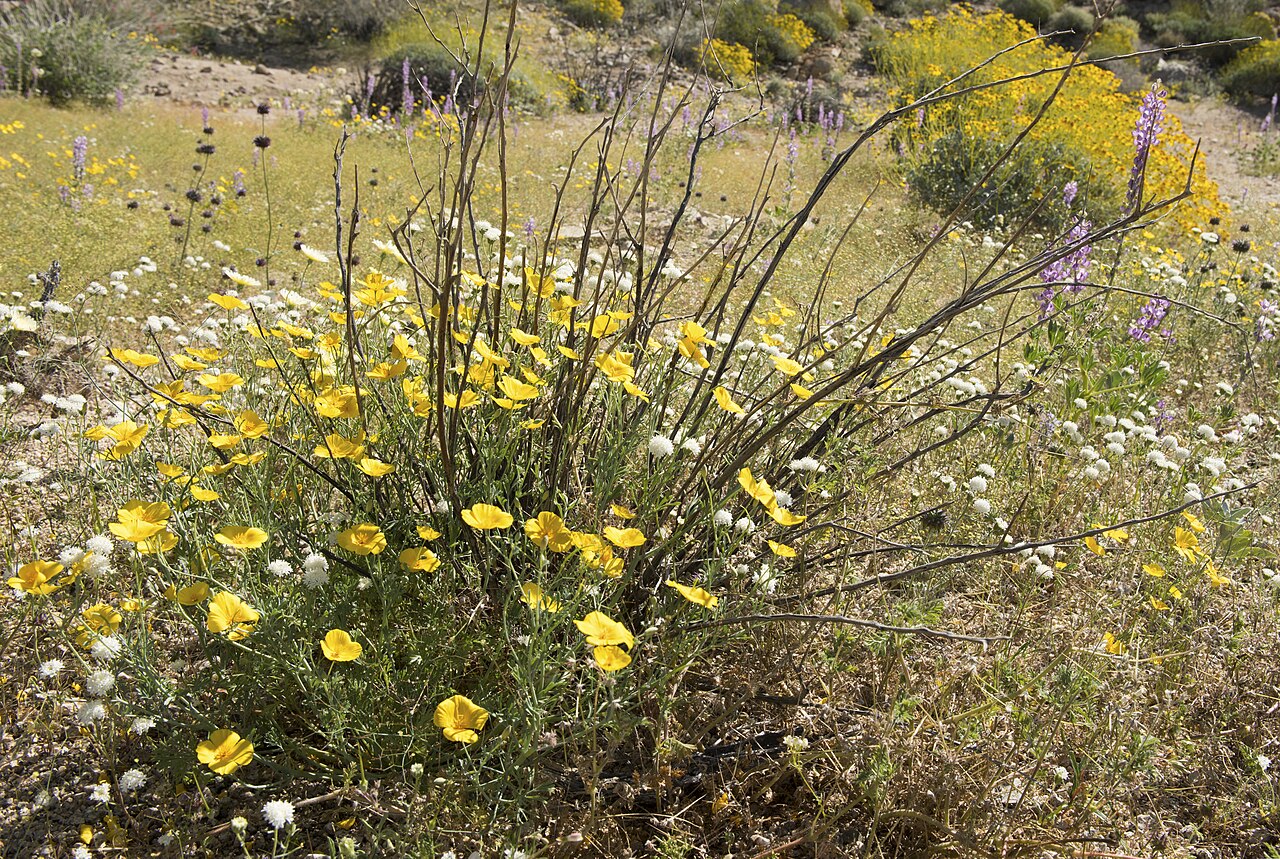
Eschscholzia parishii, known as Parish’s Poppy or Parish’s goldpoppy, is a small annual poppy of the southern California deserts. After good winter rains it sprouts on rocky slopes, bajadas and washes, and from February to May it covers the ground with satiny, cup-shaped, clear yellow flowers about 1 to 2 inches across, held above a low tuft of finely divided, blue-green leaves.
It is a desert cousin of the familiar California poppy, but it is smaller, always pure yellow, and strictly an annual. It grows mainly in the Colorado Desert and the western and southern Mojave Desert, including Joshua Tree National Park and Anza-Borrego Desert State Park, and south into Baja California. In wet years it is one of the main players in the famous desert superblooms.
In the garden, Parish’s poppy is a fine choice for a desert wildflower seed mix in low-desert gardens with sandy or gravelly soil and no summer water. This guide covers how to identify it, where it grows, how to grow it from seed, and its value for desert bees and other insects.
Identification
Parish’s poppy is one of several yellow annual poppies in the California deserts. Look closely at the leaves, stems and flowers to tell it apart from its relatives.
Growth Habit
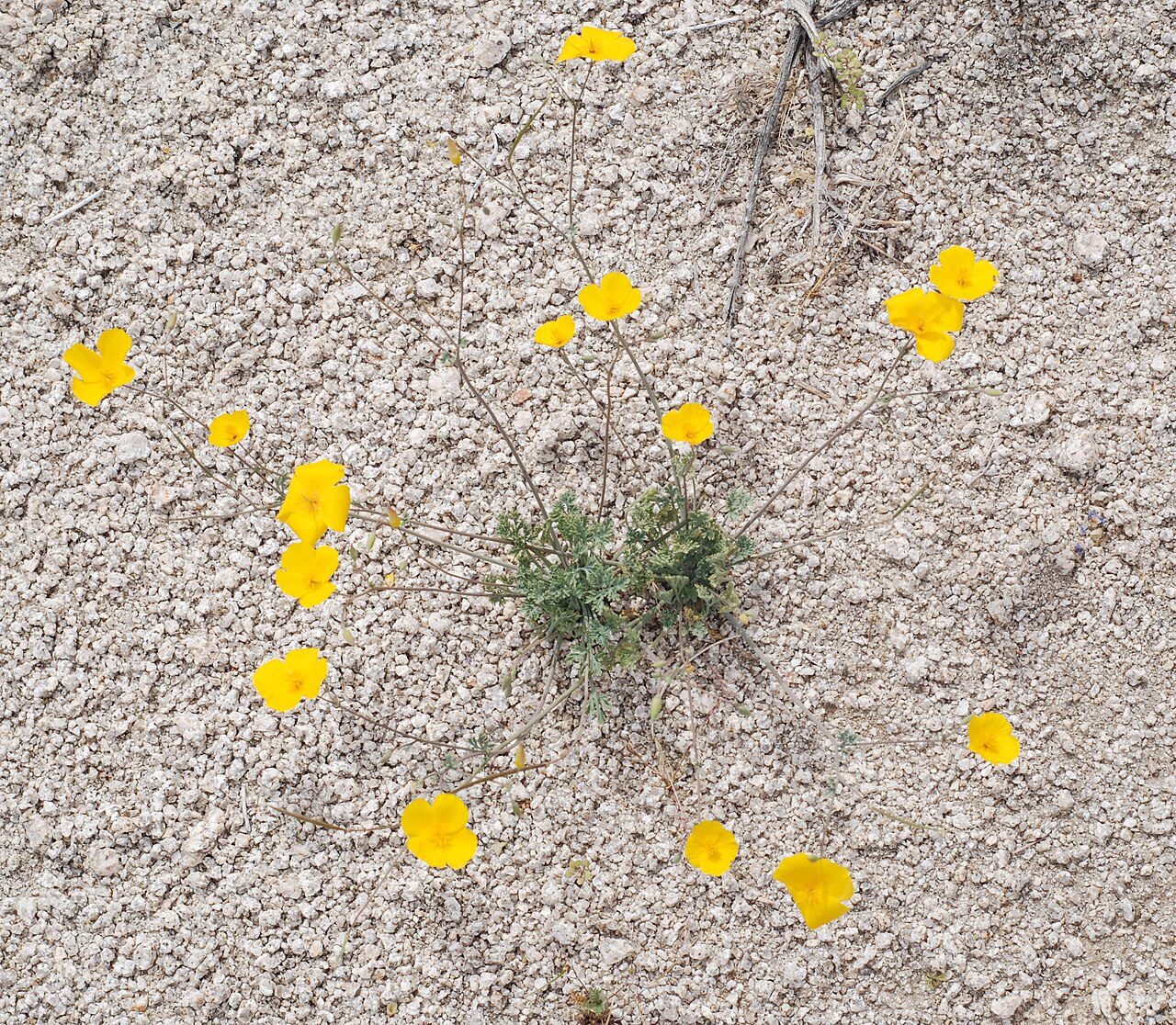
Parish’s poppy is a small, hairless annual, usually 4 to 12 inches tall and occasionally taller in wet years. It forms a low tuft of leaves at the base, with several slender stems that carry a few leaves and end in single flowers. Plants live for only a few months, from germination after the winter rains to seed in late spring.
Leaves
The leaves are finely divided into narrow, linear segments, giving them a lacy look. Like other poppies in the genus, they are smooth and blue-green to gray-green with a waxy bloom. Most leaves are at the base, but some are also on the lower stems.
Flowers
The flowers are solitary at the stem tips, with four broad, satiny, bright yellow petals, usually about 1/2 to 1 inch long, and many stamens in the center. Unlike the California poppy, the petals lack an orange base, and the flower sits on a narrow receptacle without the broad, flaring rim. Before opening, each bud is covered by a pointed, cone-shaped cap (the fused sepals), which pops off as the flower opens. The flowers close at night and on cloudy days.
Fruit & Seeds
The fruit is a long, slender, ribbed capsule, about 2 to 3 inches long, that dries and splits open along its length to scatter many small seeds. The seeds can remain dormant in the soil for years, waiting for a wet winter.
Look-alikes
The little gold poppy (E. minutiflora) is similar but usually has much smaller flowers, with petals often under 1/2 inch long. The desert gold poppy (E. glyptosperma) of the Mojave Desert has its leaves all at the base and its flowers on leafless stalks. The California poppy is larger, often orange, and has a broad rim under the flower. Identifying the desert species can require a close look at the seeds and flower size, so field guides or Calflora are a good help.
Quick Facts
| Scientific Name | Eschscholzia parishii Greene |
| Family | Papaveraceae (poppy family) |
| Plant Type | Annual wildflower |
| Mature Height | 4–12 in (occasionally to about 16 in) |
| Mature Spread | 4–10 in |
| Growth Rate | Fast; germinates after winter rains and blooms within a few months |
| Sun Exposure | Full sun |
| Water Needs | Very low; winter rain only |
| Soil Type | Well-drained sandy, gravelly or rocky soils |
| Soil pH | About 6.5–8.5 |
| Bloom Time | February–May |
| Flower Color | Clear bright yellow |
| Fall Color | None; annual |
| Fruit | Long, slender, ribbed capsule with many small seeds |
| Deer Resistant | Generally avoided by browsers |
| USDA Hardiness Zones | Annual; grown in zones 8–11 |
Native Range
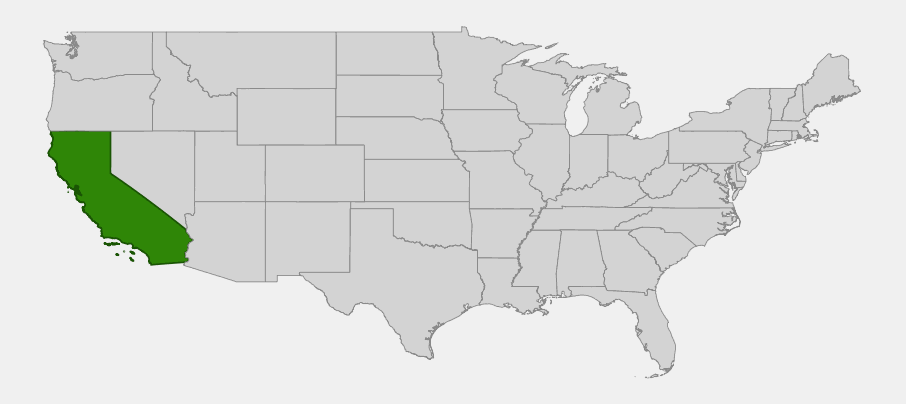
Parish’s poppy is native to the deserts of southern California and northern Baja California. USDA PLANTS lists it only in California within the United States. It grows mainly in the Colorado Desert (the California part of the Sonoran Desert) and along the western and southern edges of the Mojave Desert, in Riverside, San Bernardino, San Diego and Imperial counties.
It is common in Joshua Tree National Park, Anza-Borrego Desert State Park and the desert slopes of the Peninsular and Transverse Ranges, such as the eastern slopes of the San Jacinto and Santa Rosa Mountains and the desert side of the San Bernardino Mountains. South of the border it continues into the deserts of Baja California.
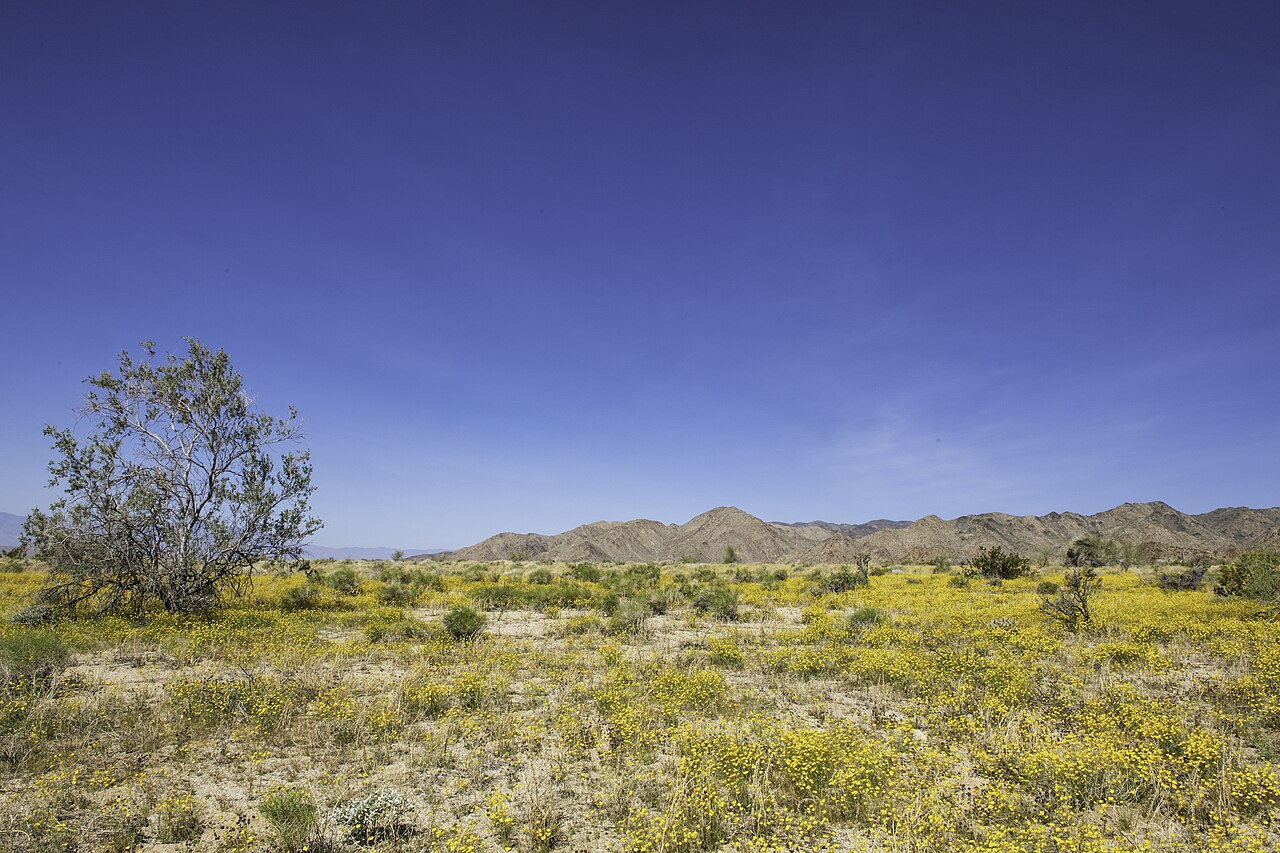
Typical habitats are rocky and gravelly slopes, alluvial fans (bajadas), sandy washes and open desert scrub, mostly from low elevations to about 4,000 feet. Like most desert annuals, its numbers vary enormously from year to year: in dry years few plants appear, while in wet years it may carpet entire hillsides.
📋 Regional plant lists featuring Parish’s Poppy: California & Nevada
Growing & Care Guide
Parish’s poppy is an easy annual to grow from seed in hot, dry gardens in the low deserts of southern California and Arizona. Like other desert annuals, it needs sharp drainage, full sun and well-timed winter moisture. Seed is sometimes available from native seed suppliers and in desert wildflower mixes.
Light
Grow it in full sun. In shade, plants become leggy and flower poorly, and the flowers stay closed.
Soil & Water
Plant in sandy, gravelly or rocky soil with excellent drainage. Rich garden soil and summer water are not needed. If winter rains are scarce, water the seeded area about every week or two from germination until plants are in bloom, then let the soil dry out as the plants set seed.
Planting Tips
Sow seed directly where you want the plants, in fall or early winter before the rains, because poppies resent transplanting. Scatter the seed on bare, raked soil and press it in lightly; do not bury it deeply. It combines well with other desert annuals such as desert bluebells, desert sunflower and chia, and with low shrubs like brittlebush.
Pruning & Maintenance
No pruning is needed. Let the plants dry and drop their seed in late spring if you want them to return next year, then remove the dried stems or leave them in place. Keep weeds, especially non-native grasses and mustards, under control, since they crowd out desert annuals.
Propagation
Grow it only from seed. Collect ripe capsules as they turn tan and begin to split in late spring, and store the seed dry until fall. Some seed germinates in the first year and some stays dormant for later years, which is how desert annuals survive dry winters.
Landscape Uses
- Desert wildflower gardens: a bright yellow carpet in late winter and spring with no summer water
- Desert seed mixes: sow with other low-desert annuals for a mini superbloom
- Rock and gravel gardens: thrives in fast-draining, lean soil
- Pollinator gardens: early-season pollen for native desert bees
- Habitat restoration: a native annual of desert bajadas and washes in southern California
Wildlife & Ecological Value
Parish’s poppy is part of the burst of life that follows a wet desert winter, and it feeds many of the insects that emerge at the same time.
For Pollinators
Poppy flowers produce plenty of pollen but little or no nectar. They are visited mainly by native bees, including small solitary bees, as well as beetles and flies that feed on pollen. Bright yellow flowers that open in the sun are well suited to these early-spring pollinators.
For Birds
Seed-eating birds such as sparrows and finches may feed on the small seeds that drop from the capsules, and desert annuals as a group support the insects that birds feed to their young in spring.
For Mammals
Desert rodents, including kangaroo rats and pocket mice, gather and store the seeds of desert annuals, and some seeds end up planted in forgotten caches. Desert tortoises and other herbivores also graze on spring annuals.
Ecosystem Role
Like other desert annuals, Parish’s poppy spends most of its life as dormant seed in the soil, and it only grows when enough rain falls in the cool season. In good years it adds a huge pulse of flowers, pollen and seed to the desert, fueling pollinators, seed-eaters and the animals that eat them.
Cultural & Historical Uses
The species is named for Samuel Bonsall Parish (1838–1928), a pioneering botanist in San Bernardino who, with his brother William, collected widely in the southern California deserts and mountains in the late 19th century. Many desert plants bear the Parish name. The genus Eschscholzia honors Johann Friedrich von Eschscholtz, a Baltic German naturalist on an early 19th-century Russian expedition to California.
The name “goldpoppy” is used broadly by USDA for many species of Eschscholzia, and “Parish’s goldpoppy” is a common alternate name for this species. Botanists have long debated the boundaries among the desert gold poppies, which differ in subtle details of their flowers and seeds.
Parish’s poppy is one of the stars of desert wildflower years. Photographs of yellow-carpeted bajadas in Joshua Tree and Anza-Borrego often show it blooming alongside desert dandelion, desert sunflower and lupines, and wildflower reports from these parks often track its bloom.
Frequently Asked Questions
Is Parish’s poppy the same as the California poppy?
No. It is a related desert species in the same genus. Parish’s poppy is smaller, always clear yellow, and an annual, while the California poppy is larger, often orange, and can be perennial.
Where can I see Parish’s poppy?
Look in Joshua Tree National Park, Anza-Borrego Desert State Park and other parts of the Colorado and western Mojave Deserts in late winter and spring after a wet winter.
How do I grow Parish’s poppy?
Sow the seed directly in sandy or gravelly soil in full sun in fall or early winter. Water only if winter rains are scarce, and let plants dry and drop their seed in late spring.
Is it a perennial?
No. Parish’s poppy is an annual that completes its life in a few months and returns from seed in later years.
Why does it bloom in some years and not others?
Like most desert annuals, it needs enough cool-season rain to germinate and grow. In dry years the seeds remain dormant in the soil.

Looking for a nursery that carries Parish’s Poppy?
Browse our native plant nursery directory: California

