
Yellow Hatpins (Syngonanthus flavidulus)
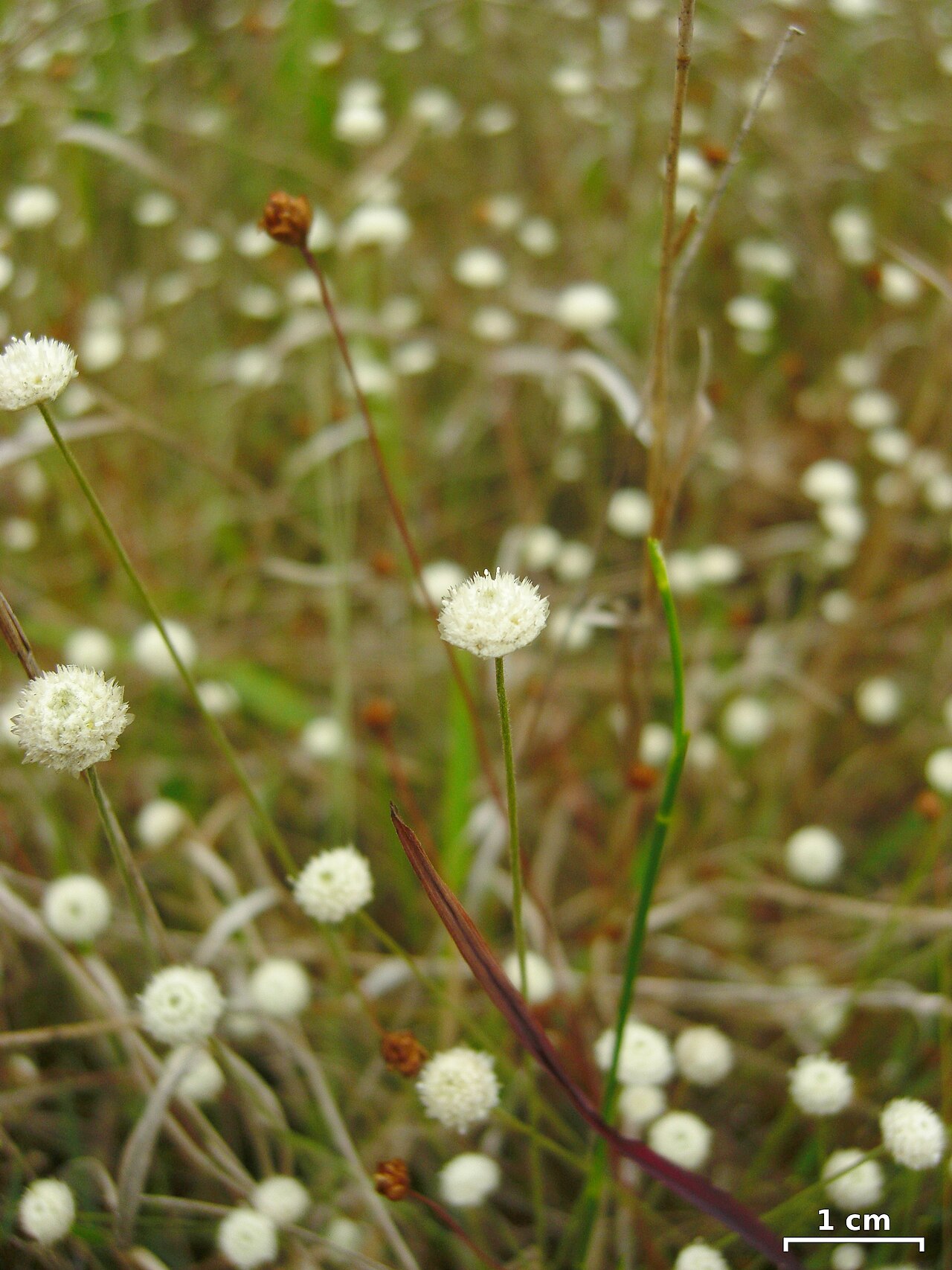
Syngonanthus flavidulus, known as Yellow Hatpins or shoe buttons, is a small, tufted wildflower of the pipewort family (Eriocaulaceae) that grows in the wet pine flatwoods, savannas and sandy bogs of the southeastern Coastal Plain, from North Carolina to Florida and west to Alabama and Mississippi. It is the only member of its genus in North America; the many other Syngonanthus species grow mainly in South America, with a few in Africa.
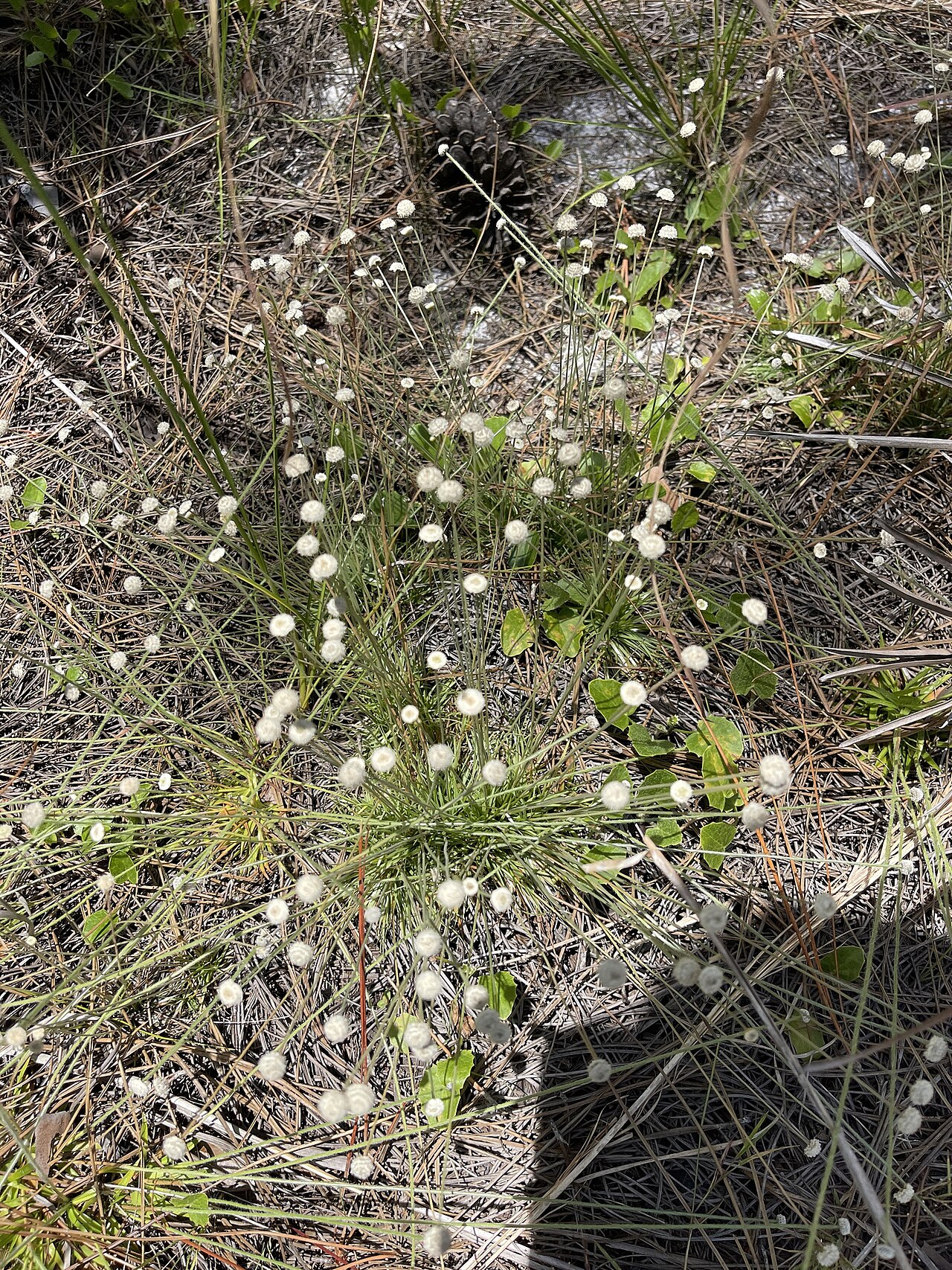
For most of the year yellow hatpins is just a low rosette of narrow, stiff leaves, easily overlooked among the grasses. In spring, each rosette sends up a bundle of thin, wiry stalks 4 to 12 inches tall, each topped with a small, button-like head of tiny, creamy white to pale yellow flowers. Seen in large numbers, the heads look like a scattering of pearl-headed hatpins stuck into the sand.
Yellow hatpins depends on frequent fire and wet, open, sandy ground, the conditions of the longleaf pine flatwoods and savannas that once covered the Coastal Plain. It is a charming plant for bog gardens and wet, sunny native plantings in the Southeast. This guide covers how to identify it, where it grows, how to grow it and its place in fire-maintained ecosystems.
Identification
Yellow hatpins belongs to a group of small plants with button-like flower heads on leafless stalks, including the pipeworts (Eriocaulon) and bogbuttons (Lachnocaulon). Look for the combination of a short, stiff leaf rosette, many thin stalks and small, pale yellowish heads.
Growth Habit
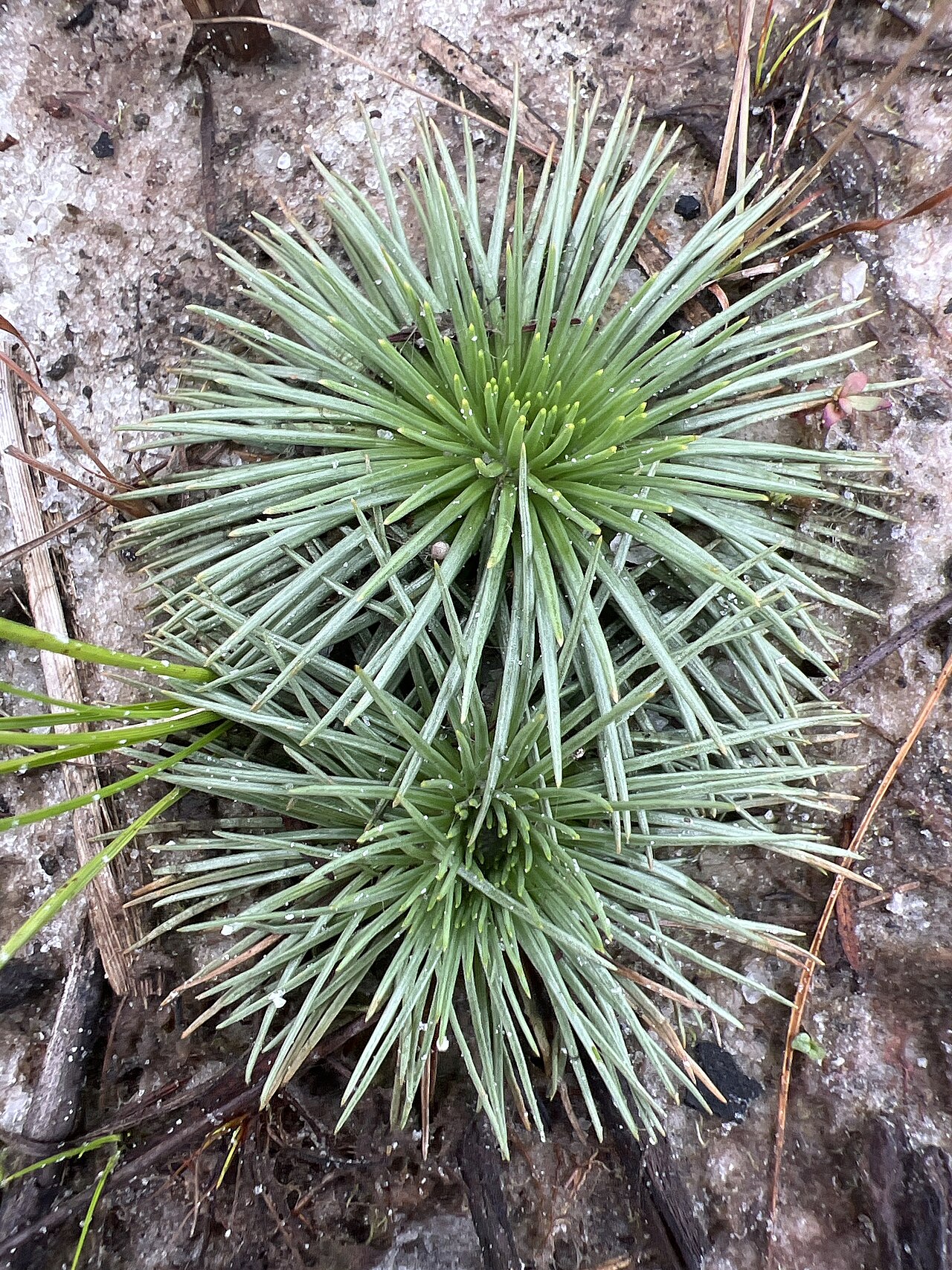
Yellow hatpins is a small perennial that forms dense tufts or rosettes, often growing in colonies. Each rosette is only 1 to 3 inches across. In flower, a single rosette may produce many slender stalks, so a plant looks like a small bouquet of pins.
Leaves
The leaves are narrow, stiff and grass-like, usually about 1 to 2 inches long, crowded in a basal rosette. They are gray-green to bright green and often have woolly hairs near the base. The rosette is star-shaped when seen from above.
Flowers
The flowering stalks (scapes) are thin, wiry, slightly twisted and ribbed, about 4 to 12 inches tall, each with a tubular sheath at its base. Each stalk ends in a single round to slightly flattened head about 1/4 inch (4 to 8 mm) across, made of many tiny male and female flowers among pale, papery bracts. The heads are creamy white to straw yellow. Flowering is mainly in spring, about March to June, with scattered blooms at other times in Florida, often stimulated by fire.
Fruit & Seeds
The tiny female flowers produce small capsules with minute seeds. The dry heads often remain on the stalks for weeks after flowering.
Look-alikes
Pipeworts (Eriocaulon species) have white, often larger heads, and the most common species, ten-angle pipewort, is much taller with long, strap-like leaves. Bogbuttons (Lachnocaulon species) are very similar in size and habitat but usually have grayish to brownish-white, woolly heads. When in doubt, the pale yellow tint of the heads and the stiff, short leaves suggest yellow hatpins.
Quick Facts
| Scientific Name | Syngonanthus flavidulus (Michx.) Ruhland |
| Family | Eriocaulaceae (pipewort family) |
| Plant Type | Small, tufted herbaceous perennial |
| Mature Height | 4–12 in in flower; rosette 1–2 in |
| Mature Spread | 1–3 in per rosette; forms colonies |
| Growth Rate | Slow |
| Sun Exposure | Full sun |
| Water Needs | High; wet to moist sandy soil |
| Soil Type | Acidic, sandy or peaty soils of flatwoods, savannas and bogs |
| Soil pH | Acidic, about 4.5–6.0 |
| Bloom Time | March–June (sporadically later in Florida) |
| Flower Color | Creamy white to pale yellow |
| Fall Color | None; evergreen rosette |
| Fruit | Tiny capsule in a dry, papery head |
| Deer Resistant | Not well documented |
| USDA Hardiness Zones | 8–10 |
Native Range
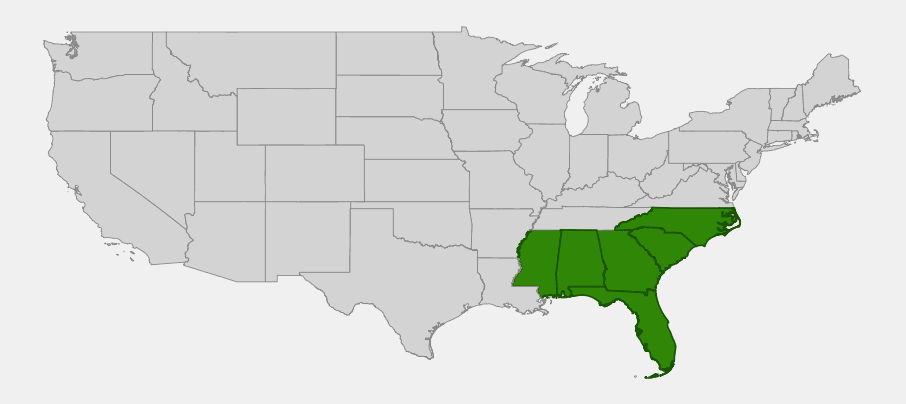
Yellow hatpins is a plant of the southeastern Coastal Plain. USDA PLANTS lists it as native in North Carolina, South Carolina, Georgia, Florida, Alabama and Mississippi. It is most common in Florida, where the Atlas of Florida Plants records it from many counties, and in the Coastal Plain of Georgia and the Carolinas.
In Florida it grows from the Panhandle south through the central peninsula, including the Lake Wales Ridge region. North of Florida it follows the outer Coastal Plain to southeastern North Carolina, and to the west it reaches the coastal counties of Alabama and Mississippi.
Typical habitats are wet pine flatwoods and savannas, seepage slopes, wet prairies, the sandy margins of ponds and depression marshes, and bogs, usually on acidic, nutrient-poor sands that are wet for part of the year. It is most abundant where regular fires keep the ground open and sunny.
📋 Regional plant lists featuring Yellow Hatpins: North & South Florida · Alabama, Georgia & Mississippi · North & South Carolina
Growing & Care Guide
Yellow hatpins is rarely sold, but it can be grown in a bog garden or a wet, sunny native planting within its range. Look for it from specialist Florida and Southeastern native nurseries or carnivorous plant growers, who sometimes offer it as a companion plant for pitcher plants and sundews. Never dig plants from the wild.
Light
Give it full sun. In the wild it grows in open flatwoods and savannas where fire removes taller plants, and it quickly declines when shaded by shrubs or tall grasses.
Soil & Water
It needs acidic, nutrient-poor sand or a mix of sand and peat that stays moist to wet, especially in spring and summer. A bog garden or a container sitting in a tray of rainwater works well. Use rainwater or other low-mineral water where tap water is hard, and do not fertilize.
Planting Tips
Plant small clumps in spring among other low bog plants such as sundews, butterworts, yellow-eyed grasses and small pitcher plants. Keep taller grasses and sedges trimmed back so they do not shade the rosettes.
Pruning & Maintenance
No pruning is needed. Remove dead leaves and debris that build up around the rosettes. In larger bog or savanna plantings, an occasional controlled burn or a close mowing in winter mimics the natural fire cycle and keeps the plants vigorous.
Propagation
Divide established clumps in spring, or sow the very fine seed on the surface of moist, sandy peat and keep it wet and in bright light. Seedlings are tiny and grow slowly.
Landscape Uses
- Bog gardens: yellow hatpins is a charming filler between sundews, butterworts and pitcher plants.
- Wet savanna and flatwoods restorations: it is a characteristic groundcover plant of longleaf pine flatwoods and wet savannas.
- Container water gardens: small clumps grow well in pots of sandy peat kept wet in a sunny spot.
- Rain gardens on sandy soils: it suits the wetter zones of sunny rain gardens in the Coastal Plain, if kept free of taller competitors.
- Nature study: its tiny, button-like heads reward a close look with a hand lens, and it is a good example of a fire-adapted Coastal Plain plant.
Wildlife & Ecological Value
Yellow hatpins is a small plant, but it is part of the extraordinarily diverse groundcover of Southeastern pine savannas.
For Pollinators
The tiny flowers are visited by small insects such as small bees, flies and other insects that crawl over the heads. Pollination in the pipewort family is not well studied, and some pollen may also be carried by wind.
For Birds
Birds make little direct use of the plant. The savanna and flatwoods habitats it shares with wiregrass and longleaf pine support birds such as Bachman’s sparrow, brown-headed nuthatch and red-cockaded woodpecker.
For Mammals
It is too small to be an important food for mammals. Its habitats support gopher tortoises, fox squirrels and other wildlife of longleaf pine ecosystems.
Ecosystem Role
Yellow hatpins is an indicator of healthy, frequently burned wet flatwoods and savannas. It disappears when fire is excluded and shrubs take over, so its presence is a sign of good habitat management.
Cultural & Historical Uses
The genus name Syngonanthus comes from Greek words meaning “joined” and “flower”, referring to the fused petals of the female flowers. The species name flavidulus means “slightly yellowish”, describing the pale yellow tint of the flower heads.
Its common names, yellow hatpins and shoe buttons, compare the small round heads on slender stalks to old-fashioned hatpins and the buttons on women’s boots. Related pipeworts are sometimes called hatpins as well.
Dried flower heads of South American Syngonanthus species, known in Brazil as “capim dourado” (golden grass), are used to weave crafts. Our native yellow hatpins is too small for this use and should be left in place.
Frequently Asked Questions
Why is it called yellow hatpins?
Its small, round, pale yellow heads sit on top of thin, straight stalks, like the decorative heads of old-fashioned hatpins stuck into the ground.
Where does yellow hatpins grow?
In wet pine flatwoods, savannas, bogs and pond margins of the southeastern Coastal Plain, from North Carolina to Florida and west to Mississippi.
When does it bloom?
Mainly in spring, from about March to June. In Florida it may also bloom at other times of year, especially after a fire.
Can I grow yellow hatpins in my garden?
Yes, in a bog garden or a container of wet, acidic sand and peat in full sun. Use rainwater, avoid fertilizer and keep taller plants from shading it. Buy plants from a native or carnivorous plant nursery; never dig them from the wild.
How is it different from pipewort?
Pipeworts (Eriocaulon) usually have white heads and are often larger, with longer, flatter leaves. Yellow hatpins has smaller, pale yellowish heads and a short, stiff leaf rosette.

Looking for a nursery that carries Yellow Hatpins?
Browse our native plant nursery directory: Alabama · Florida & Georgia · Mississippi · North Carolina · South Carolina

