
Yellow Colicroot (Aletris lutea)
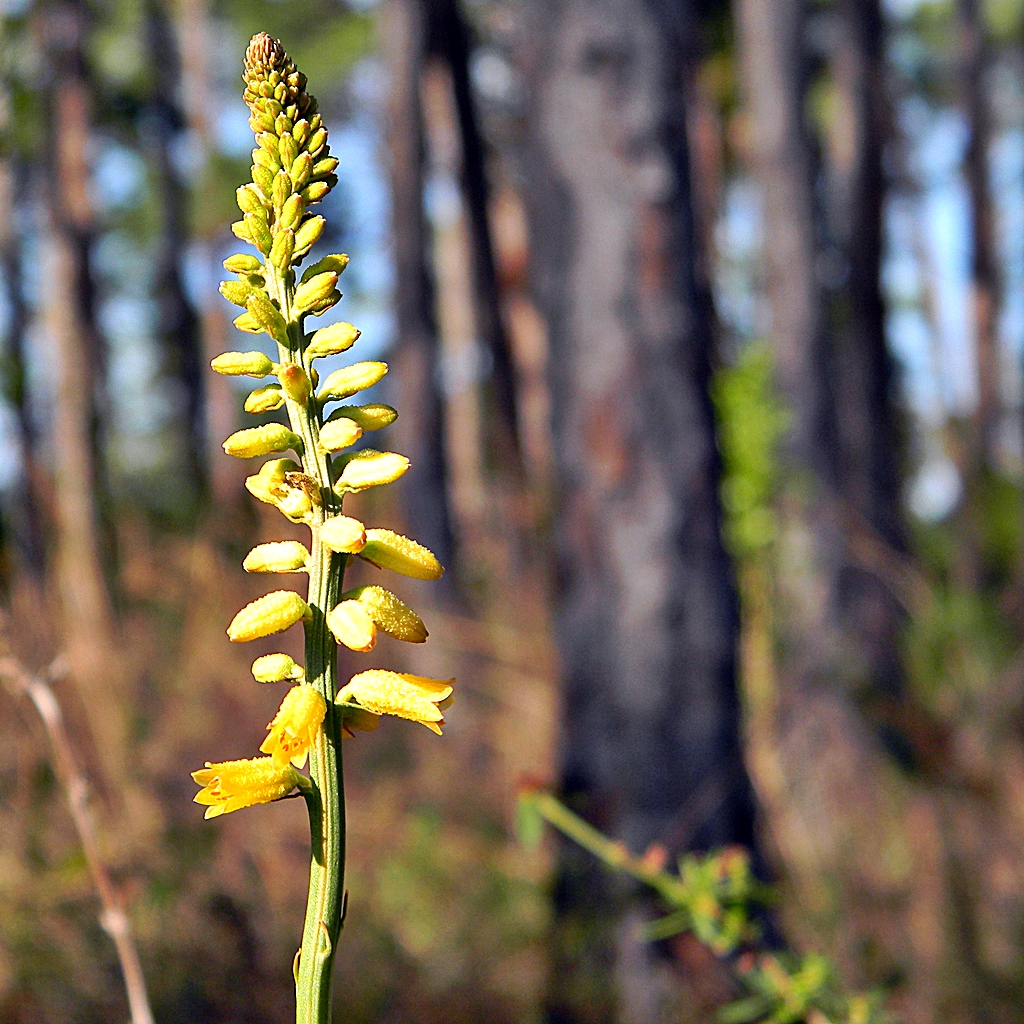
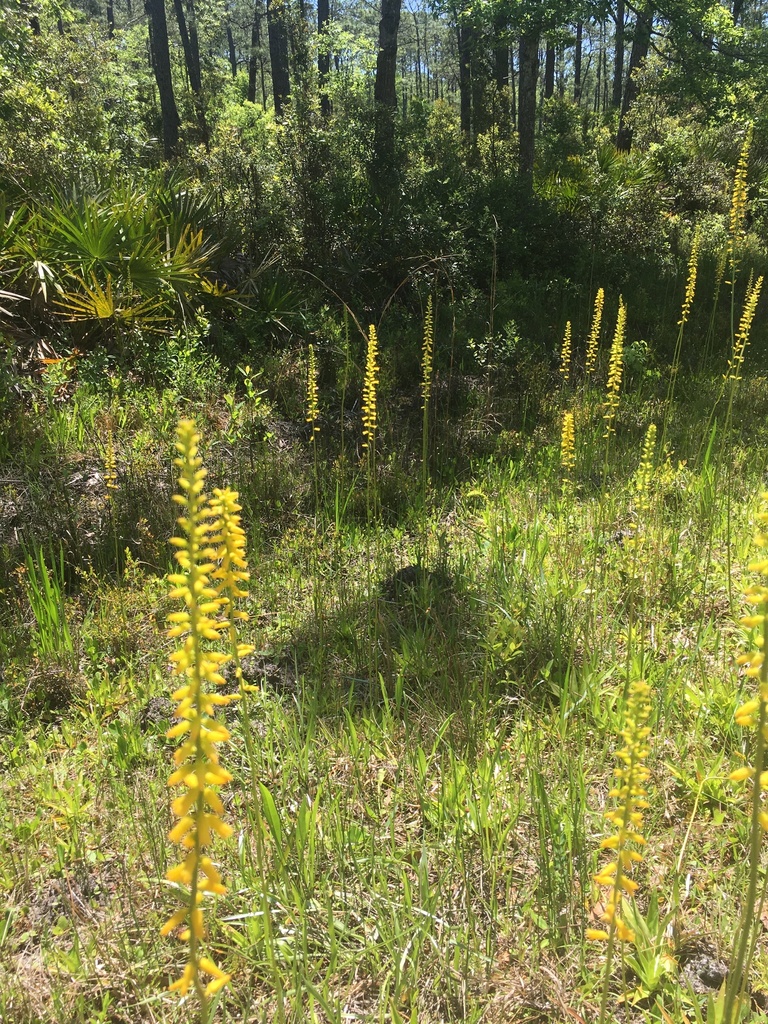
Aletris lutea, known as Yellow Colicroot, is a spring wildflower of the wet pinelands of the Deep South. For most of the year it is only a flat, star-shaped rosette of yellow-green leaves hidden among grasses. In spring each rosette sends up a slender, nearly leafless stalk 1 to 3 feet tall, lined with dozens of small, tubular, bright yellow flowers. Where it grows in numbers, the spikes stand up through the wiregrass like rows of yellow candles.
Yellow colicroot belongs to the bog asphodel family (Nartheciaceae), a small group of rosette-forming plants that older books placed in the lily family. Its flowers have a curious texture: the outside of each one is covered in tiny bumps that make it look rough and mealy, almost as if it had been dusted with cornmeal. This granular surface is shared with the other colicroots and is the easiest way to recognize the genus.
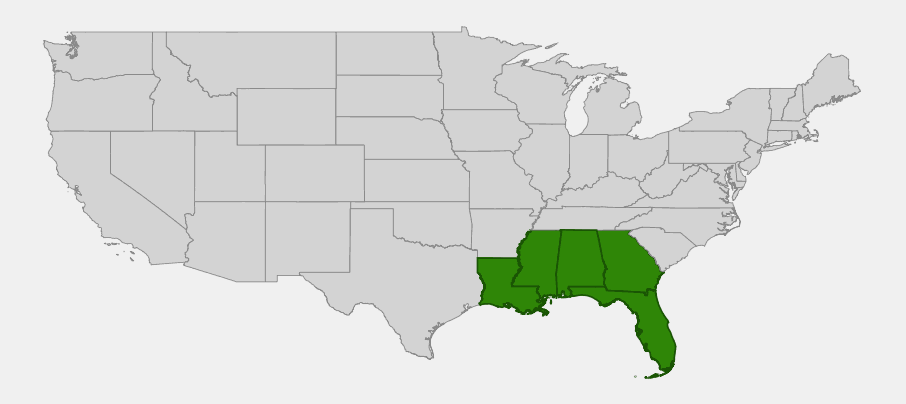
The species grows on the Coastal Plain from Georgia and Florida west to Louisiana, in wet flatwoods, savannas, bog edges and seepage slopes that burn regularly. In Florida it is one of the more common wildflowers of wet pinelands and grows nearly throughout the state. This guide covers how to tell it from its relatives, where it grows, and how to include it in a wet, sunny native garden or a pine flatwoods restoration.
Identification
Four or five colicroots grow in the Southeast. Yellow colicroot is the one with bright yellow, fairly long, tube-shaped flowers. When it is not in flower, the basal rosette is hard to tell from other colicroots and from young plants of several other flatwoods wildflowers.
Leaves
The leaves form a flat or slightly upturned basal rosette, usually 3 to 6 inches across. Each leaf is lance-shaped, pointed, smooth, somewhat fleshy and yellowish green, about 2 to 8 inches long. The rosette stays green through much of the year and is often the only sign of the plant between flowering seasons. The flowering stalk carries only a few small, bract-like leaves.
Flowers
The flowering stalk (scape) is unbranched, about 1 to 3 feet tall and occasionally taller. The top third to half of it is a slender spike-like raceme packed with short-stalked flowers. Each flower is a narrow tube about a quarter to a third of an inch long, bright yellow, with a rough, granular outer surface. At the tip the six lobes flare outward into a small star. The flowers open from the bottom of the spike upward, so a single stalk is in bloom for several weeks.
In Florida, yellow colicroot flowers mostly from March into May, sometimes starting in February in south Florida. Plants in Louisiana and Mississippi bloom mainly in April and May.
Fruit & Seeds
After flowering, each blossom becomes a small, egg-shaped capsule that stays enclosed in the dried, persistent flower. The capsules split at the top in summer and release many tiny seeds, which fall close to the parent plant. The dry stalks often remain standing into summer.
Similar Species
Aletris aurea (golden colicroot) also has yellow flowers, but they are smaller, more urn-shaped or bell-shaped, often more orange-yellow, and their lobes do not spread as widely. Aletris farinosa (white colicroot), Aletris obovata and Aletris bracteata have white flowers. The colicroots sometimes hybridize where they grow together, and pale yellow or cream-flowered plants are usually hybrids. Before flowering, the rosettes can be confused with young plants of yellow-eyed grass or some milkworts, but the leaves of colicroots are broader, flat and arranged in a neat star.

Quick Facts
| Scientific Name | Aletris lutea |
| Family | Nartheciaceae (bog asphodel family); formerly placed in the lily family |
| Plant Type | Herbaceous perennial wildflower with a basal rosette |
| Mature Height | Rosette 2–4 in; flowering stalk 1–3 ft |
| Mature Spread | 3–6 in |
| Growth Rate | Slow |
| Sun Exposure | Full sun to light shade |
| Water Needs | Moist to wet; tolerates brief dry spells between rains |
| Soil Type | Acidic sand or peaty sand, low in nutrients |
| Soil pH | About 4.5–6.0 (acidic) |
| Bloom Time | March–May (from February in south Florida) |
| Flower Color | Bright yellow |
| Fall Color | None; the rosette stays green |
| Fruit | Small capsule enclosed in the dried flower, with many tiny seeds |
| Deer Resistant | Not well documented |
| USDA Hardiness Zones | 8–10 |
Native Range
Yellow colicroot is a plant of the southeastern Coastal Plain. USDA PLANTS and the Lady Bird Johnson Wildflower Center record it from five states: Georgia, Florida, Alabama, Mississippi and Louisiana. Its range runs from southern Georgia through Florida and west along the Gulf Coast to southeastern Louisiana, where it reaches the pine savannas north of Lake Pontchartrain.
Florida holds the heart of its range. The Atlas of Florida Plants records it nearly throughout the state, from the western Panhandle through north and central Florida into south Florida, in wet flatwoods, wet prairies, savannas, seepage slopes and the edges of cypress domes and bogs. It is usually found with wiregrass, slash or longleaf pine, saw palmetto, pitcher plants and a long list of other fire-dependent wildflowers.
Like most flatwoods wildflowers, yellow colicroot depends on regular fire. Fire clears away shrubs and leaf litter, and plants bloom heavily in the first spring after a burn. Where flatwoods have been converted to pine plantations, drained, or left unburned until they become thickets, it declines or disappears.
📋 Regional plant lists featuring Yellow Colicroot: North & South Florida · Alabama, Georgia & Mississippi · Arkansas, Louisiana, Eastern Oklahoma & Eastern Texas
Growing & Care Guide
Yellow colicroot is not a common nursery plant, but native plant nurseries in Florida and the Gulf states occasionally offer it, and it is sometimes included in wet flatwoods restoration seed mixes. It is a small plant that is best appreciated in groups, in a sunny, damp spot where taller plants will not crowd it.
Light
Plant it in full sun or very light shade. In the wild it flowers best in open, recently burned flatwoods and fades as shrubs close in. In shade the rosettes survive for a while but rarely bloom.
Soil & Water
Give it acidic, sandy, low-nutrient soil that stays moist to wet through most of the year, like the seasonally wet flatwoods it comes from. It tolerates short dry spells once established, because flatwoods soils often dry out in late spring, but it does not do well in dry, deep sand or in heavy, fertile garden loam. Avoid lime, fertilizer and rich compost.
Planting Tips
Set potted plants in fall, winter or early spring with the rosette level with the soil surface, not buried. Plant them in groups of five or more, 6 to 12 inches apart, among low grasses and sedges rather than in bare mulch, so the flower spikes have company and the rosettes stay visible. A rain garden edge, the margin of a pond, or a damp corner of a native meadow works well. Water regularly during the first season if rains fail.
Pruning & Maintenance
Little care is needed. Leave the dry flower stalks until the seed has dropped. Keep taller grasses and shrubs from smothering the rosettes; in larger plantings, a controlled burn or a mowing in winter mimics the fires it depends on. Do not cover the rosettes with heavy mulch.
Propagation
Yellow colicroot is grown from seed. Collect the capsules when they turn brown and begin to open in summer, and sow the tiny seed on the surface of a moist, sandy, acidic mix. Seedlings are slow and may take two or more years to reach flowering size. Established rosettes sometimes form offsets that can be separated carefully in winter. Only collect seed with permission, and leave most of it in the wild.
Landscape Uses
- Wet flatwoods and savanna restoration: a characteristic spring wildflower of fire-maintained pinelands
- Rain gardens and pond edges: in sunny, acidic, sandy soils that stay damp
- Bog gardens: pairs well with pitcher plants, grass pink and sundews at the drier edge of a bog
- Native wildflower meadows: for low, wet spots in Florida and Gulf Coast meadows
- Pollinator plantings: early spring nectar for small native bees
Wildlife & Ecological Value
Yellow colicroot is a modest plant, but it is part of the rich wildflower layer that makes southern pine flatwoods one of the most diverse plant communities in North America.
For Pollinators
The tubular flowers are visited by small native bees and other small insects that crawl into the narrow opening for nectar and pollen. Because it flowers early, from late winter into spring, it is one of the first nectar sources of the year in many flatwoods.
For Birds
It has little direct food value for birds, as its seeds are very small. Its habitat, though, is important to pineland birds such as Bachman’s sparrow, brown-headed nuthatch and, in old longleaf stands, the red-cockaded woodpecker.
For Mammals
There is little published information on mammals eating yellow colicroot. Gopher tortoises, white-tailed deer and small mammals feed widely on flatwoods ground cover, but this plant is not a known important food.
Ecosystem Role
Yellow colicroot is a fire-adapted ground-layer perennial. Its rosette sits close to the ground and quickly regrows after a burn, and flowering is strongly stimulated by fire. Its presence in abundance is a sign of a healthy, frequently burned flatwoods ground cover.
Cultural & Historical Uses
The genus name Aletris comes from a Greek word for a woman who grinds grain, a reference to the mealy, flour-dusted look of the flowers. The species name lutea means yellow. John Kunkel Small described the species in 1903 from Florida plants.
The common name “colicroot” comes from the use of the roots of the related white colicroot, Aletris farinosa, in North American folk medicine for colic and other digestive complaints. It was also sold in the nineteenth century as “unicorn root” or “star grass.” These uses are historical; the plants are not recommended as remedies today, and digging them from the wild harms populations.
Today yellow colicroot is valued mainly by naturalists, photographers and restoration ecologists. Its yellow spikes are one of the signs of spring in the Florida flatwoods, and land managers often see it bloom in abundance a few months after a prescribed burn.
Frequently Asked Questions
Is yellow colicroot easy to grow?
It is easy in the right spot: full sun and acidic, sandy soil that stays damp. It struggles in dry sand, heavy fertile soil or shade. Start with nursery-grown plants or seed, and expect slow growth.
Why is it called colicroot?
The name comes from the related white colicroot, whose roots were once used in folk medicine to treat colic. Yellow colicroot shares the name, but it is not recommended as a remedy.
How is yellow colicroot different from golden colicroot?
Yellow colicroot has longer, tube-shaped flowers whose tips spread open into a small star. Golden colicroot (Aletris aurea) has smaller, more rounded, often orange-yellow flowers with lobes that barely open.
When does yellow colicroot bloom?
Mainly March through May, starting as early as February in south Florida. Each stalk blooms for several weeks as its flowers open from the bottom up.
Why do my colicroots bloom more after a fire?
Like many flatwoods wildflowers, yellow colicroot responds to fire. A burn removes shading shrubs and litter and releases nutrients, and the rosettes respond with heavy flowering the following spring. Winter mowing can partly imitate this in a garden.

Looking for a nursery that carries Yellow Colicroot?
Browse our native plant nursery directory: Alabama · Florida & Georgia · Louisiana & Mississippi