
Toothache Grass (Ctenium aromaticum)
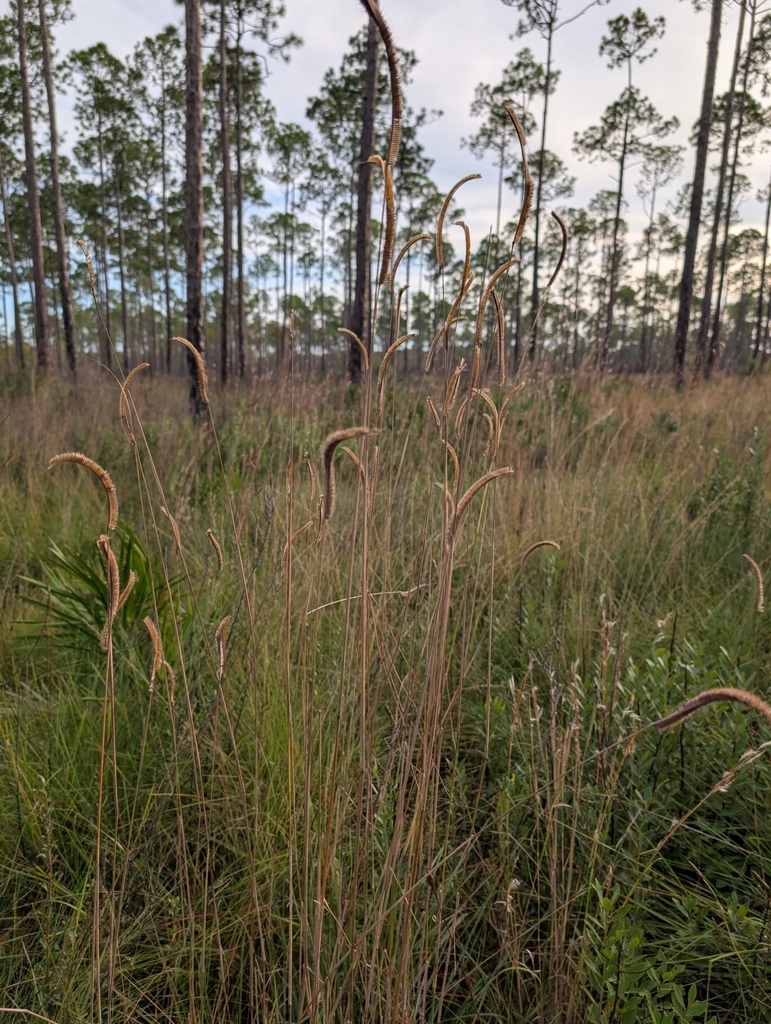
Ctenium aromaticum, Toothache Grass, is a clump-forming native bunchgrass of the wet pine savannas and flatwoods of the southeastern Coastal Plain. Its slender stems, 2 to 5 feet tall, each end in a single curved, one-sided spike that looks like a small comb or a caterpillar, turning orange-brown as it ripens. It is also called orange grass, and USDA lists it as toothache grass.
The name comes from its roots and stem bases, which are aromatic, with a spicy, citrus-like scent, and leave a numbing, tingling sensation in the mouth when chewed. Rural people in the South reportedly chewed them to ease toothaches. The plant belongs to the grass family (Poaceae).
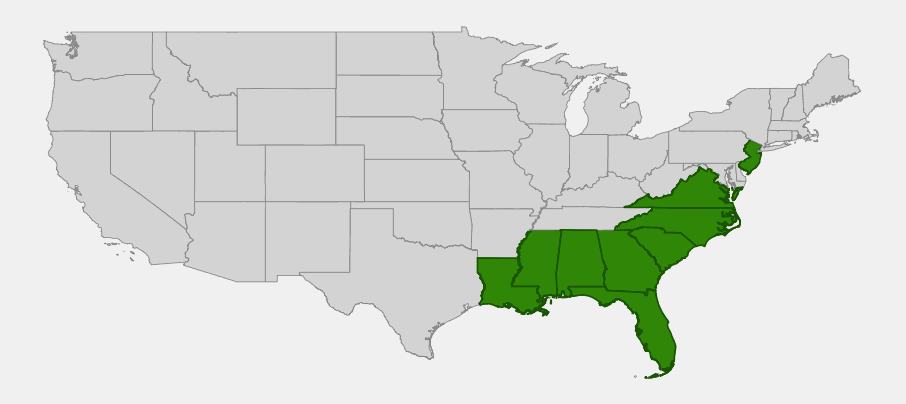
Toothache grass grows from Florida west to Louisiana and north along the coastal plain to Virginia and New Jersey. It is one of the signature grasses of fire-maintained longleaf pine savannas, flowering heavily after summer burns. In gardens it is an unusual and attractive grass for sunny, moist, acidic sites, valued for its curling seed heads and fine texture.
Identification
Out of flower, toothache grass is a fine-leaved bunchgrass that blends in with wiregrass and other savanna grasses. In flower it is unmistakable: no other grass in its range has a single, curved, comb-like spike at the top of each stem.
Leaves & Clumps
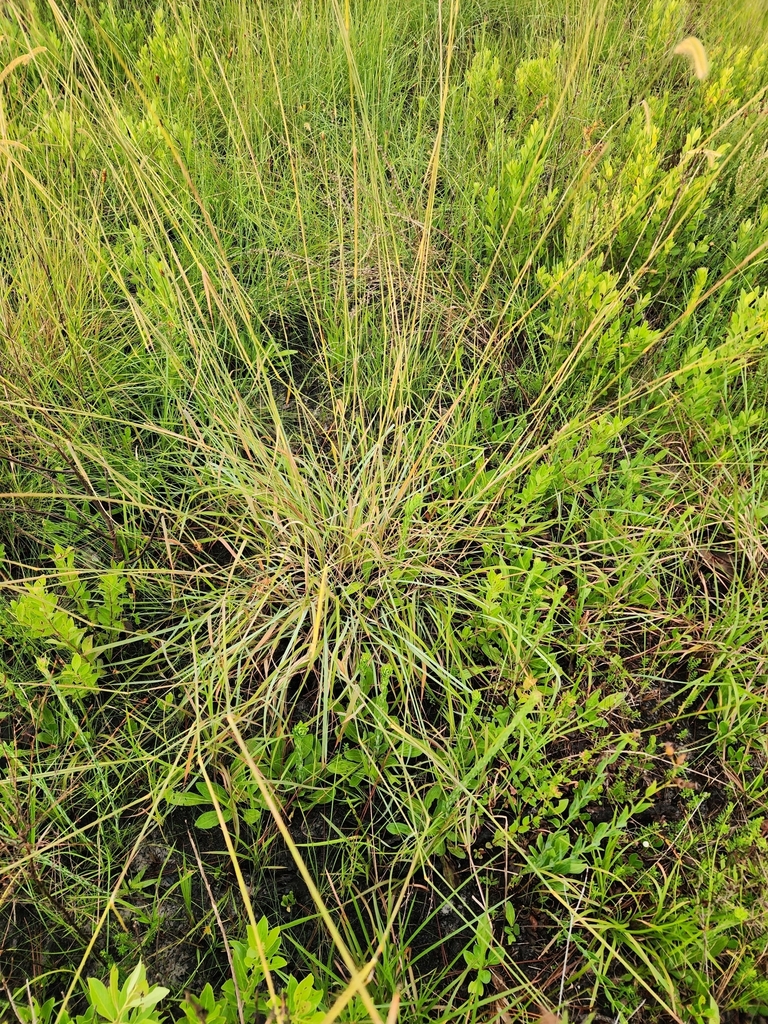
Plants form dense tufts of narrow leaves, mostly basal, about ⅛ inch wide and up to 1½ feet long, often folded or rolled. Crushed stem bases and roots have a distinctive spicy, citrus-like smell.
Flowering Stems
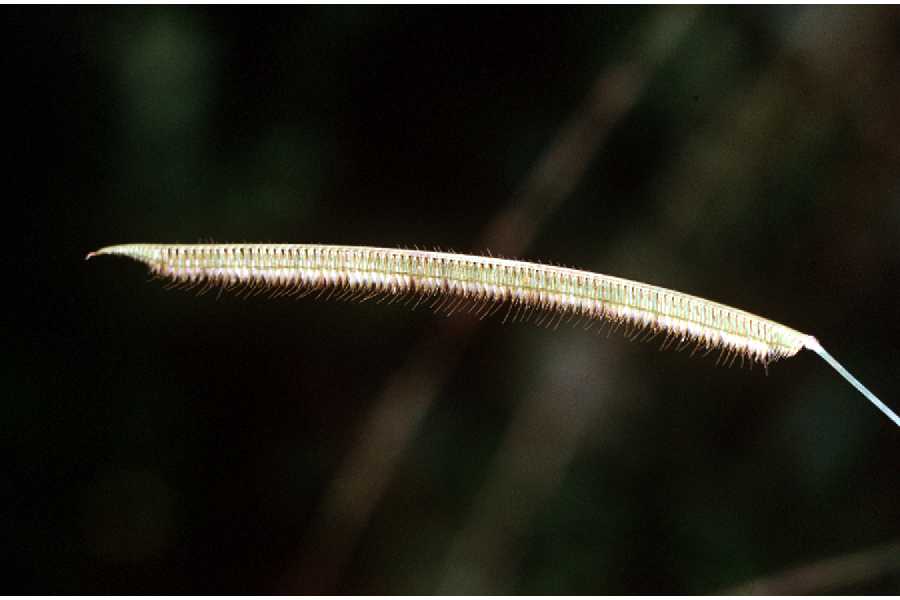
From late spring into late summer, slender upright stems rise 2 to 5 feet above the leaves. Each stem usually carries a single spike 2 to 6 inches long at its tip. The spike is flattened and curved or even coiled, with the spikelets packed in two rows along one side, giving it the look of a comb (the meaning of the Greek ktenion).
Spikelets & Seeds
Each spikelet bears a short, outward-curving awn, so the spike looks bristly. The spikes are green to straw-colored when in flower and turn orange-brown to tan as the seeds ripen in late summer and fall. The dry spikes often stay curled on the stems well into winter.
Similar Species
Wiregrass (Aristida stricta) and other savanna bunchgrasses have similar narrow leaves but loose, open or branched seed heads. Bluestems (Andropogon) bear their spikelets in pairs of fuzzy racemes. Only toothache grass has a single curved, comb-like spike.
Quick Facts
| Scientific Name | Ctenium aromaticum (syn. Campulosus aromaticus) |
| Family | Poaceae (grass family) |
| Plant Type | Perennial warm-season bunchgrass |
| Mature Height | 2–5 ft in flower; leaves 1–1½ ft |
| Mature Spread | 1–2 ft |
| Growth Rate | Slow to moderate |
| Sun Exposure | Full sun |
| Water Needs | Moderate to high; moist to seasonally wet soil |
| Soil Type | Acidic sand, sandy peat or peat |
| Soil pH | About 4.0–5.5 |
| Bloom Time | May–August (later after summer fires) |
| Flower Color | Green to straw-colored, ripening orange-brown |
| Fall Color | Seed heads orange-brown to tan; leaves turn tan |
| Fruit | Small grains in curved, comb-like spikes |
| Deer Resistant | Unknown |
| USDA Hardiness Zones | 7–10 |
Native Range
Toothache grass is native to the Atlantic and Gulf Coastal Plain. USDA PLANTS and the Lady Bird Johnson Wildflower Center record it from Florida, Georgia, Alabama, Mississippi, Louisiana, South Carolina, North Carolina, Virginia and New Jersey. It is most frequent in the Carolinas, Georgia and the Florida Panhandle. In Virginia it is rare, and the Digital Atlas of the Virginia Flora notes that it is now known only from a few boggy power-line clearings. In Florida it occurs mainly in the Panhandle and northern part of the state, with scattered occurrences farther south.
Its habitats are wet longleaf pine savannas and flatwoods, seepage slopes and bogs, pitcher-plant bogs, and the transition zones between pine savannas and pocosins or shrub bogs. These sites have acidic, nutrient-poor, sandy or peaty soils that are saturated for part of the year. USDA lists it as a facultative wetland (FACW) plant.
It is not state-listed in Florida. Across its range it depends on frequent fire: burns, especially in the growing season, trigger heavy flowering, and without fire the savannas fill with shrubs and the grass declines. Drainage, conversion to pine plantations and fire suppression have greatly reduced its habitat, which is why it survives at the northern edge of its range mainly in mowed rights-of-way.
📋 Regional plant lists featuring Toothache Grass: North & South Florida · Alabama, Georgia & Mississippi · North & South Carolina · Maryland, Virginia & West Virginia · Arkansas, Louisiana, Eastern Oklahoma & Eastern Texas · New York, Pennsylvania & Northern New Jersey · Delaware, Southern New Jersey & Long Island
Growing & Care Guide
Toothache grass is not widely sold, but it is offered by some native nurseries and seed suppliers in the Southeast. It is a rewarding ornamental grass for bog gardens and moist meadows, as long as you can give it sun and acidic soil.
Light
Give it full sun. In shade it produces few flowering stems and gradually weakens.
Soil & Water
It needs acidic, low-nutrient soil: sand, sandy peat or a peat-and-sand bog mix that stays moist and may be wet in summer. It tolerates brief dry periods once established, but not long droughts in dry sand. Do not fertilize or lime; rich soil favors weedier grasses that crowd it out.
Planting Tips
Use it in a bog garden alongside pitcher plants, at a pond or rain-garden edge, or in a wet savanna-style meadow with other native grasses and fall wildflowers. Space plants 12 to 18 inches apart. Plant in groups so the curling seed heads make a show.
Pruning & Maintenance
Leave the seed heads standing through fall and winter for interest. Cut the clumps back to a few inches in late winter, before new growth starts. In larger plantings, a controlled burn or mowing in late winter or after flowering mimics the fire it depends on in the wild.
Propagation
Grow it from seed collected when the spikes turn orange-brown, sown in a moist, acidic, sandy mix; or divide established clumps in spring. Germination can be erratic, and seedlings take a couple of years to reach flowering size.
Landscape Uses
- Bog gardens: a fine-textured grass among pitcher plants and other bog plants
- Wet savanna and flatwoods restoration: a characteristic bunchgrass of fire-maintained longleaf pine savannas
- Ornamental grass plantings: curled, comb-like seed heads that turn orange-brown in late summer
- Rain gardens and pond edges: in sunny, acidic, moist soils
Wildlife & Ecological Value
Like other native bunchgrasses, toothache grass is less showy to wildlife than a flowering shrub, but it is a structural part of the savanna that many animals depend on.
For Pollinators
It is wind-pollinated and offers no nectar. Native grasses like it serve as larval hosts for many grass-feeding caterpillars, including skippers, and the clumps shelter overwintering insects.
For Birds
Seed-eating birds such as sparrows may eat the grains, and the open, grassy savannas it helps form are habitat for birds of the longleaf pine ecosystem such as Bachman’s sparrow and northern bobwhite.
For Mammals
It is of limited importance to mammals, though the dense clumps give cover to small animals.
Ecosystem Role
Toothache grass is one of the bunchgrasses whose dry leaves carry the frequent, low-intensity fires that maintain longleaf pine savannas. In turn, those fires stimulate it to flower and keep shrubs from shading it out. Its dense root system helps hold the saturated, sandy soils of savannas and seepage slopes.
Cultural & Historical Uses
The genus name Ctenium comes from the Greek ktenion, “a small comb,” describing the one-sided spikes. The species name aromaticum refers to the aromatic roots and stem bases. The plant was first described by Thomas Walter in his Flora Caroliniana (1788) from the coastal plain of South Carolina.
The common name refers to the numbing effect of the roots when chewed, which was used in the rural South as a folk remedy for toothache. That is a historical use only; we do not recommend it, and wild plants should not be dug.
Its flush of flowering after growing-season burns, when whole savannas fill with curled orange spikes, makes it a favorite of naturalists and land managers who use prescribed fire to restore longleaf pine savannas.
Frequently Asked Questions
Why is it called toothache grass?
Its roots and stem bases are aromatic and produce a numbing, tingling sensation in the mouth when chewed, and they were chewed as a folk remedy for toothache.
What does toothache grass look like?
It is a bunchgrass with narrow leaves and slender stems 2 to 5 feet tall, each topped with a single curved, comb-like spike that turns orange-brown as it ripens.
Where does toothache grass grow?
In wet pine savannas, flatwoods, seepage bogs and pitcher-plant bogs of the Coastal Plain, from Florida to Louisiana and north to Virginia and New Jersey.
Can I grow toothache grass in my garden?
Yes, if you have full sun and moist to wet, acidic, low-nutrient soil, such as a bog garden or pond edge. It does not do well in rich, alkaline or dry soils.
Does toothache grass need fire?
In the wild it flowers most heavily after growing-season fires. In gardens, cutting it back in late winter is enough, though plants may flower less than in burned savannas.

Looking for a nursery that carries Toothache Grass?
Browse our native plant nursery directory: Alabama · Florida & Georgia · Louisiana & Mississippi · New Jersey & North Carolina · South Carolina & Virginia