White Alder (Alnus rhombifolia)
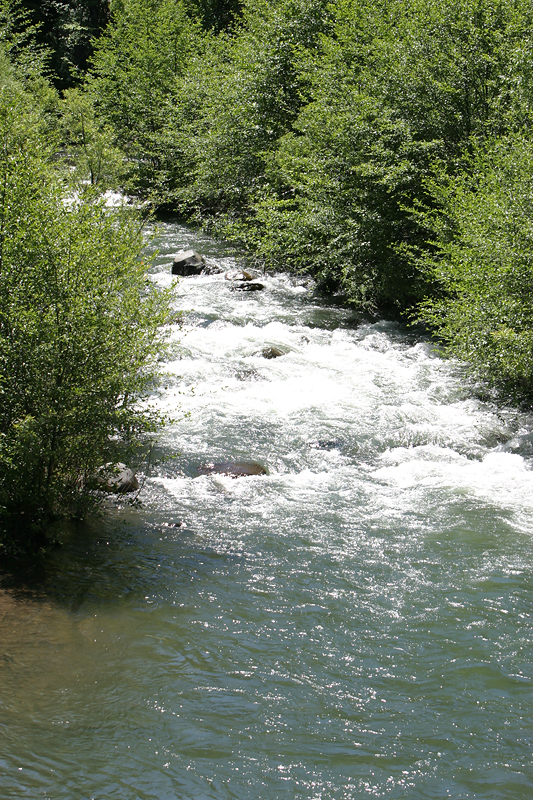
Alnus rhombifolia, commonly known as white alder, is the dominant streamside tree across much of the interior West, forming the shady green corridors that follow rivers and creeks from Montana to Southern California. Wherever flowing water cuts through dry country, white alder is often the tree that marks it from a distance — a tall, narrow-crowned column of bright green rising above willows and cottonwoods along the banks.
Unlike red alder, which hugs the fog-drenched immediate coast, white alder is the alder of inland rivers and mountain streams, tolerant of hotter summers and colder winters as long as its roots stay near a reliable water source. Like all alders, it carries nitrogen-fixing bacteria in root nodules, letting it thrive in the nutrient-poor gravel bars and cobble banks where few other trees can establish, and gradually enriching the soil for the plants that follow.
For restoration plantings and naturalistic gardens near water, white alder offers fast shade, strong bank stabilization, and streamside wildlife habitat that few other native trees can match across such a wide swath of the West. It is not a tree for a typical dry garden bed — it wants its roots in or very near permanent moisture — but where that condition is met, it is one of the most reliable and fastest-growing native trees available.
Identification
White alder grows as a single- or multi-trunked deciduous tree, typically 40 to 80 feet tall with a narrow, somewhat open, pyramidal to rounded crown. It is usually one of the taller trees in its riparian plant community, often towering over adjacent willows.
Bark & Stems
Young bark is thin, smooth and pale gray to whitish — the source of the common name — often mottled with lighter blotches. With age the bark develops shallow furrows and breaks into small, somewhat scaly plates, though it generally stays lighter in color than most other riparian trees in its range. Twigs are slender, reddish-brown, and mark the tree even in winter with small, stalked, reddish buds.
Leaves
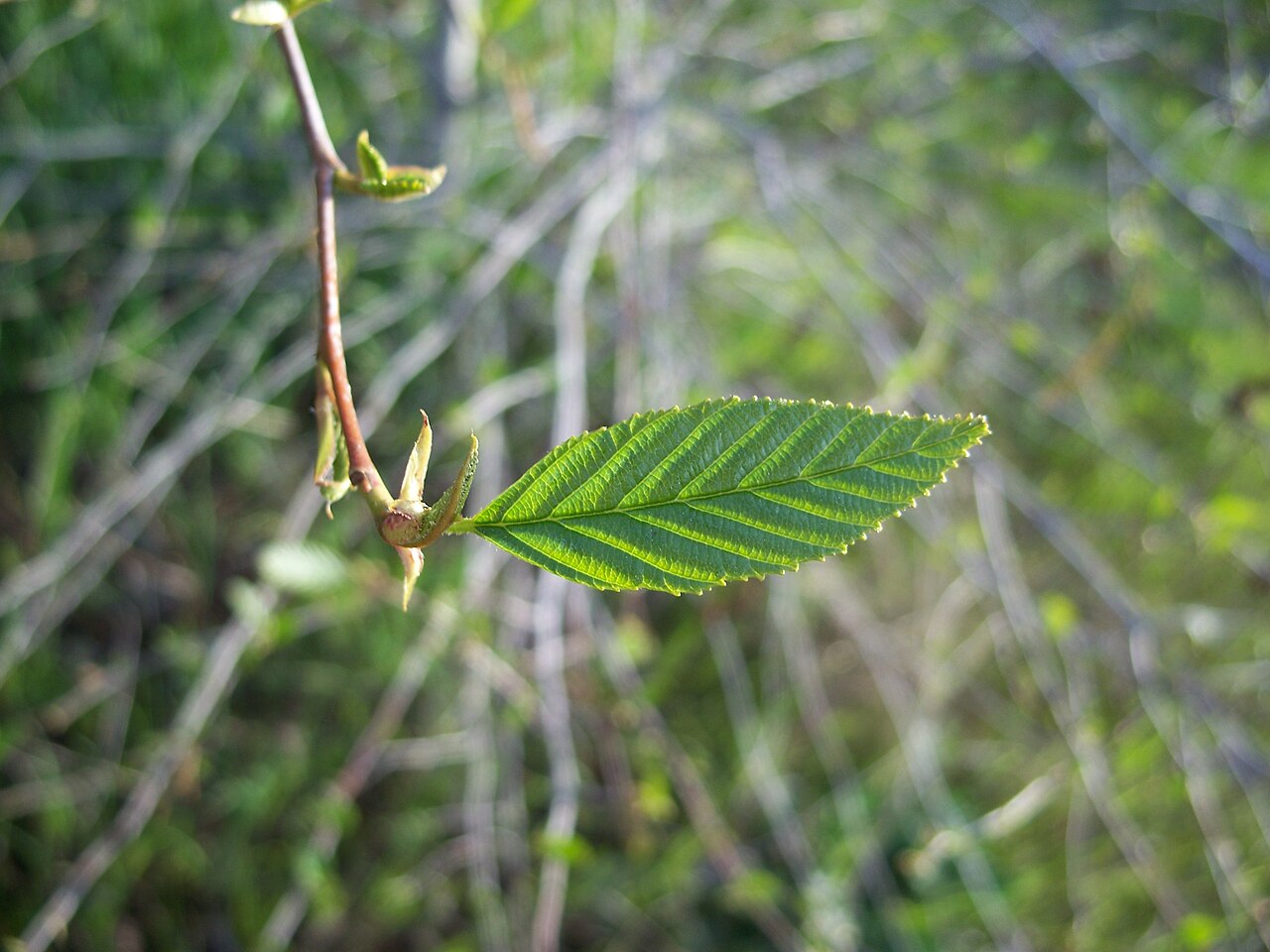
Leaves are deciduous, alternate, oval to elliptical, 2 to 4 inches long, with a distinctly rounded or blunt (not pointed) tip — an easy field mark separating white alder from the more pointed-leaved red alder. Margins are finely and doubly toothed, and importantly, the edges are flat or only slightly curled under, not strongly rolled under as in red alder. The upper surface is dull to glossy green, the underside paler with fine hairs along the veins.
Flowers
Like all alders, white alder is wind-pollinated and produces separate male and female catkins on the same tree in late winter to early spring, before the leaves emerge. Male catkins are long, slender, pendulous and yellowish-brown, releasing clouds of pollen; female catkins are much smaller, short and reddish, clustered near the branch tips.
Fruit & Seeds
Female catkins develop into small, woody, cone-like structures about ½ to ¾ inch long — true alder “cones” — that persist on the tree long after releasing their tiny winged seeds in fall. These dried cones remain on bare winter branches and are one of the most reliable alder identification features year-round, often found scattered on the ground beneath mature trees as well.
Quick Facts
| Scientific Name | Alnus rhombifolia |
| Family | Betulaceae (Birch) |
| Plant Type | Deciduous Tree |
| Mature Height | 40–80 ft |
| Mature Spread | 20–35 ft, narrow and upright |
| Growth Rate | Fast |
| Sun Exposure | Full Sun to Part Shade |
| Water Needs | High; requires reliable moisture or a high water table |
| Soil Type | Sandy, gravelly or loamy streambank soils |
| Soil pH | Slightly acidic to neutral (6.0–7.0) |
| Bloom Time | February – April (before leaf-out) |
| Flower Color | Yellowish-brown (male) / reddish (female) catkins |
| Fall Color | Yellowish-green, not showy |
| Fruit | Small woody cone-like catkins, persistent through winter |
| Deer Resistant | No (browsed by deer and elk) |
| USDA Hardiness Zones | 6–9 |
Native Range
White alder has one of the broadest ranges of any western riparian tree, growing from western Montana and northern Idaho south through Washington, Oregon, California, and western Nevada, with scattered populations reaching into desert canyon oases of Southern California near the Colorado River drainage. Unlike red alder, which is largely restricted to the fog belt within a few miles of the Pacific, white alder follows rivers well into the dry interior, tracking water rather than coastal climate.
It is almost always found directly along permanent or semi-permanent streams, rivers and seeps, from low desert canyons to mid-elevation mountain drainages, rarely straying far from the immediate streambank. White alder frequently grows in mixed riparian stands alongside Fremont cottonwood, black cottonwood, various willows and, at higher elevations, bigleaf maple, forming the dense green ribbon of vegetation that marks a watercourse from the air even across otherwise dry landscapes.
Because it depends on a reliable water source, white alder’s distribution is naturally patchy and linear rather than continuous across the landscape — present wherever a stream runs, largely absent on the uplands between drainages. This makes it an especially useful indicator species: a stand of white alder is a reliable sign of year-round or near-year-round water nearby.
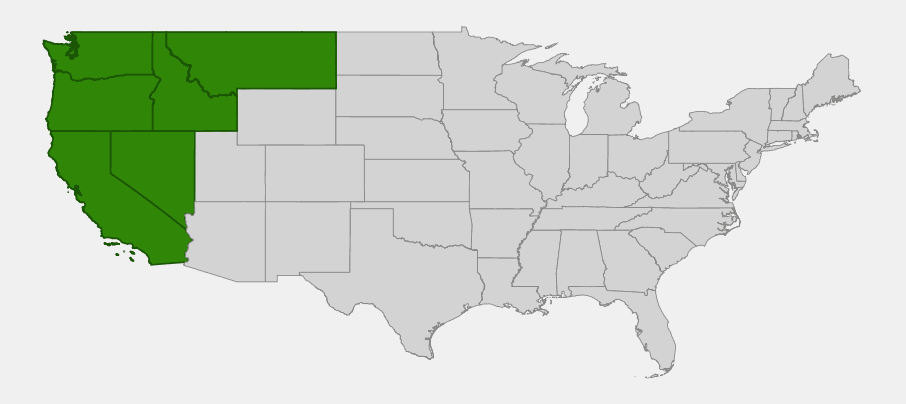
📋 Regional plant lists featuring White Alder: California & Nevada · Western Oregon & Western Washington · Idaho, Eastern Oregon & Eastern Washington · Montana & Wyoming
Growing & Care Guide
White alder is easy to grow in the right spot and nearly impossible to grow well in the wrong one — success depends almost entirely on giving it the consistent moisture its roots evolved to expect.
Light
Plant white alder in full sun to light shade. Young trees establish fastest in full sun with adequate moisture, while some light overhead shade from existing riparian canopy is well tolerated and even typical in natural stream settings.
Soil & Water
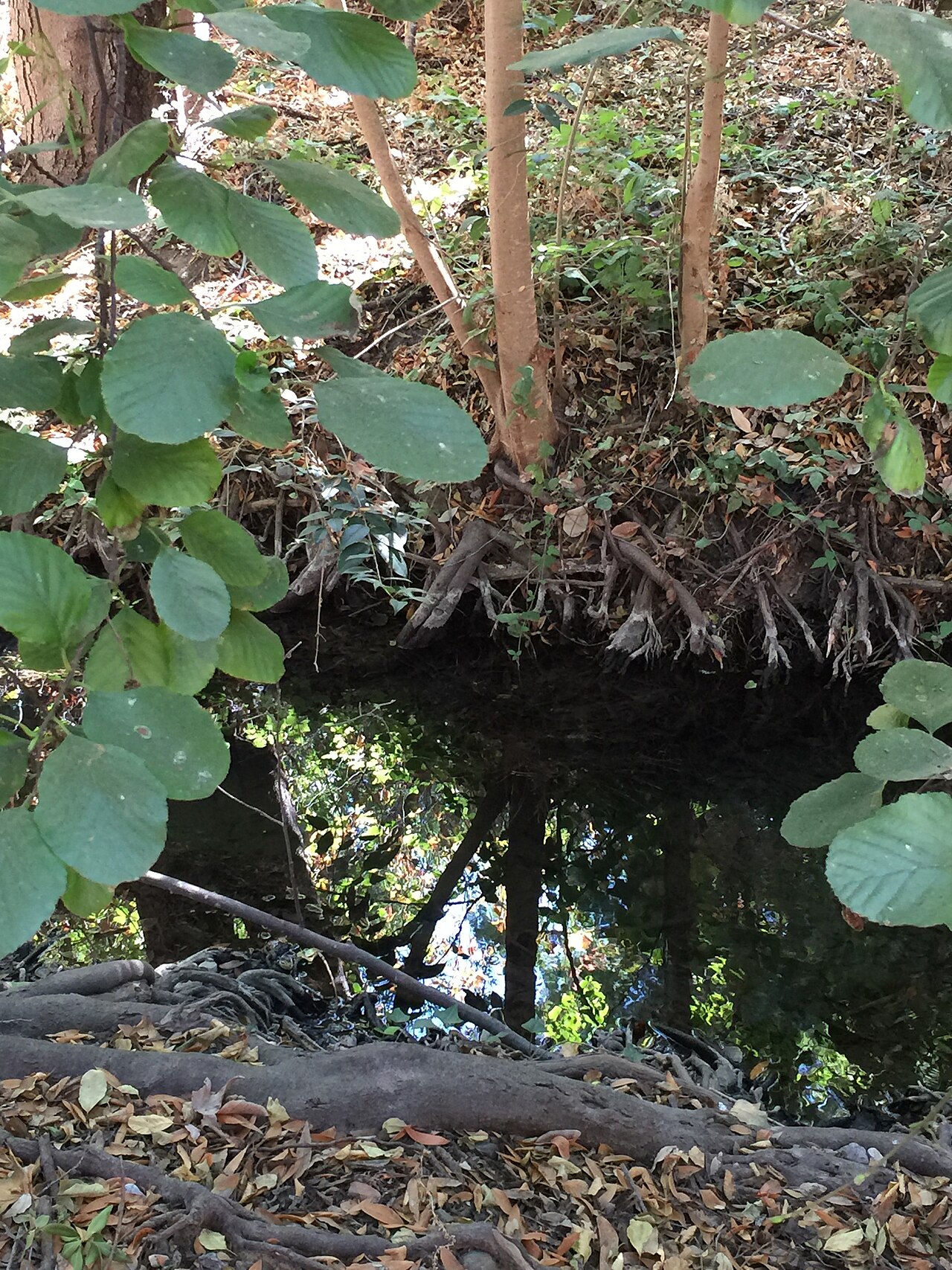
This is a true riparian obligate: white alder needs consistently moist to wet soil, ideally with roots able to reach a shallow water table or seasonal streamflow. It tolerates sandy, gravelly or loamy soils readily, since texture matters far less than moisture availability. Away from a natural streambank or pond edge, it is not a realistic choice for a typical dry or even moderately irrigated garden bed; reserve it for low spots, detention basins, pond margins or streamside restoration sites.
Planting Tips
Plant container stock or bare-root whips in late fall through early spring, directly into moist streambank soil or a reliably irrigated low area. Space trees 15 to 25 feet apart for a naturalistic riparian canopy. Because the roots fix nitrogen and the tree grows quickly, young white alders often outpace nearby plantings within just a few seasons, so plan companion species accordingly.
Pruning & Maintenance
White alder needs minimal pruning beyond removing dead, storm-damaged or crossing branches in late winter dormancy. Multi-trunked trees can be thinned to one or several strong leaders if a cleaner form is wanted. The species is relatively short-lived for a tree, often 50 to 100 years, and older trees along actively eroding banks may topple naturally — a normal part of the riparian cycle that also creates valuable in-stream wood habitat for fish.
Landscape Uses
- Streambank and riparian restoration, for its combination of fast growth, deep roots and nitrogen fixation
- Erosion control on actively eroding creek banks and gully edges
- Shade for fish habitat, cooling water temperatures along restored or natural stream reaches
- Pond and detention-basin margins with consistently saturated soil
- Naturalistic riparian screens alongside willows and cottonwoods
- Wildlife corridor plantings connecting fragmented streamside habitat
Wildlife & Ecological Value
As the dominant canopy tree along many western streams, white alder anchors entire riparian food webs across a huge span of the interior West.
For Pollinators
White alder is wind-pollinated and offers little floral nectar, but its early-spring catkins release abundant pollen at a time when few other food sources are available, supporting some generalist pollen-feeding insects and the predators and parasitoids that depend on them.
For Birds
The dense riparian canopy provides critical nesting and foraging habitat for a wide range of songbirds, including warblers, vireos and flycatchers that depend on streamside forest structure. Seeds from the small cone-like catkins are eaten by finches and other seed-eating birds through fall and winter, and the insect life supported by the canopy feeds insectivorous birds throughout the breeding season.
For Mammals
Beaver readily use white alder for food and dam-building material where the two overlap, and deer and elk browse the foliage and young shoots, particularly in winter when other browse is scarce. The shaded understory and streambank cover support a range of small mammals that depend on riparian corridors for movement across otherwise open or dry terrain.
Ecosystem Role
White alder’s nitrogen-fixing roots enrich nutrient-poor streambank soils, supporting the understory plants, aquatic insects and ultimately fish that depend on terrestrial nutrient input into streams. Its canopy shade moderates water temperature for trout and other cold-water fish, and its root systems are a primary stabilizing force on many western streambanks, reducing erosion and sediment load during high flows.
Cultural & Historical Uses
Indigenous peoples across the alder’s wide range, including groups throughout California, the Great Basin and the Pacific Northwest, used white alder wood for small tools, utensils and implements, valuing its workability despite its relatively light weight compared with harder woods. Bark and other plant parts were used in some traditions for dyes, producing reddish-brown to orange tones.
Because white alder nearly always grows directly along reliable water, its presence served as a practical landmark for travelers across the arid West, marking stream crossings and reliable water sources in otherwise dry landscapes — a function it still performs for hikers and land managers today, who use alder stands as a quick visual cue for mapping surface water.
In more recent land management history, white alder has become an important species in stream restoration science, valued for the speed with which it can reestablish streamside canopy and bank stability after wildfire, flood disturbance or human-caused degradation of riparian corridors throughout its range.
Frequently Asked Questions
What is the difference between white alder and red alder?
White alder has leaves with a rounded or blunt tip and flat or only slightly curled-under margins, and it grows along interior rivers and streams across a wide range of climates. Red alder has leaves with margins distinctly rolled under and is largely restricted to the humid coastal fog belt of the Pacific Northwest and Northern California.
Can white alder grow without a stream nearby?
Not successfully in most cases. White alder is a riparian obligate that needs consistently moist soil or access to a shallow water table. It is a poor choice for a typical dry or moderately irrigated garden bed and should be reserved for streambanks, pond edges or consistently wet low spots.
How fast does white alder grow?
Very fast for a native tree, often adding several feet per year when planted in reliably moist soil, which makes it valuable for quickly reestablishing shade and bank stability after disturbance.
Is white alder a nitrogen-fixing tree?
Yes. Like other alders, its roots host symbiotic Frankia bacteria in small nodules that convert atmospheric nitrogen into a form the tree and surrounding soil can use, making it valuable for improving poor streambank soils.
How long does a white alder live?
White alder is relatively short-lived for a tree, typically 50 to 100 years. Older trees on actively eroding banks sometimes topple before reaching old age, which is a normal part of the riparian disturbance cycle rather than a sign of poor health.

Looking for a nursery that carries White Alder?
Browse our native plant nursery directory: California · Oregon · Washington · Idaho · Montana