Hoary Tansyaster (Dieteria canescens)
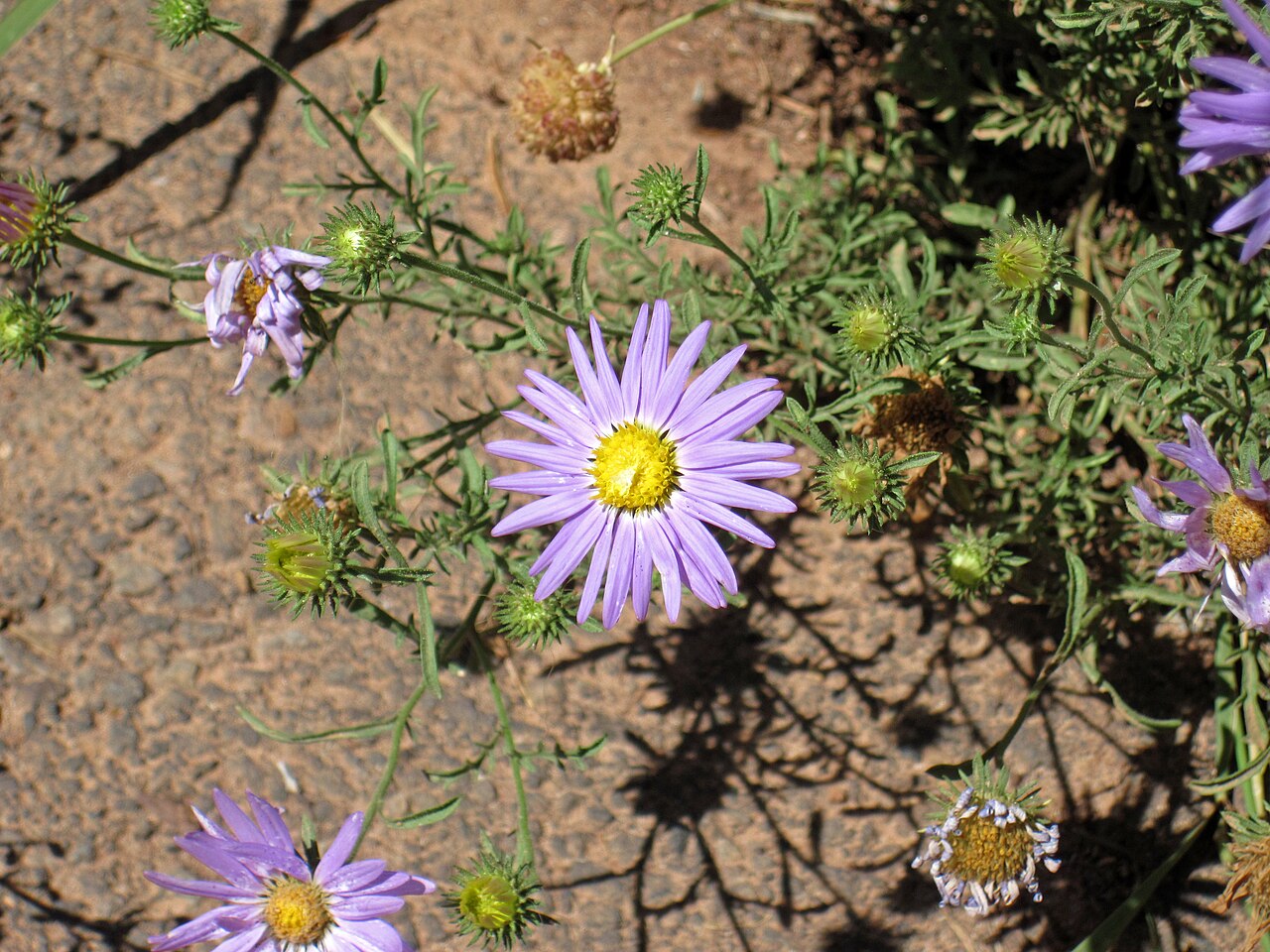
Dieteria canescens (long known as Machaeranthera canescens), commonly called Hoary Tansyaster or Hoary Aster, is a tough, drought-loving wildflower of the dry open country of the western and central United States. “Hoary” refers to the fine gray-white hairs that cover its stems and leaves, giving the whole plant a soft, silvery-green cast even before the lavender-purple, daisy-like flowers appear. It is one of the most widespread and variable native asters of the West, recognized across ten described varieties that differ subtly in leaf shape and hairiness but share the same basic look and garden value.
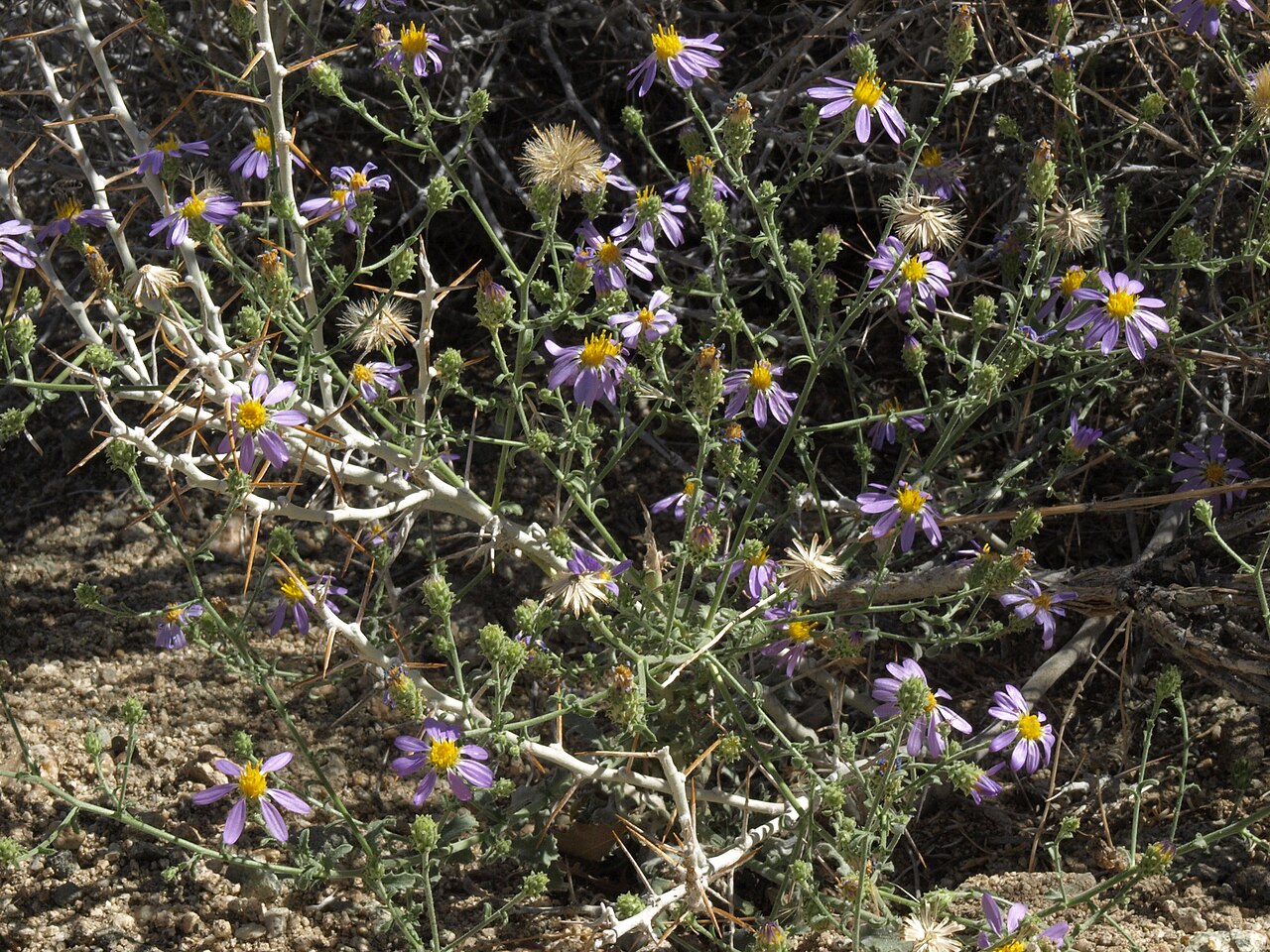
In the wild, Hoary Tansyaster grows as a bushy, much-branched annual, biennial, or short-lived perennial, 6 inches to 2 feet tall and often as wide, thriving on dry plains, rangeland, roadsides, sandy washes, and rocky slopes where precipitation is sparse and competition is light. It flowers from midsummer into fall, often putting on its best show just as many other wildflowers are finishing for the year, with one to many lavender to purple ray flowers surrounding a bright yellow disk on every stem tip.
For gardeners across the dry interior West, Hoary Tansyaster is an easy, reliable choice for a xeriscape or rock garden that wants genuine late-season color without supplemental water. It self-sows readily in good conditions, asks for nothing but sun and good drainage, and is a dependable late-season nectar source for native bees and butterflies across a huge native range.
Identification
Hoary Tansyaster is a bushy, multi-branched wildflower that can behave as an annual, biennial, or short-lived perennial depending on site conditions, typically forming a rounded clump 6 inches to 2 feet tall.
Stems & Foliage
Stems are numerous, branching freely from the base, and covered in fine, soft, grayish hairs that give the whole plant its characteristic hoary (whitish-gray) appearance. This dense pubescence is a drought adaptation, reflecting sunlight and reducing water loss. The narrow, linear to lance-shaped leaves are 1 to 3 inches long, alternate, and often have small bristle-tipped teeth along the margins; leaf shape and hairiness vary noticeably among the plant’s many regional varieties.
Flowers
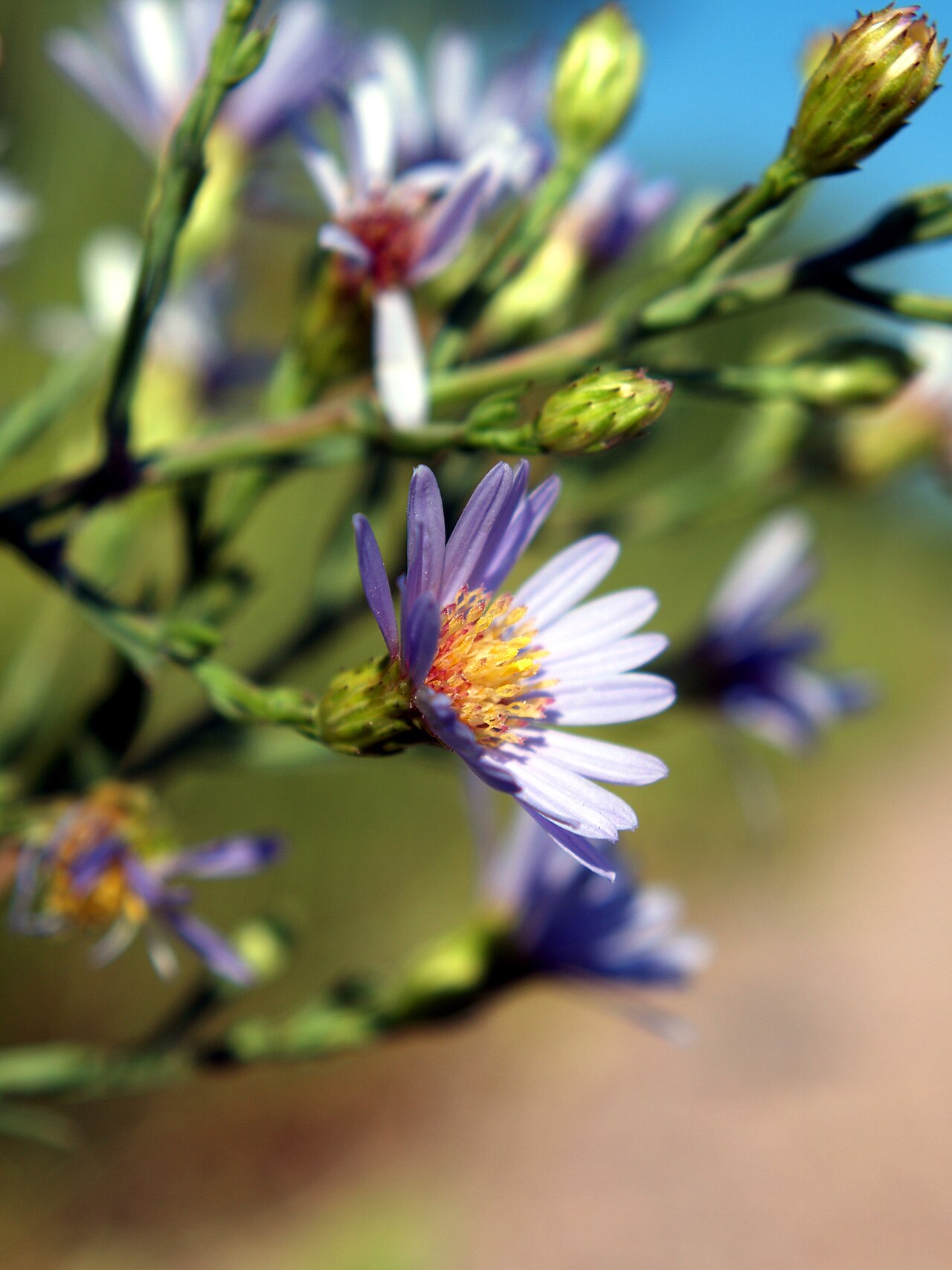
Flower heads are produced singly or in loose, branched clusters at the stem tips from midsummer through fall. Each head is roughly 1 to 1½ inches across, with 20 to 50 narrow ray flowers in shades of lavender, purple, or occasionally nearly white, surrounding a dome of bright yellow disk flowers. The bracts beneath each flower head (the phyllaries) are narrow and often sticky-glandular or bristle-tipped, a useful identification feature up close.
Fruit
After flowering, each head produces small, hairy, single-seeded fruits (achenes) tipped with a tuft of bristly hairs (pappus) that aids wind dispersal, typical of the aster family. Mature plants can produce abundant seed, and the species readily reseeds itself in open, disturbed, or sunny sites.
Quick Facts
| Scientific Name | Dieteria canescens (syn. Machaeranthera canescens) |
| Family | Asteraceae (Aster) |
| Plant Type | Annual, biennial, or short-lived perennial wildflower |
| Mature Height | 6 in – 2 ft |
| Mature Spread | 1–2 ft, bushy and much-branched |
| Growth Rate | Fast |
| Sun Exposure | Full Sun |
| Water Needs | Low; excellent drought tolerance |
| Soil Type | Dry, sandy, rocky, or gravelly; well-drained |
| Soil pH | Adaptable; neutral to alkaline |
| Bloom Time | Midsummer through fall |
| Flower Color | Lavender to purple rays with yellow disk |
| Fall Color | Not notable; grayish foliage year-round |
| Fruit | Small hairy achenes with bristly pappus |
| Deer Resistant | Yes, generally avoided |
| USDA Hardiness Zones | 4–9 |
Native Range
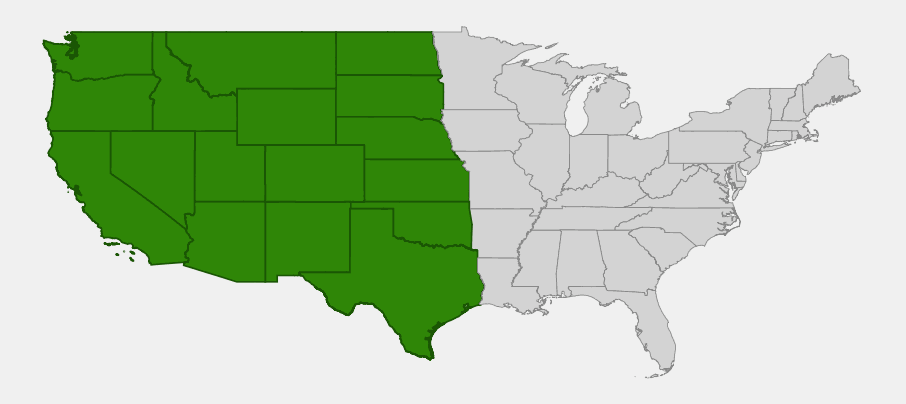
Hoary Tansyaster is native and common across the western two-thirds of the United States, from the Pacific Coast states of Washington, Oregon, and California east across the Intermountain West and Rocky Mountains into the central and southern Great Plains, reaching as far east as the Dakotas, Nebraska, Kansas, Oklahoma, and Texas. It also occurs in southwestern Canada.
It grows across a remarkable range of dry habitats: desert scrub, sagebrush steppe, pinyon-juniper woodland, short- and mixed-grass prairie, rocky slopes, sandy washes, roadsides, and disturbed ground, from near sea level in parts of its coastal range to well over 9,000 feet in the Rocky Mountains. This adaptability to many soils and elevations, paired with its drought tolerance, is a major reason it is both common and ecologically important across such a large area.
As a readily reseeding pioneer species, Hoary Tansyaster is often one of the first wildflowers to recolonize disturbed, overgrazed, or recently burned ground in the West, where its deep taproot and modest water needs let it establish quickly ahead of many other native plants.
📋 Regional plant lists featuring Hoary Tansyaster: Western Oregon & Western Washington · Idaho, Eastern Oregon & Eastern Washington · Utah & Western Colorado · Arizona & New Mexico · Montana & Wyoming · Nebraska, Kansas & Eastern Colorado · North Dakota, South Dakota & Western Minnesota
Growing & Care Guide
Hoary Tansyaster is one of the easiest native wildflowers to grow throughout the dry West, thriving on exactly the kind of lean, sunbaked conditions that defeat many garden plants.
Light
It needs full sun to perform well, flowering most heavily and compactly in the brightest, hottest spots in the garden. In partial shade it grows leggy and flowers sparsely.
Soil & Water
Good drainage is essential; this species is adapted to dry, sandy, rocky, or gravelly soils and resents heavy, wet clay. It is highly drought tolerant once established and needs little to no supplemental water in most of its native range, though occasional deep watering during extended dry spells can extend the bloom season and flower size.
Planting Tips
Direct-seed in fall or early spring, or set out small transplants after the last frost; the species germinates readily on bare, disturbed, sunny ground. Space plants 12 to 18 inches apart to allow for their bushy, spreading habit. Avoid rich, amended garden soil, which tends to produce lanky, weak-stemmed plants that flop and bloom less.
Pruning & Maintenance
Little maintenance is needed. Deadheading spent flower heads can encourage additional bloom and tidy the plant’s appearance, and leaving some seed heads in place lets the species self-sow for next year. As an annual or short-lived perennial, individual plants may not persist for many years, but a planting typically maintains itself through self-seeding in suitable conditions.
Landscape Uses
Hoary Tansyaster suits several practical roles in a western native garden:
- Xeriscape and waterwise gardens needing late-season color
- Rock gardens and gravel plantings
- Pollinator gardens, extending bloom into fall
- Erosion control and reseeding mixes on disturbed dry ground
- Roadside and rangeland restoration plantings
- Naturalized meadow or prairie plantings in dry climates
Wildlife & Ecological Value
Hoary Tansyaster is a valuable late-season nectar and pollen source across a huge swath of the dry West, blooming when many other wildflowers have already finished.
For Pollinators
The flowers attract a wide range of native bees, honeybees, and butterflies, including many species that are otherwise short on nectar sources in late summer and fall. Its abundance and wide bloom window make it a disproportionately important late-season food source for pollinators across arid and semi-arid landscapes.
For Birds & Small Mammals
Seed-eating birds forage on the ripe achenes in fall and winter, and the bushy growth form offers some ground-level cover for small wildlife in otherwise open, sparsely vegetated terrain.
Ecosystem Role
As an early colonizer of disturbed, overgrazed, or burned ground, Hoary Tansyaster helps stabilize soil and establish plant cover ahead of slower-growing perennial species, playing a meaningful role in natural recovery after disturbance across western rangelands. Its drought tolerance and wide elevational range make it a resilient, dependable presence through dry years that stress many other native wildflowers.
Cultural & Historical Uses
Hoary Tansyaster does not carry the extensive historical use record of some better-known western natives, but it has long been a familiar, recognizable part of the landscape for people traveling and living across the arid West. The Lewis and Clark expedition is recorded to have collected a specimen of this species along the Columbia River in October 1805, an early scientific record of the plant from the earliest era of American botanical exploration in the region.
Its chief historical significance has been as a conspicuous, late-blooming rangeland wildflower rather than as a plant with a documented record of food or medicinal use among regional Indigenous communities, and no such traditional uses are well established in the available ethnobotanical literature for this species.
Today, Hoary Tansyaster’s primary significance is ecological and horticultural: it is a widely recognized indicator of late-summer and fall bloom across western rangeland, and in recent decades has become an increasingly popular choice in waterwise and native plant gardens for exactly the reasons it thrives in the wild — toughness, drought tolerance, and reliable late-season color.
Frequently Asked Questions
Why is it called “hoary” tansyaster?
“Hoary” describes the fine, soft gray-white hairs covering the stems and leaves, which give the whole plant a silvery or frosted look. This hairiness is a natural adaptation that helps the plant conserve water in its dry native habitats.
Is Hoary Tansyaster the same as Machaeranthera canescens?
Yes. For many decades this species was classified as Machaeranthera canescens, and that name is still widely used in older references, nursery catalogs, and some state plant lists. Current taxonomic treatments place it in the genus Dieteria as Dieteria canescens.
How much water does Hoary Tansyaster need?
Very little once established. It is adapted to some of the driest habitats in the West and generally needs no supplemental irrigation beyond normal rainfall in most of its native range, provided the soil drains well.
Does Hoary Tansyaster spread aggressively?
It reseeds readily in open, sunny, well-drained sites, which is a strength for naturalized or restoration plantings but means gardeners wanting a more controlled bed should deadhead spent flowers before seed sets.
Will Hoary Tansyaster come back every year?
It behaves as an annual, biennial, or short-lived perennial depending on the site and climate, so individual plants may not persist for many years. In suitable conditions, however, a planting typically maintains itself indefinitely through self-seeding.

Looking for a nursery that carries Hoary Tansyaster?
Browse our native plant nursery directory: Washington · Oregon · California · ID & KS · NV, NM, ND, NE & OK · UT, SD & TX · Arizona · Montana · Wyoming · Colorado