Uluhe (Dicranopteris linearis)
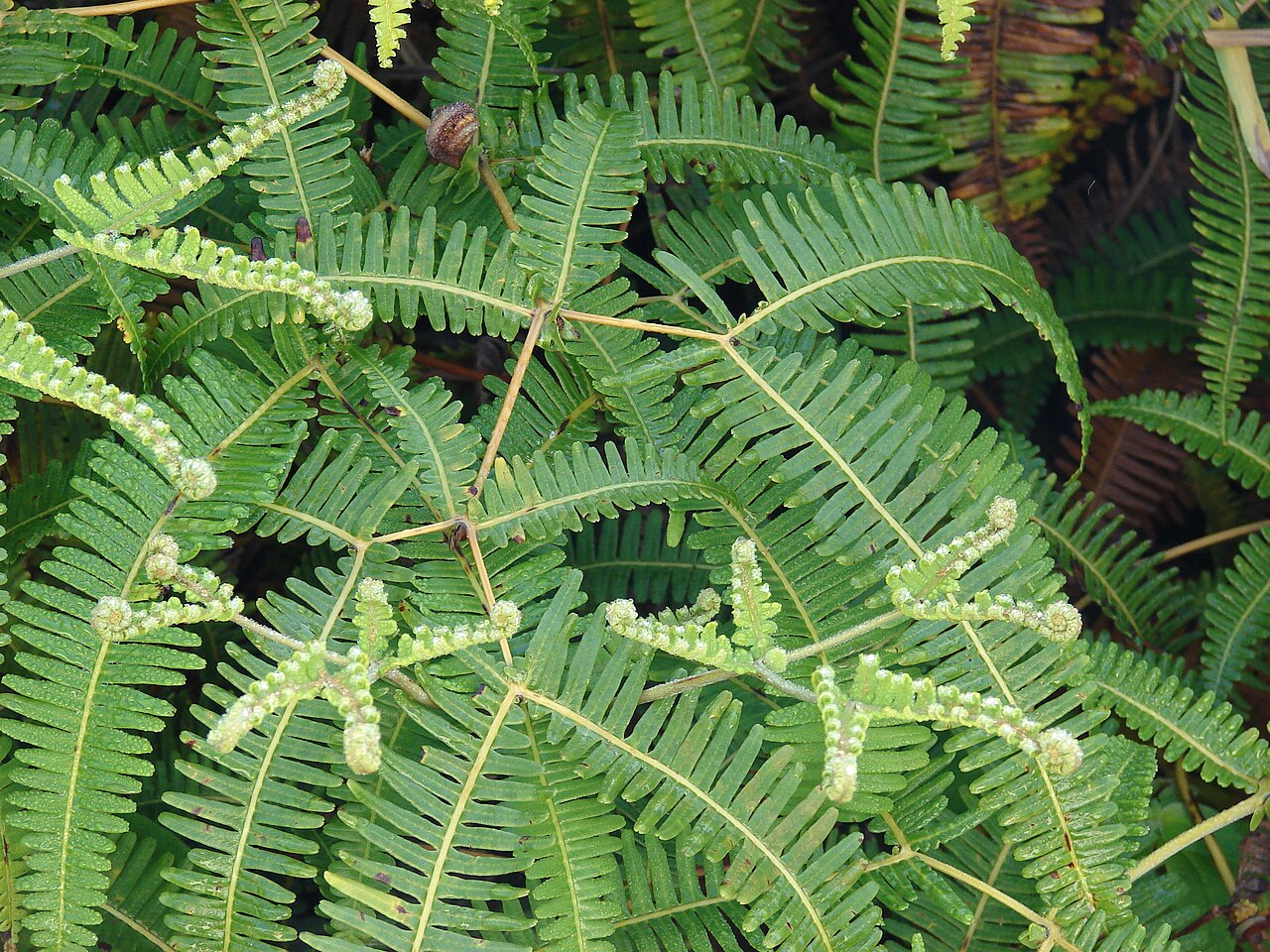
Dicranopteris linearis, called Uluhe in Hawaiian and also known as Old World forked fern or false staghorn fern, is one of the most ecologically important native ferns in the Hawaiian Islands. Rather than growing as a single upright frond like most ferns, uluhe spreads by a creeping, climbing rhizome that branches repeatedly in a distinctive forked, zig-zag pattern, scrambling over itself and neighboring vegetation to form dense, tangled thickets that can blanket entire hillsides.
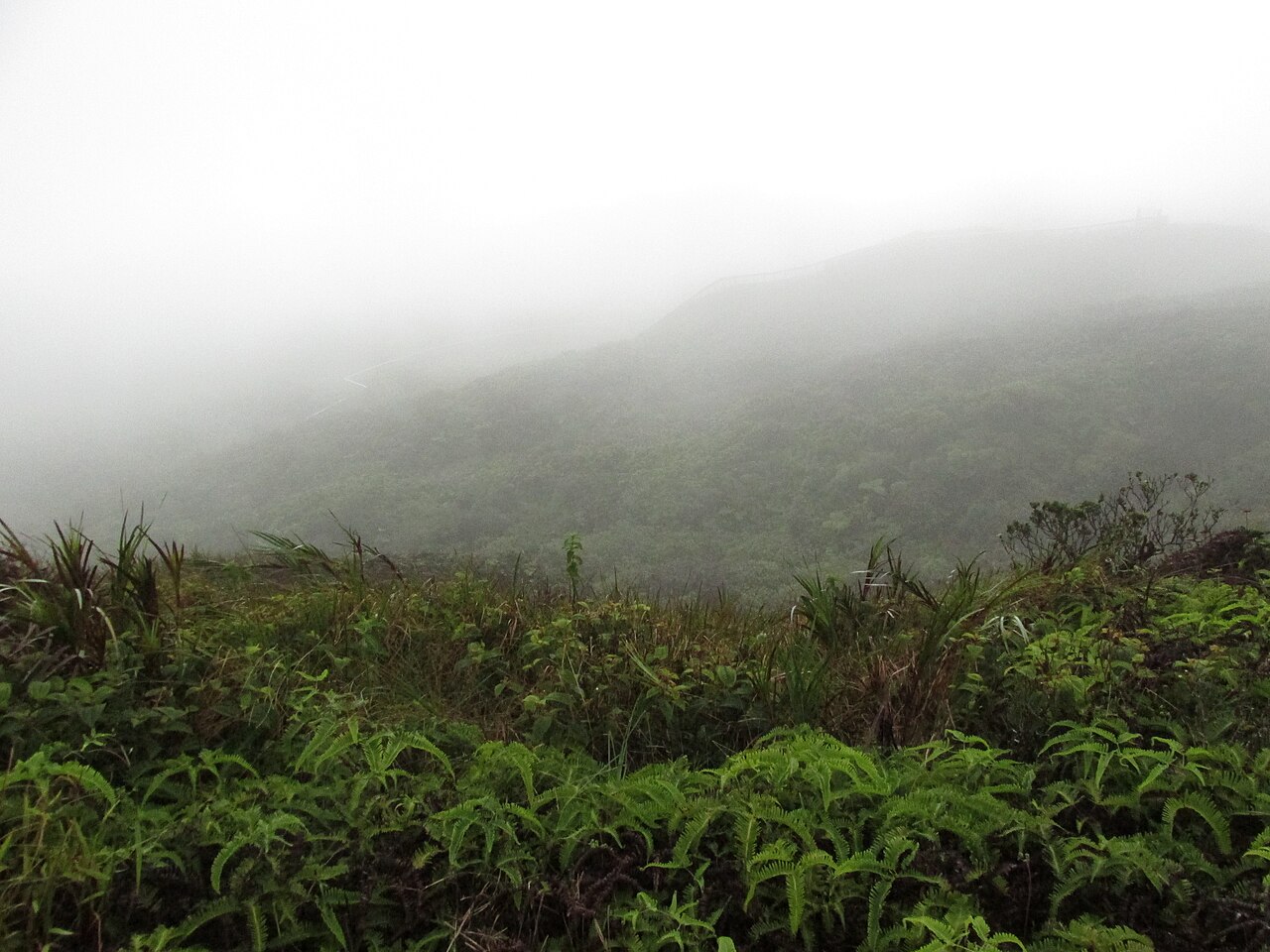
Uluhe is indigenous to Hawaii, meaning it arrived and established here without human help, and it also occurs naturally across much of the wet Old World tropics, from Africa and Asia through the Pacific. In Hawaii it is found on all the main islands, often forming the dominant groundcover in wet and mesic forest understories, along trail edges, and on recovering lava flows and landslides, where it is frequently one of the first plants to take hold.
For Hawaii gardeners and land managers working with native plants, uluhe is less a typical ornamental and more a foundational, landscape-shaping species: a keystone fern that stabilizes slopes, builds soil, and holds ground that would otherwise be vulnerable to invasive species. It is not a plant for small garden beds, but it has real value in native forest restoration projects, large naturalistic landscapes and erosion-control plantings on appropriate sites in Hawaii.
Identification
Uluhe is unlike most ferns in its growth habit. Instead of a clump of upright fronds, it produces a long, wiry central rachis (frond stem) that grows out from the base, branches into two at intervals, rests in a bud, then resumes growing and branches again, repeating this pattern indefinitely. This gives established stands a distinctive forked, almost scaffolded structure that can scramble along the ground, climb over shrubs, or clamber up and over other vegetation to heights of 20 feet or more when supported.
Rhizome & Growth Habit
The plant spreads from a tough, creeping underground rhizome that clones itself outward, sending up new forking fronds as it goes. Over time, a colony builds up layer upon layer of old and new growth, with dead fronds persisting beneath live ones because they decompose very slowly, creating a thick, spongy mat that can be a meter or more deep in old stands.
Fronds & Fiddleheads
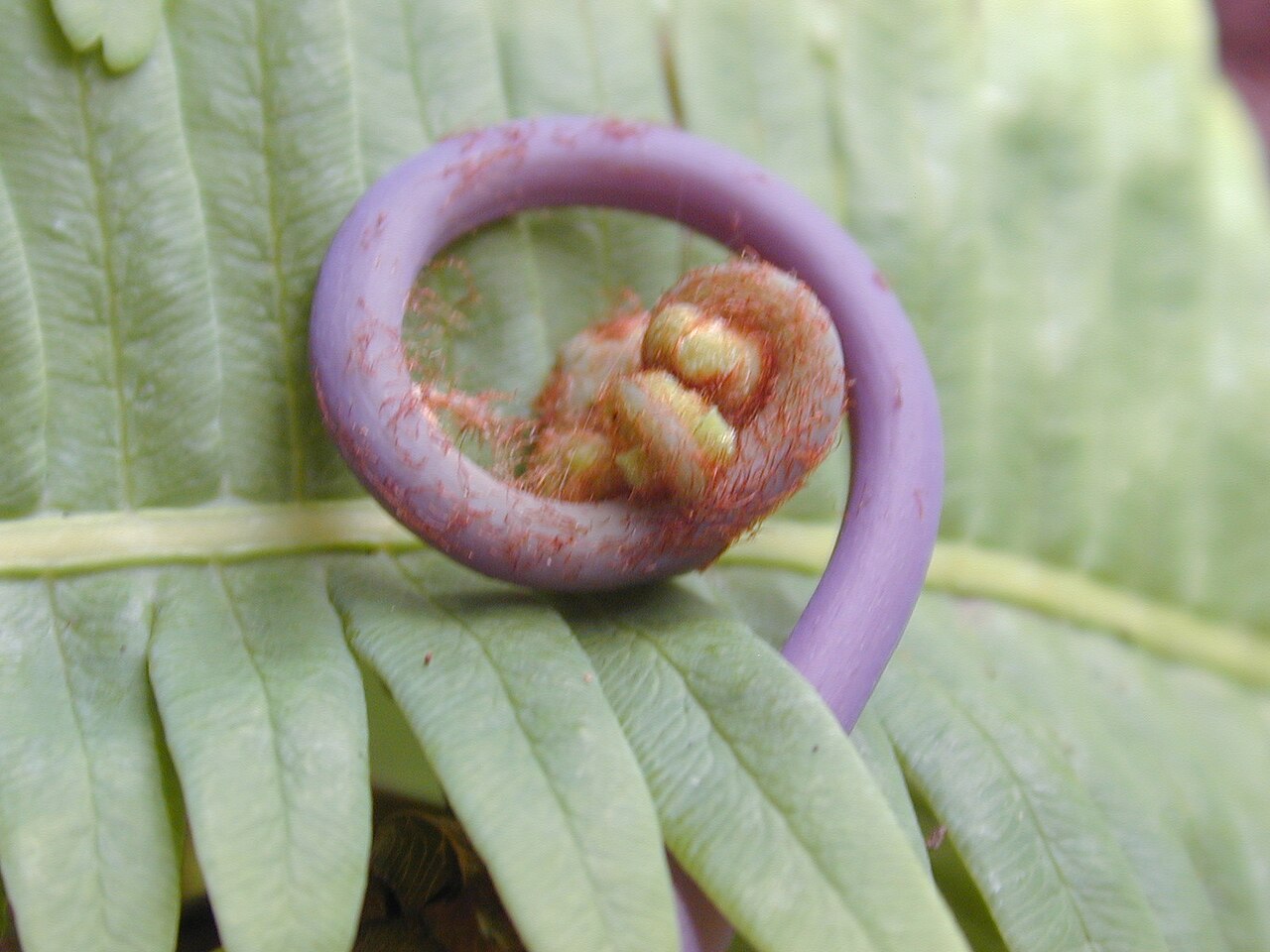
New growth emerges as a coiled fiddlehead, often tinged purple-brown with fine rusty hairs, before unfurling into the characteristic forked frond. The final leaf segments (pinnules) are narrow and linear, up to about 3 inches long and only a few millimeters wide, with undersides that are often hairy or slightly waxy. Fronds are a matte mid-green and have a tough, somewhat wiry texture compared to many other ferns.
Spores
Like other ferns, uluhe reproduces by spores rather than flowers or seeds. Small, round clusters of spore-producing structures (sori) form on the undersides of the fertile frond segments; the species spreads readily by both spores and vegetative rhizome growth, which is part of why it can so quickly colonize disturbed or open ground.
Quick Facts
| Scientific Name | Dicranopteris linearis |
| Family | Gleicheniaceae (Forked Fern) |
| Plant Type | Evergreen, rhizomatous, scrambling/climbing fern |
| Mature Height | 2–3 ft as groundcover; climbing fronds to 20 ft+ when supported |
| Mature Spread | Unlimited; spreads indefinitely by creeping rhizomes |
| Growth Rate | Fast once established; aggressive colonizer |
| Sun Exposure | Full Sun to Part Shade (does not tolerate deep shade) |
| Water Needs | High; needs consistent rainfall or moisture |
| Soil Type | Poorly drained, nutrient-poor soils; tolerates disturbed ground |
| Soil pH | Tolerant of acidic, low-fertility volcanic soils |
| Bloom Time | Not applicable (fern; reproduces by spores year-round) |
| Flower Color | Not applicable (fern) |
| Fall Color | None (evergreen) |
| Fruit | Not applicable (reproduces by spores) |
| Deer Resistant | Not applicable (no deer in Hawaii’s native range) |
| USDA Hardiness Zones | 10–11 |
Native Range
Uluhe is indigenous to the Hawaiian Islands and occurs naturally on all of the main islands, from Hawaii Island and Maui through Molokai, Lanai, Oahu and Kauai. It is also native across a very wide swath of the wet Old World tropics and Pacific, including parts of Africa, South and Southeast Asia, Australia, and many Pacific island groups, but within the United States it is found only in Hawaii.
In Hawaii, uluhe is typically found from near sea level up into montane wet and mesic forest, thriving on poorly drained, nutrient-poor volcanic soils and steep, disturbed slopes where taller vegetation has been cleared by landslide, lava flow, or past land use. It is intolerant of deep shade, so it is most common and vigorous in open to partly shaded sites, often forming the dominant understory beneath a more open native canopy or taking over entirely on sunnier slopes and ridgelines.
As a keystone species in many Hawaiian forest ecosystems, uluhe plays an outsized ecological role relative to its modest individual biomass, and large, continuous stands are a defining feature of the Hawaiian wet-forest landscape. Where uluhe thickets are removed or degraded, invasive weeds often move in quickly, so intact stands are considered valuable for holding ground against non-native plant invasion.
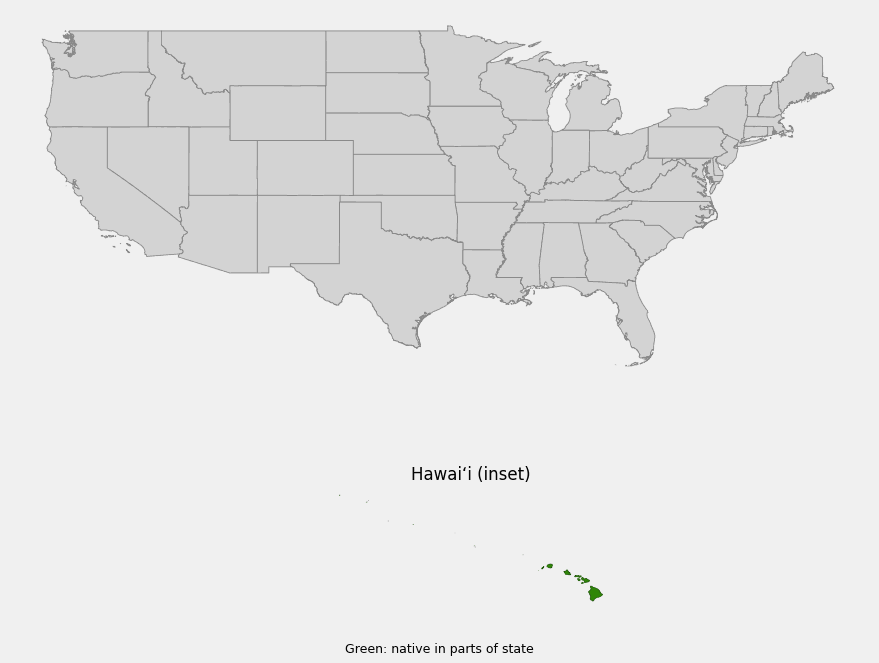
📋 Regional plant lists featuring Uluhe: Hawaii
Growing & Care Guide
Uluhe is rarely planted as a conventional garden specimen; it is far better suited to large-scale native habitat restoration, erosion control and naturalized landscapes in Hawaii than to a typical home flower bed. Where there is room for it to spread, it asks for little beyond the conditions it already thrives in across the islands.
Light
Give uluhe full sun to part shade. Unlike many ferns, it does not do well in deep, continuous shade and will fail to establish or persist under a closed canopy; it needs reasonably open overhead light to thrive, which is why it is so often seen on open slopes, ridgelines and forest edges rather than beneath dense tree cover.
Soil & Water
Uluhe is remarkably adaptable to poor, nutrient-deficient, poorly drained volcanic soils, including bare lava substrate and compacted, disturbed ground where many other plants struggle. It needs consistent moisture and performs best in Hawaii’s wetter windward and upland sites; it is not a candidate for dry leeward gardens without supplemental irrigation.
Planting Tips
Because of its aggressive spreading habit, uluhe is best used in large, open restoration or erosion-control sites rather than small garden beds, where it can quickly overwhelm neighboring plants. Establish it from rhizome divisions or responsibly sourced spore-grown plants rather than digging from healthy wild stands, and give it generous room, since a planting will keep expanding outward indefinitely if conditions remain favorable.
Pruning & Maintenance
Established uluhe needs essentially no maintenance and should generally be left alone once it covers the intended area; it can be cut back at the margins to keep it within bounds in a managed restoration planting, but the dense old growth beneath live fronds decomposes slowly and is best left in place as habitat and soil-building mulch.
Landscape Uses
Uluhe’s best uses in Hawaii landscapes and restoration work include:
- Erosion control on steep, disturbed volcanic slopes
- Native forest restoration as a groundcover beneath a more open canopy
- Revegetation of lava flows and landslides as an early-succession colonizer
- Weed suppression in large native plantings, since dense stands resist invasion
- Large naturalistic landscapes with room for its indefinite spread
Wildlife & Ecological Value
Uluhe’s ecological importance in Hawaii far exceeds what its modest flowers-free appearance might suggest; it is considered a true keystone species in many native plant communities.
For Pollinators
As a fern, uluhe does not produce flowers or nectar and is not a pollinator resource, but the structural cover it provides supports the broader insect community that in turn feeds native birds and other wildlife.
For Birds
Dense uluhe thickets provide important ground-level and understory cover for native Hawaiian forest birds, offering shelter from predators and weather as well as habitat for the insects many native birds feed on.
Ecosystem Role
Uluhe is a pioneer species that readily colonizes bare lava, talus and disturbed ground, where its layered, slowly decomposing growth builds a thick litter mat that captures organic matter, moisture and nutrients, gradually creating the conditions other plants need to establish. Despite being a relatively small share of total forest biomass, uluhe-dominated areas account for an outsized share of primary productivity in Hawaiian wet forest, and uluhe is believed to have allelopathic effects that help it hold ground against competitors. Where it is lost, invasive weedy species often move in far more readily, making healthy uluhe stands an important line of defense for native ecosystems.
Cultural & Historical Uses
Uluhe holds a long-standing place in Hawaiian culture and everyday life. Its tough, wiry fronds and rachises were traditionally used in weaving, cordage and basketry, and the fern has featured in lei-making, where its fronds and fiddleheads add texture and greenery. In the wider Old World tropics where the species also grows, related traditional uses include weaving material, and the fiddleheads have been used in folk preparations in parts of Southeast Asia and the Pacific for ailments such as intestinal complaints and skin wounds.
Uluhe also appears in Hawaiian cultural references and place-based knowledge as a recognizable, abundant forest plant, often associated with the rugged, wet upland terrain where it thrives. Its persistence and dominance on the landscape have made it a familiar sight to hikers and land managers alike, a plant woven into the practical and cultural fabric of life in the islands rather than a showpiece garden specimen.
Today, uluhe’s significance is increasingly recognized through a conservation and restoration lens: land managers value it for the erosion control and weed resistance it provides, and native plant nurseries and restoration programs work to propagate it for use in degraded-land recovery projects across Hawaii.
Frequently Asked Questions
Is uluhe an invasive weed in Hawaii?
No. Uluhe is indigenous to Hawaii and is considered a valuable native species, not an invasive one. It can form very dense, dominant stands, which sometimes makes it look weed-like, but it is part of the native ecosystem and actually helps resist invasion by introduced weedy plants.
Can uluhe be grown outside Hawaii?
In the continental United States it is not native anywhere and is rarely grown, since it needs the warm, wet, frost-free conditions found in tropical climates. Within the U.S. it is essentially a Hawaii-only plant for landscaping and restoration purposes.
Why does uluhe form such dense, tangled thickets?
Its fronds grow by repeated forking rather than a single upright stem, continually branching, resting, and branching again as they scramble over the ground and over each other and neighboring plants. Combined with slow decomposition of old growth underneath live fronds, this creates the deep, layered, tangled thickets uluhe is known for.
Is uluhe good for erosion control?
Yes, it is one of the best native plants in Hawaii for stabilizing bare, disturbed volcanic slopes, since its spreading rhizomes and dense litter mat hold soil in place and it readily colonizes poor, nutrient-deficient ground where many other plants cannot establish.
Does uluhe have flowers or fruit?
No. As a fern, uluhe reproduces by spores produced on the undersides of its fronds rather than by flowers, fruit or seeds, and it also spreads vegetatively through its creeping, cloning rhizome system.

Looking for a nursery that carries Uluhe?
Browse our native plant nursery directory: Hawaii