Northern Bush Honeysuckle (Diervilla lonicera)
Diervilla lonicera, commonly called Northern Bush Honeysuckle, is a low, suckering, deciduous shrub native to rocky woods, outcrops and open forest edges across the northeastern and north-central United States and adjacent Canada. Despite the common name, it is not related to the invasive Asian bush honeysuckles (Lonicera maackii, L. tatarica, L. morrowii and their hybrids) that choke out woodland understories across much of the eastern U.S. — Diervilla lonicera is a true native in its own genus (Caprifoliaceae, the honeysuckle family, but not a Lonicera), and it behaves nothing like its weedy namesakes. Gardeners shopping for a native groundcover shrub should double-check the botanical name before buying, since “bush honeysuckle” alone is used loosely for both the wanted native and the unwanted invaders.
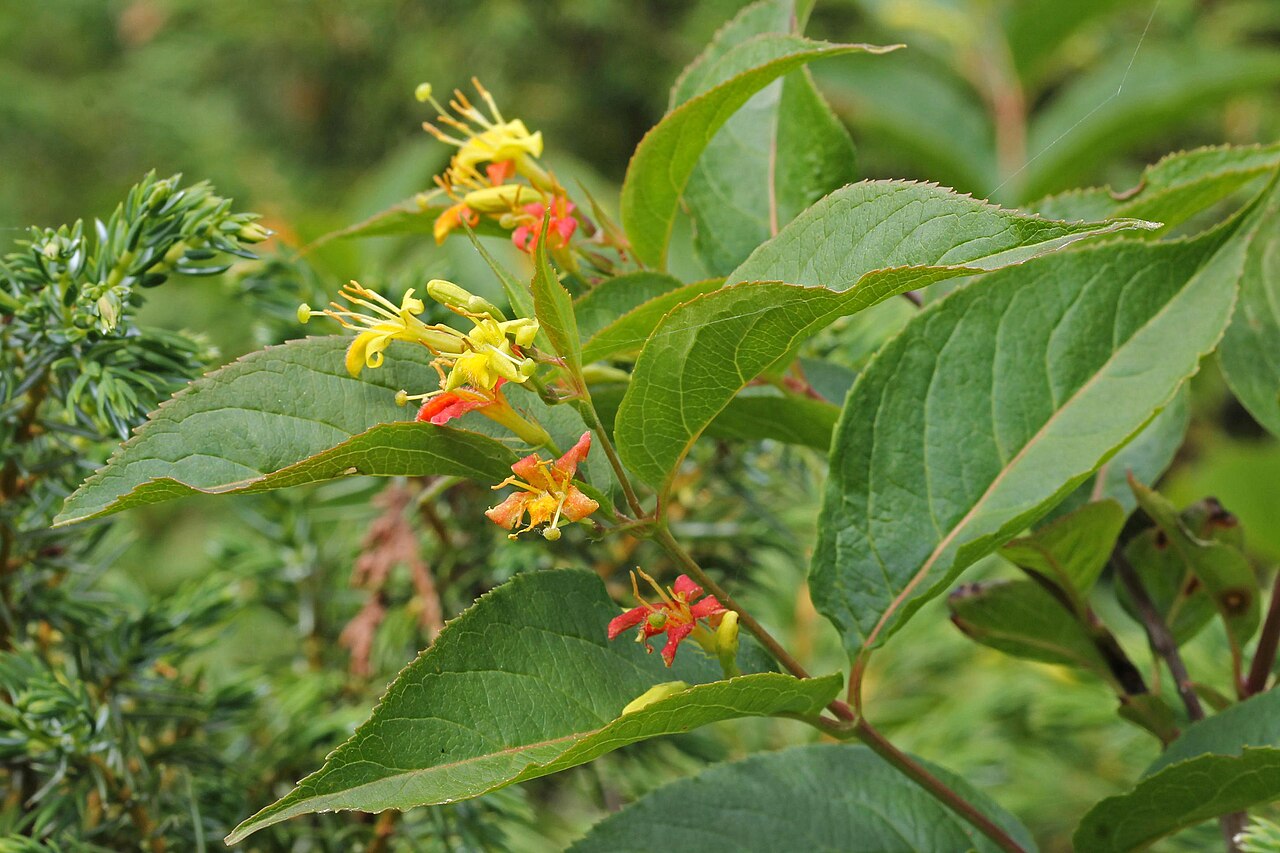
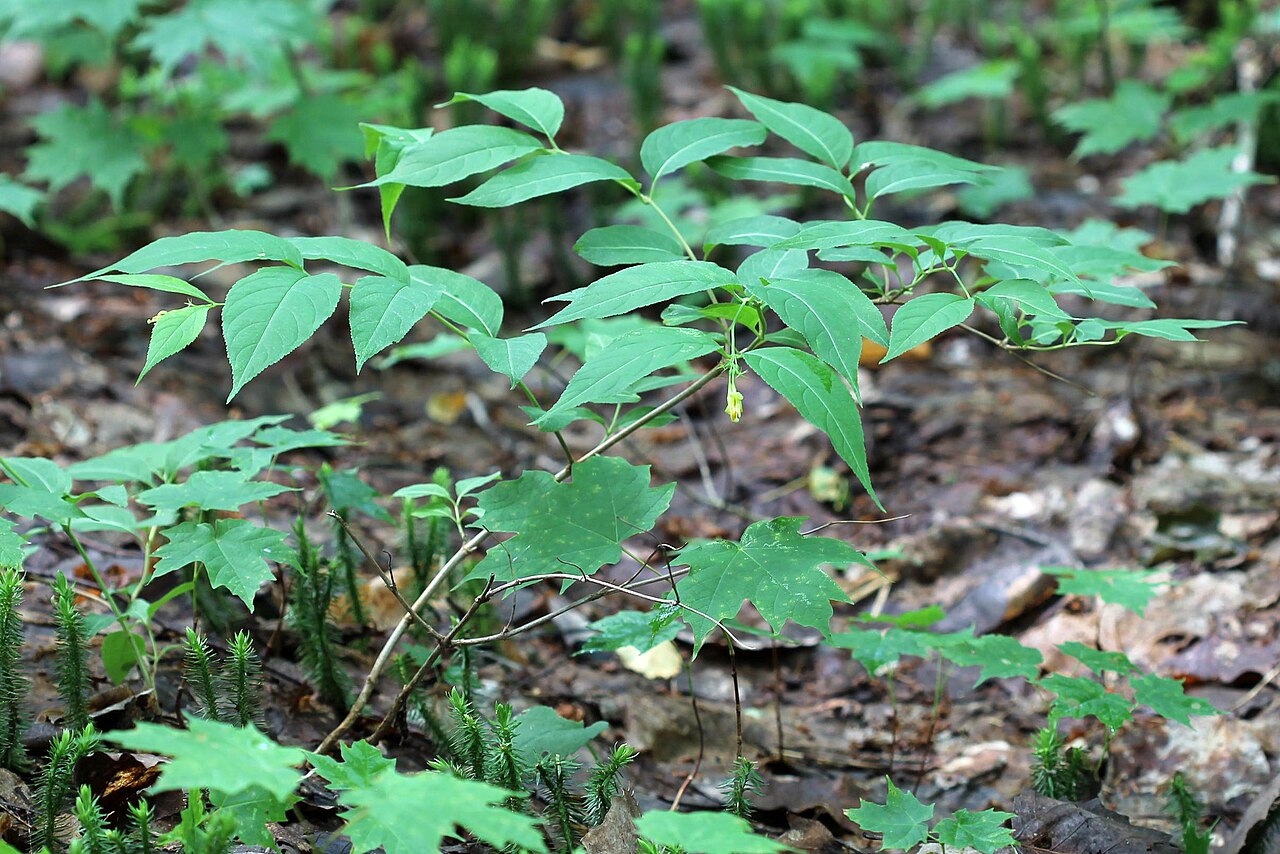
In the wild, Northern Bush Honeysuckle forms loose, spreading colonies 2 to 4 feet tall on thin, rocky or sandy soils in dry open woods, cliff tops and roadside banks, often where little else will grow. Its paired, pointed leaves turn shades of red, orange and purple in fall, and its small, funnel-shaped flowers open pale yellow in early summer before aging to a deeper orange-red, giving each cluster a two-toned look. The flowers are not showy from a distance, but up close they are an understated, long-blooming asset for a dry native bed.
For gardeners from New England and the upper Midwest down through the Appalachians, Northern Bush Honeysuckle is a tough, low-maintenance choice for slopes, dry shade, and difficult rocky sites where it can be left to spread by suckers into a dense, erosion-controlling patch. It asks for almost nothing once established and draws a steady trickle of small bees and the occasional hummingbird through the growing season.
Identification
Northern Bush Honeysuckle is a low, multi-stemmed shrub that spreads by underground suckers to form loose colonies rather than a single, dense mound. Individual stems are thin and arching, typically 2 to 4 feet tall, occasionally reaching 5 feet in favorable sites.
Stems
Young twigs are slender, reddish-brown and finely hairy, becoming grayish and slightly ridged with age. The stems are not thorny or bristly, and older stems develop thin, shreddy bark. Because the plant spreads by rhizome-like roots, a single original planting gradually widens into a patch of genetically identical stems rather than staying as one discrete clump.
Leaves
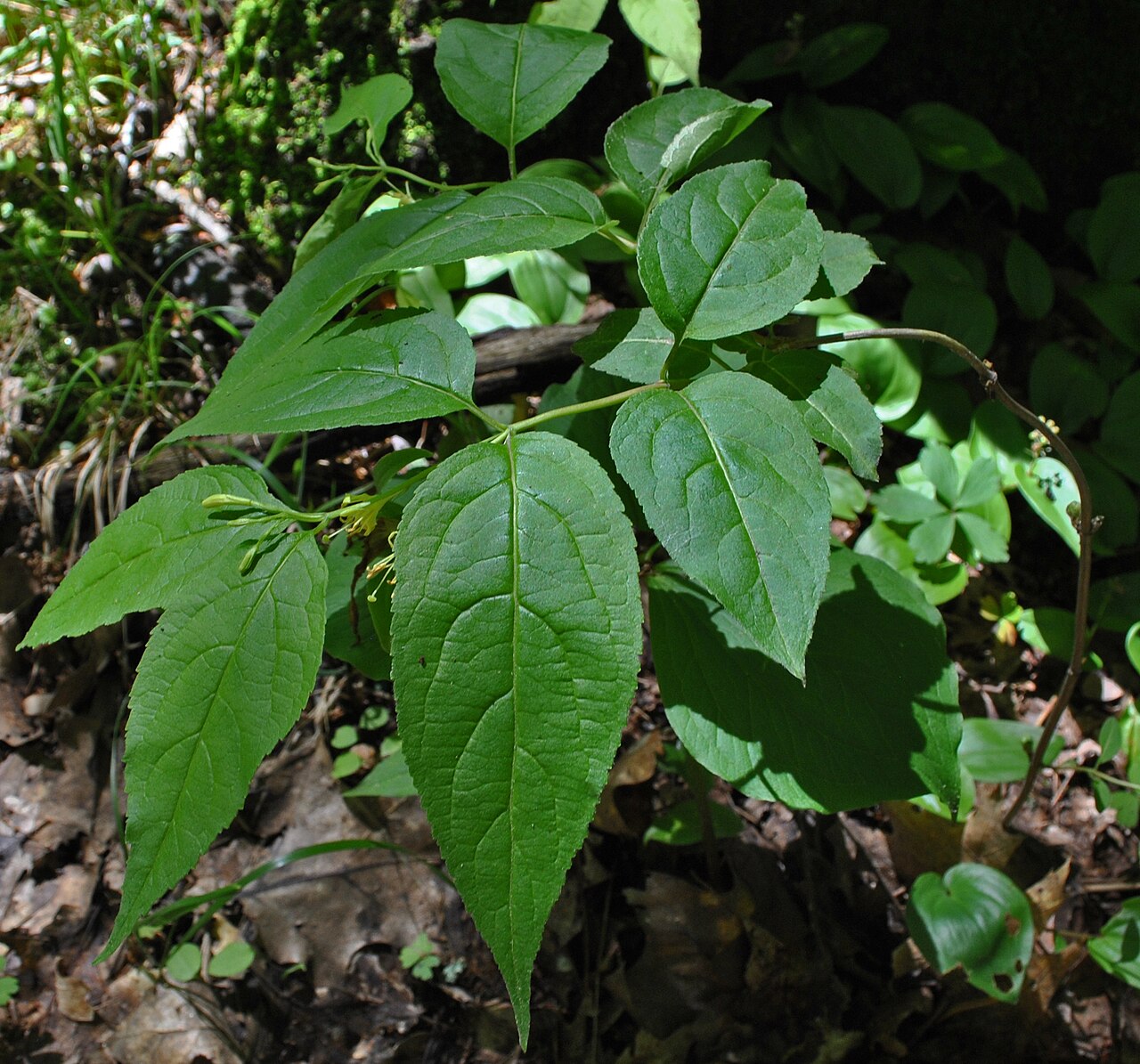
Leaves are opposite, simple, ovate to lance-shaped, 2 to 5 inches long, with a pointed tip, a rounded to slightly heart-shaped base, and sharply toothed margins. They are dark green and smooth above, paler beneath, with a short petiole. In autumn the foliage turns yellow, orange, bronze-red or purplish, often with several colors present on the same plant at once — one of the shrub’s best ornamental features.
Flowers & Fruit
Flowers appear in small clusters of two to five at the branch tips and upper leaf axils from June into August, with scattered rebloom common after the main flush. Each flower is a narrow, five-lobed yellow tube about ½ inch long that gradually turns orange and then red-orange as it ages, so a single cluster often shows both fresh yellow and aging red-orange flowers together. The fruit is a narrow, woody, beaked capsule about ⅓ to ½ inch long that splits open to release small winged seeds in fall; the dry capsules often persist into winter.
Quick Facts
| Scientific Name | Diervilla lonicera |
| Family | Caprifoliaceae (Honeysuckle) |
| Plant Type | Deciduous suckering shrub |
| Mature Height | 2–4 ft (rarely to 5 ft) |
| Mature Spread | Spreads indefinitely by suckers to form colonies |
| Growth Rate | Moderate |
| Sun Exposure | Full Sun to Part Shade |
| Water Needs | Low to moderate; excellent drought tolerance |
| Soil Type | Thin, rocky, sandy or gravelly; well-drained |
| Soil pH | Adaptable; acidic to neutral |
| Bloom Time | June – August, with sporadic rebloom |
| Flower Color | Pale yellow, aging to orange-red |
| Fall Color | Yellow, orange, bronze-red, purple |
| Fruit | Narrow woody capsule with winged seeds |
| Deer Resistant | Yes, rarely browsed |
| USDA Hardiness Zones | 3–7 |
Native Range
Northern Bush Honeysuckle is native from Newfoundland and the Maritimes west through Quebec, Ontario and the upper Great Lakes, south through New England and the mid-Atlantic, and along the spine of the Appalachians into the Carolinas and Tennessee. In the United States it is most common and abundant across northern New England, New York, Pennsylvania, the Great Lakes states and the upper Midwest, becoming scarcer and more restricted to cool, rocky, higher-elevation sites as it reaches the southern edge of its range in the mountains.
It favors dry, thin, often acidic soils over bedrock: granite and sandstone outcrops, talus slopes, open rocky woods, lakeshore ledges and roadcuts. It tolerates both full sun and the dappled light of open woodland, but rarely thrives in deep, continuous shade or in wet, heavy soils. This preference for exposed, low-fertility ground is why it is so often found colonizing cliff tops, quarry edges and thin-soiled ridgelines where competition from larger shrubs and trees is limited.
Because it spreads by suckering roots rather than relying solely on seed, established colonies can persist and slowly expand for decades on a single rock outcrop or roadside bank, making it a useful, long-lived native for holding soil on difficult sites. It is not considered rare or of conservation concern anywhere in its range.
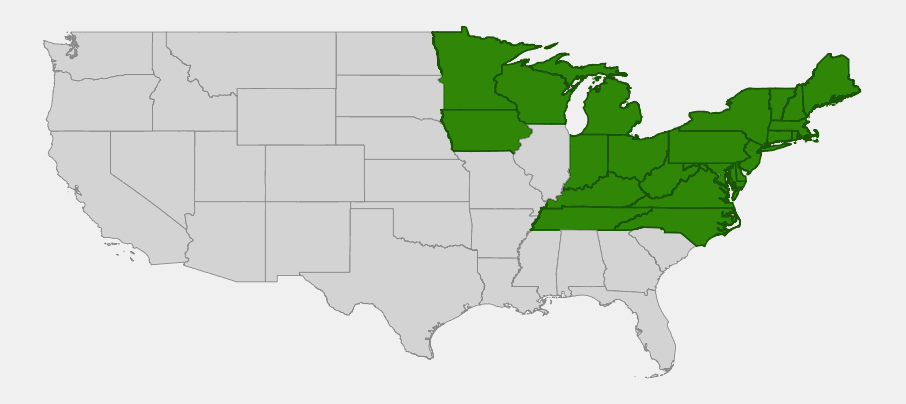
📋 Regional plant lists featuring Northern Bush Honeysuckle: New Hampshire, Maine & Vermont · Connecticut, Massachusetts & Rhode Island · New York, Pennsylvania & Northern New Jersey · Delaware, Southern New Jersey & Long Island · Maryland, Virginia & West Virginia · North Carolina & South Carolina · Kentucky & Tennessee · Ohio & Indiana · Illinois, Iowa & Missouri · Michigan, Wisconsin & Eastern Minnesota
Growing & Care Guide
Northern Bush Honeysuckle is one of the easiest native shrubs to grow on a poor, dry, rocky site where little else will take hold. It is essentially maintenance-free once it settles in.
Light
Plants flower most heavily in full sun to light shade. In deeper shade the shrub survives and spreads but blooms more sparingly and may become leggier, reaching for available light.
Soil & Water
This species is adapted to thin, well-drained, often rocky or sandy soils and is notably drought tolerant once established — it is, if anything, more likely to struggle in heavy, wet, poorly drained ground than in dry conditions. Average garden soil is fine as long as drainage is good; no fertilizer or soil amendment is needed, and over-rich soil tends to produce weak, floppy growth.
Planting Tips
Set out container plants in spring or fall, spacing them 2 to 3 feet apart if a solid groundcover patch is the goal, since the shrub will fill in by suckering. It is an excellent choice for slopes, rocky banks, and the dry, difficult ground along a driveway or rock garden edge where many other shrubs fail.
Pruning & Maintenance
Little pruning is required. Cutting the whole patch back hard every few years in late winter rejuvenates growth and encourages denser flowering; otherwise simply remove dead or winter-damaged stems. Because it spreads by suckers, give it room to roam or plan to pull occasional strays from the edge of the planting bed.
Landscape Uses
Northern Bush Honeysuckle fits several practical garden roles:
- Erosion control on dry slopes, banks and rocky cuts
- Groundcover shrub for difficult, low-fertility sites
- Rock gardens and gravel or scree plantings
- Roadside and parking-lot plantings where drought tolerance matters
- Native hedgerow or informal low border
- Pollinator gardens for small bees over a long bloom season
Wildlife & Ecological Value
Though modest in size, Northern Bush Honeysuckle offers real value to pollinators and small wildlife across a long bloom season.
For Pollinators
The tubular flowers are visited mainly by bumblebees and other native bees able to reach the nectar, along with occasional ruby-throated hummingbirds. Because individual clusters keep producing new flowers over several weeks, a planting supplies nectar through much of the summer, when many spring-blooming natives have finished.
For Birds & Small Mammals
The dense, low, suckering growth provides good ground-level cover and nesting structure for small songbirds and shelter for small mammals, especially on open rocky sites where taller woody cover is otherwise scarce.
Ecosystem Role
As a pioneer shrub on thin, disturbed, or rocky soils, Northern Bush Honeysuckle helps stabilize exposed ground and slowly builds organic matter through leaf litter, improving conditions for other plants to follow. Its rarely-browsed foliage also lets it persist and spread in areas with heavy deer pressure where many other native shrubs are suppressed.
Cultural & Historical Uses
Northern Bush Honeysuckle has a much quieter history than many native shrubs. It was not a major food or medicinal plant for Indigenous peoples in the way that berry- or root-producing species were, though some regional ethnobotanical records note minor, localized uses of the plant in traditional preparations among northeastern and Great Lakes tribes. These uses were limited and are not well documented compared to more widely utilized species.
The genus name Diervilla honors Jean-Francois Dierville, a French surgeon who brought specimens back from Acadia in the early 1700s, making it one of the first North American plants introduced to European gardens under a name still in use today. By the 19th century it had become a modest fixture of rock gardens and dry-bank plantings in both Europe and North America, valued even then for thriving where better-known shrubs would not.
Today its chief “use” is horticultural and ecological rather than medicinal or culinary: as a reliable, low native shrub for slope stabilization, rock gardens, and low-maintenance native plantings on sites too dry or thin-soiled for most other woody plants.
Frequently Asked Questions
Is Northern Bush Honeysuckle the same as invasive bush honeysuckle?
No. “Bush honeysuckle” is an unfortunate shared common name. The invasive shrubs filling woodland understories across much of the East are Asian species of true Lonicera (such as Amur, Tatarian and Morrow’s honeysuckle). Diervilla lonicera is a separate, well-behaved native genus that does not form the dense invasive thickets those species do. Always check the scientific name when buying.
Does Northern Bush Honeysuckle spread aggressively?
It spreads by suckering roots and will slowly widen into a colony, but at a modest, manageable pace compared to truly aggressive shrubs. On a rock garden or small bed, give it room or be prepared to trim back stray shoots at the edges once a year.
Will it grow in shade?
Yes, it tolerates part shade and survives in fairly shaded sites, but it flowers best and stays more compact in full sun to light shade. In deep shade expect sparse bloom and looser, reaching growth.
Is Northern Bush Honeysuckle deer resistant?
Generally yes. It is rarely browsed, which is part of why it persists and spreads in areas with heavy deer populations where many other native shrubs struggle.
What soil does it need?
Thin, rocky, sandy, or gravelly, well-drained soil suits it best, and it is notably drought tolerant once established. Avoid consistently wet or heavy clay soils, where it performs poorly.

Looking for a nursery that carries Northern Bush Honeysuckle?
Browse our native plant nursery directory: ME, MA, MI, MN, MD & KY · NH, NY, NJ, OH & NC · VT, RI, PA, VA & TN · CT & DE · WI & WV · IA & IN