
Marsh Skullcap (Scutellaria galericulata)
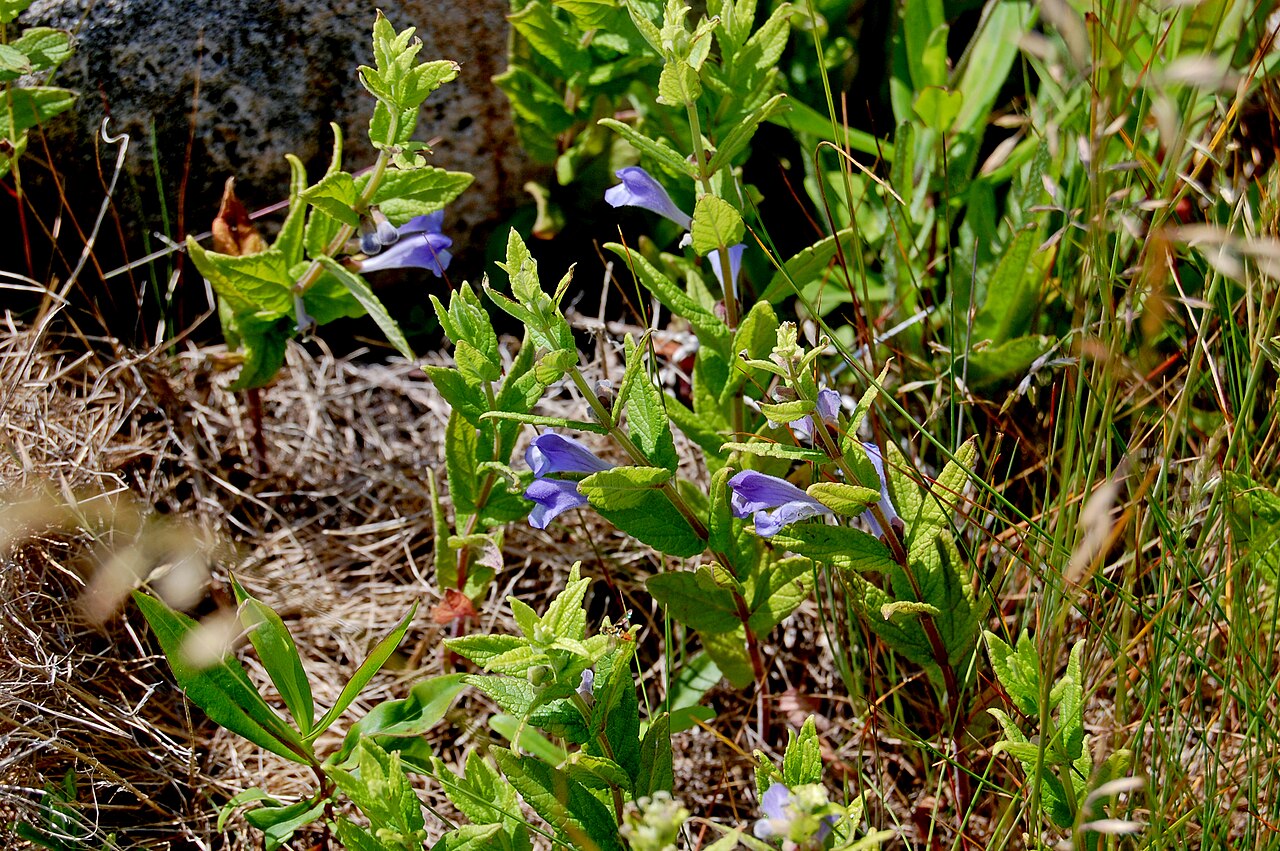
Scutellaria galericulata, known as Marsh Skullcap (also common skullcap or hooded skullcap), is a slender, spreading wetland perennial of the mint family (Lamiaceae). It grows in marshes, wet meadows, shores and swamps across the cooler parts of the Northern Hemisphere, including most of Canada, Alaska and the northern half of the United States. Its blue-violet, hooded flowers appear in summer, tucked singly in the angles between the leaves and the square stem.
The name skullcap comes from a small ridge or cap on the upper side of the flower’s calyx, which looks like a tiny helmet; the genus name Scutellaria means “little dish” or “shield” for the same reason, and galericulata means “with a little cap.” After flowering, the cap closes over the developing seeds.
Marsh skullcap is a modest but charming plant for pond edges, rain gardens and wet meadows. It spreads by slender rhizomes into loose patches, blooms for much of the summer and is visited by bumble bees. It is easy to grow in consistently moist soil in sun or partial shade.
Identification
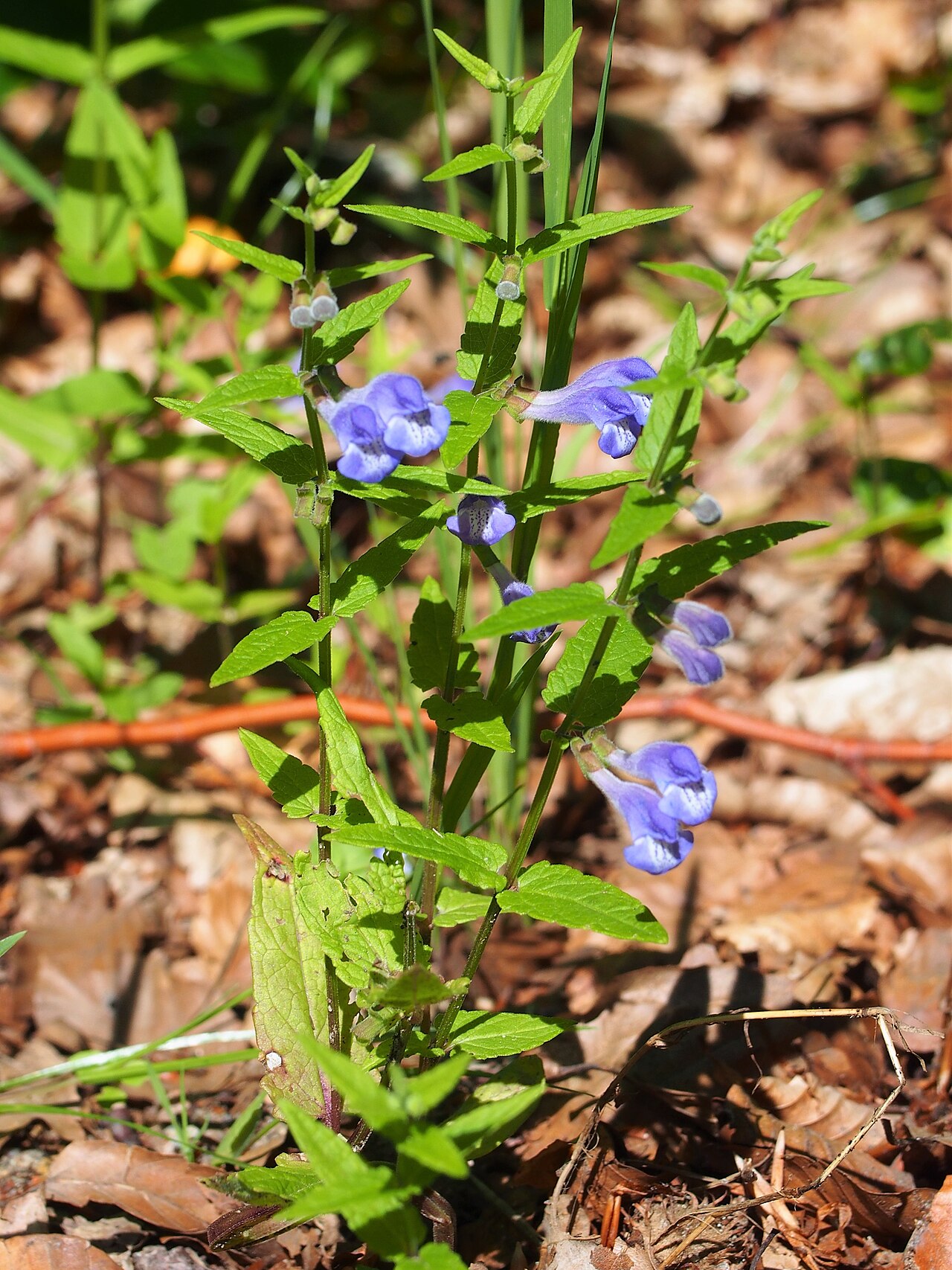
Marsh skullcap is a typical mint in many ways: square stems, opposite leaves and two-lipped flowers. Its relatively large blue flowers borne singly in the leaf axils, rather than in spikes, help separate it from other skullcaps.
Growth Form
Plants are upright or leaning, usually 8 to 30 inches tall, with square stems that are smooth or finely hairy and often branched. They spread by thin, creeping rhizomes, forming loose colonies among sedges and grasses.
Leaves
The leaves are opposite, lance-shaped to narrowly oval, 1 to 2 1/2 inches long, with short stalks or none and shallow, rounded teeth along the edges. The undersides are often finely hairy.
Flowers
From June to September, single flowers grow from the axils of the upper and middle leaves, usually one at each leaf, so they appear in pairs at each node, both turned the same way. Each flower is about 3/4 to 1 inch long, tubular and two-lipped, blue to blue-violet with a paler, white-marked lower lip. The small calyx has a raised cap or shield on top.
Fruit & Seeds
After flowering, the calyx closes and holds four small, rough nutlets. When ripe, the upper part of the calyx falls away and the nutlets are released, often dropping into water or wet mud.
Look-alikes
Mad-dog skullcap (Scutellaria lateriflora) grows in similar places, but its flowers are much smaller, under 1/2 inch, and are borne in one-sided spikes from the leaf axils. Other skullcaps, such as Helmet Skullcap, grow in drier places and have flowers in terminal spikes. American wild mint has whorls of small pale flowers and a strong minty smell, which skullcaps lack.
Quick Facts
| Scientific Name | Scutellaria galericulata |
| Family | Lamiaceae (mint family) |
| Plant Type | Rhizomatous herbaceous wetland perennial |
| Mature Height | 8–30 in |
| Mature Spread | Spreads by rhizomes into loose patches |
| Growth Rate | Moderate |
| Sun Exposure | Full sun to partial shade |
| Water Needs | High; moist to wet soil |
| Soil Type | Wet loam, muck, peat or sand |
| Soil pH | About 5.5–7.5 |
| Bloom Time | June–September |
| Flower Color | Blue to blue-violet with a pale lower lip |
| Fall Color | None notable |
| Fruit | Four small nutlets inside a capped calyx |
| Deer Resistant | Generally yes; rarely browsed |
| USDA Hardiness Zones | 3–8 |
Native Range
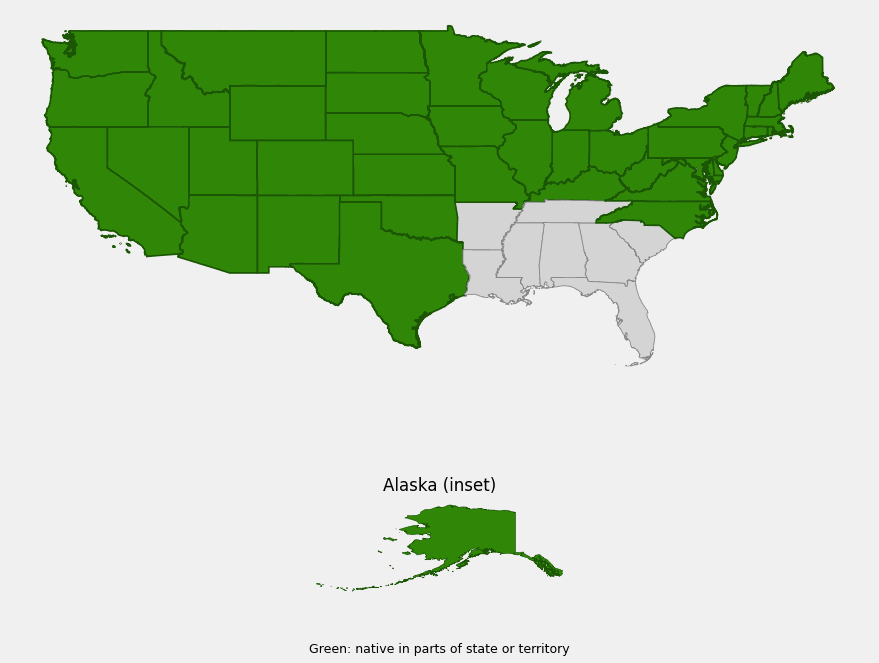
Marsh skullcap is circumboreal, growing across northern Europe, Asia and North America. USDA PLANTS lists it as native in Alaska, Canada, Saint Pierre and Miquelon and the lower 48 states, where it is recorded from 41 states. In Canada it grows in every province and in Yukon and the Northwest Territories. North American plants are sometimes separated as variety epilobiifolia or as the species Scutellaria epilobiifolia.
It is most common across the northern states, from Maine and New England west through the Great Lakes, the northern Great Plains, the Rocky Mountains and the Pacific Northwest. Southward it becomes rare and scattered: NatureServe ranks it imperiled or critically imperiled in states such as California, Nevada, Kansas, Missouri, Delaware, Virginia and West Virginia, and it is considered historical in North Carolina. Records in New Mexico, Arizona, Oklahoma and Texas are outlying. USDA also lists Florida, but the Atlas of Florida Plants does not include the species, so Florida is not treated as part of its native range here.
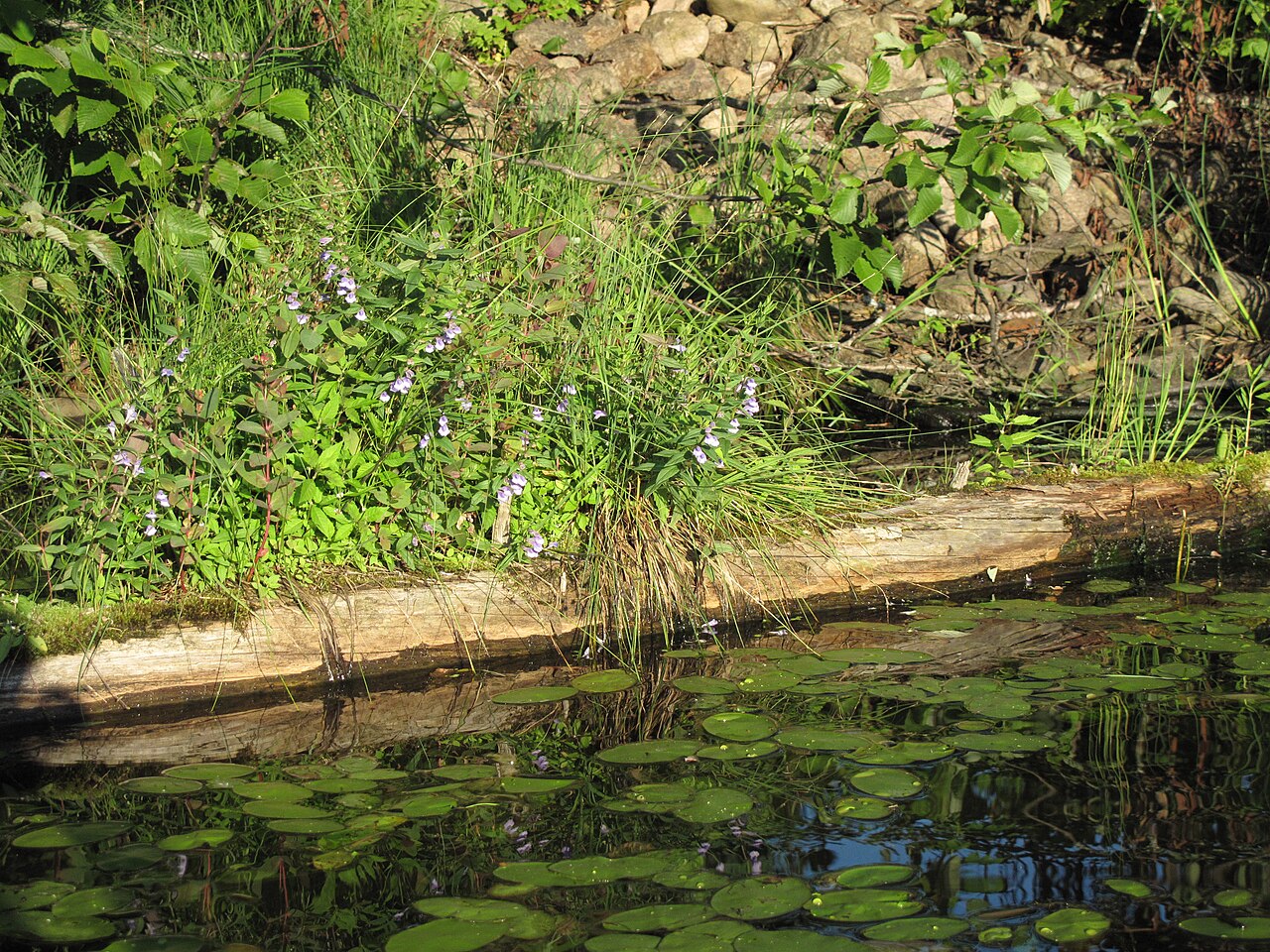
Typical habitats are marshes, wet meadows, fens, the shores of lakes, ponds and rivers, swamps, wet thickets and ditches, from sea level in the North to mountain wetlands in the West.
📋 Regional plant lists featuring Marsh Skullcap: New York, Pennsylvania & Northern New Jersey · Idaho, Eastern Oregon & Eastern Washington · Ohio & Indiana · Montana & Wyoming · Michigan, Wisconsin & Eastern Minnesota · Kentucky & Tennessee · Nebraska, Kansas & Eastern Colorado · Utah & Western Colorado · Connecticut, Massachusetts & Rhode Island · New Hampshire, Maine & Vermont · Maryland, Virginia & West Virginia · Delaware, Southern New Jersey & Long Island · Arizona & New Mexico · Illinois, Iowa & Missouri · Alaska · North & South Carolina · North Dakota, South Dakota & Western Minnesota · Western Oregon & Western Washington · California & Nevada
Growing & Care Guide
Marsh skullcap is easy to grow wherever the soil stays moist. It is a small, informal plant best used in groups among other wetland plants, where its blue flowers peek out between grasses and sedges.
Light
It grows in full sun to partial shade. In sun, keep the soil reliably wet; in hot climates, light afternoon shade helps.
Soil & Water
Plant it in moist to wet soil: loam, muck, peat or sand. It does well at the edges of ponds and streams, in bog and rain gardens and in low, wet meadows, and it tolerates short periods of shallow flooding. Do not let the soil dry out in summer.
Planting Tips
Plant in spring, about 12 inches apart. It spreads by rhizomes into loose patches but is not aggressive and is easily held in check by sedges, rushes and other wetland perennials. It pairs well with blue flag iris, sedges, wild mint and swamp milkweed.
Pruning & Maintenance
Little care is needed. Cut back or leave the dead stems in fall; leaving them provides cover for insects over winter. Divide crowded patches every few years if needed.
Propagation
Divide plants or dig rooted pieces of rhizome in spring. Seed can be sown in fall outdoors, or in spring after a month or two of cold, moist stratification. Buy plants from native plant nurseries and avoid digging from wetlands.
Landscape Uses
- Pond and stream edges: blue flowers among sedges and rushes
- Rain and bog gardens: a low, spreading perennial for wet soil
- Wet meadow restoration: common in northern wetland communities
- Bumble bee gardens: tubular flowers suited to long-tongued bees
- Shoreline buffers: helps knit wet soil with its rhizomes
Wildlife & Ecological Value
Marsh skullcap is a small part of a rich wetland community, but its long bloom season makes it useful to bees.
For Pollinators
The tubular flowers are visited mostly by bumble bees and other long-tongued bees, which push into the flower and are dusted with pollen on their backs. Smaller bees and some flies also visit. The plant blooms over a long period in summer.
For Birds
Marsh skullcap has little direct food value for birds. It grows in marshes and wet meadows used by nesting birds such as swamp sparrows, sedge wrens and common yellowthroats, and contributes to their cover.
For Mammals
Like many mints, it contains bitter compounds and is rarely browsed by deer. Muskrats and other wetland mammals may eat it occasionally along with other marsh plants.
Ecosystem Role
Its creeping rhizomes help bind soil along shores and in wet meadows. It is a common member of sedge meadows, fens and marsh edges across the North, and its seeds and roots persist through flooding and dry spells.
Cultural & Historical Uses
Skullcaps have a long history in herbal medicine. Marsh skullcap was used in European folk medicine, and North American mad-dog skullcap (Scutellaria lateriflora) became a popular nerve tonic in the nineteenth century. Some commercial skullcap products have been contaminated or substituted with other plants and linked to liver problems, so skullcap should not be used as a home remedy without medical advice.
The name Scutellaria comes from the Latin scutella, a small dish or shield, after the raised cap on the calyx. The species name galericulata comes from galerum, a cap or helmet, and the English names skullcap and hooded skullcap describe the same feature.
In much of northern North America, marsh skullcap is a familiar wildflower of canoe trips and lakeshores, often growing in the narrow band between open water and shoreline shrubs. Several states and provinces at the southern edge of its range list it as rare, and protecting wetlands is the best way to protect it.
Frequently Asked Questions
Why is it called skullcap?
The calyx, the green cup at the base of the flower, has a raised cap or shield on top that looks like a small helmet or skullcap.
Is marsh skullcap invasive?
No. It is a native perennial that spreads slowly by rhizomes into loose patches and is easily kept in check by other wetland plants.
Can I grow marsh skullcap in a regular garden bed?
Only if the soil stays consistently moist. It prefers pond edges, rain gardens, bog gardens or wet meadows and declines in dry soil.
How is it different from mad-dog skullcap?
Marsh skullcap has larger, single flowers in the leaf axils. Mad-dog skullcap has many much smaller flowers in one-sided spikes.
Can I use marsh skullcap as an herbal remedy?
Not without medical advice. Skullcaps contain active compounds, and some herbal skullcap products have been associated with liver problems, often due to contamination.

Looking for a nursery that carries Marsh Skullcap?
Browse our native plant nursery directory: Alaska & Arizona · California · Colorado, Connecticut & Delaware · Idaho, Illinois, Indiana, Iowa & Kansas · Kentucky, Maine, Maryland, Massachusetts, Michigan, Minnesota, Missouri & Montana · Nebraska, Nevada, New Hampshire, New Jersey, New Mexico, New York, North Carolina, North Dakota, Ohio & Oklahoma · Oregon · Pennsylvania, Rhode Island, South Dakota, Texas, Utah, Vermont & Virginia · Washington · West Virginia, Wisconsin & Wyoming