
Alpine Milkvetch (Astragalus alpinus)
Astragalus alpinus, the Alpine Milkvetch, is a low, creeping wildflower in the pea family with one of the widest ranges of any milkvetch. It is circumboreal, growing around the Northern Hemisphere in arctic and alpine regions of North America, Europe and Asia. In summer it forms loose mats of finely divided leaves topped by short clusters of small pea flowers that are white to pale lavender, with a purple-tipped keel.
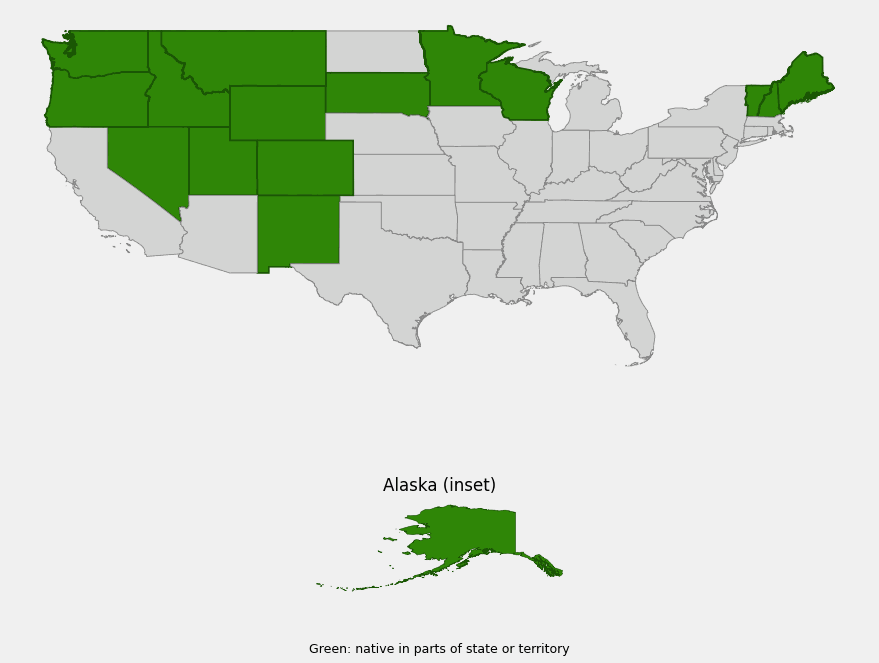
In the United States, USDA PLANTS lists it as native in Alaska and in the mountains of the West, from Washington, Oregon, Idaho and Montana south through Wyoming, Nevada, Utah and Colorado to New Mexico, as well as the Black Hills of South Dakota and the northern Great Lakes and New England states (Minnesota, Wisconsin, Maine, New Hampshire and Vermont). It grows across most of Canada, from the Yukon and Nunavut to Newfoundland and Labrador. At the southern and eastern edges of its range, such as in New England and the upper Midwest, it is rare, and populations there are tracked by state natural heritage programs.
Alpine milkvetch is mainly a plant for naturalistic rock gardens and restoration in cold climates. Like many milkvetches, it should be treated as potentially toxic to livestock; see the safety note below. This guide covers identification, range, growing conditions and its role in northern and mountain ecosystems.
Identification
Alpine milkvetch is a small, sprawling perennial with pinnately compound leaves and short, dense spikes of bicolored pea flowers. Its drooping, dark-hairy pods help confirm the identification.
Stems & Leaves
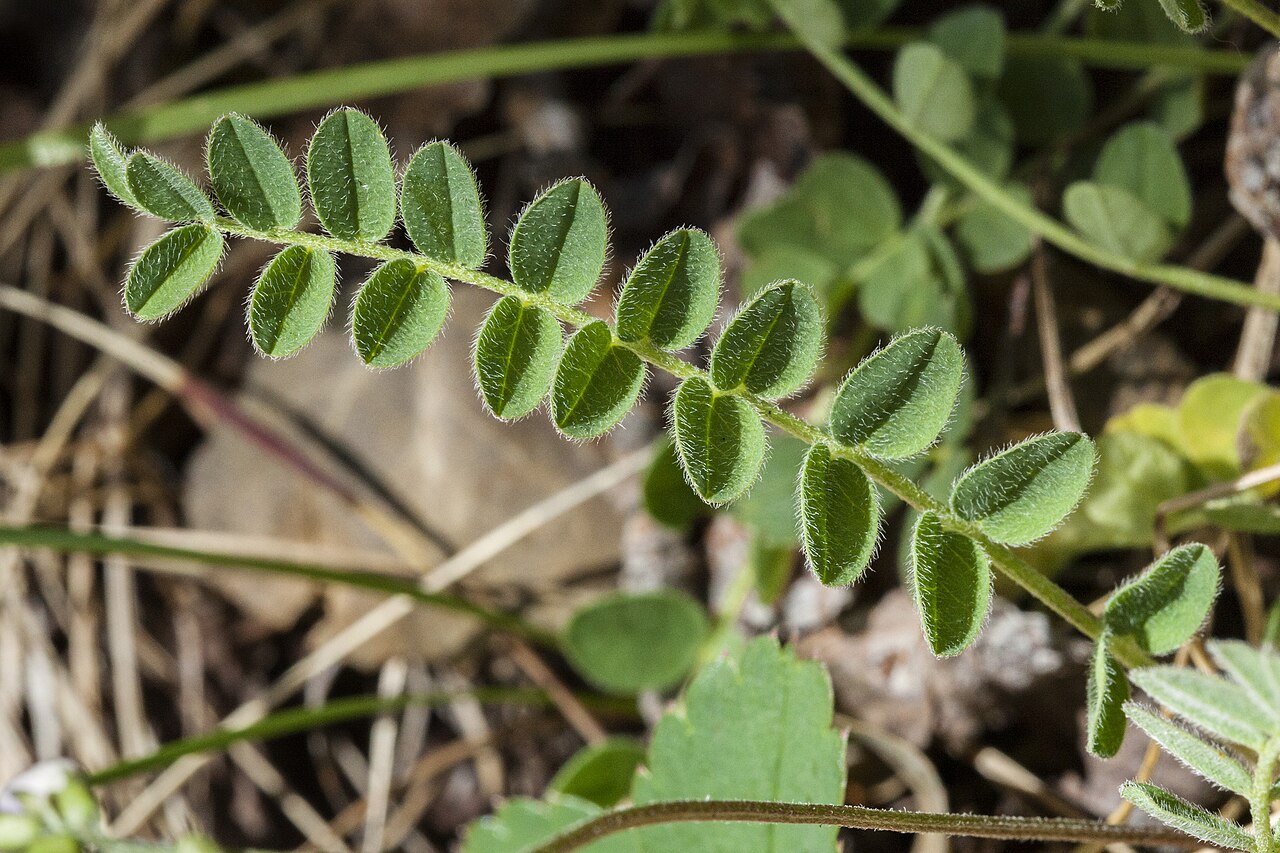
Plants spread from slender underground stems (rhizomes), forming loose mats or patches with stems 2 to 12 inches long that lie on the ground or turn upward. The leaves are pinnately compound, 1½ to 6 inches long, with usually 13 to 25 small, oval to oblong leaflets, each about ¼ to ¾ inch long. Leaflets are green, often with sparse hairs, especially beneath.
Flowers
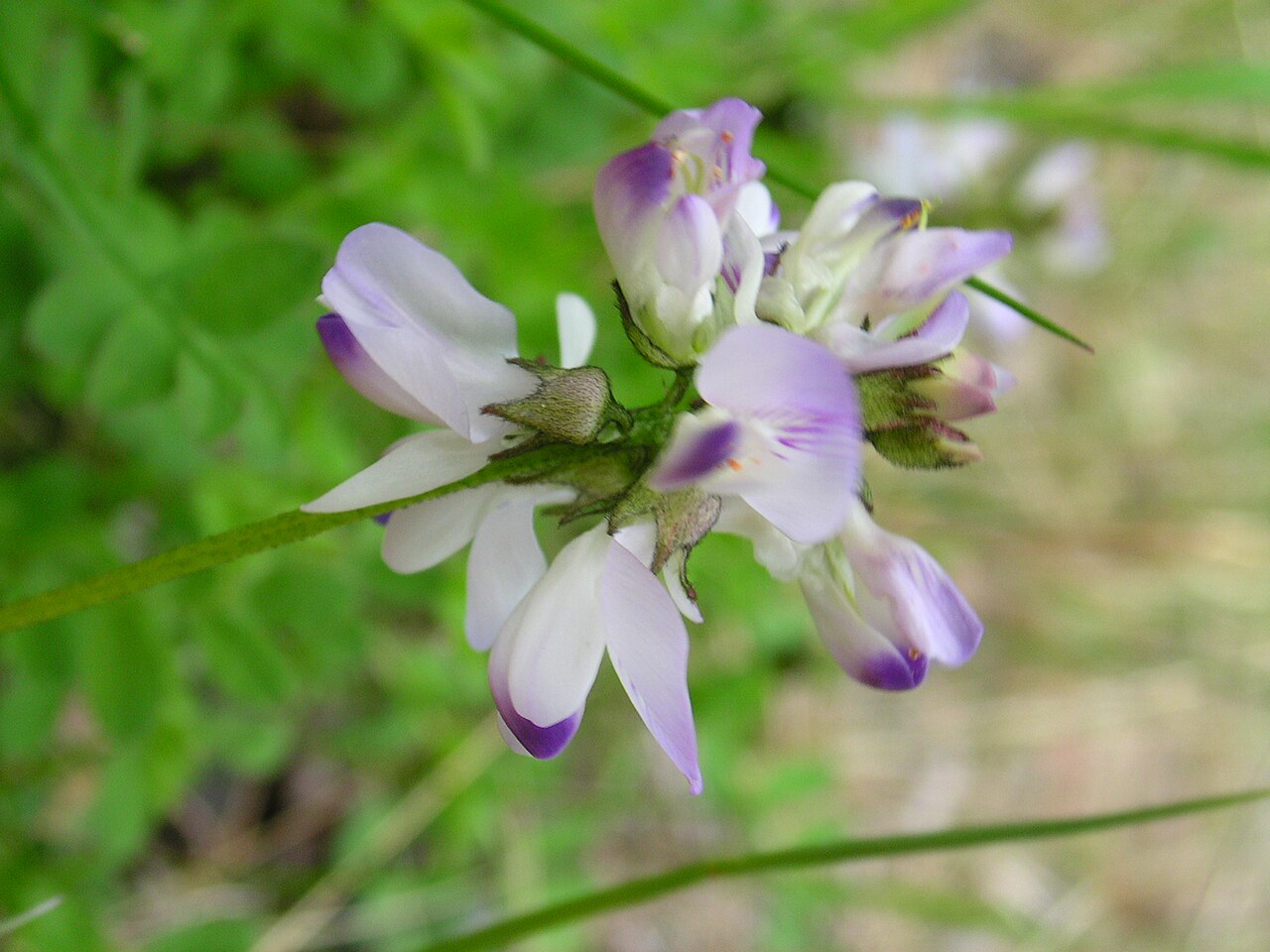
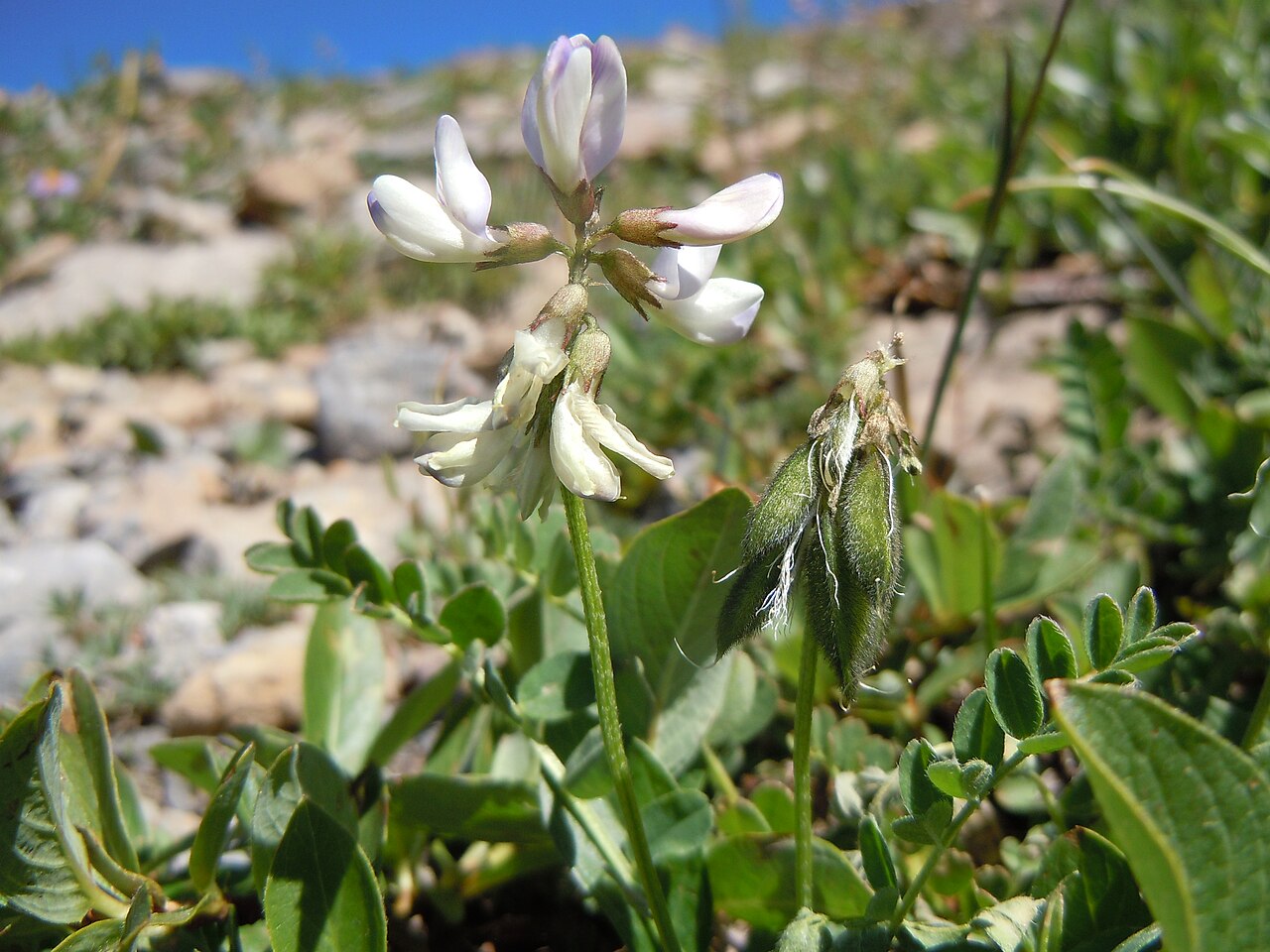
From June to August, depending on elevation and latitude, short flower stalks rise from the leaf axils, each carrying a dense, rounded to short-elongated cluster of 5 to 20 small, nodding pea flowers. Each flower is about ⅓ to ½ inch long. The banner and wings are white to pale bluish lavender, and the keel is tipped with deep purple, giving the flowers a two-toned look. The calyx is covered in short black hairs.
Fruit
The pods hang downward, are about ⅓ to ½ inch long, plump and oblong, and covered with short black or brown hairs. Each pod is partly divided inside into two chambers and holds a few small seeds.
Look-alikes
Many milkvetches and locoweeds grow in the West. Field Oxytrope and other Oxytropis species have a sharp beak on the tip of the keel and leaves all from the base. Canadian Milkvetch is a much taller, upright plant with greenish-cream flowers. Alpine Sweetvetch (Hedysarum alpinum), common in Alaska, has pink-purple flowers in long spikes and flat, jointed pods. The low, creeping habit, bicolored flowers with a purple keel tip and drooping black-hairy pods identify alpine milkvetch.
Quick Facts
| Scientific Name | Astragalus alpinus L. |
| Family | Fabaceae (pea family) |
| Plant Type | Low, mat-forming herbaceous perennial |
| Mature Height | 2–8 in |
| Mature Spread | 6–24 in; spreads by rhizomes |
| Growth Rate | Slow to moderate |
| Sun Exposure | Full sun to part shade |
| Water Needs | Medium; moist but well-drained, gravelly soil |
| Soil Type | Gravel, sand, rocky or silty soil; often calcareous |
| Soil pH | About 6.0–8.0 |
| Bloom Time | June–August |
| Flower Color | White to pale lavender with a purple-tipped keel |
| Fall Color | None; dies back in winter |
| Fruit | Drooping pod with black hairs |
| Deer Resistant | Unknown; browsed by wildlife |
| USDA Hardiness Zones | 1–6 |
Native Range
Alpine milkvetch is found around the Northern Hemisphere, from Scandinavia and the Alps across Siberia to Alaska, Canada and Greenland. In North America it is most common in Alaska and northern Canada. USDA PLANTS lists it as native in 16 U.S. states: Alaska; the western mountain states of Washington, Oregon, Idaho, Montana, Wyoming, Nevada, Utah, Colorado and New Mexico; South Dakota; Minnesota and Wisconsin; and Maine, New Hampshire and Vermont.
In the North it grows at low elevations on gravel bars, river terraces, lakeshores, open spruce forests, meadows and tundra. In the western mountains it is mainly a plant of subalpine and alpine meadows, stream banks, rocky slopes and open forest, often where the vegetation is sparse. In the upper Midwest and northern New England, it is rare, growing mostly on gravelly or rocky shores and river ledges, often on calcium-rich rock. The eastern populations are sometimes treated as a separate variety, Astragalus alpinus var. brunetianus.
Because the eastern and southern populations are small and isolated, they are vulnerable to changes in river flow, shoreline development, trampling and climate warming. In the North and in Alaska, the species is common and secure.
📋 Regional plant lists featuring Alpine Milkvetch: Idaho, Eastern Oregon & Eastern Washington · Montana & Wyoming · Michigan, Wisconsin & Eastern Minnesota · Utah & Western Colorado · New Hampshire, Maine & Vermont · Alaska · North Dakota, South Dakota & Western Minnesota · California & Nevada
Growing & Care Guide
Alpine milkvetch is rarely sold, but seed is sometimes available from native seed suppliers in Alaska, Canada and the Rocky Mountains, mainly for revegetation of gravel pads, mine sites and river bars. It is suited to cold-climate rock gardens and naturalistic plantings. Buy seed or plants from reputable sources, and don’t collect from rare eastern populations.
Light
Full sun to light shade. In the mountains and the far north it grows in full sun; in warmer areas it benefits from some afternoon shade.
Soil & Water
Lean, well-drained gravelly, sandy or rocky soil, including calcareous soils. It likes moisture during the growing season, as from snowmelt or a nearby stream, but not standing water. It struggles in hot, humid summers and rich garden soil.
Planting Tips
Use it in cold-climate rock gardens, gravel beds, crevices and on slopes, or in restoration seed mixes for disturbed gravel. Plant in spring. It is best suited to USDA zones 1 to 6 and cool summers.
Pruning & Maintenance
No pruning is needed. Keep competing grasses and weeds away from young plants. It needs little care once established.
Propagation
From seed. The hard-coated seeds germinate best after scarification (lightly nicking or sanding the seed coat) or a hot-water soak. Sow in spring in a gritty mix. Seedlings form nitrogen-fixing root nodules with soil bacteria, which helps them grow in poor soils. Rhizome divisions can also be taken in spring.
Landscape Uses
- Rock gardens: a low, creeping flower for cold-climate gravel and crevice gardens
- Revegetation: used in Alaska and the North to cover gravel pads and disturbed sites
- Naturalistic plantings: for northern lakeshore and streambank gardens
- Safety: livestock: avoid large plantings in pastures; see the safety note below
Wildlife & Ecological Value
In northern and mountain ecosystems, alpine milkvetch enriches poor soils and feeds bees and wildlife. Safety note: many Astragalus species are poisonous to livestock, either because they contain toxic compounds such as swainsonine (the cause of “locoism”) or nitro compounds, or because they accumulate selenium from the soil. Alpine milkvetch is not one of the well-known poisonous milkvetches, but toxicity varies by species and site. Don’t let livestock graze large stands, and never eat any milkvetch.
For Pollinators
Bumble bees are the main pollinators, opening the flowers to reach the nectar and pollen. In the arctic and alpine zones, where bees are few and summers short, its flowers are an important food source for queen and worker bumble bees. Several butterflies, including some blues and sulphurs, use Astragalus species as caterpillar food plants.
For Birds
Ptarmigan and other ground-feeding birds of the arctic and alpine zones eat the buds, leaves and seeds of many low tundra plants, and seed-eating songbirds may take milkvetch seeds.
For Mammals
Caribou, Dall sheep, mountain goats, marmots, ground squirrels and voles graze on arctic and alpine legumes. In Alaska, grizzly bears dig the roots of some legumes, though alpine sweetvetch is more important to them.
Ecosystem Role
Like most legumes, it forms root nodules with nitrogen-fixing bacteria, adding nitrogen to thin, nutrient-poor soils of gravel bars, tundra and alpine slopes. This helps other plants colonize these sites, and it is used in reclamation for the same reason.
Cultural & Historical Uses
Carl Linnaeus named Astragalus alpinus in 1753 in his Species Plantarum, based on plants from the European Alps and Scandinavia. Astragalus is the largest genus of flowering plants, with roughly 3,000 species. The name comes from a Greek word for an ankle bone, possibly for the shape of the seeds or pods. The common name “milkvetch” comes from an old belief that these plants increased milk production in goats.
In the 19th and 20th centuries, ranchers in the western U.S. learned the hard way that some milkvetches and locoweeds poison livestock. Plants containing swainsonine cause “locoism,” a nervous disorder in horses, cattle and sheep, and selenium-accumulating species cause other problems. These hazards are why milkvetches are generally kept out of pastures, even though many species, including alpine milkvetch, are not well-documented causes of poisoning.
Botanists have long studied alpine milkvetch as an example of a plant that survived the last Ice Age in northern refuges and spread again as glaciers retreated. The small, isolated populations in New England and the Great Lakes are considered relicts of a time when the climate there was much colder.
Frequently Asked Questions
Is alpine milkvetch poisonous?
Many milkvetches are toxic to livestock, either from compounds such as swainsonine or from selenium they absorb from the soil. Alpine milkvetch is not a well-known poisonous species, but because toxicity varies, keep livestock off large stands and never eat any milkvetch.
Where does alpine milkvetch grow?
Around the Northern Hemisphere in arctic and alpine regions. In the U.S., it grows in Alaska, the western mountains from Washington to New Mexico, the Black Hills, northern Minnesota and Wisconsin, and northern New England.
How do I recognize alpine milkvetch?
Look for a low, creeping plant with pinnate leaves of many small leaflets, short clusters of white to pale lavender pea flowers with a purple-tipped keel, and drooping pods covered in black hairs.
Can I grow alpine milkvetch in my garden?
In cold climates, yes, in a sunny rock garden or gravel bed with lean, well-drained soil. It does poorly in hot, humid summers. Seed is sometimes available from northern and Rocky Mountain native seed suppliers.
Is alpine milkvetch rare?
It is common in Alaska and northern Canada, but rare at the southern and eastern edges of its range, such as northern New England and the Great Lakes region, where populations are tracked by state natural heritage programs.

Looking for a nursery that carries Alpine Milkvetch?
Browse our native plant nursery directory: Alaska · Colorado · Idaho · Maine, Minnesota & Montana · Nevada, New Hampshire & New Mexico · Oregon · South Dakota, Utah & Vermont · Washington · Wisconsin & Wyoming

