
Sea-watch (Angelica lucida)
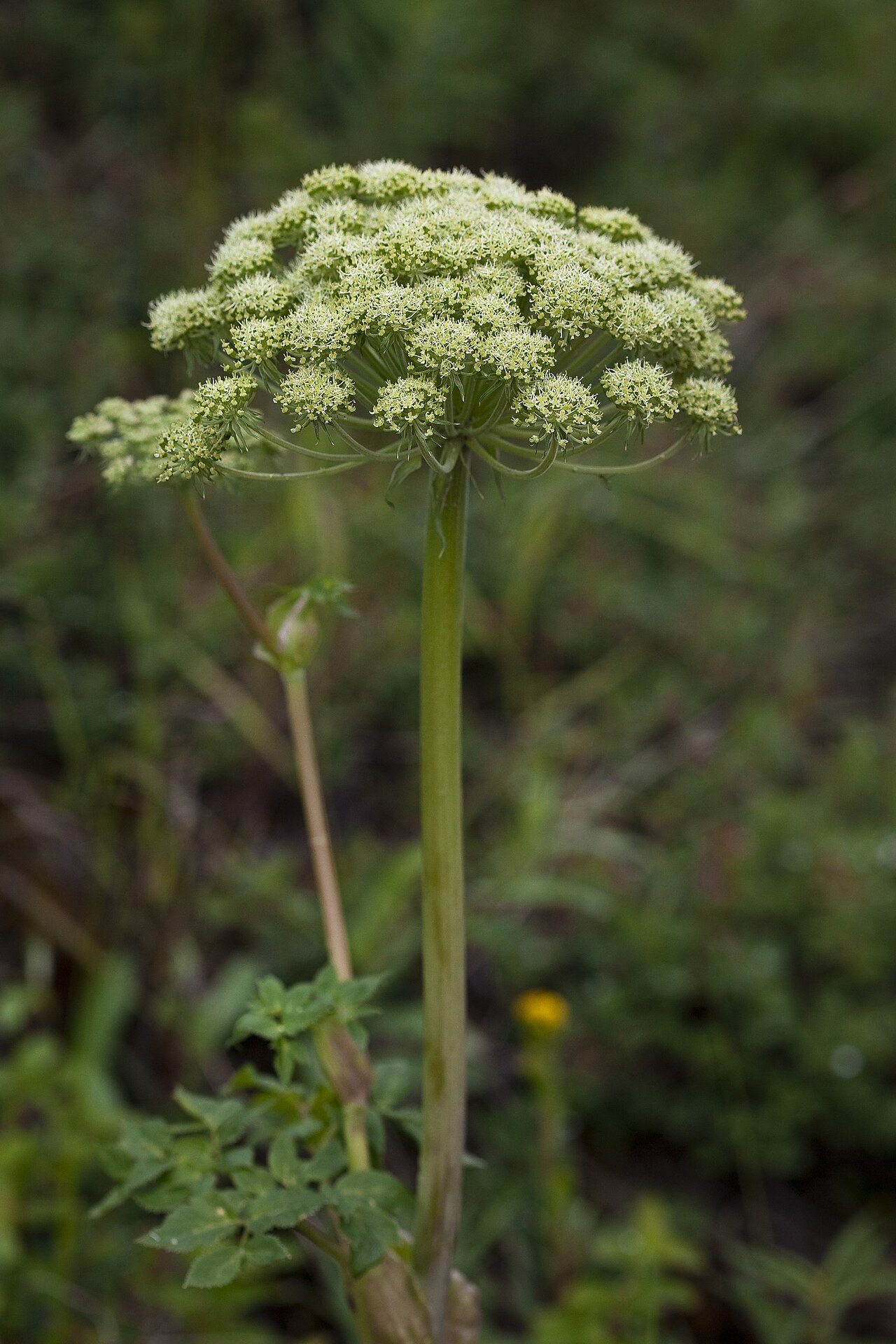
Angelica lucida, Sea-watch (also called seacoast angelica or, in Alaska, wild celery), is a stout native perennial of northern coasts. It grows on beaches, sea cliffs and coastal meadows along the Pacific coast from Alaska to northern California and along the North Atlantic coast from Labrador south to New England and New York, as well as in northeastern Asia.
It is a member of the carrot family with thick, hollow stems 2 to 5 feet tall, glossy, divided leaves (the name lucida means “shining”) and large, rounded umbels of small white to greenish-white flowers in summer. In Alaska it also grows inland in moist mountain meadows, including in Denali National Park.
Young stems have long been eaten by Indigenous peoples of Alaska and the North Pacific. But sea-watch looks a lot like water hemlock, one of the most poisonous plants in North America, so read the safety note before you ever consider tasting it. This guide covers identification, range and growing it in coastal gardens.
Identification
Sea-watch is a robust, clump-forming plant of the carrot family. Look for its thick stems, glossy leaves divided into broad, toothed leaflets, swollen leaf sheaths and large white umbels near the sea.
Stems & Leaves
The stems are stout, hollow and often purplish near the base, 2 to 5 feet tall. The leaves are large and divided two or three times into threes, with broad, shiny, coarsely toothed leaflets 1½ to 3 inches long. The bases of the leaf stalks are swollen into broad, inflated sheaths that wrap the stem.
Flowers
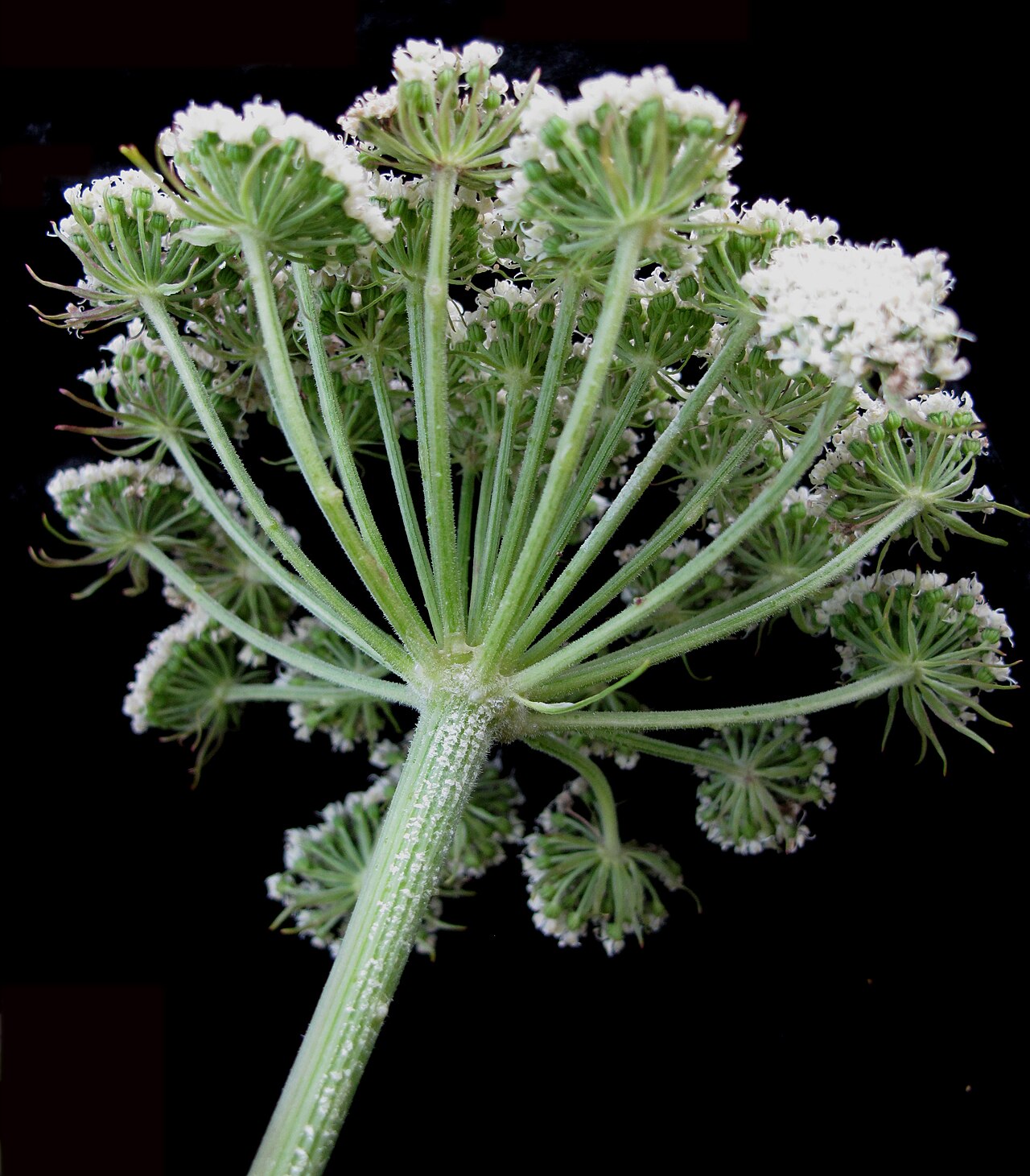
From June to August, the stems end in compound umbels 3 to 8 inches across, made of 20 to 40 or more rays, each topped with a small, rounded cluster of tiny white to greenish-white flowers.
Fruit
The fruits are oval, about ¼ inch long, with thick, corky ribs. The corky tissue helps them float, and many are carried by tides and currents along the shore.
Look-alikes
Cow Parsnip is larger, with huge, hairy, maple-like leaves and broader, flat umbels; its sap can cause skin burns in sunlight. Water Hemlock and other Cicuta species have narrower, sharply toothed leaflets whose side veins end in the notches between teeth (not at the tips) and chambered roots; they are deadly poisonous. Scotch lovage (Ligusticum scoticum) shares the same beaches but is shorter, with leaves divided only twice and smaller umbels.
Quick Facts
| Scientific Name | Angelica lucida L. |
| Family | Apiaceae (carrot family) |
| Plant Type | Herbaceous perennial |
| Mature Height | 2–5 ft |
| Mature Spread | 2–3 ft |
| Growth Rate | Moderate |
| Sun Exposure | Full sun to partial shade |
| Water Needs | Moderate to moist |
| Soil Type | Sandy, gravelly or rocky coastal soils; moist meadow loam |
| Soil pH | Slightly acidic to neutral (about 5.5–7.5) |
| Bloom Time | June–August |
| Flower Color | White to greenish-white |
| Fall Color | Dies back; dried umbels persist |
| Fruit | Oval, corky-ribbed fruits that float |
| Deer Resistant | Moderate |
| USDA Hardiness Zones | 2–7 |
Native Range
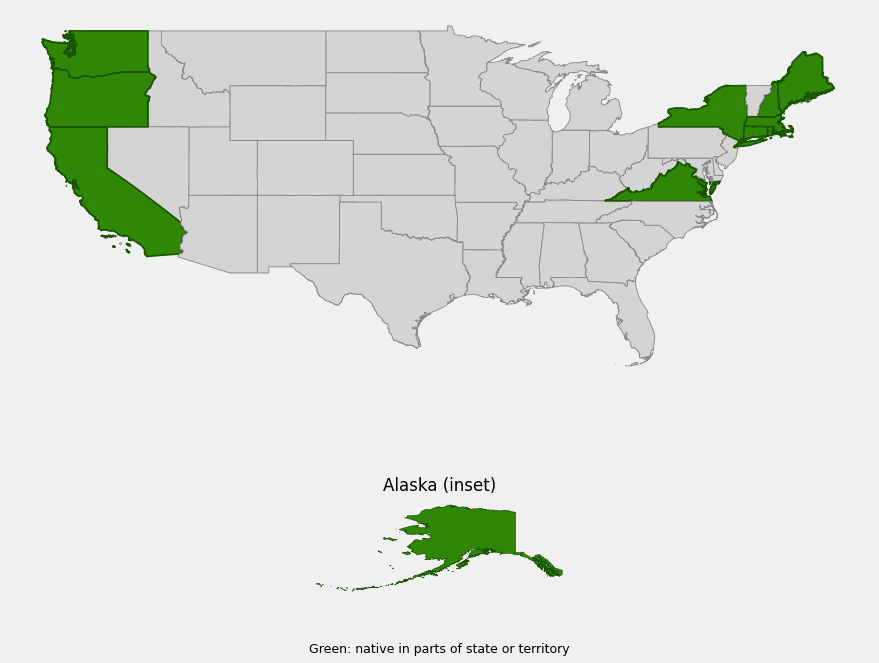
Sea-watch is native to the northern coasts of North America and northeastern Asia. USDA PLANTS lists it in Alaska, Washington, Oregon and California on the Pacific side, and in Maine, New Hampshire, Massachusetts, Rhode Island, Connecticut and New York on the Atlantic side. There is also an outlying USDA record from Virginia. In Canada it grows from British Columbia, the Yukon and the Northwest Territories east to Ontario (Hudson Bay coast), Quebec, Labrador, Newfoundland and the Maritime provinces.
On the Atlantic coast it grows on sandy and gravelly beaches, rocky shores, headlands, sea cliffs and the upper edges of salt marshes, usually within reach of salt spray. On the Pacific coast it grows in similar places and in coastal meadows and the edges of Sitka spruce forest. In Alaska it also grows well inland, in moist meadows, thickets and streambanks in the mountains.
Along the New England and New York coast it is uncommon to rare, and it is near the southern limit of its range there. In Alaska and British Columbia it is widespread and common.
📋 Regional plant lists featuring Sea-watch: Alaska · Western Oregon & Western Washington · California & Nevada · Connecticut, Massachusetts & Rhode Island · New Hampshire, Maine & Vermont · New York, Pennsylvania & Northern New Jersey · Delaware, Southern New Jersey & Long Island
Growing & Care Guide
Sea-watch is a handsome, salt-tolerant perennial for coastal gardens in cool climates. It is occasionally available from native seed suppliers in Alaska, the Pacific Northwest and New England. It is uncommon to rare in parts of the Northeast, so use nursery seed or plants and do not dig wild plants.
Light
Full sun to partial shade. It does well in cool, foggy coastal conditions and struggles in hot, humid summers.
Soil & Water
Plant it in sandy, gravelly or loamy soil that stays moderately moist. It tolerates salt spray and wind. Water during long dry spells.
Planting Tips
Sow seed in fall where you want plants, or start seedlings and plant them out in spring. Like most angelicas, it forms a deep taproot and does not transplant well once established.
Pruning & Maintenance
Cut flowering stems after seed has dropped, or leave some for winter interest. Plants may be short-lived in warm gardens but often reseed.
Propagation
From fresh seed sown in fall for natural cold stratification. Seed loses viability quickly in storage.
Safety Note
Sea-watch looks very similar to water hemlock (Cicuta), which is deadly. Never eat any wild carrot-family plant unless an expert has identified it with certainty. Like other angelicas and cow parsnip, its sap contains compounds that can cause skin rashes or blisters in sunlight on sensitive skin, so wear gloves when cutting it.
Landscape Uses
- Coastal gardens: salt- and wind-tolerant structure near the shore
- Dune and shoreline restoration: stabilizes upper beach and bluff soils
- Pollinator gardens: summer umbels for many small insects
- Wild gardens in Alaska: bold foliage for moist, cool sites
Wildlife & Ecological Value
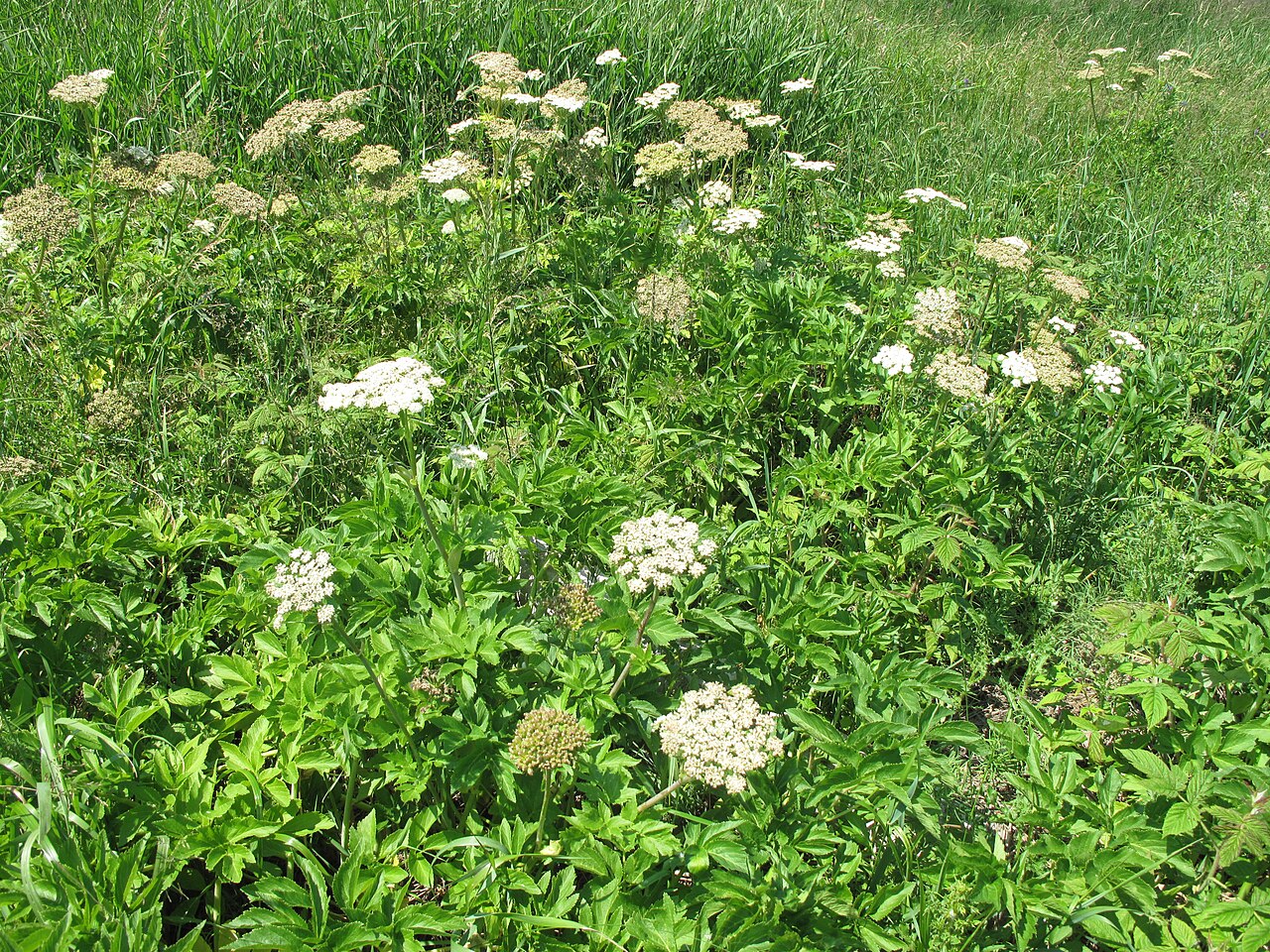
Like other members of the carrot family, sea-watch supports many insects with its broad flower clusters.
For Pollinators
The open umbels attract a wide variety of small pollinators: flies, beetles, small bees and wasps that can easily reach the shallow flowers.
For Birds
Shorebirds and songbirds hunt insects among the plants, and the dense clumps give shelter on exposed shores.
For Mammals
Brown bears, moose and other mammals graze angelicas and related plants in Alaska. Deer browse the leaves on the Pacific coast.
Ecosystem Role
Its deep roots help hold sand and gravel on beaches and bluffs. Its corky fruits travel on tides, helping it colonize new shorelines. The foliage feeds caterpillars of swallowtail butterflies, which use carrot-family plants as hosts.
Cultural & Historical Uses
Carl Linnaeus named Angelica lucida in 1753. Many botanists have also called it Coelopleurum lucidum, and some treat the Pacific plants as Angelica or Coelopleurum gmelinii. The common name “sea-watch” fits its habit of growing on headlands and beaches facing the sea.
Yup’ik, Alutiiq, Unangan (Aleut) and other Indigenous peoples of Alaska and the North Pacific have traditionally gathered the young stems and leaf stalks in spring, peeling and eating them raw or cooked, much like celery, which is why it is often called wild celery in Alaska.
Because the plant resembles the deadly water hemlock, traditional knowledge of how to tell them apart has always been an important part of gathering it. Plant guides in Alaska stress the same caution today.
Frequently Asked Questions
Is sea-watch edible?
Young stems have traditionally been eaten in Alaska. But sea-watch closely resembles deadly water hemlock, so never eat it unless an expert has identified it with certainty. Its sap can also irritate skin in sunlight.
Where does sea-watch grow?
On northern coasts: from Alaska to northern California on the Pacific, and from Labrador to New England and New York on the Atlantic, plus inland mountain meadows in Alaska and parts of northeastern Asia.
How is sea-watch different from cow parsnip?
Cow parsnip is larger, with huge, hairy, maple-like leaves and flat umbels. Sea-watch has glossy leaves divided into several smaller toothed leaflets and rounder umbels.
Can I grow sea-watch in my garden?
Yes, in cool coastal gardens with full sun to part shade and moist, well-drained soil. Start it from fresh seed sown in fall.
Why is it called Angelica lucida?
Lucida means “shining,” for its glossy leaves. Angelicas got their name from old European beliefs about their healing powers.

Looking for a nursery that carries Sea-watch?
Browse our native plant nursery directory: Alaska · California · Connecticut · Maine & Massachusetts · New Hampshire & New York · Oregon · Rhode Island & Virginia · Washington

