
Creeping Blueberry (Vaccinium crassifolium)
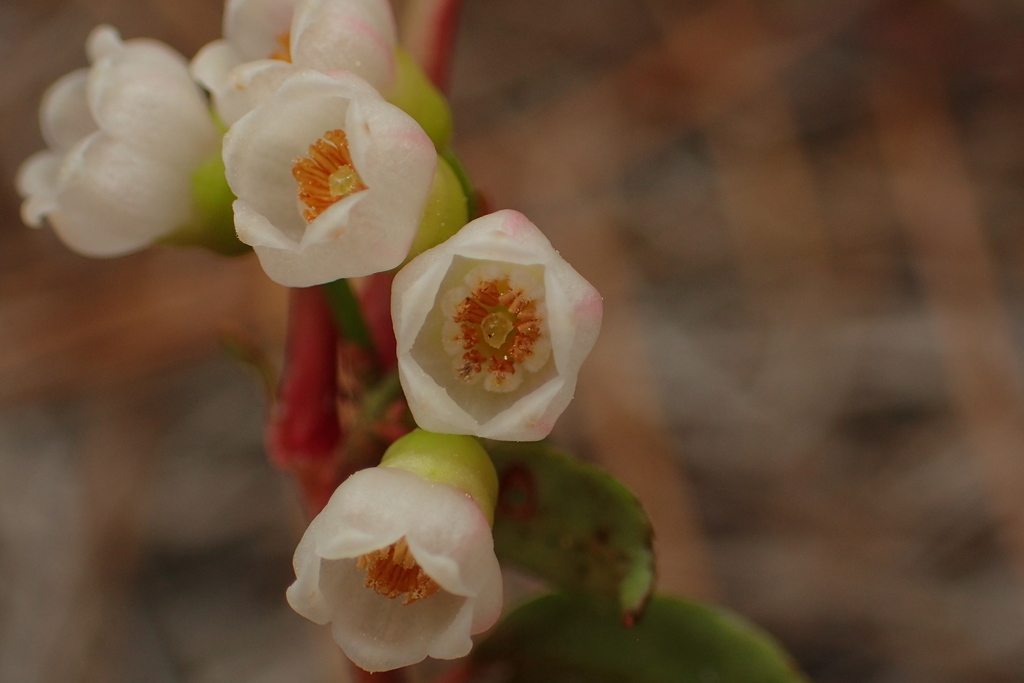
Vaccinium crassifolium, the Creeping Blueberry, is a low, evergreen, ground-hugging blueberry of the southeastern coastal plain. Its slender, reddish stems trail along sandy ground for a foot or more, rooting as they go, and carry small, glossy, leathery leaves (crassifolium means “thick-leaved”). In spring it bears clusters of small white to pink, cup-shaped flowers, followed by small, shiny black berries.
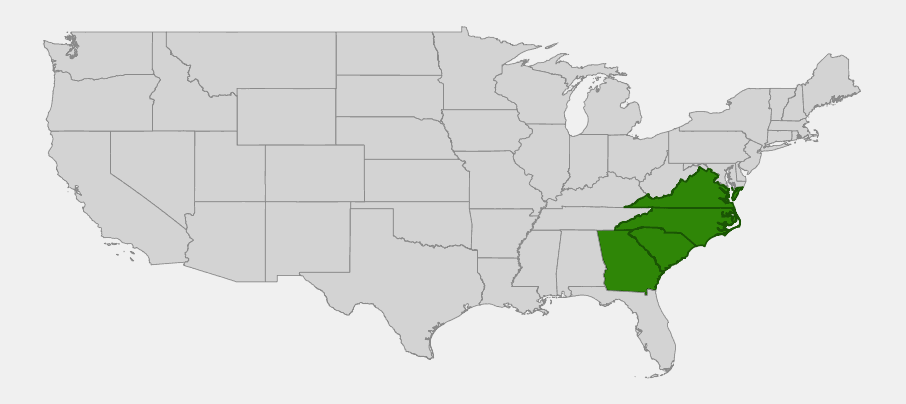
It is native only to the coastal plain and Sandhills of southeastern Virginia, North Carolina, South Carolina and Georgia, where it grows in open longleaf pine savannas, flatwoods, sandhills and pine barrens, and along sandy roadsides. Unlike most blueberries, it is a creeping groundcover rather than a shrub, and it is the only member of its own section of the genus. Some botanists have recognized a second, very rare creeper, Rayner’s blueberry (V. sempervirens) of the South Carolina Sandhills, but recent authors include it in this species.
Creeping blueberry has been grown in gardens since the 1780s and makes an attractive evergreen groundcover for sandy, acidic soil in the Southeast. This guide covers identification, range, growing tips, cultivars and its value to native bees and wildlife.
Identification
Creeping blueberry is a prostrate, mat-forming evergreen with wiry, red-tinged stems, small glossy leaves and small bell- to cup-shaped flowers. It is usually only 2 to 6 inches tall.
Stems & Leaves
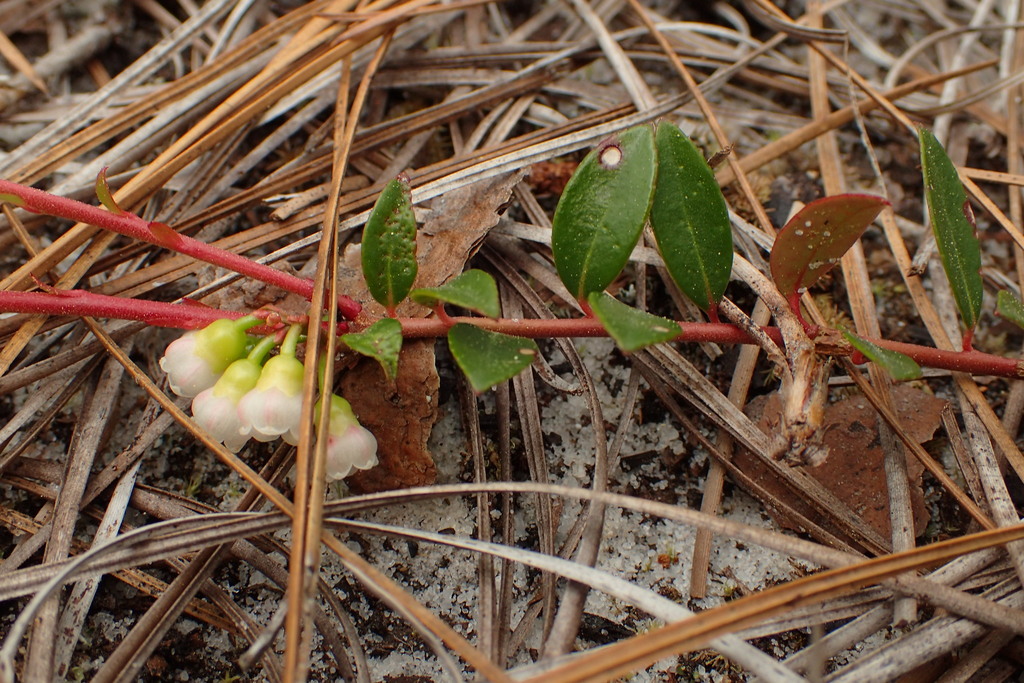
The slender stems trail along the ground for 1 to 3 feet, rooting at the nodes and forming loose mats. Young stems are reddish. The leaves are alternate, oval to elliptic, ¼ to ¾ inch long, thick, leathery and glossy dark green, sometimes with tiny teeth along the edge. New growth is often bronze or reddish, and many leaves turn burgundy in winter.
Flowers
In April and May, short clusters of small flowers appear along the stems. Each flower is about ¼ inch long, white to pink, with a short, open, cup- or bell-shaped corolla and orange-brown anthers. The flowers are more open than the narrow urns of most blueberries.
Fruit
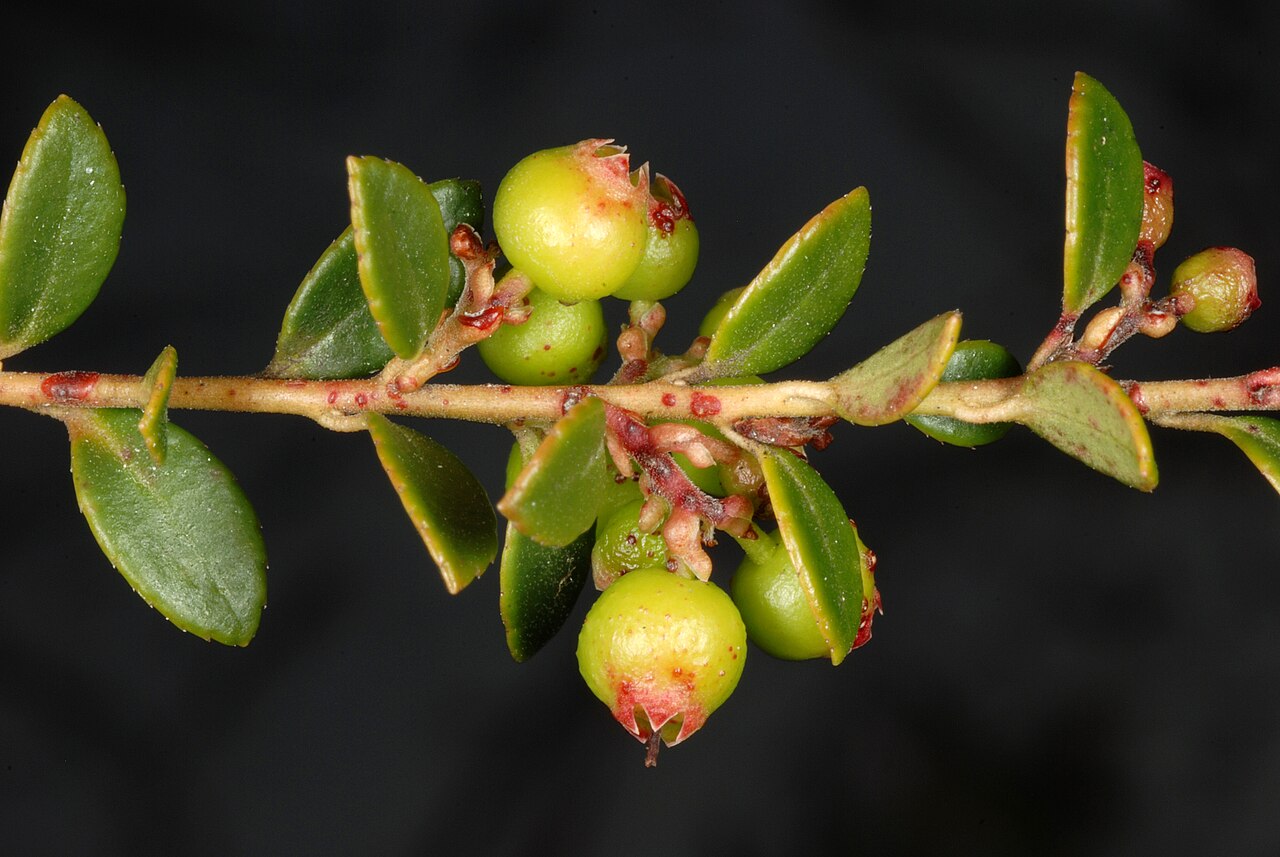
The berries are round, about ¼ inch across, and ripen from green to shiny black in early summer. They are edible but small and usually produced in modest numbers.
Look-alikes
American Cranberry also trails, but it grows in bogs and has nodding pink flowers with backward-curved petals and red berries. Partridgeberry has opposite leaves and red berries. Checkerberry has larger, wintergreen-scented leaves and red berries. Shiny Blueberry and Darrow’s Blueberry have similar small, glossy leaves but are upright shrubs. Dwarf Huckleberry has sticky, resin-dotted leaves.
Quick Facts
| Scientific Name | Vaccinium crassifolium Andrews |
| Family | Ericaceae (heath family) |
| Plant Type | Evergreen creeping dwarf shrub |
| Mature Height | 2–6 in |
| Mature Spread | 1–3 ft per plant, spreading |
| Growth Rate | Moderate |
| Sun Exposure | Full sun to part shade |
| Water Needs | Low to moderate; drought tolerant once established |
| Soil Type | Sandy, acidic, well drained to seasonally moist |
| Soil pH | About 4.5–5.5 |
| Bloom Time | April–May |
| Flower Color | White to pink |
| Fall Color | Burgundy to bronze in winter; evergreen |
| Fruit | Small shiny black berries, June–July |
| Deer Resistant | Moderate |
| USDA Hardiness Zones | 7–9 |
Native Range
Creeping blueberry has a small range in the southeastern United States. USDA PLANTS lists it as native in Virginia, North Carolina, South Carolina and Georgia. It is most common on the coastal plain and in the Sandhills of North and South Carolina, reaching southeastern Virginia to the north and eastern Georgia to the south.
It grows in open, sunny, sandy habitats: longleaf pine savannas and flatwoods, sandhills, pine barrens, the edges of pocosins, and disturbed openings such as sandy roadsides, firebreaks and power-line cuts. Many of these habitats depend on frequent fire, which keeps the ground open and lets the low creeping stems get enough light.
It is not considered rare across most of its range, though it is uncommon at the edges, such as in Virginia and Georgia. The plants once called Rayner’s blueberry (V. sempervirens), known from only a few sites in the Sandhills of Lexington County, South Carolina, are now usually treated as part of this species; those populations are very rare and of conservation concern.
📋 Regional plant lists featuring Creeping Blueberry: Maryland, Virginia & West Virginia · Alabama, Georgia & Mississippi · North & South Carolina
Growing & Care Guide
Creeping blueberry is an excellent native groundcover for sandy, acidic soil in the Southeast. Native plant nurseries offer it, and cultivars selected in North Carolina, such as ‘Wells Delight’ and ‘Bloodstone’, are sold for groundcover use. Buy nursery-propagated plants rather than digging from the wild.
Light
Full sun to light shade. It flowers and fruits best in sun, and becomes sparse in deep shade.
Soil & Water
It needs acidic soil (pH about 4.5 to 5.5), ideally sandy or sandy loam with organic matter. It tolerates both dry sandhill conditions and seasonally moist flatwoods once established, but it rots in heavy, waterlogged clay and declines in alkaline soil. Water regularly the first year.
Planting Tips
Plant in fall or early spring, 18 to 24 inches apart for groundcover. Mulch with pine straw, which keeps the soil acidic and lets the stems root down. It works well on slopes, along paths and walls, in rock gardens and under open pines.
Pruning & Maintenance
Very low maintenance. Hand-weed until the mat fills in, and trim stray runners if needed. Do not use lime or high-nitrogen fertilizer; if needed, use a fertilizer made for acid-loving plants.
Propagation
Root stem cuttings in summer in a peat and sand mix, or separate rooted pieces of the trailing stems in spring. Seed can be sown fresh, after cold stratification, but seedlings grow slowly.
Landscape Uses
- Evergreen groundcover: for sandy, acidic soil in sun or light shade
- Slopes and banks: trailing stems root down and help hold soil
- Rock gardens and walls: cascading over edges
- Longleaf pine and pollinator gardens: a native companion for wiregrass and pines
Wildlife & Ecological Value
Like other blueberries, creeping blueberry supports native bees in spring and provides fruit for wildlife in summer.
For Pollinators
The Xerces Society notes it is of special value to native bees. Bumble bees and southeastern blueberry bees buzz-pollinate the flowers, shaking pollen loose from the anthers. Blueberries are also caterpillar host plants for butterflies such as the striped hairstreak and Henry’s elfin, and for many moths.
For Birds
Northern bobwhite, wild turkey, brown thrashers and other ground-feeding birds eat the berries, and the evergreen mats give cover to small birds.
For Mammals
Box turtles, foxes and small mammals eat the berries. White-tailed deer browse the leaves lightly.
Ecosystem Role
It is part of the diverse groundcover of fire-maintained longleaf pine ecosystems, resprouting quickly after fire from its spreading stems and helping hold sandy soils.
Cultural & Historical Uses
The English botanist and illustrator Henry Andrews described Vaccinium crassifolium around 1800 in The Botanist’s Repository, from plants grown in English gardens. It had already been in cultivation since about 1787, one of the many southeastern plants sent to Britain by early plant collectors.
Creeping blueberry is the only species in its section of Vaccinium, called Herpothamnus (“creeping shrub”). Genetic studies suggest that it is more closely related to some South American Vaccinium than to the familiar North American blueberries.
In the 1980s, North Carolina State University released selections such as ‘Wells Delight’, with glossy green leaves, and ‘Bloodstone’, with red stems and burgundy winter color, as evergreen groundcovers for southern landscapes. Its leaves resemble those of bearberry and have been used in herbal medicine in similar ways.
Frequently Asked Questions
Is creeping blueberry a real blueberry?
Yes. It belongs to the same genus as blueberries, Vaccinium, and produces small, edible black berries, but it creeps along the ground instead of forming an upright shrub.
Where does creeping blueberry grow?
It is native to the coastal plain and Sandhills of southeastern Virginia, North Carolina, South Carolina and eastern Georgia, in longleaf pine savannas, flatwoods, sandhills and along sandy roadsides.
Can I eat creeping blueberry berries?
Yes. The small black berries are edible, but plants usually produce only a modest crop, so they are better enjoyed as a groundcover than as a fruit plant.
How do I grow creeping blueberry as a groundcover?
Plant it in sandy, acidic, well-drained soil in full sun to light shade, 18 to 24 inches apart, and mulch with pine straw. Water regularly the first year, then only in droughts.
What is the difference between creeping blueberry and cranberry?
Cranberry grows in bogs and has pink flowers with backward-curved petals and red berries. Creeping blueberry grows in sandy pinelands and has white to pink cup-shaped flowers and black berries.

Looking for a nursery that carries Creeping Blueberry?
Browse our native plant nursery directory: Georgia · North Carolina · South Carolina & Virginia

