
Darrow’s Blueberry (Vaccinium darrowii)
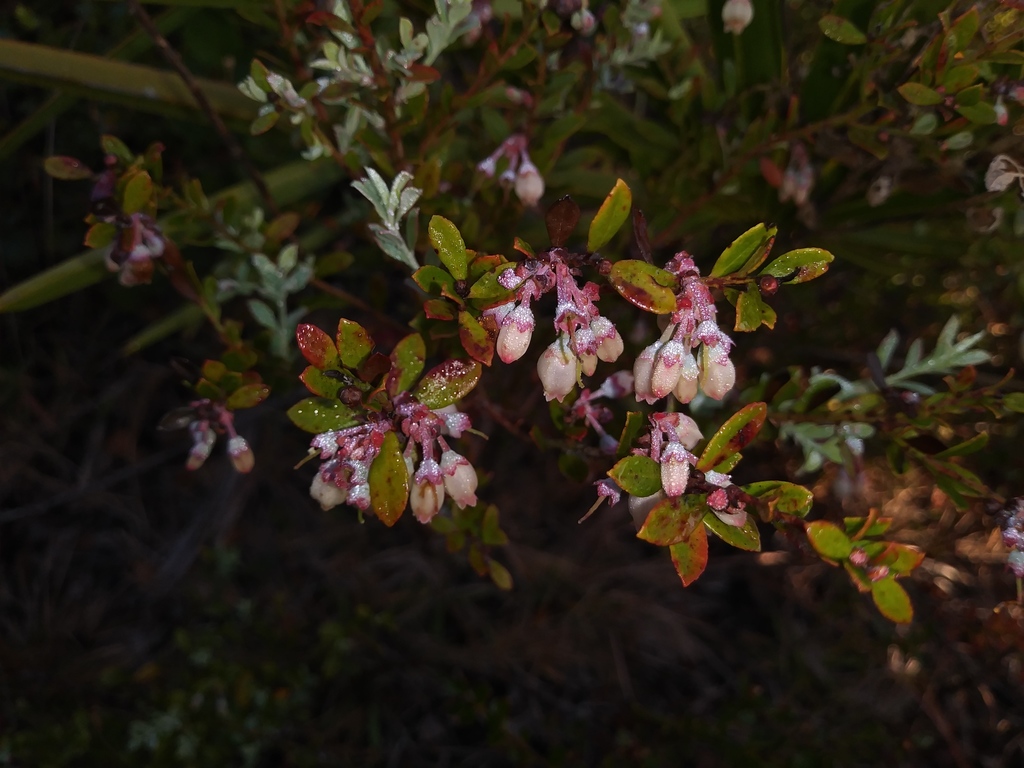
Vaccinium darrowii, known as Darrow’s Blueberry or Darrow’s evergreen blueberry, is a low, evergreen blueberry of the sandy pinelands of the Gulf Coastal Plain. It forms a dense mound 1 to 3 feet tall of tiny, powdery blue-gray leaves, with new growth flushed pink or bronze. In late winter and early spring it carries clusters of white to pink, urn-shaped flowers, followed in early summer by small, sweet, dusky blue berries. It belongs to the heath family (Ericaceae).
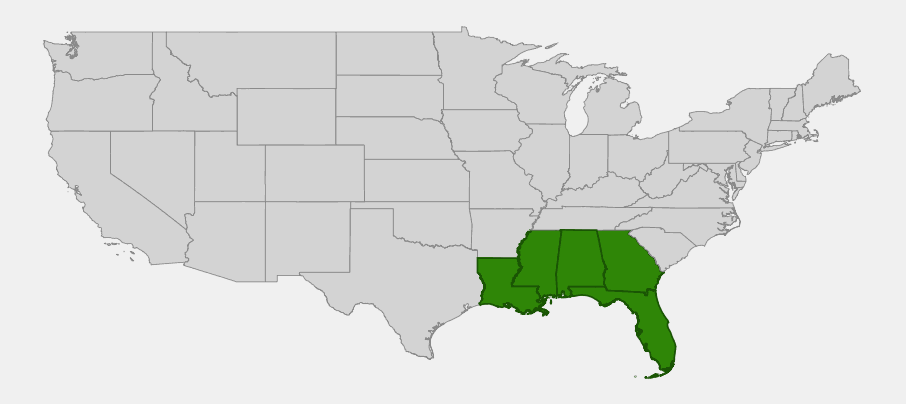
Darrow’s blueberry grows in sandhills, scrub, dry and mesic pine flatwoods and the edges of bogs in Florida, southern Georgia, Alabama, Mississippi and Louisiana. In Florida it occurs mainly in the Panhandle and the northern and central peninsula. It is one of the parents of the low-chill “southern highbush” blueberries that made commercial blueberry growing possible in Florida and other warm regions.
For gardeners, it is one of the most attractive native shrubs for sandy, acidic soils: evergreen, compact, colorful in every season and edible besides. This guide covers identification, range, how to grow it in a landscape, and its value to bees, birds and other wildlife.
Identification
Several low blueberries grow in the same pinelands as Darrow’s blueberry. Its tiny, blue-gray, evergreen leaves are the best clue.
Stems & Habit
Darrow’s blueberry is a low, evergreen shrub, usually 1 to 3 feet tall and occasionally to about 4 feet, that spreads slowly by underground stems to form colonies. The many thin, upright twigs are green to reddish when young and finely hairy. Plants in the open form dense mounds, while those in shade are looser.
Leaves
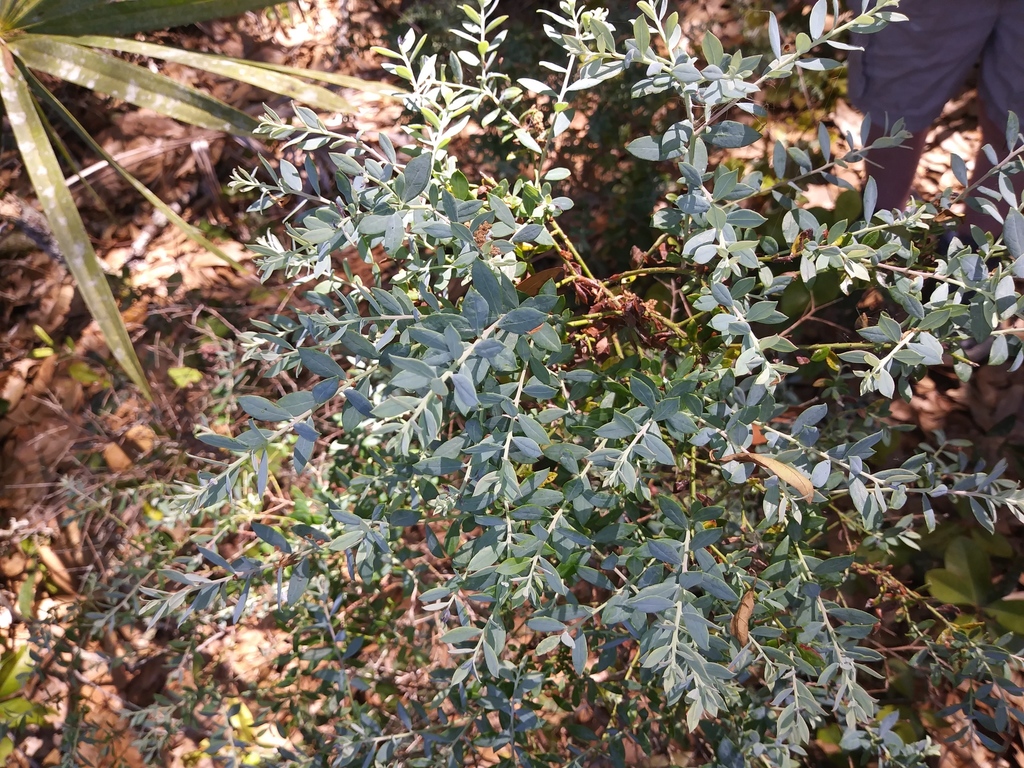
The leaves are evergreen, alternate and very small, usually about ¼ to ½ inch long, elliptic, with smooth or finely toothed edges. They are covered in a powdery, waxy bloom that makes them blue-gray to silvery green, especially on new growth, which is often tinged pink or bronze. In winter some leaves turn purplish.
Shiny blueberry (Vaccinium myrsinites), which grows in the same habitats, has glossy, dark green leaves. The two species hybridize where they grow together, and intermediate plants are common, so some individuals are hard to assign to either species.
Flowers
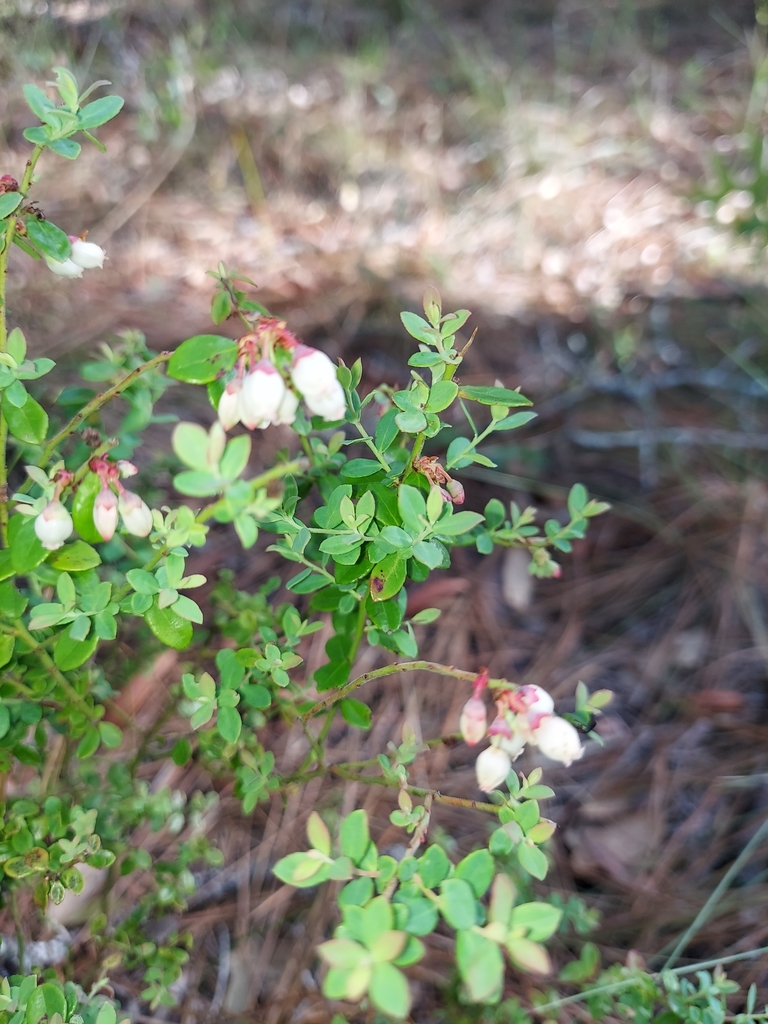
The flowers appear from late winter to early spring, mostly February through April, in short clusters near the tips of the branches. Each is a narrow, urn-shaped bell about ¼ inch long, white to pale pink, often pink at the base, with five tiny lobes at the mouth. Like other blueberries, the flowers hang downward.
Fruit
The berries ripen from late spring into summer, mostly May through July. They are small, about ¼ inch across, blue-black with a powdery blue bloom, and sweet with a mild blueberry flavor. Each berry has the five-pointed crown at the tip typical of blueberries.
Quick Facts
| Scientific Name | Vaccinium darrowii Camp (syn. V. myrsinites var. glaucum) |
| Family | Ericaceae (heath family) |
| Plant Type | Low evergreen shrub |
| Mature Height | 1–3 ft (occasionally to 4 ft) |
| Mature Spread | 2–4 ft; slowly spreads by rhizomes |
| Growth Rate | Slow to moderate |
| Sun Exposure | Full sun to part shade |
| Water Needs | Low; dry to moist, well-drained sand |
| Soil Type | Sand; acidic sandy soils |
| Soil pH | Strongly acidic (about 4.0–5.5) |
| Bloom Time | February–April |
| Flower Color | White to pale pink |
| Fall Color | Evergreen; new growth pink to bronze, some winter purpling |
| Fruit | Small sweet blue berries, May–July |
| Deer Resistant | No; deer browse the foliage and twigs |
| USDA Hardiness Zones | 7–10 |
Native Range
Darrow’s blueberry is a Gulf Coastal Plain species. USDA PLANTS and the Lady Bird Johnson Wildflower Center record it from five states: Florida, Georgia, Alabama, Mississippi and Louisiana. The Wildflower Center describes its range as the coastal plain from Georgia to southeastern Texas, though the USDA state list does not include Texas.
In Florida it grows mainly in the Panhandle and the northern and central peninsula, reaching south to the Lake Wales Ridge in Polk and Highlands counties. Its typical habitats are sandhills, scrub and scrubby flatwoods, and dry to mesic pine flatwoods, usually on deep, acidic, well-drained sand. It can also be found on the drier edges of bogs and bayheads.
Like many pineland shrubs, it is adapted to fire. Burns kill the top growth, but the plant resprouts quickly from its underground stems and often flowers and fruits heavily in the years that follow. Without fire, it is gradually shaded out by taller shrubs and trees.
📋 Regional plant lists featuring Darrow’s Blueberry: North & South Florida · Alabama, Georgia & Mississippi · Arkansas, Louisiana, Eastern Oklahoma & Eastern Texas
Growing & Care Guide
Darrow’s blueberry is a rewarding shrub for sandy, acidic soil, and it is widely available from native nurseries in Florida and the Gulf states. Nurseries also sell ornamental selections and hybrids. Choose the straight species when you want plants best suited to native habitat.
Light
Full sun produces the densest plants and the most flowers and fruit, and the bluest leaves. It also grows in part shade, such as under high pines, but becomes looser and fruits less.
Soil & Water
The key to success is acidic, well-drained soil. It thrives in deep, sandy soils with a pH below about 5.5, and it struggles in alkaline soils, limestone fill or near concrete foundations. It tolerates drought once established but appreciates occasional water during long dry spells, especially in its first year. Mulch with pine straw or oak leaves. Avoid heavy fertilizing; if needed, use a fertilizer for acid-loving plants.
Planting Tips
Plant in fall through early spring, 2 to 3 feet apart for a low hedge or groundcover mass. Set the plant at the same depth it grew in the pot and water well. It works as a low border, a foundation plant (away from alkaline concrete), a groundcover on sandy slopes, or in a native edible garden. Plant more than one plant for better fruit set.
Pruning & Maintenance
Little pruning is needed. Shape plants lightly after flowering if desired, or cut very old plants back hard in late winter to renew them, as fire would in the wild. Remove weeds that compete in the root zone. Watch for leaf spots and root rot in poorly drained soil.
Propagation
Softwood cuttings taken in late spring or early summer root readily under mist. Rooted suckers can be separated from the edge of a colony in late winter. Seed can be cleaned from ripe berries and sown on the surface of moist peat, but seedlings grow slowly and vary in form.
Landscape Uses
- Edible landscaping: small, sweet berries on an ornamental evergreen shrub
- Low hedges and borders: compact, fine-textured, blue-gray evergreen foliage
- Groundcover for sandy slopes: spreads slowly by rhizomes and tolerates drought
- Pineland and scrub restoration: within its native range on the Gulf Coastal Plain
- Wildlife gardens: flowers for early bees and fruit for birds and mammals
Wildlife & Ecological Value
Darrow’s blueberry flowers early and fruits in summer, and both stages are valuable to wildlife.
For Pollinators
Its flowers open in late winter and early spring, when few other plants are in bloom. Like other blueberries, the flowers release pollen best through buzz pollination, in which bees grasp the flower and vibrate their flight muscles. Bumble bees and specialist southeastern blueberry bees (Habropoda laboriosa) are important pollinators. Blueberries as a group are larval hosts for many moths and some butterflies, such as the striped hairstreak and Henry’s elfin.
For Birds
Mockingbirds, catbirds, thrashers, bluebirds and other songbirds eat the berries, as do wild turkey and northern bobwhite. The dense, low growth also provides cover for ground-feeding birds.
For Mammals
Black bears, foxes, raccoons, opossums and other mammals eat the fruit. Deer browse the leaves and twigs, and gopher tortoises eat fallen berries.
Ecosystem Role
In sandhills, scrub and flatwoods, Darrow’s blueberry is part of the low shrub layer that resprouts after fire and provides fruit through the summer. Its rhizomes help hold loose sand.
Cultural & Historical Uses
The species was described in 1945 by botanist Wendell H. Camp, who named it for George M. Darrow, a U.S. Department of Agriculture fruit breeder known for his work on strawberries and blueberries. Darrow and his colleagues recognized the potential of southern wild blueberries for breeding.
Darrow’s blueberry became an important parent in blueberry breeding. Highbush blueberries need many hours of winter chill to fruit well. By crossing them with low-chill southern species, especially Darrow’s blueberry, breeders at the University of Florida and the USDA developed the “southern highbush” blueberries in the second half of the twentieth century. These cultivars allowed commercial blueberry production in Florida, the Gulf states and other warm-winter regions.
Native peoples and settlers of the coastal plain gathered wild blueberries for fresh eating and drying. Today Darrow’s blueberry is planted mainly as an ornamental and edible landscape shrub, and it is a common component of pineland restoration in Florida.
Frequently Asked Questions
Are Darrow’s blueberry berries edible?
Yes. The small blue berries are sweet and edible fresh or cooked. They are much smaller than cultivated blueberries, and you may have to compete with the birds for them.
Is Darrow’s blueberry evergreen?
Yes. It keeps its tiny blue-gray leaves year-round, with pink to bronze new growth in spring and some purplish leaves in winter.
What soil does Darrow’s blueberry need?
Acidic, well-drained, sandy soil, ideally with a pH below about 5.5. It struggles in alkaline soil and near limestone or concrete.
How is Darrow’s blueberry different from shiny blueberry?
Darrow’s blueberry has blue-gray, powdery leaves, while shiny blueberry (Vaccinium myrsinites) has glossy, dark green leaves. They hybridize where they grow together, so some plants are intermediate.
Did Darrow’s blueberry contribute to modern blueberries?
Yes. It was crossed with highbush blueberries to breed low-chill southern highbush blueberries, which made commercial blueberry growing possible in Florida and other warm-winter regions.

Looking for a nursery that carries Darrow’s Blueberry?
Browse our native plant nursery directory: Alabama · Florida & Georgia · Louisiana & Mississippi