
Starry Rosinweed (Silphium asteriscus)
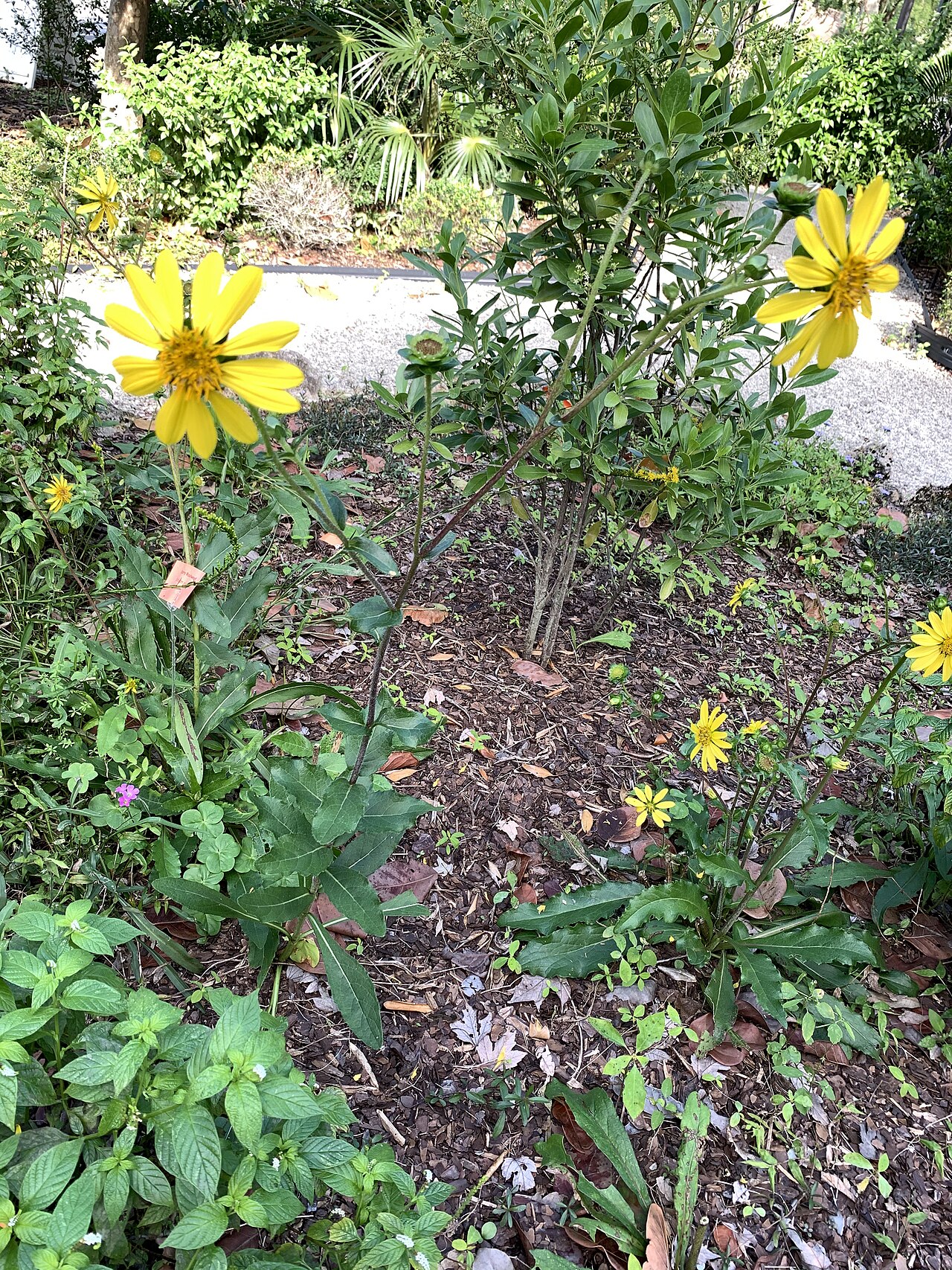
Silphium asteriscus, the Starry Rosinweed, is a sturdy, sunflower-like perennial of open woods, sandhills and roadsides across the Southeast. From early summer into fall it carries bright yellow, daisy-like flower heads, 2 to 3 inches across, on stiff stems 2 to 4 feet tall. It belongs to the aster family (Asteraceae) and is one of the smaller and more garden-friendly members of the rosinweed genus, which includes the prairie giants cup plant and compass plant.
Like other rosinweeds, it gets its name from the resinous, gummy sap that oozes from wounded stems. Its leaves are rough to the touch and usually toothed. Unlike sunflowers, rosinweed flower heads produce their seeds from the outer ray florets, while the central disc florets supply pollen but are sterile.
Starry rosinweed is a long-lived, drought-tolerant plant for sunny or lightly shaded gardens. It is valued by Florida and southeastern native plant growers as a dependable summer bloomer for pollinator gardens. Native bees in particular visit its flowers, and birds eat the seeds in fall.
Identification
Starry rosinweed is quite variable, and botanists have described several varieties across its range that differ in hairiness, leaf shape and leaf arrangement. The genus is easiest to recognize by its rough, resinous stems, the large, broad, overlapping green bracts around each flower head, and the flattened, winged seeds produced by the ray florets.
Stems & Habit
Plants grow from a woody crown with fleshy roots and send up one to several stiff, upright stems, usually 2 to 4 feet tall. The stems are often reddish to purplish and may be smooth or covered with rough hairs. When cut or broken, they release a sticky resin.
Leaves
The lower leaves are the largest, up to about 6 inches long, lance-shaped to oval, and usually coarsely toothed. Higher on the stem the leaves become smaller and may be opposite, alternate or in whorls of three. The leaf surfaces are often rough like sandpaper.
Flowers
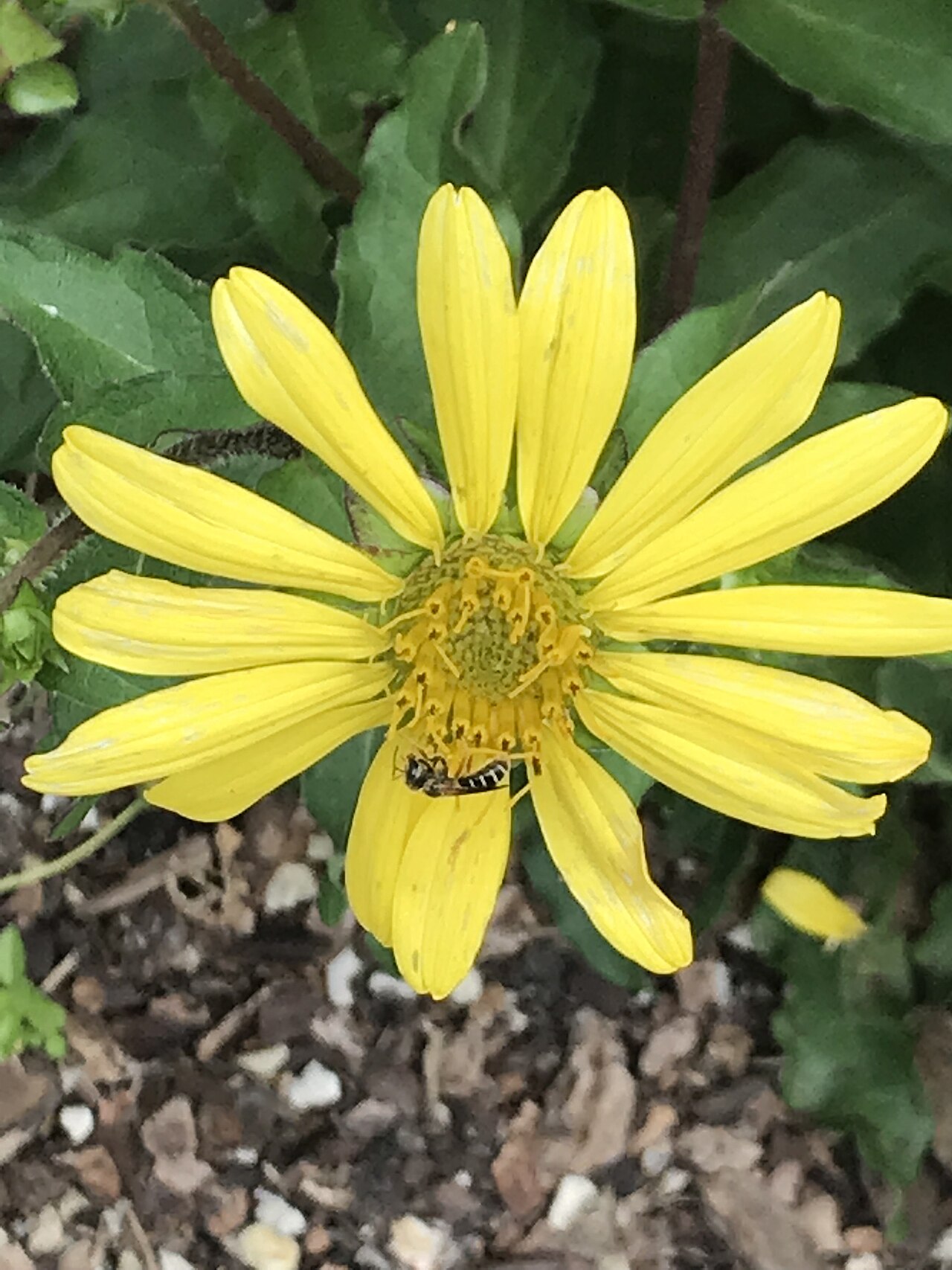
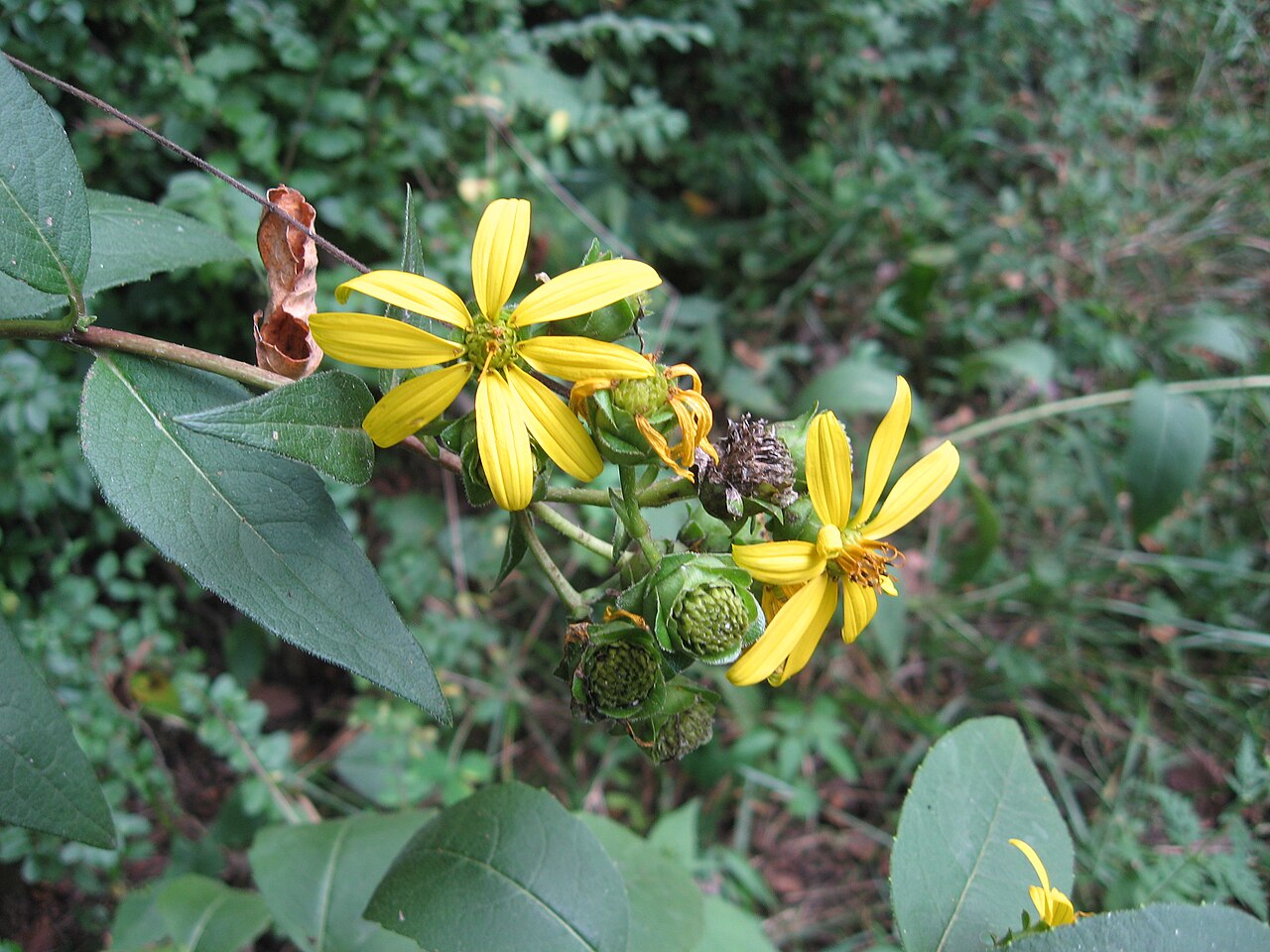
The flower heads are borne in loose clusters at the top of the stems. Each head is about 2 to 3 inches across, with roughly 8 to 13 bright yellow rays around a yellow center. The heads are cupped by two or three rows of broad, green, leafy bracts. The Lady Bird Johnson Wildflower Center lists bloom from June to September, and in Florida scattered flowers continue into fall.
Fruit & Seeds
After flowering, each ray floret produces a flat, oval, winged seed (achene) with a notch at the tip. The seeds ripen in late summer and fall and are held in the dry, brown heads, where birds pick them out.
Quick Facts
| Scientific Name | Silphium asteriscus (USDA symbol SIAS2) |
| Family | Asteraceae (aster family) |
| Plant Type | Herbaceous perennial |
| Mature Height | 2–4 ft |
| Mature Spread | 1–2 ft |
| Growth Rate | Moderate |
| Sun Exposure | Full sun to part shade |
| Water Needs | Low to medium; drought-tolerant once established |
| Soil Type | Sandy, loamy or rocky, well-drained soil |
| Soil pH | Acidic to neutral (about 5.0–7.0) |
| Bloom Time | June–September, into fall in Florida |
| Flower Color | Bright yellow |
| Fall Color | Foliage browns; seed heads persist |
| Fruit | Flat, winged achene |
| Deer Resistant | Moderately; rough, resinous leaves are seldom favored |
| USDA Hardiness Zones | 6–9 |
Native Range
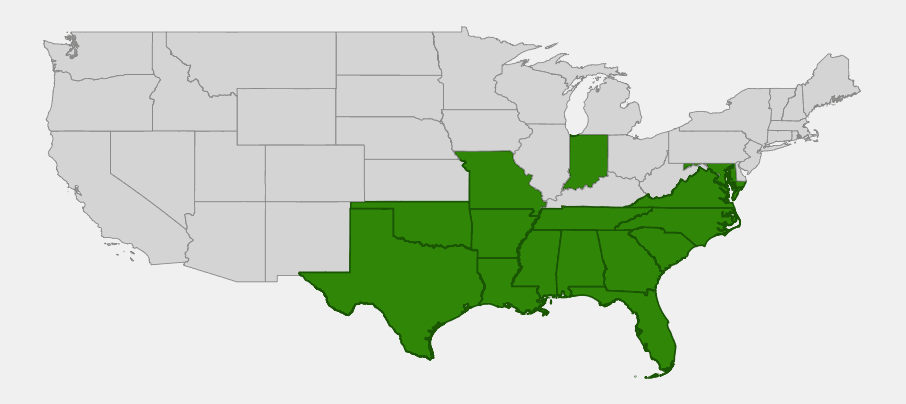
Starry rosinweed is native to the southeastern and south-central United States. USDA PLANTS data, as summarized by the Lady Bird Johnson Wildflower Center, record it from Alabama, Arkansas, Florida, Georgia, Indiana, Louisiana, Maryland, Missouri, Mississippi, North Carolina, Oklahoma, South Carolina, Tennessee, Texas and Virginia. It is most common in the Coastal Plain and Piedmont of the Deep South and becomes scattered toward the north and west.
In Florida it grows in the Panhandle and the northern and central peninsula. Across its range it is found in sunny or lightly shaded, well-drained places: open oak and pine woods, longleaf pine sandhills, woodland edges, glades and rocky bluffs, old fields and roadsides.
Because the species varies so much, some older references split its forms into separate species or varieties, and some state lists use different names for local forms. Gardeners buying plants should look for stock grown from local seed sources where possible.
📋 Regional plant lists featuring Starry Rosinweed: North & South Florida · Alabama, Georgia & Mississippi · North & South Carolina · Maryland, Virginia & West Virginia · Kentucky & Tennessee · Arkansas, Louisiana, Eastern Oklahoma & Eastern Texas · Illinois, Iowa & Missouri · Ohio & Indiana
Growing & Care Guide
Starry rosinweed is an easy, long-lived perennial for sunny native gardens in the Southeast. It is drought-tolerant once established, rarely needs staking, and comes back reliably every year from its deep roots.
Light
Full sun to part shade. It blooms best with at least six hours of sun, but tolerates the light shade of open pines and oaks, as in its natural woodland-edge habitat.
Soil & Water
Plant in well-drained sandy, loamy or rocky soil. It grows in poor soils and does not need fertilizer, which can make the stems floppy. Water regularly during its first season; after that it needs extra water only during long droughts.
Planting Tips
Set container plants about 18 to 24 inches apart in spring or fall. Place it in the middle of a border, where its 2- to 4-foot stems rise above lower plants. It combines well with native grasses, blazing stars, goldenrods and asters.
Pruning & Maintenance
Leave the seed heads standing into fall for birds, then cut the stems back in late winter. Plants form a deep root system and do not like to be moved once established.
Propagation
Grow it from seed. Sow seeds outdoors in fall, or give them about 30 to 60 days of cold, moist stratification before spring sowing. Seedlings spend their first year building roots and usually flower in their second or third year. Small plants can be divided carefully in early spring.
Landscape Uses
- Pollinator gardens: a summer-long nectar and pollen source, especially for native bees
- Sandhill and open woodland plantings: with longleaf pine, wiregrass and other sandhill natives
- Bird gardens: seed heads feed finches and other birds in fall
- Meadows and roadsides: a tough perennial for low-maintenance plantings
- Mixed native borders: a mid-height accent of bright yellow in summer
Wildlife & Ecological Value
Starry rosinweed is a valuable summer plant for insects and birds in southeastern woodlands and gardens.
For Pollinators
The Lady Bird Johnson Wildflower Center, citing the Xerces Society, lists starry rosinweed as of special value to native bees. The flowers are also visited by butterflies, wasps, flies and beetles. Its long bloom season helps bridge the summer gap between spring wildflowers and fall asters and goldenrods.
For Birds
Goldfinches and other seed-eating birds pick the flat seeds from the dry heads in late summer and fall.
For Mammals
The rough, resinous foliage is not a favorite of deer, though they may browse young shoots. Small mammals eat fallen seeds.
Ecosystem Role
Its deep roots help hold soil on slopes and sandy sites, and its sturdy stems provide overwintering sites for insects. In fire-maintained sandhills and woodlands it resprouts from its crown after burns.
Cultural & Historical Uses
Linnaeus named the species in 1753. The genus name Silphium comes from a resinous plant of ancient North Africa (silphion) that was prized by the Greeks and Romans; Linnaeus borrowed the name for these resinous American plants. The epithet asteriscus means “little star”, for the starry flower heads.
The common name rosinweed comes from the resin in the stems. Native Americans and settlers chewed the hardened resin of compass plant, a related prairie species, as a gum.
Starry rosinweed is less familiar to gardeners than its towering prairie relatives, cup plant and compass plant, but its smaller size makes it easier to fit into home gardens, and native plant nurseries in the Southeast increasingly offer it.
Frequently Asked Questions
Why is it called rosinweed?
The stems contain a sticky resin that oozes out when they are broken or damaged. Several Silphium species share the name.
How tall does starry rosinweed get?
Usually 2 to 4 feet tall, with flower heads 2 to 3 inches across at the top of stiff stems.
Is starry rosinweed good for pollinators?
Yes. It is listed as of special value to native bees, and its flowers attract butterflies and many other insects through summer.
Does starry rosinweed grow in Florida?
Yes. It is native to the Florida Panhandle and the northern and central peninsula, and it is grown in native gardens farther south as well.
How is starry rosinweed different from a sunflower?
In rosinweeds the outer ray florets produce the seeds, while in sunflowers the central disc florets do. Rosinweeds also have broad, leafy bracts around the heads and resinous stems.

Looking for a nursery that carries Starry Rosinweed?
Browse our native plant nursery directory: Alabama & Arkansas · Florida & Georgia · Indiana · Louisiana, Maryland, Mississippi & Missouri · North Carolina & Oklahoma · South Carolina, Tennessee, Texas & Virginia