Turkey Oak (Quercus laevis)
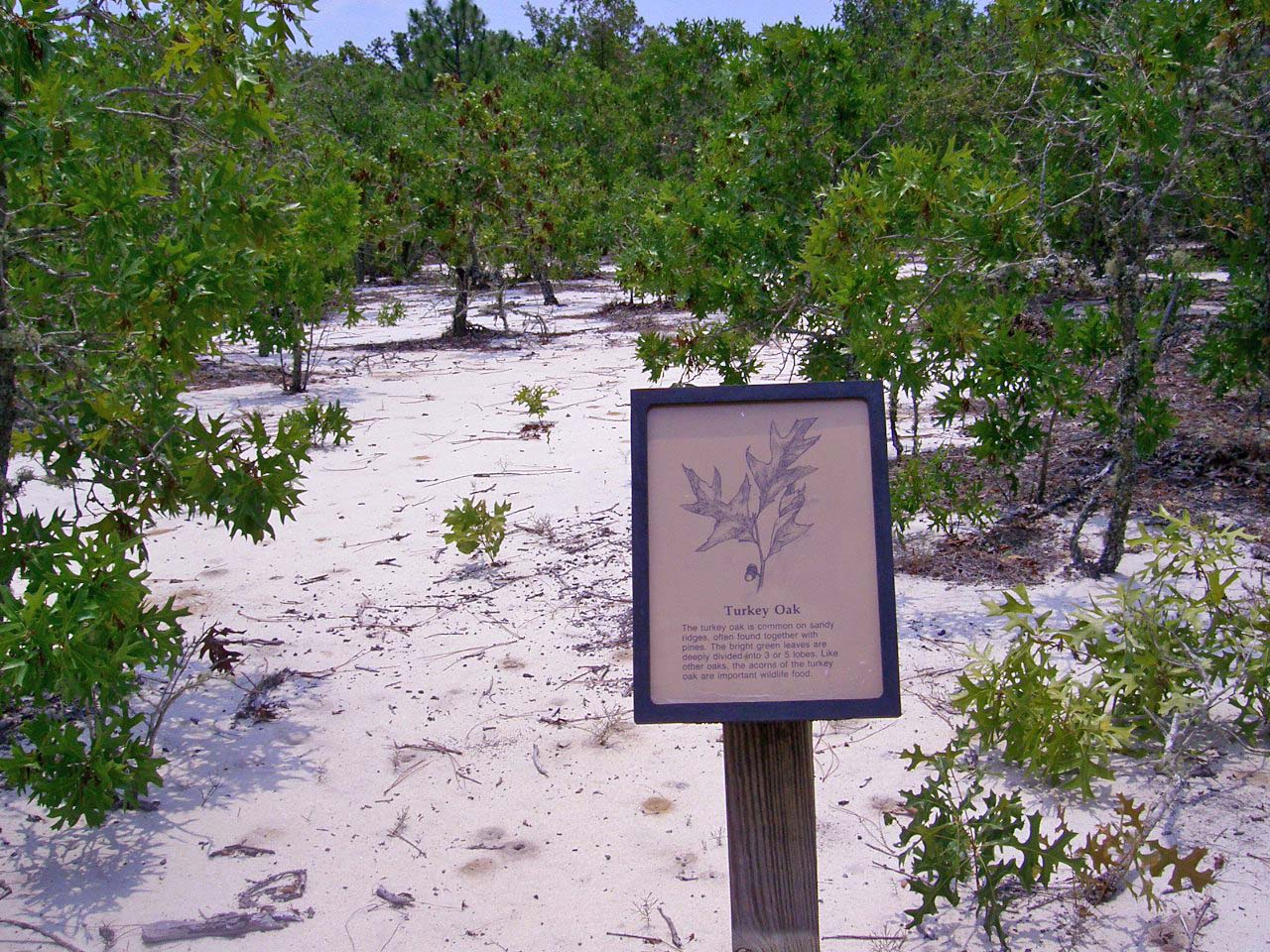
Quercus laevis, commonly known as Turkey Oak (sometimes American Turkey Oak or Catesby Oak), is a small, tough, drought-defying tree of the Southeastern Coastal Plain’s deepest, driest sand ridges. Named for its deeply lobed leaves, which curl into a shape resembling a turkey’s splayed foot, Turkey Oak is one of the defining trees of the longleaf pine-wiregrass sandhill ecosystem — a fire-maintained community found nowhere outside the Southeast and now reduced to a small fraction of its historic extent.
Turkey Oak rarely exceeds 30 feet in height and often grows as a gnarled, twisting, multi-trunked tree rather than a tall, straight one, a form shaped by the punishing growing conditions of bone-dry, nutrient-poor sand. Its thick, corky bark and the ability to resprout vigorously from the root crown let it survive the frequent surface fires that sweep through sandhill habitat every few years, killing off less fire-adapted competitors. Where longleaf pine supplies the overstory, Turkey Oak often fills the understory, and the combination is a signature sight of the Southeastern sandhills.
In the home landscape, Turkey Oak is a specialist’s tree: it thrives exactly where most other trees struggle — deep, well-drained, infertile sand in full sun — and it is a poor choice for rich garden soil or heavy clay. For a native planting on a sandy site in its range, though, it is nearly indestructible once established, requiring no irrigation or fertilizer and asking only for space and sunlight.
Identification
Turkey Oak is a small tree, typically 20–30 ft (6–9 m) tall though occasionally reaching 40–50 ft on better sites, usually with a short, often leaning or crooked trunk and an open, irregular crown. It belongs to the red oak group, and like other red oaks its acorns take two years to mature and its leaf lobes end in bristle tips rather than the rounded lobes of white oaks.
Bark
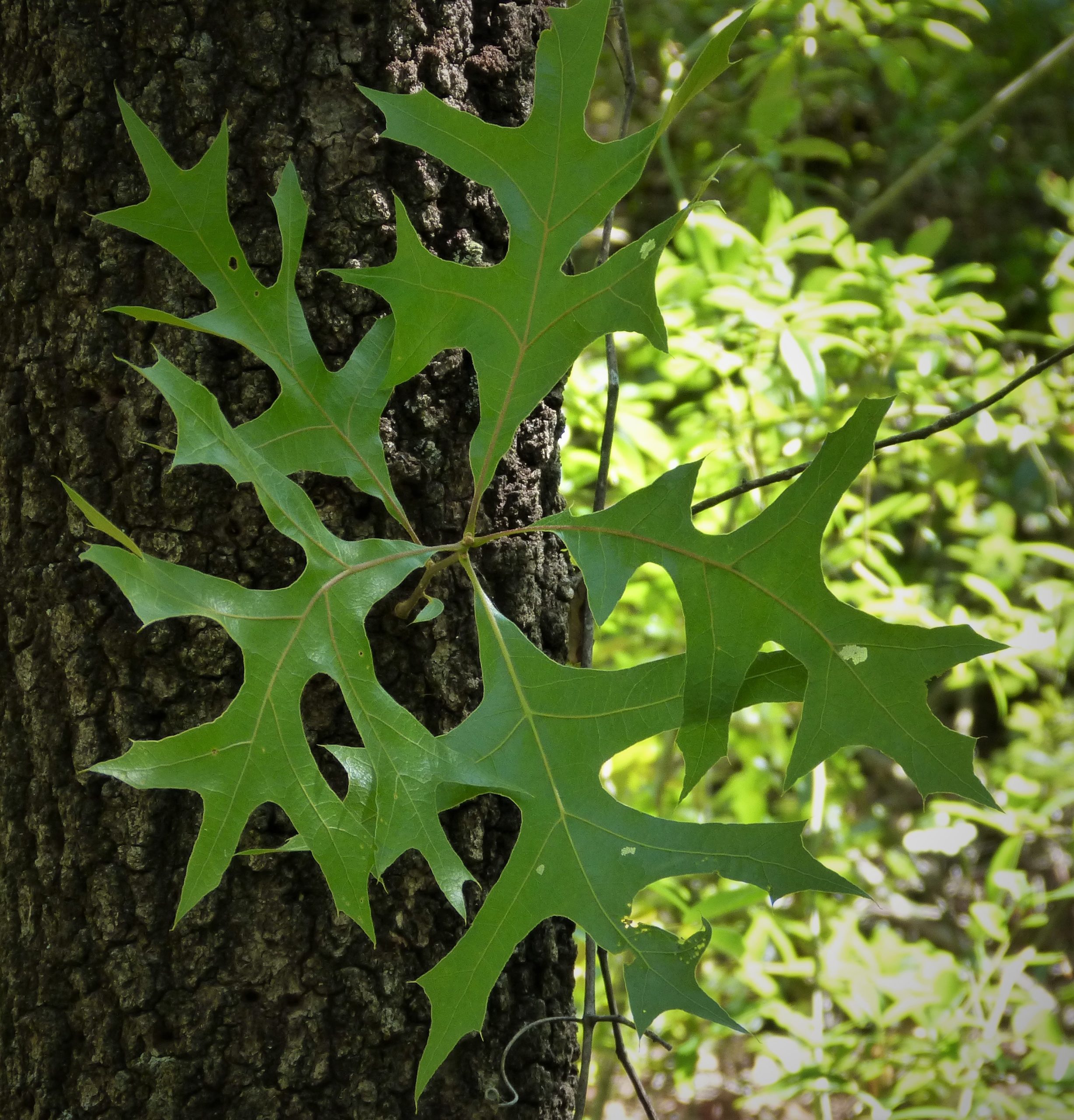
Bark on mature trunks is dark gray to blackish, thick, and deeply furrowed into irregular ridges — noticeably rougher and darker than the smoother bark of many associated oaks. This thick bark provides meaningful protection from the low-intensity surface fires common in sandhill habitat, helping older trees survive burns that would kill thinner-barked saplings.
Leaves
The leaves are the easiest identification feature: 4–8 in (10–20 cm) long, deeply cut into 3 to 7 narrow, sickle-shaped lobes that radiate outward, giving each leaf a silhouette often compared to a turkey’s foot. Leaves are thick and leathery, shiny dark green above and paler below, and turn red to reddish-brown in fall, with many trees holding a scattering of dead leaves through winter (marcescence). This deeply cut, narrow-lobed leaf shape distinguishes Turkey Oak from the broader-lobed leaves of its common associates, Bluejack Oak and Laurel Oak.
Flowers & Acorns
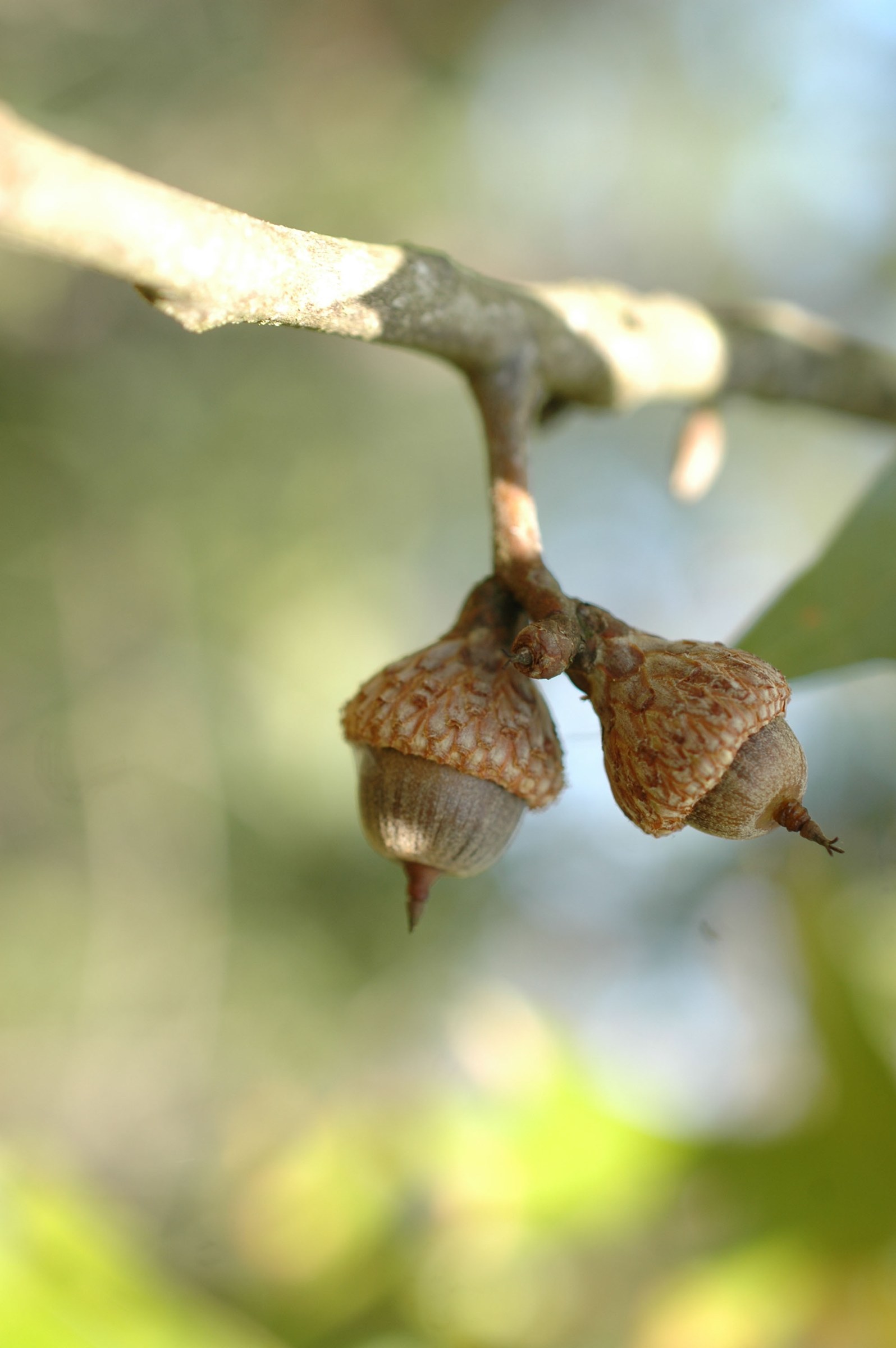
Like other oaks, Turkey Oak is wind-pollinated, with inconspicuous male catkins and tiny female flowers appearing with new leaves in spring. Acorns are relatively large for the genus, 3/4 to 1 1/4 in (2–3 cm) long, oval, borne singly or in pairs, and enclosed in about a third of their length by a thick, bowl-shaped cap covered in loose, somewhat shaggy scales. Acorns mature over two growing seasons and drop in their second autumn, a trait shared with the other red oaks.
Quick Facts
| Scientific Name | Quercus laevis |
| Family | Fagaceae (Beech/Oak) |
| Plant Type | Deciduous Tree |
| Mature Height | 20–30 ft (6–9 m), occasionally to 50 ft |
| Mature Spread | 15–25 ft, often irregular |
| Growth Rate | Slow to Moderate |
| Sun Exposure | Full Sun |
| Water Needs | Low; excellent drought tolerance once established |
| Soil Type | Deep, dry, infertile sand; very well-drained |
| Soil pH | 4.5–6.5 (acidic) |
| Bloom Time | Spring (March–April, with new leaves) |
| Flower Color | Greenish-yellow (inconspicuous) |
| Fall Color | Red to reddish-brown |
| Fruit | Large acorns, 3/4–1 1/4 in, maturing over two years |
| Deer Resistant | No (deer browse seedlings and acorns are a major wildlife food) |
| USDA Hardiness Zones | 8–10 |
Native Range
Turkey Oak occurs in the Southeastern Coastal Plain from southeastern Virginia (where it is rare and limited to a few sandy sites) south through the Carolinas, Georgia, and peninsular Florida, and west along the Gulf Coastal Plain through Alabama and Mississippi to southeastern Louisiana. It is absent from the Appalachian interior and from the Mississippi Delta’s heavy clay and alluvial soils, since the species is tied almost exclusively to deep, excessively drained sandy substrates rather than to any particular latitude.
Within this range, Turkey Oak is a hallmark species of longleaf pine-wiregrass sandhills, ancient marine sand dunes and ridges found from the Carolina Sandhills to the Florida peninsula’s interior ridge systems. It also grows on sandy scrub and old dune formations closer to the coast. Frequent, low-intensity fire is essential to maintaining this habitat; without periodic burning, hardwood species that Turkey Oak would otherwise outcompete on these infertile sites can gradually gain ground.
Turkey Oak is often found growing with Longleaf Pine, Bluejack Oak, and Wiregrass, forming a plant community adapted to frequent fire, deep drought between rains, and extremely low soil fertility — conditions few other trees can tolerate.
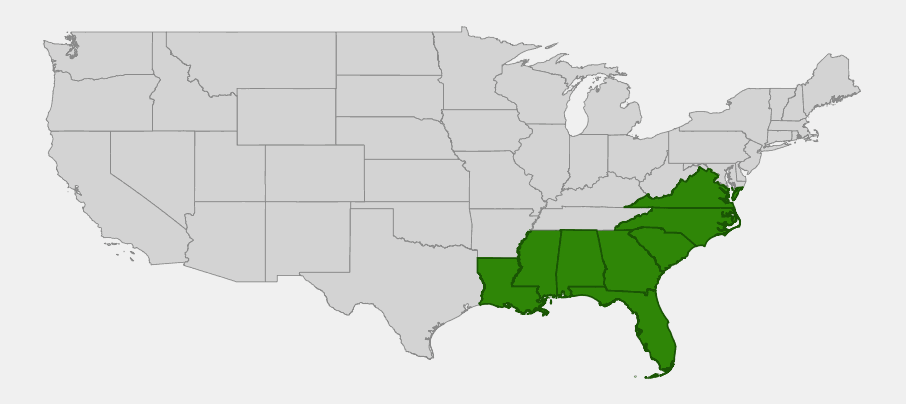
📋 Regional plant lists featuring Turkey Oak: North Carolina & South Carolina, Georgia, Alabama & Mississippi, Arkansas, Louisiana, Eastern Oklahoma & Eastern Texas, Maryland, Virginia & West Virginia
Growing & Care Guide
Turkey Oak is the definition of a low-input native tree for the right site: it needs almost nothing once established, but it has one non-negotiable requirement — deep, well-drained, sandy soil. Planted in rich garden loam or clay, it struggles with root rot and rarely thrives; planted in the loose sand it evolved for, it is nearly bulletproof.
Light
Turkey Oak requires full sun. In its native sandhill habitat it grows in open, sparsely treed conditions with little canopy shade, and it does not perform well or develop good form under shade from taller trees.
Soil & Water
Deep, loose, acidic sand with excellent drainage is essential; this is a tree built for infertile, droughty conditions, not fertile garden beds. Once its taproot is established, Turkey Oak needs no supplemental irrigation even through extended Southeastern dry spells, and it should not be planted in heavy, poorly drained, or regularly irrigated soils, which invite root disease.
Planting Tips
Plant small container or bare-root stock, since oaks with long taproots transplant poorly once they are large; a young Turkey Oak establishes its deep taproot quickly in loose sand and resents root disturbance. Choose an open, sunny site with naturally sandy, infertile soil — adding compost, fertilizer, or irrigation defeats the purpose and can harm the tree. Expect slow top growth in the first few years as the root system develops underground.
Pruning & Maintenance
Turkey Oak needs very little pruning beyond removing dead or damaged wood. Its naturally crooked, irregular form is characteristic of the species, not a flaw to correct, and heavy pruning for a more formal shape works against its wild, sandhill character. The tree tolerates occasional low-intensity fire well once mature, resprouting vigorously from the root crown if top-killed.
Landscape Uses
Turkey Oak fills a niche few other trees can occupy in the landscape:
- Sandhill and scrub restoration plantings on deep, dry, sandy sites
- Xeriscaping in coastal plain gardens where irrigation is limited
- Wildlife gardens — acorns are a major food source for many species
- Companion planting with Longleaf Pine and Wiregrass in fire-adapted native plantings
- Difficult dry-sand sites where lawns and most ornamental trees fail
Wildlife & Ecological Value
As a dominant understory and sub-canopy tree of the longleaf pine sandhill ecosystem, Turkey Oak supports a community of wildlife adapted to fire-maintained, open sandy woodlands.
For Birds
Acorns are eaten by Wild Turkeys (fittingly), Northern Bobwhite, woodpeckers, jays, and numerous migratory songbirds that pass through the Southeastern sandhills. The relatively open canopy structure of sandhill habitat benefits ground-nesting and ground-foraging birds that favor sparse understory conditions over dense forest.
For Mammals
White-tailed Deer, Eastern Gray Squirrels, Fox Squirrels, and numerous small mammals rely heavily on Turkey Oak acorns as a fall and winter food source, especially in years when pine seed production is low. Deer also browse young seedlings and resprouts, which can shape the tree’s form and regeneration in heavily browsed areas.
For Pollinators & Other Insects
Though wind-pollinated, oaks including Turkey Oak host an outsized number of moth and butterfly caterpillar species compared to most other tree genera, making them a foundational food source for the insects that in turn feed breeding birds. The Gopher Tortoise, a keystone species of the sandhill community, also benefits from the open, sandy conditions Turkey Oak habitat provides.
Ecosystem Role
Turkey Oak is both an indicator and a structural component of longleaf pine sandhill habitat, one of the most fire-dependent and biodiverse ecosystems in North America — and also one of the most reduced, with well under five percent of historic longleaf pine sandhill acreage remaining. Its thick bark and resprouting ability let it persist through the frequent fires this community needs, while its acorns cycle nutrients and energy through an otherwise extremely nutrient-poor sandy system.
Cultural & Historical Uses
Turkey Oak wood is dense and hard but typically too small, twisted, and knotty for conventional lumber; historically it saw limited local use for fence posts and fuelwood, where its tendency to grow crooked mattered less than its durability and hot, long-burning fire. It was not a significant timber species commercially, unlike many of its taller oak relatives.
The acorns, like those of other red oaks, are high in bitter tannins and were processed by some Indigenous peoples through leaching before being used as a food source, though turkey oak acorns were generally considered less desirable for human use than the sweeter acorns of white oaks. Early naturalists, including the botanist for whom “Catesby Oak” is named, documented the species’ distinctive sandhill habitat as an important feature distinguishing the Deep South’s interior landscape.
Today, Turkey Oak’s chief cultural significance is ecological and educational: it is a widely used indicator species for identifying intact or restorable longleaf pine sandhill habitat, and interpretive signage featuring the species, as seen at state parks and nature preserves across its range, helps visitors recognize this distinctive Southeastern plant community.
Frequently Asked Questions
Why is it called Turkey Oak?
The deeply cut, narrow lobes of the leaves spread out in a shape that resembles a turkey’s foot, giving the species its common name. It is unrelated to the European Turkey Oak (Quercus cerris), which shares the name by coincidence.
Can Turkey Oak grow in regular garden soil?
Not well. Turkey Oak is adapted to deep, dry, infertile sand, and it tends to struggle with root problems in rich, moisture-retentive garden soils. It is best suited to naturally sandy sites rather than amended or irrigated beds.
Is Turkey Oak drought tolerant?
Yes, exceptionally so once established. It is one of the most drought-tolerant oaks in the Southeast, native to some of the driest, most well-drained sites in the region.
Do Turkey Oak acorns take one year or two to mature?
Two years, like other members of the red oak group. Flowers appear in spring, but the acorns do not fully mature and drop until the following autumn.
Is Turkey Oak a good shade tree?
Not really — it stays relatively small (usually 20–30 ft) with an open, irregular crown, so it provides light, dappled shade rather than the dense canopy of larger oaks. It is better suited to restoration and wildlife plantings than as a conventional shade tree.

Looking for a nursery that carries Turkey Oak?
Browse our native plant nursery directory: Virginia & South Carolina · North Carolina · Georgia & Florida · Alabama · Mississippi & Louisiana