
Shiny Blueberry (Vaccinium myrsinites)
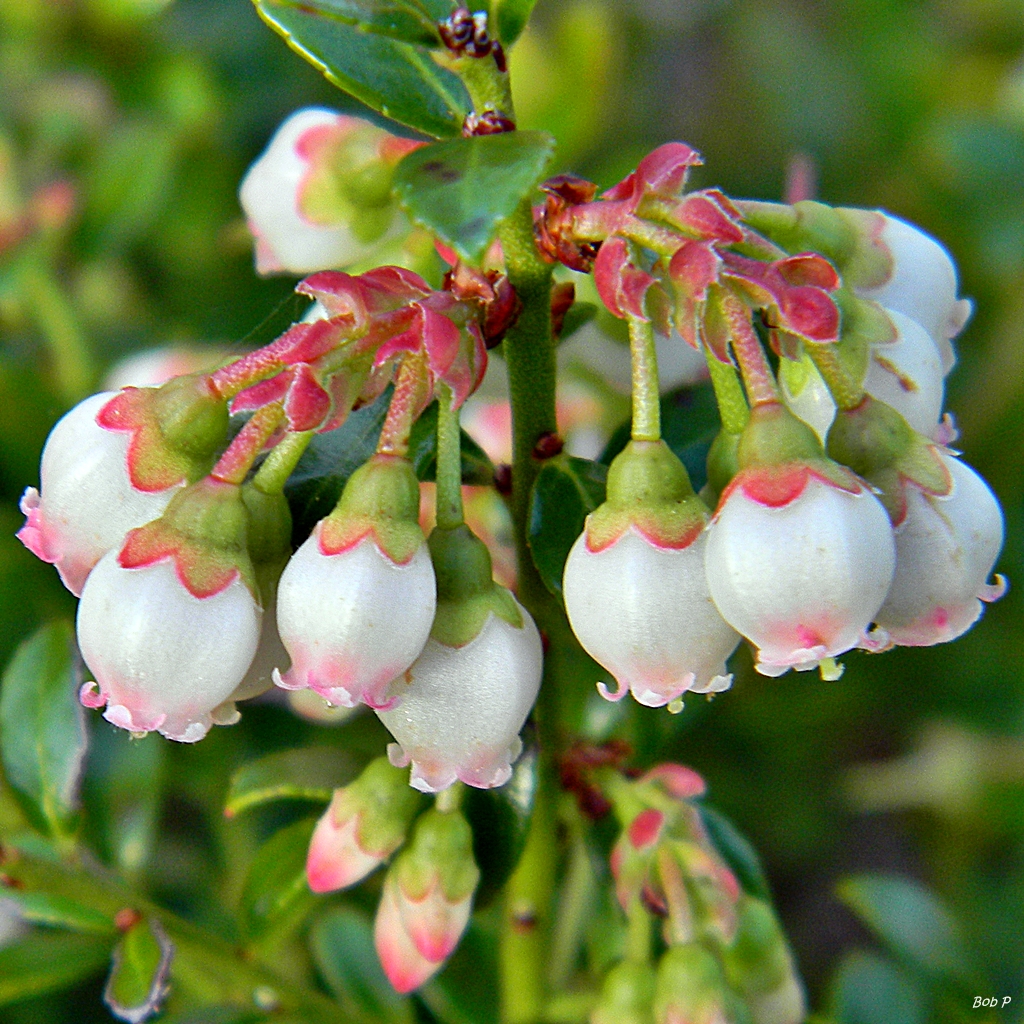
Vaccinium myrsinites, the Shiny Blueberry or evergreen blueberry, is a low, evergreen wild blueberry of the southeastern Coastal Plain. It belongs to the heath family (Ericaceae) and is one of the most common shrubs in the ground layer of Florida’s pine flatwoods, sandhills and scrub, where it spreads by underground stems into knee-high patches with small, glossy leaves.
From late winter into spring, shiny blueberry covers itself with clusters of small, urn-shaped flowers, white with pink to red rims and red-tinged stalks. They are among the earliest bee flowers of the year in Florida. By late spring and early summer the flowers have turned into small, sweet, black to dark blue berries that are taken quickly by birds, gopher tortoises, foxes, bears and people who know where to look.
For gardeners, shiny blueberry is a tough, drought-tolerant groundcover shrub for sunny, sandy, acid soils, the kind of site where lawn grass fails. This guide explains how to identify it, where it grows, how to grow it, and why it matters to the wildlife of fire-maintained pinelands.
Identification
Several low blueberries grow together in the Southeast. Shiny blueberry is recognized by its combination of evergreen, glossy green leaves, a habit of 1 to 2 feet, and small black fruits.
Growth Habit
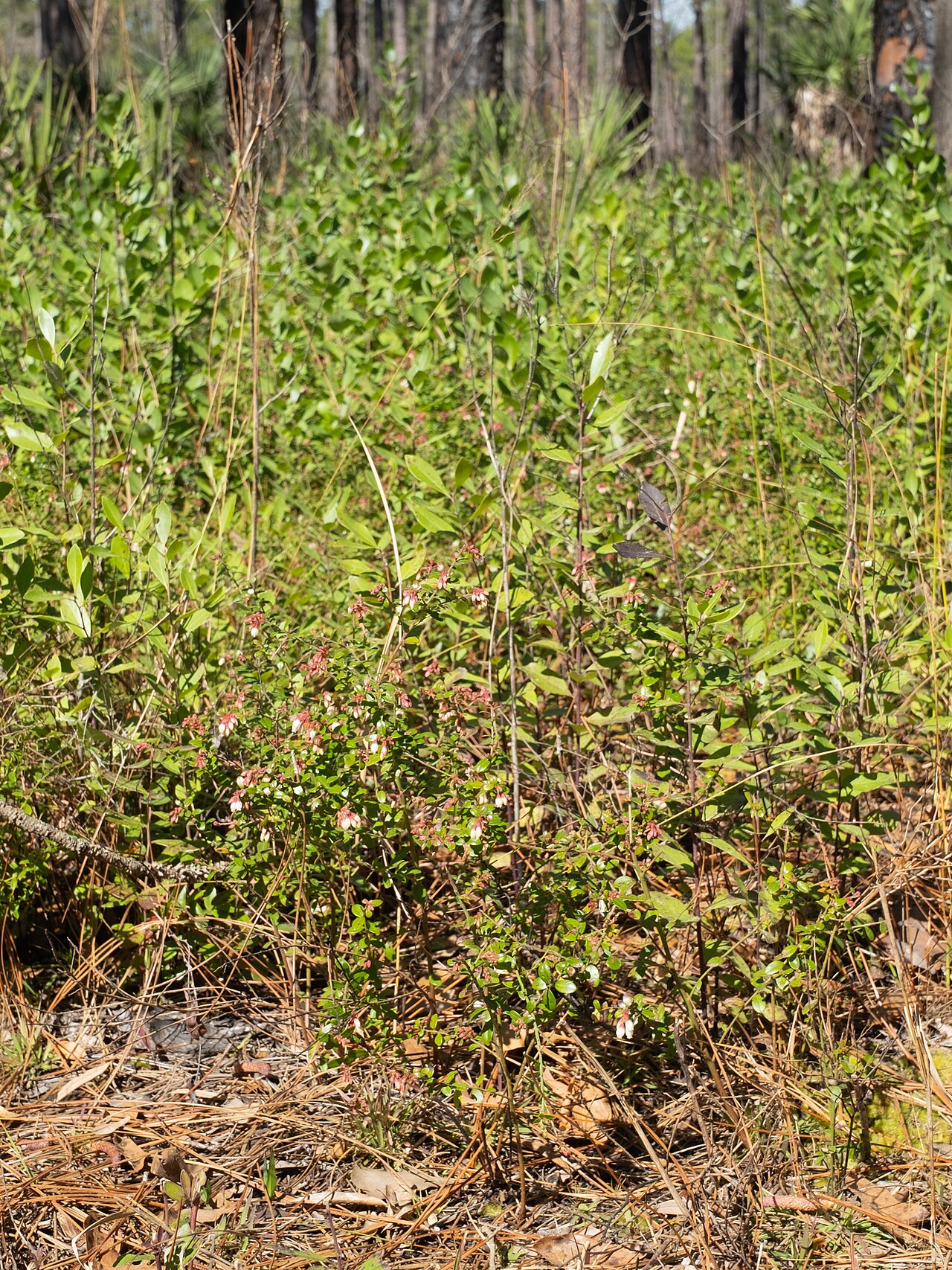
Shiny blueberry is a small, upright to spreading shrub, usually 1 to 2 feet tall and occasionally up to about 3 feet. It spreads by rhizomes and often forms loose colonies several feet across. The twigs are green to reddish, angled and finely hairy, and older stems are gray-brown.
Leaves
The leaves are evergreen, alternate, small and leathery, usually ½ to 1 inch long, elliptic to oval, with smooth or finely toothed edges. They are bright, glossy green above and paler beneath, where tiny stalked glands can be seen with a hand lens. New growth is often red-tinged, and in winter the foliage may turn bronze or reddish. Darrow’s blueberry (V. darrowii), which grows in the same habitats, has smaller, dull, blue-gray leaves.
Flowers
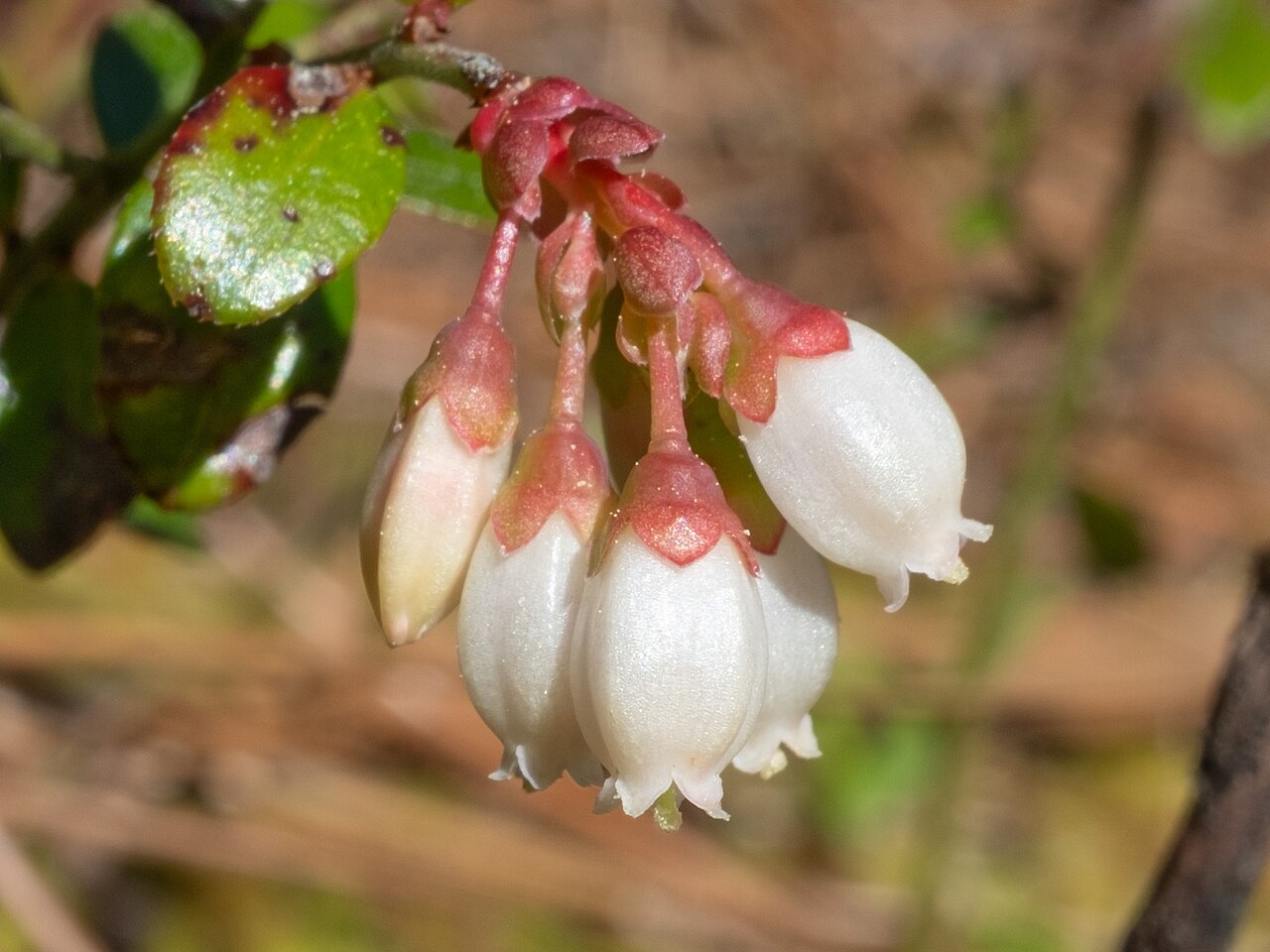
The flowers hang in short, dense clusters near the ends of the twigs. Each one is an urn-shaped bell about ¼ inch long, white to pale pink with a red to pink rim and five tiny curled lobes at the mouth. The flower stalks and the calyx are often bright red. In Florida plants can begin flowering in December and usually peak from February to April, before or as new leaves appear.
Fruit
The berries are round, about ¼ inch across, and black or very dark blue, sometimes with a thin whitish bloom. They ripen from about April to June. Like other blueberries they are sweet and edible, with many tiny seeds, though the crop on any one plant is small.
Quick Facts
| Scientific Name | Vaccinium myrsinites |
| Family | Ericaceae (heath family) |
| Plant Type | Low evergreen shrub; spreads by rhizomes |
| Mature Height | 1–2 ft (occasionally to about 3 ft) |
| Mature Spread | 2–4 ft; colonies wider over time |
| Growth Rate | Slow to moderate |
| Sun Exposure | Full sun to part shade |
| Water Needs | Low; very drought tolerant once established |
| Soil Type | Well-drained to seasonally moist acid sands |
| Soil pH | About 4.0–5.5 (strongly acid) |
| Bloom Time | December–May, peaking February–April |
| Flower Color | White to pale pink with red-tinged rims |
| Fall Color | Often bronze to reddish in winter |
| Fruit | Small black to dark blue berries, April–June |
| Deer Resistant | No; deer browse the shoots |
| USDA Hardiness Zones | 8–10 |
Native Range
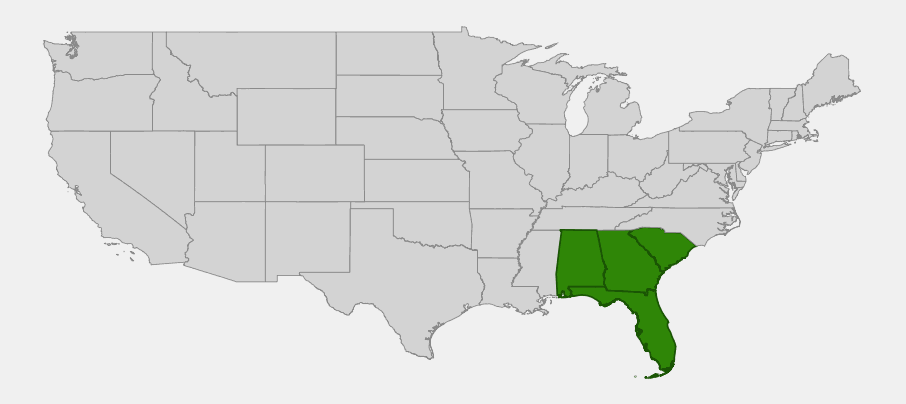
Shiny blueberry is a southeastern Coastal Plain species. USDA PLANTS lists it as native to Alabama, Florida, Georgia and South Carolina. It was described by Lamarck in 1783 from a specimen collected near St. Augustine, Florida.
Florida is the center of its range. It grows through the Panhandle and down the peninsula into south Florida, reaching the southeast coast in Palm Beach and Martin counties. In Georgia, Alabama and South Carolina it is mostly limited to the sandy lower Coastal Plain.
Its main habitats are pine flatwoods, sandhills, scrub and dry oak woodlands, where it grows with wiregrass, saw palmetto and other low shrubs. These are fire-dependent communities. Shiny blueberry burns back in fires but resprouts quickly from its rhizomes, and plants often flower and fruit heavily a year or two after a burn.
📋 Regional plant lists featuring Shiny Blueberry: North & South Florida · Alabama, Georgia & Mississippi · North & South Carolina
Growing & Care Guide
Shiny blueberry is easy in the right conditions: sun, sand and acid soil. It is sold by native plant nurseries in Florida, and container-grown plants establish far better than wild plants, which have deep, wide-spreading rhizomes and rarely survive digging.
Light
Full sun gives the most flowers and fruit and the densest plants. It tolerates part shade, such as the light shade under pines, but becomes sparse and fruits poorly in heavy shade.
Soil & Water
Plant it in well-drained, acid, sandy soil low in nutrients. It will not thrive in alkaline soil, limestone fill or near concrete foundations, where the pH is high. Water regularly for the first growing season. After that it is very drought tolerant and usually needs no irrigation. Avoid fertilizer except, if needed, a small amount of an acid-forming product made for azaleas or blueberries.
Planting Tips
Plant in fall or winter, spacing plants 2 to 3 feet apart for a groundcover. Mulch with pine straw or leaves, which keeps the soil acid and cool. It works well in front of taller native shrubs, along paths, and in sunny, sandy areas being converted from lawn.
Pruning & Maintenance
Little care is needed. To rejuvenate old, woody patches, cut stems to near the ground in late winter, imitating a fire. Plants resprout vigorously from the rhizomes. Pull competing weeds and grasses while plants are establishing.
Propagation
Divide rhizomatous clumps in winter, or root softwood cuttings in late spring in an acid peat and perlite mix under mist. Seed can be cleaned from ripe berries and sown on the surface of moist, acid potting mix. Seedlings are slow and may take several years to flower.
Landscape Uses
- Groundcover for sandy sites: a low, evergreen alternative to lawn on dry, acid sand
- Wildlife gardens: early nectar for native bees and summer berries for birds
- Edible landscaping: small, sweet wild blueberries in late spring
- Pine flatwoods and sandhill restoration: part of the native shrub layer under longleaf and slash pine
- Rain gardens and swale edges: tolerates short periods of seasonal moisture on the upper slopes
Wildlife & Ecological Value
Wild blueberries are some of the most valuable native shrubs for wildlife in the Southeast. Shiny blueberry contributes early flowers in late winter and fruit in late spring, and its dense, low growth provides cover for small animals.
For Pollinators
Blueberry flowers keep their pollen inside tube-shaped anthers that release it best when shaken by vibration. Bumblebees and the southeastern blueberry bee (Habropoda laboriosa) are especially good at this “buzz pollination”. The flowers also offer nectar to other native bees and early butterflies. The Xerces Society lists it as of special value to native bees.
For Birds
The berries are eaten by wild turkey, northern bobwhite, northern mockingbird, brown thrasher, gray catbird, eastern towhee and many other birds. Low patches also give cover and nesting sites to ground-dwelling birds such as Bachman’s sparrow.
For Mammals
Gopher tortoises, foxes, raccoons, opossums and Florida black bears eat the fruit. White-tailed deer browse the leaves and twigs, especially fresh regrowth after a fire.
Ecosystem Role
Shiny blueberry is a characteristic member of the low shrub layer of fire-maintained pinelands. Its rhizomes let it survive frequent burns, and its fruit is an important food in late spring before many other wild fruits ripen. Like other members of the heath family, it relies on root fungi (ericoid mycorrhizae) to take up nutrients from poor, acid soils. Seed-harvester ants have been photographed carrying off fallen berries.
Cultural & Historical Uses
Lamarck named Vaccinium myrsinites in 1783. The species name means “like Myrsine“, a reference to its small, leathery leaves. Its type specimen was collected near St. Augustine in 1779, when Florida was a British colony, making it one of the earlier southeastern plants to be described scientifically.
Wild blueberries of many species were an important seasonal food for Native American peoples across eastern North America, eaten fresh and dried for later use. Shiny blueberry’s small crop, scattered over large areas of pine woods, was gathered in the same way by early settlers and is still picked by hikers and foragers in Florida.
Shiny blueberry is a tetraploid, and some botanists have suggested that it arose from hybridization between Darrow’s blueberry and another southern low blueberry. It still hybridizes with related species where they grow together, which can make some plants hard to name. In gardens it is grown mainly as a native groundcover rather than for fruit production.
Frequently Asked Questions
Are shiny blueberry fruits edible?
Yes. The small black berries are sweet and can be eaten fresh or added to baked goods. Each plant produces only a modest crop, so most gardeners share them with the birds.
How is shiny blueberry different from Darrow’s blueberry?
Both are low evergreen blueberries of Florida pinelands. Shiny blueberry has glossy, bright green leaves and black fruit. Darrow’s blueberry has smaller, dull blue-gray leaves and blue fruit with a powdery bloom.
Will shiny blueberry grow in my yard?
It grows well in sunny, sandy, acidic soil in the Coastal Plain of Florida, Georgia, Alabama and South Carolina. It does poorly in clay, alkaline soil, or rich, frequently watered garden beds.
Does shiny blueberry stay green all year?
Yes, it is evergreen, though the leaves often take on bronze or reddish tones in winter, and new spring growth is red-tinged.
How do I keep it compact?
In late winter every few years, cut the oldest stems close to the ground. Plants resprout from their rhizomes and flower more heavily on the new growth, just as they do after a natural fire.

Looking for a nursery that carries Shiny Blueberry?
Browse our native plant nursery directory: Alabama · Florida & Georgia · South Carolina