
Willowleaf Aster (Symphyotrichum praealtum)
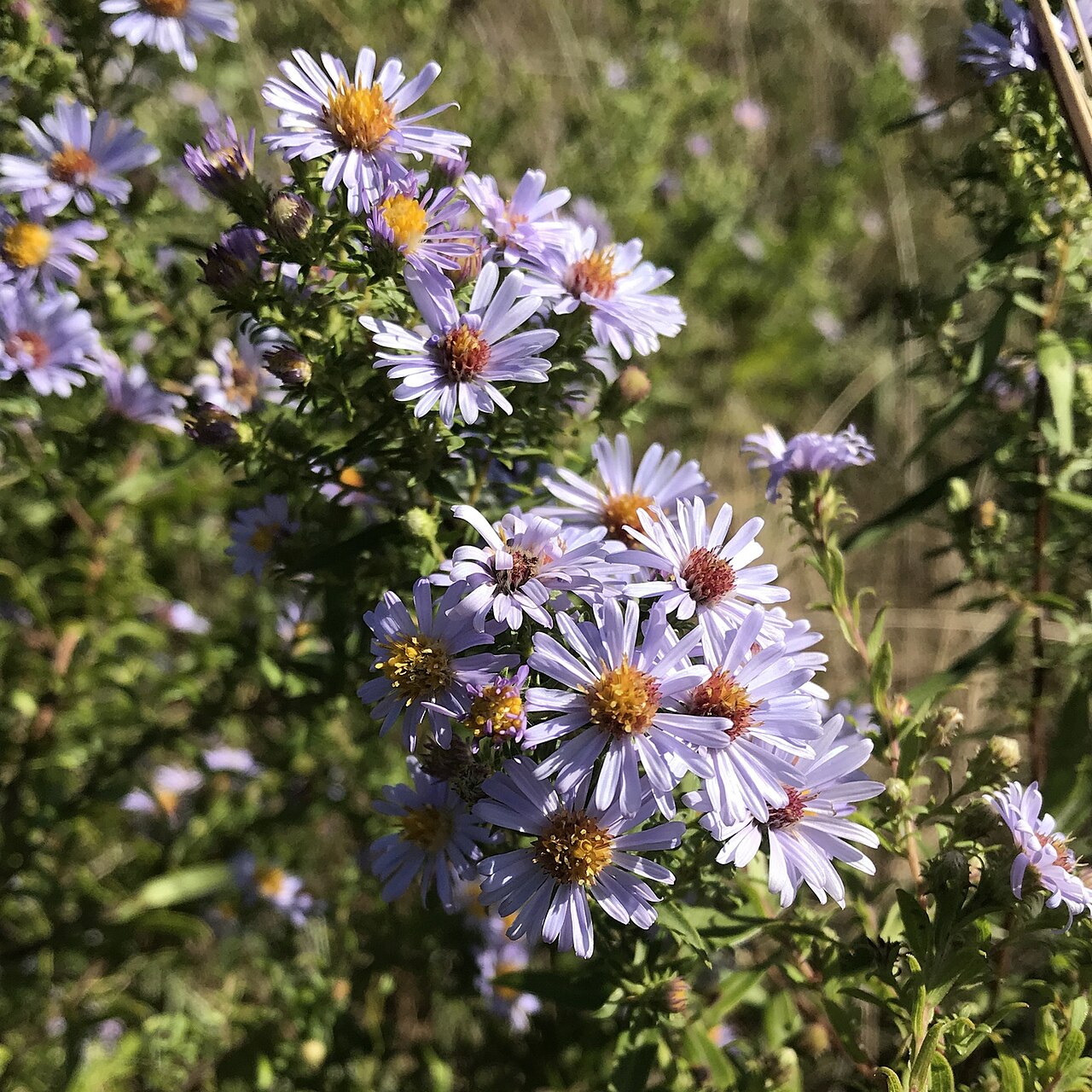
Symphyotrichum praealtum (formerly Aster praealtus), the Willowleaf Aster or willow aster, is a tall, colony-forming native aster of moist prairies, meadows, shores and roadside ditches. It is most common in the central United States, from the Great Lakes and the Mississippi Valley to Texas, and it reaches scattered sites in the East, southern Ontario and northern Mexico. In late summer and fall its leafy stems carry dense, branching sprays of pale lavender flowers with yellow centers.
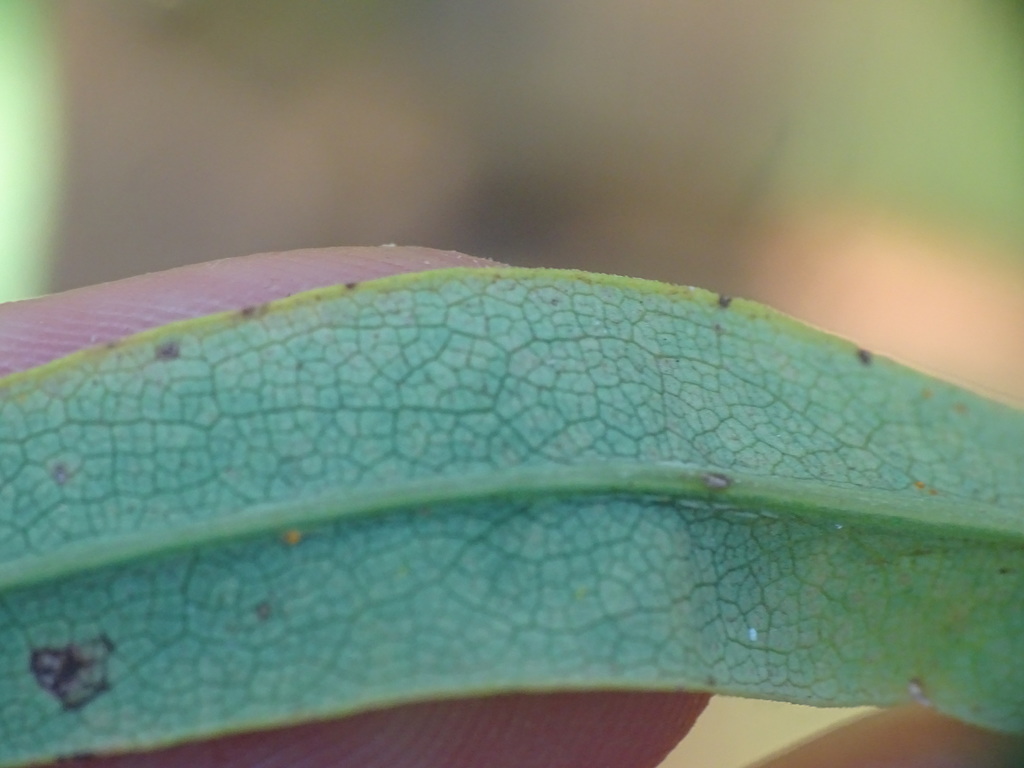
It is named for its long, narrow, willow-like leaves, which are firm and slightly leathery and have a distinctive network of raised veins on the underside, the best way to tell it from similar asters. Like many asters, it spreads by underground rhizomes into large clonal patches, making it an excellent plant for stabilizing moist soils and for big, naturalistic plantings.
Willowleaf aster is one of the last native flowers to bloom in many areas, often into November, and it supplies nectar to bees and butterflies when little else is flowering. It is globally secure but rare at the edges of its range and is listed as endangered in New Jersey and threatened in Ontario. This guide covers how to identify it, where it grows, how to grow it and its value to wildlife.
Identification
Willowleaf aster is a tall, rhizomatous aster with narrow, firm leaves and many pale lavender flower heads. The net-like veins on the leaf undersides are the most reliable field mark.
Stems & Leaves
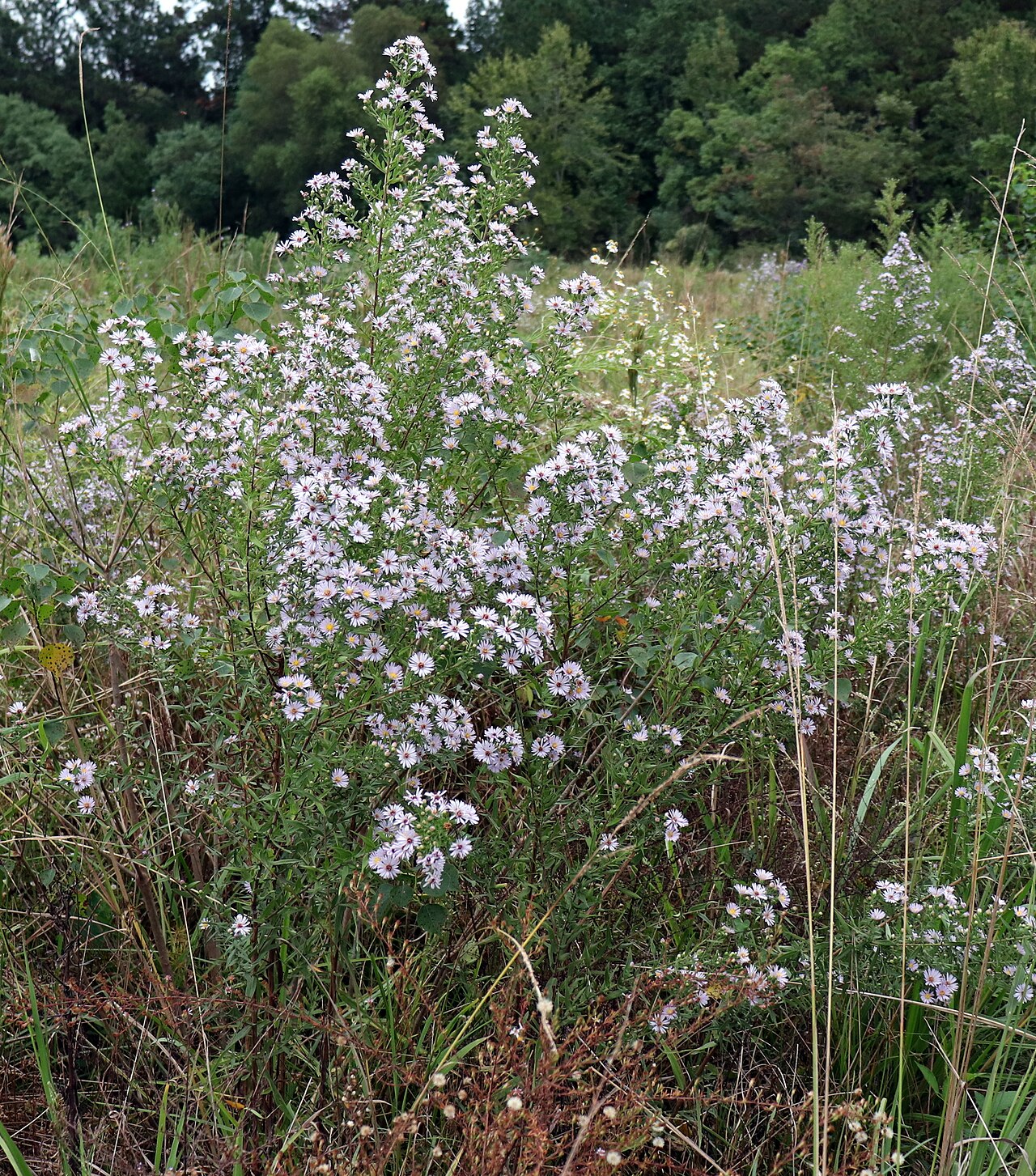
Stems are 2 to 5 feet tall (sometimes taller), smooth or with lines of fine hairs, and branched in the upper part. The leaves are alternate, linear to narrowly lance-shaped, typically 2 to 5 inches long and less than ½ inch wide, with smooth or slightly toothed edges and pointed tips. They are firm, somewhat leathery and rough or smooth above, and the underside shows conspicuous, raised, net-like (reticulate) veins, with the small veins forming tiny areoles. The lower leaves often wither by flowering time.
Flowers
From late August to October or November, the upper branches carry dense, leafy sprays of many flower heads, each about ¾ to 1 inch across. Each head has many pale violet to lavender (occasionally whitish) ray florets around a center of cream to pale yellow disk florets that turn reddish-purple with age. The bracts around the head are narrow, overlapping and green-tipped.
Fruit
The seeds are small achenes with tufts of whitish bristles that are carried by the wind in late fall. Willowleaf aster cannot pollinate itself; it needs pollen from a genetically different plant to set seed.
Look-alikes
Panicled Aster (S. lanceolatum) is very similar and hybridizes with it, but its leaves are thinner, without the conspicuous net of raised veins beneath, and its flowers are usually white. Smooth Blue Aster has broader, bluish-green, clasping leaves. New England Aster has hairy, clasping leaves and deep purple rays. Shining aster (S. firmum) has clasping leaves and also hybridizes with willowleaf aster.
Quick Facts
| Scientific Name | Symphyotrichum praealtum (Poir.) G.L. Nesom (syn. Aster praealtus Poir.) |
| Family | Asteraceae (aster family) |
| Plant Type | Rhizomatous herbaceous perennial |
| Mature Height | 2–5 ft |
| Mature Spread | 2–3 ft; spreads into colonies |
| Growth Rate | Fast |
| Sun Exposure | Full sun to light shade |
| Water Needs | Medium to wet; tolerates periodic flooding |
| Soil Type | Clay, loam, silt or sandy soils |
| Soil pH | About 5.5–8.0 |
| Bloom Time | Late August–November |
| Flower Color | Pale lavender to violet rays, yellow disks |
| Fall Color | Late flowers; leaves may redden |
| Fruit | Small achene with whitish bristles |
| Deer Resistant | Moderate; may be browsed |
| USDA Hardiness Zones | 4–9 |
Native Range
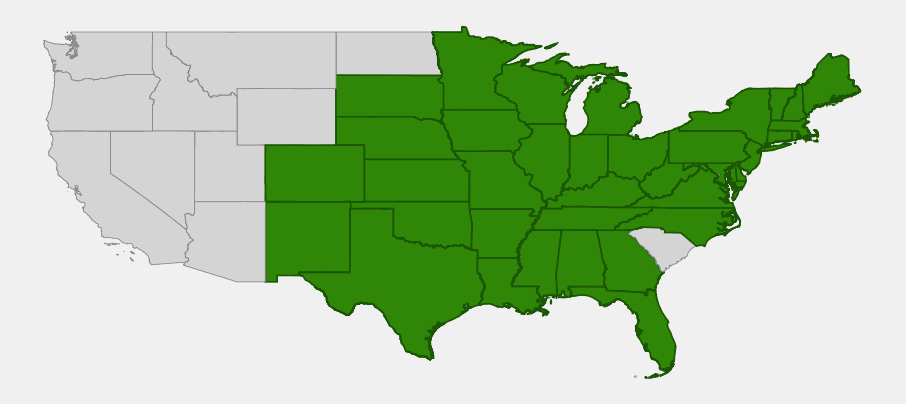
Willowleaf aster is native to much of the eastern and central United States, southern Ontario and the northern Mexican states of Chihuahua, Coahuila and Nuevo León. USDA PLANTS lists it in 37 states, from Minnesota, Wisconsin and Michigan east to New England and south to Georgia, the Florida Panhandle and Texas, and west to South Dakota, Nebraska, Kansas, Colorado and New Mexico. It is most common in the prairie states and the Mississippi and Ohio valleys, including Missouri, Illinois, Iowa, Kansas, Oklahoma, Arkansas and Texas.
In the East it is much rarer and scattered. The Native Plant Trust’s Go Botany describes it as very rare in New England, with records from Connecticut and Massachusetts, and it is listed as endangered in New Jersey. In Ontario it survives in fewer than 15 populations, mostly in the city of Windsor, where it is listed as threatened; during construction of the Herb Gray Parkway, tens of thousands of plants were moved and replanted to protect them.
Its habitats are moist and open: wet and mesic prairies, meadows, oak savannas, the shores of lakes and streams, the edges of marshes, ditches, railroad rights-of-way and roadsides. It depends on periodic disturbance such as fire, drought or mowing to keep its sites open, and it often forms large colonies in moist, low areas.
📋 Regional plant lists featuring Willowleaf Aster: New York, Pennsylvania & Northern New Jersey · Ohio & Indiana · Michigan, Wisconsin & Eastern Minnesota · Kentucky & Tennessee · Nebraska, Kansas & Eastern Colorado · Connecticut, Massachusetts & Rhode Island · New Hampshire, Maine & Vermont · Maryland, Virginia & West Virginia · Delaware, Southern New Jersey & Long Island · Illinois, Iowa & Missouri · Alabama, Georgia & Mississippi · North & South Florida · North & South Carolina · Arkansas, Louisiana, Eastern Oklahoma & Eastern Texas · South & West Texas · North Dakota, South Dakota & Western Minnesota · Arizona & New Mexico
Growing & Care Guide
Willowleaf aster is easy to grow and is offered by native plant nurseries in the Midwest and South, especially for prairie and wetland restorations. It is vigorous and spreads by rhizomes, so give it room in a meadow, rain garden or large border where it can form a colony. In the Northeast, where it is rare, use nursery-propagated plants and never dig from the wild.
Light
Full sun gives the sturdiest stems and the most flowers. It tolerates light shade, but plants become lankier and bloom less.
Soil & Water
It prefers medium to moist soil and tolerates clay, periodic flooding and wet spells, making it ideal for rain gardens and swales. It also tolerates average garden soil and short dry periods once established.
Planting Tips
Plant in spring or fall, 2 to 3 feet apart. Because it spreads, pair it with other vigorous natives such as goldenrods, boneset, ironweed and tall grasses, or contain it with mowing or a root barrier in smaller gardens.
Pruning & Maintenance
For shorter, bushier plants, cut stems back by about a third to a half in late May or early June. Leave the stems standing over winter for seeds and insect shelter, and cut them down in early spring. Divide or pull rhizomes every few years to control spread.
Propagation
Divide clumps or rhizomes in early spring. Seed can be sown outdoors in fall or after 30 to 60 days of cold, moist stratification; because the plant needs cross-pollination, seed collected from a single isolated clone may have low viability.
Landscape Uses
- Rain gardens and swales: tolerates wet soil and periodic flooding
- Prairie and meadow restorations: late color in moist prairies
- Pollinator gardens: nectar for bees and butterflies into November
- Erosion control: rhizomes bind soil on banks and ditches
Wildlife & Ecological Value
As one of the latest native flowers to bloom, willowleaf aster provides an important food source for insects at the end of the season.
For Pollinators
The flowers are visited by many bees, including bumble bees, honey bees and small native bees, as well as butterflies such as monarchs migrating south in fall, skippers and sulphurs, and wasps such as the great golden digger wasp. Like other asters, it hosts the caterpillars of the pearl crescent and many moths.
For Birds
Sparrows, juncos, goldfinches and other seed-eating birds eat the seeds in fall and winter, and dense colonies provide cover.
For Mammals
Deer and rabbits sometimes browse the plants. Small mammals use the dense colonies for cover.
Ecosystem Role
Its rhizomes form dense colonies that stabilize soil along streams, ditches and wet prairies. Because it needs cross-pollination and blooms so late, its seed set depends on pollinators that remain active late in the year.
Cultural & Historical Uses
The French botanist Jean Louis Marie Poiret described this plant as Aster praealtus in the early 19th century. The species name means “very tall.” Like most North American asters, it was moved to the genus Symphyotrichum by Guy Nesom in 1994, after studies showed that the broad genus Aster mixed unrelated groups.
Botanists have described several varieties of willowleaf aster, though they are not consistently recognized, and it hybridizes with panicled aster and shining aster, which can make some plants hard to identify.
In Ontario, willowleaf aster became the focus of a large transplanting effort when the Rt. Hon. Herb Gray Parkway was built in Windsor, where tens of thousands of plants were moved out of the construction zone and replanted.
Frequently Asked Questions
How do I identify willowleaf aster?
Look for tall stems with long, narrow, firm leaves that have a clearly raised network of veins on the underside, and dense sprays of pale lavender flowers with yellow centers in fall.
What is the old name for willowleaf aster?
It was formerly Aster praealtus. Like most North American asters, it is now in the genus Symphyotrichum.
Does willowleaf aster spread?
Yes. It spreads by rhizomes and forms large colonies, which makes it great for meadows, rain gardens and erosion control but too vigorous for small, formal beds.
When does willowleaf aster bloom?
From late August into October or November, often later than most other native wildflowers.
Is willowleaf aster rare?
It is common in the central U.S. but rare in New England and the Northeast. It is endangered in New Jersey and threatened in Ontario.

Looking for a nursery that carries Willowleaf Aster?
Browse our native plant nursery directory: Alabama & Arkansas · Colorado, Connecticut, Delaware, Florida & Georgia · Illinois, Indiana, Iowa & Kansas · Kentucky, Louisiana, Maine, Maryland, Massachusetts, Michigan, Minnesota, Mississippi & Missouri · Nebraska, New Hampshire, New Jersey, New Mexico, New York, North Carolina, Ohio & Oklahoma · Pennsylvania, Rhode Island, South Dakota, Tennessee, Texas, Vermont & Virginia · West Virginia & Wisconsin

