
Saltmarsh Sand Spurry (Spergularia salina)
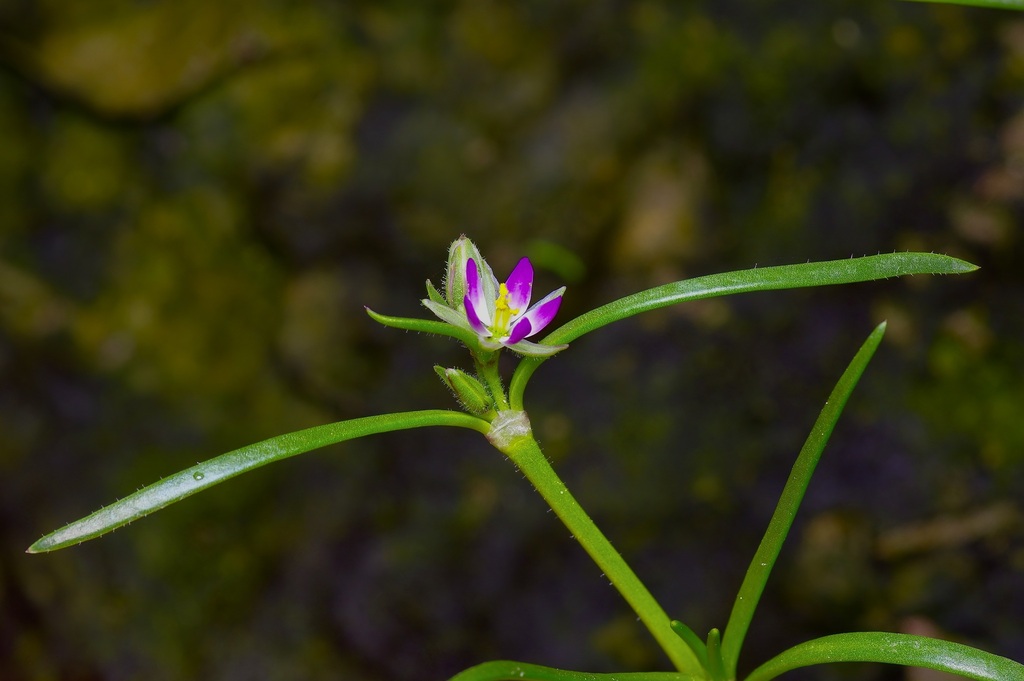
Spergularia salina, called Saltmarsh Sand Spurry, salt sandspurry or lesser sea-spurrey, is a small, salt-loving wildflower of coastal marshes, tidal flats and inland alkali flats. It is a low, sprawling annual (sometimes a short-lived perennial) with fleshy, needle-like leaves and tiny pink, star-shaped flowers that open in sunshine from spring to fall. It belongs to the pink family (Caryophyllaceae).
It is a halophyte, a plant adapted to salty soil. In the United States it grows along the Atlantic, Gulf and Pacific coasts and at natural salt and alkali flats across the West. Many botanists and older references use the name Spergularia marina for the same species.
In the last century saltmarsh sand spurry has also spread inland along highways treated with road salt, especially in the Northeast and Great Lakes region. This guide focuses on the plant in its natural habitats and explains how to identify it, where it is native, and its role in salt marshes and saline wetlands.
Identification
Several sand spurries grow in North America. Saltmarsh sand spurry is recognized by its fleshy leaves, small pink flowers with petals shorter than the sepals, and its salty or alkaline habitat.
Stems & Habit
Plants are low and branching, 2 to 12 inches long, with stems lying flat or curving upward to form loose mats. The upper stems are often covered with small, sticky glandular hairs, while the lower parts are smooth.
Leaves
Leaves are opposite, linear and thick, ½ to 1½ inches long, fleshy and almost round in cross-section, often with a sharp tip. At the base of each leaf pair are small, papery, triangular stipules, a key feature of the genus Spergularia. Leaves often appear clustered at the nodes because short side shoots develop in the leaf axils.
Flowers
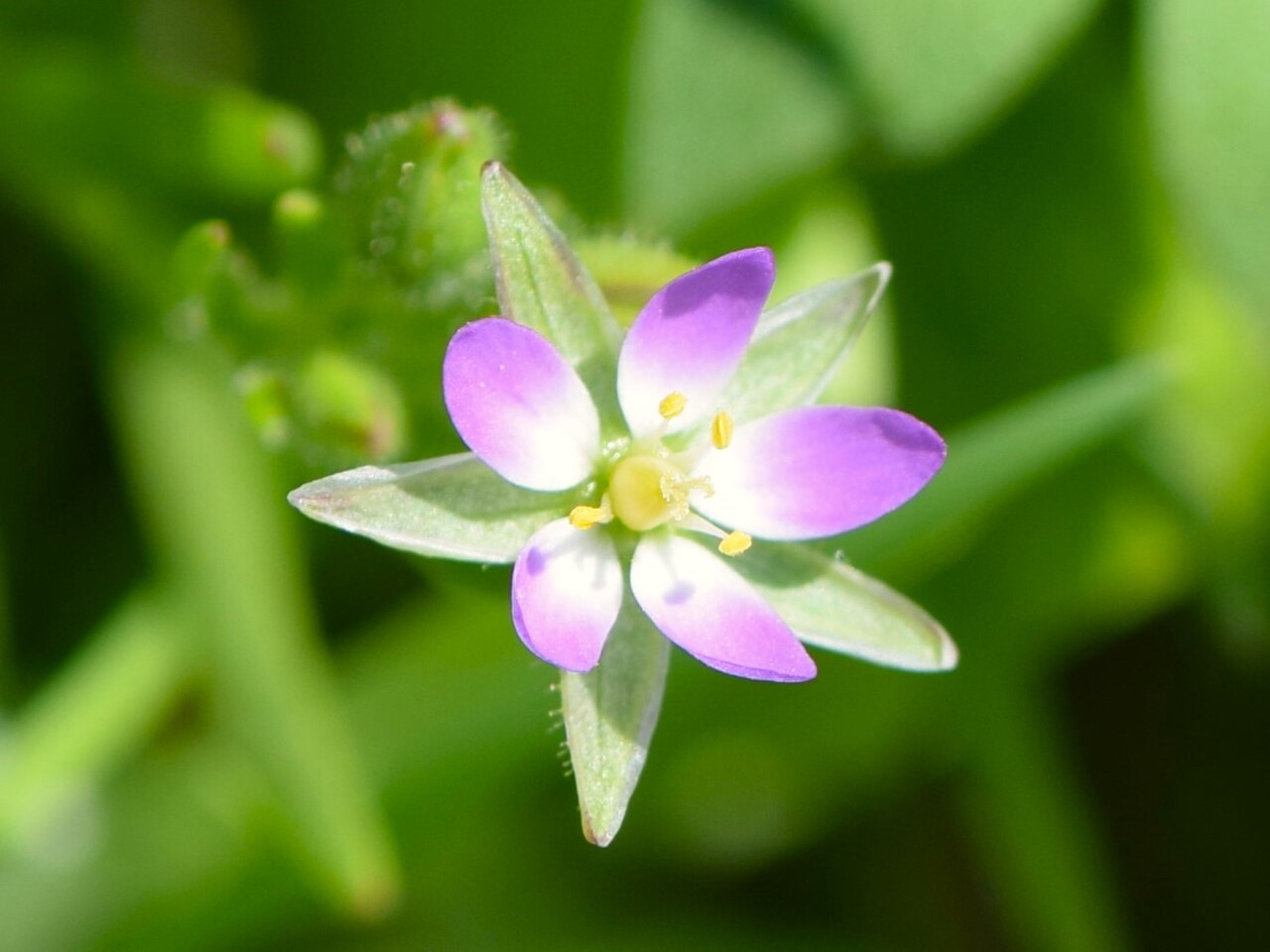
The flowers are small, about ¼ inch across, with five pink to rose petals that are white toward the base and slightly shorter than the five green sepals. There are usually two to five stamens. Flowers open in sunny weather and close in the afternoon or under clouds. They appear from spring into fall, nearly year-round in mild coastal climates.
Fruit & Seeds
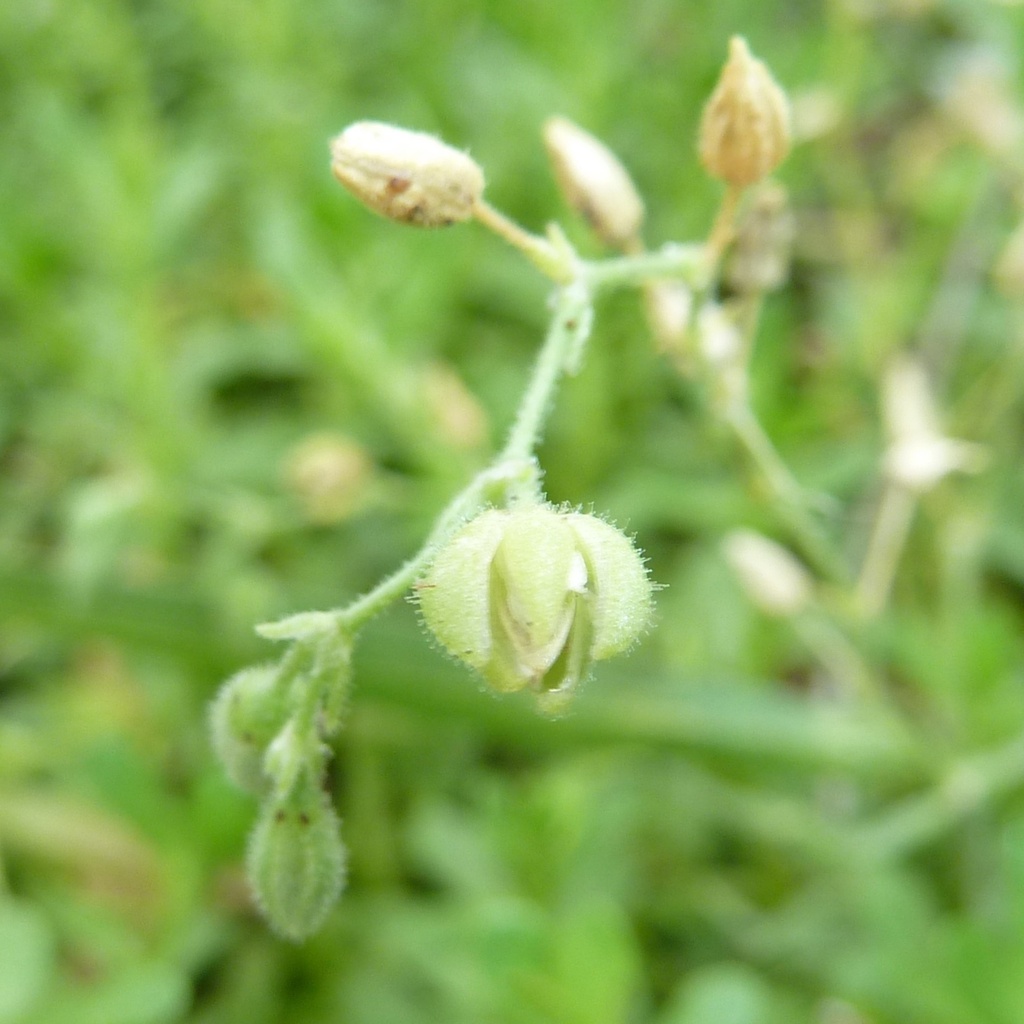
The fruit is an egg-shaped capsule about ⅛ to ¼ inch long that splits into three parts. It contains many tiny, flattened, brown seeds. Some seeds have a thin, papery wing around the edge and some do not, often on the same plant, which helps the plant spread both by wind and water.
Quick Facts
| Scientific Name | Spergularia salina (syn. S. marina) |
| Family | Caryophyllaceae (pink family) |
| Plant Type | Annual or short-lived perennial herb |
| Mature Height | 2–12 in (often prostrate) |
| Mature Spread | 4–12 in |
| Growth Rate | Fast |
| Sun Exposure | Full sun |
| Water Needs | Medium to high; moist saline soil, tolerates tidal flooding |
| Soil Type | Saline or alkaline sand, silt, clay or mud |
| Soil pH | About 6.5–9.0 |
| Bloom Time | April–October (nearly year-round on warm coasts) |
| Flower Color | Pink with a white center |
| Fall Color | None |
| Fruit | Small capsule with winged and wingless seeds |
| Deer Resistant | Yes; rarely browsed |
| USDA Hardiness Zones | Annual; found in zones 3–11 |
Native Range
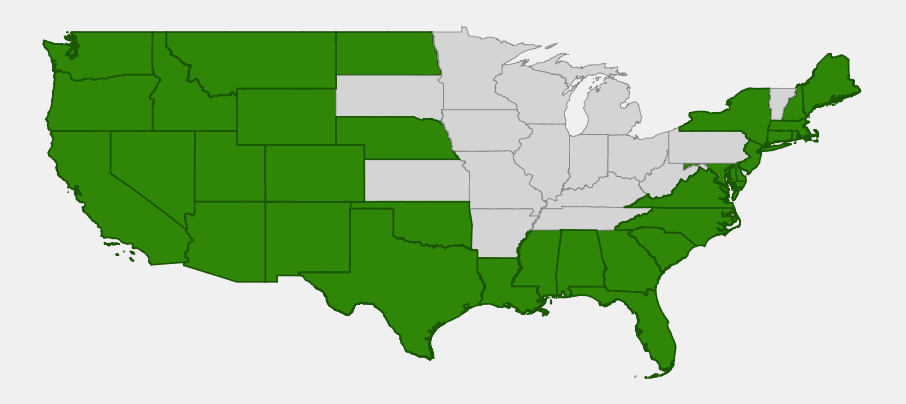
Saltmarsh sand spurry is widespread in the Northern Hemisphere on coasts and saline soils. In North America it occurs along the Atlantic Coast from Newfoundland and the Maritimes south to Florida, along the Gulf Coast to Texas and Mexico, and on the Pacific Coast from British Columbia to California. Inland it is native to natural salt and alkali flats, saline springs and the margins of salty lakes across the West, from the prairie provinces and the Dakotas to Arizona and New Mexico.
USDA PLANTS records it from 40 states. This page lists 32 states where it grows in native coastal or inland saline habitats. Records from Pennsylvania and the Midwest, including Ohio, Indiana, Illinois, Michigan, Wisconsin, Iowa and Kentucky, come mostly from roadsides where it has spread with winter road salt, and regional floras generally treat those roadside populations as introduced.
In the Great Basin and the northern Plains it is a characteristic plant of alkali flats and saline meadows, growing with saltgrass, alkali sacaton and red glasswort. On the coasts it grows at the upper edge of salt marshes, on tidal mud and on sandy shores.
📋 Regional plant lists featuring Saltmarsh Sand Spurry: North & South Florida · Alabama, Georgia & Mississippi · North & South Carolina · Maryland, Virginia & West Virginia · Delaware, Southern New Jersey & Long Island · New York, Pennsylvania & Northern New Jersey · Connecticut, Massachusetts & Rhode Island · New Hampshire, Maine & Vermont · Arkansas, Louisiana, Eastern Oklahoma & Eastern Texas · South & West Texas · Nebraska, Kansas & Eastern Colorado · North Dakota, South Dakota & Western Minnesota · Montana & Wyoming · Utah & Western Colorado · Arizona & New Mexico · California & Nevada · Idaho, Eastern Oregon & Eastern Washington · Western Oregon & Western Washington
Growing & Care Guide
Saltmarsh sand spurry is not grown as a garden ornamental, but it is a useful plant for coastal and saline restoration and an interesting native wildflower to recognize on beaches, marshes and alkali flats.
Light
It needs full sun and open ground. It is quickly shaded out by taller vegetation.
Soil & Water
It grows in moist, salty or alkaline soil, from tidal mud and sand to inland saline clay. It tolerates periodic flooding by salt water and seasonal drying. In ordinary garden soil it can grow but is soon crowded out by other plants.
Planting Tips
For restoration of salt marsh edges or saline wetlands, sow seed on bare, moist saline soil in spring. It is best used with other native halophytes adapted to the site, such as saltgrass and glassworts.
Pruning & Maintenance
No maintenance is needed. As an annual it maintains itself by reseeding where open, moist, saline ground persists.
Propagation
Grow from seed, which germinates readily on moist soil in spring. Seeds can tolerate moderate salinity.
Landscape Uses
- Coastal restoration: for bare upper salt marsh, tidal mud and sandy shore edges
- Saline wetland restoration: for inland alkali flats and saline meadows in the West
- Education: an easy-to-find example of a salt-adapted (halophytic) wildflower
Wildlife & Ecological Value
Saltmarsh sand spurry is a small but common member of the plant communities of salt marshes and alkali flats.
For Pollinators
The small flowers are visited by tiny bees, flies and other small insects, but they also self-pollinate readily, which helps the plant set seed in harsh, windy habitats.
For Birds
Its abundant, tiny seeds are eaten by sparrows, finches, shorebirds and other small birds that forage on mudflats and marsh edges.
For Mammals
It is of little direct value to mammals, though small rodents may eat the seeds.
Ecosystem Role
As a fast-growing annual, it quickly colonizes bare, salty ground where few other plants can grow, such as tidal mud, the edges of salt pans and alkali flats. It helps stabilize these surfaces and adds organic matter, preparing the way for perennial salt-marsh plants.
Cultural & Historical Uses
The genus name Spergularia means “little Spergula,” after the related corn spurry (Spergula arvensis), a European weed of grain fields. The species name salina means “of salt places,” and the older name marina means “of the sea.”
The species has been described under many names, including Arenaria marina, Spergularia marina, Lepigonum marinum and Spergularia salina. Botanists have long debated which name has priority, and current treatments differ.
In recent decades salt sandspurry has become a familiar sight along highways in the northern United States and Canada, where road salt creates miniature salt flats on the shoulders. Its spread along these “salt corridors” is often used as an example of how human activity can create new habitats for plants once confined to coasts and saline flats.
Frequently Asked Questions
Is saltmarsh sand spurry the same as Spergularia marina?
Yes. Spergularia salina and Spergularia marina are two names for the same species. USDA PLANTS uses S. salina; many other references use S. marina.
Where does saltmarsh sand spurry grow?
On salt marshes, tidal flats and sandy shores along the Atlantic, Gulf and Pacific coasts, and on natural salt and alkali flats across the West. It also grows along salted highways farther inland.
Is it native along roadsides in the Midwest?
No. Roadside populations in the Midwest and other inland areas without natural salt flats are considered introduced, spread by de-icing salt.
How do I tell it from red sand spurry?
Red sand spurry (Spergularia rubra) is a European species with thinner, non-fleshy leaves, silvery stipules and slightly larger pink flowers, and it grows on dry, sandy, non-saline ground.
Can I grow saltmarsh sand spurry in my garden?
It is not a typical garden plant. It is best used in coastal or saline restoration projects where few other plants can grow.

Looking for a nursery that carries Saltmarsh Sand Spurry?
Browse our native plant nursery directory: Alabama & Arizona · California · Colorado, Connecticut, Delaware, Florida & Georgia · Idaho · Louisiana, Maine, Maryland, Massachusetts, Mississippi & Montana · Nebraska, Nevada, New Hampshire, New Jersey, New Mexico, New York, North Carolina, North Dakota & Oklahoma · Oregon · Rhode Island, South Carolina, Texas, Utah & Virginia · Washington · Wyoming

