
White Meadowfoam (Limnanthes alba)
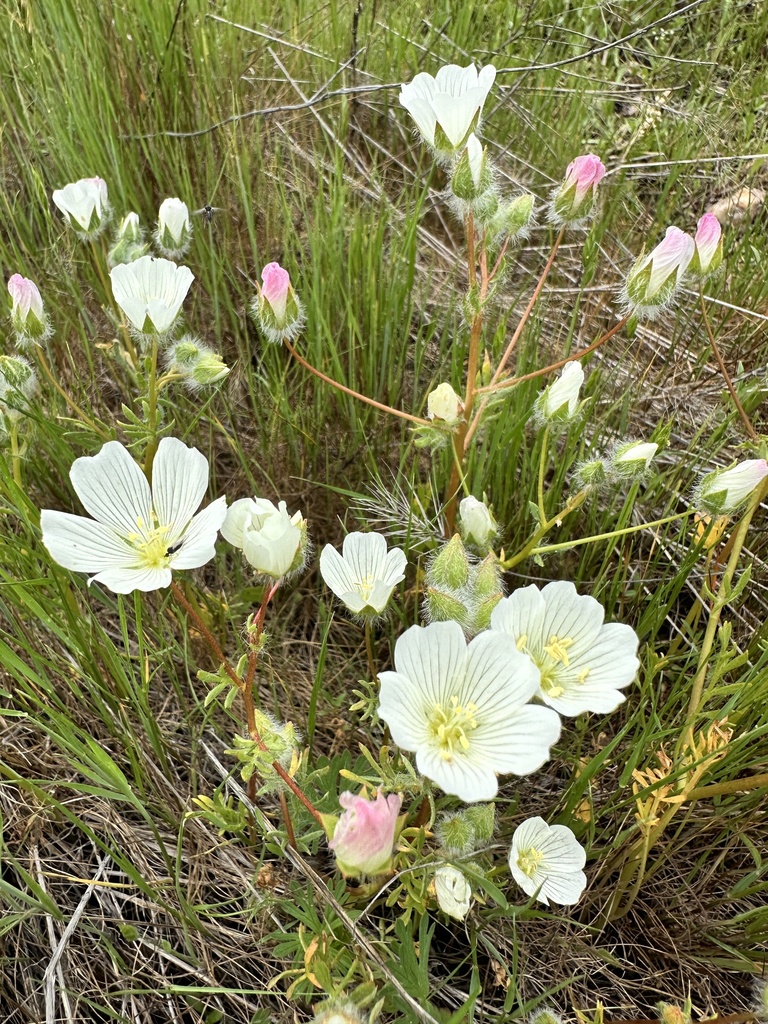
Limnanthes alba, known as White Meadowfoam, is a spring-blooming annual wildflower of California and southwestern Oregon. In wet years it fills the edges of vernal pools, seasonally flooded meadows and wet grasslands with bowl-shaped white flowers, sometimes so thickly that the ground looks covered in foam, which is how meadowfoams got their name. As the flowers age, the petals often take on a pink or lilac blush.
White meadowfoam is also the wild ancestor of a modern crop. Its seeds contain an unusual, very stable oil made of long-chain fatty acids, and since the 1970s plant breeders at Oregon State University and elsewhere have developed it into a commercial oilseed. Meadowfoam seed oil is now grown in Oregon’s Willamette Valley and used in cosmetics, hair care products and lubricants.
In gardens, white meadowfoam is an easy, fast-growing annual for spring color in moist, sunny spots, and a magnet for native bees. This guide covers identification, its native range and vernal pool habitat, how to grow it from seed, and the story of meadowfoam oil.
Identification
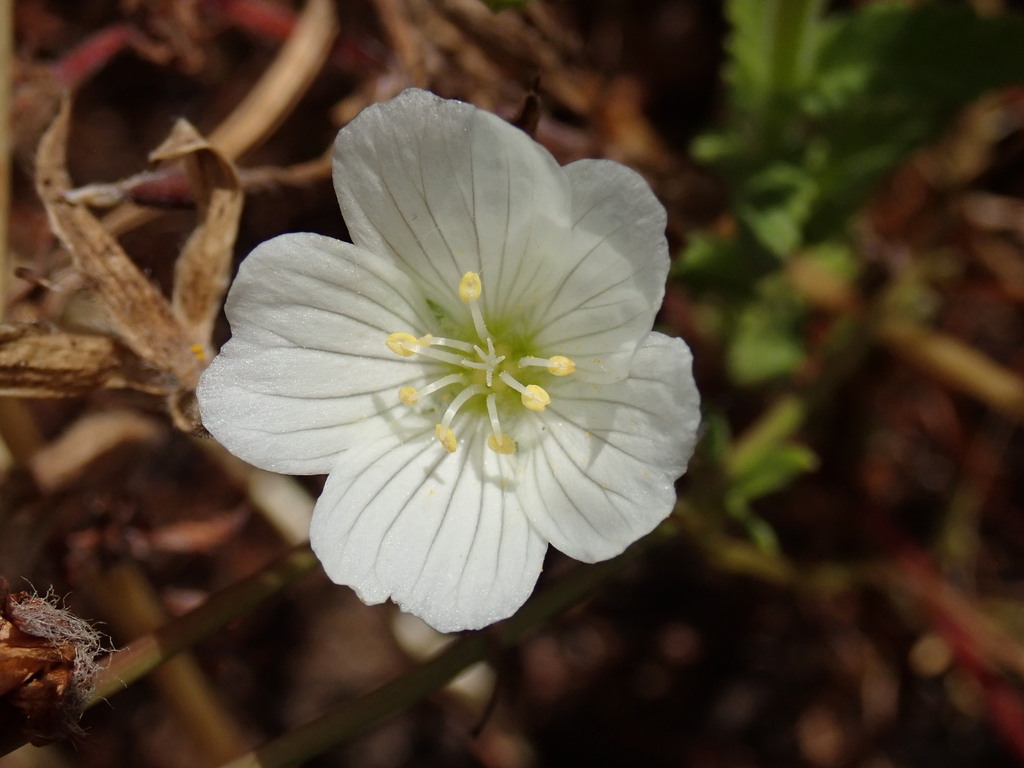
Meadowfoams (Limnanthes) are low annuals with finely divided leaves and cup-shaped five-petaled flowers. White meadowfoam is distinguished by its pure white flowers that often age pink, and by its upright to spreading habit in valley and foothill wetlands.
Growth Habit
White meadowfoam is a winter annual. Seeds germinate with the fall and winter rains, the plants grow through the cool season and flower in spring, and they set seed and die as the soil dries in late spring. Plants are 4 to 12 inches tall, occasionally to about 16 inches, with several stems that are upright or sprawling from the base. The stems are smooth and somewhat fleshy.
Leaves
The leaves are alternate and pinnately divided into about 5 to 9 leaflets, which are themselves toothed or lobed, giving the foliage a soft, ferny look. They are bright green and somewhat succulent.
Flowers
Flowers appear from about February to May, depending on the year and location. Each is borne singly on a long stalk from a leaf axil and is about three-quarters of an inch to an inch across, with five white petals that form a shallow bowl. The petals have faint veins and are often slightly notched at the tip. As the flower ages, the petals frequently turn pink to lilac. In the typical subspecies, the sepals are noticeably hairy; a smooth-sepaled form found in the Sierra Nevada foothills is called subsp. versicolor.
Fruit & Seeds
Each flower produces up to five rounded nutlets, gray to dark brown, with rough, tubercled surfaces. The nutlets fall near the parent plant and lie dormant through the dry summer until the fall rains. They contain the oil that made meadowfoam a crop.
Similar Species
Douglas’ Meadowfoam (Limnanthes douglasii) is the best-known meadowfoam in gardens. Most of its forms have yellow-centered flowers with white tips, the “poached egg” look, though some varieties are white. White meadowfoam lacks the bold yellow center. Several other meadowfoams in California and Oregon are rare and narrowly distributed.
Quick Facts
| Scientific Name | Limnanthes alba Hartw. ex Benth. |
| Family | Limnanthaceae (meadowfoam family) |
| Plant Type | Annual wildflower (winter annual) |
| Mature Height | 4–12 in (occasionally to 16 in) |
| Mature Spread | 6–12 in |
| Growth Rate | Fast |
| Sun Exposure | Full sun |
| Water Needs | Medium to high in winter and spring; dry in summer after seed set |
| Soil Type | Clay, clay loam or silty soils that are wet in winter and spring |
| Soil pH | About 5.5–7.5 |
| Bloom Time | February–May |
| Flower Color | White, often aging to pink or lilac |
| Fall Color | None; plants die after seeding in late spring |
| Fruit | Rounded, rough nutlets (up to 5 per flower), rich in oil |
| Deer Resistant | Moderate |
| USDA Hardiness Zones | Annual; grown as a cool-season annual in zones 7–10 |
Native Range
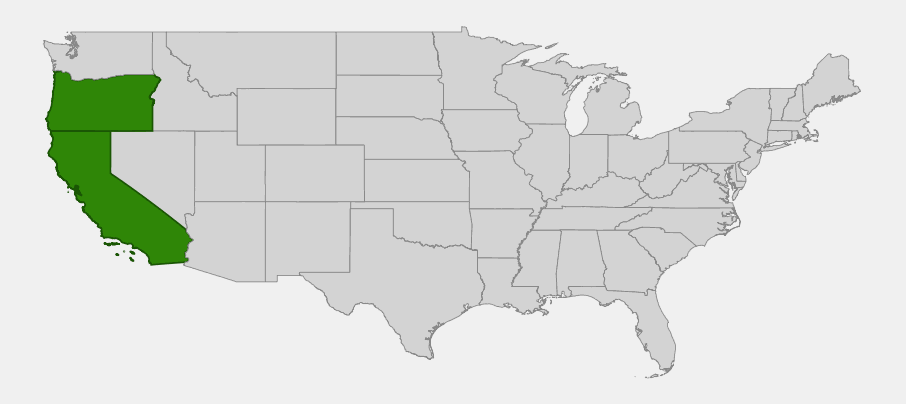
White meadowfoam is native to California and southwestern Oregon, which are the two states recorded by USDA PLANTS. In California it grows in the Sacramento Valley and the adjacent foothills of the Sierra Nevada and the North Coast Ranges, and in scattered sites farther south. In Oregon it is native in the southwest, especially the Rogue Valley and nearby valleys.
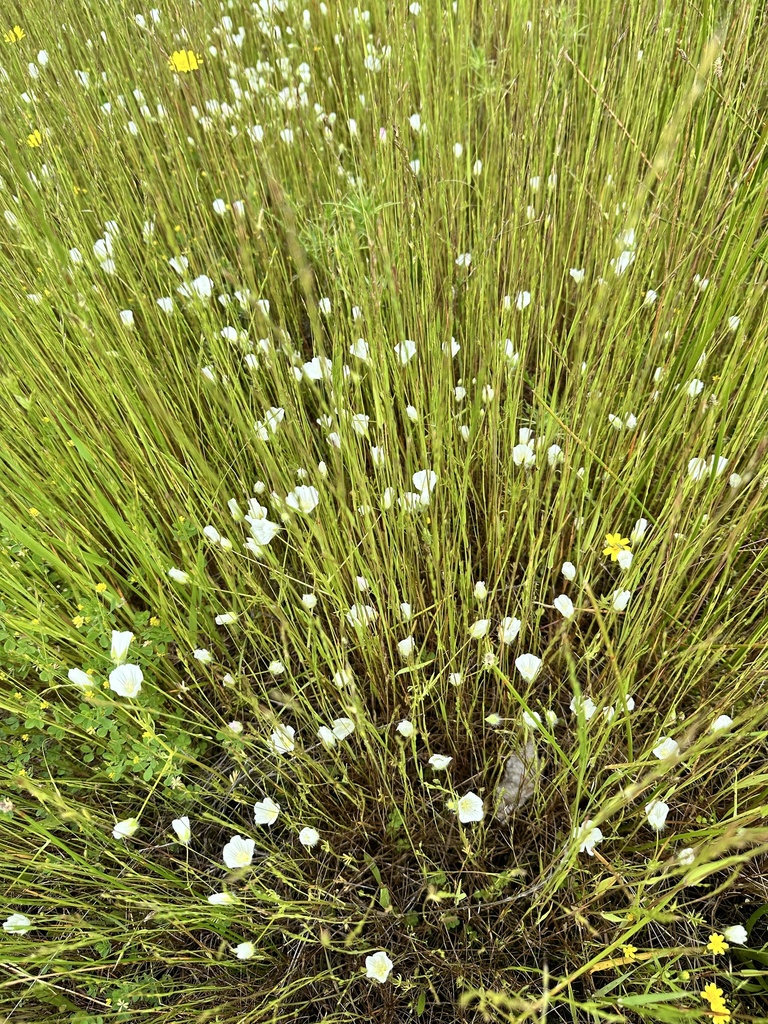
Its classic habitat is the vernal pool landscape: shallow depressions in grassland and oak savanna that fill with rain in winter and dry out by late spring. White meadowfoam grows around the edges of these pools and in other seasonally saturated places, such as wet meadows, swales, seeps and the margins of ditches and streams. It is often part of the colorful rings of wildflowers that bloom around drying vernal pools.
Some botanists include Parish’s meadowfoam of the southern California mountains, a state-listed endangered plant, within this species as a subspecies. Fields of cultivated meadowfoam in the Willamette Valley of Oregon are of bred crop strains, and plants that escape from those fields are not part of the native range. Like other vernal pool species, white meadowfoam has lost much of its habitat to farming and development in the Central Valley.
📋 Regional plant lists featuring White Meadowfoam: California & Nevada · Western Oregon & Western Washington
Growing & Care Guide
White meadowfoam is easy to grow from seed and needs only sun, moisture during the cool season and a place to reseed. Buy seed from native seed companies or nurseries. Seed of crop varieties is sometimes sold too, but for habitat gardens choose wild-type seed from a source near you.
Light
Plant in full sun. In part shade, plants become leggy and flower less.
Soil & Water
White meadowfoam grows best in heavier soils, such as clay or silty loam, that stay moist through winter and spring. It tolerates short periods of standing water. In gardens, water it during dry spells in winter and spring, then let it dry out after it finishes blooming. It is ideal for low spots, rain gardens and the edges of ponds that are wet in winter.
Planting Tips
Sow seed outdoors in fall, just before or with the first rains, scattering it on bare soil and pressing it in lightly or covering it with a thin layer of soil. In cold-winter areas, sow in early spring as soon as the soil can be worked. Thin seedlings to about 6 inches apart. Seed germinates best in cool soil, around 40 to 60°F; warm soil inhibits it.
Pruning & Maintenance
No pruning is needed. Let plants set seed before removing them, and leave some to reseed if you want it to return the next year. Weed competing grasses in winter so seedlings get enough light.
Propagation
Propagate only by seed. Collect the nutlets as the plants turn brown in late spring, dry them and store them in a cool, dry place until fall. Fresh seed is often dormant until it has gone through the warm summer, which matches its natural cycle.
Landscape Uses
- Vernal pool and wetland restoration: a key annual for restoring seasonal wetlands within its range
- Rain gardens and swales: spring flowers in places that are wet in winter and dry in summer
- Wildflower meadows: an early-season annual to mix with goldfields, poppies and other natives
- Pollinator gardens: an important early pollen and nectar source for native bees
- Containers: a quick, pretty spring annual for pots kept moist
Wildlife & Ecological Value
Like other vernal pool annuals, white meadowfoam packs its whole life into a few months, but its flowers feed a remarkable community of insects.
For Pollinators
White meadowfoam is pollinated mostly by bees. Its flowers are visited by many native bees, including solitary mining bees, some of which specialize on meadowfoam pollen, as well as flies and honeybees. Commercial meadowfoam fields rely on bees, and studies of pollination in meadowfoam crops have shown the importance of both honeybees and native bees.
For Birds
Birds such as finches and sparrows eat the seeds when they ripen, and the flowers attract insects that birds feed to their young in spring.
For Mammals
Small mammals eat the oily seeds, and grazing animals sometimes eat the plants. White meadowfoam is not a major food for larger mammals.
Ecosystem Role
White meadowfoam is part of California’s distinctive vernal pool flora, which includes many endemic plants and invertebrates. Its early flowers support native bees that also pollinate other spring wildflowers, and its seeds help maintain the soil seed bank that lets vernal pool plant communities recover after dry years.
Cultural & Historical Uses
The genus name Limnanthes means “marsh flower,” from the Greek limne, marsh, and anthos, flower. White meadowfoam was first collected by the German botanist Karl Theodor Hartweg, who explored California for the Horticultural Society of London in the 1840s, and it was named by George Bentham.
In the 1950s and 1960s, the U.S. Department of Agriculture screened thousands of wild plants looking for new industrial oils, and meadowfoam seed oil stood out. Its fatty acids are unusually long (mostly 20 and 22 carbon atoms), making the oil very stable and resistant to oxidation. Researchers at Oregon State University then spent decades breeding white meadowfoam into a crop with higher yields, more upright growth and better seed retention.
Today meadowfoam is grown commercially in Oregon’s Willamette Valley as a winter rotation crop, often after grass seed. The oil is used in skin and hair care products, cosmetics and specialty lubricants, and the leftover seed meal is used as animal feed and fertilizer.
Frequently Asked Questions
What is meadowfoam seed oil?
It is an oil pressed from the seeds of meadowfoam, mainly cultivated varieties of white meadowfoam (Limnanthes alba). Because its fatty acids are long and very stable, it is used in skin care, hair care and cosmetics, often as a moisturizer.
Is white meadowfoam a native plant?
Yes. White meadowfoam is native to California and southwestern Oregon, where it grows around vernal pools and in wet meadows and grasslands.
How is white meadowfoam different from Douglas’ meadowfoam?
Douglas’ meadowfoam usually has yellow flowers with white tips (the “poached egg plant”), although some forms are all white. White meadowfoam has white flowers without a yellow center, which often fade to pink.
When should I plant white meadowfoam seeds?
In mild-winter climates, sow in fall when the rains begin. In cold-winter areas, sow in early spring. The seeds need cool soil to germinate, and plants flower in spring.
Does white meadowfoam come back every year?
Each plant lives only one season, but if you let it set seed, it will usually reseed and come back in the same spot the following year.

Looking for a nursery that carries White Meadowfoam?
Browse our native plant nursery directory: California · Oregon

