
Stick-Leaf (Mentzelia oligosperma)
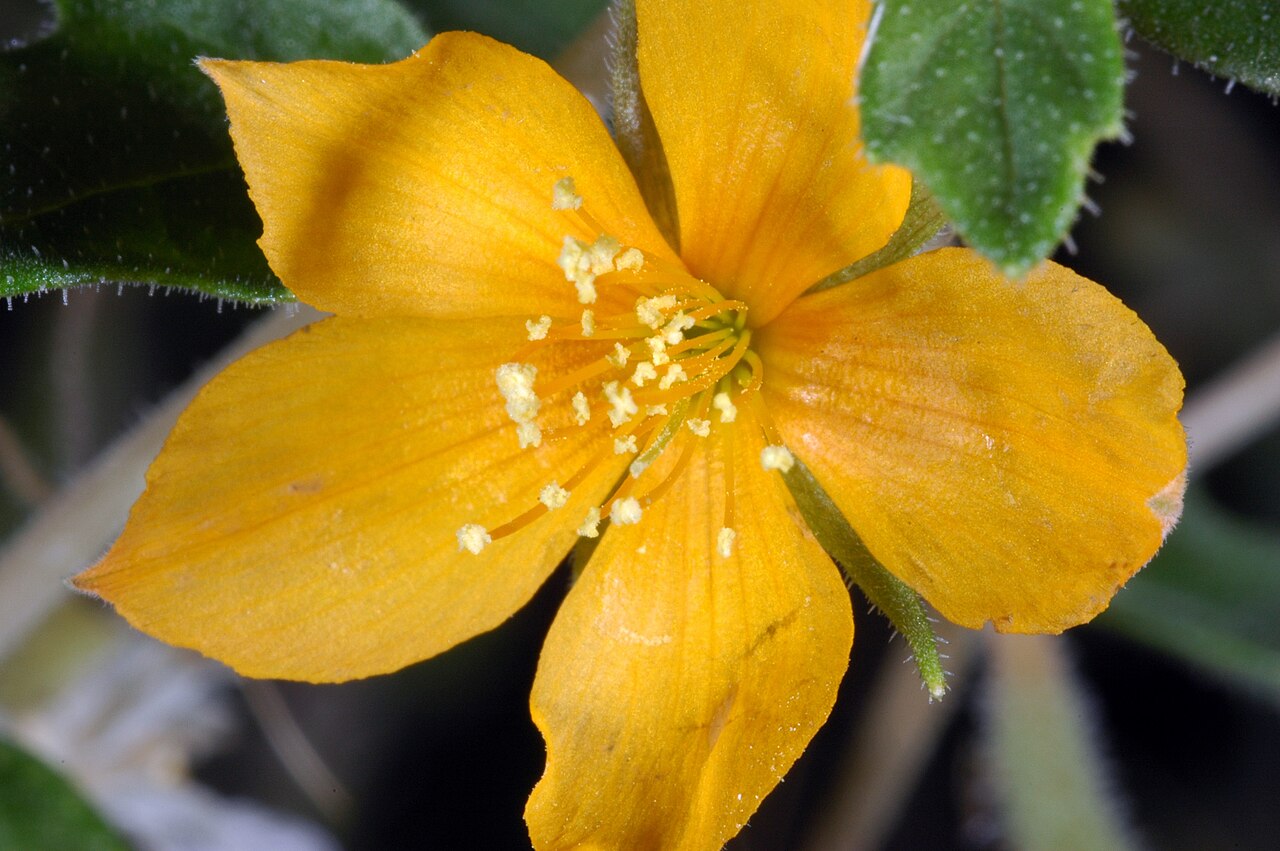
Mentzelia oligosperma, known as Stick-Leaf, stickleaf mentzelia or chickenthief, is a low, bushy perennial of rocky prairies, limestone glades and canyon ledges across the southern Great Plains and the Southwest. It grows 8 to 20 inches tall from a woody base, with brittle, whitish stems and rough, toothed leaves, and from late spring through summer it opens bright orange-yellow, star-shaped flowers about an inch across.
Its names come from its leaves, which are covered with tiny barbed and hooked hairs that grab onto clothing, fur and feathers and are hard to pull off. The flowers open in the morning and close by mid-afternoon, so the plant is easy to miss later in the day. The species name oligosperma means “few-seeded”, referring to its small capsules. It belongs to the blazing star family (Loasaceae).
Stick-leaf is a tough, drought-tolerant wildflower for rock gardens and dry, rocky native plantings. This guide covers how to identify it, where it grows, how to grow it, and its value to pollinators.
Identification
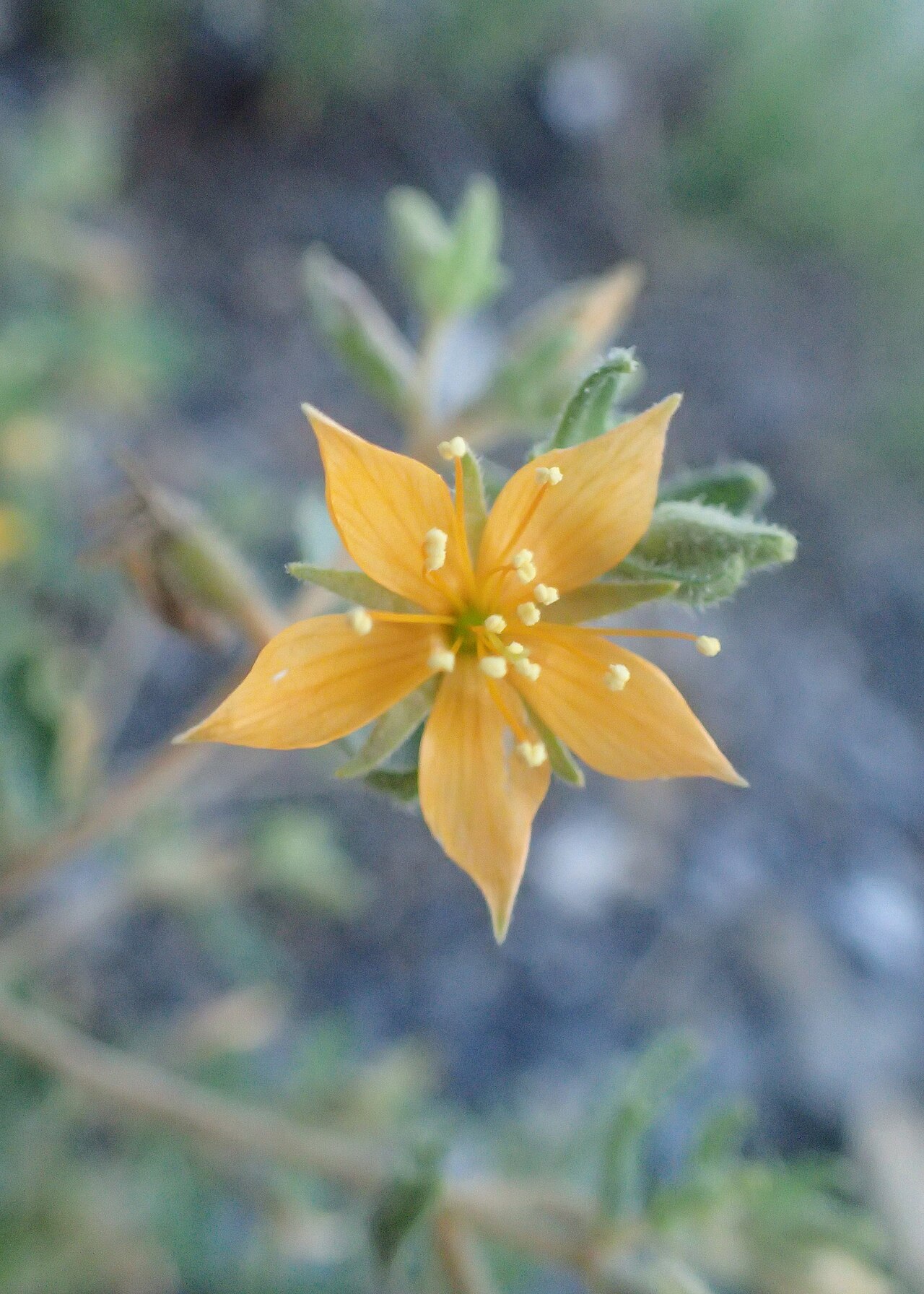
Look for stick-leaf on dry, rocky ground in summer: a low, tangled clump of whitish stems with small, rough, toothed leaves that stick to your sleeves, and a scattering of orange-yellow, five-petaled flowers that are open only in the morning.
Growth Habit
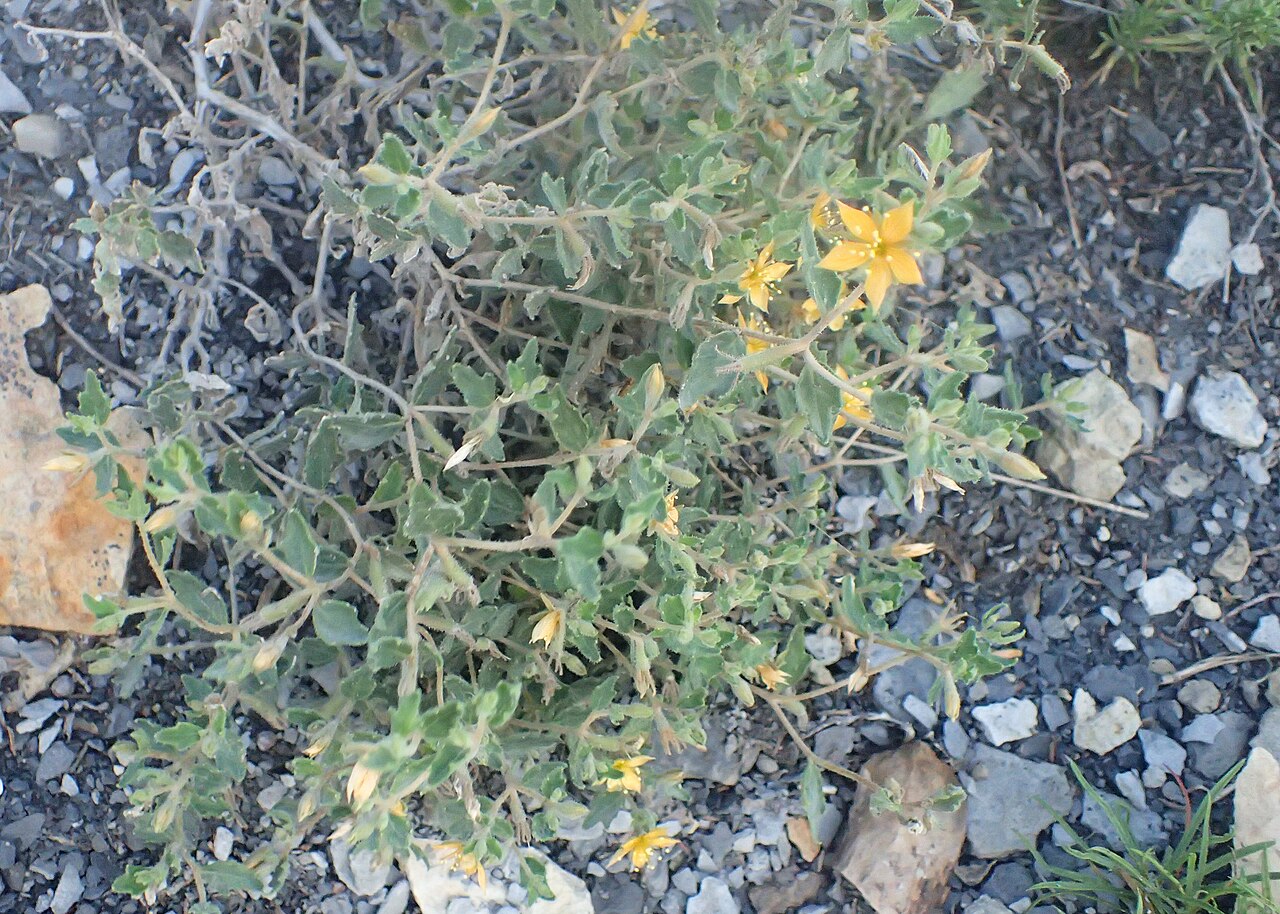
It is a perennial from a thick, woody root, usually 8 to 20 inches tall, with many spreading to upright branches that form a rounded or sprawling clump. The stems are pale, whitish to tan, brittle and break easily at the joints.
Leaves
The leaves are alternate, ovate to lance-shaped, about 1/2 to 2 1/2 inches long, and coarsely toothed or shallowly lobed. Both surfaces are rough with stiff, barbed hairs that act like Velcro, so the leaves and stem pieces stick to clothing, animal fur and feathers.
Flowers
The flowers are about 3/4 to 1 1/4 inches across, with five pointed, orange-yellow to golden or salmon-orange petals and a central cluster of many yellow stamens. They open in the early morning and close by afternoon. Bloom runs from about May or June into September.
Fruit & Seeds
The fruit is a small, narrow, cylindrical capsule, about 1/4 to 1/2 inch long, topped by the persistent sepals. It holds only a few seeds, usually one to three, which is unusual for a Mentzelia.
Look-alikes
Other blazingstars, such as smoothstem blazingstar and whitebract blazingstar, have larger flowers and many seeds per capsule, and mostly grow farther west. Ten-petal blazingstar (Mentzelia decapetala) of the Plains has large, pale cream flowers that open in the evening. Stick-leaf’s small, orange, morning flowers and few-seeded capsules separate it.
Quick Facts
| Scientific Name | Mentzelia oligosperma Nutt. ex Sims |
| Family | Loasaceae (blazing star family) |
| Plant Type | Low, bushy perennial wildflower (woody at the base) |
| Mature Height | 8–20 in |
| Mature Spread | 1–2 ft |
| Growth Rate | Moderate |
| Sun Exposure | Full sun |
| Water Needs | Low; very drought tolerant |
| Soil Type | Rocky, gravelly or sandy, well-drained soils; often limestone |
| Soil pH | About 6.5–8.5 |
| Bloom Time | May–September |
| Flower Color | Orange-yellow to golden or salmon |
| Fall Color | Not significant |
| Fruit | Small cylindrical capsule with one to three seeds |
| Deer Resistant | Yes; rough, clinging foliage is seldom browsed |
| USDA Hardiness Zones | 5–9 |
Native Range
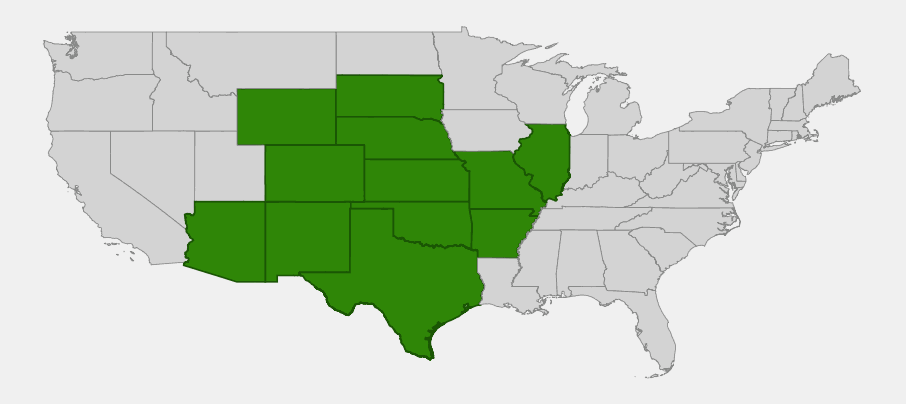
Stick-leaf is native to the central and southwestern United States and northern Mexico. USDA PLANTS lists it in 13 states; the Massachusetts record comes from a single nineteenth-century wool-waste site, where the Native Plant Trust notes it arrived on imported wool, so it is not treated as native there. Its native range runs from South Dakota and Wyoming south through Nebraska, Colorado, Kansas, Oklahoma and Texas to New Mexico and Arizona, and east to Missouri, Arkansas and western Illinois.
It is most common in Kansas, Oklahoma and Texas, including the Flint Hills, Gypsum Hills and Edwards Plateau. At the edges of its range it becomes rare: NatureServe ranks it as critically imperiled in Arizona, Nebraska, Arkansas and Illinois and imperiled in Wyoming. In Missouri and Illinois it grows on limestone glades and bluffs along the Mississippi River.
It grows in full sun on dry, rocky or gravelly sites: limestone and gypsum outcrops, glades, bluffs and ledges, rocky prairies, canyon walls, roadcuts and sandy or gravelly washes.
📋 Regional plant lists featuring Stick-Leaf: Montana & Wyoming · Nebraska, Kansas & Eastern Colorado · North Dakota, South Dakota & Western Minnesota · Illinois, Iowa & Missouri · Arkansas, Louisiana, Eastern Oklahoma & Eastern Texas · South & West Texas · Arizona & New Mexico
Growing & Care Guide
Stick-leaf is a small, tough wildflower for rock gardens, walls and dry, rocky native plantings in the Plains and the Southwest. Its long summer bloom and very low water needs make it useful in hot, difficult sites. It is offered by a few native seed suppliers in Texas and the Plains. Because it is rare at the edges of its range, use nursery or seed-grown plants and never dig it from the wild.
Light
Grow it in full sun. It flowers poorly in shade.
Soil & Water
It needs very well-drained, rocky, gravelly or sandy soil and does well on limestone. Once established it needs no supplemental water in most of its native range; avoid rich soil and frequent watering, which cause rot.
Planting Tips
Plant it in a rock garden, on a dry slope, in a gravel bed or between stones of a dry wall, where its low, sprawling form and orange flowers can be seen. Keep it away from paths and play areas, since the leaves cling to clothing and pet fur.
Pruning & Maintenance
Little care is needed. Cut back dead stems in late winter. Wear gloves when handling it, as the barbed hairs stick to skin and fabric.
Propagation
Grow it from seed sown in fall in a gritty mix or directly on prepared rocky ground. Seed production is low, so collect what you can from garden plants. Plants develop a deep root and resent transplanting once established.
Landscape Uses
- Rock gardens and walls: a low, long-blooming perennial for thin, rocky soil
- Xeriscapes: very drought tolerant once established
- Pollinator gardens: summer pollen and nectar for native bees
- Glade and prairie restoration: a component of limestone glade and rocky prairie plantings
- Hot, difficult sites: tolerates reflected heat, poor soil and drought
Wildlife & Ecological Value
Stick-leaf is a modest but reliable source of summer flowers on dry, rocky ground where few other plants bloom in the heat.
For Pollinators
The morning flowers are visited by native bees, such as sweat bees and small solitary bees, that gather pollen from the many stamens. Flies and small beetles also visit.
For Birds
The few seeds are of minor importance to birds.
For Mammals
The rough, clinging foliage is seldom browsed. Stem pieces and leaves often travel on the fur of passing animals, which may help the plant spread.
Ecosystem Role
As a deep-rooted perennial of glades, outcrops and rocky prairies, stick-leaf helps hold thin soils in place and adds to the diversity of drought-adapted wildflowers that sustain pollinators through the summer.
Cultural & Historical Uses
The genus Mentzelia honors the seventeenth-century German botanist Christian Mentzel. Thomas Nuttall named this species, and the name was published by John Sims in Curtis’s Botanical Magazine in the early nineteenth century.
The common names stick-leaf and chickenthief both describe its clinging leaves. Ranchers and hikers know the plant by the green fragments that cling to their jeans and socks after walking through a rocky pasture.
Its only record from New England is a famous botanical oddity: it was found at the site of a nineteenth-century wool-carding factory in Massachusetts, where seeds had arrived tangled in imported sheep’s wool.
Frequently Asked Questions
Why is it called stick-leaf?
Its leaves and stems are covered in tiny barbed and hooked hairs that cling tightly to clothing, fur and feathers, much like Velcro.
When do stick-leaf flowers open?
They open in the early morning and usually close by afternoon, so look for them before midday from late spring through summer.
Where does stick-leaf grow?
On dry, rocky ground, especially limestone outcrops, glades and rocky prairies, from South Dakota and Wyoming south to Texas, New Mexico and Arizona, and east to Missouri, Arkansas and western Illinois.
Is stick-leaf rare?
It is common in Kansas, Oklahoma and Texas but rare at the edges of its range, including Arizona, Nebraska, Arkansas and Illinois. Never dig it from the wild.
Can I grow stick-leaf in my garden?
Yes, in full sun with very well-drained, rocky or gravelly soil. It is drought tolerant and suits rock gardens and dry walls, but keep it away from paths, since the leaves cling to clothing.

Looking for a nursery that carries Stick-Leaf?
Browse our native plant nursery directory: Arizona & Arkansas · Colorado · Illinois & Kansas · Missouri · Nebraska, New Mexico & Oklahoma · South Dakota & Texas · Wyoming

