Wild Petunia (Ruellia humilis)
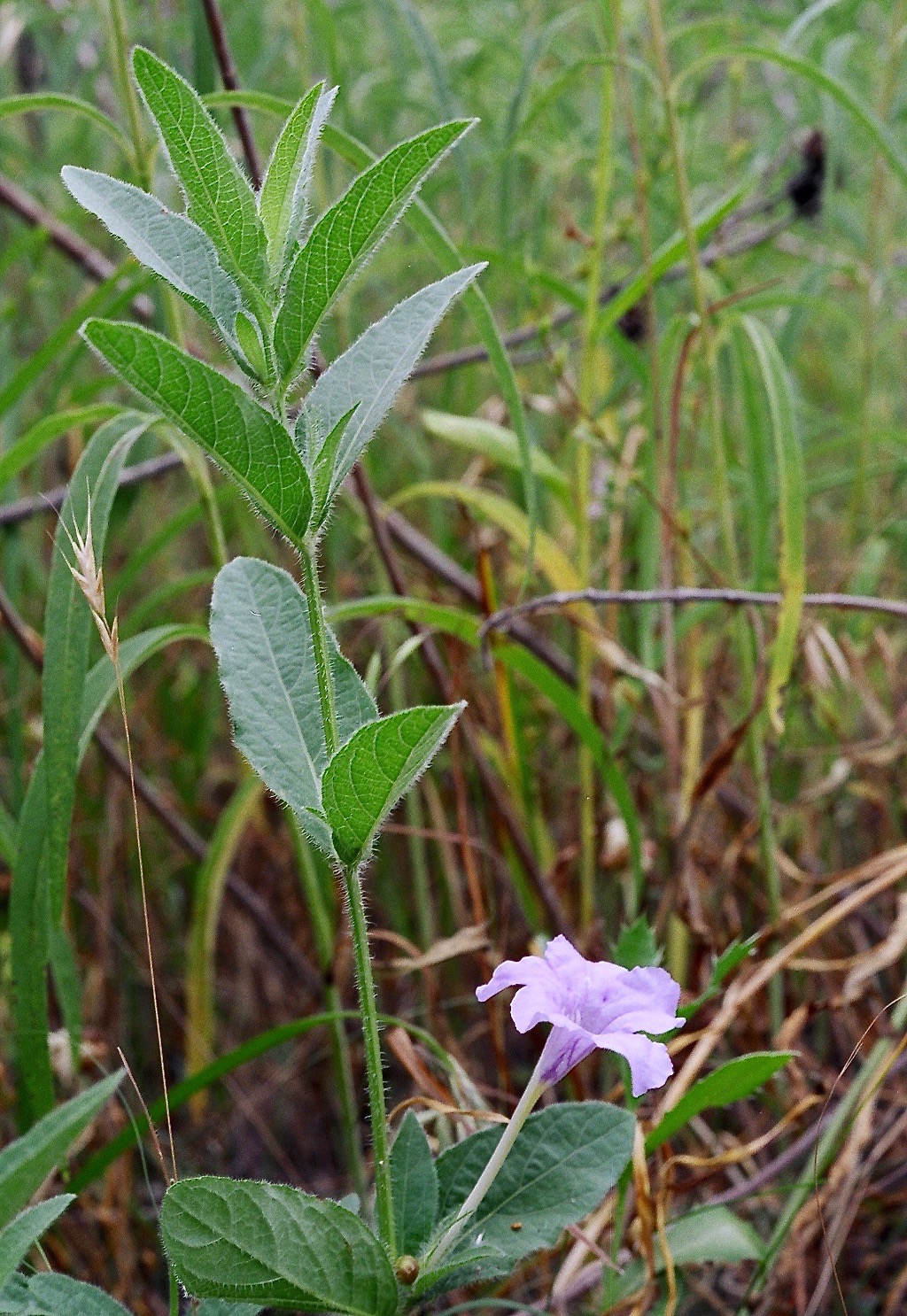
Ruellia humilis, commonly known as Wild Petunia, Fringeleaf Wild Petunia, or Prairie Petunia, is a low, bushy perennial wildflower of prairies, glades, and open woodland edges across the central and eastern United States. Despite the common name and its showy, trumpet-shaped lavender-to-purple flowers, it is not related to garden petunias at all — it belongs to the Acanthaceae (acanthus family) rather than the nightshade family, and the resemblance is purely a case of convergent flower shape.
Wild Petunia is a compact, many-branched plant, usually under a foot tall though occasionally reaching two feet, with a dense, leafy, almost shrubby appearance that comes from its short internodes. Its whole plant is covered in soft, spreading hairs, giving the foliage a slightly fuzzy, grayish cast that helps it stand out from surrounding grasses. From late spring through early fall it produces a long, reliable succession of 1.5- to 2-inch flowers, each one lasting only a single day before fading, but with new buds opening in constant rotation.
Tough, drought-tolerant, and unbothered by poor or rocky soil, Wild Petunia is an easy-care native for sunny prairie plantings, rock gardens, and the front of a wildflower border. It reseeds modestly where happy, slowly filling in bare patches without becoming aggressive, and it serves as a larval host plant for several butterfly species — reason enough to find it a spot in a pollinator-friendly garden.
Identification
Wild Petunia is a low, clump-forming perennial typically 6 to 18 inches (15–45 cm) tall, occasionally to 2 feet, with a bushy, multi-branched habit produced by its short internodes.
Stems
Stems are slender, upright to somewhat sprawling, and densely covered with soft, spreading white hairs. Branching occurs frequently along the stem, giving mature plants a full, leafy silhouette rather than a single dominant stalk.
Leaves
Leaves are opposite, simple, and sessile or nearly so, elliptic to lance-shaped, 1 to 3 inches long, with entire (untoothed) margins. Both leaf surfaces are covered in fine hairs, giving the foliage a soft, grayish-green texture that is distinctive even before the plant flowers.
Flowers
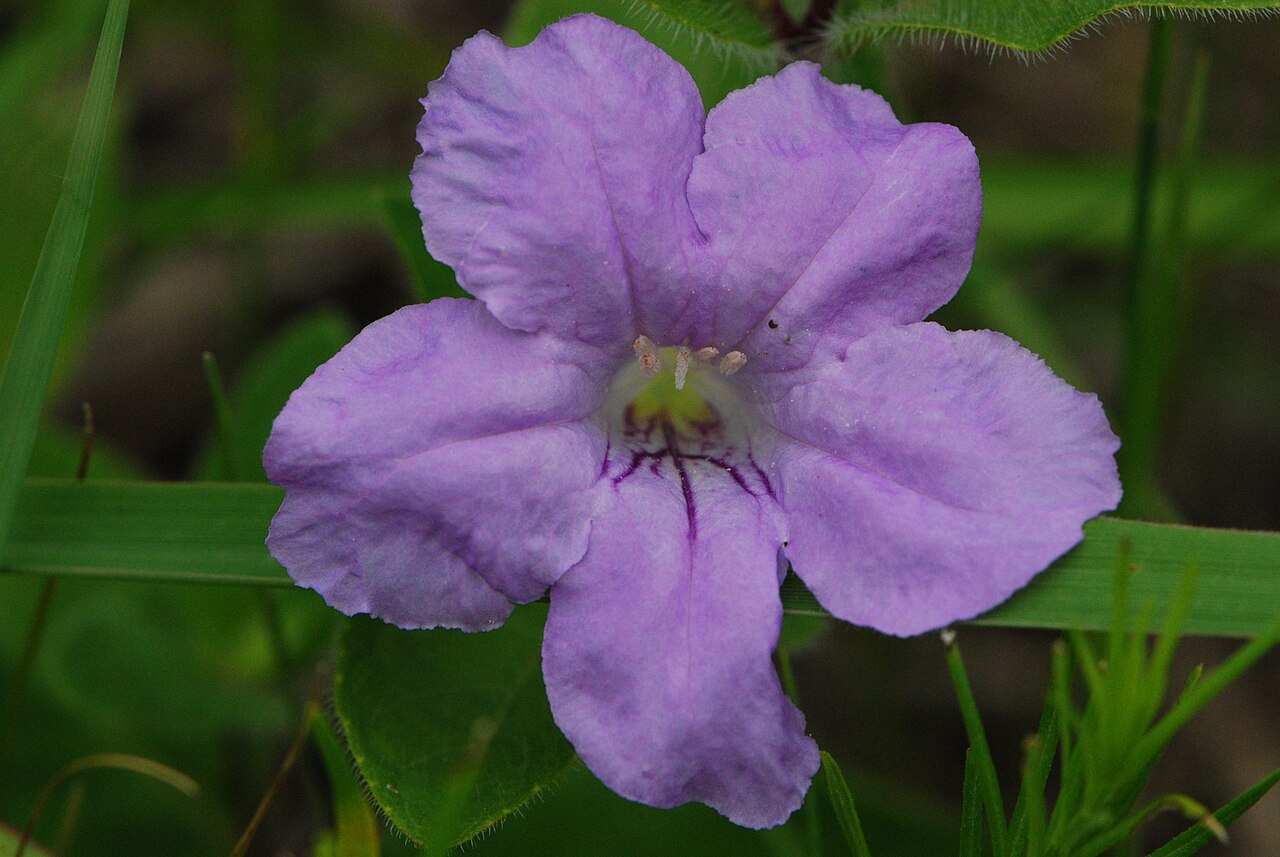
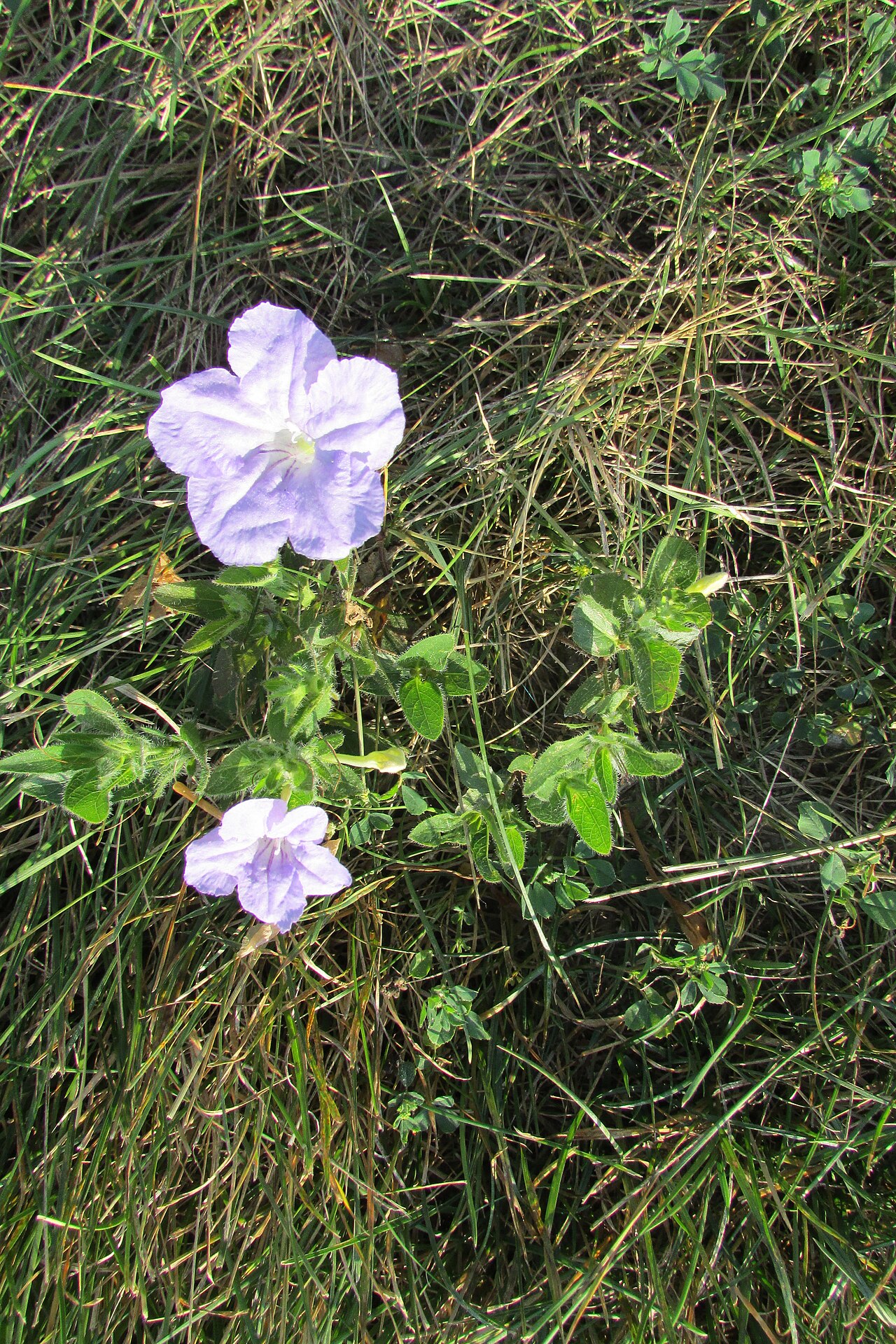
Flowers are solitary or in small clusters in the leaf axils, funnel-shaped with five flaring lobes, 1.5 to 2 inches across, ranging in color from pale lavender to violet-purple, with darker nectar-guide lines radiating into the throat. Each flower opens in the morning and typically wilts by the next day, but the plant produces a steady supply of new blooms from late spring into early fall.
Fruit & Seeds
After flowering, Wild Petunia produces narrow, club-shaped seed capsules roughly half an inch long. At maturity the capsules split open explosively, flinging the flattened seeds a short distance from the parent plant — a dispersal strategy shared by many of its Acanthaceae relatives.
Quick Facts
| Scientific Name | Ruellia humilis |
| Family | Acanthaceae (Acanthus) |
| Plant Type | Herbaceous Perennial Wildflower |
| Mature Height | 6–18 in (15–45 cm), occasionally to 24 in |
| Mature Spread | 12–18 in (30–45 cm) |
| Growth Rate | Slow to Moderate |
| Sun Exposure | Full Sun to Part Shade |
| Water Needs | Low to Average |
| Soil Type | Well-drained; tolerates rocky, sandy or clay-loam soils |
| Soil pH | 6.0–7.5 (neutral, tolerates some lime) |
| Bloom Time | May – September |
| Flower Color | Lavender to purple |
| Fall Color | None notable; foliage fades tan |
| Fruit | Narrow, explosively-dehiscent seed capsule |
| Deer Resistant | Good |
| USDA Hardiness Zones | 4–9 |
Native Range
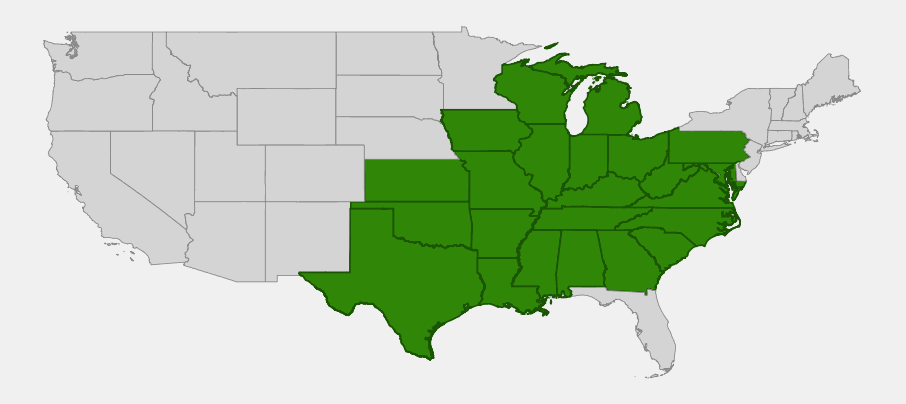
Wild Petunia is native to the central and eastern United States, with a range that runs roughly from Pennsylvania west through the Ohio Valley to Wisconsin and eastern Kansas, and south through the Mississippi Valley and the Southeast to western North Carolina, Alabama, and Texas. It reaches its greatest abundance across the tallgrass and mixed-grass prairie regions of the lower Midwest — Missouri, Kansas, Oklahoma, and Texas — where it is a familiar component of remnant prairie flora.
The species is absent from the Atlantic Seaboard north of Pennsylvania and from peninsular Florida, and BONAP county records show it is rare, historical, or entirely absent in the Northeast and in Minnesota, where any plants found are more likely garden escapes than wild populations. Gardeners in those areas should treat it as a well-behaved regional ornamental rather than a local native.
Within its native range, Wild Petunia grows in dry to mesic prairies, glades, open rocky woods, savannas, and along woodland edges, usually on well-drained soils with some exposure to sun. It tolerates limestone-derived soils well and is a characteristic plant of glades and barrens throughout the Ozarks and the limestone regions of the lower Midwest.
📋 Regional plant lists featuring Wild Petunia: New York, Pennsylvania & Northern New Jersey · Maryland, Virginia & West Virginia · North & South Carolina · Georgia, Alabama & Mississippi · Arkansas, Louisiana, Eastern Oklahoma & Eastern Texas · Kentucky & Tennessee · Ohio & Indiana · Illinois, Iowa & Missouri · Michigan, Wisconsin & Eastern Minnesota · Nebraska, Kansas & Eastern Colorado
Growing & Care Guide
Wild Petunia is an easygoing native for sunny, well-drained spots, asking little beyond good drainage and a sunny position to reward you with months of flowers.
Light
Full sun produces the most compact growth and heaviest bloom, though Wild Petunia also tolerates part shade, especially in hotter climates, where a little afternoon relief can keep the foliage looking fresher through summer.
Soil & Water
This species thrives in lean, well-drained soils — rocky, sandy, or clay-loam — and is notably drought-tolerant once established, a trait inherited from its prairie and glade origins. It does not need rich garden soil or regular fertilizing; in fact, overly fertile or consistently wet soil can lead to floppy growth and fewer flowers. A little supplemental water during the hottest part of summer will keep the bloom display going strong.
Planting Tips
Plant container-grown Wild Petunia in spring, spacing plants 12 to 18 inches apart. It is well suited to rock gardens, dry prairie plantings, and the front edge of a sunny border, where its low, bushy habit won’t overwhelm neighbors. Established plants reseed modestly, so expect a few volunteer seedlings to appear nearby in following years — an easy way to expand a planting at no cost.
Pruning & Maintenance
Little maintenance is required. Cutting plants back by about a third in early summer can encourage bushier growth and more flowers later in the season, though this is optional. Remove old stems in late winter before new growth emerges in spring.
Propagation
Wild Petunia is easy to grow from seed collected after the capsules mature but before they split open, since ripe capsules disperse their seed explosively. Seed germinates readily without special pretreatment when sown outdoors in fall, and established clumps can also be divided in spring.
Landscape Uses
- Rock gardens — thrives in lean, well-drained conditions
- Dry prairie and meadow plantings — a true prairie and glade native
- Border edging — low, bushy habit suits the front of a bed
- Pollinator gardens — nectar source and butterfly larval host plant
- Xeriscaping — notably drought-tolerant once established
- Limestone glade restoration — well adapted to calcareous soils
Wildlife & Ecological Value
Despite its modest size, Wild Petunia offers real ecological value in prairie and glade habitats.
For Pollinators
The tubular flowers are well suited to long-tongued bees and bumblebees, which push past the darker nectar guides into the throat to reach nectar, picking up pollen along the way. The plant also serves as a larval host for the Common Buckeye butterfly and several other moth and butterfly species, making it valuable for supporting a full pollinator life cycle rather than adult nectar alone.
For Birds
While not a major bird-food plant, the dense, low foliage provides minor ground-level cover for small songbirds and insects that in turn support insectivorous birds foraging in prairie and glade habitats.
For Mammals
Wild Petunia is seldom heavily browsed, and its fuzzy, somewhat bitter foliage makes it a good choice where deer pressure is a concern. Small mammals may take shelter among its low, bushy growth.
Ecosystem Role
As a low, drought-tolerant perennial of prairies and glades, Wild Petunia helps fill the understory layer between taller prairie grasses and forbs, adding structural diversity and season-long bloom that supports a steady turnover of pollinating insects through the growing season.
Cultural & Historical Uses
Wild Petunia does not carry a widely documented history of medicinal or culinary use among Indigenous peoples or early settlers, unlike some of its more prominent prairie neighbors. Its historical significance is largely ecological and botanical: as a conspicuous, long-blooming member of the tallgrass prairie and glade flora, it has long served as an indicator species for botanists and land managers assessing the health and diversity of remnant prairie habitat.
In more recent decades, Wild Petunia has found a place in native plant horticulture and prairie restoration projects, valued by gardeners and restorationists alike for its drought tolerance, long bloom season, and role as a larval host plant — qualities that have made it an increasingly popular choice in naturalistic and pollinator-focused landscaping.
Frequently Asked Questions
Is Wild Petunia related to garden petunias?
No. Despite the similar common name and funnel-shaped flowers, Wild Petunia belongs to the Acanthaceae (acanthus family), while garden petunias belong to the Solanaceae (nightshade family). The resemblance in flower shape is coincidental.
How long do individual Wild Petunia flowers last?
Each flower typically opens for just one day before wilting, but established plants produce a steady supply of new buds from late spring through early fall, so the plant always appears to be in bloom.
Does Wild Petunia spread aggressively?
No. It reseeds modestly in favorable conditions but is not considered aggressive or weedy. Volunteer seedlings are easy to identify and relocate or remove if not wanted.
Can Wild Petunia handle poor, rocky soil?
Yes — it is naturally adapted to lean, well-drained, often rocky or limestone-derived soils found in prairies and glades, and generally performs better in these conditions than in rich, heavily amended garden soil.
Is Wild Petunia deer resistant?
Generally yes. Its fuzzy foliage is not a preferred deer browse, making it a reasonably reliable choice in areas with deer pressure, though no native plant is completely deer-proof.

Looking for a nursery that carries Wild Petunia?
Browse our native plant nursery directory: Alabama & Arkansas · Georgia · Illinois, Indiana, Iowa & Kansas · Kentucky, Louisiana, Maryland, Michigan, Mississippi & Missouri · North Carolina, Ohio & Oklahoma · Pennsylvania, South Carolina, Tennessee, Texas & Virginia · West Virginia & Wisconsin