White Bractspine Blazing Star (Mentzelia involucrata)
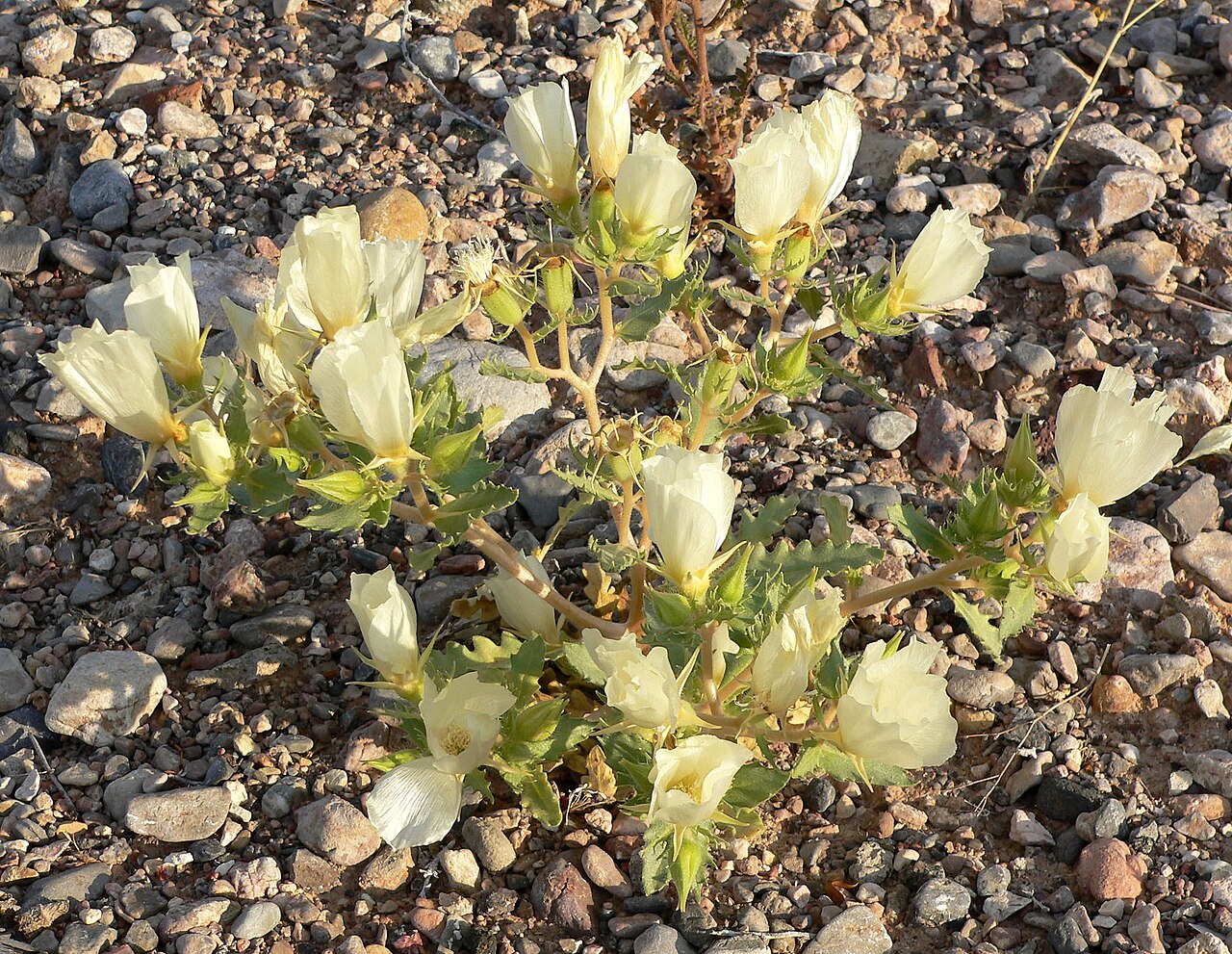
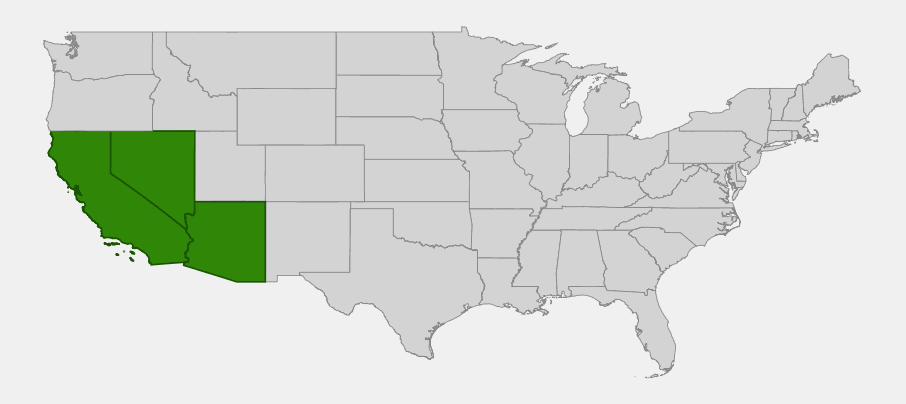
Mentzelia involucrata, known as white bractspine blazing star, sand blazing star, or by the Cahuilla name ku’u, is a showy desert annual in the Loasaceae (blazing star) family, native to the Mojave and Sonoran Deserts of California, Nevada, and Arizona, as well as Baja California, Mexico. Each spring after sufficient winter rain, this low, bristly plant produces an abundance of large, pale creamy-white to pale yellow flowers that open wide in full sun, creating one of the more dramatic desert wildflower displays in its range despite the plant’s otherwise unassuming, coarse-textured foliage.
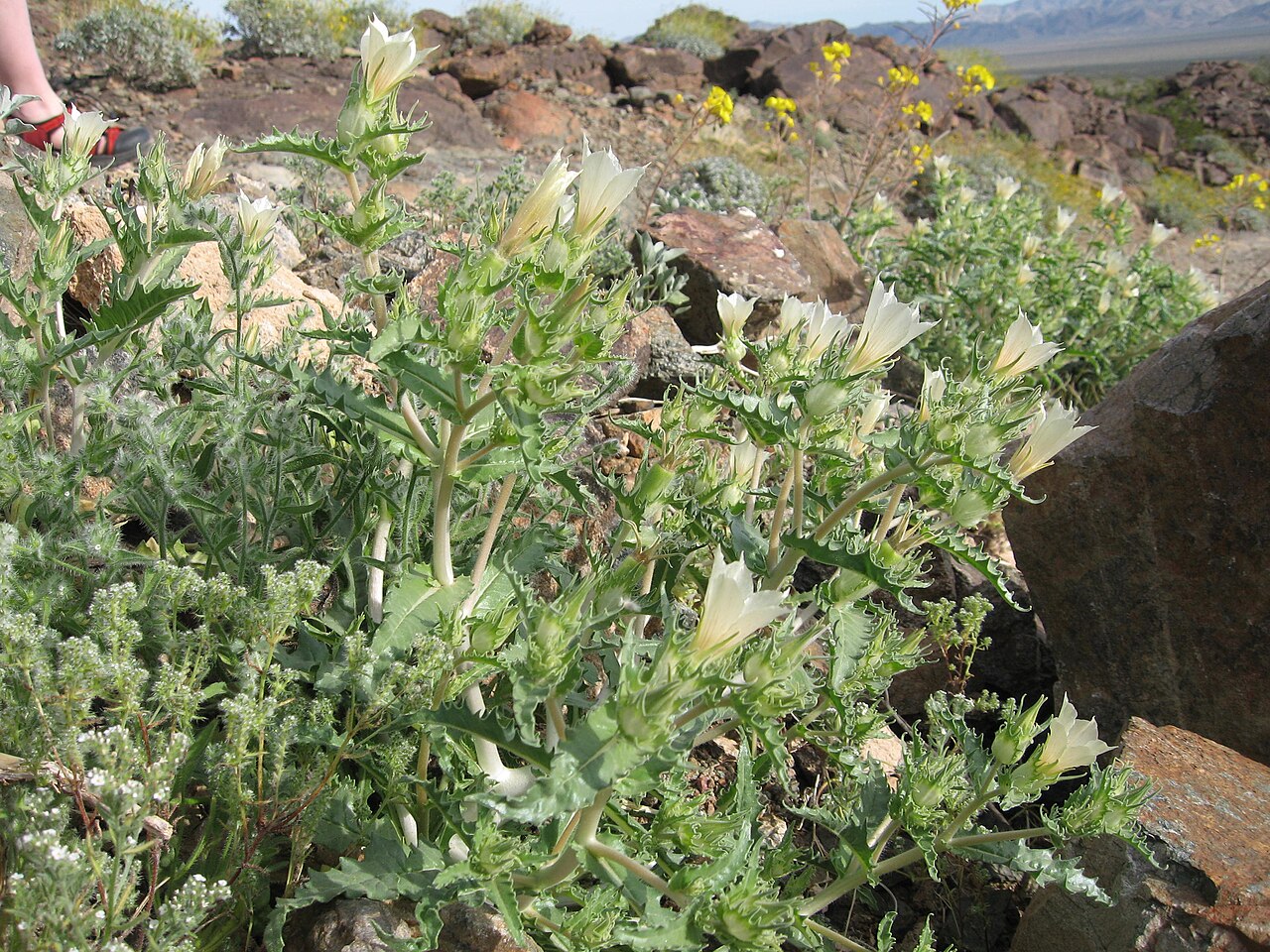
The common name references the distinctive whitish, spine-toothed bracts that surround each flower bud — a feature that, along with the plant’s notoriously clingy, barbed leaves and stems, makes this species easy to identify (and best handled with gloves) once you know what to look for. The barbed hairs that cover the foliage can stick readily to skin and clothing, a trait shared by many of its *Mentzelia* relatives and the reason the genus is sometimes called “stickleaf.”
White bractspine blazing star is an undemanding desert annual for gardeners within its native range who want an easy, self-sowing spring wildflower that asks for nothing beyond rocky, well-drained soil and full sun. It is especially effective massed in a desert wildflower garden or rock garden, where its large pale flowers stand out against the gravelly, mineral-toned substrates it favors in the wild.
Identification
White bractspine blazing star is a low, spreading to upright annual, typically 4 to 16 inches (10–40 cm) tall, with a coarse, somewhat sprawling habit and foliage that feels distinctly rough or sandpapery to the touch.
Stems & Leaves
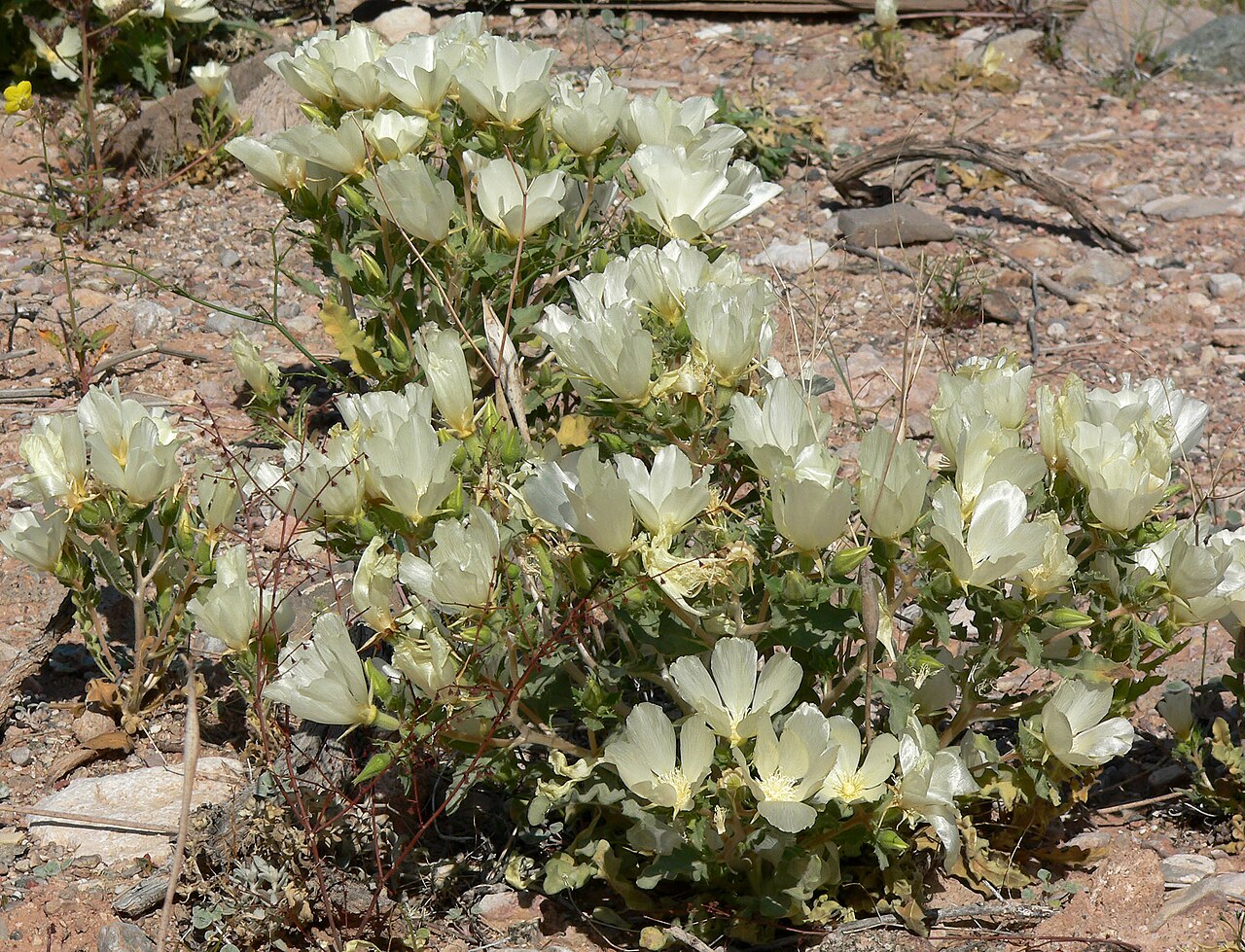
Stems are pale, often whitish, and branch freely from the base, covered in the barbed, hooked hairs characteristic of the genus Mentzelia — these hairs allow the plant to cling readily to clothing, fur, and skin, functioning as a seed-dispersal mechanism in the wild. Leaves are alternate, irregularly lobed or coarsely toothed along the margins, grayish-green, and rough-textured, clasping the stem at their base. The overall foliage effect is somewhat weedy and unremarkable compared to the flowers, which is part of why the species is grown specifically for its bloom rather than its form.
Flowers
The flowers are the plant’s standout feature: large, cup- to bowl-shaped, 1 to 2 inches (2.5–5 cm) across, with five broad, pale creamy-white to very pale yellow petals surrounding a dense cluster of numerous yellow stamens. Each flower bud is subtended by a distinctive whitish, papery, spine-toothed bract — the “bractspine” of the common name — which persists around the base of the open flower and helps distinguish this species from other desert Mentzelia. Flowers typically open in full sun during the day and may close in late afternoon or under cloud cover. Bloom season runs from February through May, varying with winter rainfall timing across its range.
Fruit & Seeds
After flowering, the plant produces a cylindrical, somewhat curved capsule that dries and splits to release numerous small, flattened seeds. Like the foliage, mature capsules and dried plant parts retain some of the barbed-hair texture that aids in incidental seed dispersal via animal fur and clothing. Seed set is typically abundant in good bloom years, and the species readily self-sows where conditions are favorable.
Quick Facts
| Scientific Name | Mentzelia involucrata |
| Family | Loasaceae (Blazing Star) |
| Plant Type | Annual Wildflower |
| Mature Height | 4–16 in (10–40 cm) |
| Mature Spread | 8–16 in (20–40 cm) |
| Growth Rate | Fast |
| Sun Exposure | Full Sun |
| Water Needs | Low (relies on winter/spring rain) |
| Soil Type | Rocky, gravelly, or sandy; fast-draining |
| Soil pH | 7.0–8.5 (neutral to alkaline) |
| Bloom Time | February – May |
| Flower Color | Creamy white to pale yellow |
| Fall Color | None (annual, senesces after seed set) |
| Fruit | Cylindrical capsule with numerous small seeds |
| Deer Resistant | Yes (rough, barbed foliage deters browsing) |
| USDA Hardiness Zones | 8–10 |
Native Range
White bractspine blazing star is native to the Mojave and Sonoran Deserts of the southwestern United States, found across the desert regions of California, southern Nevada, and western Arizona, as well as Baja California, Mexico. It is most commonly encountered in the low, hot desert valleys and bajadas east and south of California’s Transverse Ranges, extending through the Colorado Desert and lower Colorado River valley into western Arizona.
Within this range, the species favors rocky slopes, gravelly washes, desert pavement, and disturbed roadside cuts, typically from near sea level up to about 3,000 feet elevation. It thrives on the sparse, mineral-rich, fast-draining substrates typical of low desert terrain and is often among the first and showiest annuals to bloom after adequate winter rain in these harsh, rocky settings. It commonly grows alongside other low-desert annuals and shrubs such as brittlebush, desert chicory, and various other spring-blooming desert wildflowers.
Gardeners within its native range should favor locally or regionally sourced seed, since the species’ bloom timing and rainfall dependence are closely tied to the specific desert conditions of the Mojave and Sonoran regions.
📋 Regional plant lists featuring white bractspine blazing star: California & Nevada · Arizona & New Mexico
Growing & Care Guide
White bractspine blazing star is a rewarding, low-maintenance annual for desert gardeners, provided the planting site mimics the rocky, open, fast-draining ground the species favors in the wild.
Light
Full sun is essential — this species is adapted to open desert slopes and washes with no overhead shade, and flowering is noticeably reduced in shaded or crowded conditions.
Soil & Water
Rocky, gravelly, or sandy soil with excellent drainage is critical; this species does poorly in heavy clay or any soil that retains moisture. In the garden, a deep watering at fall planting followed by occasional watering through germination and early growth is generally sufficient, echoing its dependence on winter and early spring rainfall in the wild. Avoid summer irrigation, which can promote rot and is unnecessary once the plant has set seed and begun to senesce.
Planting Tips
Sow seed directly in fall on bare, lightly raked, rocky or gravelly soil — seeds need good soil contact and should not be buried deeply. Because the barbed foliage can irritate skin, consider siting plants away from frequently brushed pathways, or plan to wear gloves when working near mature plants. Massing several plants together produces the best floral display, echoing the dense wildflower patches seen in the wild after a good rain year.
Pruning & Maintenance
No pruning is needed; this is a short-lived annual that completes its life cycle and dries up on its own by late spring or early summer in most of its range. Leave spent plants in place to shed seed naturally rather than removing them immediately after bloom, which helps ensure a self-sustaining population in subsequent years.
Landscape Uses
White bractspine blazing star suits several specific desert garden roles:
- Desert wildflower meadows and spring bloom seed mixes
- Rock gardens and gravel gardens with sharp drainage
- Restoration seeding of disturbed rocky or gravelly desert slopes
- Low-water demonstration gardens showcasing authentic desert annuals
- Roadside and embankment plantings within its native desert range
Wildlife & Ecological Value
White bractspine blazing star contributes significantly to the spring ecology of the Mojave and Sonoran Desert floor, where its large, abundant flowers provide an important nectar and pollen resource at a time when desert blooms are often scarce.
For Pollinators
The large, open, nectar-rich flowers attract a wide range of pollinators, including native bees, bee flies, and other insects drawn to the pale coloration and central mass of showy yellow stamens. Many Mentzelia species are specifically pollinated by solitary bees adapted to desert bloom cycles, and the abundant pollen production in large flowering patches makes this species a valuable spring food source in the desert pollinator calendar.
For Birds & Small Wildlife
Seed produced after flowering contributes to the diet of ground-foraging desert birds and small mammals, particularly in years of abundant bloom when seed set is correspondingly heavy. The barbed, clinging hairs on stems and seed capsules also aid in incidental seed dispersal by larger animals that brush against the plant.
Ecosystem Role
As a desert ephemeral, white bractspine blazing star is part of the pulse of spring annual growth that follows adequate winter rainfall in the Mojave and Sonoran Deserts, converting scarce seasonal moisture into blooms, pollen, nectar, and seed that support a broader web of desert pollinators and seed-eating wildlife. Its tolerance of rocky, disturbed, and roadside habitats also gives it value in stabilizing and revegetating disturbed desert ground, where it can establish more readily than many less resilient native species.
Cultural & Historical Uses
White bractspine blazing star is known by the Cahuilla name ku’u, reflecting its recognition among Indigenous peoples of the Southern California deserts, where Cahuilla and other desert peoples were deeply familiar with the seasonal bloom patterns of low desert annuals. Documentation of specific traditional uses for this particular species is limited in published ethnobotanical literature, though related Mentzelia species in the region were known among various desert tribes for their edible, oil-rich seeds, gathered and processed after the spring bloom.
The genus name Mentzelia honors Christian Mentzel, a 17th-century German botanist, while the species name involucrata references the distinctive involucre of spine-toothed bracts surrounding each flower — the very feature that gives the plant its common English name. The barbed, clinging texture shared across the genus has earned various Mentzelia species the informal nickname “stickleaf,” a trait noted by desert travelers and naturalists since the earliest botanical surveys of the American Southwest in the 19th century.
Today, white bractspine blazing star is primarily appreciated for its role in desert wildflower tourism, drawing hikers and photographers to Mojave and Sonoran Desert preserves during good bloom years, and it has found a modest niche in native plant horticulture among desert gardeners seeking authentic, low-water spring color.
Frequently Asked Questions
Why does white bractspine blazing star feel sticky or clingy?
The plant’s stems, leaves, and seed capsules are covered in tiny, barbed hairs that catch readily on skin, clothing, and animal fur — a seed-dispersal adaptation shared across the genus Mentzelia, sometimes called “stickleaf.” It is not actually sticky with sap; the clinging sensation comes entirely from these microscopic barbs.
Is white bractspine blazing star the same as blazing star perennials sold at nurseries?
No. “Blazing star” is also a common name for Liatris, an unrelated perennial in the aster family native to central and eastern North America. Mentzelia involucrata is a desert annual in the Loasaceae family and is not related to Liatris despite sharing a common name.
When do the flowers open and close?
Flowers typically open fully in bright sunlight during the day and may close partially in late afternoon, in shade, or under overcast conditions — a trait shared by many desert annuals that conserves moisture and protects pollen when pollinator activity is low.
Can I grow this plant outside the desert Southwest?
It is not recommended. White bractspine blazing star is specifically adapted to the hot, dry, rocky conditions of the Mojave and Sonoran Deserts and performs poorly in humid or temperate climates with different rainfall patterns. Gardeners outside this range should choose a regionally native annual wildflower instead.
Should I wear gloves when handling this plant?
It’s a good idea, especially when direct skin contact is likely. The barbed hairs on the stems and leaves can cause mild skin irritation or a clingy, itchy sensation in sensitive individuals, similar to contact with cleavers or other bur-forming plants.

Looking for a nursery that carries white bractspine blazing star?
Browse our native plant nursery directory: California · Nevada · Arizona