Bird’s Foot Fern (Pellaea mucronata)
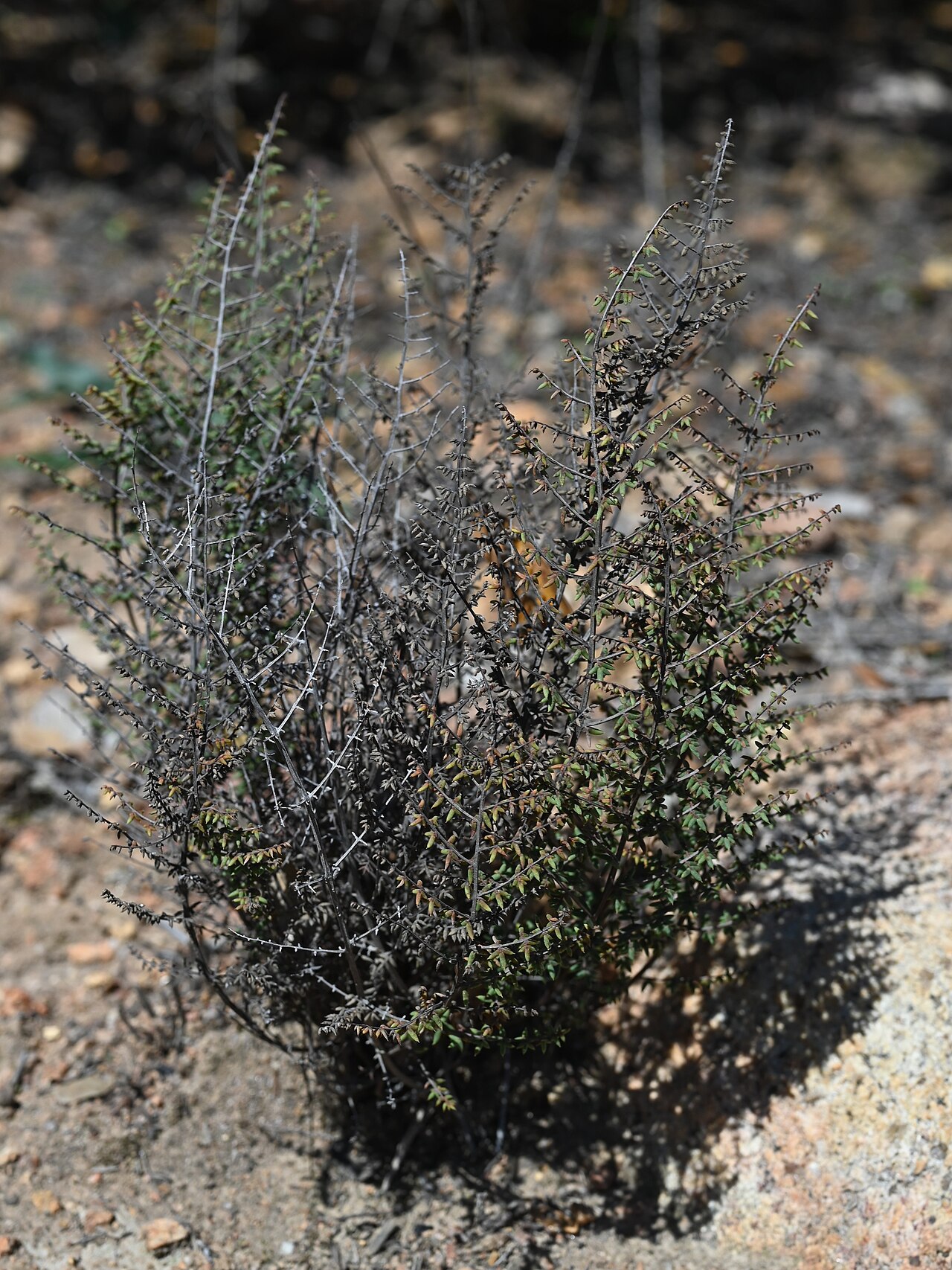
Pellaea mucronata, commonly known as Bird’s Foot Fern or bird’s-foot cliffbrake, is a small, exceptionally tough evergreen fern native to the rocky hillsides and outcrops of California and its neighboring states. Unlike the soft, shade-loving ferns most gardeners picture, bird’s foot fern is a true drought-dweller: a stiff, wiry, almost shrub-like fern that thrives in full sun on bare rock and thin, dry soil where few other ferns could survive.
The species belongs to Pteridaceae, the maidenhair fern family, and is named for its sharply pointed (mucronate) leaflet tips, which give each fine-textured frond a prickly, bird’s-foot-like silhouette. Fronds form dense, rounded clumps 1 to 2 feet across, with a waxy coating that helps the plant conserve moisture through California’s long, dry summers. In drought or heat, fronds curl inward to reduce water loss, then uncurl and green up again with the return of rain — a resurrection trick shared by several dryland ferns.
Because it tolerates full sun, rocky soil, and extended drought far better than most ferns, bird’s foot fern has become a valued choice for rock gardens, dry shade borders, and naturalistic plantings that mimic its native chaparral and foothill woodland habitat. It asks for almost nothing once established, rewarding gardeners with year-round structure and a distinctive, finely cut texture unlike any other common garden fern.
Identification
Bird’s foot fern is a small, evergreen, rock-dwelling fern forming compact clumps 8 to 20 inches (20–50 cm) tall and about as wide, with stiff, upright to spreading fronds rising from a short, scaly rhizome.
Stems & Fronds
Each frond is 3 to 18 inches (7–45 cm) long on a thin, wiry, dark brown to blackish petiole (stipe), topped by a straight, thin rachis lined with widely spaced leaflets (pinnae). The overall effect is airy but stiff, more like a dryland shrublet than a typical shade fern. The rhizome bears narrow, bicolored scales with dark centers and pale margins.
Leaflets (Pinnae)
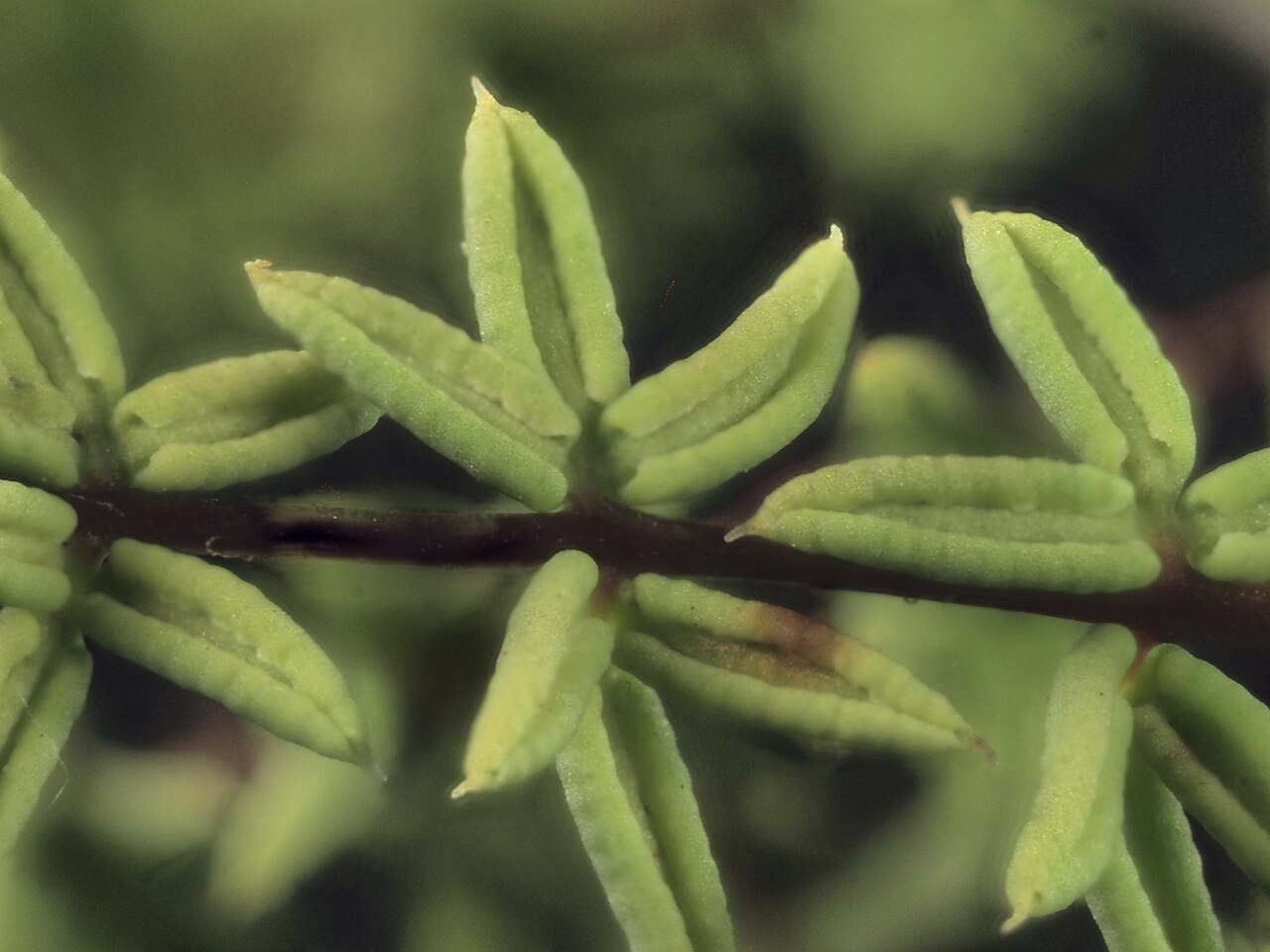
The leaflets are divided into small, narrow, sharply pointed (mucronate) ultimate segments, sometimes further subdivided, each up to about 0.4 inch (1 cm) long. Segments are green to dark purplish-green, often with a thin waxy, somewhat glaucous coating, and the margins may roll under slightly, partly covering the spore-bearing sori beneath.
Spores
As with most ferns, bird’s foot fern reproduces by spores rather than flowers or seeds. The sporangia are borne in narrow bands along the rolled-under edges of the fertile leaflets, typically maturing in summer. There is no showy bloom; the plant’s interest lies entirely in its evergreen, finely divided foliage.
Quick Facts
| Scientific Name | Pellaea mucronata |
| Family | Pteridaceae (Maidenhair Fern) |
| Plant Type | Evergreen Rock Fern |
| Mature Height | 8–20 in (20–50 cm) |
| Mature Spread | 1–2 ft, rounded clump |
| Growth Rate | Slow |
| Sun Exposure | Full Sun to Part Shade |
| Water Needs | Low once established |
| Soil Type | Rocky, gravelly, well-drained; granite or sandstone crevices |
| Soil pH | 6.0–7.5 (slightly acidic to neutral) |
| Bloom Time | None (fern; spores mature in summer) |
| Flower Color | None (spore-bearing, not flowering) |
| Fall Color | Evergreen; may curl and bronze in drought |
| Fruit | None (reproduces by spores) |
| Deer Resistant | Yes |
| USDA Hardiness Zones | 7–10 |
Native Range
Bird’s foot fern is native to California, where it occurs throughout most of the state, and extends into neighboring southwestern Oregon, Nevada, and Arizona, as well as northern Baja California, Mexico. It is most common and widespread in California, with more scattered populations toward the edges of its range in each neighboring state.
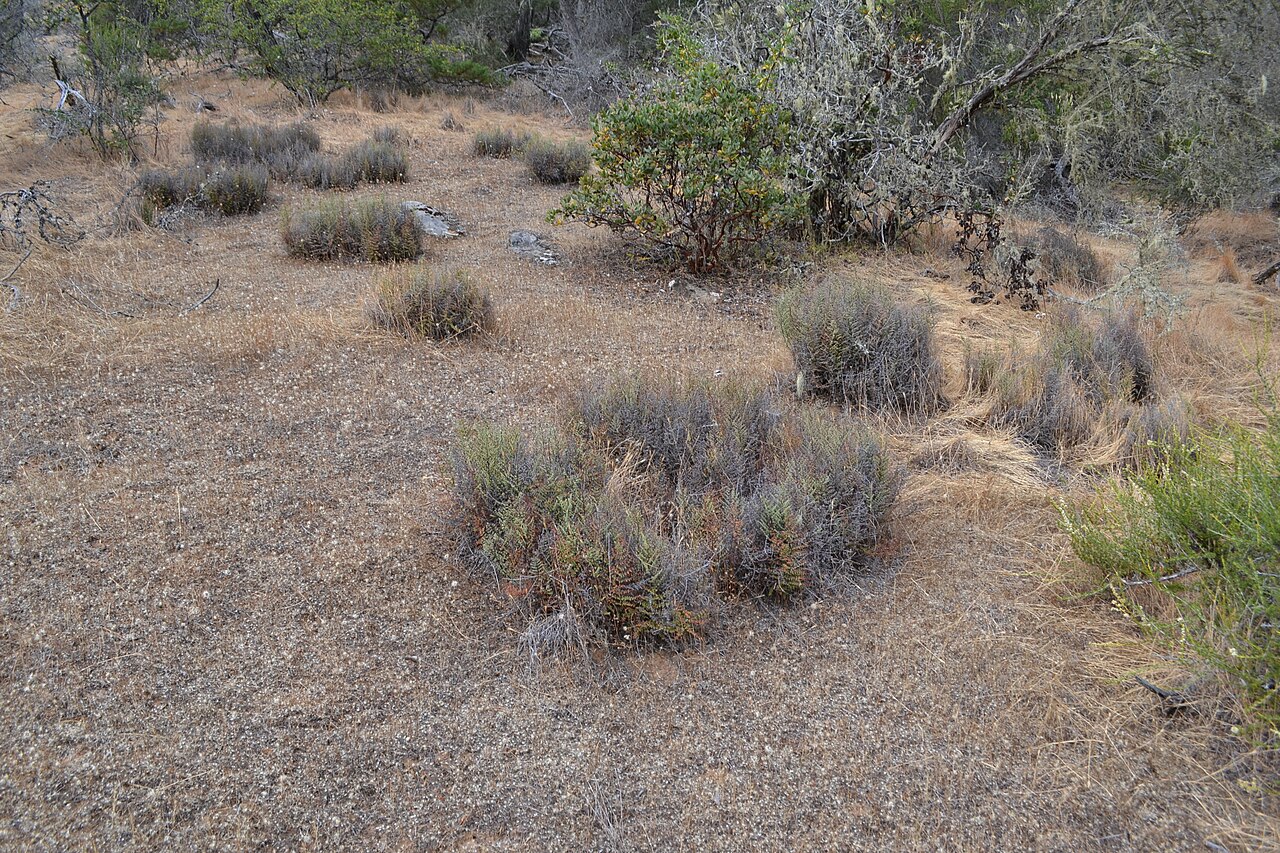
Across this range, bird’s foot fern is a true rock-dweller, growing from crevices and ledges on granite, sandstone, and other rocky outcrops in chaparral, foothill woodland, and dry montane habitats, generally at low to moderate elevations. It tolerates intense summer heat and reflected sun from bare rock far better than most ferns, a key adaptation to its sun-exposed, drought-prone habitat.
Because it depends on rocky substrate rather than consistently moist forest floor, bird’s foot fern is often found growing alongside drought-adapted shrubs of the chaparral and oak woodland community rather than with typical shade-loving ferns, underscoring its unusual ecological niche among North American ferns.
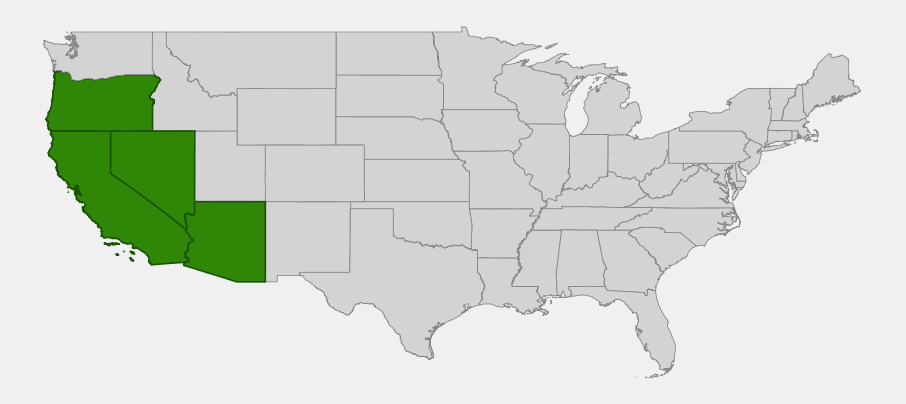
📋 Regional plant lists featuring Bird’s Foot Fern: California & Nevada · Arizona & New Mexico · Western Oregon & Western Washington
Growing & Care Guide
Bird’s foot fern is a distinctive choice for gardeners who want a fern that behaves more like a tough, drought-adapted rock plant than a delicate woodland species.
Light
Unlike most ferns, bird’s foot fern tolerates and often prefers considerable sun. In cooler coastal gardens it grows well in full sun; in hotter inland climates, give it light to part shade, especially in the afternoon, to reduce summer stress.
Soil & Water
Plant in rocky, gravelly, or sandy soil with excellent drainage — amended rock-garden mixes or crevices between stones mimic its wild habitat well. It is highly drought tolerant once established, needing little to no supplemental water during the dry season in most of its native range, and in fact resents heavy, consistently moist soil, which can cause the rhizome to rot.
Planting Tips
Plant from container stock in fall or early spring, tucking roots into rock crevices or well-drained raised beds rather than flat garden soil. Water regularly through the first year to establish a deep root system, then taper off to occasional deep watering during extended summer drought. It grows slowly, so be patient — mature clumps take a few years to fill out.
Pruning & Maintenance
Little maintenance is needed. Remove dead or browned fronds in late winter or early spring before new growth emerges. During severe drought, fronds may curl and appear dead, but they typically green up again once rain returns — avoid cutting a stressed plant back hard until you are sure it has not simply gone dormant.
Landscape Uses
Bird’s foot fern suits dry-climate garden styles that most ferns cannot tolerate:
- Rock gardens and crevice plantings in sun or part shade
- Dry shade and chaparral gardens as an unusual fine-textured accent
- Xeriscapes that still want the look of a fern without the water demand
- Retaining walls and rocky slopes, tucked into crevices for stability and interest
- Native plant collections paired with coffee fern and other California rock ferns
Wildlife & Ecological Value
As a fern rather than a flowering plant, bird’s foot fern’s main ecological contribution is structural rather than floral.
For Birds
The dense, wiry clumps provide small songbirds and ground-foraging species with low cover and shelter on otherwise open, rocky terrain, particularly valuable in chaparral habitat where low vegetative cover can be sparse.
For Mammals
Small mammals use the dense rosettes of bird’s foot fern for cover among rock outcrops. The tough, somewhat prickly foliage is not a preferred browse for deer or rabbits, contributing to the plant’s deer-resistant reputation in gardens.
For Pollinators
As a non-flowering fern reproducing by spores, bird’s foot fern offers no nectar or pollen and does not directly support pollinators, though its evergreen structure contributes to the overall habitat complexity of the chaparral and rocky slope plant communities it grows within.
Ecosystem Role
Bird’s foot fern is a specialist of thin, rocky soils and crevice habitats where few other plants can establish, helping to anchor sparse soil pockets on slopes and outcrops and contributing a structurally distinct, fine-textured layer to chaparral and foothill woodland plant communities.
Cultural & Historical Uses
Bird’s foot fern has little documented history of use by Indigenous peoples or settlers, consistent with most small rock ferns, which typically lack the food, fiber, or medicinal applications of larger or more abundant plants. Its chemistry has drawn some scientific interest: researchers have identified a thin waxy coating of terpenoid compounds on the fronds, along with trace amounts of the flavonoid galangin, though these findings are of biochemical rather than practical historical significance.
In the 20th and 21st centuries, bird’s foot fern has become increasingly appreciated by California native-plant gardeners and rock-garden enthusiasts specifically because it breaks the usual rules of fern cultivation — tolerating sun, heat, and drought where most ferns fail — making it a talking-point plant in dryland and crevice garden designs.
Today its value is almost entirely horticultural and ecological: a tough, low-water fern that extends the range of garden styles where ferns can be grown successfully in California’s Mediterranean climate.
Frequently Asked Questions
Can bird’s foot fern really grow in full sun?
Yes, within reason. In cooler coastal climates it tolerates full sun well, while in hot inland areas it appreciates some afternoon shade. This sun tolerance is unusual among ferns and is one of the species’ most useful garden traits.
Why do the fronds curl up and look dead sometimes?
During hot, dry periods, bird’s foot fern fronds often curl inward as a drought response to reduce water loss. This is normal and not necessarily a sign the plant has died — fronds typically uncurl and green up again once rain or irrigation returns.
Is bird’s foot fern the same as coffee fern?
No. Coffee fern (Pellaea andromedifolia) is a related but distinct California native species with broader, more rounded leaflets, while bird’s foot fern (Pellaea mucronata) has narrower, sharply pointed leaflets. Both grow in similar rocky habitats and are sometimes found together.
Does bird’s foot fern need regular watering like other ferns?
No. Unlike moisture-loving woodland ferns, bird’s foot fern is drought tolerant once established and prefers infrequent deep watering over consistently moist soil, which can cause rot.
How fast does bird’s foot fern grow?
It is a slow-growing fern. Newly planted specimens may take several years to form a full, rounded clump, so patience is needed, but established plants are long-lived and require very little care.

Looking for a nursery that carries Bird’s Foot Fern?
Browse our native plant nursery directory: California · Oregon · Nevada · Arizona