Coffee Fern (Pellaea andromedifolia)
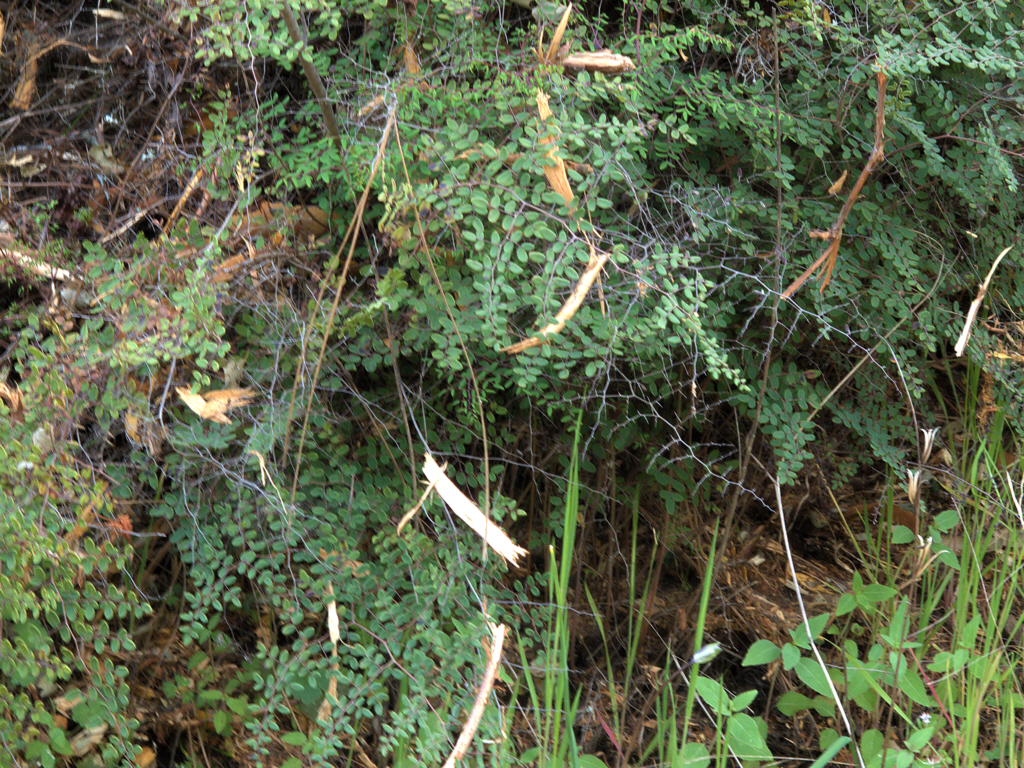
Pellaea andromedifolia, commonly known as coffee fern or coffee cliffbrake, is a small, drought-tolerant fern native to California, found growing from rocky outcrops, dry slopes, and canyon walls across much of the state. Unlike most ferns, which need year-round shade and moisture, coffee fern is remarkably well adapted to California’s dry summers, curling and browning during drought and reviving with the winter rains.
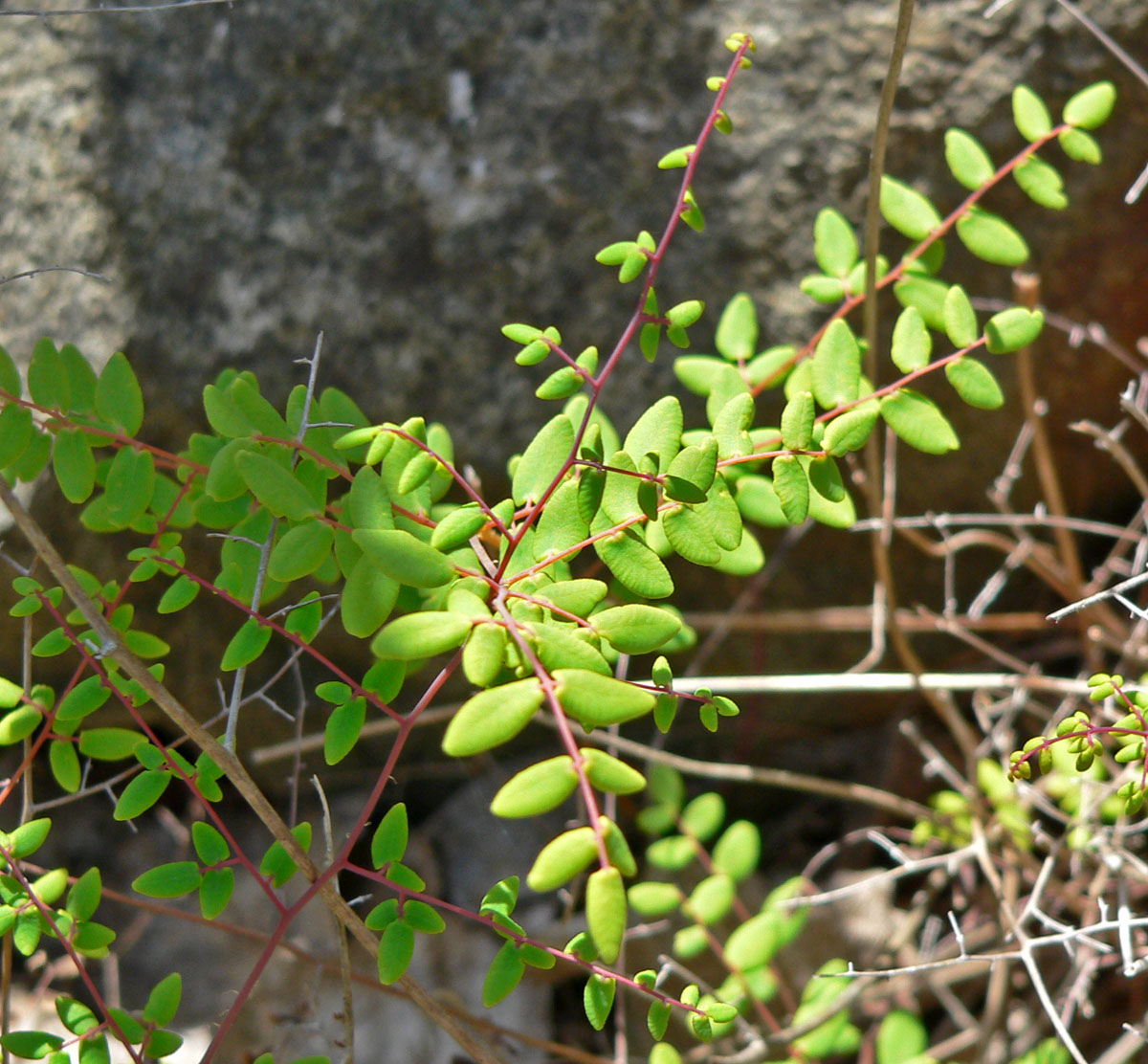
The common name refers to the bean-like shape of its rounded, leathery leaflets, which resemble coffee beans in miniature. The fronds themselves are delicate and lacy in overall outline but tough and leathery to the touch, an adaptation that helps the plant survive long stretches without rain.
Coffee fern is an excellent choice for a California native rock garden, dry shaded slope, or crevice planting where many other ferns would simply fail. It asks for almost nothing once established, making it one of the lowest-maintenance ferns available to West Coast native plant gardeners.
Identification
Coffee fern grows as a low, spreading clump from a creeping rhizome, typically reaching 6 to 18 inches tall with fronds that arch outward in a loose, airy mass. Unlike many ferns with a single upright clump, coffee fern often forms sprawling colonies as the rhizome creeps along rocky crevices and slopes.
Fronds
Fronds are twice-pinnate (divided into leaflets that are themselves divided), giving an overall lacy, finely textured appearance despite the leathery substance of each individual leaflet. The small, rounded to oblong leaflets (pinnules) are blue-green to gray-green, smooth, and noticeably bean- or coffee-bean-shaped — the source of the common name. Stems (rachises) are typically a distinctive reddish-brown to purplish-black and wiry.
Drought Response
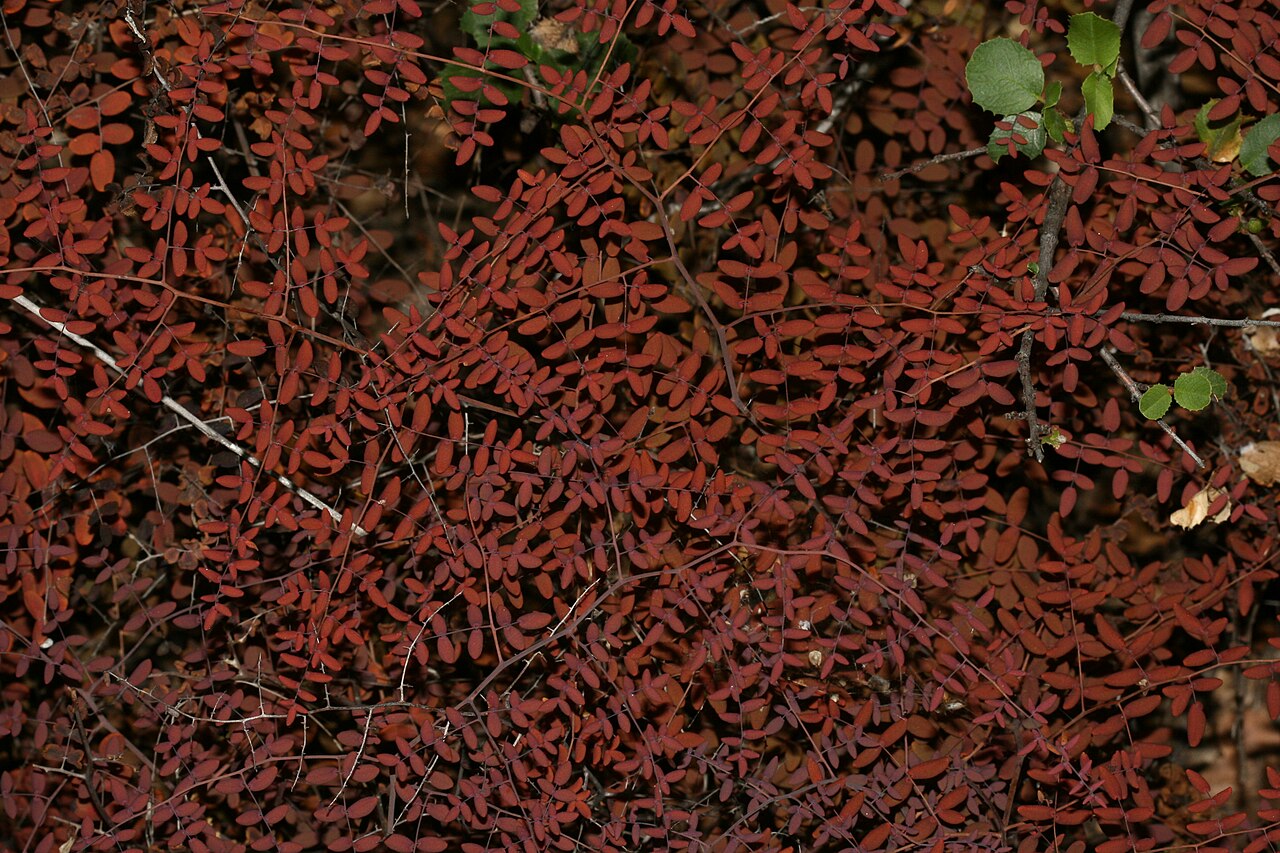
One of coffee fern’s most distinctive traits is how it handles California’s dry season: during extended drought, the fronds curl inward and turn reddish-brown, appearing dead, only to green up and unfurl again within days of the first substantial rain. This drought-dormancy strategy, shared with several other dryland ferns in the genus Pellaea, is what allows the species to grow on exposed, sun-baked rock where most ferns cannot survive.
Quick Facts
| Scientific Name | Pellaea andromedifolia |
| Family | Pteridaceae (Brake Fern) |
| Plant Type | Drought-deciduous perennial fern |
| Mature Height | 6–18 in |
| Mature Spread | 1–2 ft, spreading slowly by rhizome |
| Growth Rate | Slow to moderate |
| Sun Exposure | Part Shade (tolerates more sun near the coast) |
| Water Needs | Low once established; summer-dry adapted |
| Soil Type | Rocky, well-drained; tolerates thin, poor soils |
| Soil pH | Slightly acidic to neutral |
| Bloom Time | None (ferns do not flower) |
| Flower Color | None |
| Fall Color | Fronds often curl and redden in late-summer drought |
| Fruit | None; reproduces by spores along leaflet margins |
| Deer Resistant | Yes |
| USDA Hardiness Zones | 8–10 |
Native Range
Coffee fern is native to California, where it occurs widely from the northern Coast Ranges south through the Central Coast, Transverse and Peninsular Ranges, and into the Sierra Nevada foothills, extending south into Baja California, Mexico. Within California it is one of the more commonly encountered small ferns on dry, rocky slopes.
Typical habitat includes rocky outcrops, canyon walls, dry chaparral slopes, and oak woodland edges, usually in partial shade though it tolerates more open sites near the coast where fog moderates summer heat. It grows from near sea level up to around 5,000 feet in the foothills, often rooted in crevices or thin soil pockets among rocks where few other plants compete for space.
Coffee fern is not listed as threatened or endangered and remains common within its California range. It is sometimes reported just beyond California’s borders in garden or naturalized contexts, but its confirmed wild native range is essentially confined to California and adjacent Baja California.
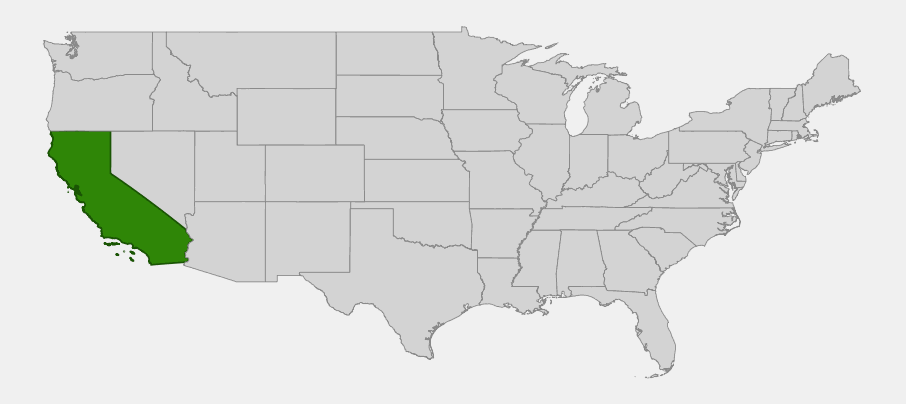
📋 Regional plant lists featuring Coffee Fern: California & Nevada
Growing & Care Guide
Coffee fern is one of the easiest native ferns to grow in a California garden precisely because it does not behave like a typical fern — it wants good drainage and can handle real summer drought, as long as it gets some relief from the hottest afternoon sun.
Light
Part shade is ideal, especially on hot inland sites; morning sun with afternoon shade works well. Near the coast, where fog and cooler temperatures moderate the intensity of summer sun, coffee fern tolerates considerably more direct light. Avoid deep, constant shade, which tends to produce sparser growth than the dappled light the species gets in its natural rocky habitat.
Soil & Water
Plant in well-drained, rocky, or gritty soil — heavy, constantly wet clay is the fastest way to lose this fern. Water occasionally during the first year to help it establish, then taper off; established plants need very little supplemental water and are well adapted to California’s dry summers, when the fronds may curl and brown before reviving with autumn or winter rain.
Planting Tips
Tuck coffee fern into rock gardens, crevices, dry slopes, or the base of a retaining wall, where its spreading habit and tolerance for thin soil work to its advantage. Plant in fall so the roots can establish with winter rains before facing their first dry season. Because it spreads slowly by rhizome, give it room to form a naturalized patch over time rather than expecting a dense clump quickly.
Pruning & Maintenance
Little maintenance is needed. Dried, curled fronds from summer drought-dormancy can simply be left in place — they will green up again with rain — or tidied away if their appearance is unwanted. Avoid heavy watering or rich, moisture-retentive soil, both of which work against this fern’s natural drought adaptation and can lead to rot.
Propagation
Coffee fern can be propagated by careful division of an established rhizome in the cooler, moister months, or grown from spores collected from the undersides of mature fronds and sown on a sterile, moist medium. Division is faster and more reliable for most home gardeners.
Landscape Uses
- Rock gardens and crevice plantings where its natural rocky habitat is easy to recreate
- Dry shaded slopes that get little or no summer irrigation
- Retaining wall and boulder plantings
- California native gardens focused on low-water, low-maintenance plants
- Oak woodland understory alongside other drought-tolerant natives
Wildlife & Ecological Value
As a small, non-flowering fern, coffee fern’s wildlife contribution is modest but real, mostly through ground-level cover and its role stabilizing the thin, rocky soils it grows on.
For Pollinators
Ferns reproduce by spores rather than flowers, so coffee fern offers no nectar or pollen. It does, however, add low ground cover and structural variety to the dry, rocky slopes where many native pollinator-supporting wildflowers also grow.
For Birds
The low, spreading growth habit offers some ground-level shelter for small birds foraging in rocky, open habitat, particularly where it grows in combination with chaparral shrubs that provide additional cover.
For Mammals
Coffee fern provides minor cover for small reptiles and ground-dwelling invertebrates among rocks and leaf litter, which in turn supports the broader food web of lizards, small mammals, and the predators that rely on them.
Ecosystem Role
By rooting into crevices and thin rocky soils, coffee fern helps stabilize slopes and outcrops that are otherwise difficult for larger plants to colonize. Its drought-dormancy strategy — curling and reviving with the seasons — is a useful indicator of a healthy, functioning chaparral or oak woodland understory responding normally to California’s wet-dry climate cycle.
Cultural & Historical Uses
Coffee fern has long been noted by California botanists and naturalists for its distinctive bean-shaped leaflets and its unusual drought tolerance among ferns, and it appears in regional floras and wildflower guides going back well over a century as one of the characteristic small ferns of California’s dry hillsides and canyons.
Indigenous peoples of California were familiar with coffee fern as part of the dry chaparral and woodland plant communities they lived among, though it is not documented as a significant food or material plant compared to other regional species; historical accounts describe it primarily as a common, easily recognized element of the native flora.
Today coffee fern’s main role is horticultural and ecological — valued by native plant gardeners for its low water needs and rock-garden suitability, and by land managers and restoration practitioners as a reliable, drought-adapted component of chaparral and oak woodland plant communities.
Frequently Asked Questions
Why do coffee fern’s leaves curl up and turn brown?
This is a normal drought response, not a sign the plant is dying. During California’s dry summer months, the fronds curl inward and turn reddish-brown to conserve moisture, then green up and unfurl again within days of the first good rain.
Does coffee fern need regular watering?
No. Once established, it is quite drought tolerant and actually performs poorly in constantly wet or heavily irrigated soil. Occasional water during the first year helps it establish; after that, rainfall alone is usually enough.
Why is it called “coffee fern”?
The name comes from the small, rounded, bean-shaped leaflets, which resemble miniature coffee beans. It is also sometimes called coffee cliffbrake, referencing its preference for rocky, cliff-like habitat.
Can coffee fern grow in full sun?
It prefers part shade, but tolerates more sun in cool, foggy coastal gardens than it does inland. In hot interior gardens, give it at least afternoon shade to prevent excessive leaf scorch.
Is coffee fern good for a rock garden?
Yes — its natural habitat is rocky outcrops and crevices, and its tolerance for thin, well-drained soil and low water makes it one of the better native ferns for a California rock garden or dry slope planting.

Looking for a nursery that carries Coffee Fern?
Browse our native plant nursery directory: California