New Mexico Plumeseed (Rafinesquia neomexicana)
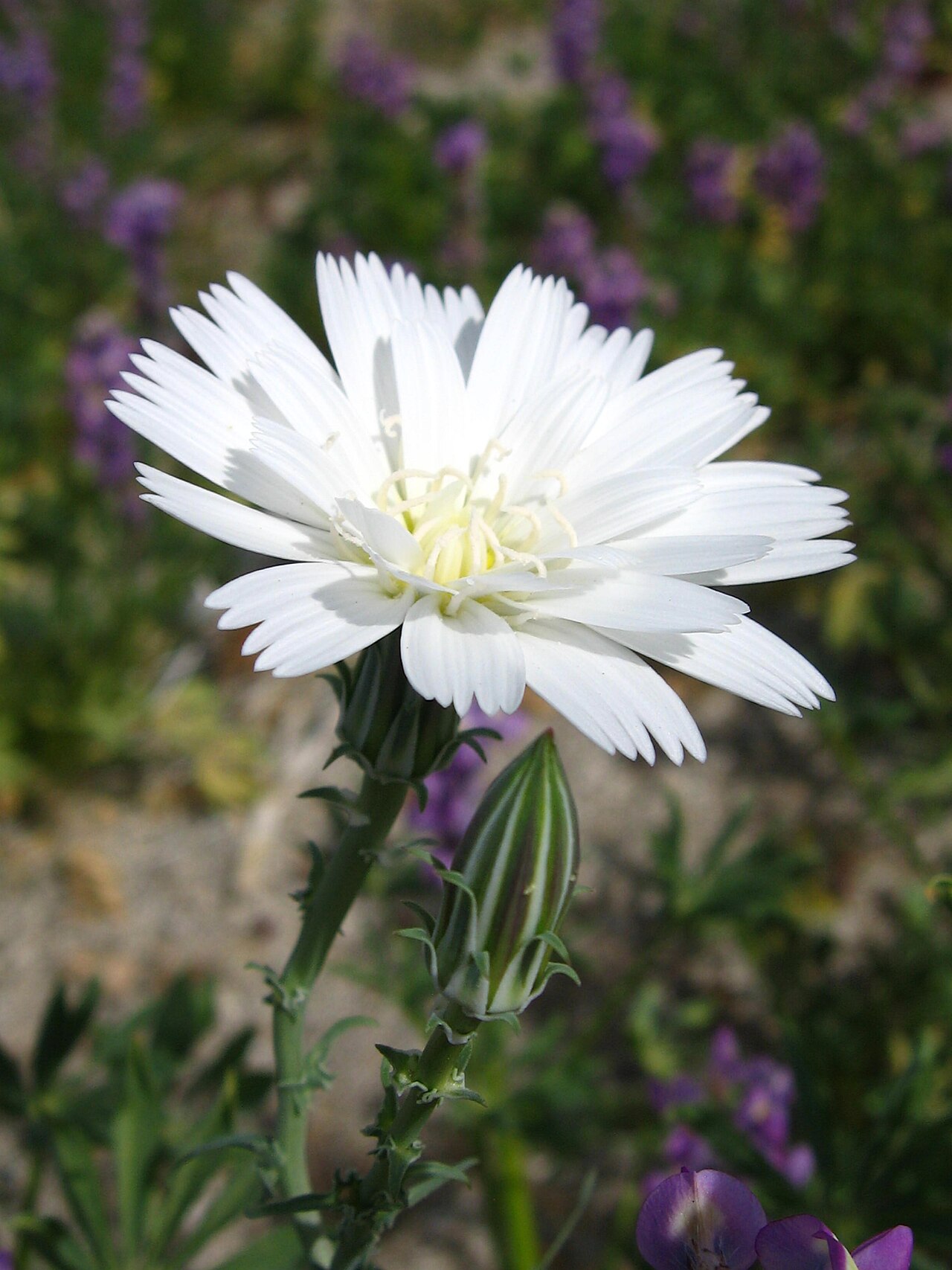
Rafinesquia neomexicana, commonly called New Mexico Plumeseed and often sold or described as Desert Chicory, is a delicate winter-spring annual wildflower of the southwestern deserts. Its papery white, dandelion-like flowerheads and weak, sprawling stems make it one of the most recognizable members of the spring desert-annual wildflower display, especially after a wet winter brings on a strong bloom. Despite the “chicory” nickname, it is not the same plant as true chicory (Cichorium intybus), though both belong to the aster family and share a similar flower form.
This is a true ephemeral: New Mexico Plumeseed germinates with fall and winter rains, grows quickly through late winter, flowers from February into May depending on elevation and rainfall, and then sets seed and dies as the desert heats up for summer. Its gray-green, sparsely hairy foliage and weak stems often lean on nearby shrubs such as creosote bush for support, giving stands of the plant a loose, informal look rather than an upright habit.
For desert gardeners, New Mexico Plumeseed is best used the way it grows in the wild: scattered through a naturalistic wildflower planting or dryland garden rather than as a formal bedding plant. It asks for nothing beyond well-drained soil and the same winter moisture that triggers its wild germination, and it rewards a dry garden with weeks of bright white bloom when few other plants are flowering.
Identification
New Mexico Plumeseed is a slender, gray-green annual forb, typically 6 to 20 inches tall, with a notably weak, often zigzagging stem that frequently sprawls or climbs through the branches of neighboring shrubs for support rather than standing fully upright.
Stems & Foliage
Stems are thin, pale gray-green, and sparsely branched, with a milky sap typical of the chicory tribe of the aster family. Basal leaves are 2 to 8 inches long, pinnately lobed with narrow, often toothed segments, giving the plant a fine, almost dandelion-like foliage texture; leaves become progressively smaller and simpler higher on the stem. The whole plant has a gray-green cast from fine, sparse hairs.
Flowers
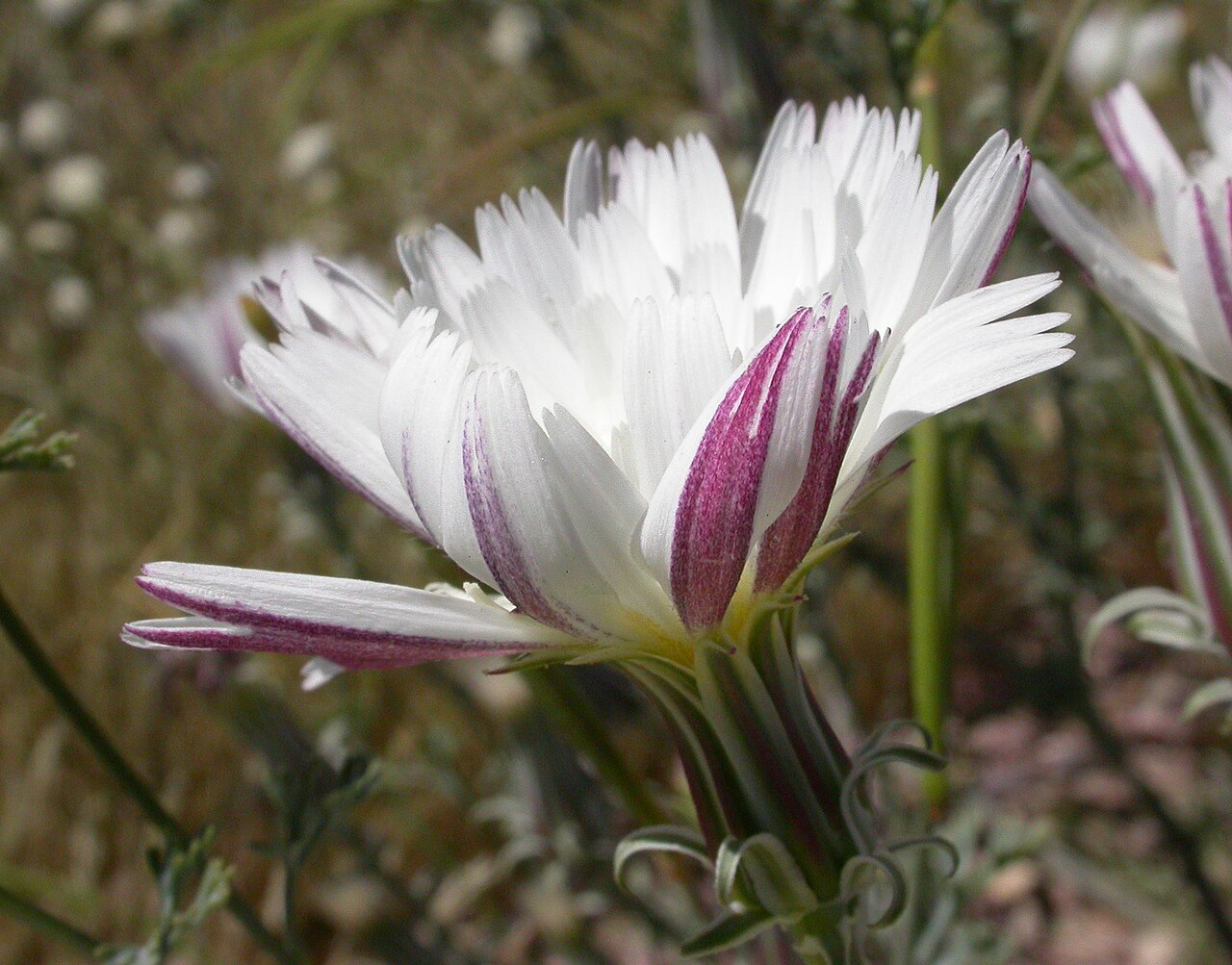
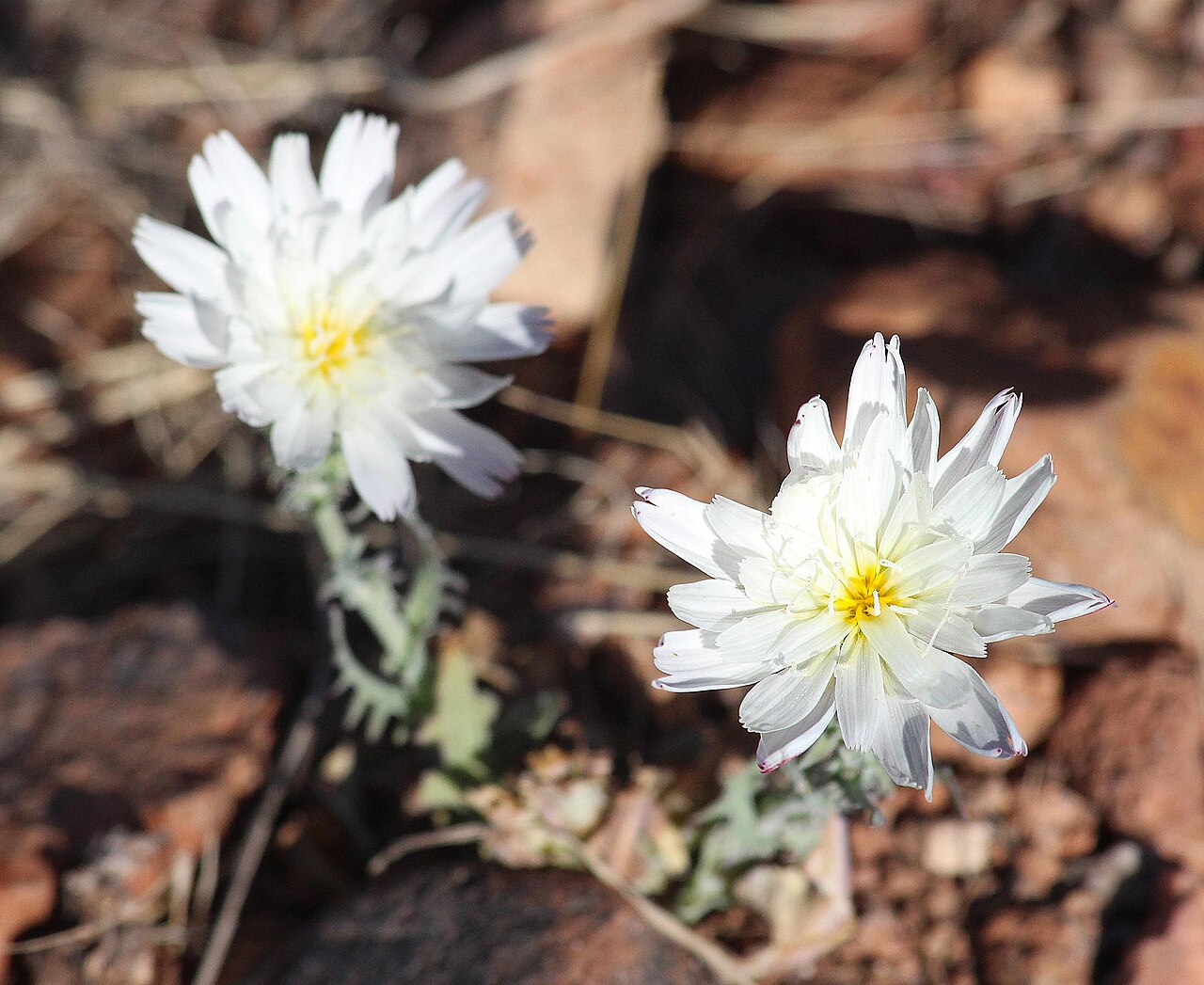
Flowerheads are solitary at the branch tips, composed entirely of strap-shaped white ray flowers (no central disk flowers, as in other chicory-tribe composites), often with a faint pinkish or purplish tinge on the outer surface of the ray tips. The outer rays extend well beyond the ½- to 1-inch phyllaries (the bracts that enclose the bud before it opens), giving each flowerhead a loose, shaggy appearance roughly 1 to 2 inches across when fully open. Flowers typically open in the morning and close by early afternoon, especially in heat.
Fruit & Seeds
Like other plants in the chicory tribe, the fruit is a small dry achene tipped with a feathery pappus (the “plumeseed” of its common name) that carries seeds on the wind, much like a dandelion. Seed set follows quickly after bloom as the plant completes its short annual life cycle before summer heat arrives.
Quick Facts
| Scientific Name | Rafinesquia neomexicana |
| Family | Asteraceae (Aster/Sunflower) |
| Plant Type | Annual forb/wildflower |
| Mature Height | 6–20 in |
| Mature Spread | 6–12 in, often sprawling through nearby shrubs |
| Growth Rate | Fast (completes life cycle in one season) |
| Sun Exposure | Full sun |
| Water Needs | Low; relies on winter/spring rainfall |
| Soil Type | Sandy or gravelly, well-drained desert soils |
| Soil pH | Neutral to alkaline |
| Bloom Time | February – May |
| Flower Color | White, rays often purple-tinged beneath |
| Fall Color | None (plant dies back after spring seed set) |
| Fruit | Small achene with feathery wind-dispersed pappus |
| Deer Resistant | Generally yes (milky sap deters browsing) |
| USDA Hardiness Zones | 8–10 (grown as a cool-season annual) |
Native Range
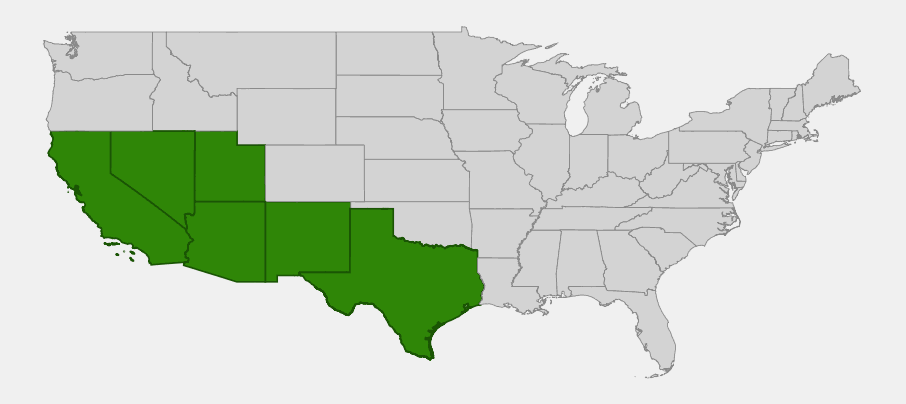
New Mexico Plumeseed is native to the deserts of the southwestern United States, occurring in California, Nevada, Utah, Arizona, New Mexico and western Texas. It also extends south into the Mexican states of Baja California and Sonora. Within this range it is found in the Mojave and Sonoran Deserts, including the Colorado Desert subregion of southeastern California.
Typical habitat is open, sandy or gravelly desert flats and washes, especially in creosote bush scrub and Joshua tree woodland plant communities, from near sea level up into the lower pinyon-juniper belt. It often grows scattered among and under larger desert shrubs, which it can lean on for support as it grows, and it is a conspicuous and welcome part of the spring desert-annual wildflower bloom in years with adequate winter rain.
Because it is a true desert ephemeral, New Mexico Plumeseed is not well suited to humid or regularly irrigated climates outside its native range; attempting to grow it in wetter regions of the country is unlikely to succeed and is not recommended.
📋 Regional plant lists featuring New Mexico Plumeseed: Arizona & New Mexico · Utah & Western Colorado
Growing & Care Guide
New Mexico Plumeseed is easy to grow within its climate range, as long as you treat it as the cool-season desert annual it is rather than trying to keep it going through summer.
Light
Plant in full sun. In the wild it often grows in the dappled light at the edge of larger shrubs, but it flowers most freely in open, sunny spots in a garden setting.
Soil & Water
Use sharply drained sandy or gravelly soil; heavy clay or soil that stays wet will rot the roots. Water to establish germination in fall, then rely mainly on winter and early spring rainfall, supplementing only during an unusually dry winter. Once the plant begins setting seed in late spring, let it dry out and die back naturally — this is the normal end of its life cycle, not a sign of a problem.
Planting Tips
Sow seed directly in fall, at the same time winter annual germination would occur in the wild; New Mexico Plumeseed does not transplant well as an older plant because of its fine root system. Scatter seed thinly among existing desert shrubs or in an open wildflower bed, since the weak stems often look best when they have something to lean on. No stratification is typically needed — natural fall and winter temperature and moisture cues are usually sufficient.
Pruning & Maintenance
None needed. As an annual, the plant completes its cycle and dies after seed set; simply allow seed to drop for next year’s bloom, or collect and store seed in a cool, dry place to replant in fall.
Propagation
Propagate from seed only. Collect ripe achenes with their feathery pappus still attached once flowerheads have gone to seed, store dry, and sow in fall for the following spring’s bloom.
Landscape Uses
New Mexico Plumeseed shines in informal, naturalistic desert plantings:
- Desert wildflower meadows mixed with other spring annuals such as desert marigold and lupine
- Dryland and xeriscape gardens as a low-water seasonal accent
- Naturalized plantings at the base of creosote bush or other desert shrubs it can lean on
- Pollinator and wildflower seed mixes for arid-region restoration
Wildlife & Ecological Value
As a widespread spring desert annual, New Mexico Plumeseed plays a modest but real role in the short-lived but ecologically important desert wildflower bloom.
For Pollinators
The flowerheads are visited by native bees and other small pollinating insects during their brief late-winter and spring bloom window, when flowering plants are scarce and the resource is especially valuable to early-season pollinators.
For Birds
Seed-eating birds take advantage of the achenes once they ripen, and the overall flush of desert annuals that this species is part of supports the insects that many desert birds depend on for food during nesting season.
For Mammals
Various small desert mammals and, where present, desert tortoises feed on the foliage and flowers of spring annuals including this species, making it part of the broader forage base that supports desert wildlife through the lean months before summer.
Ecosystem Role
Desert annuals like New Mexico Plumeseed respond opportunistically to winter rainfall, and in good rain years they produce the dramatic wildflower blooms the desert Southwest is known for. This “boom and bust” strategy adds a pulse of productivity, forage and pollinator resources to desert ecosystems that would otherwise have little green growth for much of the year.
Cultural & Historical Uses
New Mexico Plumeseed has no major documented history of use by Indigenous peoples of the Southwest in the way some other desert plants were used for food, fiber or medicine; as a slight, short-lived annual with milky sap, it was not a significant food or material resource.
Its common name “desert chicory” reflects a resemblance to the Old World chicory plant familiar to European settlers, rather than any shared traditional use — the two plants are different genera, and true chicory (Cichorium intybus) is the species historically used for coffee substitutes and salad greens, not this native desert wildflower.
Today the plant’s main significance is ecological and aesthetic: it is one of the recognizable, photogenic components of the Southwest’s famous spring desert wildflower displays, drawing visitors to desert parks and preserves in good bloom years.
Frequently Asked Questions
Is New Mexico Plumeseed the same as regular chicory?
No. “Desert chicory” is just a common nickname based on the flower’s resemblance to true chicory (Cichorium intybus), an unrelated introduced plant used historically for coffee substitutes and salad greens. New Mexico Plumeseed (Rafinesquia neomexicana) is a different genus, native to North American deserts.
Why do the flowers look wilted by afternoon?
This is normal. The flowerheads typically open in the cooler morning hours and partially close as the day heats up, especially on sunny spring afternoons. The plant is not stressed; it’s simply conserving moisture and protecting pollen during the heat of the day.
Can I grow New Mexico Plumeseed outside the desert Southwest?
It is not recommended. This species is adapted to the specific rainfall pattern and dry climate of the Mojave and Sonoran Deserts, and it does not perform well in humid or regularly irrigated regions outside its native range.
Does New Mexico Plumeseed need staking?
No staking is needed. Its weak, sprawling stems are a normal part of its growth habit, and in the wild it often leans on nearby shrubs. In a garden, planting it near other desert perennials gives it natural support if you prefer a tidier look.
When should I collect seed?
Collect once the flowerheads dry and the feathery pappus is visible, similar to a dandelion seed head, usually a few weeks after peak bloom in late spring. Store seed in a cool, dry place and sow in fall for the next season’s display.

Looking for a nursery that carries New Mexico Plumeseed?
Browse our native plant nursery directory: Arizona · New Mexico & Nevada · Utah & Texas · California